Showing posts with label choices in narrative voices. Show all posts

19 January 2024

Detecting Style

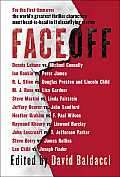
“Red Eye” is a short story by Michael Connelly and Dennis Lehane. It was published in Face Off and then in The Best American Mystery Stories 2015, where I read it.

David Baldacci, the editor of Face Off, invited established crime writers to write short stories that brought their lead characters together. In “Red Eye,” Connolly’s L.A. police detective Harry Bosch meets Lehane’s Boston private eye Patrick Kenzie.

It looks like Connolly and Lehane traded sections, Connolly writing those parts told by following Bosch and Lehane those tracking Kenzie. Usually Kenzie is the narrator of the novels that feature him, but to match Connolly Lehane wrote in the close third person.

Even beyond the central characters, the sections are easily distinguished by the authors’ styles. Connolly is stripped down, short sentences and terse observations.

Lehane’s sections, in contrast, are full of sentence fragments, aphroisms, metaphors. It’s still hard-boiled prose, but it’s not afraid of style.

The contrast reminds me of the difference between Dashiell Hammett’s The Maltese Falcon and Raymond Chandler’s The Big Sleep. And I like a little more ornament in my prose.

01 September 2020

Captain Hastings’s True Worth

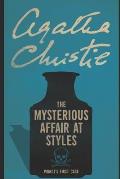
In the end, after the drawing-room revelations that the publisher demanded, I enjoyed Agatha Christie’s The Mysterious Affair at Styles more as a series of character sketches and dialogues than as a murder mystery.

For me, the solution relied too much on esoteric aspects of poisons. (Christie was working at a wartime pharmacy.) The number of people administering said poisons, sneaking into bedrooms at night, and trying to frame or shield other people became incredible. In an excellent mystery, everything comes together at the end with an almost audible click. There was still a bit of scraping in this debut.

That said, the character of Hercule Poirot seems to have come out fully formed and delightful. There’s a rich vein of supporting characters with distinct personalities and speech patterns, most of whom pair off at the end like a Shakespearean comedy. And for the first time I appreciated Capt. Arthur Hastings as a comedic character.

Christie clearly took inspiration from Arthur Conan Doyle’s Holmes and Watson when she wrote about Poirot and Hastings, especially in the short stories that followed the success of this novel, in which the men share rooms in London. But Dr. John Watson was an intelligent, resourceful man, appearing incapable only because he was standing next to an obsessed genius. He helped Sherlock Holmes in many ways. He never came across as a doofus until the character was written that way for Nigel Bruce in the movies.

Hastings, in contrast, provides only one type of assistance to Poirot: entrée into upper-class British society. Well, two things if we add light entertainment in the course of a trying case, as shown in this discussion of the likely murderer:
“Someone with a good deal of intelligence,” remarked Poirot dryly. “You realize that he chose the one place in the house to hide it where its presence would not be remarked? Yes, he is intelligent. But we must be more intelligent. We must be so intelligent that he does not suspect us of being intelligent at all.”

I acquiesced.

“There, mon ami, you will be of great assistance to me.”

I was pleased with the compliment. There had been times when I hardly thought that Poirot appreciated me at my true worth.
Early in the book, Hastings, who’s recovering from a battlefield wound, speaks of becoming a detective. He coddles easy theories about the murder and records lots of clues whose significance passes him by completely. (Poisons not among them.)

Hastings’s attention is easily caught by beautiful women, though his code means he doesn’t pursue another man’s wife and impulsively proposes marriage to an unmarried woman he thinks is about to cry. As a narrator, Hastings alternately admires Poirot, feels baffled by his momentary “mistakes,” and occasionally resents his superiority and secrecy.

To sum up, in The Mysterious Affair at Styles Capt. Hastings behaves very much like Bertie Wooster toward Jeeves.

COMING UP: The Code of the Wodehouses?

10 July 2020

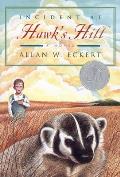
How a Real Story Became Incident at Hawk’s Hill

In 1873, a young boy went missing from his family’s farm in Manitoba. After more than a week, a man of Native and European ancestry found him hiding in a badger hole. That much we can read in nineteenth-century sources from Winnipeg.

In the early 1900s the nature writer Ernest Thompson Seton picked up that story from some Manitobans. He published a version that went into much more detail about how the little boy had actually shared that hole for days with a mother badger that had recently lost its young. Seton or his informants turned the mysterious event into a morality tale, which he published in at least three books.

This 1960 article from the Manitoba Historical Society’s Manitoba Pageant magazine mentions some other local recountings: by Archbishop Samuel Matheson in 1936, in Country Guide in 1951 by Margaret Arnett MacLeod, by the Manitoba Free Press in 1953. I haven’t seen those versions, so I don’t know what new details they provide and what evidence they were based on.

At some point the American writer Allan W. Eckert (1931-2011) came across Seton’s version of the story. Eckert had made himself a specialist in ecological writing, penning most of the scripts for Mutual of Omaha’s Wild Kingdom. He also found a niche writing on Native Americans, including outdoor dramas about Tecumseh and Blue Jacket. (That pairing of nature and Native Americans probably reflects a bias within our culture.)

Eckert’s nonfiction tended toward the imaginative. One of his early magazine sales was an article for the American Legion magazine in 1962 about the disappearance of the US Navy air training mission Flight 19 off the coast of Florida. Eckert appears to have added details not in the documentary record, and that event later became a keystone of the “Bermuda Triangle” legend.

Likewise, Kirkus said of Eckert’s 1992 biography of Tecumseh, A Sorrow in Our Heart, “in its interpretative zeal it strays from, or at least embellishes, the historical record to the point of being suspect.” Even Kirkus’s good review of That Dark and Bloody River noted Eckert’s method of “'reconstituting' credible dialogue among people in briefly reported events.”

On the other hand, Eckert’s fiction was often based closely on historical fact. His first novel was about the extinction of the great auk. Another was based on an event in the life of Daniel Boone. In the late 1960s Eckert started a series of historical sagas about the “Winning of America.”

Eckert saw the skeleton of a novel in Seton’s tale of the lost boy and the badger. The tale offered a chance to write about both the frontier past and the natural world. And it came with the gloss of nonfiction. When Eckert published his novel Incident at Hawk’s Hill in 1971, he stated up front in a short author’s note, “The story which follows is a slightly fictionalized version of an incident which actually occurred at the time and place noted.” Toward the end of the book, Eckert introduced characters who shared the names of two of Seton’s informants.

Eckert changed some details of the story, starting with calling the little boy not Harry (or Willie) Service but Benjy MacDonald. Seton had written that the event took place near “Bird’s Hill,” and Eckert turned that into “Hawk’s Hill,” named after a hawk the MacDonalds see. (The original Manitoba landmark was named after a settler named Bird, not an actual bird.)

Many other details and the plot of Eckert’s story came directly from Seton’s narrative. From the outset, the little boy shows more affinity for animals than for people. Seton’s villain—a nasty neighbor named Grogan—appears under the name of George Burton. He’s not a “half-breed,” however; in fact, he’s cruel to Natives as well as animals. As in Seton’s story, Benjy wanders away after a prairie chicken and needs to take shelter from a storm. A mother badger has been injured in the villain’s trap and lost her babies, leaving her with unfulfilled maternal instincts.

The real boy was lost for about ten days, but Incident at Hawk’s Hill draws that time out to two months. Eventually, Benjy is rescued by a relative rather than (as with the real boy) a stranger; where Seton wrote that that relative was a cousin, Eckert found more drama in making the rescuer a brother.

When Benjy returns, he initially behaves like a badger, but eventually returns to human behavior, stronger for his experience in the wild. Finally, just as in Seton’s telling, the villain shoots the badger, not realizing it has become a family companion, and the family unites to drive him away. The experience brings the MacDonalds closer, particularly father and son. But the family has also decided, with a visiting archbishop’s help, to keep the full story secret so as not to make Benjy appear stranger than people already think of him.

Eckert didn’t write Incident at Hawk’s Hill for children. The point of view skips around among many characters—adults, children, badger, and omniscient narrator. Though six-year-old Benjy is a central character, for many pages Eckert describes him entirely from the outside, and not in appealing terms—he’s small for his age, developmentally odd. It takes several chapters before readers are privy to Benjy’s thoughts, and then only when he’s the only human in the scene. Much of the book follows the drama of the MacDonald family searching for him or reacting to his return.

The early reviews treated Incident at Hawk’s Hill as an adult novel. Critics focused on Eckert’s reputation as a nature writer, with the New York Times calling the book a “folk fable” written “without recourse to undue anthropomorphism.” Kirkus’s reviewer, who could barely stand the story, concluded, “Were it not for Mr. Eckert’s natural history credentials one might think he had been sniffing too much meadow grass.”

Soon, however, people began to view Incident at Hawk’s Hill as a book for children. It was, after all, about a young boy and an animal making friends. It was on the short side, well under 200 pages. And it had pictures. Little, Brown commissioned scratchboard art from John Schoenherr, who had illustrated Sterling North’s Rascal (1963) and Walt Morey’s Gentle Ben (1965)—two novels about boys and animals written for children. (Schoenherr had an earlier career as a science-fiction illustrator. He would go on to win the Caldecott Medal for Owl Moon.)

The Bulletin of the Center for Children’s Books deemed Incident at Hawk’s Hill “An adult novel that should appeal to many young readers.” And in 1972 the novel was named a Newbery Honor Book. That year the judging committee appears to have been unusually generous, naming five Honor Books, more than in any other year in the 1960s and 1970s. From then on, Eckert’s novel was treated as a children’s book.

Disney adapted Incident at Hawk’s Hill into a 1975 television movie called The Boy Who Talked to Badgers. This treatment made Benjy, played by ten-year-old Christian Juttner, more of a likable hero. It switched some episodes around, but the basics of Seton’s and Eckert’s story remained. One notable addition was Denver Pyle as narrator, revealed at the end to be Benjy grown up.

Almost two decades later, in 1998, Eckert published Return to Hawk’s Hill, starting at the end of the first novel and then going over much the same ground. Benjy, a little older, wanders off again. Even the villain returns, despite having been run off before. But the new story had one major difference. This time, instead of a badger Benjy falls in with a community of mixed Cree and French descent who look after him, and his father learns to apologize for his prejudice against these Métis.

Return to Hawk’s Hill thus restored the helpful role of Métis in the real story of the lost boy in Manitoba. As specified in the nineteenth-century sources, a man of Cree and European ancestry rescued the boy from the badger hole. Seton’s early-1900s version had not only erased that rescuer from the story but made the villain a “half-breed.”

I have no idea whether Eckert had learned of those original sources by the time he wrote Return to Hawk’s Hill and set out to fill a deficit in his earlier novel. He may simply have wanted to create a sequel to one of his most successful books and looked to his interest in indigenous North Americans for inspiration. Either way, he added yet more significance in the mysterious story of a lost boy in the badger hole.

TOMORROW: Further meaning for 21st-century readers.
07 April 2020

Reading the Monkey

In this time of pandemic throughout the Great Outside World, Prof. Dina Massachi and the International Wizard of Oz Club have organized a video reading of L. Frank Baum’s The Wonderful Wizard of Oz.

All the videos are on the Oz Club’s YouTube channel, as well as various Facebook, Instagram, and Twitter feeds. Yesterday there was even a report on the project in Philadelphia keyed to local reader Ryan Bunch.

Other readers have included Baum’s granddaughter Gita Morena, novelist Gregory Maguire, biographer Michael Patrick Hearn, historian of feminism Sally Roesch Wagner, and many friends I’ve made through the Oz conventions.

Dina asked me to tackle Chapter 14, “The Winged Monkeys.” In this chapter Dorothy learns the secret of the Golden Cap she took from the Wicked Witch of the West—that it can summon the Winged Monkeys to fulfill her wish. She then hears the story of how those Winged Monkeys became enslaved to the cap.

A large part of the chapter consists of the King of the Winged Monkeys’ story from his grandfather’s day. There are other long flashbacks in the book, such as when the Tin Woodman and the Wizard explain how they ended up in the fixes where Dorothy found them. This flashback is unusual in going so far back to tell a story about characters we never see elsewhere in the book—or elsewhere in Baum’s other books, either.

All the characters in the chapter are matter-of-fact about the Monkeys being compelled to obey the owner of the Golden Cap. The present King of the Winged Monkeys expresses no resentment about the sorceress who enslaved them, or his grandfather who angered her, or the Wicked Witch for ordering them around. Dorothy never considers freeing the monkeys from slavery as she’s inadvertently freed the Munchkins and the Winkies.

Glinda the Good does free the Winged Monkeys at the end of the book, but then in the sequel, The Marvelous Land of Oz, Baum describes them still as enslaved to the cap, so evidently that moment in his story hadn’t meant much to him. I doubt an author today could write so casually about slavery.

Reading Chapter 14 therefore presented a challenge. How to voice the King of the Winged Monkeys in a way that made him more than a docile servant by preserving the sense of mischief he acknowledges. Plus, that story of people we’d never meet again had to be interesting. In my telling, the king’s voice came out like a Bowery Boy.

Here’s the result for Chapter 14. Or you can start from the beginning in the great Kansas prairies.

06 April 2020

The Truth of True Grit

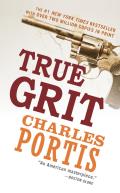
Charles Portis’s True Grit is a straightforward manhunt story elevated into a great American comic novel by the narrative voice.

The narrator is Mattie Ross, a fourteen-year-old determined to track down the man who killed her father and bring him to justice—at an affordable price. To do this she hires one-eyed deputy marshal Rooster Cogburn and forms an awkward alliance with Texas ranger LaBoeuf.

The very first paragraph ends with an accounting of the money Mattie’s father had on him when he was killed. Mattie knows that figure because she manages the business of the family farm. She speaks with the fiercest emotion when striking a financial bargain with horse traders, bounty hunters, and other men. At the end of the novel we learn that she’s grown up to run a private bank.

But Mattie Ross doesn’t want money for its sake, or for luxuries. She’s ready to endure privation and danger, defying the bounty hunters’ commands that she go home and leave the tracking to men. Money matters to Mattie because it’s how she measures fairness in the world, and fairness is her real concern.

Mattie is not out to make friends. She speaks bluntly and judgmentally to everyone she meets. She exasperates Cogburn and LaBoeuf until eventually they realize her integrity, and that they’re not getting rid of her. By the end of their trek, they risk their lives to save her. Then the three characters go their separate ways, never seeing each other again.

Others perceive the potential sexual tensions in a young girl traveling through unsettled territory with older men. LaBoeuf tells Mattie that he first thought she was pretty. But Mattie herself never shows any feel for sexual or romantic attractions. As an adult, she is a contented maiden lady.

I came to view the character of Mattie Ross through the lens of autism spectrum disorder, and I’m not the first to do so. Caroline Narby wrote such an interpretation for Bitchmedia. This Goodreads member named Stephanie did the same.

When Portis wrote True Grit in 1968, pretty much only psychiatrists knew about autism, and the syndrome was widely attributed to “refrigerator mothers” and other nonsense. The term “Asperger syndrome,” which seems to be the closest category to describe Mattie’s character, wasn’t coined until 1976. The recognition that some people with autism function well in certain fields, such as financial analysis, while having trouble with everyday social relations was well in the future.

But goldurnit if Mattie Ross doesn’t come off as one of the most incisive portraits of a character on the autism spectrum. While she looks for “true grit” in Cogburn, she demonstrates that integrity, drive, and unwillingness to compromise in herself.

There have been two movie versions of True Grit, the first made in 1969 when the book was still new. John Wayne played Rooster Cogburn as a semi-parodic version of his usual persona and won an Oscar for his troubles. However, writer Marguerite Roberts, director Henry Hathaway, and actress Kim Darby never seem to have a handle on Mattie Ross’s character, portraying her as a teenager with the stubbornness of a child.

In contrast, Joel and Ethan Coen’s 2010 version of True Grit is built around Mattie. The scene of the ferry crossing shows the difference: in the first movie, we arrive at the ferry with Cogburn and LaBoeuf and view Mattie’s crossing at a distance. In the second film, it’s the other way around.

Portis’s narrative voice and dialogue fit right into the Coens’ usual combination of high and low rhetoric. Hailee Steinfeld played Mattie with the right exasperating exactitude, her determination not childish but single-minded.

Parts of the first True Grit movie are entertaining, but the second is really good. And the novel is a masterpiece.

04 September 2014

Viewing Bad Houses

While reading Bad Houses, a graphic novel by Sara Ryan and Carla Speed McNeil, I got to thinking about the trope of the “Manic Pixie Dream Girl.”

Because one of the story’s main characters, Anne, could fit that mold. She dresses quirkily. She has interesting hair—with a stripe of dye and locks designed to look like a sunflower, as revealed by making-of pages in the back of the book. And her romantic interest definitely jolts the story’s young male lead, Lewis, out of a rut.

But Anne’s not a “Manic Pixie Dream Girl” because the story isn’t told just from Lewis’s point of view. We also get to see Anne’s story, including her background and secrets, down to her embarrassment about the hole in her bright striped stockings. We also see the stories of the young people’s mothers, one a hoarder filling up a house and the other an estate-sale specialist emptying them.

So one key to avoiding the cliché of the “Manic Pixie Dream Girl” may be—surprise!—to treat young women as full characters in their own right.

15 August 2012

Play It Again, Psammead

The success of various latter-day sequels to classic (i.e., public-domain or licensed-by-heirs) children’s novels prompted Puffin to invite Jacqueline Wilson to write such a book. After initially declining, she chose to follow on a childhood favorite, E. Nesbit’s Five Children and It, as she described in the Guardian. Her column answers many of the questions I had about this project last year.

Wilson also found that she couldn’t write in the same mode as the original book.
Nesbit had written her book in the third person [in fact, as a delightfully intrusive narrator], but I much prefer writing in the first person, and I thought it would be easier and more involving for my readers if I chose a child narrator again. I invented Rosalind, a quiet, shy, intense girl. She's a very keen reader – and so, naturally enough, when the story opens she's been reading Five Children and It. She has a younger brother, Robbie, a delicate, timid boy who loves playing with his toy zoo animals. Their parents have divorced – no surprise there, this is a Jacqueline Wilson novel.

The children have gone to spend part of their summer holiday with their dad, while their mum goes to an Open University summer school. He is now married to Alice, and they have a toddler called Maudie. Alice also has a daughter from a former relationship. She's named Samantha, but she's always called Smash. She’s a fierce, opinionated, streetwise child, who’s a royal pain most of the time. Smash is staying with her mother for the holidays because her dad is on honeymoon with his new young wife.

So I have a very modern jigsaw family. But this isn’t a dark, angst-ridden book about emotionally neglected children. It’s a fantasy story – and as soon as the children dig up the Psammead in the sandpit at Oxshott Woods, the fun starts.

I knew that one of the first wishes would be the obvious one: Smash wants them all to be rich and famous. I had great fun with this one. I let Rosalind be a bestselling child author, turned Robbie into a mini TV chef, and had Maudie as the star of a sitcom. Smash herself is like a little Lady Gaga, with a sell-out gig at the O2 Arena.

I think the most challenging wish for me was when bookish Rosalind asks if they can meet all the Edwardian children in Five Children and It. I had to work hard to get Cyril, Anthea, Robert and Jane to sound natural, and not just silly caricatures. The Edwardian children seem very immature to my modern children and yet they boss the family’s adult servants around without a second thought. They also have extraordinary freedom, roaming about the countryside on a whim.
Wilson’s article also makes one mention of Nesbit’s own sequels, The Phoenix and the Carpet and The Story of the Amulet, and one of another latter-day continuation, Helen Cresswell’s 1992 The Return of the Psammead.

07 July 2012

Differing Points of View and James Treadwell’s Advent

I’ve spoken at writing conferences about what I call the Parameters of Narrative Voice, one of the most important being Point of View. Does a story follow one character closely, or take a wider view? Is the narrator omniscient or limited? What signals (if any) a shift in narration?

I think that an author is best served by establishing the parameters of narrative voice early so that any later changes don’t throw off readers. That said, some novels I like a lot—Treasure Island, Tom Sawyer—shift points of view midstream, to greater or lesser effect.

I brought up that aspect of storytelling in my ongoing Q&A with James Treadwell, author of Advent.

Most of the first part of Advent sticks closely to Gavin’s point of view as he travels from London to Cornwall and meets people. Then we start to follow some other characters as well: Horace, the Chinese-British boy; the minister; and so on. Meanwhile, there are interstitial chapters tracing the story of Dr. John Fiste backwards through time. How did you develop that narrative strategy? What challenges did it bring?

“Strategy”?

Sorry.

But seriously … As far as I can remember, I had the idea of a double narrative in mind from the start. At one stage I think I conceived of it fairly schematically: shorter, more lyrical, more ornate chapters would relate to the more explicitly fantastical material, while longer, plainer sections would tell the story of the present-day characters. It wouldn’t stay as neatly organised as that, but once it was underway it felt roughly right: two apparently very different strands of plot converging on a kind of hinge moment.

Some of the shifts in perspective and narrative voice just arrived out of nowhere, though. It’s that odd experience of ventriloquism which a lot of writers must experience: suddenly it feels like another voice’s moment to start speaking.

The challenges. Mainly, I suppose, it’s trying to get the pace right: the flow from one kind of narrative or point of view to another, the rhythm of suspense, the proportions of the plot. I wish I could say I get this right all the time but I know very well I don’t. It’s one of the aspects where I depend most on my (marvellously helpful) agent and editors to tell me when things aren’t working.

The other big challenge of this rather non-linear and intricate way of fitting a story together is, if I’m honest, the challenge to the reader. In the absence of a single consistent more-or-less omniscient narrator who goes through the plot from beginning to middle to end, there’s no doubt that it’s harder for the reader to be certain of what’s going on.

I’m all right with that, though.

MONDAY: Teenagers as fantastical beings.

04 April 2012

The Sedentary Benedict Society

At one point in Trenton Lee Stewart’s The Mysterious Benedict Society, a character demands, “Is it really as great as all that? . . . Sitting in a stupid chair doing nothing?” She’s referring to the experience of being in the Whisperer, a mind-control device in the novel.

That description could also be applied to watching television, which the book is quite down on. In fact, the Whisperer involves kids going into a trance-like state and repeating an adult’s thoughts because, for the sort of fantastic reason necessary in middle-grade fiction, the machine needs preadolescents to be effective.

For that matter, “sitting in a stupid chair and doing nothing” might be one way some folks would describe reading.

Ironically, a great deal of the first chapters of The Mysterious Benedict Society consists of characters sitting in a chair doing nothing but listening to other characters. In that part of the book, Stewart sticks quite closely to the point of view of Reynie Muldoon, foremost of the book’s protagonists. Only later does the narrator move into the heads of Sticky Washington, Kate Wetherall, and other characters, and only later does the action heat up.

As a result, in those early chapters, we readers learn about the other characters’ experiences and the requisite Threat to the Entire World as Reynie listens, sitting in a stupid chair and doing nothing.

12 January 2012

Limits to Anglophilia

I’m happy to acknowledge my Anglophilia, but even I found the Anglophilia in Jane Louise Curry’s The Bassumtyte Treasure over the top.

It’s not just ordinary Anglophilia, even. It’s all about the aristocracy, indeed the old aristocracy that remained loyal to Catholicism and Mary, Queen of Scots. The book asks us to root for the aristocratic Bassumtyte family to keep their big house and grounds and servants in the 1970s.

Since it would be awkward to delve into how that wealth was accumulated in previous centuries, or the value of the public services that the tax revenue is now funding, Curry instead embodies that threat as an off-stage villain who’s eager to buy a house. And wouldn’t you know, he’s an Arab prince with lots and lots of money. Arabian aristocracy isn’t so appealing as English.

As with The Lost Farm, Curry starts with a young protagonist—in this case, ten-year-old Tommy Bassumtyte—and his problems—suddenly being sent from New Hampshire to England. The opening chapters are firmly and consistently in his point of view.

But the story doesn’t stick with Tommy. By the second half of the book, the point of view is shifting suddenly among him, his older cousin, an aged ancestor, and other adults as need be. Though Tommy plays a part in the unfolding plot, just as often he’s standing aside as adults do things. And the book’s language doesn’t seem particularly kid-friendly, even for young Anglophiles:
Old Sir Thomas’s plan for the Tudor garden consisted of [a] planting diagram in which each box tree was indicated by a small circle representing its trunk and, on following pages, a series of elevations and one perfectly round tree drawn separately like a lollipop on a short, thick stick. The elevations were side views which showed a long expanse of severe, flat-topped hedge surmounted at each corner and at the pathway opening by a leafy ball. Unlike the present arrangement (or as much as could be judged of it in its shaggy state), on only one of the four sides was there an opening through the outer ledge. Through it could be seen a sketchy representation of another, inner hedge.
Finally, the book is a mix of fantasy and mystery without being really satisfactory as either. As a fantasy it’s timid, with three short visits of a ghost and one peek through time. As a mystery it relies on those fantasy-aided insights rather than rational thinking to reveal crucial details.

23 December 2011

Bartimaeus Flattened on the Page

Andrew Donkin shares credit for the script of the Amulet of Samarkand graphic novel with Jonathan Stroud, just as he shared credit for the Artemis Fowle adaptation with Eoin Colfer.

I thought the Artemis Fowle comic was very good, equal or perhaps even better than the novel. However, I thought the comics adaptation of the first Bartimaeus novel was merely a flattened version of the original.

The Samarkand art, by draftsman Lee Sullivan and colorist Nicolas Chapuis, is just fine. Their pictures of a magical London are terrific; I especially like the way their London Eye has the five-pointed pentagram inside it. I found it somewhat difficult to follow how old Nathaniel was in different scenes as the narrative flashed back and forth, but that really points to the larger problem in this adaptation.

Colfer’s Artemis Fowle was practically made for the comics form. The narrative voice is an omniscient, detail-oriented third person. The conflict is built on opposing teams with clear goals. The narrative is built up from plot twists in the physical world rather than realizations in the mental one. The characters cover a broad range of physical types, with corresponding personalities.

In contrast, Stroud’s Bartimaeus books are a triumph of narration. There’s Bartimaeus’s own voice, with its boasts and footnotes, which brief comics captions can barely replicate. That voice helps us follow the djinn through his shapeshifting and world-jumping while in the graphic format we have to see Bartimaeus from the outside.

The novel’s other, third-person narrative voice shows us Nathaniel growing up and working his schemes. It provides the sense of distance useful for an anti-hero while letting us into his head as he thinks and rethinks.

The narration also keeps the timing of different scenes distinct. In the comics version, there’s a short sepia-toned flashback to when Nathaniel was very little, but all the other scenes unfold before us looking like the present, differentiated only by captions saying NOW and BEFORE.

Indeed, I wonder if this form would have worked better if it started at Chapter 11, “The Day Everything Changed”; using Nathaniel’s confrontation with Simon Lovelace to fill us in on the boy’s background and world; and then proceeding chronologically. That approach would have kept Bartimaeus off the stage for longer. However, if we can’t hear his voice in all its glory, it’s unfortunately not such a loss.

21 July 2011

Male and Female Storytelling Energies?

Last week, in a discussion on Facebook of whether Harry Potter is a feminist saga (prompted by this essay), author Bruce Coville shared some interesting thoughts about what defines a “boy book”:
It's not the gender, it's the energy. I've spent a couple of decades thinking about this, in no small part because of the reaction to MY TEACHER IS AN ALIEN. This is a book I wrote first person female, yet it is still considered a "boy's book." I cracked my brain over this for a long time, and in the end I came to the conclusion that it's about the "storytelling energy" of a story. . . .

The very best (and most successful) books partake equallly of male storytelling energy (action!) and female storytelling energy (relationship).

Jo Rowling merges them seamlessly.
Coville has been talking about that blend for years, which is why I feel comfortable quoting his Facebook comments.

I think gender roles are one of the areas in which Rowling’s execution actually undercuts the values on the surface of her books. But Coville is correct about the types of energy she’s combined in her story, whether or not those are intrinsically male and female.

26 April 2011

Fonts of Wisdom in Origami Yoda

At the back of Tom Angleberger’s The Strange Case of Origami Yoda is one of those usually high-falutin’ notes on typography:
The main text is set in 10-point Lucida Sans Typewriter. The display typeface is ERASER. Tommy’s comments are set in Kienan, and Harvey’s comments are set in Good Dog.
That note lists more fonts than is common, but still greatly understates the situation. There are other chapters credited to the characters Mike, Sara, Cassie, Lance, Marcie, Quavondo, and Rhondella, each in its own font. There are posters and suspension slips in yet more typefaces, probably also overseen by designer Melissa Arnst.

Origami Yoda has what my Parameters of Narrative Voice system calls a clear Paper Trail: the novel is made to read like a document or collection of documents from its fictional world. And in this case it looks reasonably like such documents as well: a middle-schooler’s report on recent events with classmates’ contributions, handwritten comments, illustrations, and graffiti.

Because Origami Yoda has such a powerful visual dimension, I was surprised to see it just won the E.B. White Read-Aloud Award. With good training and preparation, a reader could use different voices for each narrator to match the fonts. But how can an oral delivery get across the wrinkled pattern laid under each page, suggesting the whole document has been stuffed several times into a backpack? How does one read aloud a sketch of a Shakespeare bust falling down the margin of one page and saying, “Oh Poop!” upside-down?

(In classrooms, I suspect the answer to the last question is “Very carefully.”)

29 March 2011

Shifts in Shifting Point of View

Not so long ago, authors were strongly advised to define their point-of-view character for each novel, or at least for each chapter or scene in a novel. While it was possible to describe events that character wasn’t privy to, the informal rules said, a good novel’s narration should show readers only one person’s thoughts or feelings at a time.

Shifting from inside one character’s head to inside another, the tastemakers warned, could confuse readers and/or remind them that they were reading fiction. If one had to make that shift, it was imperative to wait for a chapter break or other obvious signpost. And ideally such a book should be about different views of life; the shifts should not be driven merely by narrative convenience.

There were exceptions to this rule, of course. Many novels of the past had shifting points of view, and readers still enjoyed them—but new authors had to look at what was being published today. There were also some individual exceptions, such as Phillip Pullman.

Something changed over the last decade. Perhaps Pullman’s success undercut the rules. Perhaps the rebirth of the intrusive narrator via Lemony Snicket opened the door to other types of old-fashioned narration. However it happened, three of the last four novels I read had shifting points of view.

Catherine Stier’s The Terrible Secrets of the Tell-All Club works with very close point of view in part one, with each short chapter following one of four kids. The point-of-view character’s name even appears in each chapter title, and the story focuses on how different characters view and misinterpret the same events. That type of narrative complexity grew in popularity over the last couple of decades.

But when Tell-All Club’s action shifts to a school camp, Stier abandons those delineations. Part two is titled “All Together Now.” (The first part has no title.) The narration starts jumping from one protagonist’s head to another within the same chapter and scene. That speeds up the action, but I’m not sure it serves the story—in part because I thought the story sort of petered out into valuable lessons about life.

M. T. Anderson’s Agent Q, or The Smell of Danger!, like the previous titles in the Pals in Peril series, features an intrusive, metatextual narrator who shifts point of view like a silent-movie comedian wrestling a fire hose. But all three books introduce us first to the thoughts of Lily Gefelty, the most normal of their three protagonists. The first couple show us the least normal, Jasper Dash, mainly from the outside, with the third finally letting us into his highly trained brain.

As I recall, the Pals in Peril series was originally presented and re-presented as a trilogy, which harmonized with its three protagonists and the first volume’s tripartite structure. But commercial success and the lack of any narrative limits in this universe put Agent Q in the interesting position of this trilogy’s fourth book. No single protagonist’s point of view or genre dominates as much as in the previous volumes, which results in a lot more switching from one head to another.

Agent Q also brings on a couple of claimants to be fourth member of our heroic threesome. However, neither of those young men gets point-of-view time, nor cover space on this volume or the next to come. (All I can say is that someone else appears to have disliked the Alex Rider books.)

Finally, Diana Wynne Jones’s Enchanted Glass has two protagonists/point-of-view characters, middle-aged Andrew and adolescent Aidan. Indeed, it proceeds for quite a while from its opening with no child in sight, still an unusual feature in a novel for children. As in Pullman’s novels, the narration jumps from one main character’s thoughts to the other within chapters without any section breaks or other typographical signals. But at that point in her life, Jones was well able to break the rules.

18 March 2011

Narrative Voice, Authorial Credit, and the Comics Form

Last month Comic Book Resources has published an essay by Timothy Callahan about narrative voice in the comics form. As many have noted, the bombastic third-person narrator has vanished from comic-book captions, replaced by snatches of the main character’s (or characters’) thoughts. This change coincided, and probably responded to, the rise of autobiographical comics with more literary ambitions.

So is the result a type of first-person narration? Callahan doesn’t think so. Because comics almost always show characters from the outside, even as their thoughts appear in those captions, we readers aren’t taking in the story from their points of view alone.

Callahan notes a few comics that have tried to show only what the narrator/protagonist sees, just as Robert Montgomery shot Lady in the Lake entirely from Philip Marlowe’s point of view. But just as that movie became the most discussed in film-studies textbooks without anyone actually seeing or enjoying it, fully first-person comics usually come across as experiments or stunts.

Callahan therefore concludes:

Most comic book narration slides into what might be called, in literary circles, Free Indirect Discourse. It's not a perfect fit. Free Indirect Discourse is, basically, third person narration that slips into phrasing and tonality that matches first person narration.
Perhaps a more fruitful conclusion is that categories developed for prose literature don’t always apply to comics, and terminology from film criticism might work better.

Callahan goes on:
artists carry the majority of the burden of Point of View. For an example, see something like CBR's Comic Book Idol competitions, in which artists submit pages based on the same scripts. The meaning of each version differs radically, precisely because the Point of View (and tone, which I'll get to later, as promised) depends so much on the what and how of the penciled page. . . .

None of this may be surprising at all. Perhaps you're thinking, "yeah, no kidding! Artists are the main storytellers in comics." But then why do writers get most of the credit (or blame) when a comic book comes out? . . . how much of the "writing" is done in the script, and how much is done in the translation of script to art?
Indeed, if we stick with the movie analogy, a comics writer is like a screenwriter, but a comics artist is like a director—and, as Callahan says, also handles the acting. In movies the director gets primary credit for a movie, and the director’s and star actors’ names appear before the title. In contrast, even successful screenwriters are well paid but expendable.

Yet in comics, writers traditionally get first credit, and Callahan concedes that he buys comics on the basis of the writers’ names.
I've long thought of myself as someone who follows writers instead of artists. And we're now knee-deep in the age of the writer in mainstream comics, where artists bounce from series to series, but a writer can stick around and make an impact over several years on a single series. . . .

What exactly are we latching onto, if so much of the writing in comics is in the hands of the artist?

I suppose what we're left with is "a writer's sensibility." The way a writer emphasizes certain types of stories, or returns to a particular set of themes. The way a writer structures a story of the long term, regardless of who may or may not draw individual issues.
I think that’s an incomplete answer. To start with, we should replace the word “writing” as Callahan uses it with “storytelling.” Writing is verbal; storytelling can occur in many media.

If a comics writer comes up with a story, the result is more than the dialogue, captions, and sound effects that survive in verbal form on the final pages. That initial story also establishes the events that make up its plot; determines what readers should learn when, and often at what pace; and sets the basis for the setting, characterization, and overall world-building. That’s more than “sensibility”; it’s the (choose your metaphor) skeleton or foundation of the end product.

Of course, there are plenty of examples of a comics artist being the first to structure a story, or writer and artist working together, or corporate owner dictating major plot turns and assigning writers to figure out how to make them work. And yet, as Callahan notes, the writer’s name still comes first.

27 February 2011

Mascot Beyond Rescue

The number of novels inspired by the death of the second Jason Todd (the Robin of the late 1980s) is very small. Peter David’s Mascot to the Rescue! is almost certainly the best of the batch. Which is not to say it’s a good novel, or even a good “chapter book” for young readers.

The premise of Mascot to the Rescue! is that a boy named Josh Miller has become convinced that his life parallels that of Mascot, the kid sidekick in his favorite comic book. When that magazine’s publisher announces that it will kill off Mascot because fans have voted against his old-fashioned chirpiness, Josh and his new friend Kelsey set out to convince the publisher or auteur to keep him alive.

Josh periodically goes into a mental zone where he pretends to be Mascot, which comes in handy when he must fight off paint-ballers, rabid dogs, and other obstacles that pop up to provide an action sequence. The book has occasional line drawings of these scenes from Colleen Doran, who’s drawn for Teen Titans, among others.

David is a fine comic-book writer, with particular experience writing Jason Todd’s successor as Robin in the Young Justice series. But many storytelling techniques that work on the comics page don’t work so well in a prose novel.

Mascot to the Rescue!‘s narrative point of view jumps around, particularly from Josh to Kelsey and back, often within scenes. The narration frequently tells us what different characters are thinking. That approach is out of favor with most modern prose novelists, and even by the standards of other times the result seems clunky. In a comic or movie script, it’s often useful for writers to spell out what characters are thinking, but in prose subtlety works better.

David’s plot relies heavily on coincidences. For example, there’s a holy fool in the form of a mentally disabled man who works for the comic-book publisher; he appears at just the right moment to take Josh and Kelsey to visit Stan Kirby, the creator of Mascot.

But many of the plot’s coincidences just don’t add up. Josh’s mother keeps him from spending any time on the internet, yet she maintains a daily blog about being a single mother. Stan Kirby refuses to send his work electronically and doesn’t event check his email, but he turns out to read Ms. Miller’s blog regularly.

Josh’s elementary-school principal and a social worker from child protection services are the book’s two cardboard baddies. As I’ve written before, it makes no sense for authors to create child-hating villains from people who’ve gone into professions where they have to work with children.

We know from nearly the start that Josh’s mom and Kelsey’s dad are supposed to get together. Their pairing is apparently so imperative that David gives the two characters few scenes together, so we never see the attraction. Similarly, Josh and Kelsey are paired off, each of the good guys gets his heroic moment, and modern comic-book publishing is saved.

But the biggest problem at the start of the book is that Josh really does seem troubled and delusional. His character is probably the novel’s biggest weakness. While many young superhero fans might be attracted to the idea of a real-life adventure that crosses into comic-book publishing, Josh’s character may be too close to what they don’t want to be like. He’s more pathetic than sympathetic.

Through the character of Stan Kirby, an acknowledged homage to his predecessors, David gets to voice some of comics creators’ big recent complaints about the business:

  • “Fan” sites on the internet are relentlessly negative.
  • Sales reward gore over heroism.
  • There are no comics appropriate for kids.
Ironically, it was Stan Lee and Jack Kirby’s creation of the Fantastic Four that introduced antiheroes into superhero comics and started the genre toward more complex, mature, and eventually dark storytelling.

That portrayal of comics fandom, however, doesn’t accurately reflect the history of the Jason Todd vote. There have been fans who dislike the cheerful young mascot type, going all the way back to the 1940s. (See Feiffer, Jules.) But the second Jason became unpopular because he didn’t fit that mold. Readers might be discomfited by Josh Miller, but a lot more of them would like to be Mascot.

22 November 2010

Yummy: There Is No Rosebud Here

I remembered the case of Robert “Yummy” Sandifer from 1994 before reading Yummy: The Last Days of a Southside Shorty. I didn’t remember the boy’s name, but I remembered the news reports about an eleven-year-old killer on the run, eventually found murdered by his own gang in a tunnel.

I therefore knew how the title character’s story would end in Yummy, the comics-style retelling of that episode by G. Neri and Randy DuBurke. Younger readers might not, despite the phrase “Last Days” in the subtitle and the mention of death on the front flap.

G. Neri structures the narrative to maintain that suspense. It begins with Yummy Sandifer shooting a teen-aged girl, then circles back to his upbringing, entrance into gang life, and early crimes. When we return to the shooting, the story seems to have caught up with its telling. Though still in the past tense, there’s no sign of what’s to come.

The narrator Roger is another boy about Yummy’s age, a fictional neighbor and classmate. But he comes from a normative American family: mother, father, one other sibling. But we also see that Roger’s older brother was the member of the Black Disciples gang who recruited Yummy.

Like the reporter in Citizen Kane, Roger undertakes to find out more about Yummy, asking neighbors and friends. He describes his own encounters with the boy, who has sometimes seemed abused, sometimes a bully, sometimes just another kid. Neighbors share contradictory thoughts about Yummy and his behavior.

Unlike Orson Welles’s film, however, Yummy ends without an answer, even a facile one. (Citizen Kane was always more about audacious storytelling than about its story.) We never learn what made Yummy so much more violent than other “shorties,” or exactly why he shot two people on one August day.

We do, however, get a sense that Roger’s family has helped to keep him from that path. There’s even a family reconciliation at the end, providing the requisite “sense of hope.” But for the questions the narrator asks about Yummy Sandifer and the girl he killed, there are no adequate answers.

The artwork fits that stark story. Randy DuBurke’s panels are all in black and white; he uses hatching to create the illusion of grays, but there are no washes or half-tones. It’s a high-contrast world full of shadows and looming perspectives, with spindly-legged kids running for their lives.

(These comments based on a review copy sent by the publisher, Lee & Low Books.)

30 July 2010

Hearing Voices

From Lee Wind’s interview with M. T. Anderson:

In writing middle grade, I imagine the voice going TOWARDS the reader. In YA and adult, I imagine the voice coming FROM the narrator. I guess it’s because, naturally, I think of writing middle grade fiction as akin to story-telling or reading aloud.
Of course, for his young adult novels Anderson has (so far) chosen first-person narration, meaning that the voice is a major part of the characterization.

In his middle-grade “Pals in Peril” books and tween Game of Sunken Places and sequelae, Anderson’s narrative voices aren’t characters within the story. Rather, they’re filters between the action and the reader, and somewhat chatty about it, especially in the former series.

I see that reflecting the reëmergence of the intrusive third-person narrative voice in children’s literature after Lemony Snicket. In novels published during my childhood (and Anderson’s, and Handler’s), third-person narrators tried to be as unobtrusive as possible, murmuring flatly into readers’ ears and ducking away whenever one looked around to see where the story was coming from. It’s no surprise that Anderson’s opinionated narrators pop up in books that also involve knee socks—they reflect inspiration in storytelling about a century old.

Anderson’s observation makes an interesting pairing with this comment from Wind’s interview with Scholastic editor Nick Eliopulos:
In simplest terms, I think of voice as a bridge from the author to the reader. It’s about your style, how you express yourself and your characters, how you choose to communicate.

I wonder if those involved in kids’ books fret over voice more than those in adult publishing? Because, allowing for some noteworthy exceptions, a children’s book involves an adult writer communicating with a child or teen reader. So the author has a lot to keep in mind when it comes to the voice.
This is one of the better explanations of “voice” that I’ve heard. Usually editors and agents seem to use the word to mean, “I know what I like.”

05 April 2010

Why Thought Balloons Burst

Having traced the development of American comics thought balloons, their typical use, and alternate systems of narration, I approach the question of why they’ve virtually disappeared from mainstream American comics. Why did one comics publisher recently tell a star novelist not to use them at all?

This conversation among comics scripters offers several competing explanations:

  • That certain dominant editors in the late 1980s and 1990s, particularly Jim Shooter at Marvel and Cat Yronwode at Eclipse, insisted that magazines move away from the comics techniques that I call “showing the invisible”: thought balloons, sound effects, cutaway views, etc.
  • That comics were supposed to replicate movies, where the big money is, and most movies don’t use narrators or voiceovers to tell characters’ thoughts.
  • That Frank Miller’s Daredevil and Batman stories from the late 1980s and Alan Moore’s scripts for V for Vendetta (1982-89) and Watchmen (1986-87) didn’t use thought balloons, and were so striking and influential that they made the traditional comics narrative style look cheesy.
Within that conversation scripter Steven Grant added another influence:
This is going to sound self-centered, but I know one thing that greatly influenced overuse of the “first person caption as substitute thought balloon” in the mid-80s: my use of the gimmick in the PUNISHER mini series. Now I wasn't particularly influenced by Frank or anyone else when I used them, I just had a vision of The Punisher as someone who felt under no compulsion to explain himself to anyone, but he had been established as keeping a diary/war journal…so the first person captions became essentially this running diary he kept in his head, his dislocated commentary on his situation.
Grant’s use of the “diary/war journal” to help tell his story is what my Six Parameters of Narrative Voice calls a “Paper Trail”: narration through what purports to be a document created within the story.

But why was there such a big artistic change in such a relatively short time? I think a big part of the explanation has to lie in economics. In the 1980s, the major American comics publishers recognized that their audiences had become smaller, older, and found in specialized stores. The companies were no longer publishing for kids picking out what magazine covers grabbed them at the newsstand.

Older comics readers could keep up with more sophisticated storytelling techniques, and wanted it to keep them interested. They wanted scripts that did more showing and less telling. Readers knew the classic characters, so they didn’t need everything spelled out in each issue; instead, they wanted to see those personalities explored more deeply. They wanted more nuanced discussions of heroism and the values or conflicts different characters symbolize.

The result was a a greater emphasis on characters’ internal lives, which made first-person verbal narration more powerful than the third-person omniscient approach that had dominated the first decades of superhero stories.

It’s notable, however, that most adventure comics aren’t really told in the first person. They continue to include scenes that the central character/narrator can’t be privy to: villains conspiring, for example. But those scenes usually have no verbal narration or commentary. We readers are simply privy to what the hero can’t see, for the sake of the story.

Of course, it would have been possible for comics creators to focus on one character’s thoughts while continuing to use thought balloons. But once third-person narrative captions went away, that freed up space at the edges of panels, and captions don’t block as much art as thought balloons and their tails. (They’re also a lot easier to produce on a computer.)

The first-person narrative approach, once the exception, has become so established that creators can now play with readers’ expectations for it. For instance, Jeph Loeb’s Superman/Batman scripts from 2003 track both title characters’ thoughts in each scene through two set of narrative captions in contrasting colors. The result is dramatic, though also easily parodied.

04 April 2010

Thought Balloons and Systems of Narration

Thought balloons (discussed at length yesterday) were part of a system of narration that dominated American adventure comics for decades. This system also involved an omniscient narrator, often bombastic and occasionally redundant.

Using thought balloons, this narrative approach could reveal any character’s thoughts, including hero or villain, as long as it served the story. Conversely, since adventure comics depended on sudden plot turns, this style also involved concealing characters’ thoughts if they would give away the next twist too early. (See “Reason for Robin, #2.”)

Other comics genres took different approaches to narration. Romance comics were often told in the first-person voice of the central character, like magazine “confessions”; both captions and thought balloons let us into that character’s head, and hers alone. Horror comics were introduced and narrated by recurring figures like the Crypt Keeper, who had supernatural insight into characters’ thoughts and fates. And of course there were experiments and exceptions within every genre.

To find examples of the typical adventure-comics approach in full flower, I looked at Batman issues from the early 1980s, since they were handy. Batman, #336, has a script by Roy Thomas, based on a Bob Rozakis plot. The captions are in the voice of an omniscient narrator. There are thought balloons from Batman/Bruce Wayne, Alfred Pennyworth, Commissioner Jim Gordon, and two villains, the Spellbinder and the Cluemaster. That narrator knows everything!

This style offers leeway for a character to take over the narration for a while. Gerry Conway’s main story in Batman, #338, has an omniscient narrator, also displays the hero’s voice in both thought balloons and captions, and quotes the villain’s voice in captions for a flashback. The captions in characters’ voices include quotation marks around the words. (This tale also has one passing thought balloon for a saleswoman we never see again.)

Yet that same stretch of Batman magazine offers an alternative way of narrating adventure comics, a way that would come to dominate the form. That style appears in the back-up feature in Batman, #337-9, featuring none other than Robin.

Written by Conway, this three-part story shows Dick Grayson looking back on his life, exploring his roots in a traveling circus, and solidifying his identity beyond being Batman’s sidekick.

That story is narrated by Dick himself. The captions are all in his voice; there are no quotation marks to set them off from an omniscient narrator‘s captions.

Likewise, Dick is the only character trailing thought balloons. As narrator, he’s not privy to other characters’ thoughts, only to their actions and words. And as the following panel shows, the captions and thought balloons run into each other. (One theme of this installment is that Dick’s fretting about his past can distract him from the present.) This first-person narrative approach makes perfect sense for this story. The external plot—a murder mystery at the circus—is minor. So minor that Dick appears in his Robin costume in only three panels of the third installment, all flashbacks.

What matters in this tale is Dick’s internal journey to figuring out who he is, separate from Batman, with a different drive. That continues a process which began in preceding issues of Batman and which we also saw in concurrent issues of The New Teen Titans. And it was a forerunner of recent decades of superhero stories that are, at least nominally, as much about the heroes’ individual emotional lives as about their ability to catch bad guys and hit them.TOMORROW: Along the thought balloon trail.

NEXT WEEK: Gerry Conway on Robin.