Showing posts with label the peculiar publishing industry. Show all posts

06 March 2025

Raskin Returns, the Sequel

As Publishers Weekly points out, there’s poetic irony in two previously unknown literary projects surfacing from the literary estate of Ellen Raskin, author of The Mysterious Disappearance of Leon (I Mean Noel) and The Westing Game.

The industry organ reports:
International Literary Properties—a global company that invests in and manages literary estates—has acquired Raskin’s estate and, along with it, two previously unpublished manuscripts by the late author, including a sequel to her Newbery Award–winning mystery, The Westing Game. . . .

John Silbersack of the Bent Agency took on the role of Raskin’s literary agent nearly two decades ago, when Ellen’s daughter Susan Moore and son-in-law John first approached him to represent the estate. . . . Silbersack shared that at the time of Raskin’s death in 1984, “she had been working on—and had very nearly completed—a marvelous new story, very much in the vein of The Westing Game, titled A Murder for Macaroni and Cheese.

“Ellen’s practice was to rewrite and re-edit each prior chapter on the completion of a new chapter, so the earliest sections of the book were pored over time and again, while the very final chapters were more sketched out.” In an example of life imitating art, he said, “Ellen’s daughter, Susan, devoted herself to ‘solving’ the mystery and tying up all the loose ends, and the manuscript awaits a final polish and a worthy collaborator to bring it to a finale, which is at the top of our to-do list.”

Of the second book, a Westing Game sequel, he said, “Crafting a follow-up to one of the most beloved titles of all time is no small task. In conjunction with ILP, we’re currently in the process of bringing in another iconic middle grade author to work with us on this eagerly anticipated literary event. Watch this space!”
So in fact Ellen Raskin left two unfinished manuscripts, both needing considerable work by others to complete. A “global company” in now investing in those projects, seeking “a worthy collaborator” and “another iconic middle grade author” to make her notes publishable.

If Raskin told us anything, however, it’s to look beyond the surface. Back in 2012, Betsy Bird dug up a report from Publishers Weekly in 2007:
Stephanie Owens Lurie and Mark McVeigh at Dutton have acquired five books by Newbery Award–winner and The Westing Game author Ellen Raskin in a major six-figure deal negotiated by Alex Glass and John Silbersack at Trident on behalf of the Raskin estate. The books include two new puzzle mystery novels: The Westing Quest, a sequel to The Westing Game, and A Murder for Macaroni and Cheese, a never-before-seen manuscript nearly completed at the author’s death in 1984.
Bird then noted, “Years go by and not a peep is made about these books again.” Dutton reissued other Raskin titles in 2011. In the same year, the company announced A Murder for Macaroni and Cheese, issuing a brief blurb and an ISBN (9780525422914). But then that was pulled back.

The internet working as it does, lots of book websites (GoodReads, StoryGraph, Google Books, BooksWagon, etc.) sucked up the data attached to that ISBN and produced pages for A Murder for Macaroni and Cheese. So it already has the online profile of an out-of-print book when it’s never seen print at all.

17 November 2023

The Return of “The Fuzzy Ghost”

This week I received my contributor’s copy of The Big Book of Things That Go Bump in the Night: A Collection of Utah Horror.

This anthology of “27 stories, poems, and flash fiction pieces, all geared toward kids” is published by Timber Ghost Press and available here.

My story, “The Fuzzy Ghost,” is much older than its target audience. It’s a tale about a family coming to terms with the death of a relative, and I wrote the first version in the 1990s after the death of my own older brother, Al.

At one point I had interest in the story from a kids’ magazine company, but the editor of the magazine I’d submitted to thought it would work better for the next-younger audience. I wrote another version, half the length to fit the second magazine’s specs. But for a story that depends on mood, that took away too much, and the revision didn’t sell.

Back then, kids’ magazines were practically the only market for such short fiction, and they had very strict limits on word counts. Technology has made internet magazines, micro-press anthologies, and even story vending machines viable, and that in turn has opened up the specs for stories.

Last year, as I continued to process the death of my mother, I spotted Timber Ghost Press’s call for submissions. I dug the latest draft of “The Fuzzy Ghost” out of my hard drive, updated it with specific period details, and sent it in. And now it’s come back to me inside a paperback book.

12 January 2022

We’re #2!

Fawcett’s original Captain Marvel debuted in Whiz Comics, #2. There was no issue #1.

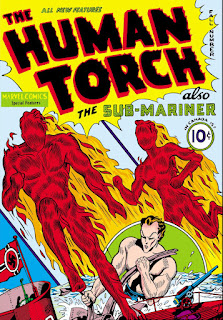
The Human Torch’s kid sidekick, Toro, debuted in Human Torch, #2. There was no issue #1.

Amazing Man debuted in Amazing Man Comics, #5, and then headlined Stars and Stripes, #2. Neither of those comic books had #1 issues, either.

Back around 1940, when those periodicals appeared, publishers tried to avoid #1 issues if they could. To newsstand vendors, the first issue of a magazine looked like an unproven product they could skip.

Fawcett published a couple of “ashcan” issues with different titles to secure its Captain Marvel copyrights and trademarks before sending Whiz Comics out into the market. Timely dropped a series after one tepid issue and retitled that magazine after its established star, the Human Torch. As for Amazing Man, the Comic Corporation of America simply started its series further along the number line than 1.

When companies canceled one series of stories and started another which seemed to have better prospects, they often changed titles but kept the numbering. Thus, the first Sub-Mariner Comics evolved into Official True Crime Cases in 1947, Amazing Mysteries in 1949, and finally Best Love, but the numbering climbed steadily from #23 to #33.

After a five-year gap, the Atlas company brought Prince Namor back in 1954, with Sub-Mariner Comics resuming at issue #33. That was neither exact nor logical, but what mattered was reminding retailers this character was an established draw.

Likewise, Daring Mystery Comics ran through #8 and was then succeeded by two series, both launching at #9: Comedy Comics in 1942 and Daring Comics in 1944. At Charlton in the late 1950s, Nyoka the Jungle Girl morphed into Space Adventures after Space Adventures lost its numbering to War at Sea.

That preference for presenting a new comics series as firmly established lasted into the succeeding decades. When Marvel shifted its monster and sci-fi magazines to superhero brands, the company changed the magazines’ titles but not their numbering. Thus, Journey into Mystery, #125, was followed by Thor, #126; Strange Tales, #168, by Doctor Strange, #169; and Tales of Suspense, #99, by Captain America, #100. Over at DC, My Greatest Adventure, #85, led into Doom Patrol, #86.

To be sure, Marvel’s other regular Tales of Suspense feature, Iron Man, got its own magazine with a #1 number and a “Big Premiere Issue” decal drawn on the cover. That presaged a new force on the comics scene—collectors who liked to own the first of something special.

In the 1980s the comic-book industry completed a huge shift from newsstands to specialty comics shops. One of the most visible effects was on the #1 issue. Collectors and resellers like that number. Once a liability, a #1 designation is now an asset. Comics publishers seize any opportunity to restart series and put out new #1s. There are, for example, four magazines designated as Nightwing, #1:
  • the first issue of a 1995 miniseries.
  • the first issue of an ongoing series started in 1996.
  • the first issue of an ongoing series started in 2011.
  • the first issue of an ongoing series started in 2016.
Increasingly new fans complain that all these #1 issues and reboots make it harder to follow the storylines and figure out what back issues to seek. But just as economic incentives made comic books designated #1 rarer in earlier decades, for now those forces push the other way.

06 August 2020

Hondo from Story to Screenplay to Novel

In a collection of Louis L’Amour stories, I came across this passage in Jon Tuska’s introduction, explaining how L’Amour’s first sale in the western genre eventually produced his first bestseller:
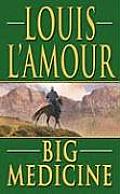
L’Amour sold his first Western short story to a slick magazine a year later, “The Gift of Cochise” in Collier’s (7/5/52). Robert Fellows and John Wayne purchased screen rights to this story from L’Amour for $4,000 and James Edward Grant, one of Wayne’s favorite screenwriters, developed a script from it, changing L’Amour’s Ches Lane to Hondo Lane. L’Amour retained the right to novelize Grant’s screenplay, which differs substantially from his short story, and he was able to get an endorsement from Wayne to be used as a blurb, stating that Hondo was the finest Western Wayne had ever read. Hondo (Fawcett Gold Medal, 1953) by Louis L’Amour was released on the same day as the film, Hondo (Warner, 1953), with a first printing of 320,000 copies.
Making the Hollywood connection was clearly important to L’Amour’s career path, which at this critical point hardly followed the model of a lone author sticking to his creative vision, unswayed by money and celebrity.

The movie Hondo couldn’t match up to George Stevens’s Shane, a masterpiece released a few months earlier. Jack Schaefer’s novel Shane is quite good as well. As with L’Amour, it was Schaefer’s first successful foray into the western genre, and it defined his career.

02 April 2020

A Picture Book for Patriots Day

A couple of years ago, I did a specialized editorial job for Disney’s publishing wing.

The company contacted me because of my research into the start of the Revolutionary War and asked me to fact-check a picture book on the topic.

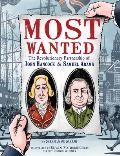
Most Wanted: The Revolutionary Partnership of John Hancock and Samuel Adams is written by Sarah Jane Marsh and illustrated by Edward Fotheringham. Earlier, they collaborated on Thomas Paine and the Dangerous Word, also from Disney.

On the day after OzCon 2018, a bunch of attendees made plans to go to Disneyland. I expected to go with them until I suddenly realized I’d had my fill of company and wanted to decompress in a library with a manuscript and my history sources. So instead of giving money to the Disney Corporation, I spent the day earning money from it with this job.

Most Wanted was published this week, just in time for the pandemic cancellation of the reenactment of the Battle of Lexington and Concord, which provides the book’s climax. That was bad luck for Marsh and Fotheringham, I thought. But as I was preparing this blog post, I realized the book had gone through another big change recently.

Powell’s was now listing Most Wanted as a Little, Brown title. Same with the Paine book. I had to reassure myself that my little story about Disney was accurate.

Then I remembered that in February the Disney Corporation sold a thousand children’s titles to Hachette, parent company of Little, Brown. Hachette was already distributing for Disney, so the supply chain is intact (except for the retail end, of course). There’s a lot of editorial and marketing shuffling going on, though.

I hope Most Wanted comes through the turmoil unscathed, the way Samuel Adams and John Hancock made it out of Lexington and to the Second Continental Congress.

24 December 2019

Life Lessons from the MGM Movie

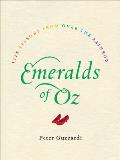
Emeralds of Oz: Life Lessons from Over the Rainbow is a short but not insubstantial riff on the MGM Wizard of Oz. The author, Peter Guzzardi, is a veteran book editor, but this is the first book published under his own name, several years in the making.

Emeralds of Oz is not based on the Oz mythos as a whole—just the famous movie. Guzzardi writes nostalgically about watching that film on television with his family but shares no fond memories of reading the Oz books as a child. He read a lot, but his taste leaned toward boys’ adventures. It takes over a dozen pages before Guzzardi even mentions L. Frank Baum, and there are only a couple of times when the book invokes parts of Baum’s story that didn’t make it into the movie.

Guzzardi isn’t just playing to the MGM movie’s larger contemporary fan base. That movie really defines his idea of Oz. At one point he recalls a difficult journey, noting he was about the same age as when Dorothy went to Oz. Context makes clear that he’s picturing the young adolescent Dorothy portrayed by Judy Garland, not the little girl drawn by W. W. Denslow.

The bulk of the book consists of lessons drawn from rewatching the MGM movie, rather like a sincere Mystery Science Theater 3000 viewing. A fair number of these homilies actually grow out of the vaudeville-style jokes mixed into the screenplay. There are longer meditations on the movie’s more explicit lessons, and of course a struggle at the end because of the screenplay’s ethical knots.

The “Emeralds of Wisdom” found in the movie tend toward pleasant reminders to keep doing what we normally do or know we should do, not deeper digs into the philosophical and ethical questions that the movie could raise. (Can one be a very good man while pretending to be a wizard?) The working title was All I Need to Know I Learned from the Wizard of Oz, with the implication that we knew it all from when we were young. Guzzardi drops mentions of the Kabbalah, mantras, Maslow’s hierarchy of needs, and other mainstays of modern self-help books. The more interesting commentary grows from his own life, however.

As an editor, Guzzardi’s specialty was crowd-pleasers, sometimes with fantastic results—Stephen Hawking’s A Brief History of Time, most notably. Emeralds of Oz grew out of that same commercial impulse. It’s designed as a gift, with glittery emerald endpapers, deckle edges, eye-catching interior design, and other hallmarks of the book as object. For people who like the movie and this sort of advice, it’s a fine package. But its strength comes from Guzzardi’s sincerity as he seeks guidance in the question, “What Would Dorothy Do?”

02 September 2019

The Rise of the “Oxford Comma“

A weekend Twitter conversation with editor Harold Underdown and picture book creator Debbie Ridpath Ohi set me digging for the origin of the phrase Oxford comma.”

That’s the currently popular term for the comma before “and” or “or” in a series of three or more, as in “Tom, Dick, or Harry.” The more established term is “serial comma.” Some people are trained to use that comma, others not to.

Punctuation in the eighteenth century was haphazard to the point of being hazardous. In contrast, the Victorians were prescriptivists, and the spread of print culture meant there was a lot to prescribe.

Around the turn of the twentieth century Horace Hart (1840-1916), controller of the Oxford University Press, issued a set of guidelines for that organization’s type compositors and proof readers. His examples show he expected to see the serial comma, but he never pointed it out or prescribed it.

Around the same time, the polymath Herbert Spencer (1820-1903) wrote to F. Howard Collins (1857-1910) about why the serial comma mattered, stating:

whether to write “black, white, and green,” with the comma after white, or to leave out the comma and write “black, white and green”—I very positively decide in favour of the first. To me the comma is of value as marking out the component elements of a thought, and where any set of components of a thought are of equal value, they should be punctuated in printing and in speech equally: Evidently therefore in this case, inasmuch as when enumerating these colours black, white, and green, the white is just as much to be emphasized as the other two, it needs the pause after it just as much as the black does.
Collins quoted Spencer in a footnote of his 1905 book Author and Printer: A Guide for Authors, Editors, Printers, Correctors of the Press, Compositors, and Typists. Collins wrote that book in part because he felt Hart’s guide didn’t have enough practical advice for authors.

The Inland Printer magazine, published in Chicago, quoted Collins’s footnote in a review of recent references for compositors. By the end of 1905, therefore, Spencer’s argument for serial commas was spreading on both sides of the Atlantic. For decades the serial comma has been a standard put forward by The Chicago Manual of Style, the main style guide of the American book publishing industry.

However, some areas of publishing resisted that rule. One was daily newspaper journalism in the US. A serial comma might be little more than a flyspeck, but if we total up all such commas in a week of newspapers, eliminating it might save a significant amount of ink, paper, and time. For decades, therefore, The Associated Press Stylebook has prescribed not using the serial comma unless it was necessary to avoid confusion.

Americans in different fields can thus train themselves either to use the serial comma or not to, in the firm belief that they’re following the most authoritative writing guide. It’s all a matter of which sort of writing they’ve undertaken.

Meanwhile, after World War 2 Britain went through a great punctuation contraction. I’ve written about this before. Double-quote marks became single-quote marks. Periods disappeared from many abbreviations. Newspapers stopped setting off titles with italics or quote marks. And the serial comma was shooed away.

Except at Oxford University Press. As at the University of Chicago Press, scholarly editors continued to see value in the clarity of the serial comma. Posthumously expanded editions of Horace Hart’s rules made that mark of punctuation a standard even as much of British publishing disagreed.

Because the serial comma had become a hallmark of the Oxford University Press, Peter Sutcliffe dubbed it the “Oxford comma” in his 1978 history of the publisher. He credited Collins with establishing the rule, but his own book established a new term for the mark.

“Oxford comma” is thus a retronym, a term coined for something that was once so standard it didn’t need a special designation (e.g., analog watch, prose novel). At one point all British publishers put commas into series of three or more. Now that most don’t, that comma is notable enough to need a name, and “Oxford comma” has a touch of class. It’s quite possible that “serial comma” is also a retronym, forced by journalism developing a different standard.

Harold and I agreed that “Oxford comma” seems like a parvenu synonym for what we’d learned as the “serial comma.” Indeed, Google Books Ngram confirms that authors used “serial comma” and “series comma” starting around 1920. For a long time the terms appeared at about the same rate, but “serial comma” took off in the late 1970s.

Not until this century did “Oxford comma” spread, perhaps pushed by international internet debate. In the Google Books Ngram database (which stops in 2008), “Oxford comma” has overtaken “series comma” and cut into the dominance of “serial comma.” It has not, however, returned to being standard punctuation in Britain.

10 December 2015

An Unknown Comics Adventure in Oz

Last week as The Wiz was about to air on television, Mark Evanier unspooled his story about being hired to script an adaptation of the 1978 movie version for DC Comics.

It’s most interesting, like a lot of the stories on Evanier’s website, for the backstage look at how comics companies work. (Which is to say, barely.) There are also some nicely crafted lines:
  • “Not far enough before the film's scheduled premiere, someone at or around DC Comics got the idea to publish a slick magazine which would be part comic book, part souvenir book for lovers of the movie. This was some time before anyone knew there wouldn't be a lot of lovers of that movie.”
  • “I had to sign all sorts of non-disclosure agreements that I would not divulge what I saw to anyone and as I recall, they didn't specify any time limit. I mean, I was supposed to write all these authorized articles about what was in the movie and here I was signing vows that I would never in a million years divulge to anyone what was in the movie. So I may be violating those agreements right now.”
  • “I forget what they were going to charge for it but it struck me as a bit too pricey. It also struck me as not my problem.”
  • “By far, most of my time went into going up to Universal to see a more-complete version of the movie and then to see an even-more-complete version. I saw it three times but I never saw the final release cut. I felt that the film got better as the holes were filled in…which is not to say I thought it ever got to be really good. The merits it did have were (a) a few of the actors’ performances and (b) some truly dazzling dance numbers. And of course, it did dawn on me that our adaptation would contain neither.”
For the stories of which artist should work on this project, how the 1976 Copyright Act affected things, why no one has ever heard of this comic, and how its obscurity might have helped Evanier and artist Dan Spiegle’s careers, check out Evanier’s recollection.

19 November 2015

When Nate Wright Met Greg Heffley

Yesterday’s post left aspiring comic-strip artist Jeff Kinney working at an online “edutainment” company while corresponding with full-time comic-strip artist Lincoln Peirce.

As I described back here, Kinney’s employer saw some potential in a middle-grade novel in diary form that he was working on. At his boss’s suggestion, he added more illustrations and shared the novel day by day on the company’s website.

That story found a young online audience quickly, a book deal only after a couple of years. That was the start of the huge Diary of a Wimpy Kid phenomenon, now stronger than ever.

Kinney continued to work at that company until relatively recently, overseeing the launch of Poptropica. That online videogame platform is built around “islands,” each having its own game and style. Kinney asked his friend Peirce if he was interested in licensing the Big Nate comic strip to the site.

In 2010 the Washington Post reported what happened:
On Valentine's Day last year, Poptropica launched "Big Nate Island," the interactive world of sixth-grader Nate Wright and his adventures as a "self-described genius" and "all-time record-holder for detentions in school history."

Kids went wild. "All I remember is that Jeff called me after the first 48 hours and said: 'You crashed the server,' " Peirce recalls. "It was their biggest launch by 20 percent."

The sudden online popularity of "Big Nate" led to Peirce's long-sought major book deal, with no less than HarperCollins. "Big Nate: In a Class by Himself" just spent 11 straight weeks on the New York Times bestseller list.
That first Big Nate book series is one of many modeled on Diary of a Wimpy Kid: prose with lots of line art, paper-over-board covers, humorous slice-of-life stories, and so on. Its success prompted the comic strip’s syndicate to finally issue Big Nate comics collections. Meaning that after years of having no books and a daily deadline, Lincoln Peirce had two fast-selling book series and an audience beyond newsprint.

And all because he’d been nice enough to write back to an aspiring young college artist. It’s almost as if this publishing story has a moral.

20 November 2014

Publishers as Venture Capitalists?

Another of Paul Levitz’s observations about the publishing industry last week was that book publishers have usually operated like bankers. They extend interest-free loans to authors in the form of advances, to be paid back (they hope) in royalties over succeeding years.

And like bankers, those companies are quicker to loan money to people who don’t need it: authors who are already earning a fine living off past books or in other fields. New or unknown authors, especially in fiction, have to do most of their work before they see any money, and then they don’t see much.

(That of course reflects that publishing advances aren’t exactly like loans. They’re also bids on properties, and in any business what looks more like a sure thing commands a higher price than an unproven quantity.)

Levitz suggested that publishers will have to become more like venture-capital firms, investing earlier in authors’ careers and projects. And, presumably, offering more guidance and control over their creations, as venture capitalists watch over the start-ups they invest in. Hollywood studios work closer to that model, paying earlier in the process to develop projects with a larger payoff.

I see a couple of problems for authors with that model. First, Hollywood studios are notorious for the number of projects they abandon: scripts in turnaround, TV pilots shot and never aired, and so on. Likewise, venture capitalists know that many of their investments won’t pay off, and they pull the plug a lot. Right now authors who get as far as a publishing contract are usually sure that their books will eventually see print, even if they’re marketed even more weakly than usual.

Hollywood studios are also notorious for getting involved in the creative process with script notes, personnel ultimatums, recutting, and so on. All to make the final stories more entertaining, of course. But does that work?

The screenwriter and novelist William Goldman famously wrote in Adventures in the Screen Trade:
Nobody knows anything. . . . Not one person in the entire motion picture field knows for a certainty what’s going to work. Every time out it’s a guess and, if you’re lucky, an educated one.
What’s more, writing a book is a far less collaborative process than making a movie, or creating a tech company. How much solid advice can publishers offer to authors early in the creative processs? How many experts can they bring on board, or how many systems can they put in place, when the whole enterprise consists of one person and one keyboard?

27 October 2014

When Harry Hardin Met Anna

Anna Todd’s After is taking the English-language publishing industry’s exploration of fanfiction to the edge of legality.

Originally published on Wattpad as a series of erotic adventures with Harry Styles of the pop group One Direction, the 2,500-page saga is being republished by Simon & Schuster as a series of erotic adventures with…a college boy named Hardin.

According to the Washington Post, Todd first wanted to keep using the names of the One Direction singers:
“I felt like, ‘Are you sure we have to do this? Can’t we just give Harry Styles all the money?’” Todd said in an interview.
But the S&S legal team rightly said no. The singers have whatever rights to control their public images that they haven’t already signed away to Simon Cowell.

What’s more, Todd’s original text might be considered libelous. Though Harry Styles is “the cute one” in One Direction, in her story the male lead is a boozing, lecherous bad boy—something a lot of Styles’s fans have resented.

The New York Times reported some additional changes for the print edition: “leaner punctuation and some extra content — mostly added and extended sex scenes.” So, given One Direction’s popularity with teen-aged girls, there’s a third minefield: potential complaints about selling pornography to minors.

Meanwhile, Todd’s original files remain intact on Wattpad for free instead of $64. This is quite an publishing experiment to watch.

02 October 2014

No Need to Complicate Things

Sarah Lyall of the New York Times noted some oddities in her advance reading copy of Moriarty, a latter-day Sherlock Holmes novel by Anthony Horowitz:
In the reader’s edition, some copies of which were sent to The New York Times, “Moriarty’s” narrator, an American detective named Frederick Chase, is laying out the background to the story – how Holmes and Moriarty came to be at Reichenbach Falls and what is believed to have happened next. All of a sudden he switches to capitals. “NO NEED TO COMPLICATE THINGS HERE, I THINK,” the text announces. “WHAT I’VE WRITTEN IS BROADLY TRUE.”

Can the narrator be offering some meta-commentary on his own text? At first it seems so. But then it happens again. In a spot where Chase and a Scotland Yard inspector have found an important clue that seems to be an excerpt from a previous Holmes story written by Dr. Watson, things suddenly veer off-piste again. “IT MAKES NO SENSE FOR FREDERICK CHASE TO HAVE READ THE SIGN OF FOUR,” the text declares.

There are at least six of these capitalized interjections, and sadly, they turn out to have nothing to do with anything so exciting as postmodern cleverness. They are instead Mr. Horowitz’s notes to a copy editor or, as Mr. Horowitz’s agent in London, Jonathan Lloyd, said, some “mild author reaction to some copy-editing points.”
It seem that the book’s British publisher sent the wrong file to its American counterpart, and folks in the US didn’t catch those interjections while putting that file into proof form.

None of Horowitz’s comments, Lyall reports, is rude, profane, or otherwise embarrassing—and authors responding to copyediting can become heated. These are simply the sort of “stet” instructions that every published author has sent back at some point. Such copyedits and responses to them used to be confined to colored pencil on paper, but now they’re in the form of electrons like the rest of a manuscript, and it’s harder to keep them sorted out.

Those capitalized comments also indicate that Horowitz doesn’t use or trust “Track Changes” and “Comments” in a Word document, and I’m fully in sympathy with him on that.

18 September 2014

Not a Perfectly Normal Route to Publication

Publishers Weekly’s twenty-year retrospective on Robie Harris and Michael Emberley’s It’s Perfectly Normal details how unusual its route to print was.

The book came out of Harris’s conversation with an editor about a book on sexual health for middle-graders, but that editor ultimately chose not to acquire the book.

Harris then did what new authors are specifically told not to do: she partnered with an illustrator, albeit one with a Caldecott-winning family heritage:
With the idea firmly planted, Harris decided she wanted to write a full manuscript before submitting it to any publishers. “It’s complicated and complex, and it’s loaded material for many people,” she explains. It was at this early stage that she called on Michael Emberley, a fellow then-Bostonian who she “knew a little bit. I told him I wanted to talk with him about working on a book about sex and sexual health, and he said, ‘I’ll be right over,’ ” she recalls. When they were able to collaborate on a handful of illustrations that were appealing to kids and also provided information, “I knew we were a team,” says Harris.

The pair submitted their manuscript to several houses with the caveat that the project not be significantly altered.
And that’s another thing not to do, or at least to be aware that such insistence comes at a cost.

In Harris and Emberley‘s case, the press most interested in the project as is was a new and largely unproven company, Candlewick Press. Perhaps that publisher’s European roots—as the American wing of the U.K.’s Walker Books—made it more open to the book’s frank approach.

20 August 2014

The Syncretism of DC Comics

In religion, the term syncretism refers to the amalgamation of different religious traditions, or possibly the absorption of one faith’s traditions into another. It’s how, for example, the mythology of Greek gods expanded to incorporate other cultures’ deities, either as aspects of that established pantheon or as new members of it.

Some of the pagan traditions that early Christianity syncretically absorbed in its spread across Europe still define how we celebrate Easter and Christmas. Christian missionaries tended to build churches on ground that previous religions already considered sacred, which is why we have the French locale of Saint-Michel-Mont-Mercure (Saint Michael/Mount Mercury) and an English cathedral right beside the hot springs at Bath.

Of the two major US publishers of superhero comics, Marvel has resisted syncretism but DC has grown through it. In nearly every decade since it was founded, DC has absorbed a publishing competitor, not just taking over its past publications but eventually bringing its characters into the “DC Universe.”

Indeed, this pattern was built into the company’s operations soon after it introduced the first comics superhero, Superman. What we now call “Golden Age DC” consisted of three comics companies with overlapping ownership: National Allied Publications, Detective Comics, and and All-American Publications. The last operated out of separate offices, but in mid-1940 its heroes started appearing alongside some of the other companies’ in All Star Comics. In 1946 National/DC bought out All-American, obtaining complete ownership of the Flash, Wonder Woman, the Spectre, the Sandman, Hawkman, and other trademarks.

Superhero stories went into a decline in the following decade, but DC was able to maintain sales of Superman, Batman and Robin, Wonder Woman, and a few backup characters. Other companies stopped publishing in the genre, or publishing altogether. In some cases, DC stepped in to buy their trademarks.

Eventually, superhero stories became popular again, along with the idea that all of a company’s heroes operated in the same universe and could meet, fight, and then go after common foes. In 1961 editor Julius Schwartz and writer Gardner Fox created parallel universes, which gave DC room for all the heroes it had accumulated over the years.

At first DC editors confined each parent company’s legacy mostly to one version of Earth. Thus, Fawcett Comics’s Captain Marvel and his family and villains were on Earth-S or Earth-5; Quality Comics’s Freedom Fighters were on Earth-X. But then the Crisis on Infinite Earths miniseries of 1985-86 ended with all those different realities being amalgamated into one common history and reality—full syncretism at last!

Here’s DC’s acquisition timeline and how it incorporated its new intellectual properties:
  • Quality Comics acquired 1956, Blackhawk kept in publication, Plastic Man syncretized in 1966, Quality’s other superheroes syncretized in 1973.
  • Fawcett Comics’s Captain Marvel and family licensed and syncretized in 1972, acquired outright in 1991.
  • Charlton Comics’s “action heroes” acquired in 1983, syncretized in 1986.
  • Milestone Comics partnered from its start in 1993, Static and others syncretized starting in 2009.
  • Wildstorm Comics acquired in 1999, some characters syncretized in 2011.
In 2006 DC tried splitting up its heroes into separate universes again, with fifty-two realities promised (though not all explored). The “New 52” of 2011 cut back on that scheme, but there are at least a handful of alternate universes in the company’s comics today, and since characters can (with effort) cross over, it’s all one reality.

TOMORROW: The problems with superhero syncretism.

22 March 2014

Dummy Type

Book designers, especially those packaging books that haven’t been written yet, often use “dummy type” to show how words will look on the page. Back when I was in publishing, American designers tended to use English text, but British designers used a passage that began:

Lorem ipsum dolor sit amet, consectetur adipiscing elit. Nam hendrerit nisi sed sollicitudin pellentesque. Nunc posuere purus rhoncus pulvinar aliquam. Ut aliquet tristique nisl vitae volutpat. Nulla aliquet porttitor venenatis.
I remember my first department head saying how when she’d started in the business she’d always been impressed by design samples from Britain because they looked so classy.

But it turns out that this isn’t real Latin—it’s a jumble of Latin-like words and phrases reminiscent of Cicero and established in the 1600s. The London Review of Books just published a Cambridge graduate student’s translation of the whole paragraph, designed to recreate the feeling of reading the original as if it were meaningful. It begins:
Rrow itself, let it be sorrow; let him love it; let him pursue it, ishing for its acquisitiendum. Because he will ab hold, uniess but through concer, and also of those who resist. Now a pure snore disturbeded sum dust. He ejjnoyes, in order that somewon, also with a severe one, unless of life. May a cusstums offficer somewon nothing of a poison-filled.
Equally enjoyable, the British scholar who produced that prose is named Jaspreet Singh Boparai, showing how bad Latin and bad English both became worldwide languages.

18 February 2014

Illustrating Picture Books versus Drawing Comics

Toward the end of his conversation with Skottie Young on the Stuff Said podcast, artist Gregg Schigiel asks about Young’s experience illustrating his first picture book, Fortunately, the Milk by Neil Gaiman. (A lot of Schigiel’s interviews seem to be digging for career counseling, but that’s another story.)

Young sounds almost amazed as he reports how much easier illustrating a picture book was compared to drawing a comic. Jef Czekaj said the same thing on a panel I moderated a while back. I wouldn’t be surprised if other artists who’ve worked in both fields feel the same way. That’s not to say picture-book illustration is easy; but relatively it seems to be a more pleasant experience.

For one thing, picture books don’t require so many pictures. A 32-page picture book might require 20 separate images, which could fill as few as four pages of standard comics. True, those images have to be bigger and more detailed so that they reward multiple readings. On the other hand, they don’t have to be so tightly squeezed together on a page with captions and word balloons impinging on them.

More important, however, is how picture-book publishers treat artists. Editors and art directors choose an artist based on his or her past work and reputation, and they see their job as assisting the writer’s and artist’s visions come to fruition, not to move the corporation’s larger story along. They don’t try to exercise so much editorial control. They set more generous deadlines.

Schigiel’s book experience has come with licensed titles (i.e., those that are part of a corporation’s larger story). So he starts out asking Young what his Art Director told him. But Art Directors for picture books are far more hands-off than people with the same title in other parts of publishing. Young found himself surprised at how few “notes” he received back on his sketches.

The biggest difference between the mainstream book business and other forms of publishing is visible on the covers. On a book, the author’s and illustrator’s names are almost always the biggest; on Fortunately, the Milk, Gaiman’s name is huge, Young’s rather small. But the publisher’s name is usually smallest of all, slipped onto the bottom of the spine and the back. In a comic book or other magazine, the magazine’s name is the biggest; its employees are in charge, and its intellectual property and reputation is what mainly drives the sales.

30 December 2013

Profit and Loss

Last week the New York Times published book editor Gerald Howard’s essay reminiscing about editorial tasks in the early 1980s:

I had the idea that we should reissue two early novels by the fine writer Alice Adams. In order to clear the sum of money necessary to do so, I had to generate, by myself, calculator and production cost sheets in hand, a profit-and-loss statement, or P. & L., which would then be signed off on by various departments. My last hurdle in executing this modest financial transaction of maybe $7,500 was to secure the initials of our chief financial officer. A numbers guy. Not much of a reader.

Like all publishing P. & L.’s, ours factored in typesetting, cover art and printing costs, marketing, overhead, the cost of money and the revenue from projected sales and subsidiary rights to spit out a percentage figure on the bottom line that indicated the likely return on investment. (When I first was confronted with one of these forms, I thought, so that’s what a “bottom line” is. Interesting.) We were theoretically required at that time to have our P. & L.’s yield a return of at least 8 percent, and I had become adept in ways to make or exceed that number. You could shave on the cover art. You could shave on marketing and advertising. You could basically lie about projected sales and hope no one called you on it. The techniques I had developed in college to make my ham-handed chem lab experiments yield the proper results found a practical new use.

So there I was in our C.F.O.’s office with a P. & L. that just eked out a 7 percent return. He looked at that piece of paper dubiously. He looked at me dubiously. I made some weak noises about literary excellence, backlist sales, commitment to authors. He continued to look at me dubiously. Then, with that wry and sad expression with which financial people have regarded liberal arts people since at least the invention of movable type and perhaps even written language, he signed off on my shortfallen P. & L. and said to me, “You know, we could make more money by just putting this advance into a certificate of deposit.”

I produced the properly crestfallen face because I knew he was right. Inflation was rampant and C.D.’s were paying 10 percent per annum or more. What a drag I was on the corporation. But I grabbed the P. & L. before he could have second thoughts, thanked him and backed out of his office.
Note, however, that the CFO did sign off on the investment.

I interviewed for a job with Gerry Howard a couple of years after this must have taken place. One of my first tasks on the editorial job I did get was running a P&L on one of the two desktop computers the Editorial Department then owned. I guess I should be pleased I wasn’t doing the calculations by hand.

12 December 2013

The Remains

Rebecca Mead and George Prochnik’s essay “Book-Club Guide to a Remaindered Book” has got to be the least-sympathetic-to-authors article on publishing that I’ve read for a long time. Even if it’s mercilessly accurate:

1. When the author’s agent initially asked the author who he thought the readers of his proposed book would be and he defensively replied, “Everyone,” do you think the author should have immediately realized that there is a thin line between everyone and no one?

2. Did the agent’s pitch that the proposed book “brilliantly bridges genres” give the author license that caused him to, in the later words of his agent, “miss the boat” completely, by failing to inhabit any genre whatsoever?

3. Did the negligible advance justify the author’s contention that he could “write what I liked,” without regard to the book’s marketability, plausibility, or legibility?

4. Why do you think the agent stopped returning the author’s phone calls?
I mean damn.

15 November 2013

Lindsey Graham and the Unreliable Contractor

This fall Threshold Editions, an imprint of Simon & Schuster with an explicit politically conservative mandate, released The Embassy House: The Explosive Eyewitness Account of the Libyan Embassy Siege by the Soldier Who Was There, credited to “Sgt. Morgan Jones” and a writer named Damien Lewis.

As The Week reported:
Davies talked about scaling the 12-foot walls of the Embassy during the attack, hitting an al Qaeda member in the head with the butt of his rifle, and seeing J. Christopher Stevens, the U.S. ambassador to Libya, dead in the hospital.
Sounds like a good adventure novel, doesn’t it?

That quote refers to “Davies” because it turns out there was no “Morgan Jones”—that was the pseudonym of a British contractor named Dylan Davies. There was also no “Libyan Embassy Siege”—militants in Benghazi, Libya, attacked a US consulate and a larger CIA compound it was providing cover for, not an embassy. And Davies/Jones wasn’t “There,” despite offering an “Explosive Eyewitness Account” that supported stories that the people on the American right have been telling each other for years.

On 27 October, Sixty Minutes aired a segment interviewing Davies as Jones. The television show neglected to note that its network and Simon & Schuster are part of the same corporation—i.e., that the segment was part of the book’s publicity push. The McClatchy news service has since found other significant omissions and exaggerations in the televised piece. But the bulk of the story was the interview with Davies.

The next day, Sen. Lindsey Graham (R–S.C.) threatened to hold up all of President Barack Obama’s appointments, even for judgeships and the chairman of the Federal Reserve, unless there were new hearings about the events in Libya. He went on CNN, and the transcript shows that in making his case he referred twice to “the 60 Minutes piece” and “the 60 Minutes Story.”

Within days, however, Dylan Davies’s credibility was in tatters. He had given one story to his employer and the FBI shortly after the attacks. He then sold another story to the CBS corporation. (In between he apparently asked FOX for money for an interview.) When it became clear that Davies had changed his tale, the TV show apologized for its story. The publisher canceled the book.

How did that affect Lindsey Graham’s position? Not at all. “I never asked for the British contractor [as a hearing witness],” he claimed. “I didn't know he existed.” He made that claim despite having referred at least twice to the television story built around that man’s lies.

Media Matters noted other members of Congress who had touted the Sixty Minutes story: Sen. Kelly Ayotte (R–N.H.), Rep. Jason Chaffetz (R–Utah), and Rep. Frank Wolf (R–Va.). They too remain unbowed by not having the facts they thought they had. Wolf announced, “Our position on Benghazi hasn't changed.”

Significantly new facts should change how people think—but not when that thinking wasn’t based on facts to begin with. All along the American right wing’s fixation on Benghazi has been a symptom of OIP Derangement Syndrome. It’s politicized and interfered with a necessary look at American foreign policy and diplomatic security. Dylan Davies sensed an opportunity, and editors and politicians seized his bait.

If Sen. Graham must have hearings, they should cover questions like these:
  • What did he, Sen. John McCain (R–Ariz.), and Sen. Joseph Lieberman (I–Conn.) tell Muammar Qaddafi and his son when they met with him in 2009? The official diplomatic cable about that meeting, released through Wikileaks, contradicts McCain’s account, and Graham’s is somewhere in the middle. It would be good to clear up that discrepancy.
  • What’s the full story behind Dylan Davies’s fiction? When did he change his story to conform to right-wing talking points, and did his coauthor or editors encounter any reasons for doubt? How did Threshold Editions get time on Sixty Minutes, and how did politicians like Ayotte and Chafetz learn about the piece beforehand in order to promote it?
  • How do Graham, McCain, and their Republican colleagues justify blackballing UN Ambassador Susan Rice from the post of Secretary of State because she’d delivered mistaken talking-points about Benghazi despite supporting UN Ambassador Condoleezza Rice for the same post after she’d made false statements about Iraq?
  • In June 2011 Graham was saying, “The War Powers Act is unconstitutional, not worth the paper it’s written on. It’s an infringement on the power of the commander in chief.” He took a similar stance during the discussion of Syria. With opponents in his upcoming primary, will he propose to repeal that law?

24 October 2013

Before “New Media Day” Gets Old

SCBWI New England’s “New Media Day” at the Eric Carle Museum of Picture Book Art made clear that publishing has entered a period of hybridization, combining both print and digital books published both by companies and by authors.

Despite all the stories and insights, though, my biggest takeaway was that the website Scribd.com likes to be pronounced with a short I.

Here I am with Mary Jane Begin, Gail Gauthier, and Emilie Boon, who were on a panel I moderated, and (second from left) artist Ruth Sanderson.

I can’t see why people keep asking me to moderate panels; I’m really quite shy and retiring.