Showing posts with label doing the math. Show all posts

11 July 2026

The Facts Behind the First News Stories about an “Our Gang Curse”

My last two postings have posited that the long-lived public discussion of an “Our Gang curse” started with a couple of wire-service articles in early 1959, spurred by the deaths of Carl “Alfalfa” Switzer and Don “Fats” Law.

Carl Switzer had indeed been a star of many Our Gang shorts. He had a bad death, shot in the groin in a fight over $50 for training a hunting dog. He was only thirty-one. Yes, that can sound cursed.

But Don Law, who “died of an intestinal disorder” a couple of weeks later, was never in the Our Gang movies, much less in twenty of them as his obituary claimed. That series never had a character named “Fats.” Law’s death got nationwide attention because it came so soon after Switzer’s, and that concatenation launched the “Our Gang curse.” Yet that coverage was based on a lie.

The long May 1959 article by Rick Du Brow about the Our Gang alumni as a “pathetic group of Hollywood ‘has-beens’” rested on similar misinformation. It offered a list of five Our Gang alumni who had “died in the past seven years” alone. Two were Switzer and Law, so right away the pattern was weaker than presented.

That list of recent deaths included the actress Helen Parrish, but she was never in the Our Gang series. Parrish had been a child actress in the 1920s, appearing in one Smitty short with Donald Haines, who was later part of the gang, but that’s as close as she got.

Clifton “Bobby” Young did appear in a bunch of Our Gang shorts in the late 1920s and early 1930s before his adult acting career. He died in a fire in 1951, and thus not in “the past seven years.”

Billy “Froggy” Laughlin (not McLaughlin, as Du Brow had it) was a regular in the late Our Gang shorts from MGM. He died at age sixteen after a motor scooter crash in 1948. Again, that wasn’t in the preceding seven years. Du Brow obviously stretched for examples to produce the illusion of a trend.

Du Brow also mistakenly listed Eddie Bracken and Nanette Fabray as Our Gang alumni. He wrote that embezzler Lea Artye Folz had been in the gang; she had small roles in three shorts but more appearances in rival series and features.

Du Brow said the Rev. Ben Griffith had played Mickey McGuire in Our Gang; that was the title character in a rival series, played by Mickey Rooney and Marvin Stephens. Griffith did claim to have played that part in Our Gang as early as 1950 and as late as his 1988 autobiography, but I don’t see confirmation anywhere.

I also mentioned a Miami News article from early 1959 listing four locals as Our Gang regulars. Only one was: Shirley Jean Rickert, who made six appearances in 1931 followed by an equal number of Mickey McGuire shorts in 1933–34. Geraldine Fay and Sy Rich had no discernible link to Hollywood. Jack Ray made a fleeting appearance in one Our Gang movie in 1926, but he never played “Freckles” in the series as the Miami story said. (Ray did, however, spend most of his childhood appearing in theaters across the US, Canada, and western Europe claiming to have played “Freckles” in Our Gang. I’m still collecting information on him.)

Thus, in 1959 a lot of people were telling false stories about being in Our Gang as children, possibly because of work on other series, possibly out of wishfulness. Yet Du Brow was actually in touch with Fern Carter, who knew exactly which kids she had taught. And he still got a lot of names wrong.

Bob Thomas’s earlier Associated Press article started with “the legend that the famed little rascals have been ill-fated,” but it was actually an interview with producer Hal Roach. He knocked down the idea of a jinx, saying that “176 kids” had appeared in his series, and many had “turned into happy respected citizens, including doctors and lawyers here in Los Angeles.” (Early Our Gang player Jack Davis was indeed a doctor. I can’t think of an alumnus who became a lawyer, though.)

Some newspapers therefore gave Thomas’s AP dispatch headlines like “‘Our Gang’ Normal Group of Kids—Roach” (Morris Herald-News, 17 February) and “Roach Denies Ill Fate Plagues ‘Our Gang’” (Duluth News-Tribune, 18 February). But that fact-based argument didn’t have the appeal of the “Our Gang curse.”

In his UPI story, Du Brow cited an even higher number of kids in the series—“more than 300 youngsters.” But then he ignored the consequences of that math. He wrote that four highly successful performers were “just a fraction” of the total while five deaths (which included two people with no part in the series) were representative of the larger group.

Clearly those reporters sensed that the public would lap up the idea of an “Our Gang curse.” And the longevity of that idea—bolstered, to be sure, by some sensational deaths after 1959—shows that their sense was right.

[The photo above shows Fern Carter teaching arithmetic to Pete the Pup, Allen “Farina” Hoskins, and Jean Darling during a publicity tour in 1928.]

11 August 2019

Robin and Gender Shifts in American Naming

Last year the Life of Words blog discussed how over time many American names have flipped from being predominantly male to predominantly female—and, in a few cases such as Stacey and Lacey, flipped back.

Here’s the prevalence graph for the name Robin, based on US Census and Social Security data.

As you can see, until 1850 basically all Americans named Robin were male. Gradually more women named Robin appeared and then around 1930 there was a sudden shift and Robin became a predominantly, though not exclusively, female name.

The character Robin made his debut in 1940 shortly after that shift to a female name. However, the men who created him—Jerry Robinson with Bill Finger and Bob Kane—came from a generation that knew Robin even more predominantly as a male name.

In 1970 the trend of Robin being a female name in America peaked. As of 2000, we were heading back to the range in which the shift happened back around 1930. Was there another sudden change?

20 November 2015

Weighing the Woes of White Americans

Janell Ross in the Washington Post this week:

In a new poll released by the Public Religion Research Institute (PRRI) on Tuesday [PDF download], a whopping 43 percent of Americans told researchers that discrimination against whites has become as large a problem as discrimination against blacks and other minority groups.
To be precise, half of all white Americans feel that way. Less than 30% of blacks and Hispanics agree. Ross continues:
White Americans feel put-upon and mistreated — and large shares of non-white Americans do not seem to have any knowledge of the challenges that white Americans say they face.

Of course, there are always aspects of other people's lives that we do not or cannot understand. But the sheer size of the racial/ethnic gap concerning perceived discrimination against white Americans is particularly interesting because there is very little in the way of objective evidence of this discrimination and the disadvantage that typically follows. On just about every measure of social or economic well-being, white Americans fare better than any other group.

That's true of housing and neighborhood quality and homeownership. That's true of overall health, health insurance coverage rates, quality of health care received, life expectancy and infant mortality. That's true when it comes to median household earnings, wealth (assets minus debt), retirement savings and even who has a bank account. . . .

White Americans are, as a group, born healthier and live longer and get better health care, jobs, education and housing in the years in between. Yet half of white Americans believe that discrimination against them is as big a problem in their lives as it is for those of people of color. But there's just no evidence to back that up.

What does exist is ample evidence of continued-but-shrinking racial and ethnic inequality in many arenas and utter stagnation and backsliding in others. Basically, what's changed since the 1950s — outside of technological innovations such as this here Internet — is that white Americans no longer have an exclusive or almost-exclusive hold on the best housing, jobs, schools or the ballot box.
The question on the latest PRRI American Values Survey was “Just your impression, in the United States today, is there a lot of discrimination against any of the following groups or not?”

In past polls, the most comparable question has been whether respondents agree with the statement “We have gone too far in pushing equal rights in this country.” Agreement hovered between 38% and 49% from 1987 to 2012. So the perception that, despite empirical evidence, whites suffer from discrimination as much or more than non-whites doesn’t appear to be new, nor growing, in that period.

The new survey also notes that the perception of anti-white discrimination among whites is much higher within the “working class” (60%) than among people with college degrees (36%). A recent analysis of American mortality rates from 1999 to 2013 by Anne Case and Angus Deaton also found that educational difference was a significant dividing line among middle-aged white non-Hispanic Americans. People who had any college education died at a slightly smaller rate over that period. But mortality for people who had no college had gone up so much as to produce a strikingly higher mortality rate for the entire age/race cohort.

Thus, white Americans without college education might well be justified in perceiving a more difficult life than they expected. But they’re more likely to blame that on “discrimination” against whites rather than, say, a changing economy.

07 November 2014

Aggregation

This is a snapshot from Talking Points Memo, my favorite site for political news. It shows the aggregation of several polls over recent weeks about Americans’ attitudes toward our two main political parties.

As you can see, Americans thought much worse of the Republican Party, and yet favored its congressional candidates by a slight edge. Which is what we saw in the mid-term election this week. And enough slight edges across the country’s competitive districts turn into a strong run of victories for those unfavored Republicans.

But as to how voters can reconcile those attitudes in their minds, that’s a mystery. Part of the answer is turnout. Part is that we the electorate are almost evenly divided, making slight edges more crucial—this is the fourth of the last five election cycles that swung sharply against the previous vote for Congress.

And part might be underlying OIP Derangement Syndrome, in which some voters, sensing a problem in the national government, blame President Barack Obama despite agreeing in the abstract with his policies and methods.

31 October 2014

The Cloture Wars

Earlier this week Farah Stockman wrote in the Boston Globe about presidential nominations in recent years:
To see how contentious nominations have become, count motions for “cloture,” which forces a vote when two sides can’t agree to move forward. From 1949 to 1968, there wasn’t a single nominee that needed a cloture motion. From 1967 to 1992, there were eleven. During Bill Clinton’s presidency, 22 nominees needed one. Under George W. Bush, 38 did. But under President Obama, that number has exploded, to a stunning 178, and counting.
That’s illustrated above in the graphic by Olivia Hall that accompanied Stockman’s essay.

What’s more, the pattern through the last three decades of the 20th century was that the number of cloture votes rose when the opposition party was about to take control of the Congress, as in 1986 and 1994. In those years the minority party, sensing better opportunities ahead, stalled on nominations while the majority party tried to preserve them.

The current century shows two new patterns. First, cloture motions became more common from 2002 to 2006 during the Bush-Cheney presidency, though they slumped in the last two years when Democrats controlled the Senate. Second, the need for cloture votes returned immediately in 2009 after the election of President Obama, and then started to rise exponentially in 2012.

16 August 2014

What Do Those Challenges to The Giver Mean?

Slate just ran Ben Blatt’s article with the incendiary headline “The Giver Banned” and the more temperate subtitle “Why Do So Many Parents Try to Remove Lois Lowry’s Book?”

Blatt wrote:
Since its release in 1993, The Giver has been one of the most controversial books in American schools. Between 1990 and 1999, The Giver ranked 11th on the list of the books most frequently requested for removal. In the 2000s it was 23rd, just two spots below To Kill a Mockingbird. This Friday marks the release of the first film adaptation of The Giver, which is likely to renew fandom, as well as opposition, to the dystopian young adult novel.
That analysis is lacking several crucial variables:
  • just how many schools and school libraries have The Giver as a standard title. The more schools use a book, especially as assigned reading for a whole class, the more likely it is to prompt challenges, but the rate of those challenges could still be much lower than for other titles.
  • how much difference there is between the top of the list and 23rd.
The article states that, in contrast to most other controversial titles, and especially the most challenged, “The most frequently cited reasons to challenge The Giver have been ‘Violence’ and claims that the book is ‘Unsuited to [the] Age Group’—or in other words that it’s too dark for children.” That point is accompanied by a chart showing how types of challenges to The Giver compared to the ALA’s total database. But the chart offers no “n value”—no statement of how many challenges were counted.

And that complaint brings up another missing variable: what grades the complaints were coming from. To a parent “Unsuited to Age Group” doesn’t mean too dark for all children but too dark for the particular children assigned to read it.

And let’s face it, The Giver is a dark book, regardless of what age its readers are. That’s kind of the point.

18 April 2014

Captain America and the Threat of OIP Derangement Syndrome

As I noted yesterday, some right-wing media organizations responded to The Lego Movie with complaints that it was anti-business. (Others, to be sure, saw it as simply anti-government, and they were fine with that. Critics on the left saw it as about the danger to people of business and government intertwining, as they often warn. In fact, it’s about commercialism taking over entertainment.)

What about the other big superhero adventure of the spring, Captain America: The Winter Soldier? The directors of that film, Joe and Anthony Russo, said months ago that they were modeling it on the political thrillers of the 1970s, with a few over-the-top action sequences thrown in. They cast Robert Redford as a high official because his filmography includes Three Days of the Condor and All the President’s Men. They even dressed him in a 1970s-style three-piece suit, and he still looks good.

Both Christian Toto at Breitbart on the right and Asawin Suebsaeng at Mother Jones on the left picked up on that anti-authority theme by saying the film wouldn’t be screened at the White House soon. Nor, they could have added on the same speculative grounds, in Congress, the FISA court, the Pentagon, or other pillars of the political center and the security establishment.

But John Nolte at the Breitbart site went off the deep end, calling the movie “a blatant $175 million ‘screw you’ to Barack Obama's surveillance state.” One might be concerned about Nolte watching a PG-13 movie without a parent since he doesn’t appear to remember anything earlier than six years ago. But his response is just a symptom of OIP Derangement Syndrome.

The big danger in Captain America: The Winter Soldier is that a government agency wants to launch worldwide preemptive strikes against what it sees as threats to America or democracy. Preemptive action was the core of the “Bush Doctrine,” which Nolte cheered on his old website, now left to drift into the aether.

The “surveillance state” that Nolte blames on President Obama was in fact built by the Bush-Cheney administration. Nolte really should know that because he’s written, for example, about the Washington Post’s coverage of the NSA’s PRISM program, which clearly stated that program was established in 2007. As soon as the Obama administration came into office in 2009, it started to reveal more about the programs it inherited and to put more limits on them.

The disclosures of Bradley/Chelsea Manning and Edward Snowden show that there’s much more we the people have to know. Nolte offered notable praise for Glenn Greenwald for helping to share the Snowden files. Of course, that happened during the Obama administration.

Based on Nolte’s stated support for some of the most egregious Bush-Cheney policies, such as waterboarding, and his decision to become a right-wing media voice (at first pseudonymous, then openly) because he disliked opposition to the Iraq invasion, I can’t help but think that his position on security leaks would have been quite different under a right-wing President.

Likewise, if Captain America: The Winter Soldier had been released under an administration he supported, Nolte would have complained that it was Hollywood’s usual attack on anything good and conservative. That’s been his professional hobbyhorse for years.

In making the security state its major threat, Winter Soldier echoes a common theme of the American left—a theme the American right takes up only when it’s not in power.

TOMORROW: And does the movie really tackle that threat?

10 April 2014

Where Is Ukraine? My Kraine Was Here Just a Minute Ago.

Captcha and similar programs are designed to make commenters prove that they’re real people by interpreting type that’s hard for robots to read.

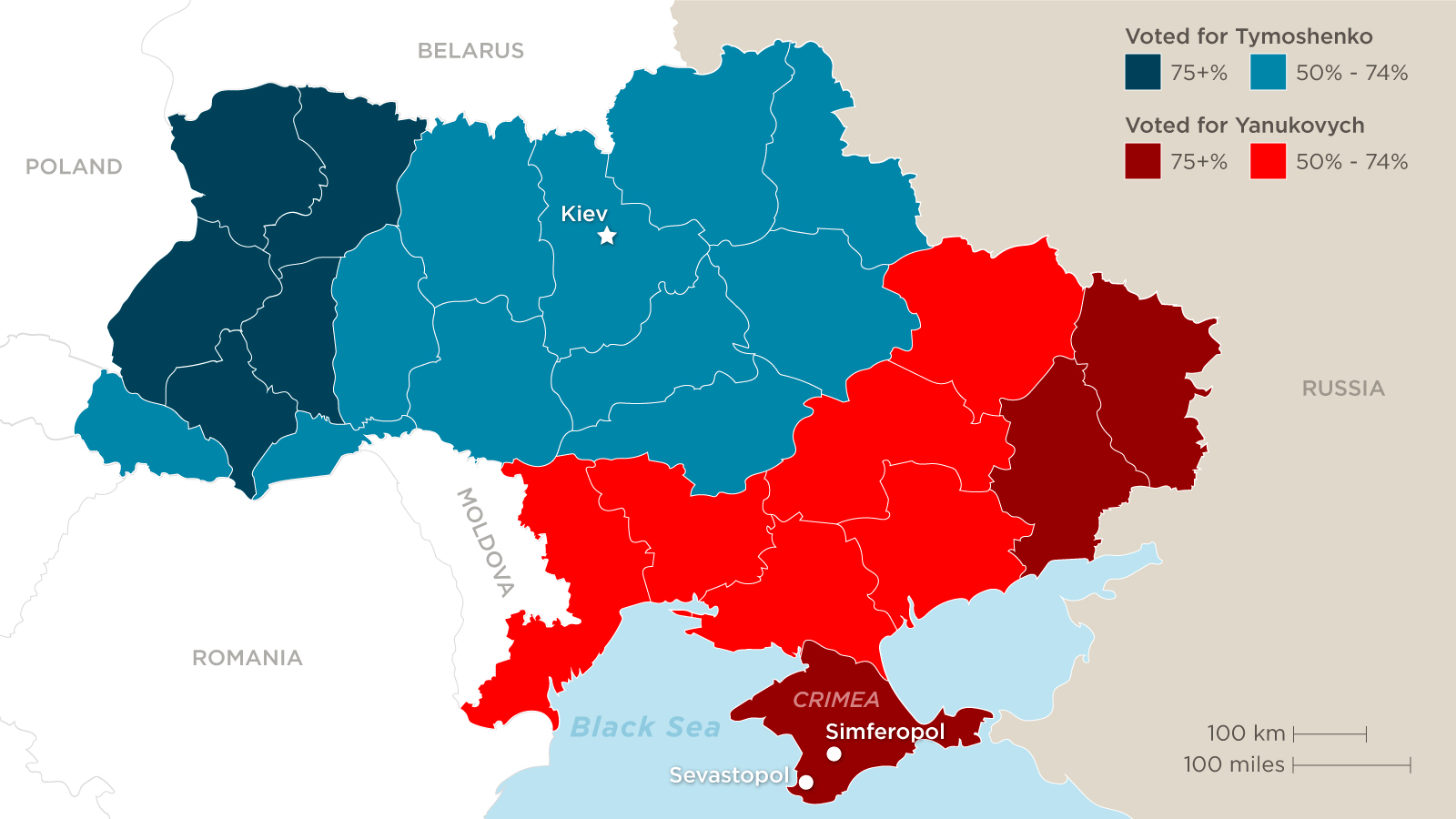
For a long time I’ve wished there was a similar service for discussions of events around the world, or US foreign policy toward particular countries. A person would need to locate the area under discussion on a map of the world with no labels. If you couldn’t identify Nigeria, or Kuwait, or Venezuela, you could still post your opinion, but that result would also appear so other people could judge how well founded your opinion was.

This week the Washington Post reported on a survey of Americans’ attitudes toward the difficult situation in Ukraine, correlated with their ability to locate Ukraine on a map. The findings:
…the further our respondents thought that Ukraine was from its actual location, the more they wanted the U.S. to intervene militarily. Even controlling for a series of demographic characteristics and participants’ general foreign policy attitudes, we found that the less accurate our participants were, the more they wanted the U.S. to use force, the greater the threat they saw Russia as posing to U.S. interests, and the more they thought that using force would advance U.S. national security interests; all of these effects are statistically significant at a 95 percent confidence level.

Our results are clear, but also somewhat disconcerting: The less people know about where Ukraine is located on a map, the more they want the U.S. to intervene militarily.
There is a logical connection between believing that Ukraine is, say, on the border of Germany and believing that its stability is of great importance to the western alliance. But the first of those beliefs has no factual basis. And that lets us judge how well founded the second opinion is.

In fact, the map above shows a lot of people misplacing Ukraine on Eurasia moved it far to the east, indicating that more than a decade of looking at maps of Afghanistan and its neighbors has not actually sunk in.

04 April 2014

Whatever It Is, They’re Against It

This week Quinnipiac University released one of its regular polls of Americans’ views on political issues. As most people would expect, this survey showed a stark partisan divide on most issues.

Among the Republicans surveyed, 74% disapprove of the way President Barack Obama is “handling the situation with Russia and Ukraine.” Of course, since 93% of them disapprove of how he’s generally doing the job of President, Republicans actually think that’s one of the better aspects of the current administration.

Sixty percent of all Republicans think the President is not being “tough enough” on Russia. Yet the same group is almost evenly split on whether it’s more important for the US “to take a firm stand” (47%) or “not get too involved” (42%). And 84% of Republicans, a slightly higher portion than of Americans overall, are “very” or “somewhat concerned” that “the current situation in Ukraine will develop into a larger regional conflict that could lead to the U.S. military getting involved.”

How can the US be tougher, take a firm stand, but not get too involved and definitely not end up in a larger military conflict? That dilemma should puzzle anyone. The survey found 69% of Republicans agreeing on a measure: “imposing economic sanctions on Russia for its actions involving Ukraine.” That’s the approach that President Obama is taking, but of course 74% of those Republicans disapprove of how he’s doing that. The survey didn’t ask about any stronger measures, probably because no one—even in the Republican Party—has come up with any to advocate in a concerted way.

Sixty percent of Republicans agree that “inaction on the part of the administration when chemical weapons were used in Syria conveyed weakness to President Vladimir Putin thus emboldening him in Ukraine.” Of course, Republicans and many of their representatives in Congress did a sudden turnaround back in August 2013 and disapproved when President Obama proposed military action against Syria.

To be fair, President Obama isn’t the only thing that Republicans are at odds with themselves on. A clear majority—58%—disapprove of how the Republicans in Congress are handling their job.

21 March 2014

Rience Priebus Speaks to His Party’s Reality

The job of the Republican National Committee chairman, Reince Priebus, is to speak up his party, which can’t be easy when a significant portion of that constituency is no longer tethered to reality. This week Priebus played to that crowd by claiming that the GOP had really won the 2012 Presidential campaign:

"I mean, the fact of the matter is Mitt Romney won on the message," Priebus said. "He won on jobs, he won on the economy, he won on the question of, 'Who do you actually think would make a better president?' But where he lost was on the question of, 'Who cares about you?'"
That seems to be yet another attempt to delegitimize Barack Obama as President.

Talking Points Memo analyzed Priebus’s comments.
Exit poll data throws doubt on those claims. Voters were pretty much evenly divided on the question of who would handle the economy better, with Romney edging President Obama by 1 percent [which would be within margins of error].

But it's unclear from the exit polling what led Priebus to believe that Romney "won on jobs" and even more inexplicable why the chairman believes that voters said Romney "would make a better president."

Priebus was right about one thing though: Obama claimed a massive advantage over Romney on the empathy question.
The true facts of the matter are that President Obama was reelected with a clear majority of the popular vote; that Mitt Romney convinced only 47% of American voters that he’d be the better President; and that Priebus’s attempt to claim otherwise is simply a play to OIP Derangement Syndrome.

19 March 2014

Kick-star-ter for Tik-Tok

This week I pledged in a Kickstarter campaign for a production of The Tik-Tok Man of Oz, first shown in 1913-14, at this summer’s Winkie Convention in San Diego.

I’m attending that convention (in fact, I’m helping with the daytime programming), so I’m already going to reap the benefit of this production. But I admired producer Eric Shanower’s theatricality in a bare-bones ballet adaptation of The Road to Oz a few years back, so I thought this show would be worth a real ticket price.

As a celebrated artist, Eric had the ability to offer a very rare incentive for a large pledge: a “20"x24" original painting by Eric Shanower of 30 major Oz characters.” Having just one person sign up for that reward would have brought the campaign two-thirds of the way to its goal. I assumed that was the sort of pie-in-the-sky level that Kickstarter campaigns offer people in order to make the next level down seem less expensive.

Instead, two people have signed up for that grand reward, putting the campaign over the top and producing an unusual pattern in the pledges. Recent Kickstarter campaigns for a documentary film titled “Who Stole the Ruby Slippers?” (still ongoing) and a “Shadow of Oz” tarot deck (which just made its goal) seem to have a more common distribution, with most people pledging in the low and middle tiers and nobody offering four-figure sums.

The demand indicated by this pledge pattern for Tik-Tok Man would make me seriously think about doing nothing but original paintings of 30 major Oz characters.

07 February 2014

Super Bowl Stats Show OIP Derangement Syndrome

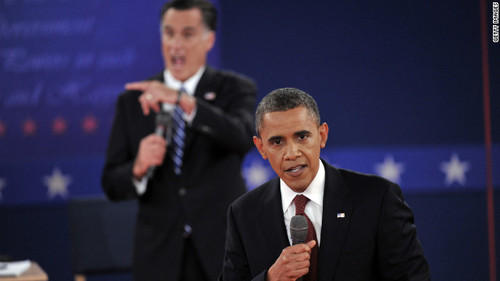
In 2011, Bill O’Reilly interviewed President Barack Obama before the Super Bowl. The taped conversation lasted a little more than fourteen minutes. Wonkette counted O’Reilly breaking into the President’s remarks 48 times. Ryan Witt at PoliticalExaminer.com counted 22 interruptions that stopped Obama’s statements.

Witt also numerically documented a clear contrast with how O’Reilly treated President George W. Bush in an earlier interview.

This Sunday, O’Reilly again interviewed President Obama. The sequence was only ten minutes long, or two-thirds of the earlier interview. Dana Millbank of the Washington Post wrote:
Along the way, he interrupted the president 42 times, by my count — although, given the amount O’Reilly spoke, it may be more accurate to say Obama was interrupting him. Sometimes he argued with Obama as though the president were a guest on The O’Reilly Factor. Of the 2,500 words uttered during the interview, O’Reilly spoke nearly 1,000 of them.
It appears the count of O’Reilly’s interruptions (or, as his network’s transcript put it, “overlaps”) per minute had gone up.

After Millbank’s column ran, O’Reilly called him “a weasel,” “lying,” and “beneath contempt.” (Earlier in the same appearance, he declared, “I never attack anyone personally.”) Neither O’Reilly nor his employer has offered any refutation of Millbank’s statistics, however. In fact, O’Reilly had promised network viewers that he would interrupt the President.

This footage shows O’Reilly obviously in the grip of OIP Derangement Syndrome. It also offered yet more evidence of the same mental condition affecting Donald Trump, who criticized President Obama for not wearing a tie on Super Bowl Sunday without having made the same complaint about George W. Bush in 2004 or Bush on Sixty Minutes in 2007.

31 January 2014

Keeping Executive Orders in Order

Faced with a resistant Republican minority in the Senate and majority in the House (albeit not one that gained a majority of Americans’ votes in 2012), President Barack Obama has announced that he will do what he can for the country through executive orders.

Naturally, people who think Obama doesn’t deserve to be President, despite being elected and reelected by majorities, have to find something wrong with him exercising the powers of the Presidency. Even before the State of the Union address, rookie Rep. Randy Weber (R-Texas) was tweeting that Obama was becoming a “Kommandant-In-Chef” [sic].

But the American Presidency Project tabulates Presidents’ executive orders. Its figures show that:
  • Presidents have used the power of executive orders since George Washington. That includes all the first generation of Presidents from the right wing’s beloved Founding Fathers.
  • The last President who issued fewer executive orders in his first term than President Obama was Benjamin Harrison, well over a century ago.
  • Among all Presidents since Franklin D. Roosevelt, as Steve Benen showed at the Meddow Blog, President Obama has issued the fewest executive orders per year in office. He could issue as many orders in the next three years as George W. Bush issued in his first four and still not match the total issued by Ronald Reagan.
And, of course, very few of the President’s critics on this issue can point to evidence that they made similar complaints about the previous administration’s use of executive power.

Again, the problem isn’t actually the mechanism of executive orders. It’s the visceral dislike some people feel on seeing Barack Obama exercise any Presidential authority, forcing them to search for a socially acceptable way to justify their feelings.

24 January 2014

Politifact Profiles

This week Politifact released a list of the top-ten politicians it and its regional affiliates have fact-checked.

Because the service launched in 2007, Barack Obama has been President for most of its existence, so it’s not surprising that he’s the most fact-checked person. Nor is it surprising that the people ranking second and third behind him are his main opponents from 2012 and 2008, Mitt Romney and John McCain. But Politifact has fact-checked Obama far more often (500 times) than Romney (204) and McCain (170) combined.

What’s more significant lies underneath those rankings in Politifact’s findings on each politician. It ranked President Obama’s statements True or Mostly True 46% of the time. In contrast, Romney was True or Mostly True only 31% of the time and McCain 38%. Add the Half True category to the men’s totals—after all, they are politicians, used to emphasizing one side of the argument—and the percentages are Obama 73%, Romney 59%, and McCain 56%.

We can also look at the three men’s numbers from the bottom up. Politifact gave only 2% of the Obama statements its lowest rating of Pants of Fire, and deemed another 13% False (total: 15%). Romney had 9% Pants of Fire and 16% False (total: 25%). McCain had 5% Pants on Fire and 22% False (total: 27%).

Either way we look at it, President Obama adhered to the facts more often than his major opponents. He made fewer statements that the service judged to be whoppers. And not just by a little bit, but by a 10% margin or more.

Nevertheless, one of the beliefs that people with OIP Derangement Syndrome share is that President Obama is dishonest. But that’s just another way they’ve divorced themselves from reality. In actual fact, Politifact has subjected Obama to more scrutiny than any other politician, and has assessed him to be more factual than the Republican Party’s chosen candidates.

17 January 2014

George F. Will Senses I’s, as in “OIP Derangement Syndrome”

Back in June 2009, George F. Will criticized President Barack Obama for being “inordinately fond of the first-person singular pronoun.” At Language Log, linguist Mark Liberman tested Will’s judgment:
I took the transcript of Obama's first press conference (from 2/9/2009), and found that he used 'I' 163 times in 7,775 total words, for a rate of 2.10%. He also used 'me' 8 times and 'my' 35 times, for a total first-person singular pronoun count of 206 in 7,775 words, or a rate of 2.65%.

For comparison, I took George W. Bush's first two solo press conferences as president (from 2/22/2001 and 3/29/2001), and found that W used 'I' 239 times in 6,681 total words, for a rate of 3.58% — a rate 72% higher than Obama's rate. President Bush also used 'me' 26 times, 'my' 31 times, and 'myself' 4 times, for a total first-person singular pronoun count of 300 in 6,681 words, or a rate of 4.49% (59% higher than Obama).
But curiously Will had never made the same “inordinately fond” critique of George W. Bush. He was close enough to Bush to slip the candidate an index card revealing a question he’d ask on the air, but evidently didn’t listen closely to how Bush answered questions.

In October 2009, Will expanded his criticism to include First Lady Michelle Obama, evidently trying to respond to takedowns like Liberman’s by offering numbers:
In the 41 sentences of her remarks, Michelle Obama used some form of the personal pronouns "I" or "me" 44 times. Her husband was, comparatively, a shrinking violet, using those pronouns only 26 times in 48 sentences. Still, 70 times in 89 sentences conveyed the message that somehow their fascinating selves were what made, or should have made, Chicago's case compelling.
Liberman again tested the context of Will’s remark:
Barack Obama's Olympic remarks included 26 first-person-singular words out of 1130, for a rate of 2.3%. This is slightly below his typical rate for presidential press conferences, and a bit more than half the rate of the George W. Bush pressers that I measured earlier (2.3/4.49 = 51%, to be precise). . . .

It's true that Michelle's tally was higher — 45 first-person-singular words out of 781, for a rate of 5.76%.

This is almost as much as the 6.4% first-person-singulars registered by Nancy Reagan's statement on Edward Kennedy's death, or the 7.0% achieved by her remarks at the christening of the USS Ronald Reagan in 2001, or the 10.0% notched by her discussion of the assassination attempt on her husband.
We’ll recall that Will was close enough to Ronald Reagan to help coach him for a Presidential debate and then go on TV as a “journalist” to declare that Reagan had won performed well. But Nancy Reagan’s use of pronouns didn’t get under his skin the way Michelle Obama’s does.

In May 2012, Will regurgitated his idea once more, saying on television:
If you struck from Barack Obama’s vocabulary the first-person singular pronoun, he would fall silent, which would be a mercy to us and a service to him, actually.
Once again, Liberman shared actual evidence from the radio addresses of the last five Presidents, starting with Reagan. Once again, Barack Obama scored lowest on the use of the “first-person singular pronoun.” Fed up with such claims, Liberman declared Will’s statement to be a lie.

Will’s thought process is clear. He has such a visceral reaction to hearing this President that he has to justify that feeling to himself in a socially acceptable way. He therefore complains that President Obama (and his wife) are too focused on themselves. In fact, Will’s problem is obviously that he doesn’t like to hear people like them speaking from a position of authority and respect, regardless of what pronouns they use.

30 December 2013

Profit and Loss

Last week the New York Times published book editor Gerald Howard’s essay reminiscing about editorial tasks in the early 1980s:

I had the idea that we should reissue two early novels by the fine writer Alice Adams. In order to clear the sum of money necessary to do so, I had to generate, by myself, calculator and production cost sheets in hand, a profit-and-loss statement, or P. & L., which would then be signed off on by various departments. My last hurdle in executing this modest financial transaction of maybe $7,500 was to secure the initials of our chief financial officer. A numbers guy. Not much of a reader.

Like all publishing P. & L.’s, ours factored in typesetting, cover art and printing costs, marketing, overhead, the cost of money and the revenue from projected sales and subsidiary rights to spit out a percentage figure on the bottom line that indicated the likely return on investment. (When I first was confronted with one of these forms, I thought, so that’s what a “bottom line” is. Interesting.) We were theoretically required at that time to have our P. & L.’s yield a return of at least 8 percent, and I had become adept in ways to make or exceed that number. You could shave on the cover art. You could shave on marketing and advertising. You could basically lie about projected sales and hope no one called you on it. The techniques I had developed in college to make my ham-handed chem lab experiments yield the proper results found a practical new use.

So there I was in our C.F.O.’s office with a P. & L. that just eked out a 7 percent return. He looked at that piece of paper dubiously. He looked at me dubiously. I made some weak noises about literary excellence, backlist sales, commitment to authors. He continued to look at me dubiously. Then, with that wry and sad expression with which financial people have regarded liberal arts people since at least the invention of movable type and perhaps even written language, he signed off on my shortfallen P. & L. and said to me, “You know, we could make more money by just putting this advance into a certificate of deposit.”

I produced the properly crestfallen face because I knew he was right. Inflation was rampant and C.D.’s were paying 10 percent per annum or more. What a drag I was on the corporation. But I grabbed the P. & L. before he could have second thoughts, thanked him and backed out of his office.
Note, however, that the CFO did sign off on the investment.

I interviewed for a job with Gerry Howard a couple of years after this must have taken place. One of my first tasks on the editorial job I did get was running a P&L on one of the two desktop computers the Editorial Department then owned. I guess I should be pleased I wasn’t doing the calculations by hand.

27 December 2013

Filibuster Statistics

It’s been a month since Majority Leader Harry Reid changed the Senate’s rules on what level of cloture is required for confirming some Presidential appointments. That allowed the Senate to confirm several eminently qualified judges and agency heads.

Republicans continue to make dire threats about what they’ll do if they gain the majority again. Apparently they believe such warnings of one-party rule make that prospect more appealing for American voters.

In the meantime, it‘s worth reviewing some of the numbers that led up to Reid’s decision.

Number of all Presidents’ nominees for district court judgeships filibustered between 1917 and 2008: 3.

Number of President Obama’s nominees for district court judgeships filibustered: 20.

Average number of times per year that the Senate invoked cloture, signaling a filibuster, between 1917 and 2000: 2.3.

Average number of times per year that the Senate invoked cloture under President George W. Bush: 17.5. (Over 40% of those events occurred in the 2007-08 Congress when Republicans were in the minority and filibustering on behalf of the President.)

Average number of times per year that the Senate has invoked clouture under President Obama: 27.

In October the Senate Republican minority filibustered the nomination of Rep. Mel Watt (D–Cal., shown above) to head the Federal Housing Finance Agency. The last time a sitting member of Congress’s appointment had been blocked by filibuster: 1843.

24 November 2013

Counting All Covers

In preparation for the “Celebrating 75 Years of Dick Grayson” anniversary, I got a question about the assertion that Robin was on the cover of more DC comic books of the 1940s than any other costumed hero.

A commenter told me that fact soon after I started the weekly Robin, saying it was a good way to win bar bets. (Not at any sort of bar I know, but okay.) A quick check of titles confirmed the fact, but I decided to do a more careful accounting.

In the 1940s, Superman appeared on the covers of:
  • Action Comics, #20-139 (120 comic books).
  • Superman, #3-61 (59).
  • World’s Fair, #1, and World’s Finest, #2-42 (42).
  • All-Star Comics, #36 (1).
  • Superman’s Christmas Adventure for 1940 and 1944 (2).
  • Superboy, #1 (1).
Total: 225 comic books.

Batman appeared on:
  • Detective Comics, #35-154 (120).
  • Batman, #1-56 (56).
  • World’s Fair, #1, and World’s Finest, #2-42 (42).
  • All-Star Comics, #36 (1).
  • Star Spangled Comics, #88-94 (7).
Total: 225 comic books.

Robin appeared on:
  • Detective Comics, #38-152 and #154 (116).
  • Batman, #1-46 and #48-56 (55).
  • World’s Fair, #1, and World’s Finest, #2-42 (42).
  • Star Spangled Comics, #65-95 (31).
Total: 244 comic books.

I might have missed some of the more obscure guest appearances, but Superman and Batman still have a lot of ground to cover before they catch up to the Boy Wonder. His usually-solo run on Star Spangled at the end of the decade put him in the lead.

Now I can’t claim that Robin was more prominent or popular than Superman or Batman in the 1940s. On many of those covers he appears subordinate to Batman, as a background assistant, observer, or boy hostage in need of rescuing. When Superman and Batman guest-starred on All-Star Comics with the Justice Society, Robin didn’t come along. When sales of Star Spangled featuring Robin began to slip, the editor added Batman to the cover before finally replacing the Boy Wonder with Tomahawk.

Furthermore, if we count the appearances of Superboy on the covers of More Fun Comics, #104-106; Adventure Comics, #103-147; and Superboy, #2-5 (52 more comic books in all) in Superman’s column, then he’s the clear leader. Superman was undoubtedly DC’s flagship property, with a national comic strip, radio show, movies, and novelizations. Starting in 1942 the company even included the name of Superman in its logo. But the US courts have decided that Superboy is a separate legal property.

So those are the numbers.

25 October 2013

Prescription for OIP Derangement Syndrome

As President Barack Obama’s administration fixes the new federal health-insurance website, it’s valuable to compare responses to that endeavor with responses to the last administration’s big foray into health benefits: Medicare Part D.

The Washington Post described how that law was enacted for President George W. Bush in 2003: “During the vote, which was of unprecedented length, the House Republican leadership cajoled, berated and twisted arms, barely controlling a conservative revolt…” A June 2004 article in the Millbank Quarterly noted that was “by far the longest known roll-call vote in the history of the House.” Majority Leader Tom DeLay promised a favor to one reluctant Republican which later brought him a public admonition from the Ethics Committee. In the end that bill passed in the House 220-215 with members of both political parties on both sides.

Almost immediately the law’s price tag changed, as the Washington Post reported in 2005:

Beginning with his January 2003 State of the Union address, Bush pledged to keep the total cost of the drug benefit to $400 billion over 10 years. An estimate by the Congressional Budget Office was close to Bush’s figure.

But shortly after Bush signed the program into law in December 2003, the White House revised its projection to $534 billion, but it never offered a detailed breakdown of that estimate.

Last March, Richard S. Foster, Medicare's chief actuary for nearly a decade, said administration officials threatened to fire him if he disclosed his belief in 2003 that the drug package would cost $500 billion to $600 billion. . . .

As recently as September, Medicare chief Mark B. McClellan said the new drug package would cost $534 billion over 10 years. Last night, he acknowledged that the cumulative cost of the program between 2006 and 2015 will reach $1.2 trillion, but he cited several major savings and offsets that he said will reduce the federal government's bottom-line cost to $720 billion.
Medicare Part D was a big contributor to the budget deficits that the Bush-Cheney administration left to its successor. (In contrast, the Congressional Budget Office estimated that the Affordable Care Act would save the federal government money over ten years because it would make our use of health care more efficient.)

When Medicare Part D finally went into effect on 1 Jan 2006, there were lots of problems. On 18 January, the Washington Post reported on “tens of thousands of elderly and disabled Americans, their pharmacists, and governors struggling to resolve myriad start-up problems.” In particular, the paper had already said, the “online interactive tool…pitched as a high-tech way to help the 43 million Medicare beneficiaries sort through all the drug coverage choices” had run into troubles and missed deadlines.

Meanwhile, Tom DeLay left office under an ethical cloud. His replacement as House Majority Leader in early February 2006 was John Boehner. That Ohio representative had voted for Medicare Part D but had not been part of the party leadership at the time and therefore bore limited responsibility for the law.

On 6 Feb 2006, five weeks after Medicare recipients were supposed to start enrolling, Boehner went on the friendly confines of FOX News Sunday and criticized one aspect of the program: “The implementation has been horrendous. We’ve made it far more complicated than it should be. . . . I think the implementation side continues to need to be improved.” The interviewer then turned to Boehner’s interest in “meat and potato issues” and his “perpetual tan.”

Talking Points Memo also quoted Rep. Joe Barton (R-Texas) as saying, “This is a huge undertaking and there are going to be glitches. . . . Rather than trying to scare and confuse seniors, I would hope that we can work together as we go through the implementation phase to find out what is wrong with the program and if we can make some changes to fix it, let us do it and let us do it on a bipartisan basis." That was on 15 Feb 2006, six weeks after the enrollment started.

And Rep. Nathan Deal (R-Georgia) said in the same forum: “Like most significant programs, the new benefit has not gone without a few isolated glitches and unexpected problems. But I believe that if there is anything wrong with the plan, most of it has been fixed and that that hasn't can be fixed over time.”

As late as 6 Apr 2006, more than three months after enrollment opened, Rep. Tim Murphy (R-Pennsylvania) insisted: “Any time something is new, there is going to be some glitches.”

None of those congressmen demanded that the entire law be repealed, defunded, or seriously delayed. None called for the resignation of Cabinet secretaries. None referred to the program as a horrible threat to the federal budget or individual freedom. None voted to shut down the government as it started or urged their states not to cooperate with it. And while many Democratic elected officials didn’t like aspects of Medicare Part D and the way it was passed, they didn’t do those things, either. The double standard apparent in the responses is a hallmark of OIP Derangement Syndrome.

04 October 2013

Doing the Math at the World War II Memorial

After the Republican caucus in the House of Representatives shut down the federal government this week, the World War II Memorial in Washington became a battlefield for camera-hungry Republican legislators. National Park Service sites aren’t essential to people’s health and safety, and that memorial therefore closed after the Republicans refused to pass a budget or a continuing resolution free of extraneous provisions.

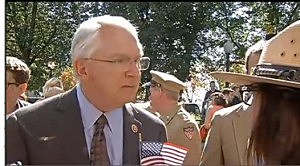
A charitable organization called Honor Flight had already flown some aged WW2 veterans to Washington to visit the site. When those vets arrived, some Republican legislators were on hand to move aside barriers. Rep. Randy Neugebauer (R-Tex.) established the first sentence of his obituary by berating a polite park ranger for following her instructions to keep people out of the closed site. That was one day after Neugebauer had gone on the radio to boast about the shutdown.

As many people noted, Neugebauer was thus helping to close government sites and blaming the federal employee who therefore received the assignment to keep one site closed. That park ranger was working without pay while Neugebauer, through a legislature quirk, continues to receive his salary.

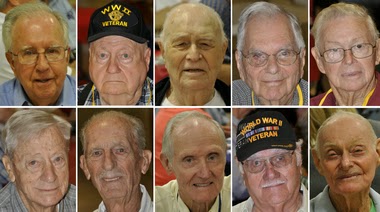
There’s another element of that conflict that I haven’t seen discussed. The first veterans to visit the memorial on Tuesday were a group from Mississippi. Before every Mississippi Gulf Coast Honor Flight trip from that state, the Gulf Live blog has profiled all of the veterans participating. Here are their photographs, starting with men on a 2012 flight and then the men (and one woman) who flew to Washington this fall.

I can’t help but notice that every single veteran on those flights from Mississippi appears to be white. Surely there are black veterans from Mississippi. The 2010 census found that 37% of Mississippi’s population is African-American. Back in 1940, just before the US entered WW2, that percentage was even higher: 49% black. [I’d link to the US Census Bureau, but the shutdown means its website can’t offer any useful information. Those figures come from a news article and a book.] Some of those Mississippians must have served the US during WW2.

If one were to choose 83 Mississippians randomly today, the odds of getting a group with no African-American in it are .63 to the 83rd power, or about .000000000000002%. So it seems significant that Honor Flight has not brought a single African-American veteran to Washington from Mississippi.

I’m not saying that anyone involved in the charity deliberately discriminated against black veterans. There are many factors that could contribute to the lack of African-Americans on those flights: discrimination by military recruiters, migration out of and into the state, life and health expectancies, the social networks that recruited vets for these flights, and so on. Sadly, all of those factors have some link to America’s history of anti-black bigotry, a topic today’s right wing tries hard to deny and yet fuels OIP Derangement Syndrome.

I looked at some other photos of the confrontations at the WW2 memorial, which involved veterans from other states. I didn’t see any African-American WW2 veterans in those pictures, but I’d be pleased to be pointed to pertinent examples. Only the Mississippi contingent had been systematically profiled by the press back home, allowing this analysis.

What does that reality mean for the Republican in Congress who went to the memorial and insisted those veterans get to visit? They were willing to slow America’s economic recovery from the worst crisis since the Great Depression; to stop pay for hundreds of thousands of workers; to shut down information for the public; and to halt funds for medical research, early childhood education, and other important government functions. But they wanted to be seen making sure the hard consequences of their vote didn’t inconvenience a group of old white men (and one woman). They were playing to the cameras, and playing to their base.