Showing posts with label cultural sensitivities. Show all posts

10 May 2026

“They are trying to get along without Ernest Morrison”

As I wrote back here, almost all the other kid-gang comedy movies produced in the wake of Our Gang’s success included at least one African-American kid in the cast.

People viewed Ernie “Sunshine Sammy” Morrison and Allen “Farina” Hoskins as vital to the series’ success.

On 4 July 1924 the California Eagle, published for Los Angeles’s African-American community, reported:
The kid situation seems to be worrying that powers that be at the Hal Roach Studio. They are trying to get along without Ernest Morrison (Sunshine Sammy) but the big question is will the exhibitors accept “Our Gang” comedies without Sammy or a Race star other than Farina.

It is rumored that two of the “Our Gang” Series that were made without Ernest were returned from the Eastern exchange marked N.G.
“N.G.” was the standard Hollywood label for bad shots to be discarded.

In fact, Hal Roach had quickly sought out a replacement for Ernie Morrison. In April 1924 the studio brought on Flemon Miller, a black boy about the same age, to appear in “The Sun Down Limited” and “Every Man for Himself.” The Pathé Exchange would distribute those pictures in the fall, but Flemon wouldn’t make much impression on the screen.

The California Eagle went on to drop some inside information:
The Dramatic League booking office received a hurry up call for Eugene Jackson and Eugene has gone to work there and his director is McGowan who directs the “Our Gang” series.
Eugene Jackson (1916–2001) had already acted in a few films, including the feature Penrod and Sam and “An Afternoon Tee” in the rival Reg’lar Kids series (a short which was Johnny Downs’s break into the movies).

The newspaper’s next item noted that another black child actor, James “Bubbles” Berry (1915–1969, shown above), was available after making eight pictures for the Century studio. Those movies, such as “Speed Boys,” were also imitations of Our Gang. But “Bubbles” was made up with white lipstick for a minstrel-show effect, something the Roach studio never did to Ernie Morrison.

The Eagle’s deduction about Gene Jackson was correct: he joined the Our Gang unit at the end of June and made six movies through early 1925. In his 1999 autobiography, Jackson described his beginning this way:
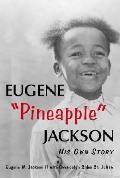
I met with Mr. Roach, and he liked my natural acting ability. I did some impromptu acting, and he said I had an open freshness with a million dollar smile. He conversed with me for a short while, and I signed immediately for a three-year contract. He coined the name “Pineapple” for me in the series, which has been a permanent part of my show business name.
As for Ernie Morrison, Jackson remembered living around the corner from him. Ernie was four years older and busier, so Gene admired him from a distance:
Sammy was such a big star. He was an established star. When he arrived home, the entire neighborhood would could out to see him. He had a great big limousine a mile long.
But now that Ernie had left the Hal Roach Studio, what would he do?

TOMORROW: Training in ’24.

08 May 2026

“‘Our Gang’ comedies will be as a ship without a rudder without Sammy”

In the early 1920s, Ernie Morrison was almost certainly the most prominent African-American actor in Hollywood, the only one to appear regularly in movies marketed to mainstream audiences.

What’s more, whether as sidekick to Hal Roach’s adult male comedians or as a leading member of Our Gang, Ernie didn’t really fit inside the dominant culture’s racial stereotypes (despite the studio and the press’s best efforts).

While he often played scamps, Ernie the real-life hard-working actor was also a role model. His June 1922 trading card assured children, “In between his motion-picture work he studies hard at his lessons, and a very great future is predicted for this clever youngster.”

Naturally, Ernie Morrison held special significance for African-Americans. W. E. B. Du Bois’s short-lived magazine for black children, The Brownies’ Book, featured the boy twice while he was still working with Snub Pollard. In 1923 Du Bois visited the Hal Roach Studio with other members of the NAACP. The June issue of that organization’s magazine, The Crisis, included the photo above.

Ernie, clowning with a broken bass fiddle, was surrounded by:
  • Dr. Vada Somerville (1885–1972), co-founder of the NAACP’s Los Angeles chapter, first black woman to be licensed as a dentist in California.
  • Dr. W. E. B. Du Bois (1868–1963).
  • Anita Thompson (1901–1980), star of By Right of Birth from the Lincoln Motion Picture Company and actress in other films.
  • Beatrice Thompson (1874–1938), executive secretary of the LA chapter and the actress’s mother.
  • Pearl W. Hinds Roberts (1892–1984), pipe organist with a degree from the Oberlin Conservatory, wife of a California assemblyman.
On 28 Feb 1924, around the time Joseph Morrison and Hal Roach broke off negotiations over a contract renewal, the Omaha World-Herald reported that the local NAACP chapter had sponsored a free showing of “one of ‘Sunshine’ Sammy’s photoplays” for more than 200 black children to raise funds to support an anti-lynching bill.

Given Ernie’s profile, the end of his contract with Roach was a big deal for African-American moviegoers. The most detailed reports about that change appeared in the black press. The New York Age article cited here was the first to report salary numbers. On 18 July 1924, the Afro-American of Baltimore ran this item:
SUNSHINE SAMMY LEAVES HAL ROACH

The Hal Roach Studio seems hard put to it these days. Ernest Morrison, nationally known as “Sunshine Sammy” has left the lot.

Mr. Morrison, Sammy’s father, refuses to give any information other than to say that Ernest will be featured in his own company. The “Our Gang” comedies will be as a ship without a rudder without Sammy.
The Morrisons’ contract had ended four months before, but the studio was about to run out of the Our Gang movies Ernie had made early in the year. And audiences viewed black kids as an essential part of the gang.

COMING UP: Keeping busy in 1924.

04 May 2026

Ernie Morrison before Our Gang

Ernie Morrison was born in late 1912 in New Orleans. About six months later his father, Joseph, moved the family to Los Angeles, where he ran a grocery store.

In 1916, Joseph Morrison later told the New York Age, he “overheard some directors inquiring as to where they could find a clever little youngster.” Another source says the moviemakers were looking for a “little colored boy.” Ernie fit both descriptions. Joseph took his son to the studio.

By age four, Ernie was a regular in the Baby Marie Osborne comedies. The studio behind those films, Diando, even tried to create a new series around Ernie in 1918, using his father’s nickname “Sunshine Sammy.” But the Pathé Exchange didn’t pick up those short movies for distribution.

In August 1919, Harold Lloyd, the only consistently successful comedy star at the Rolin Studio, was badly injured by a prop bomb during a photo shoot. Rolin’s head, Hal Roach, scrambled both to help his friend recover and to find new material to release.

Lloyd’s usual sidekick, the Australian comedian Snub Pollard, was promoted to a lead. In the short “Call for Mr. Caveman,” filmed in September 1919, his supporting cast included a little black boy played by Ernie Morrison.

Roach saw how well Ernie performed. Indeed, his lively personality still comes through on the screen. Envisioning a new series (which, Robert Demoss reports at the Lucky Corner, he unfortunately referred to as “‘coon’ pictures”), Roach signed Ernie to a two-year contract, as shown above. That made the six-year-old the first African-American actor with a long-term movie deal.

However, Pathé still wasn’t interested in a “Sunshine Sammy” series—“not on the basis of racism,” writes Richard Lewis Ward in A History of the Hal Roach Studios, but because the company head felt “‘kid pictures’ were box office poison.”

Instead, Ernie performed as Snub Pollard’s regular sidekick from 1919 to 1921. After Lloyd recovered, Ernie appeared in a few of his films, too, most delightfully in “Get Out and Get Under.” During that time, Rolin was renamed as the Hal Roach Studio.

Roach saw that Ernie Morrison was gaining a fan base. He renewed the contract and assigned the boy to boost the studio’s lesser comedians, such as Eddie Boland and Paul Parrott (brother of Charley Chase and later director for Laurel and Hardy). Ernie was also loaned out for the Neilan adaptation of Booth Tarkington’s Penrod with Wesley Barry.

In mid-1921, Hal Roach once again put “Sunshine Sammy” at the center of a picture. In an advertisement to cinema owners (shown here), the studio declared:
Millions have laughed at him, exhibitors have commented upon his popularity with their audiences,…full of pep, a “pip” of a “feeder” to the comedy stars he supported

Now he is starred in one two-reel comedy, made the way Hal Roach knows how to make ’em

Hot Dog! This one isn’t a gamble, it’s just sure to please!
The rest of that ad copy uses broad dialect and racial slurs. The movie itself was titled “The Pickaninny,” though Ernie never fit into that stereotype of a black child. Roach thus offered the Morrisons more opportunity than they would find elsewhere but still played into the racism of the time.

Pathé released that “Sunshine Sammy” comedy in December 1921. It didn’t do well enough to launch a new series. Ernie continued to appear in supporting roles. But he was popular enough to be featured on a Boys’ Cinema trading card in June 1922, posing in top hat and tails with a short biography on the back; most of the other “Famous Heroes” in this series were grown men, all of them white.

Meanwhile, in January 1922 Ernie had started performing in a new series of shorts at the Roach studio—not in support of an adult male comedian, but alongside other child actors and animals. Those “kid pictures” would make him an even bigger star.

COMING UP: After the gang.

06 February 2026

Jackie Condon’s Career Before “Our Gang”

Jackie Condon was the youngest player in the first Our Gang movie ever shot in early 1922, establishing the role of the tagalong little brother. Born in March 1918, he was going on four years old.

Among the kid actors in “Our Gang,” however, Jackie was probably second only to Ernie Morrison in filmmaking experience. He’d been appearing on camera since he was a babe in arms.

IMDB and the Lucky Corner list seven movies Jackie appeared in before “Our Gang” was filmed:
  • Jinx, a Mabel Normand feature in 1919—as shown by press reports.
  • “Italian Love,” a Billy West short directed by Charley Chase in 1920—a viewing on YouTube confirms Jackie appeared in it, in the flesh. 
  • “A Convict’s Happy Bride,” an Alice Howell short—also on YouTube, with Jackie quite active. 
  • “The Morning After,” a Snub Pollard one-reeler released in 1921, now lost—Jackie’s work was identified by Robert Demoss through Rolin/Hal Roach Studio records. (In this period Ernie Morrison was Pollard’s regular sidekick, so this was the first movie Ernie and Jackie both appeared in before Our Gang.)
  • Little Lord Fauntleroy, the Mary Pickford feature—in the opening scene, Jackie gets undressed to play in a sprinkler.
  • “At Your Service,” a Hallroom Boys short—only one reel survives, and Jackie doesn’t appear in that footage; I don’t know the basis for listing him in the cast.
  • Penrod, a Wesley Barry feature made in 1921 and released in 1922, adapted from Booth Tarkington’s novel—I don’t think this movie survives, but the press material includes Jackie in the long list of young cast members.
In fact, Penrod was a significant precursor to the Our Gang series launched a few months later. Hal Roach lent Ernie Morrison to be a featured player in it, and its cast also included Peggy Cartwright, who became the “leading lady” in several of the earliest Our Gang shorts.

Wesley Barry’s stardom in the early 1920s probably also influenced Roach’s thinking about the Our Gang series. For Rebecca of Sunnybrook Farm (1917), producer-director Marshall Neilan had young Wesley act for the first time without greasepaint covering his freckles. The young actor caught the eye of moviegoers. He rose quickly to be a featured player, then a star in Dinty (1920). Wesley Barry established the archetype of the freckle-faced “reg’lar” American boy that Mickey Daniels, Jay R. Smith, Harry Spear, and Donald Haines would play in the Our Gang movies.

Dinty also showed its young white hero having an African-American kid and a Chinese-American kid as his playmates. Many reviewers mentioned that favorably. Of course, that movie, and that press coverage, played up the racial stereotypes of the day. But at least those characters were friends.

COMING UP: New additions to Jackie Condon’s filmography.

29 January 2025

“They want boys like Farina”

As I wrote before, the 1930 Our Gang short “Pups Is Pups” (Lucky Corner; IMDB; Dave Lord Heath) was set in a city, with big industrial structures looming over the kids’ yard.

That setting was also reflected in the gang itself, which was more multiethnic than it had been since 1925. That was when George “Sonny Boy” Warde made the last of his nine movies playing a stereotypical Chinese kid. For “Pups Is Pups” the gang included Alan Dong in a similar role, never repeated.

Of course, like all the Our Gang films, “Pups Is Pups” included some African-American kids: Allen “Farina” Hoskins; his sister Jannie, as shown in a still from a deleted scene; and young twins Kenneth and Hugo Hill playing his little brothers. (In the next movie, Matthew Beard arrived as a little brother for Farina. At first called Hercules, he’d soon be nicknamed “Stymie.”)

“Pups Is Pups” was also the first movie for Buddy McDonald, whose 2001 interview with Richard W. Bann I’ve been studying. Having a racially integrated set of playmates was new to Buddy, but he enjoyed working with Farina and Stymie:
I really liked them, both. They were the very first black people I met. I thought nothing of it at the time. I did learn about racial prejudice, but not at Hal Roach Studios. My mother was a bigot. . . .

Farina was the only one I stayed in touch with. We were pretty good friends. I talked to Al Hoskins around the year he died. He was back and forth between Oakland and Los Angeles. He’d been down and out too. He seemed to have nothing left either from his days in the Gang, other than memories. But it didn’t defeat his optimism. What a nice man.
In that interview, McDonald drew Bann’s attention to a part of Farina’s costuming imposed to make him fit the prevailing stereotype of black kids:
watch the films with Farina. He had another pair of shoes on inside those big shoes he wore to make his feet look extra large.
The 1925 promotional film “Our Gang at Home” makes the difference obvious. That movie is included in Ben Model’s Silent Comedy Watch Party, episode 88. Watch from 45:30 to 46:10, when little Farina briefly gets to wear only his own shoes.

“Pups Is Pups” played off American racial attitudes in another way that Bann’s interview didn’t address. Early in the movie, Farina reads an advertisement seeking “colored boys” to be pages at a dog and pet show. Jackie proposes the whole gang seek jobs as pages, but Chubby says, “They want boys like Farina.” There’s no explanation of what that means, but probably no explanation was necessary. Farina heads downtown to earn good money, promising that once he lands the job he’ll get the gang prizes for their pets.

As I mentioned above, one publicity photo shows a scene that never made it into the final cut. Apparently the original script showed all the other neighborhood kids of Farina’s age in blackface, presumably to apply for page jobs. That group includes (from left) Jackie, Chubby, Mary Ann, Buddy McDonald, and Alan Dong.
Bann didn’t ask McDonald about being made up for this scene or how it played out, and McDonald didn’t bring it up. But I have to think it was a unusual, memorable experience for a new actor.

The book Hollywood Speaks quoted Hal Roach this way: “I’d say fifty percent of written comedy won’t play. Things sound funny on paper, but when you get on the set, they may not be funny.” The studio relied on improvisation, and many planned or even performed scenes were never released.

In this case, the original plan for “Pups Is Pups” must not have played. Director Robert McGowan pulled back into familiar territory of kids and animals pushing into a dignified adult setting. (Chaos and hilarity ensued, of course.)

(NEXT: “One Day I showed up at the studio barefoot.”)

27 November 2024

“Real honest to goodness…pie slinging contests”

Mass pie-tossing definitely returned to American movies in 1927, and not just in Laurel and Hardy’s “Battle of the Century,” released in December.

The surviving examples appeared first in a particular type of movie: the kid gang comedy. That makes sense because the core viewers of those movies were so young they weren’t:

  • tired of the Keystone-style comedy of the previous decade, given that they had probably never seen those films.
  • influenced by what the press deemed properly funny for modern audiences.
In May 1927, the Bray Studios registered a short called “The Big Pie Raid,” directed by Stan De Lay (IMDB; YouTube; clearer extract on YouTube). This was part of the McDougall Alley series, running from 1926 to 1928—an obvious imitation of the Our Gang comedies, but with even more blatant racism.

The Library of Congress filing for “The Big Pie Raid” summarized its plot like this:
The two gangs are having it out on the football field. The winning team has been promised a party by one of the girl spectators. Oatmeal, a little colored lad, wins the day for his side and the result is that the team goes down to enjoy the blowout. After much ice cream and cake and speech making they adjourn to the lawn to play games.

The losers of the football game however are on the job and attack the party with mud pies. Real honest to goodness mud pie slinging contests ensue with the victors of the morning coming out victorious but not until all the pies of a bakery wagon had been used and not until Oatmeal had come to the rescue with his little friend Farina [sic—Fatima], that gasser of animals, the skunk.
At around the twelve-minute mark, a wagon helpfully labeled PIES loses a wheel near the kids’ mud fight. That leads to a “Real honest to goodness” pie fight, with combatants and one spectator hit. Since Bray named the movie after that part of the scenario, the studio clearly saw the pie fight as an attraction for its target audience.

The typographical error inserting the name Farina into the synopsis of “The Big Pie Raid” shows how much the makers of this series had the Our Gang movies on their minds. McDougall Alley featured a little black child called Oatmeal, played by Hannah Washington. Just as the character of Farina was variously identified as a girl or a boy in early years, “The Big Pie Raid” presents Oatmeal as a boy so that he can play in the football game.

Even though Oatmeal is the hero of both the football game and the subsequent fight, he and his Chinese-stereotype friend Free-Gin have to be snuck into the older white kids’ party. One difference between this movie and the typical Our Gang shorts is that the McDougall Alley kids are more bourgeois than their rivals rather than poorer.

In December 1927, Fox released “Wild Puppies,” directed by Clyde Carruth (IMDB; YouTube; Library of Congress shot list). Like “The Big Pie Raid,” this short comedy moves from a football game to a gang fight that parodies trench warfare. However, its special effects are more elaborate and amusing. While most of the missiles are vegetable, ultimately fat boy Albert Schaefer throws pies down onto three members of the rival gang. The climactic bits show the bad guys trying to escape a lion, scenes that actor Coy Watson, Jr., wrote about in The Keystone Kid.

In both “The Big Pie Raid” and “Wild Puppies,” the leader of the rival gang, and the person whose face takes the most mess, was Jack McHugh. He’d been the center of an earlier kid gang series from Century before being upstaged by Malcolm Sebastian as “Big Boy,” his little brother.

McHugh would make one appearance in an Our Gang film: “Shivering Shakespeare” (1930). Once again, he played a rival gang leader who starts a pie fight. It seems to have been a specialty.

COMING UP: But that wasn’t the first pie-throwing in an Our Gang movie.

31 August 2024

Integrating Our Gang’s Schools


The Hal Roach Studio’s Our Gang series was notable from the beginning in showing black and white kids playing together on a mostly equal basis.

However, they didn’t go to school with each other—not for years.

Many American school systems were segregated in the early 1920s, either by law or (as in Los Angeles) by a combination of real-estate covenants and administrative moves that shuttled most black, Mexican, and Asian kids into certain schools.

At first the Hal Roach Studio’s school for its young actors replicated that situation, though it’s not clear if that was ever a goal. Ernie Morrison had been under contract for years when the series started, and he had a private tutor. Judging by photos like the one above from 1923, that tutor was a black woman.

In September 1922, having become responsible for educating more kids, Hal Roach hired Fern Carter (1893–1961) to run a school within the studio. She’s the woman standing in this publicity photo next to director Robert McGowan. She remained the teacher for the series’ main cast for more than twenty years.

Ernie Morrison continued to study with his tutor, however. It’s possible that race had no bearing on that arrangement. He and his father might have preferred that individual attention. It’s also quite conceivable that race was a factor. The Morrisons might have wanted to preserve that woman’s job, for instance, while the studio or other kids’ parents couldn’t imagine hiring her to teach the whole group. Or segregated schooling might simply have seemed like the norm. 

In those same early years, almost all of the Our Gang shorts were about children outside of school. Titles like “Saturday Morning,” “July Days,” and “Sunday Calm” reflect the focus on kids having free time to get into trouble. Physical comedy worked better when the cast wasn’t stuck to their desks.

Every so often, however, a movie showed the gang in a classroom. “Boys to Board” (1923) was set at a small boarding school, orphans preferred. “Lodge Night” (1923) showed little Joe Cobb as the new kid in a one-room school before shifting to other locations. Eventually all of “Commencement Day” (1924) took place in and around such a school.

And in all three of those movies, Ernie Morrison’s character isn’t in class with the white kids. He—and his little sibling Farina—still play with the white boys. In “Lodge Night” all the boys are part of a club spoofing the KKK. In “Commencement Day” Ernie has set up a merry-go-round near the school, charging kids some of their lunch for a ride.

In “Boys to Board” Ernie runs a delivery service, bringing Joe to the boarding school. That puts him in the position to rescue the white boys, so his outsider status actually makes him a hero. But it also appears that Ernie’s character doesn’t go to school at all.

As a result, those movies didn’t challenge audiences of the time with the sight of black and white kids in a classroom together. For some Americans, of course, that would have seemed normal, or at least unremarkable. But other white viewers might have objected.

During those years, Allen “Sunny” Hoskins was too young to go to school, and so was his character Farina. But eventually he grew up. In “Seeing the World” (1927), Farina is conspicuous among the students under teacher James Finlayson.

From then on, whenever audiences saw Our Gang in a classroom, that school was integrated. Starting in the early 1930s, more stories took place in school, and Farina, Stymie, Buckwheat, and other black kids (one even played by Dorothy Dandridge) were always on an equal basis with the white kids.

Likewise, behind the scenes Sunny Hoskins and his successors attended Fern Carter’s classes alongside their white cast mates. In fact, Carter described Sunny as her brightest student. And he, like most of the Our Gang alumni, recalled her fondly.

26 August 2024

Falling for Farina

As related back here, Hal Roach and the makers of the Our Gang comedies modeled the character of Farina, played by Allen “Sunny” Hoskins, on the pickaninny stereotype.

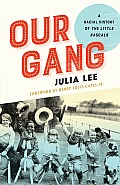
Gloria Lee writes in Our Gang: A Racial History of the Little Rascals:
His hair was tied in pigtails and white ribbons. He ate watermelons, fell into vats of flour, and smoked a corncob pipe. He wore the clownlike, oversized shoes of a minstrel. . . .

Farina became the vehicle of all the most hackneyed and racist sight gags. He appeared in whiteface while his white friends appeared in blackface. When he got the measles, white spots were painted on his face instead of black ones. He clutched voodoo amulets and was terrified of ghosts. He was called “Shine” while Mickey was called “Freckles” or “Speck” and Joe Cobb was called “Fatty.”

But something strange started to happen. Despite his genesis in the flattest of stereotypes, Farina started to become—how else to put it?—human. He went through the minstrel motions, but even the narrowness of his scripted roles couldn’t suppress his outsized personality. The public fell in love with him.
Just as rival studios needed an equivalent of Ernie Morrison in their kid gangs, many also had a younger black child in this stereotypical form. In the McDougall Alley Kids and Buster Brown series that counterpart was a girl named “Oatmeal,” played by Hannah Washington.

One manifestation of public interest the character, and of recognizing that a real child played the role, was the demand to know if Farina was a boy or a girl. For a while the movies were ambiguous, as were newspaper stories. Roach milked the question, playing coy in press releases.

Eventually, however, the studio acknowledged that “Sunny” Hoskins and the character of Farina were little boys. The costume changed to have pants, but it retained a couple of the pickaninny traits. Sunny wore one pair of shoes inside another because Farina had flat oversized feet. He kept his hair long enough for pigtails for years. Farina continued to suffer a disproportionate amount of mess and rough treatment.

From 1925 to 1931 Farina was the series’ main black character. In several films he was clearly the lead: “Your Own Back Yard,” “One Wild Ride” (1925), “Monkey Business” (1926), “Love My Dog,” “Chicken Feed” (1927), “Spook-Spoofing,” “The Smile Wins” (1928), “Election Day,” “Fast Freight” (1929). In some movies Sunny’s sister Jannie played Farina’s little sister, often called Mango.

Sunny made the transition to talkies while some other Our Gang kids struggled. Lee notes that one issue in that shift was that he’d been born in Boston and grown up in Los Angeles, so he didn’t speak in the broad “Southern” dialect the intertitles had assigned to Farina. It looks like he figured out how to deliver those lines for the microphones not quite as broadly but still with enough rural character to please the public.

Ultimately, Sunny Hoskins outlasted a second generation of fellow players. His seniority in the series matched his line deliveries, which projected a long-suffering personality. Having started as a toddler, he ended up appearing in more Our Gang movies than any other actor.

This series of postings started by noting the roots of the Farina persona in the character of Topsy in stage productions and parodies of Uncle Tom’s Cabin. Farina actually played Topsy in the 1926 short “Uncle Tom’s Uncle,” when the gang put on their own version of the show. Pudgy Joe Cobb portrayed the title character in blackface, his mom repeatedly telling him to wash his face and do his chores. That reflected the ongoing influence of Harriet Beecher Stowe’s novel on American culture.

19 August 2024

Who Could Replace “Sunshine Sammy”?

Ernie “Sunshine Sammy” Morrison was the Hal Roach Studio’s first child star and the highest-paid of the original Our Gang cast. All the more remarkable since Ernie was a black kid in 1920s America.

After a couple of years of those movies being increasingly successful, Ernie’s father asked for a raise. Hal Roach didn’t renew the Morrisons’ contract.

In early 1924, Ernie went off to make more money in vaudeville, though he returned that summer to complete “Fast Company,” a short started the previous year but delayed by the director’s injury.

Roach’s competitors appear to have seen Ernie as a key to the appeal of Our Gang. Many of the rival series that sprang up in this period also featured an African-American boy of the same age.

For example, James Berry played “Bubbles” in some of the Century Kids films—made up in one with white lipstick to look like a minstrel-show caricature. His brother Ananias appeared in the rival McDougall Alley Kids shorts. The Mickey Maguire series featured Jimmy Robinson as “Hambone Johnson,” the hero’s closest friend.

Roach himself recognized Ernie Morrison’s value by trying to replace him. Later in 1924 “The Sun Down Limited” introduced Flemon Miller as “Powder-Puff.” I can’t help but think there was some knowing irony in how that character appeared with the intertitle, “He wanted to join the ‘Gang’—But the quota was exhausted.” Flemon lasted for only one more film, “Every Man for Himself.”

The studio then hired Eugene Jackson from the competing Reg’lar Kids series, at first as “Snowball.” Roach renamed him “Pineapple” after someone combed his hair so it stood up like pineapple leaves—i.e., he was made to look like a joke. Like Ernie Morrison, “Pineapple” was usually older brother to “Farina.” Gene made six shorts from the middle of 1924 to the start of 1925 and went on to a long show-biz career.

After letting Gene Jackson go, the studio’s next Our Gang film was “Official Officers.” Its gang included a black boy played by Todd Roark, who had won a Los Angeles Evening Express Baby Contest with the prize of one week’s work in an Our Gang movie for $100. Todd didn’t stand out, but it’s interesting that the studio brought him on as a gang member, not an incidental extra.

In this same period, George “Sonny Boy” Warde played Sing Joy, a Chinese boy in the gang, over nine shorts. Sonny Boy’s own ancestry was Japanese and French, though there are questions even about that; later he adopted the stage name Luis Cordova before shifting back to Sonny Loy. The point is that the Hal Roach Studio appears to have been trying to present Our Gang as racially inclusive, even while presenting the non-white kids in stereotypical forms.

Meanwhile, every one of those mid-1920s shorts included Allen “Sunny” Hoskins as “Farina,” then four and five years old. In a couple of those movies he was the only black kid. And it turned out he was Ernie Morrison’s replacement all along.

15 August 2024

From Uncle Tom’s Cabin to Our Gang

As influential as Uncle Tom’s Cabin was on ante-bellum American culture and politics, stage adaptations of Harriet Beecher Stowe’s novel continued to shape popular culture for the next century.

In the theater, both straight and parodic, the novel’s black characters turned into racist caricatures. The Uncle Tom of the novel resists cruelty, dispenses moral wisdom, and becomes a martyr. In plays for post-Civil War white audiences and in minstrel-show offshoots, that character became old, feeble, and subservient.

The novel also included a young black girl named Topsy. In those dramatic adaptations, and especially in minstrelsy, Topsy became a comic grotesque, the prototype of the racist caricature of a pickaninny. In her book Racial Innocence: Performing American Childhood from Slavery to Civil Rights Robin Bernstein writes:
The pickaninny was an imagined, subhuman black juvenile [with…] dark or sometimes jet-black skin, exaggerated eyes and mouth, the action of gorging (especially on watermelon), and the state of being threatened or attacked by animals (especially alligators, geese, dogs, pigs, or tigers). Pickaninnies often wear ragged clothes (which suggest parental neglect) and are sometimes partially or fully naked. . . . the figure is always juvenile, always of color, and always resistant if not immune to pain.
The shadow of the theatrical Uncle Tom’s Cabin falls on Hal Roach’s Our Gang comedies—despite those movies being relatively progressive in showing black and white children playing together.

Racial inclusion was part of Roach’s plan for the movies from the start. In 1921 he built a short movie around one of his studio’s most popular supporting players, nine-year-old Ernie “Sunshine Sammy” Morrison. That movie was called “The Pickaninny” even though Ernie didn’t conform to that stereotype in his looks or persona. It didn’t do well enough for the distributor to want a series, perhaps because of resistance from Southern cinemas.

Roach then assembled a team of kids around Morrison, calling them his “Rascals.” The industry instead took the title of the first release, “Our Gang,” as the name of the series. From the start in 1922, those movies featured a bunch of white kids plus Ernie—usually from a poorer family, but always welcomed as a playmate and sometimes as a leader. At times his character would be called something cliché like “Booker T.,” but more often he was just “Ernie,” like the other actors using their own names.

Later in the spring of 1922, the Our Gang series brought on Allen “Sunny” Hoskins, less than two years old. His character, named “Farina,” was designed to match the pickaninny type: pigtails, shapeless sack dress, and oversized flat shoes. For months the movies presented Farina as Ernie’s baby sister, thus closer to Topsy.

The white filmmakers gave Farina other traits based on racist stereotypes. In “Giants vs. Yanks” (1923) toddler Farina carries a straight razor, as so many black men supposedly did, according to the cliché of the time. “One Wild Ride” (1925) ends with Farina literally buried in watermelons. The intertitles rendered his lines in a broad dialect with more malapropisms than the other gang members. 

Most troubling, there’s a pattern of Farina enduring more physical punishment and mess than the other kids, reflecting the notion that pickaninnies didn’t feel as much pain. Of course these are slapstick comedies, so the whole cast fell about, but “Sunny” Hoskins went through more than others.

The Our Gang movies never made a direct connection between Farina and Topsy, but they didn’t have to. Minstrel-show stereotypes were pervasive in early-20th-century American culture. In “The Big Show!” (1923), the gang acts out famous movies, several of the kids impersonating older movie stars of the day. What role was there for Ernie Morrison? He played Uncle Tom.

27 November 2023

The Man with a Butler Did It

This month I read two British murder mysteries, published twenty years apart, in which the culprit turned out to be the local bigwig killing someone who was blackmailing him.

(I’m withholding the names of those books to protect the dénouements.)

Now I’m trying to figure out if that trope suggests an ingrained suspicion of privilege, showing that the local wealthy squire is not to be trusted.

Or do those books reinforce social hierarchies, since both these murderers had risen from the lower classes to their high places in society through blackmailable methods?

25 November 2023

“A society of men here called high-binders”

The California Gold Rush made San Francisco a boom town. It attracted Americans from the East Coast, of course, and also people from southern China.

Within a couple of decades, some Americans of northern European backgrounds began to view Chinese immigration as a problem. In particular, they pointed to violent male criminals who trafficked young women and fought men from other organizations.

To label that type of criminal, newspaper editors and government officials reached back several decades.

The Weekly Alta California for 5 Feb 1870 referred to a ring of Chinese immigrants as “a gang of ‘Celestial highbinders’.” In this period “Celestial” was a codeword for Chinese, China being the “Celestial Empire.”

On 2 May 1876, at a California state senate hearing on “The Social, Moral, and Political Effect of Chinese Immigration,” the Sacramento police officer Charles P. O’Neil testified:
On I Street there are from one hundred and fifty to two hundred of what we call “highbinders,” living off the houses of prostitution, and they are mixed up with the gamblers. You might call them hoodlums.
The U.S. Congress formed a Joint Special Committee to Investigate Chinese Immigration, and in the fall of 1876 China trader Thomas H. King testified about “the large force of the six companies’ high-binders, who can always be seen guarding [contract laborers].”

A senator asked: “What do you mean by ‘highbinders’?”

King replied: “I mean men who are employed by these companies here to hound and spy on these Chinese and pursue them if they do not comply with their contract as they see fit to judge it.”

“It is a term to express Chinese persons who act in that capacity?”

“I have often heard the term applied to designate bad men. It is an English term, I believe.”

Later the Rev. Augustus W. Loomis, a Presbyterian missionary, objected to King’s claim:
…he expatiates about the high-binders, hired assassins, kept by the six companies to intimidate the coolies. These are simply assertions without proof. . . . I have heard the papers speak of them. I do not know of any such people.
But even Loomis acknowledged people were using the term.

At those same hearings, San Francisco police officer Michael A. Smith said:
There is also a society of men here called high-binders, or hatchet-men. . . . A great many of them carry a hatchet with the handle cut off; it may be about six inches long, with a handle and a hole cut in it; they have the handle sawed off a little, leaving just enough to keep a good hold.
Since “high-binders” had fallen out of use as a general term for hoodlums, Californians could seize on it to mean Chinese hoodlums in particular. In 1877, O. Gibson’s The Chinese in America stated:
…associations of Chinese villains and cut-throats have been formed for the purpose of protecting the owners of women and girls in their property rights, and of doing any other villainous business that comes to hand.

The San Francisco press know these men by the term of “Highbinders.”
In The Hatchet Men: The Story of the Tong Wars in San Francisco’s Chinatown (1962), Richard H. Dillon wrote:
While giving testimony during the 1870’s in regard to evildoing in Chinatown, Special Officer Delos Woodruff answered a question from the bench by saying, “A lot of highbinders came to the place—”

The judge interrupted him with a gesture of his hand. “What do you mean by ‘highbinders’?” His honor queried.

“Why,” replied Woodruff, “a lot of Chinese hoodlums.”

The judge persisted, “And that’s the term you apply to Chinese hoodlums, is it?”

“That’s what I call them,” responded Woodruff.
The source for this exchange is almost certainly an item in the 19 Mar 1893 (San Francisco) Morning Call, thus a recollection or reconstruction rather than a contemporaneous record. Woodruff resigned from the San Francisco police in 1874 after testifying that he had kicked back $25 per month to a friend of the police chief for his lucrative beat, and then suddenly moved out of state when that man came to trial. Despite that pedigree, other authors cite the exchange from Dillon’s book as establishing the term “highbinders.” But there are less impeachable examples from the 1870s.

“Highbinders” remained in near-constant use for the next several decades, losing its scare-quotes, its hyphen, and its initial capital. Even today, the Merriam-Webster dictionary definition of the word notes the specific link to Chinese criminals. But, as I discussed earlier, it actually came from the opposite coast, and an earlier conflict between natives and immigrants.

(The picture above is a page from Harper’s Weekly in 1886 showing “The Chinese Highbinders in San Francisco” and their “Favorite Weapons.”)

22 November 2023

The First High-Binders

I’ve been reading about San Francisco before the big earthquake of 1906, and one word that comes up a lot is “highbinder.”

Merriam-Webster defines that as “a professional killer operating in the Chinese quarter of an American city,” or alternatively “a corrupt politician.”

There were plenty of corrupt politicians in Gilded-Age San Francisco, but in the newspapers of the time and in histories since the term “highbinder” definitely meant a thug of Chinese extraction.

I wondered what the etymology of that term was. What were those men binding, and how high? Was is something to do with queues, or Chinese dress?

It turned out the answer lies in the early 1800s, and it has nothing to do with Chinese-American culture at all.

The term surfaced in New York City at the end of 1806. The Evening-Post of 26 December reported on a riot the evening before this way:
There has for some time existed in this city, in and about George and Charlotte-Streets, a desperate association of lawless and unprincipled vagabonds, calling themselves High-binders, and which, during the last winter, produced several riots, making the demolition of houses of ill-fame the ostensible object of their disorderly practices.
The Weekly Inspector of 27 December stated:
On Christmas Eve, a party of banditti, amounting, it is stated, to forty or fifty members of an association, calling themselves High-binders, assembled in front of St. Peter’s Church, in Barclay-street, expecting that the Catholic ritual would be performed with a degree of pomp and splendor, which has usually been omitted in this city. These ceremonies, however, not taking place, the High-binders manifested great displeasure, but were at length prevailed on to disperse.
I should clarify that these original High-binders wanted to jeer at and disrupt a high Catholic ceremony inside St. Peter’s Church (shown above), not to participate. They were a Protestant, probably nativist gang.

The High-binders’ actions on Christmas Eve provoked counterattacks by Irishmen the next day. Those fights escalated until a town watchmen was killed. Although the police arrested only Irishmen at first, the Republican Watch-Tower of 6 Jan 1807 (misdated 1806 by its printer) said, “It is shrewdly suspected that the murderer will yet be found among the ruffians denominated high binders.”

The Bowery Boys site tells the story of the Christmas Riot of 1806 here.

On 24 Jan 1807, the American Citizen, another New York paper, reported on the trials arising from that violence. Its editors did their best to sort out the sides. They also stated that the correct term was “hide-binders,” for men working in the leather trade.

Within just a few months the May 1807 Weekly Inspector published this item at the end of a column:
An American bull.—An American, speaking of the turbulent conduct of the “hide-binders,” observed that these low Irishmen were so used to being hung, that they could not live without it.
Just five months before the High-binders had burst onto the New York scene by besieging a Catholic church and then brawling with its Irish defenders. Now the term had become a pejorative label slapped onto “low Irishmen” since apparently only they could be thugs.

COMING UP: Spreading out of New York.

07 April 2020

Reading the Monkey

In this time of pandemic throughout the Great Outside World, Prof. Dina Massachi and the International Wizard of Oz Club have organized a video reading of L. Frank Baum’s The Wonderful Wizard of Oz.

All the videos are on the Oz Club’s YouTube channel, as well as various Facebook, Instagram, and Twitter feeds. Yesterday there was even a report on the project in Philadelphia keyed to local reader Ryan Bunch.

Other readers have included Baum’s granddaughter Gita Morena, novelist Gregory Maguire, biographer Michael Patrick Hearn, historian of feminism Sally Roesch Wagner, and many friends I’ve made through the Oz conventions.

Dina asked me to tackle Chapter 14, “The Winged Monkeys.” In this chapter Dorothy learns the secret of the Golden Cap she took from the Wicked Witch of the West—that it can summon the Winged Monkeys to fulfill her wish. She then hears the story of how those Winged Monkeys became enslaved to the cap.

A large part of the chapter consists of the King of the Winged Monkeys’ story from his grandfather’s day. There are other long flashbacks in the book, such as when the Tin Woodman and the Wizard explain how they ended up in the fixes where Dorothy found them. This flashback is unusual in going so far back to tell a story about characters we never see elsewhere in the book—or elsewhere in Baum’s other books, either.

All the characters in the chapter are matter-of-fact about the Monkeys being compelled to obey the owner of the Golden Cap. The present King of the Winged Monkeys expresses no resentment about the sorceress who enslaved them, or his grandfather who angered her, or the Wicked Witch for ordering them around. Dorothy never considers freeing the monkeys from slavery as she’s inadvertently freed the Munchkins and the Winkies.

Glinda the Good does free the Winged Monkeys at the end of the book, but then in the sequel, The Marvelous Land of Oz, Baum describes them still as enslaved to the cap, so evidently that moment in his story hadn’t meant much to him. I doubt an author today could write so casually about slavery.

Reading Chapter 14 therefore presented a challenge. How to voice the King of the Winged Monkeys in a way that made him more than a docile servant by preserving the sense of mischief he acknowledges. Plus, that story of people we’d never meet again had to be interesting. In my telling, the king’s voice came out like a Bowery Boy.

Here’s the result for Chapter 14. Or you can start from the beginning in the great Kansas prairies.

28 March 2020

Greenmantle, White Men

John Buchan’s second spy novel featuring Richard Hannay was Greenmantle, published in 1916 even as the Great War was raging.

Like Buchan’s The Thirty-Nine Steps the previous year, the story is primarily a chase. Hannay and his fellow British secret agents make their way across Germany, Austria-Hungary, Serbia, Bulgaria, and Turkey to the Russian front in various guises.

There’s no doubt the book is well written and gripping. But ultimately it was unsatisfying. Though Hannay is our narrator and lead protagonist, by far the most important figure in the mission is his friend Sandy, who travels up through the Near East. Yet we hardly ever see what adventures Sandy has.

Another supporting character, Peter, becomes crucial at the end, but he gets a whole chapter to himself, reportedly told to Hannay later. For the rest of the book we’re traveling with Hannay, who’s resourceful and lucky in equal measures, but ultimately accomplishes little beyond staying alive and stumbling across a map.

In contrast, Sandy disguises himself as an Arab and undermines German efforts through the local society. He recruits a band of loyal aides, infiltrates the villainess’s household, and rescues Hannay on several occasions. Yet almost all that work and all those suspenseful moments are off stage.

Furthermore, that whole plotline just underscores shows how the racism of Greenmantle goes well beyond its rhetoric. And the rhetoric is unmistakably bad. Hannay says things like:
  • “Gaudian was clearly a good fellow, a white man and a gentleman. I could have worked with him for he belonged to my own totem.”
  • “‘Europe is a poor cold place,’ said Peter, ‘not worth fighting for. There is only one white man's land, and that is South Africa.’ At the time I heartily agreed with him.”
  • “Then we were always being stopped by sentries and having to show our passes. Still the ride did us good and shook up our livers, and by the time we turned for home I was feeling more like a white man.”
  • “Peter had a compass, but he didn't need to use it, for he had a kind of ‘feel’ for landscape, a special sense which is born in savages and can only be acquired after long experience by the white man.”
To be sure, the book also reflects Buchan’s time in how it describes different European nationalities and sexes. The character of Blenkiron is a provocative portrait of an American industrialist, but since he’s the only Yank, it’s hard to know how idiosyncratic he was supposed to be.

To get back to Sandy, he doesn’t spout the same nonsense about non-whites. He actually seems to respect the non-British culture he blends into. But his success in disguise gives rise to another racist trope: this Scotsman becomes a better Arab than any Arab we meet.

Sandy not only blends in completely, he’s not only the leader of his little cult, but he ends up becoming the “Greenmantle” himself—the reincarnation of a Muslim prophet whom a German agent was hoping to use to energize the Turks.

In that setup, Buchan was evidently inspired by the Islamic tradition of the Mahdi, a returning savior. This belief is especially strong in Shi’a Islam, but also has many adherents in Sunni Islam. However, to Buchan as a British colonist in Africa, “the Mahdi” meant a particular ruler of Sudan in the late 1800s who claimed that title. Thus, Buchan invented “Greenmantle” as a new term for that Islamic savior.

Buchan’s first novel, Prester John, also involved a messianic uprising of locals against the British Empire. Evidently it was a danger he felt keenly.

Such movements remained inscrutably foreign to Buchan, and thus to Hannay. I see that as tied into the author’s inability to tell Sandy’s story from within Islamic society, much less to tell the story of someone from that society instead of someone infiltrating it. Instead, the real action in Greenmantle remains off-stage, submerged, and unfathomable.

02 October 2017

Dahl’s Chocolate Boy

Last month I wrote about the suddenly fashionable but not really new news that Roald Dahl had originally described Charlie Bucket as black.

Maria Russo of the New York Times interviewed Catherine Keyser, Associate Professor of English at the University of South Carolina, about the part of Dahl’s early draft for Charlie and the Chocolate Factory.

Keyser identified the agent who advised Dahl against making Charlie black as Sheila St. Lawrence of the Watkins Agency in New York. She had pushed Dahl into giving children’s books a try, so she was a big part of his literary success and wealth. Their working relationship ended in a transatlantic row, of course.

In the first draft Charlie’s status as a “small NEGRO boy” became significant in a scene that Keyser summarized like this:
Charlie ends up in the Easter Room, where there are life-size candy molds of creatures, and one of these life-size molds is shaped like a chocolate boy. Charlie is fascinated by this. Wonka helps him into the mold and gets distracted. The mold closes, and the chocolate pours over his body and he is suffocating and nearly drowning in it. And it hardens around him, which feels terrible. He’s trapped. He’s alive but can’t be seen or heard. No one knows where he’s gone. Then he gets taken to Wonka’s house to be the chocolate boy in Wonka’s son’s Easter basket. . . .

As far as this version goes, I think it is a really powerful racial allegory that might seem very surprising coming from Dahl. I think the mold in the shape of a chocolate boy is a metaphor for racial stereotype. In the early 20th century, chocolate marketing in both the U.S. and England was very tied up in imperialist fantasies and in connecting brown skin with brown chocolate.
I can’t help thinking that Keyser’s reading of the episode as a “powerful racial allegory” is too charitable to Dahl. He was not known for his broad sympathies, after all.

What’s more, the guiding pattern in Charlie and the Chocolate Factory is that the kids get in trouble because their personal weaknesses draw them toward a certain type of candy, and they end up nastily transformed in some way related to that candy. This Charlie is “fascinated” by the chocolate boy mold, even wishing to get inside. It feels like Dahl was thinking that a black boy would naturally be drawn to the chocolate boy mold. That’s the suffocating stereotype itself, not an allegory for it. Dahl eventually dropped that characterization of Charlie and that episode, letting him sharpen the book’s moral allegory.

Another part of the interview:
When you started your research, had anyone else ever written about “Charlie’s Chocolate Boy”?

No. It was mentioned by Dahl’s biographer, Donald Sturrock, and it was mentioned in Lucy Mangan’s popular book “Inside Charlie’s Chocolate Factory.”
So actually I think the answer to that question is “Yes.” Even if, as Keyser goes on to state, no previous author had looked at the episode “in great textual detail.”

16 September 2017

The Original Charlie Bucket

The press in both Britain and America is abuzz with reports that Roald Dahl originally wrote of Charlie Bucket, hero of Charlie and the Chocolate Factory, as black. These grew out of a radio interview with Dahl’s widow and his authorized biographer, Donald Sturrock.

In fact, Sturrock reported how Dahl’s early drafts described Charlie as a “small NEGRO boy” back in 2011 in his biography Storyteller. At that stage the novel’s plot turned on Charlie being sprayed with quick-drying chocolate and mistaken for one of Willie Wonka’s “chocolate boys,” an awkward state that nonetheless lets him witness a theft and solve a mystery.

Dahl already had his eye on the American market, with agents in New York and Hollywood and direct contact with editors at Alfred A. Knopf. His widow, who didn’t meet Dahl until a decade after he wrote Charlie, suggested that a part-American sensibility was why he first imagined the young hero as black. Of course, it might simply have been a mental association of chocolate and brown skin.

In the radio interview Sturrock said that an agent recommended that Dahl drop that idea. He didn’t name the agent, but he used the pronoun “she,” ruling out Dahl’s British representative, Laurence Pollinger. According to Sturrock, “She said people would ask: ‘Why?’” Which might have been an unfortunate reflection of the U.S. market, or might have been a polite way of warning Dahl off of a racial stereotype.

As we know, in subsequent drafts Dahl stopped describing Charlie as black and also gave Willie Wonka an enslaved African workforce. That should undercut any simple suggestion that Dahl was unusually enlightened in imagining a black hero for a children’s novel in the early 1960s.

07 December 2015

“Uncomfortable with how he came to have it”

From Eula Biss’s essay “White Debt” in yesterday’s New York Times Magazine:
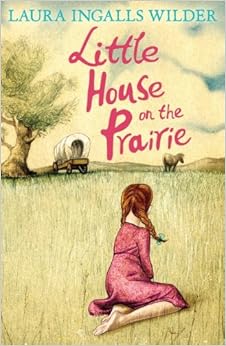
I read several hundred pages of Little House on the Prairie to my 5-year-old son one day when he was home sick from school. Near the end of the book, when the Ingalls family is reckoning with the fact that they built their little house illegally on Indian Territory, and just after an alliance between tribes has been broken by a disagreement over whether or not to attack the settlers, Laura watches the Osage abandoning their annual buffalo hunt and leaving Kansas. Her family will leave, too.

At this point, my son asked me to stop reading.

“Is it too sad?” I asked.

“No,” he said, “I just don’t need to know any more.” After a few moments of silence, he added, “I wish I was French.”

The Indians in Little House are French-speaking, so I understood that my son was saying he wanted to be an Indian. “I wish all that didn’t happen,” he said. And then: “But I want to stay here, I love this place. I don’t want to leave.” He began to cry, and I realized that when I told him Little House was about the place where we live, meaning the Midwest, he thought I meant it was about the town where we live and the house we had just bought.

Our house is not that little house, but we do live on the wrong side of what used to be an Indian boundary negotiated by a treaty that was undone after the 1830 Indian Removal Act. We live in Evanston, Ill., named after John Evans, who founded the university where I teach and defended the Sand Creek massacre as necessary to the settling of the West. What my son was expressing — that he wants the comfort of what he has but that he is uncomfortable with how he came to have it — is one conundrum of whiteness.
This five-year-old’s reaction could not have been solely based on what Laura Ingalls Wilder and her daughter wrote in that book, which reflects previous centuries’ views of that conflict (Ma Ingalls’s even more old-fashioned than Pa’s and the authors’). That suggests that, at least for him, he’s picking up a broader perspective about the long, often fatal conflict over land in North America.

This anecdote reminded me of time nearly a decade ago when I accompanied Godson and Godson’s Brother, along with their parents, to Plimoth Plantation. The boys were about six, and they enjoying tearing around the recreated meetinghouse/fort in that museum village, peering down the cannon barrels out across the stockade.

Then Godson’s Brother stopped and told me very seriously that if he were able to go back to Plymouth in 1627, he would give the Natives rifles. (Actually, he said “wifles,” because he was still having trouble with some consonants.) I rather hoped he was thinking about establishing a fairer balance of power rather than more deadly fighting, especially since some of my ancestors would have been on the other side of those mythical rifle shots. Again, comfort and discomfort, and a broader perspective from today’s kids.

25 November 2015

An Update to Parrotfish for This Historical Moment

Ellen Wittlinger’s article in The Horn Book about updating her novel Parrotfish (published in 2007) is testimony to changes in society and in language.

Wittlinger’s novel is considered the first modern young adult novel with a transgender protagonist. In writing it, she consulted with Toby, a twentysomething friend of one of her children who was female-to-male transgender. That was only ten years ago, but the first edition’s language was already out of date.

Wittlinger writes:
In the ALAN Review interview, and often in the original edition of the book, I used the word transgendered. This usage is no longer correct. If you say, for example, that paper has “yellowed,” something has happened to the paper to make it yellow. But “yellow paper” has always been yellow, just as transgender people have always been who they are — nothing has acted upon them to make them transgender. As the GLAAD Reference Guide points out, “You would not say that Elton John is ‘gayed’ or Ellen DeGeneres is ‘lesbianed,’ therefore you would not say Chaz Bono is ‘transgendered.’” Scratch the “-ed” ending.

But the word that bothered me — and critics — most was tranny. A decade ago, Toby felt it was a word that transgender people would use amongst themselves or to refer to themselves, and that’s how I used it in the book. But the word has evolved to be defamatory. GLAAD’s entry says, “Please note that while some transgender people may use ‘tranny’ to describe themselves, others find it profoundly offensive.”
In this age of digital publishing, it’s relatively easy to make such changes in electronic books and new printings. The existing paper copies of Parrotfish will, of course, remain the same. Wittlinger also states that 2007 remains the novel’s “historical moment” even with the terminology changes.

She also expects further change in this area of language. When GLAAD issued the ninth edition of its Media Reference Guide in 2014, it stated it had been publishing that reference for “over 15 years.” At 66 pages, with a lot of white space in the design, it’s not a hefty text. Nonetheless, at the pace it’s been revised so far, that ninth edition will need replacement in 2016.

Given how sensitive we are these days about language and other signifiers, I wonder how soon there may be complaints about print copies of Parrotfish being not just of its historical moment, but insensitive. It took only three days after Wittlinger’s essay appeared for a pseudonymous commenter to take issue with its spelling of “cis-gender”—a very new word that’s appeared in three different forms (“cisgender,” “cis-gender,” and “cis gender”) in news stories this month.

20 November 2015

Weighing the Woes of White Americans

Janell Ross in the Washington Post this week:

In a new poll released by the Public Religion Research Institute (PRRI) on Tuesday [PDF download], a whopping 43 percent of Americans told researchers that discrimination against whites has become as large a problem as discrimination against blacks and other minority groups.
To be precise, half of all white Americans feel that way. Less than 30% of blacks and Hispanics agree. Ross continues:
White Americans feel put-upon and mistreated — and large shares of non-white Americans do not seem to have any knowledge of the challenges that white Americans say they face.

Of course, there are always aspects of other people's lives that we do not or cannot understand. But the sheer size of the racial/ethnic gap concerning perceived discrimination against white Americans is particularly interesting because there is very little in the way of objective evidence of this discrimination and the disadvantage that typically follows. On just about every measure of social or economic well-being, white Americans fare better than any other group.

That's true of housing and neighborhood quality and homeownership. That's true of overall health, health insurance coverage rates, quality of health care received, life expectancy and infant mortality. That's true when it comes to median household earnings, wealth (assets minus debt), retirement savings and even who has a bank account. . . .

White Americans are, as a group, born healthier and live longer and get better health care, jobs, education and housing in the years in between. Yet half of white Americans believe that discrimination against them is as big a problem in their lives as it is for those of people of color. But there's just no evidence to back that up.

What does exist is ample evidence of continued-but-shrinking racial and ethnic inequality in many arenas and utter stagnation and backsliding in others. Basically, what's changed since the 1950s — outside of technological innovations such as this here Internet — is that white Americans no longer have an exclusive or almost-exclusive hold on the best housing, jobs, schools or the ballot box.
The question on the latest PRRI American Values Survey was “Just your impression, in the United States today, is there a lot of discrimination against any of the following groups or not?”

In past polls, the most comparable question has been whether respondents agree with the statement “We have gone too far in pushing equal rights in this country.” Agreement hovered between 38% and 49% from 1987 to 2012. So the perception that, despite empirical evidence, whites suffer from discrimination as much or more than non-whites doesn’t appear to be new, nor growing, in that period.

The new survey also notes that the perception of anti-white discrimination among whites is much higher within the “working class” (60%) than among people with college degrees (36%). A recent analysis of American mortality rates from 1999 to 2013 by Anne Case and Angus Deaton also found that educational difference was a significant dividing line among middle-aged white non-Hispanic Americans. People who had any college education died at a slightly smaller rate over that period. But mortality for people who had no college had gone up so much as to produce a strikingly higher mortality rate for the entire age/race cohort.

Thus, white Americans without college education might well be justified in perceiving a more difficult life than they expected. But they’re more likely to blame that on “discrimination” against whites rather than, say, a changing economy.