Showing posts with label AUTHOR J. R. R. Tolkien. Show all posts

27 December 2019

The Oxford and Cambridge Schools of British Fantasy

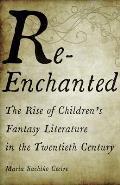
From Slate’s interview with Maria Sachiko Cecire, professor at Bard and author of Re-Enchanted: The Rise of Children’s Fantasy Literature in the Twentieth Century:
J.R.R. Tolkien and C.S. Lewis, of course, as many people know, were friends and colleagues, but they were actually working to reform the English curriculum at Oxford, in addition to writing their own fantasy.

They were the architects of this curriculum, which went into effect in 1931. And they really had an enormous role to play in the kinds of questions that were set in examinations, the texts that were required for undergrads to read; then this had this kind of huge knock-on effect in terms of what people were studying for the next nearly 40 years at Oxford. There’s still some vestiges of that curriculum in the Oxford education today. Then the younger authors I was looking at were Susan Cooper, Kevin Crossley-Holland, Diana Wynne Jones, and Philip Pullman. They all studied this curriculum and got their degrees between 1956 and 1968.

This curriculum at Oxford was really heavy on medieval literature, just at the moment when most other universities were going in the direction of modernism and the kinds of writing that we now associate with literary fiction in the 20th and 21st centuries. At Oxford they were doubling down on medieval literature and also looking at it not just as examples for linguistic analysis—which was how it had been primarily studied in the 19th century under philology—but really looking at it as literature. Really seriously asking students to meditate on both the English medieval past and also this idea of magic and enchantment. . . .

And for comparison’s sake, I also went to the archive at a few other universities, including Cambridge, which went in a really different direction from Oxford in the ’20s and ’30s—much more intentionally towards modernism, towards more contemporary texts, and cutting out medieval requirements for their undergraduate English degree.

And interestingly, Cambridge didn’t really have the same legacy of children’s fantasy writers. T.H. White was at Cambridge at a really interesting time, when there was still a medieval requirement, but right as they were ending it. If you compare his The Once and Future King to, say, The Lord of the Rings, they’re so different in the way they talk about the Middle Ages, with a different level of reverence. There’s anachronism in White’s writing, and pretty profound critiques of the warlike nature of the Middle Ages and of a lot of the nostalgia for that period. Whereas Tolkien and his students tend to be a lot more reverent of that material.
See previous discussions of Tolkien as a teacher of future fantasy writers in 2010 and 2011.

24 April 2013

Becoming an Author in the Worst Way

On Monday I attended an event at the Cambridge Public Library kicking off World Book Night, a European tradition that’s being promoted here. It involves applying for the privilege of giving away forty copies of a book to people who don’t read much. And somehow it’s connected to the date when Miguel de Cervantes and William Shakespeare died, except not really.

The event featured a panel of three local authors whose novels had been selected for this year’s World Book Night program:

The moderator began the session by asking the authors what books they wish they had written. The answers were, respectively, The Immortal Life of Henrietta Lacks, The Brief Wondrous Life of Oscar Wao, and The Lord of the Rings. But Gaiman’s answer came with a story, of course—a story about the nature of storytelling.

I see parts of this story on the web, so I know Gaiman has told it before. He might have adapted it for a character, as his memories of reading about fire hydrants and pizzas in America ended up in the mouth of John Constantine in The Books of Magic. But in any event, the full tale was new to me, so I’m sharing it.

Around the age of twelve, little Neil Gaiman desperately wanted to be the author of The Lord of the Rings. Not to write The Lord of the Rings, since that seemed like an unimaginable amount of work and J. R. R. Tolkien had already written it. Nor to write a new book that could stand beside The Lord of the Rings, since that was obviously impossible. Rather, he wanted to be able to hold himself up in the world as author of The Lord of the Rings itself.

So little Neil thought about the most likely way to achieve this goal. He decided to carry his copy of The Lord of the Rings with him at all times in case a trans-dimensional rift opened up and shifted him into another reality like our own in every way but one—it would have no Lord of the Rings.

Little Neil knew he couldn’t simply submit his paperback copy of the book to a publisher in that world; they would ask all sorts of questions about foreign rights. But he could, he decided, convince an adult to type out all of The Lord of Rings, put his name on the front page, and submit that manuscript to a publisher. And surely the firm would recognize the amazing value of this story by newcomer Neil Gaiman, and in that reality he would be forever and after author of The Lord of the Rings.

But then little Neil spotted a loose end that could jeopardize the whole plan: the typist would know that he hadn’t actually written the book. And he saw no way around that danger but to kill the typist.

At that point, Gaiman acknowledged, his younger self faltered on this ingenious plan. Even being author of The Lord of the Rings didn’t seem worth murdering another person. For a while he continued to carry around the book to be ready for the right trans-dimensional rift, but eventually he turned to other ways of becoming an author.
26 December 2012

How Tolkien Built His Mythology Gradually

PBS’s Art Beat blog ran an interview with Jason Fisher about J. R. R. Tolkien’s creative process, starting with his language study:
Once Tolkien had made a thorough study of the history of English and its literary artifacts, he discovered the native English had actually lost their mythology when the French came during the Norman conquest. So Tolkien became interested in trying to figure out whether he could restore some of that mythology. Eventually he gave up the idea that he would be restoring an actual mythology for England. But this mythological backdrop continued to permeate everything that he wrote for the rest of his life.
Tolkien’s paternal ancestors apparently arrived in England half a millennium after the Norman Conquest, but he identified with the earlier Anglo-Saxons. The notion that England lost its original Good Things to the Norman Conquest was also part of Whig political thinking in the eighteenth century. So in that respect The Lord of the Rings is a cultural cousin of the Declaration of Independence, sharing an intellectual root.

Fisher also notes that The Hobbit was originally more tweely English and contemporary in its first edition:
Tolkien was actually an inveterate niggler. He constantly tinkered with his works. For most people, The Hobbit that they know today is the version that includes all of these changes and revision. But if you read the first edition of The Hobbit you see all kinds of strange things, like references to policemen on bicycles, references to Lilliputians, a reference to the Gobi Desert, the wild wireworms of the Chinese, all of these references to the real world. After the first edition, Tolkien cut all of those references and made it more of its own separate world.
Eventually, it appears, Tolkien tumbled to the fact that he was creating a mythology not for England but for himself.

09 May 2012

Gandalf the Oppressor?

From Damien G. Walter’s unfathomably headlined article “Is science fiction literature's first international language?” in the Guardian:
Russian SF has a long and well-documented history as an outlet for political perspectives that were otherwise repressed. But it is as a critique of the values of western capitalism that the genre has recently caught attention.

The Last Ringbearer by Kirill Eskov is set in the Middle Earth of JRR Tolkien, immediately after the climatic [sic] battle of The Return of the King, and has recently been issued in its second edition translation free online, despite objections from the Tolkien estate. The book reimagines Lord of the Rings as a history written by the victors, with Mordor recast as an emergent industrial nation crushed under the heel of a war-mongering western alliance lead by Gondor, and Gandalf described as "engineering a final solution to the Mordorian problem".

If this mirrors a large proportion of European / Russian history it seems entirely valid, given how easily exactly the same reading can be made of Tolkien's fantasy epic.
Now is this really a critique of Lord of the Rings or a rip-off of it? Or does a rip-off constitute a form of political critique of such a dominant intellectual property?

What does it mean to identify with orcs, even if you present them as misrepresented? Is the “war-mongering western alliance” that Eskov and Walter see the Axis or NATO?

19 January 2012

Moorcock: “the prose of the nursery-room”

From Michael Moorcock’s essay “Epic Pooh,” as archived at Revolution SF (it was originally written in 1978, revised in 1989, and revised again to note recent authors):

The sort of prose most often identified with "high" fantasy is the prose of the nursery-room. It is a lullaby; it is meant to soothe and console. It is mouth-music. It is frequently enjoyed not for its tensions but for its lack of tensions. It coddles; it makes friends with you; it tells you comforting lies. It is soft:
One day when the sun had come back over the forest, bringing with it the scent of May, and all the streams of the Forest were tinkling happily to find themselves their own pretty shape again, and the little pools lay dreaming of the life they had seen and the big things they had done, and in the warmth and quiet of the Forest the cuckoo was trying over his voice carefully and listening to see if he liked it, and wood-pigeons were complaining gently to themselves in their lazy comfortable way that it was the other fellow's fault, but it didn't matter very much; on such a day as this Christopher Robin whistled in a special way he had, and Owl came flying out of the Hundred Acre Wood to see what was wanted.

Winnie-the-Pooh, 1926
It is the predominant tone of The Lord of the Rings and Watership Down and it is the main reason why these books, like many similar ones in the past, are successful. It is the tone of many forgotten British and American bestsellers, well-remembered children's books, like The Wind in the Willows, you often hear it in regional fiction addressed to a local audience, or, in a more sophisticated form, James Barrie (Dear Brutus, Mary Rose and, of course, Peter Pan).

Unlike the tone of E. Nesbit (Five Children and It etc.), Richmal Crompton (the 'William' books) Terry Pratchett or the redoubtable J.K.Rowling, it is sentimental, slightly distanced, often wistful, a trifle retrospective; it contains little wit and much whimsy.
Wait a minute! Milne’s characterization of Eeyore is hilarious. But his narrative voice is indeed the voice of an adult looking back/down on childhood. Nesbit’s narrative voice, on the other hand, is an author in conspiracy with young readers.

Perhaps the “voice of the nursery-room” is one reason why some of the novels Moorcock mentions—Lord of the Rings and Watership Down among them—are treated as books for young people even though their authors conceived them as books for adults.

09 December 2011

Tolkien the Teacher

Back in early 2010, I quoted reminiscences about J. R. R. Tolkien at Oxford from Diana Wynne Jones and Susan Cooper, as collected by Leonard Marcus. Cooper said, “He was a wonderful lecturer,” but Jones said his lectures were “absolutely appalling.”

It looks like many more people shared Jones’s response. Adam Gopnik’s recent article in the New Yorker about high fantasy for young readers begins:

At Oxford in the nineteen-forties, Professor John Ronald Reuel Tolkien was generally considered the most boring lecturer around, teaching the most boring subject known to man, Anglo-Saxon philology and literature, in the most boring way imaginable.

“Incoherent and often inaudible” was Kingsley Amis’s verdict on his teacher. Tolkien, he reported, would write long lists of words on the blackboard, obscuring them with his body as he droned on, then would absent-mindedly erase them without turning around.

“I can just about stand learning the filthy lingo it’s written in,” Philip Larkin, another Tolkien student, complained about the old man’s lectures on “Beowulf.” “What gets me down is being expected to admire the bloody stuff.”
Since Jones and Cooper were at Oxford at about the same time, and since Cooper can appreciate theatricality when she sees it, most likely she was remembering the more popular lectures of C. S. Lewis.

According to Philip Pullman, Tolkien left his stamp on the Oxford curriculum even after he had retired from teaching: “every undergraduate had to read and study—and suffer—Anglo-Saxon.”

28 April 2011

The Multi-Billionaire and the Dragon

One is a murderous creature who sits hoarding his wealth. The other is a dragon.

Earlier this month Forbes issued its “Fictional 15,” the most wealthy fictional characters. The accuracy of that list is debatable; it doesn’t agree with, for example, the AV Club’s list of “obscenely wealthy comic-book and cartoon characters.”

Forbes editor Michael Noer supplemented the main list with a long essay on calculating the net worth of Smaug the dragon from J. R. R. Tolkien’s The Hobbit.
We know from the novel that Smaug’s wealth comes down to three primary components, the mound of silver and gold that he sleeps on, the diamonds and other precious gemstones encrusted in his underbelly, and the “Arkenstone of Thrain,” which is depicted as something like the Hope Diamond on steroids.
Estimating the size of the mound, Smaug’s belly, and the Arkenstone required going beyond Tolkien’s text to Dungeons and Dragons reference websites, current commodity prices, and a lot of assumptions.

Noer came out with a figure of approximately $8.6 billion. That’s higher than the magazine’s calculation of the fortunes of Facebook founder Marc Zuckerberg, media magnate Rupert Murdoch, and mutual-fund company head Ned Johnson. But it’s less than a sixth of the estimation for Microsoft cofounder Bill Gates.

08 May 2010

Another Recollection of Tolkien

Back in March I quoted recollections of Prof. J. R. R. Tolkien from Diana Wynne Jones and Susan Cooper, found in Leonard Marcus book of interviews, The Wand in the Word.

Yet another future children’s-book author who encountered Tolkien at Oxford was Philip Pullman. He’s a decade younger than Jones and Cooper, so by the time he was at university Prof. Tolkien was a wealthy celebrity, retired from the classroom. Pullman told Marcus:

He was a genial old fellow in his seventies, world famous by then. The rector of our college…invited me and a couple of my friends to dinner to meet the great man. . . . it was Tolkien who fought the great battle to retain Anglo-Saxon as a subject of study at Oxford. Because he won that battle, every undergraduate had to read and study—and suffer—Anglo-Saxon.

And so we were all introduced and sat down to dinner. One of my friends was on one side of him; the other friend was on the other side. I was seated across the table. Professor Tolkien turned to the first fellow and said, “How are they pronouncing Anglo-Saxon these days?” That was one of the things the scholars argued over, you know: the different ways of pronouncing the wretched language! My friend had done as little work as I had, and had no idea. So he just sort of gaped and goggled and tried to make up an answer.

Which displeased Tolkien, who turned to the other fellow and said, “Now then, you man, did you enjoy The Lord of the Rings?”

My other friend had to say, “Well, I’m awfully sorry but I haven’t read it.“

I could have answered that question, at least. But that was the end of Tolkien’s conversation. He never got round to asking me anything.
The young Pullman was a fan of Tolkien, but he’s become more critical. Perhaps if the professor had paid him more attention back then…

29 March 2010

Conflicting Recollections of Prof. Tolkien

In his book The Wand and the Word: Conversations with Writers of Fantasy, literary scholar Leonard S. Marcus asked a number of established fantasy writers about their influences, particularly J. R. R. Tolkien.

Diana Wynne Jones (born in 1934) and Susan Cooper (born in 1935) attended Oxford University at about the same time, and they gave Marcus completely different memories of Tolkien.

Cooper said:

I never met him, but I went to his lectures on Anglo-Saxon literature, along with hundreds of other students. He was a wonderful lecturer. Like C. S. Lewis, whose lectures I also attended, he was a tweedy, pipe-smoking, middle-aged man. We were all waiting for the third volume of The Lord of the Rings to come out.
But Jones told Marcus:
I went to his public lectures. They were absolutely appalling. In those days a lecturer could be paid for his entire course even if he lost his audience, provided he turned up for the first lecture. I think that Tolkien made quite a cynical effort to get rid of us so he could go home and finish writing The Lord of the Rings.

He gave his lectures in a very, very small room and didn’t address us, his audience, at all. In fact he looked the other way, with his face almost squashed up against the blackboard. He spoke in a mutter. His mind was on finishing The Lord of the Rings, and he was really musing to himself about the nature of narrative.

But I found this so fascinating that I came back week after week, as did one other person. I’ve always wondered what became of him, because he was obviously equally fascinated. And because we stuck there, Tolkien couldn’t go away and write Lord of the Rings!

He would say the most marvelous things about the way you take a very basic plot and twitch it here and twitch it there—and it becomes a completely different plot.
Perhaps these writers are remembering different series of lectures, and Tolkien was more engaged in the topic of Anglo-Saxon than in his “public lectures.” Perhaps Cooper’s memory of Tolkien is mixed with her memory of Lewis, whom Jones recalls as a polished, popular speaker in a large, packed auditorium.

20 October 2006

Worst Use of Fantasy Literature of the Week

This week Sen. Rick Santorum (R-PA), trailing in his race for reelection, told the Bucks County Courier-Times that America's ongoing war in Iraq is the equivalent of Aragorn's attack on the gates of Mordor:

As the hobbits are going up Mount Doom, the Eye of Mordor is being drawn somewhere else. It's being drawn to Iraq and it's not being drawn to the US. You know what? I want to keep it on Iraq. I don't want the Eye to come back here to the United States.
Naturally, websites are illustrating this quote with photo-composites of Santorum and the Gigantic Lighthouse of Evil from Peter Jackson's Lord of the Rings movies. For a knowledgable dismembering of the Tolkien analogy, see Scott Rosenberg's analysis.
