Showing posts with label AUTHOR E. Nesbit. Show all posts

23 September 2014

Finding Neverland Has a Lot to Answer For

In 2004 Miramax released Finding Neverland, with Johnny Depp playing a handsomer-than-real-life James M. Barrie, Kate Winslet as a more-widowed-than-real-life Sylvia Llewellyn Davies, and Freddie Highmore as one of her less-doomed-than-real-life sons.

It was a modern “prestige picture,” with a historical setting, literary roots, paeans to preserving childhood imagination, and a noble dying parent. All the odd aspects of Barrie’s relationship with the Llewellyn Davies family and of late-Victorian Britain were blurred away.

That movie made $116 million worldwide, more than four times its production budget. More important, it was nominated for seven Oscars and won one (for best score), which is what studios want in a prestige picture. Harvey Weinstein is now producing a Broadway musical based on it.

Two years later the Weinstein Company offered Miss Potter, starring Renee Zellweger as Beatrix Potter. Last year Disney (owner of Miramax) gave us Saving Mr. Banks, with Emma Thompson as P. L. Travers and Tom Hanks as Walt Disney; the company entered that deal to protect its brand, but the result was another prestige picture that distorted literary history.

There were, to be sure, earlier biopics about British children’s-book writers, such as Dreamchild (1985) with Ian Holm as Lewis Carroll and Shadowlands (1993) with Anthony Hopkins as C. S. Lewis. But those were about the contrasts between childhood literature and adult life, not about fantasy stories making everybody happy again.

It’s possible that Hollywood now thinks it’s run out of dead British children’s authors who are famous in the States. (Evidently E. Nesbit is not well known enough, and her solution to family troubles too worrisome.) The studios have therefore moved on to American children’s-book writers.

This week the Hollywood Reporter broke the news that New Line Cinema bought the script for Road to Oz, a biopic about L. Frank Baum. The writer, Josh Golden, has even been working with one of the Finding Neverland producers, Nellie Bellflower. (And somehow the team of Golden and Bellflower doesn’t seem like they would turn out an unflinching look at the human condition.)

The John Ritter TV movie The Dreamer of Oz (1990) already showed it’s possible to fit Baum’s life into the arc of a man prone to fantasizing who redeems himself through telling children’s stories. Oz proved its potential to generate international box-office success with Oz the Great and Powerful last year (and its potential to lay an egg with this year’s Legends of Oz: Dorothy’s Return). So this screenplay might actually get made.

Interestingly, New Line is part of the same Time Warner corporation that owns rights to the 1939 MGM movie. This biopic might therefore be able to use elements from that film, which Baum never saw, but which could trigger the requisite warm nostalgia from viewers who don’t know the real story.

26 July 2014

Kickstarting Dragons

April Brown and colleagues from an online comics magazine called Off Registration have prepared a comics adaptation of E. Nesbit’s The Book of Dragons.

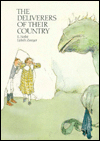
That volume will of course include a version of “The Deliverers of Their Country,” one of my favorite examples of magical realism. The team behind this take is Jonathan Clode and Russell Hossain. According to the sample page, the artist has set the story in the present day, but the dialogue retains the original Edwardian flavor.

Brown and friends are running a Kickstarter campaign to cover printing costs, with an end date of 8 August.

15 August 2012

Play It Again, Psammead

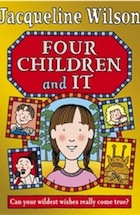
The success of various latter-day sequels to classic (i.e., public-domain or licensed-by-heirs) children’s novels prompted Puffin to invite Jacqueline Wilson to write such a book. After initially declining, she chose to follow on a childhood favorite, E. Nesbit’s Five Children and It, as she described in the Guardian. Her column answers many of the questions I had about this project last year.

Wilson also found that she couldn’t write in the same mode as the original book.
Nesbit had written her book in the third person [in fact, as a delightfully intrusive narrator], but I much prefer writing in the first person, and I thought it would be easier and more involving for my readers if I chose a child narrator again. I invented Rosalind, a quiet, shy, intense girl. She's a very keen reader – and so, naturally enough, when the story opens she's been reading Five Children and It. She has a younger brother, Robbie, a delicate, timid boy who loves playing with his toy zoo animals. Their parents have divorced – no surprise there, this is a Jacqueline Wilson novel.

The children have gone to spend part of their summer holiday with their dad, while their mum goes to an Open University summer school. He is now married to Alice, and they have a toddler called Maudie. Alice also has a daughter from a former relationship. She's named Samantha, but she's always called Smash. She’s a fierce, opinionated, streetwise child, who’s a royal pain most of the time. Smash is staying with her mother for the holidays because her dad is on honeymoon with his new young wife.

So I have a very modern jigsaw family. But this isn’t a dark, angst-ridden book about emotionally neglected children. It’s a fantasy story – and as soon as the children dig up the Psammead in the sandpit at Oxshott Woods, the fun starts.

I knew that one of the first wishes would be the obvious one: Smash wants them all to be rich and famous. I had great fun with this one. I let Rosalind be a bestselling child author, turned Robbie into a mini TV chef, and had Maudie as the star of a sitcom. Smash herself is like a little Lady Gaga, with a sell-out gig at the O2 Arena.

I think the most challenging wish for me was when bookish Rosalind asks if they can meet all the Edwardian children in Five Children and It. I had to work hard to get Cyril, Anthea, Robert and Jane to sound natural, and not just silly caricatures. The Edwardian children seem very immature to my modern children and yet they boss the family’s adult servants around without a second thought. They also have extraordinary freedom, roaming about the countryside on a whim.
Wilson’s article also makes one mention of Nesbit’s own sequels, The Phoenix and the Carpet and The Story of the Amulet, and one of another latter-day continuation, Helen Cresswell’s 1992 The Return of the Psammead.

19 January 2012

Moorcock: “the prose of the nursery-room”

From Michael Moorcock’s essay “Epic Pooh,” as archived at Revolution SF (it was originally written in 1978, revised in 1989, and revised again to note recent authors):

The sort of prose most often identified with "high" fantasy is the prose of the nursery-room. It is a lullaby; it is meant to soothe and console. It is mouth-music. It is frequently enjoyed not for its tensions but for its lack of tensions. It coddles; it makes friends with you; it tells you comforting lies. It is soft:
One day when the sun had come back over the forest, bringing with it the scent of May, and all the streams of the Forest were tinkling happily to find themselves their own pretty shape again, and the little pools lay dreaming of the life they had seen and the big things they had done, and in the warmth and quiet of the Forest the cuckoo was trying over his voice carefully and listening to see if he liked it, and wood-pigeons were complaining gently to themselves in their lazy comfortable way that it was the other fellow's fault, but it didn't matter very much; on such a day as this Christopher Robin whistled in a special way he had, and Owl came flying out of the Hundred Acre Wood to see what was wanted.

Winnie-the-Pooh, 1926
It is the predominant tone of The Lord of the Rings and Watership Down and it is the main reason why these books, like many similar ones in the past, are successful. It is the tone of many forgotten British and American bestsellers, well-remembered children's books, like The Wind in the Willows, you often hear it in regional fiction addressed to a local audience, or, in a more sophisticated form, James Barrie (Dear Brutus, Mary Rose and, of course, Peter Pan).

Unlike the tone of E. Nesbit (Five Children and It etc.), Richmal Crompton (the 'William' books) Terry Pratchett or the redoubtable J.K.Rowling, it is sentimental, slightly distanced, often wistful, a trifle retrospective; it contains little wit and much whimsy.
Wait a minute! Milne’s characterization of Eeyore is hilarious. But his narrative voice is indeed the voice of an adult looking back/down on childhood. Nesbit’s narrative voice, on the other hand, is an author in conspiracy with young readers.

Perhaps the “voice of the nursery-room” is one reason why some of the novels Moorcock mentions—Lord of the Rings and Watership Down among them—are treated as books for young people even though their authors conceived them as books for adults.

21 October 2011

Ness on Nesbit

Gracious, I missed that Mari Ness at Tor was reviewing all the books by E. Nesbit!

I didn’t see a mention of how in her golden period Nesbit wrote for The Strand, so her books appeared first in that magazine in chunks and only later were collected. That helps to explain their episodic rhythm, especially in the early years.

Ness gets rather cutting on a time-travel novel that I haven’t been able to complete, Harding’s Luck:

Nesbit also choose[s] to make Dickie into a poor crippled orphan, and thus, Extremely Good, so Good that Dickie is willing to return to poverty and disability, giving up the pony, just to turn a homeless beggar and thief into a hardworking, honest man.

I’m not certain that any writer could have pulled this off; certainly Nesbit couldn’t. I can believe in Nesbit’s magical rings and wishes; I can certainly believe in her portraits of children who do thoroughly selfish and foolish things or spend more time thinking about food and fun than about being good. But not this. . . .

By 1907/1908, when Nesbit was planning and writing Harding’s Luck, she was well established as a popular, clever, children’s writer. But then, as more than occasionally now, “popular,” “clever,” and “children’s” did not add up, in the eyes of important (and generally male) critics, as “good” or “of literary merit.” . . . Nesbit, on personal, friendly terms with some of these literary critics, knew what they were looking for, and she was prepared to change her writing to meet it. Thus the serious tone of this book, and its often self-conscious “literary” feel.
That’s not a selling review, is it? The title of this illustration by H. R. Millar might sum up the tone that Ness disliked in the book: “It hurt, but Dickie liked it.”

I think Nesbit was much more comfortable writing about upper and upper-middle-class children, though they might (as in The Railway Children) be in danger of falling into genteel poverty. Poor Dickie might have made her nervous, in her good Fabian Socialist way, so he had to end up better than life.

22 March 2011

New Nesbit and Another Nesbit News Bit

The Guardian reports that Jacqueline Wilson, one of the UK’s most respected and popular writers for children, has signed a contract to “write a new version of E Nesbit’s classic Five Children and It.”

That seemed like such a wasted effort that I went looking for more detail, but even the original report in The Bookseller adds little—only that Wilson will write a “contemporary version.”

Does this mean retelling the same Psammead adventures in contemporary England, where children don’t have to worry so much about evading the household help? Or will a new set of children discover the grumpy little wish-provider and make new wishes?

Is Wilson writing The Psammead Comes Back: And This Times It’s Personal? Should we look forward to more Nesbit revamps that reflect modern lifestyles, like The Airline Children? The Enchanted McMansion? The Would-Be-Above-Averages?

Most of Nesbit’s novels are set in England a century ago, of course, and some display the racism and class attitudes of their times. But the children—almost always a gender mix of siblings, not vastly distinguishable—treat each other in easily relatable ways. The narrative style and voice in many of Nesbit’s fantasies is delightfully fresh. So I’m not sure what about Five Children and It is so dated as to demand a contemporary rewrite, which would therefore be driven by the new copyright claim and exclusive sales.

There are other ways to regain that old magical realism, of course. Edward Eager unabashedly updated Nesbit for the postwar suburban American child, and Laurel Snyder has updated Eager with Any Which Wall. In 1999 Books of Wonder commissioned new illustrations for Five Children and It from Paul O. Zelinsky, as shown above. All those editions and additions share a certain old-fashioned and nostalgic tone, but surely that’s what people seeking “a new version of E Nesbit” would be looking for. Perhaps Wilson will simply produce her own “inspired by Nesbit” adventure.

The other Nesbit news story for this week was the revelation that some beloved details of The Railway Children—particularly flagging down a train to prevent an accident and receiving an engraved watch as a reward—also appear in a novel published just a few years before: The House by the Railway, by Ada J. Graves. Since I dislike The Railway Children, this news didn’t derail me in the least.

03 March 2011

“She Never Slapped Her Hippopotamus”

This is a passage from E. Nesbit’s “Uncle James, or The Purple Stranger,” a story collected in The Book of Dragons. It introduces one of the main characters, a little princess.

She was always kind to her pets. She never slapped her hippopotamus when it broke her dolls in its playful gambols, and she never forgot to feed her rhinoceroses in their little hutch in the backyard. Her elephant was devoted to her, and sometimes Mary Ann made her nurse quite cross by smuggling the dear little thing up to bed with her and letting it go to sleep with its long trunk laid lovingly across her throat…
Alas, a few paragraphs further comes an explanation that erases the visual image this passage alone provides. But it’s delightful while it lasts.

13 November 2010

Correction: When Edward Met Edith

Months back, I wrote an analysis of how Edward Eager’s 1954 fantasy Half Magic addressed history—in its setting in the past, in its depiction of change over time, and in its explicit allusions to E. Nesbit’s novels from decades earlier. I wrote that Eager set Half Magic around the period when he had first read Nesbit.

Fellow Oz fan and scholar Dee Michel recommended that I read Eager’s thoughts on the Oz series in his 1948 Horn Book essay “A Minority Report,” and in doing so I came across evidence that my supposition about Eager’s childhood reading was wrong.

Eager didn’t read Nesbit’s books as a child. He discovered them as a young father in the 1940s, and in this essay he thanked the “learned ladies” of the American children’s book establishment for cluing him in. Those ladies included Anne Eaton, Anne Carroll Moore, “Mrs. Becker, Miss [Bertha E.] Mahony and the rest.”

Their praise for Nesbit’s books sent Eager “vainly chasing through New York’s thrift shops and secondhand bookstores.” The books had gone out of print in America, and their owners apparently still treasured their old copies. By great pre-Amazonian effort Eager found enough to declare Nesbit’s “magnificent works” to be “the best children’s books, I am quite sure, in the world!”

An editorial note with Eager’s essay in the 1959 Horn Book Sampler says that Coward-McCann had reprinted Nesbit’s novels in the US only the year before. By then, Eager had made his own name in children’s books.

So my original argument stands: that Eager set Half Magic in the period of his own childhood, and that the book comments in part on that period and historic change. But Eager didn’t choose that setting because it reminded him of first reading Nesbit.

06 July 2009

Gerald and the Ugly-Wuglies

This spring Eva's Book Addiction offered an insightful review of E. Nesbit's The Enchanted Castle, with particular attention to the Ugly-Wuglies:

those creatures created out of coats and hangers and pillows and blankets and broom handles and hockey sticks and gloves to fill out the seats for the children's home theatrical performance. They come alive accidentally due to an unwise wish, and scare the dickens out of everyone when they start applauding at the end.

It's horrible when these scarecrow-like figures get up and stump down the hall on their odd and unwieldy legs but worse yet when one of them tries to talk. A long string of vowels comes out of its painted mouth, vivid against its white pillow-case face, and it says the same thing over and over - "Aa oo re o me me oo a oo ho el?" - until finally Gerald understands. And what horror did this Ugly-Wugly utter?

"Can you recommend me to a good hotel?"
The Ugly-Wuglies are, it turns out, empty versions of middle-class Victorian Englishmen and women. And nothing's scarier than that.

03 October 2008

Avoiding the Dreaded Prologue

A while back, Alison Morris at Shelftalker quoted this passage from E. Nesbit's The Treasure Seekers. It comes to us in one of the finest narrative voices that any writer has ever conceived, the self-effacing chronicler Oswald Bastable:

I shall not tell you anything about us except what I should like to know about if I was reading the story and you were writing it. Albert’s uncle says I ought to have put this in the preface, but I never read prefaces, and it is not much good writing things just for people to skip. I wonder other authors have never thought of this.
Coincidentally, that very morning I'd noticed how Gail Gauthier's The Hero of Ticonderoga starts with eight pages about heroine Thérèse's first stab at an oral report about Ethan Allen, and then moves on to...chapter 1.

I looked back at the first page of the story. There's no label saying "Preface" or "Prologue" or "Please, please, please read this even if you never read any introductory material." Since not every book design includes chapter numbers, a reader like Oswald Bastable could easily be fooled into thinking that was chapter 1, and read it unawares. Clever.

31 March 2008

The Nesbit Model and the Baum Model

For a while I've been mulling over two types of fantasy adventures that start in a world that readers recognize as much like their own. The difference involves the young protagonist(s). Does a group of children have the adventure together, or is a single child on his or her own? It's struck me that authors and series usually favor one form or the other.

The books with a group of children always have some boys and some girls, usually siblings but sometimes augmented with cousins and long-standing neighbors whose connection predates the book. I identify this grouping as constructed on the "Nesbit model," after the British novelist E. Nesbit, who nearly perfected the form more than a century ago in Five Children and It, The Enchanted Castle, and other delights.

Other fantasy books constructed along the Nesbit model include:

  • Peter Pan, by J. M. Barrie.
  • The Ship That Flew, by Hilda Lewis.
  • Mary Poppins and its sequels, by P. L. Travers
  • The Magic Bed-Knob and sequel, by Mary Norton
  • The Lion, the Witch, and the Wardrobe and its sequels, by C. S. Lewis.
  • every Edward Eager book, of course, since he openly took Nesbit as a model.
  • The series that began with A Wrinkle in Time, by Madeleine L'Engle.
  • Over Sea, Under Stone, by Susan Cooper, who was motivated to write a "family adventure story" by a contest a publisher announced in Nesbit's honor, as she explained in her Newbery acceptance speech.
  • The Ogre Downstairs, by Diana Wynne Jones, and several of her other books.
  • The Spiderwick Chronicles, by Tony DiTerlizzi and Holly Black.
These books have a sort of collective protagonist, with the siblings and friends bringing different strengths to the adventure and bucking each other up. That model has proved its value in non-fantasy series as well, such as Swallows and Amazons and its successors by Arthur Ransome; The Famous Five and its many, many clones by Enid Blyton; and Mystery Manor, by Mary Evelyn Atkinson, which I've never read, but which had such intriguing endpapers.

(I didn't include in that group books that have multiple protagonists, usually of both sexes, who are brought together by the adventure itself: Diane Duane's Wizards series, J. K. Rowling's Harry Potter books, Philip Pullman's His Dark Materials trilogy, and so on.)

I identify the other set as following the "Baum model," though there might be precedents before L. Frank Baum's The Wonderful Wizard of Oz, such as Charles E. Carryl's Davy and the Goblin. In this set, a young protagonist travels alone into a fantasy world and attracts companions there, or deals alone with a magical element intruding into his or her world.

The protagonist in this sort of story is often an only child; it took 34 Oz books before any young protagonist had a sibling (in The Wonder City of Oz, shown at top), and four more before a brother and sister had an adventure together. If the protagonist in one of these book has a sibling or two, they're often obstacles to fun and adventure rather than companions.

Fantasies built along this model include:
  • The Old Tobacco Shop, by William Bowen.
  • Peter Graves, by William Pène du Bois.
  • David and the Phoenix, by Edward Ormondroyd.
  • The Magic Shop books by Bruce Coville.
  • The Phantom Tollbooth, by Norton Juster.
  • The Indian in the Cupboard, by Lynne Reid Banks.
Now perhaps I'm simply dividing books by one factor (quantity of protagonists), and deluding myself into perceiving that that classification leads to something of further significance. But I note that most of the authors in the first grouping are British, and most in the second are American.

Was that difference simply the result of Nesbit's and Baum's influences in their respective countries since the start of the 20th century? Or does it speak to a deeper significance about national cultures--America's cult of individualism, for instance?

02 November 2007

Knights and Ladies in Knight's Castle

One of the weaknesses of E. Nesbit's fantasy books is that her children aren't very distinct. It doesn't help that there are often three or four of them, all from one family. And it doesn't help that they tend to fall into gendered types: the commanding boy, the maternal girl, the youngest, and so on, so even what sets them apart from each other doesn't make them individuals. I think her child characters have delightfully childish dialog and thinking, but they just don't stand out.

Nesbit's acolyte Edward Eager largely avoids that problem, though he, too, uses multiple children as protagonists. I think in Knight's Castle Eager exaggerates the types a bit, making each more distinct. And he reverses the usual stereotypes by depicting one girl, Eliza, as the most aggressive of the bunch, while another, Ann, is the youngest and shyest.

And here's a passage when those personalities and gender expectations come out most clearly.

"Don't!" said Ann. "Once you start moving them around you never can tell what might happen!"

"What could happen?" said Jack.

"Almost anything," said Eliza. "You don't know what that magic's like when it's roused!"

"Ah, don't pay any attention to them," said Roger suddenly and basely, full of his new manly importance as Jack's friend. "They're just a couple of crazy girls."

After that, Ann did not take much part in the conversation.

Eliza's reaction to being called a crazy girl was different. In the process of her reaction a chair leg came off and the floor was scratched, but no one was seriously hurt.
Later Eliza also proves to be the most bloodthirsty of the children in battle: "I cut off four heads and cleaved three knights in two. How did you do?" Roger is feeling a little queasy at that moment.

As for Ann, just at the moment in the book when she's feeling most small, there's a need for a small girl. A bit neat, to be sure, but satisfying nonetheless.

01 November 2007

Horn Book Fantasy Roundup

This month the Horn Book's website added a selection of fine essays on fantasy from issues past.

I particularly enjoyed Lloyd Alexander on E. Nesbit's narrative voice in a 1985 essay:

A lot of Victorian children's writers give off a sort of mealy-potato quality: much rolling of eyes heavenward; children dying beautifully of some unidentified (but not messy) ailment. But E. Nesbit has a freshness, tartness, without gushing or talking down. Today's writers owe her a debt. We are modern thanks largely to her. As much as anyone, perhaps more, she helped us to find our twentieth-century voices.
Interesting samples of that narration posted here and here.

12 August 2007

Good Old Beautiful Phoenix

On my five-hour bus ride last Friday, I learned that my godson's five-year-old first cousins on his mother's side some fine children were enjoying E. Nesbit's The Phoenix and the Carpet. And that put me in mind of one of my favorite passages from that magnificent character study:

"I've been here all the time," said the Phoenix, yawning politely behind its claw. "If you wanted me you should have recited the ode of invocation; it's seven thousand lines long, and written in very pure and beautiful Greek."

"Couldn't you tell it us in English?" asked Anthea.

"It's rather long, isn't it?" said Jane...

"Couldn't you make a short English version, like Tate and Brady?"

"Oh, come along, do," said Robert, holding out his hand. "Come along, good old Phoenix."

"Good old beautiful Phoenix," it corrected shyly.

"Good old beautiful Phoenix, then. Come along, come along," said Robert, impatiently, with his hand still held out.

The Phoenix fluttered at once on to his wrist.

"This amiable youth," it said to the others, "has miraculously been able to put the whole meaning of the seven thousand lines of Greek invocation into one English hexameter--a little misplaced some of the words--but
'Oh, come along, come along, good old beautiful Phoenix!'
"Not perfect, I admit--but not bad for a boy of his age."
I especially admire Nesbit's insertion of the word "shyly."

[ADDENDUM: Indeed, I realized after posting this passage that every adverb in it but "impatiently"--in other words, every adverb modifying something to do with the Phoenix--brings a little irony. The Phoenix's yawn isn't polite, the bird isn't shy about seeking compliments, Robert's plea isn't miraculous, and the 7,000-line invocation isn't just "rather long." The adverbs draw attention to themselves and the qualities they describe only to make us reexamine what's really going on.]

19 November 2006

Even More Original Ice Dragon?

Apropos of ice dragons instead of fire dragons, fantasy scholar Ruth Berman tells me that E. Nesbit wrote a story called "The Ice Dragon" in her collection The Book of Dragons, also titled Seven Dragons. That tale originally snaked through the June and July 1899 issues of The Strand magazine.

A standalone edition of The Ice Dragon was published in 1988, with pictures by Carol Gray. Though the text is in the public domain, the only free version I could find on the web is this audio download, which requires registration.

09 November 2006

Series as a Genre Unto Themselves

Roger Sutton just wrote about the issues provoked by sequels and series, asking how reviewers and prize judges can evaluate them. Must one know the ultimate ending of the series to gauge the first volume? Must readers have read the foregoing volumes to appreciate a later entry? And if part 2 is better than part 1 or part 3 (The Empire Strikes Back, anyone?), can it satisfy without a true beginning or end?

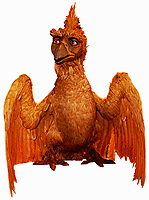
As one example of the quandary, on the Child_Lit email list, Charlie Butler started a list of classic twentieth-century British children's books with E. Nesbit's Five Children and It. For my money, the first sequel, The Phoenix and the Carpet, is superior because of the superior character of the Phoenix (pictured above, at least according to the BBC). And the third book, with its look at mankind's past and future, has more philosophical depth than the first. Clearly, the sequels couldn't have existed without the first book, but the series as a whole outweighs that beginning. In the end, I think it's best to consider this Nesbit series as a whole.

As I discussed in this posting about Diana Wynne Jones's The Pinhoe Egg, sequels that closely follow a preceding book offer a pleasure different from standalone books. They offer variations on the familiar rather than the thrill of discovery.

Series also sell differently, of course, as we see in how children's bestseller lists now routinely separate series titles from standalones, lest the latter be crowded out entirely by volumes of The Magic Tree House. Of course, that can make it awkward when a successful single title spawns gobs of sequels--what was once respectable enough to merit a place on the main list might get shunted off to the category of books that sell too much.

Only some series are planned from the beginning (Harry Potter, A Series of Unfortunate Events, Percy Jackson), and others forced into separate volumes by length (The Lord of the Rings, Octavian Nothing). But most series start out as standalone titles, and they evolve into series because of that most powerful motivator for writing: ready money.

Book 1 sells a bundle. More readers means more people wondering, "What happened next?" (even if, as in Wicked, the main character is D-E-A-D, dead). Publisher and agent drop hints about the wisdom of revisiting that well. Author can't help but think gratefully of those characters and that world. And before we know it, as Bobcat Goldthwait said about the need for Police Academy 4, "There were so many unanswered questions!" crying out to be addressed.

Sometimes sequels really do address questions that the original volume couldn't touch. Bruce Coville's My Teacher Is an Alien started as a catchy title suggested by packager Byron Preiss and grew into a series with depths that its beginning never hinted at.

L. Frank Baum's Oz books managed to be all types of sequels: incremental, planned, and then ground out endlessly. They come in four layers, defined by how long he imagined his series to be when he wrote:

  • The Wonderful Wizard of Oz, planned as a standalone novel
  • The Marvelous Land of Oz, focusing the Scarecrow and Tin Woodman, who had become Broadway stars
  • the next four books, written under one contract; each starts with Dorothy on a journey, and the set ends with her settling in the Emerald City and Glinda cutting Oz off from the Outside World
  • the last eight books, published annually as long as he lasted with no overarching structure
The sequel phenomenon may be especially strong in children's books because there's such a tradition of series, many very good and even more beloved. Of the past twenty-five years of Newbery winners, I count at least half a dozen that inspired sequels or were sequels.

Compare that to Pulitzer-winning novels in the same period. In serious adult fiction, an author may already have to be at the top of his game (as in Updike, Roth--and I do mean "his") to get away with such a commercial move as writing a sequel. Larry McMurtry's sales remain high, but was his literary star higher before he started writing sequels to Lonesome Dove?

11 October 2006

Visiting Storybook England

A little over a decade ago, I made my first visit to good friends in England. They were living in an apartment in Christ Church College at Oxford, and they arranged for me to sleep in a spare room in the deanery below. That's the same deanery where Alice Liddell, daughter of Dean Henry Liddell, grew up.

My bedroom window overlooked the garden where Alice and her sisters had played, including a tree said to be the model for the Cheshire Cat's. In a common room nearby was a fire screen that the Rev. Charles L. Dodgson used to introduce youngsters to his Hunting of the Snark (on which I wrote my undergraduate thesis). And to light my way to the bathroom at night, the most convenient lamp was the little one over a Hans Holbein portrait of Henry VIII. It was a most impressive arrangement for an Anglophilic visitor.

Now the UK's National Tourist Office has recognized that children's literature is one of the country's most valuable exports, and has created a new website to lure travelers: StorybookEngland.com. It offers pointers to scores of sites around Britain associated with children's literature. For instance, Dorney Court was the childhood inspiration for Susan Cooper's Huntercombe Hall in The Dark Is Rising.

I have a few grumbles about this site. It seems impossible to navigate around without stumbling back into the annoying animated introduction. There are two non-overlapping lists of authors, both alphabetical by first name; then the Bookstore section is alphabetical by last name. Finally, I once backed into the "First Page," only to find that its lists of authors and works was completely "undefined." In short, there are still more than a few bugs to be shunted away.

More worrisome in the long run, a lot of the locations recommended for visiting aren't where great books were written, set, or inspired, but sites where those books are commemorated (such as the statue of Paddington Bear in Paddington Station) or where TV or movie adaptations were filmed. We move closer and closer to a culture in which nothing really matters unless it's been on TV.

For example, the only E. Nesbit sites are where The Railway Children was filmed thirty-five years ago, and that's the only Nesbit novel in the bookstore. I don't particularly like The Railway Children. [And I will sneer at all emails from fans of that soppy tale of upper-middle-class deprivation and trainspotting, reading them aloud in a high, twee voice for my own amusement.]

Surely in all England there must be a worthwhile site associated with Nesbit herself, such as the church where she's buried, and her superior fantasy and humor novels. Is there no sandpit where the Psammead might have buried itself? Or estate with statuary that inspired The Enchanted Castle?

(And as long as you're heading to Storybook England, check out the new ride at the Tate Modern!)

05 June 2006

E. Nesbit: magical realism before its time

In a discussion of "magic(al) realism" on an email list in March and more recently in another on Child_Lit, I opined that all the traits that define that literary style (aside from continental origin) can be found in E. Nesbit's short story "The Deliverers of Their Country", published in 1899. [Actually, I called that story "The Saviours of Their Country," so proud that I'd spelled the second word in the English way. Oh, well.]

On Child_Lit Leda Schubert posted one definition of "magic realism," from Herbert Kohl's From Archetype to Zeitgeist (1992):

Magic realism is the name given to a style of writing that has emerged in fiction written over the past twenty-five years in Central and South America [i.e., since 1967]. The style is characterized by a jarring juxtaposition of magical and strange occurrences described in ordinary and detailed descriptive language. Magic realism does not try to make the strange seem special or mystical, but rather matter-of-fact and part of everyday reality. The Colombian Gabriel Garcia Marquez (1928-), one of the leading creators of this style, once said in an interview that attention to the concrete details of the magical event created the belief in magic as ordinary and within the world that is essential to this style. He gave an example of elephants flying through the sky, and said that one wrote that there were twenty-two elephants flying by instead of merely that there were elephants flying by, because that detail infused the magic with enough reality to draw the reader in.
Obviously Nesbit wrote in England about a hundred years ago, and not in Latin America forty years ago. But otherwise, how does her story meet this definition's main criterion of making the strange seem "matter-of-fact and part of everyday reality" through "attention to the concrete details"?
It all began with Effie's getting something in her eye. It hurt very much indeed, and it felt something like a red-hot spark--only it seemed to have legs as well, and wings like a fly. Effie rubbed and cried--not real crying, but the kind your eye does all by itself without your being miserable inside your mind--and then she went to her father to have the thing in her eye taken out. Effie's father was a doctor, so of course he knew how to take things out of eyes; he did it very cleverly with a soft paintbrush dipped in castor-oil. When he had got the thing out, he said:--

"This is very curious." Effie had often got things in her eye before, and her father had always seemed to think it was natural--rather tiresome and naughty perhaps, but still natural. He had never before thought it curious. She stood holding her handkerchief to her eye, and said:--

"I don't believe it's out." People always say this when they have had something in their eyes.

"Oh, yes--it's out," said the doctor--"here it is on the brush. This is very interesting."

Effie had never heard her father say that about anything that she had any share in. She said "What!"

The doctor carried the brush very carefully across the room, and held the point of it under his microscope--then he twisted the brass screws of the microscope, and looked through the top with one eye.

"Dear me," he said. "Dear, dear me! Four well-developed limbs; a long caudal appendage; five toes, unequal in length, almost like one of the Lacertidae, yet there are traces of wings." The creature under his eye wriggled a little in the castor-oil, and he went on: "Yes; a bat-like wing. A new specimen, undoubtedly. Effie, run round to the professor and ask him to be kind enough to step in for a few minutes."

"You might give me sixpence, daddy," said Effie, "because I did bring you the new specimen. I took great care of it inside my eye; and my eye does hurt."
Lots of matter-of-fact, concrete detail about what turns out to be a dragon. Enjoy the rest of the story here, or check out the Lisbeth Zwerger picture book.

30 May 2006

E. Nesbit and the language barrier

One of the toughest challenges of writing about characters moving from our world to another is having them communicate believably to the folks they find in that other world [or time, or country, or level of reality, or junior high]. You can't just stop the plot for months of language-training. Well, that's what Philip Jose Farmer did in A Barnstormer in Oz, and the result wasn't pretty.

Usually fantasy authors ignore this problem, trusting their readers to go along. Deep down most of us believe our native tongue is the natural one, so of course it would also be the language of mermaids, medieval knights, or aliens who look like giant dust clouds.

But there are some cleverer treatments of the problem out there. Douglas Adams, working on the original and still-the-greatest form of The Hitchhiker's Guide to the Galaxy for radio, invented the babelfish; he made evolution solve his language problem, then bankshot that idea into a logical and theological joke. One of my writing-group colleagues has made her heroine's ability to communicate with everyone part of her plot; the girl becomes the new society's translator, which is interesting enough that we stop caring about how she came to have that ability.

My award for canniest use of intrusive narrative voice to meet this challenge goes to E. Nesbit in The Story of the Amulet. In chapter 3, she describes how the magical amulet speaks to the four children we met in Five Children and It:

I cannot tell you what language the voice [of the amulet] used. I only know that everyone present understood it perfectly. If you come to think of it, there must be some language that everyone could understand, if we only knew what it was.
Thus, the groundwork is laid for the children's first visit to another world. The next chapter offers Nesbit's longest attempt at explanation--or a semblance of it, in the form of an explanation from an adult who realizes that she is not making sense and is rather cross that the children might found her out.
Now, once for all, I am not going to be bothered to tell you how it was that the girl could understand Anthea and Anthea could understand the girl. You, at any rate, would not understand me, if I tried to explain it, any more than you can understand about time and space being only forms of thought. You may think what you like. Perhaps the children had found out the universal language which everyone can understand, and which wise men so far have not found. You will have noticed long ago that they were singularly lucky children, and they may have had this piece of luck as well as others. Or it may have been that...but why pursue the question further? The fact remains that in all their adventures the muddle-headed inventions which we call foreign languages never bothered them in the least. They could always understand and be understood. If you can explain this, please do. I daresay I could understand your explanation, though you could never understand mine.
Fortunately, that difficult moment is over, and the narrator feels no need to relive it in chapter 6:
(I think I must have explained to you before how it was that the children were always able to understand the language of any place they might happen to be in, and to be themselves understood. If not, I have no time to explain it now.)
And by chapter 8 the narrator is quite convinced that this is old business, and we readers know we could never convince her otherwise, anymore than we could convince nanny to let us stay up till midnight or set fire to the cat.
I really am not going to explain again how it was that the children could understand other languages than their own so thoroughly, and talk them, too, so that it felt and sounded (to them) just as though they were talking English.