Showing posts with label SERIES Little House on the Prairie. Show all posts

07 December 2015

“Uncomfortable with how he came to have it”
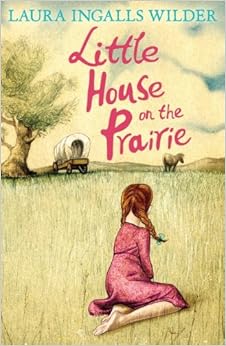
From Eula Biss’s essay “White Debt” in yesterday’s New York Times Magazine:
I read several hundred pages of Little House on the Prairie to my 5-year-old son one day when he was home sick from school. Near the end of the book, when the Ingalls family is reckoning with the fact that they built their little house illegally on Indian Territory, and just after an alliance between tribes has been broken by a disagreement over whether or not to attack the settlers, Laura watches the Osage abandoning their annual buffalo hunt and leaving Kansas. Her family will leave, too.

At this point, my son asked me to stop reading.

“Is it too sad?” I asked.

“No,” he said, “I just don’t need to know any more.” After a few moments of silence, he added, “I wish I was French.”

The Indians in Little House are French-speaking, so I understood that my son was saying he wanted to be an Indian. “I wish all that didn’t happen,” he said. And then: “But I want to stay here, I love this place. I don’t want to leave.” He began to cry, and I realized that when I told him Little House was about the place where we live, meaning the Midwest, he thought I meant it was about the town where we live and the house we had just bought.

Our house is not that little house, but we do live on the wrong side of what used to be an Indian boundary negotiated by a treaty that was undone after the 1830 Indian Removal Act. We live in Evanston, Ill., named after John Evans, who founded the university where I teach and defended the Sand Creek massacre as necessary to the settling of the West. What my son was expressing — that he wants the comfort of what he has but that he is uncomfortable with how he came to have it — is one conundrum of whiteness.
This five-year-old’s reaction could not have been solely based on what Laura Ingalls Wilder and her daughter wrote in that book, which reflects previous centuries’ views of that conflict (Ma Ingalls’s even more old-fashioned than Pa’s and the authors’). That suggests that, at least for him, he’s picking up a broader perspective about the long, often fatal conflict over land in North America.

This anecdote reminded me of time nearly a decade ago when I accompanied Godson and Godson’s Brother, along with their parents, to Plimoth Plantation. The boys were about six, and they enjoying tearing around the recreated meetinghouse/fort in that museum village, peering down the cannon barrels out across the stockade.

Then Godson’s Brother stopped and told me very seriously that if he were able to go back to Plymouth in 1627, he would give the Natives rifles. (Actually, he said “wifles,” because he was still having trouble with some consonants.) I rather hoped he was thinking about establishing a fairer balance of power rather than more deadly fighting, especially since some of my ancestors would have been on the other side of those mythical rifle shots. Again, comfort and discomfort, and a broader perspective from today’s kids.

04 February 2013

New Light on Mary Ingalls’s Blindness

CNN reported on a paper in the latest Pediatrics coauthored by Dr. Beth Tarini, which had its genesis in this conversation:
“I was in my pediatrics rotation. We were talking about scarlet fever, and I said, ‘Oh, scarlet fever makes you go blind. Mary Ingalls went blind from it,’” recalls Tarini, who is now an assistant professor of pediatrics at the University of Michigan. My supervisor said, “I don’t think so.”
Which is the sort of exchange an intern never forgets.

Tarini was thinking of Laura Ingalls Wilder’s Little House on the Prairie books and television series. But those turn out not to be medically accurate. Scarlet fever might produce temporary blindness, but its hallmark is a rash. No letters or newspaper stories about Mary Ingalls’s illness described that symptom. Instead, contemporaneous sources said she suffered from “severe headaches” and partial paralysis of the face.
Finally, and perhaps the most important piece of evidence, in a letter Wilder wrote to her daughter, Rose, right before her book By the Shores of Silver Lake was published, she makes reference “some sort of spinal sickness”. The letter also mentions that Mary saw a specialist in Chicago who said “the nerves of her eyes were paralyzed and there was no hope.”

Diagnosis by these disease detectives: viral meningoencephalitis, which causes inflammation of the brain and the meninges, the membrane that covers the brain. In severe cases, it can cause inflammation of the optic nerve that can result in a slow and progressive loss of sight.
The study ends by suggesting why Wilder, her daughter and collaborator Rose Wilder Lane, and/or the book’s editors decided to identify Mary Ingalls’s illness as “scarlet fever”: because it already had a literary pedigree. And the book and TV adaptation have been misleading future doctors ever since.

12 November 2010

Hunting the “Lunatic Fringe”

In Little Town on the Prairie, Laura Ingalls Wilder (and her uncredited co-writer, daughter Rose Wilder Lane) portrayed young Laura as wishing for a new hairdo, and put these words in Ma Ingalls’s mouth: “Mary Power is a nice girl, but I think the new hair style is well called a ‘lunatic fringe.’”

That scene is set in 1881-82, but the phrase “lunatic fringe” was usually attributed to Theodore Roosevelt three decades later. He first used it in a review of an art exhibition review for The Outlook magazine in 1913:

It is vitally necessary to move forward and to shake off the dead hand, often the fossilized dead hand, of the reactionaries; and yet we have to face the fact that there is apt to be a lunatic fringe among the votaries of any forward movement. In this recent art exhibition the lunatic fringe was fully in evidence, especially in the rooms devoted to the Cubists and the Futurists, or Near-Impressionists.
Roosevelt also used the phrase in his autobiography, published the same year:
Then, among the wise and high-minded people who in self-respecting and genuine fashion strive earnestly for peace, there are the foolish fanatics always to be found in such a movement and always discrediting it—the men who form the lunatic fringe in all reform movements.
And in the next chapter, “As I have already said, there is a lunatic fringe to every reform movement.” That last has become widely quoted. The phrase spread rapidly, showing up in one New Jersey man’s Congressional testimony against woman suffrage in 1914. The term was often credited to Roosevelt in that decade, though sometimes as “the fringe of lunacy.”

However, a few years back the Yale librarian and researcher Fred Shapiro reported finding much earlier examples of the phrase “lunatic fringe” in a non-political context. Indeed, he found them precisely as Ma Ingalls used the words. Sophie May’s story “Four Days” in the February 1874 issue of Oliver Optic’s Magazine for Young and Old includes this sentence:
“The girls!” exclaimed Miss Lizzie, lifting her eyebrows till they met the “lunatic fringe” of hair which straggled uncurled down her forehead.
The Yale Alumni Magazine quoted a couple more citations from the next two years, indicating this was indeed the name of a fashionable hairstyle. As alumnae writing to the magazine have pointed out, Laura Ingalls Wilder’s recollection from the late 1800s was accurate. Roosevelt was playing off a phrase he’d no doubt heard in his youth.

08 December 2006

Little House in the Doldrums

Publishers Weekly reports on booksellers' mixed reaction to HarperCollins's reissue of the Little House books by Laura Ingalls Wilder with new, photographic covers and no interior art.

What was the problem with Garth Williams's drawings? Apparently, they betrayed the fact that these books take place in...history.

The magazine quotes Kate Jackson, Editor-in-Chief at HarperCollins, as saying, "But Laura Ingalls was a real little girl, not a made-up character. Using photographs highlights that these are not history but adventure books." Hence the series sell line at the bottom of the cover: "Little House • Big Adventure."

So photographs = real = adventure, but real ≠ history.

What's really "real," I suspect, is that after years of selling the Little House books and then reselling them through abridgments, prequels, sequels, anniversary editions, and every other type of spin-off, HarperCollins has seen sales drop. Fantasy has pushed aside historical fiction as the way young readers--even girls--prefer to try out different societies.

But eventually that will change.