Showing posts with label PLAY Music Man. Show all posts

29 October 2025

The Wizard of Balboa Park

The San Diego Civic Light Opera Association was founded in 1945. Its first show was Gilbert and Sullivan’s The Mikado in the Wegeforth Bowl at the San Diego Zoo.

Because of San Diego’s ideal weather, the organization staged its shows outside. It soon took on the name of the Starlight Opera.

On July 29, 1946, the San Diego Union and Daily Bee said: “If the new Starlight Opera company becomes any more popular it will have to move to Ford Bowl.” That was the amphitheater in Balboa Park built for a 1935 expo.

Indeed, the Starlight Opera Company was soon using that larger space. Around 1950 the amphitheater became known as the Starlight Bowl. (An amphitheater in Burbank was using the same name at that time, confusing matters.)

The Light Opera Association also widened its repertoire to include new, popular shows and operated under the same of Starlight Musical Theatre.

Because the amphitheater was right under the main flight path to Lindbergh Field, performers learned to freeze when a loud plane passed overhead. Starlight Musical Theatre’s old website called this “One of the most artistic innovations of productions at the Starlight Bowl.”

In 1962 the Starlight company planned a summer season of The Music Man, Can-Can, The Wizard of Oz, and Bye Bye Birdie.

About the third show the 7 Apr 1962 San Diego Evening Tribune explained:
“The Wizard of Oz,” was adapted originally for the stage by L. Frank Baum from his classic children’s story. It was first presented in 1903, starring the team of Fred Stone and David Montgomery. Their leading lady was Anna Laughlin, the mother of singer Lucy Monroe.

The version of “Wizard” which Starlight is using has been updated by Frank Gabrielson, and features the songs of Harold Arlen and E. Y. Harburg, composed for the highly successful 1939 movie.
That adaptation had originally been commissioned by the St. Louis Municipal Opera in 1942 and is therefore known as “the MUNY Version.” As the licensor says, it “features characters and events not seen in the MGM film”—and it also leaves out several characters and events.

The 1962 San Diego Evening Tribune article was headlined “Little Munchkins Needed for Starlight ‘Wizard of Oz’,” and its main news was:
Casting for Starlight’s production of “The Wizard of Oz” will be held for three days, instead of the usual two, due to the large number of children needed in the cast. . . .

The youngsters will be used for the Wizard of Oz’s “army,” composed of one private and 24 generals. They will also be used as munchkins—the little people enslaved by the Wicked Witch of the East and freed by Dorothy. . . .

Roles open for adults include that of the Scarecrow—which also requires dancing ability; the Tin Woodman and the Cowardly Lion. The leading role of Dorothy, calls for a teenage soprano with acting experience, age 18 at the maximum.
In 2010, after more than sixty straight years of productions, the San Diego Civic Light Opera Association went out of business. There’s now a Save Starlight campaign to fix up the abandoned amphitheater and stage new concerts and shows there.

TOMORROW: Crossing the streams.

03 January 2022

The “Shipoopi” Problem

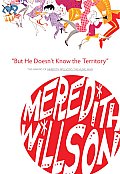
Over the holidays, Godson informed me that Godson’s Brother had never seen The Music Man, the stage and screen musical by Meredith Willson. Since Godson’s Brother is now in the business of theatrical production in Britain, I gave him a copy of Willson’s carefully wide-eyed account of developing the show, But He Doesn’t Know the Territory.

At some point I hope to sit down with both brothers to watch The Music Man, ideally in an environment that allows commentary, both wide-eyed and snarky. That brings up a potentially big problem: the “Shipoopi” number.

Back in college, a friend who was cowriting musicals used the word “Shipoopi” almost as profanity, shorthand for a stupid, unmotivated dance number plopped into the middle of a show. And indeed there’s a lot to sneer at in “Shipoopi.” The song title sounds silly, if not scatalogical. The lyrics are sexist. In the movie, the number ends with Marian in Harold’s arms, leaving no reason for them to go separately to the footbridge for their rendezvous.

Even more than some of the other “trunk songs” that Meredith Willson wrote before The Music Man and then tried to find places for, this song’s lyrics don’t arise out of the dramatic situation. They don’t reflect the characters’ emotions. All that granted, I can nonetheless make a case for “Shipoopi.”

Most of the early numbers in The Music Man uncover music in scenes of small-town daily life: the rhythm of the rail, the pitch of a salesman, a repetitive piano lesson, gossips’ prattle, the raised voices of the school committee. In coming to town, the title character brings the latent musicality of River City to the surface.

Of course, Marian the librarian already embodies music. As the piano teacher, she’s the only person in River City who knows about the subject. But her straight job requires, ironically, keeping patrons quiet and still. The town’s other ladies shun Marian for having been too friendly with Old Miser Madison, preferring a player piano to a real piano player.

By promising River City a boys’ band in “Seventy-Six Trombones,” Harold Hill makes the idea of music explicit and appealing. That song doesn’t just reveal the music in daily life; it’s about enjoying music itself. “Shipoopi” does the same in the second act—a whole chorus of townspeople knowingly sing and dance together. Musical subtext becomes text.

The significance of “Shipoopi” differs in the Broadway show and the movie because of when and how the song appears. On stage, early in Act 2, River City’s teenagers interrupt the ladies rehearsing their Grecian urns tableau in order to have a dance—the number shows the younger, more musically inclined generation taking over. On screen, “Shipoopi” comes later as part of a town celebration. It demonstrates community cohesion, not division.

Either way, “Shipoopi” shows how River City has moved to embrace music, an element of life repressed at the start of the story. That foretells the town’s acceptance of Harold and Marian at the end.

(Godson’s Brother said the little he knew about The Music Man made it seem thematically akin to Footloose, which tells me he’ll get this.)