Showing posts with label SERIES Alice in Wonderland. Show all posts

29 October 2014

“Wonderlands” Conference and Call for Papers
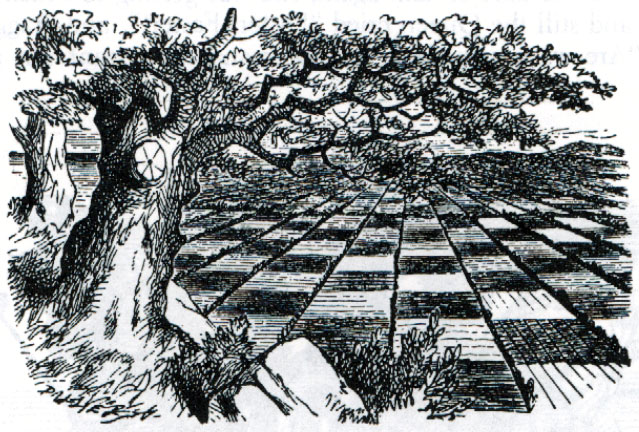
The University of Chichester’s Sussex Centre for Folklore, Fairy Tales and Fantasy is hosting a symposium on “Wonderlands: Reading/ Writing/ Telling Fairy Tales and Fantasy” on 23 May 2015.

The event is “Timed to coincide with the 150th anniversary of Alice’s Adventures in Wonderland, this event is primarily aimed at postgraduate students and early career researchers, although other scholars and the general public will be welcome.”

The call for papers says:
We are seeking papers which explore all aspects of reading, writing, and telling fairy tales and fantasy. In particular, we invite discussion of wonder lands in fantastical literature, classic and modern fairy tales, and contemporary oral storytelling.

Possible topics of focus include, but are not limited to:
  • Other worlds, otherworldliness, Wonderland, and wonder lands
  • Relationships between reading, writing, and/or telling fantasy
  • Contemporary scholarship in children’s and adult’s fantasy literature
  • Storytelling as a vehicle for the fantastic
  • Practice and performance of fairy tales
  • Fantastical non-fiction
  • Relationships between real and imagined wonder lands
  • Meta-textual conversations with classic fantasy literature
  • Imagining the fantastical world through illustrations and picture books
We also welcome paper submissions or panel presentations which include a creative or performative element.

Please submit abstracts of no more than 300 words (or panel proposals of 1,000 words) and a short personal bio to the organisers, Joanna Coleman, Joanne Blake Cave, and Rose Williamson at wonderlands.symposium@gmail.com. The deadline for submission will be 31st January 2015.
The keynote lecturer will be Oxford professor Diane Purkiss, who has also co-written as Tobias Druitt. As a promise or threat, the announcement ends, “The day will close with a series of performances from professional storytellers which engage with the theme of wonder lands.”

(h/t to Karen Graham at Telling Tales)

15 October 2014

The Gardner Centennial

I left my testimonial about what Martin Gardner’s writing meant for my intellectual development.

27 January 2014

Alice in Guildford

Charles Dodgson settled his sisters in Guildford, England, and died there in 1898. In 1990, the town commemorated his most famous work by installing a couple of impressive statues.

On the grounds of Guildford Castle, near the Dodgson home, is Jeanne Argent’s statue of Alice going through the looking-glass. Details include striped stockings. The glass can make impressive effects on film.
On a river bank sits Edwin Russell’s “Alice and the White Rabbit.” Though her hair and dress may seem more modern, this Alice looks more like the real Alice Liddell.

20 June 2012

Dorothy Gale in Manchester

From Angelica Carpenter, Curator Emerita at the Arne Nixon Center for the Study of Children’s Literature, comes word of this call for papers from Britain.
Returning to Oz: The Afterlife of Dorothy

Thursday 7th February 2013
Manchester, UK

Papers are sought for a one-day conference in Manchester on representations and interpretations of Dorothy and Oz in popular culture. This conference seeks to address the perennial popularity of L. Frank Baum’s creations, and to explore their most recent incarnations.

Possible themes may include (but are not limited to):
• Film, TV and animated adaptations
• Sequels and prequels (other than Baum’s series); translations, editions and revisions
• Music and musicals
• Kitsch
• ‘Friends of Dorothy’ and gay culture
MGM and Judy Garland
• Graphic novels and visual art
• Merchandise, memorabilia and ephemera

This conference is the sister project to our Further Adventures in Wonderland: The Afterlife of Alice project. As such, papers are also welcomed that offer some comparison of the respective afterlives of Alice and Dorothy, or that deal with texts featuring both characters.

Abstracts of 250-300 words (for a 20 min paper) should be sent via email to the CONFERENCE CONVENORS by 30th September 2012.

Selected papers may be invited for inclusion in an academic collection of essays following the conference.
I have mixed feelings about this. On the one hand, it might be an opportunity to write about interpretations of Oz and to explore part of Britain that I’ve never seen, visiting Godson and his family along the way.

On the other hand, I think it’s very important to note that Dorothy has no “afterlife” because Dorothy is living in Oz where no one dies.

31 July 2011

Biggest Role Yet

So what do Robin the Boy Wonder and the White Rabbit have in common?

Both characters have been played by Kamran Darabi-Ford, the young British actor cast as Dick Grayson in the Batman Live arena show now touring Britain.

He’s also played “the fey Simon in Cameron Jack’s exciting and successful production of Lord of the Flies,” and “an acrobatic Puck in A Midsummer Night’s Dream at the RSC Fringe Festival.”

02 November 2010

Vote Your Views

Last month the Boston Globe published a reader letter that managed to span two of my professional interests, so I’m quoting it on both blogs today:

Members of the Tea Party movement claim that their name was adopted from the Boston Tea Party, an act of civil disobedience against the tyrannical government of the time (“Understanding the Tea Party,’’ Letters, Oct. 12).

I contend that the name must derive from another historic tea party, namely, the one from Lewis Carroll’s “Alice in Wonderland.’’ In that classic tale and its follow-up, “Through the Looking-Glass,’’ there exists a vast cast of characters, many reminiscent of today’s Tea Partiers who talk jabberwocky on a regular basis.

There are the twins Tweedledum and Tweedledee who bicker over insignificant issues; the Red Queen who constantly orders the beheading of anyone who displeases her; and the imbecilic White Queen. And let’s not forget the Mad Hatter.

To those offended by the current use of the term Tea Party, I suggest they shift their point of reference. They’ll find that the current movement is more than aptly named.
Whatever your views, if you’re an American citizen I hope you’ve voted by the end of the day. Otherwise, those of us who do vote don’t really have to listen to you. And elected officials will have little reason to do so.

27 May 2010

Whenever an Appeal Is Made to Law

Late in Dorothy and the Wizard of Oz, his fourth novel in the series, L. Frank Baum took a cue from Lewis Carroll’s Alice in Wonderland and tried to create a bitterly satirical courtroom scene. Of course, he had a different sensibility, so instead of nonsense and madness the scene was full of vaudeville cross-talk and some genuine moral questions (with the cross-talk eventually drowning out the moral answers).

The case began when people suspected Dorothy’s pet kitten Eureka of eating a piglet. Princess Ozma, still relatively new at ruling, did her best to bring about justice.

“I will summon the Court to meet in the Throne Room at three o’clock,” replied Ozma. “I myself will be the judge, and the kitten shall have a fair trial.”

“What will happen if she is guilty?” asked Dorothy.

“She must die,” answered the Princess.

“Nine times?” enquired the Scarecrow.

“As many times as is necessary,” was the reply. “I will ask the Tin Woodman to defend the prisoner, because he has such a kind heart I am sure he will do his best to save her. And the Woggle-Bug shall be the Public Accuser, because he is so learned that no one can deceive him.”

“Who will be the jury?” asked the Tin Woodman.

“There ought to be several animals on the jury,” said Ozma, “because animals understand each other better than we people understand them. So the jury shall consist of the Cowardly Lion, the Hungry Tiger, Jim the Cab-horse, the Yellow Hen, the Scarecrow, the Wizard, Tik-tok the Machine Man, the Sawhorse and Zeb of Hugson’s Ranch. That makes the nine which the law requires, and all my people shall be admitted to hear the testimony.”

They now separated to prepare for the sad ceremony; for whenever an appeal is made to law sorrow is almost certain to follow—even in a fairyland like Oz.
I mention this episode because at this moment I’m reporting for jury duty.

24 May 2010

Feeling Grateful for Martin Gardner

I was sorry to read yesterday of the death of Martin Gardner, longtime columnist for Scientific American and, somewhat surprisingly, one of my favorite childhood authors.

I may have first come across Gardner’s name as coauthor of The Wizard of Oz and Who He Was, which Michael Patrick Hearn built on to create The Annotated Wizard of Oz. Gardner also wrote introductions to most of Dover’s 1970s reprints of L. Frank Baum’s non-Oz fantasies, and I was abundantly pleased to follow in his footsteps in introducing a centenary edition of John Dough and the Cherub a few years back.

But Martin Gardner stimulated my growing brain even more outside the Nonestic world. My parents had a copy of The Annotated Alice, and I read and reread that book many times—eventually only the annotations. Gardner later assembled another volume of Alice annotations and a short Annotated Hunting of the Snark, though the original contained his best material. I ended up writing my undergraduate thesis on Lewis Carroll’s Hunting of the Snark.

Another book I reread several times was Gardner’s The Incredible Dr. Matrix, collecting his columns about a fictional numerologist and con man. Like the Wizard, Dr. Irving Joshua Matrix is a charming humbug—but in his tales there’s always the whiff of money changing hands. The essays in that volume and some later additions are now in The Magic Numbers of Dr. Matrix.

Gardner’s books showed me how stories, even children’s adventures, could be read at many different levels, some possibly intended by the author and others just for fun. They showed that storytelling and mathematics didn’t have to be separate disciplines, though I must admit I didn’t even try most of the puzzles. Gardner’s amused take on Dr. Matrix fed my interest in con men and how people delude themselves.

One of my most important lessons from Gardner was skepticism. In 1974, he wrote a Dr. Matrix column about “pyramid power,” parodying ideas that had circulated in France for some decades. Soon American authors published books titled Pyramid Power, trumpeting how this marvelous discovery had been discussed in Scientific American! In The Incredible Dr. Matrix Gardner laid out that sequence of events for me, thoroughly amused by the folly.

29 December 2009

Serious Comics and Talking Animals

Matt Phelan’s The Storm in the Barn is showing up on a number of “year’s best” lists, but my feelings on its magical plot machinations match those expressed by Jessica Bruder in the New York Times Book Review:

Jack finds himself face to face with the Storm King, an evil spirit who withheld the rain to win power. . . . Jack finally wins a climactic battle on top of a windmill, and it starts to rain. He’s saved everyone. Unless you go with a possibility suggested earlier in the book: Jack has “dust dementia” and has imagined the whole thing. Either way, the fight doesn’t feel all that redemptive.
Both this book and David Small’s Stitches allude to classic works of Victorian children’s literature, and that’s another way that the latter seems much stronger to me.

In The Storm in the Barn, Jack’s sister reads descriptions of a desert from L. Frank Baum’s Ozma of Oz. As I noted earlier, Phelan found those passages through Wikipedia, and his quotes are anachronistic—the kids’ mother couldn’t find the phrase “Deadly Desert” in that book because it didn’t appear till a later one. That’s just a symptom of how that literary allusion feels nailed on rather than organic to the story.

In contrast, David Small’s use of Alice in Wonderland in Stitches has clearly grown from his own childhood love of that book. Allusions are integrated throughout the story. First he shows himself as a young boy playing as Alice, getting to escape “to a land of talking animals, singing flowers and dancing teapots.”

Later, Alice’s nightmarish shrinking and growing informs one of the adolescent David’s recurring nightmares (shown through stat panels) as he struggles to escape from a confining house.

Finally, the White Rabbit comes on the scene as a therapist who provides the book’s breakthrough—without, of course, ever losing track of the time. It turns out David was in the nonsense world all along. Unlike The Storm in the Barn, Small’s Stitches is about sorting out the real nightmares from the fantastic ones, not mixing them up.

16 January 2009

Remembering Simple Joe Malarkey

In last weekend's New York Times Book Review, the usually incisive Caleb Crain looks askance at a recent collection of mid-20th-century children's literature from the radical side: Tales for Little Rebels: A Collection of Radical Children’s Literature, edited by Julia L. Mickenberg and Philip Nel. Crain writes:

It is one thing to convince your child that no individual owns the sandbox and that it is better for all children that it is so. It is another to hope that when he grows up he will donate the family home to a workers’ collective. . . .

[Mickenberg and Nel] have nonetheless found 44 texts that attempt to attach children to social justice permanently. As they note in an introduction, the tentacles of the left reach deep. Crockett Johnson, creator of the innocuous-seeming “Harold and the Purple Crayon,” was an editor at The New Masses, a Communist weekly. Syd Hoff, known for “Danny and the Dinosaur,” wrote for The Daily Worker. . . .

In fact, so permeated is children’s literature by progressive ideals that Mickenberg and Nel were forced to narrow their scope by focusing on texts that have fallen out of print. They group their rediscoveries according to such themes as economics, unionization and respect for individual difference.
Crain finds Hoff's Mr. His, published under the name A. Redfield, to be a charming tale of a union-busting plutocrat, who presumably gets his comeuppance and may even learn a valuable lesson about life. He praises some other projects before moving into categories he calls "Insufferable" and "Inappropriate."

In the latter grouping, Crain finds fault with Walt Kelly's adaptation of the nonsensical trial at the end of Lewis Carroll's Alice in Wonderland. I think the only inappropriate quality there is that Kelly was drawing a political cartoon for adults, not really a book for children. (It was published by Simon & Schuster's adult division, I believe.) What Crain finds inappropriate:
The King of Hearts is drawn as a burly, sinister cat with the face of Senator Joseph McCarthy. To show that the McCarthy cat is evil, Kelly gives its eyes no pupils. It has a 5 o’clock shadow, and there’s hair--fur?--on the backs of its hands. The effect is grotesque, of a feline Tony Soprano brutalizing and carnalizing Carroll’s delicate surrealism. I imagine it would give children nightmares.
I grew up with images of this character, Simple Joe Malarkey, from my uncle's Pogo books and then my own. I never had nightmares. To be sure, the men in my family have hairy arms, and my mother's great-uncle was Joseph Welch, the counsel in the Army-McCarthy hearings who helped take the senator down. But if making a bad guy look bad is "inappropriate," then a lot of cartoonists have a lot to answer for.

17 August 2006

Looking ahead and back at Looking Glass Wars

Dial is preparing to publish The Looking Glass Wars, by Frank Beddor, which has already been fairly successful for Egmont in the UK. The property's UK website and US website and other publicity (Beddor, with his background in show business, has generated a lot) offer some interesting remarks.

According to Publishers Weekly this month:

Beddor says his first spark for the idea of the book came seven years ago when he was visiting the British Museum and saw a deck of illuminated cards. It was his first real introduction to Carroll’s oeuvre, as he says he was “definitely not a fan” of Alice as a boy.

Once the spark was lit, Beddor locked himself away in an old Art Deco building in Los Angeles. He commissioned a visual artist to help flesh out the world he was imagining, and after two years of research and five years of writing, he had the first volume in his planned trilogy.
Back in July 2004, Beddor offered the Independent an additional reason for rewriting the Alice stories:
I guess I didn't realise how beloved Lewis Carroll's classic was. I was just seeking revenge. My grandmother and my mother made me read this book when I was 10 or 11 and I thought it was a terrible girls' book. This is my revenge; I wanted to rewrite it as a book boys would also enjoy.
No matter that Alice in Wonderland has been continually popular with many (but not all) children for over a century. "A book boys would also enjoy" seems to mean:
  • violence--lots and lots of violence
  • a graphic novel version on the way
  • good versus evil rather than Alice versus nonsense, which isn't really the same thing
On SF Site, Nathan Brazil wrote this review of the British version:
Clearly writing with the movie and game versions in mind, Beddor dispenses with complexities like characterisation and devious plot twists. Instead, what is presented is a tale where everyone is exactly who they seem. Black and white, good and bad with no shades of grey to trouble readers.
Contributors to Wikipedia and this video mashup on YouTube note similarities between The Looking Glass Wars and the American McGee's Alice videogame, which as of April was said to be becoming a movie for Universal Studios. There's also a John Le Carré novel called The Looking Glass War, of course.