Showing posts with label kids these days what can you do. Show all posts

10 September 2025

Are You Gonna?

“Are You Gonna Be My Girl?” performed by WJM (William Lipton, Jeremy Yun, and Max Simas, with guest bassist Collin Simas, uploaded to YouTube on 9 May 2013)

“Are You Gonna Be My Girl?” performed by The Runarounds (William Lipton, Axel Ellis, Jeremy Yun, Jesse Golliher, and Zendé Murdock, uploaded to YouTube on 10 Feb 2023)

The Runarounds was formed in 2000 for a television show that finally went out on Amazon Prime this month. The five musicians cast as slightly younger musicians for the series have been playing and writing songs together in the meantime, and they’re now touring the east coast.

In the series premiere, the characters bond over the song “Are You Gonna Be My Girl?”, originally by Jet. As the cast notes in interviews, and as this pair of videos shows, most of them have had fun playing that song since they were kids.

23 August 2018

Another Job Lost to Advancing Technology

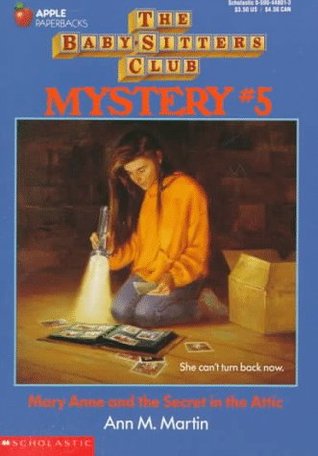
From the Los Angeles Review of Books’s interview with Holly Tommasino, who created the hand-lettered journal entries in the original Baby-Sitters Club books. Tommasino was first an in-house designer for Scholastic, then a freelancer, then out of a job:
What was your role with The Baby-Sitters Club?

When all the design elements for the series were initially coming together, I created the handwriting styles for each character. And then I handwrote all portions of the manuscripts that were flagged by editorial — usually BSC journal entries, but also the postcards and letters and lists that popped up from time to time. I continued to produce the handwriting even after I left Scholastic.

What happened then?

I worked as a freelancer until 1996. At that point, due to advances in technology, I was sent font forms by a company. They asked me to letter each character’s handwriting in spaces on the form. And these forms were long! They had me do a few different y’s and then write a w attached to a y or a t attached to a y. They didn’t want the handwriting samples to look totally uniform, so it was quite an extensive process. After that, the freelance work stopped, but the books continued.
The 1986-2000 series has of course been rejuvenated with comics adaptations by Raina Telgemeier and then Gale Galligan. Those editions appear to be the bestsellers today.

In contrast, 2010 Scholastic reissued two early titles, evidently retaining or reproducing the cursive writing, but those books didn’t spark a new craze among the children of the original readers. The latest reissue is clearly for the nostalgia market. Was the cursive handwriting, which kids today are said not to be able to read, to blame?

12 December 2015

Underestimating an Audience

Earlier this week I attended an unusual book event at the Public Library of Brookline.

Author M. T. Anderson read the introduction of his new nonfiction book, Symphony for the City of the Dead: Dmitri Shostakovich and the Siege of Leningrad. He spoke about Shostakovich’s String Quartet No. 8, composed well after the war but perhaps looking back on it. Then the Arneis Quartet performed that work. nd finally Anderson took questions.

The audience was big enough that the librarians had to bring in more chairs, which is always gratifying for event organizers. Always better to underestimate turnout by a little than to overestimate. As at most cultural offerings, the audience leaned toward the senior side rather than Anderson’s usual readership of teens and middle-graders.

There were some kids there with their parents. I assumed they were fans of Anderson’s Pals in Peril! series. I wondered what they were thinking about this much more serious presentation, with historical/musical analysis of a composition that even some classical music fans find puzzling.

During the question session, one of those kids eagerly raised his hand. He was sitting with a friend the same age and one of their fathers. He had a bowl haircut and a big hole in one of the knees of his trousers. I wondered, how far off the topic of this event was his question going to be?

“I read your book,” he told Anderson. “How long did it take to you find out all this stuff?”

Five years of research, Anderson explained. And we all learned something.

07 December 2015

“Uncomfortable with how he came to have it”

From Eula Biss’s essay “White Debt” in yesterday’s New York Times Magazine:
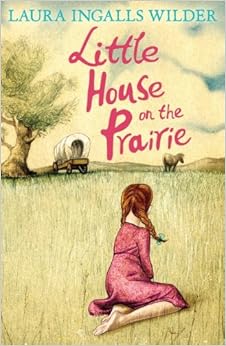
I read several hundred pages of Little House on the Prairie to my 5-year-old son one day when he was home sick from school. Near the end of the book, when the Ingalls family is reckoning with the fact that they built their little house illegally on Indian Territory, and just after an alliance between tribes has been broken by a disagreement over whether or not to attack the settlers, Laura watches the Osage abandoning their annual buffalo hunt and leaving Kansas. Her family will leave, too.

At this point, my son asked me to stop reading.

“Is it too sad?” I asked.

“No,” he said, “I just don’t need to know any more.” After a few moments of silence, he added, “I wish I was French.”

The Indians in Little House are French-speaking, so I understood that my son was saying he wanted to be an Indian. “I wish all that didn’t happen,” he said. And then: “But I want to stay here, I love this place. I don’t want to leave.” He began to cry, and I realized that when I told him Little House was about the place where we live, meaning the Midwest, he thought I meant it was about the town where we live and the house we had just bought.

Our house is not that little house, but we do live on the wrong side of what used to be an Indian boundary negotiated by a treaty that was undone after the 1830 Indian Removal Act. We live in Evanston, Ill., named after John Evans, who founded the university where I teach and defended the Sand Creek massacre as necessary to the settling of the West. What my son was expressing — that he wants the comfort of what he has but that he is uncomfortable with how he came to have it — is one conundrum of whiteness.
This five-year-old’s reaction could not have been solely based on what Laura Ingalls Wilder and her daughter wrote in that book, which reflects previous centuries’ views of that conflict (Ma Ingalls’s even more old-fashioned than Pa’s and the authors’). That suggests that, at least for him, he’s picking up a broader perspective about the long, often fatal conflict over land in North America.

This anecdote reminded me of time nearly a decade ago when I accompanied Godson and Godson’s Brother, along with their parents, to Plimoth Plantation. The boys were about six, and they enjoying tearing around the recreated meetinghouse/fort in that museum village, peering down the cannon barrels out across the stockade.

Then Godson’s Brother stopped and told me very seriously that if he were able to go back to Plymouth in 1627, he would give the Natives rifles. (Actually, he said “wifles,” because he was still having trouble with some consonants.) I rather hoped he was thinking about establishing a fairer balance of power rather than more deadly fighting, especially since some of my ancestors would have been on the other side of those mythical rifle shots. Again, comfort and discomfort, and a broader perspective from today’s kids.

03 December 2015

A Clanging Cymbal in Oklahoma

Everett Piper, President of Oklahoma Wesleyan University, has been getting a lot of attention recently for his blog posting, “This Is Not a Day Care; It’s a University.” He wrote:
I actually had a student come forward after a university chapel service and complain because he felt “victimized” by a sermon on the topic of 1 Corinthians 13. It appears that this young scholar felt offended because a homily on love made him feel bad for not showing love. In his mind, the speaker was wrong for making him, and his peers, feel uncomfortable.
It’s worth looking at what that sermon was about. This is a standard translation of what that chapter in 1 Corinthians says about love:
Though I speak with the tongues of men and of angels, but have not love, I have become sounding brass or a clanging cymbal. And though I have the gift of prophecy, and understand all mysteries and all knowledge, and though I have all faith, so that I could remove mountains, but have not love, I am nothing. And though I bestow all my goods to feed the poor, and though I give my body to be burned, but have not love, it profits me nothing.

Love suffers long and is kind; love does not envy; love does not parade itself, is not puffed up; does not behave rudely, does not seek its own, is not provoked, thinks no evil; does not rejoice in iniquity, but rejoices in the truth; bears all things, believes all things, hopes all things, endures all things.
It’s also useful to consider what sort of place Oklahoma Wesleyan University is. It’s an “evangelical Christian university” formed in 2001 from the mergers of several smaller Christian colleges that had been around since 1909. It serves about 900 students. Its principles include the Bible as “the inerrant and authoritative written Word of God.”

None of that could have been a surprise to the student Piper spoke to. In other words, a student at a very conservative religious college objected to how this sermon asked that he and his fellow students show more love. It’s not clear what sort of compassion this student felt pressured into, but humans are usually slowest to show love for people who are distant or different from us.

How did Piper interpret that in his blog post? He wrote:
Our culture has actually taught our kids to be this self-absorbed and narcissistic. Any time their feelings are hurt, they are the victims. Anyone who dares challenge them and, thus, makes them “feel bad” about themselves, is a “hater,” a “bigot,” an “oppressor,” and a “victimizer.”
Whoa! That took a sudden turn. Piper twisted from one conservative Christian student complaining that he shouldn’t have to show love to suggesting that other young students complaining about bigots and oppressors are simply “self-absorbed and narcissistic.” Piper rolled straight over the very real possibility that there are bigots and oppressors who try to bully others—especially those who seem distant or different from themselves—into feeling bad.

Are there such people at Oklahoma Wesleyan University? Let's start with Piper. In August, he announced that he was withdrawing the university from the Council for Christian Colleges and Universities because two other colleges in that organization had decided to hire same-sex couples. So when Piper talks about “showing love,” he has strict limits in mind.

18 August 2014

Wisest Thing I’ve Read Today

Over the weekend the Boston Globe ran an interview with eleven-year-old actor Aidan Gemme. He’s currently starring as Peter Llewellyn in the unfathomable stage musical adaptation of Neverland, the unhistorical movie about J. M. Barrie writing Peter Pan.

One of Gemme’s earlier Broadway jobs was alternating in the role of the Boy in Waiting for Godot. Here’s how he described preparing to play that frustrating character:
The Boy doesn’t really have a personality, and you can’t get information on him. I didn’t step into him. I just stepped out of myself.

17 August 2014

One Family’s Robin Debate

This week Brad Guigar of the Evil, Inc. webcomic (sample above) posted a podcast debate among himself, his eight-year-old son Max, and his twelve-year-old son Alex on the vital question of who’s the best Robin.

Some observations about the discussion:
  • The gents are almost totally concerned with DC’s post-Crisis, pre-New 52 universe, with perhaps a bit of the animated cartoons thrown in. It’s no surprise to hear them skip Jason Todd’s pre-Crisis past as a trapeze artist since that goes against what made the character most meaningful, but the guys also don’t acknowledge the history of the second Tim Drake, appearing in comics now.
  • The panel amalgamates Carrie Kelley, the possible future female Robin from Frank Miller’s Dark Knight Rises, with Stephanie Brown, the short-lived female Robin from the regular continuity about a decade ago. (And of course they don’t bother with the current Stephanie Brown, who had a shorter history.) I think that mostly shows how girls remain an unfathomable mass to preteen boys.
  • The older son makes a sharp distinction between the Robin he likes most as a character (Jason) with the character he thinks is or was the best Robin. In fact, he ranks Jason low on the Robin scale.
  • Neither young panelist sees much to like in Damian Wayne. I believe young readers still want a Robin they can look up to or imagine as their own best selves. Damian’s popularity rests with older readers who get off on his brattiness or neediness.
Thanks to Eric Gjovaag for the pointer to this podcast.

21 April 2014

The Marathon Tradition Endures

I live about three blocks from the route of the Boston Marathon as the race winds through Boston’s suburbs toward the Back Bay. For many years every Marathon Day looked much like the photo above, with families lining both sides of Commonwealth Avenue to watch, cheer, and pass out cups of water or other replenishment.

Naturally, the kids clapping and holding out water would edge into the road, and every half hour or so a motorcycle cop would roll slowly along the gutter, herding everyone back. Early in the race people would wait for a break in the runners and then dash across to visit friends on the other side, sometimes getting stranded until the field thinned out again. Some parties brought multiple lawn chairs, campers, and spreads of food, either to eat or to sell to other spectators.

But that was before last year’s bombs.

Three days ago, we found that the whole of the race route through town had been marked off with orange plastic delineators, or “candlesticks” as a cousin told me the professionals call them. On the side of the street away from driveways, a cord had already been threaded through those plastic stakes. Clearly the public-safety officials were planning to keep everyone off the road.

Meanwhile, race organizers issued several strict warnings about this year’s event. No unauthorized runners. No running in costume. No march along the route by service people. No backpacks, coolers, or thick blanket rolls. All understandable regulations, but I feared the Marathon I enjoyed would disappear.

I’m pleased to say that even with cords strung on both sides of the road and signs warning that all coolers, backpacks, and other bags were subject to search, the atmosphere is much the same. Kids were still edging out into the road, just not as far. People still dashed from one side to the other, just not as often. There were plenty of lawn chairs, coolers, and unrolled blankets, as well as plenty of security officers. And at least one runner in a tutu.

14 April 2014

Reacting to “Kids React to…”

I grew up with dial telephones. The family of my best friend in first grade had a “princess” phone with a smaller dial in the handset, but that was as exotic as home phones got. Touchtone phones were confined to offices.

In fact, I grew up in a town that once had an exchange named “Woodland,” so a lot of the local numbers I dialed started 969- or 965-. I spent many seconds of my school years waiting for the dial to rotate almost the whole way back—and I’m never getting those seconds back.

Since dial telephones were already established when I was a kid, they seem indeterminably old to me. Yes, my mother had stories about something called a “party line,” which was clearly ancient, but I can easily accept dial telephones as historic.

I could therefore enjoy the “Kids React to Rotary Phones” video easily. Though these twenty-first-century kids are baffled by the old technology, they’re also smart and lively and often able to figure out the implications of that device once the video makers explain it to their incredulous ears.

The kids display those same qualities in “Kids React to Walkmans”, but there’s a sharper edge for me. Because I remember when the Walkman was new. And cool. And, like all widely used new technology, a cause for tsk-tsking social concerns. Yes, I understand that they’ve long been superseded by, well, phones. But they’re not really old, are they?

09 March 2014

Forever Robin?

Listening to Kevin Smith and Marc Bernardin discuss the Batman Forever movie from 1995 on Smith’s Fat Man on Batman podcast got me thinking how poorly cast Chris O’Donnell was as Dick Grayson.

O’Donnell was in his mid-twenties when he made the movie. His appearance certainly called into question the state’s need to assign Dick Grayson a bachelor millionaire as a guardian, but that wasn’t the only problem.

O’Donnell is at his best playing bottled-up characters alongside wild cards (as in Scent of a Woman with Al Pacino). But Dick Grayson is the more emotionally open side of the Dynamic Duo. Furthermore, that movie’s take on the partnership called for Dick to be edgy.

Looking back, I was reminded of a scene in the 1960s Batman television show in which Dick tries to infiltrate a youth gang by cleverly dressing up in a leather jacket and slicking his hair. A girl offers him a cigarette. He coughs at the first inhale, offering the lame excuse that he’s had too many already that day. (Burt Ward himself didn’t smoke growing up, he says.) Adam West as Bruce Wayne later acknowledged that Dick had done his best, but it was…painfully obvious…that…he was not…a smoker.

Even with an earring, O’Donnell looked just as incongruous reading his lines. Just working on a motorcycle doesn’t make a kid a potential juvenile delinquent—especially when he looks old enough to be in law school.

Reportedly director Joel Schumacher had narrowed down his casting choice to O’Donnell and Leonardo DiCaprio, four years younger and already Oscar-nominated for What’s Eating Gilbert Grape?. The moviemaking team asked a focus group of young teen-aged boys—the core audience for action movies since Star Wars—which of those two actors looked like he’d win in a fight. The boys says O’Donnell would. But that was the wrong question. A big part of the appeal of Robin is that he’s the littlest guy in the fight, but comes through anyway.

O’Donnell played the role of Dick Grayson through two movies directed by Schumacher. Then, as he tells the story, he walked away from blockbuster roles to marry and raise a family while taking less time-demanding acting jobs. He’s now a father of five, three of them boys, and they’re naturally proud of their father’s most iconic role. O’Donnell described the pattern in a 2010 interview:

“I used to try to be really low-key on airplanes, with my hat pulled down. Now I pre-announce to the people around us, ‘I want to apologize in advance,’” he jokes.

“When Chip was 3, as soon as we sat down, he said, ‘My dad was Robin in the Batman movie.’”
During a recent visit to Conan O’Brian’s talk show, O’Donnell disclosed that he still owns one of the Robin costumes, in an unopened crate that he’s moved from house to house. I’m sure his kids would be glad to see inside.

13 February 2014

Art for a Winter’s Day

With yet another snowstorm piling up outside my door, I’m sharing some of the beautiful and transient artwork that Andy Goldsworthy sculpted out of ice in Cumbria and other parts of England in the 1980s.


At Publishers Weekly’s Shelftalker blog, Elizabeth Bluemle recently wrote about a nephew so enamoured of Goldsworthy’s work that he had a birthday party with a snow-sculpting theme.

06 February 2014

Set-Up for a Heartwarming Story

Matthew is a nine-year-old kid. He was born with very short fingers on his right hand—a condition known as “limb difference.” Usually this doesn’t bother Matthew, but after his family moved into a small town in Kansas other kids kept asking him about his hand.

Jennifer is Matthew's mother. She adopted him and two other kids. Her late father also had only a partial hand, and she remembered that bothered him. Jennifer came across plans on the internet for making an artificial hand, but she knew that was beyond her technical skills.

Mason is a sixteen-year-old high-school student. He’s always been a tinkerer; he built his own computer, for instance. He was on the football team, but after his third concussion from sports Mason’s parents told him he couldn’t play anymore, so suddenly he had a lot of free time.

The Johnson County Library has a 3-D printer.

I couldn’t make this up.

02 January 2014

All the Young Humans

Humans of New York is Brandon Stanton’s photography blog, which recently featured this portrait. The blog led to a book of the same title published this year by St. Martin’s.

The collection is wonderful, full of color and personality and very short stories. Stanton is particularly good at capturing kids. Of course, it helps that he’s walking the streets of New York, where the combination of human density, variety, and appreciation of difference produces a very wide spectrum of style, even in the young.

I was planning to recommend the book even before I spotted one of my college roommates, Jefferson Mays, and his wife inside.

21 December 2013

The Problem of Resentful Reading

Fifth-grade teacher Pernille Ripp in School Library Journal on “Why Reading Sucks: Talking honestly with kids might make them more passionate readers”:

On posterboard, I wrote the heading, “Why Reading Sucks,” and asked the kids to name their own reasons for why this might be the case. At first, the children darted glances at one another, not quite sure where this crazy teacher was headed. Then one student finally blurted out, “I don’t think a teacher has ever asked me that!” . . .

When we looked over the list we had created together, I agreed that these were valid reasons, indeed, why reading may not be the most favorite thing to do for a child or even many adults. Some children hate sitting still; others find reading boring, time consuming, or restrictive. They resent that they are forced to read certain books or at a certain time. They feel pressured, and some believe that they are bad readers. What it all adds up to is a miserable reading experience, and that is what we have to fight.

I thanked the kids for their honesty, and then asked them for their solutions. One after another my students raised their hands. “Can we pick our own books?” “Yes,” I replied. “Do we have to read a certain amount of minutes and log it?” “No,” I said. “I expect you to read every night and you only log it in [class].” “Do we have to finish every book we start?” “No,” I assured them.
Ripp originally wrote this piece for her blog in September. She also offers a survey asking kids how they are as readers.

The day after the SLJ site published Ripp’s essay, she had a baby.

19 November 2013

Not in Florida Anymore

Here’s a striking video of The Wizard of Oz, largely based on the MGM movie, from a Florida state school. The troupe is called Eyes Alive!, and all the young actors are deaf, performing in American Sign Language.

The school’s blog explains:
Jessica Stultz, a deaf elementary teacher, founded the performing arts group in 2010. “With many deaf films rolling out within the past decade by ASL Films, Rustic Lantern and others, I felt creating ASL films by our young students was a great way we could share old classics in the language of the deaf.” She added, “Having our young students perform in these films helps build their ASL acting and storytelling skills – they also learned nonverbal and facial expression skills. This increases their self-confidence and they also learn to collaborate with others.” . . .

In the fall of 2011, the Eyes Alive! group decided their next project would be “The Wizard of Oz.” After writing the 25-page script, they quickly realized that the production would be better if it were made into a movie instead of being performed live on stage. Jessica Stultz contacted Michael Johnson, FSDB video production specialist, to see if he would help produce the film. Mr. Johnson has a degree in Film and Television Production from Full Sail University in Orlando, FL and spent a couple of years in Los Angeles working on multiple motion pictures, television shows, and commercials.

With his help, photography started in early 2012 and filming was completed by the end of April. On June 5, 2012, “The Wizard of Oz” was performed live for elementary students and their families in Kirk Auditorium.
Clearly all the kids worked hard on the project, and some are quite expressive actors.

10 October 2013

This Is Your First Time?

In the New York Times’s review of the New Yiddish Rep’s production of Waiting for Godot, I noticed that the Boy is being played by nine-year-old Nicholas Jenkins.

I know New York is a cosmopolitan melting-pot, but it still struck me that a lad named Nicholas Jenkins had probably not grown up hearing Yiddish.

In fact, the theater company has shared a video of “Nicholas Jenkins’ First Yiddish Lesson.”

And it turns out Nicholas and I have something in common. At an early age we both played a Flying Monkey in The Wizard of Oz.

20 August 2013

Market Report on “Oz Incorporated”

Earlier in the summer I caught a performance of Circus Smirkus’s “Oz Incorporated” show. Each year this traveling youth circus has a theme, lately one based on some cultural milieu of the twentieth century: superheroes, journalism, pirates, westerns, science fiction. Sometimes those shows have had narrative arcs.

This year’s production took its inspiration from The Wizard of Oz (mostly the 1939 movie rather than the book). But it didn’t really try to retell the story; rather, the show relied on audiences recognizing moments and characters from the source material and tying those together for themselves.

This show also shifted the setting of Oz to a modern office building and corporation—think How to Succeed in Business Without Really Trying. Thus, the Wizard is a charlatan CEO, Glinda his executive assistant, and the Munchkins hand-puppet workers in a phone bank. The usual arch to the backstage was treated as an elevator door. I’m not sure how much of that biting satire the youngest members of the audience got.

The Scarecrow came on as a mop-headed, mop-wielding janitor in the building. The Tin Woodman was introduced through a juggling act, with a juggling club doubling as his oil can. And the Cowardly Lion was a big fellow in a suit, too soft-hearted for the corporate world. Interestingly, the Wicked Witch of the West was played by a young man in a stylized modern performance.

But I don’t want to put too much weight on Smirkus’s narratives because they’re really just strings to hold the pearls of the acrobatic and clowning acts. Thus, the Emerald City guards performed on unicycles and trampolines, the Flying Monkeys on trapeze, and the lions and tigers and bears on slack and tight ropes. The Wizard performed several bits of poor magic and also came out as a giant head on stilts.

When I first saw Circus Smirkus perform decades ago, the performers came in a wide range of ages. The same held true when the organization was featured on the Disney documentary series Totally Circus. But today most of the cast are in their mid-teens, young adults rather than older kids.

Every year I hope to see Smirkus present tricks I hadn’t seen before, and the show rarely disappoints. This year those were slack-wire techniques, new moves with juggling clubs, and a unicycle with three wheels. Like this.

12 August 2013

“You do Batman stuff all the time.”

As long as I was talking about Ty Templeton’s Batman work, it seemed like a good time to share his autobiographical “Bun Toons” webcomic about being a father of teenagers.

Click through to see what impresses Templeton’s kids even more than dinner with the Governor-General of Canada.

03 August 2013

Page by Gulledge

In her graphic novel Page by Paige, Laura Lee Gulledge harnesses the power of surrealism to explore the inner life of a teen-aged artist new to Manhattan.

That visual invention is what really carries the book because, although there’s tension involved in Paige’s search for friends and confidence, her journey doesn’t run her into any wrenching twists or setbacks.

Like The Plain Janes, this story involves absurdist guerrilla public art. Apparently that’s a thing kids do now. Or wish they could.

01 August 2013

Wisest Thing I’ve Read Today

From the Reddit “Ask Me Anything!” discussion with Ethan Nicolle, co-creator of Axe Cop, on how his brother Malachai has developed as a writer from age five to age nine:

He also has begun to get a better understanding of story, why it is good to give the bad guys a motive and to make the good guys almost lose. These were concepts that made no sense to him when he was five. He likes surprising and tricking his audience now.
And as for the violence in the comic:
I always…try to envision it the way HE sees it and not the way it would happen in reality. He think[s] in video games and toy battles. One very revealing moment was when we watched this fan-made live action Axe Cop movie, which is basically episode 1 verbatim, shot for shot in real life. When Malachai saw it, he had to shut his eyes, and it scared him. He is not thinking in reality. That is why when he says something that would be really violent in real life, I don't draw it that way. Most of the bad guys heads pop off like toys. I think that kids are much better at discerning cartoons from reality too.
And Malachai himself on when he might stop writing Axe Cop:
I think I will stop when I don't have that crazy imagination any more. Around 18.