Showing posts with label ripped from the headlines. Show all posts

25 August 2014

The Sheriff of Loving County

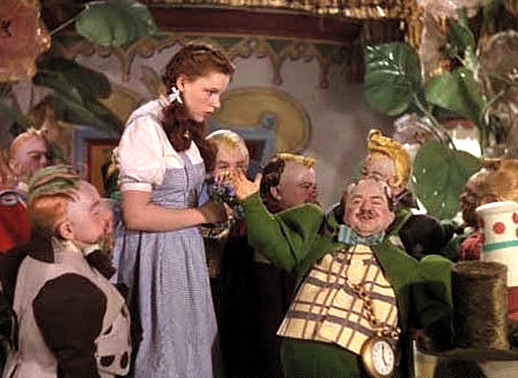
This New York Times article about radioactive waste and a very small county in west Texas included the photo shown above.

You might spot the detail that sent me on a research journey which ended at this Find-a-Grave page about Edna Reed Clayton Dewees, along with some Wikipedia entries. And that led to this set-up for a series of murder mysteries—

It’s January 1945 in a very small county in west Texas called Loving, tucked alongside the Pecos River. Twenty-three-year-old Edna Reed has been working at Pecos Army Air Field, having previously contributed to the war effort by operating a lathe in a Fort Worth aircraft plant. But before those jobs, Edna was Deputy District Clerk in another county, so she knows the levers of the local government.

When the position of Loving County sheriff becomes vacant and there aren’t enough young men around, the town fathers ask Edna to accept the post. Then she finds that she likes being sheriff. So, even though no woman has ever been elected sheriff in Texas, Edna Reed decides to run for the job.

For a wide-open place, Loving has a shady history. It was first incorporated by out-of-state businessmen who fled with all the official records when their fraud was exposed, then reincorporated in 1931 as its population was rising suddenly.

Now the war has ended and soldiers are coming back to Loving County. How will the local establishment deal with those men’s new ambitions, values, and troubles? Does any of them want to become sheriff, or become Edna’s husband? The place has very little reported crime, but what secrets lurk in its past? Can young Edna Reed keep the peace in Loving County without carrying a gun?

And so far, all that is nonfiction.

06 February 2014

Set-Up for a Heartwarming Story

Matthew is a nine-year-old kid. He was born with very short fingers on his right hand—a condition known as “limb difference.” Usually this doesn’t bother Matthew, but after his family moved into a small town in Kansas other kids kept asking him about his hand.

Jennifer is Matthew's mother. She adopted him and two other kids. Her late father also had only a partial hand, and she remembered that bothered him. Jennifer came across plans on the internet for making an artificial hand, but she knew that was beyond her technical skills.

Mason is a sixteen-year-old high-school student. He’s always been a tinkerer; he built his own computer, for instance. He was on the football team, but after his third concussion from sports Mason’s parents told him he couldn’t play anymore, so suddenly he had a lot of free time.

The Johnson County Library has a 3-D printer.

I couldn’t make this up.

01 October 2013

Munchkin Economics

Mari Ness harrumphs over a comment from a Citibank economist: “The world’s largest economy looks like the Land of Oz run by munchkins.” Quoting largely from L. Frank Baum’s The Emerald City of Oz, Ness writes:
Allow me to say, alas, if only.

I have, of course, been one of the loudest and fiercest critics of Ozma, the girl Ruler of Oz, carefully documenting all of the numerous historically attested examples of what I have termed "Ozma fail," including, but not limited to, actions leading to gross injustice, kidnapping, an attack on the Emerald City, war or genocide. So I think I cannot be accused of bias when I say both "if only" and "how unfair," or of gross partisanship if I take up cudgels in her defense.

Oz, after all, is arguably one of the most successful economies in the known or unknown universe, so wealthy that it can even offer a free suite of rooms, elegant food, and free jewels to American hobos who just happen to be passing by. The Emerald City also provides lavish parties and entertainment at no cost to the local population. Areas of the kingdom suffering economic distress can apply for and receive economic assistance from the central government in the Emerald City. The result is an economy that is the marvel of the magical world. . . .

Mind you, by the standards of Citibank's chief economist, some aspects of the Oz economy may seem a bit alarming. Oz, after all, is a centralized, planned economy offering free universal health care (provided by magic wand and natural, genetic immortality) and education -- an education which children and college students are literally forced to swallow down. Farmers are forced to turn over all agricultural surpluses to the Emerald City to be stored in giant warehouses to be distributed for the common good; products are evenly distributed, with no profit margin. . . .

To be fair, this economy is run by Ozma, not Munchkins. Point to Citibank.
Even there, however, I think the economist’s comments are unfounded. Munchkinland is usually called the most pleasant and peaceful quadrant of Oz. Even shortly after the death of the Wicked Witch of the East, the populated areas that Dorothy visits seem prosperous and developed with little evidence of recent hardship.

The Munchkins appear to have distributed government power more evenly than people in other parts of Oz. Rather than a single ruler, three Munchkin gentlemen greet Dorothy alongside the visiting Good Witch of the North. By the end of The Wonderful Wizard of Oz Baum established strong monarchs for the Quadling and Winkie Countries and the Emerald City’s central region, and later stated that the Gillikin Country lacked such a ruler and was the wildest part of Oz. And in Munchkinland? While Baum made occasional brief mentions of an unnamed Munchkin king, that figure leaves so little impact that I’m not sure he really existed or was more than symbolic. And yet the Munchkins remain prosperous and happy.

We can ask related questions about the Munchkinland in the MGM movie. We meet a mayor, a coroner, uniformed soldiers, and representatives of two civic organizations. There’s a village in good repair and a good road. Clearly civil society continued even under the Wicked Witch of the East. Munchkinland is one of the two pleasant parts of Oz that Dorothy visits in the movie, the other being the Emerald City—where citizens run to a humbug wizard at the first airborne sign of trouble.

The Citibank economist used “Munchkins” as a synonym for “little people,” and suggested that little people can’t run an economy. That may be how life looks to Citibank, but most people would rather have a society run by and for the little people as a whole than by humbug wizards, straw men, or even pretty young absolute monarchs.

13 June 2013

The Spy Who Came In From the Web

This thriller starts with Steve, a former employee of a surveillance agency, contacting a libertarian-minded reporter and making a very public disclosure of government secrets. Though many professionals and outside observers say Steve’s revealed nothing new, the US government makes a lot of noise about arresting him. Steve holes up in Hong Kong with his Chinese-Australian girlfriend Rosalie and starts speaking to the Chinese press about what he spirited away from his last job on a thumb drive.

The Chinese intelligence agency decides to steal Steve’s thumb drives, figuring there’s even more information on them than he and the news media have revealed. Unknown to the Chinese spies, the US government wants them to do exactly that. The whole defection has been a way to get tracking software and bugs installed on those thumb drives into the mysterious Shanghai compound where the best Chinese hackers work.

But in the process of stealing those thumb drives, the Chinese intelligence agency kidnap Rosalie. Or were those men from Hong Kong’s criminal triads? Now Steve has to rescue his girlfriend without the help of US intelligence. Or was she an agent, too, just pretending to be his girlfriend and encouraging him to defect? And if they can’t get the thumb drives, will any of the government agencies be willing to work with Steve and thumb screws instead?

10 October 2012

When Mark Twain Met Tom Sawyer

Smithsonian magazine offers a profile of Tom Sawyer, volunteer firefighter, saloon owner, and civil servant, whom Mark Twain—then still plain Samuel Clemens, aspiring journalist—met in the early 1860s in San Francisco.

Most of the article appears to be based on interviews with Sawyer in the 1890s, after Twain had become a famous author, in large part based on The Adventures of Tom Sawyer. At that time, Sawyer was telling people how he used to share anecdotes of his childhood with his drinking buddy Sam, and thus inspired the famous character.

How much can we rely on Sawyer’s memories and claims? A passage from Roughing It indicates that Twain did know someone named Sawyer in San Francisco. However, it also says the young writer met that Sawyer for the first time just before his first speaking engagement, and that doesn’t match the timeline that the real Tom Sawyer recalled.

Sawyer claimed Clemens had told him that he was ready to write a story about boys in 1864. But at that time Twain seems to have wanted to write a serious novel, not humor, and he didn’t start on Tom Sawyer until 1873.

Furthermore, Twain later denied naming the character Tom Sawyer after anyone. His 1923 biographer Alfred Bigelow Paine listed three people as inspirations for the character, one of them the author himself. Tom’s home town is based on Hannibal, Missouri, while Sawyer the San Franciscan had grown up in Brooklyn, New York. Tom’s house, as I wrote here, is clearly based on the Clemens house.

On the other hand, Twain never appears to have objected to Sawyer’s interviews and claims, which were published and reprinted in his lifetime.

What are we to make of all this? I suspect Mark Twain borrowed Tom Sawyer’s name as a rhythmic stand-in for this own Sam Clemens, but little else. Well, perhaps the braggadocio that’s so much part of Tom’s personality. And perhaps Twain felt a little guilty about that authorial appropriation, preferring not to mention it. Meanwhile, out in San Francisco, the saloon-owning Tom Sawyer’s stories got better and more detailed over the years. And now they’ve resurfaced in Smithsonian.

21 January 2011

Boston Comics Roundtable on the Fewcha

Today’s issue of the Boston Phoenix is devoted to the future of Boston. Among other features it includes a page of single-panel comics from the Boston Comics Roundtable. The print version shows nine in black and white, but the online gallery starting here includes sixteen in color, including a modest contribution from me.

The BCR’s introduction to the gallery explains:

We approached this future-Boston project as a sort of moderated "jam comic," an improvised group effort in which one cartoonist draws a panel, then passes it off to another who adds a panel of their own, and so on, usually resulting in a weird, amusing Frankenstein's-monster of a story. In this case, each cartoonist went off on their own and came up with a scene from the coming century, which we then fit together into a sequence.
It was fun to watch this project take shape on a very tight deadline. On the evening of 6 January, Phoenix editors met with everyone who had dropped by the BCR meeting. The group hammered out a basic approach. Dan Mazur was drafted to coordinate everything, Cathy Leamy provided a visual template, and Roho set up an email list.

That weekend a couple of writers broadcast a bunch of picture/caption ideas, and artists began posting their sketches to the email list. The delivery deadline was the 12th, giving time for selection, sequencing, final captioning, and coloring by Dan and Braden D. Lamb.

In thinking about panel ideas and watching the selection grow, two things occurred to me:
  • The urge to find a joke that works in a single panel for a broad audience meant steering away from some provocative aspects of futurism, such as demographic changes and politics, and toward some Boston stand-up stand-bys: parking, sports, Dunkies.
  • As we know, the comics form can be used to tell any type of story or discuss nearly any topic. The BCR itself has published anthologies on the history of Boston, on food, and on other down-to-earth subjects. Nevertheless, when cartoonists get the assignment to picture the future, quite a few grab the chance to draw giant robots fighting.
Of course, it’s not too late for Boston to prepare for giant robot fights.

05 May 2010

Aquapocalypse: The YA Paranormal Romance

Jenny is finally becoming friends—maybe more?—with Rutan, the cute guy who moved in next door two months into the high school year. He comes from another country, or maybe a part of another country that’s trying to become independent, she’s not sure. Rutan and his family have mostly kept to themselves.

But only a day after Jenny gets Rutan to walk home from high school with her at last, the governor declares a water emergency for the whole county.

Some horrible parasite might have gotten into the water supply, the authorities say. There’s no test for the parasite, and no way to cure it once it gets into your body. If you’re infected, in six days its evolutionary instinct takes over your own and you lose control of your actions. The parasite grows inside, hollowing out your body over the course of eight months as you attack and eat other people.

Jenny and her family try to go on with normal life, using bottled water and furiously boiling what comes out of the tap. Rutan proves to be a big help, sharing advice about the water shortage and folk remedies for avoiding the parasite. Rutan explains that he and his family are used to living with such problems.

As the six days tick off, the community becomes more anxious and suspicious. There are rumors of infections already breaking out, rumors of hoaxes, rumors of cures. People argue about who might already have swallowed the parasite. Jenny wonders, if I’m already infected, is it better to stay beside the people I love or to run away from them?

On day 5, Jenny hears on the news that a little-known terrorist organization has taken credit for releasing the parasite. Her father points out that the group’s spokesman sounds a lot like Rutan. Jenny scolds him for implying something horrible, even though she noticed the accent herself.

That night, Jenny starts to wonder about the political arguments she’s heard at Rutan’s house, the family religious rituals she thought were exciting and fresh. Could Rutan and his family really have come to America to infect the water supply? But if they did, why would he give her family so much advice? Or is Rutan’s advice actually any good?

Day 6 arrives…