Showing posts with label SERIES Sherlock Holmes. Show all posts

01 September 2020

Captain Hastings’s True Worth
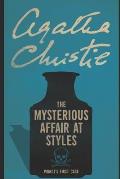
In the end, after the drawing-room revelations that the publisher demanded, I enjoyed Agatha Christie’s The Mysterious Affair at Styles more as a series of character sketches and dialogues than as a murder mystery.

For me, the solution relied too much on esoteric aspects of poisons. (Christie was working at a wartime pharmacy.) The number of people administering said poisons, sneaking into bedrooms at night, and trying to frame or shield other people became incredible. In an excellent mystery, everything comes together at the end with an almost audible click. There was still a bit of scraping in this debut.

That said, the character of Hercule Poirot seems to have come out fully formed and delightful. There’s a rich vein of supporting characters with distinct personalities and speech patterns, most of whom pair off at the end like a Shakespearean comedy. And for the first time I appreciated Capt. Arthur Hastings as a comedic character.

Christie clearly took inspiration from Arthur Conan Doyle’s Holmes and Watson when she wrote about Poirot and Hastings, especially in the short stories that followed the success of this novel, in which the men share rooms in London. But Dr. John Watson was an intelligent, resourceful man, appearing incapable only because he was standing next to an obsessed genius. He helped Sherlock Holmes in many ways. He never came across as a doofus until the character was written that way for Nigel Bruce in the movies.

Hastings, in contrast, provides only one type of assistance to Poirot: entrée into upper-class British society. Well, two things if we add light entertainment in the course of a trying case, as shown in this discussion of the likely murderer:
“Someone with a good deal of intelligence,” remarked Poirot dryly. “You realize that he chose the one place in the house to hide it where its presence would not be remarked? Yes, he is intelligent. But we must be more intelligent. We must be so intelligent that he does not suspect us of being intelligent at all.”

I acquiesced.

“There, mon ami, you will be of great assistance to me.”

I was pleased with the compliment. There had been times when I hardly thought that Poirot appreciated me at my true worth.
Early in the book, Hastings, who’s recovering from a battlefield wound, speaks of becoming a detective. He coddles easy theories about the murder and records lots of clues whose significance passes him by completely. (Poisons not among them.)

Hastings’s attention is easily caught by beautiful women, though his code means he doesn’t pursue another man’s wife and impulsively proposes marriage to an unmarried woman he thinks is about to cry. As a narrator, Hastings alternately admires Poirot, feels baffled by his momentary “mistakes,” and occasionally resents his superiority and secrecy.

To sum up, in The Mysterious Affair at Styles Capt. Hastings behaves very much like Bertie Wooster toward Jeeves.

COMING UP: The Code of the Wodehouses?

02 October 2014

No Need to Complicate Things

Sarah Lyall of the New York Times noted some oddities in her advance reading copy of Moriarty, a latter-day Sherlock Holmes novel by Anthony Horowitz:
In the reader’s edition, some copies of which were sent to The New York Times, “Moriarty’s” narrator, an American detective named Frederick Chase, is laying out the background to the story – how Holmes and Moriarty came to be at Reichenbach Falls and what is believed to have happened next. All of a sudden he switches to capitals. “NO NEED TO COMPLICATE THINGS HERE, I THINK,” the text announces. “WHAT I’VE WRITTEN IS BROADLY TRUE.”

Can the narrator be offering some meta-commentary on his own text? At first it seems so. But then it happens again. In a spot where Chase and a Scotland Yard inspector have found an important clue that seems to be an excerpt from a previous Holmes story written by Dr. Watson, things suddenly veer off-piste again. “IT MAKES NO SENSE FOR FREDERICK CHASE TO HAVE READ THE SIGN OF FOUR,” the text declares.

There are at least six of these capitalized interjections, and sadly, they turn out to have nothing to do with anything so exciting as postmodern cleverness. They are instead Mr. Horowitz’s notes to a copy editor or, as Mr. Horowitz’s agent in London, Jonathan Lloyd, said, some “mild author reaction to some copy-editing points.”
It seem that the book’s British publisher sent the wrong file to its American counterpart, and folks in the US didn’t catch those interjections while putting that file into proof form.

None of Horowitz’s comments, Lyall reports, is rude, profane, or otherwise embarrassing—and authors responding to copyediting can become heated. These are simply the sort of “stet” instructions that every published author has sent back at some point. Such copyedits and responses to them used to be confined to colored pencil on paper, but now they’re in the form of electrons like the rest of a manuscript, and it’s harder to keep them sorted out.

Those capitalized comments also indicate that Horowitz doesn’t use or trust “Track Changes” and “Comments” in a Word document, and I’m fully in sympathy with him on that.

13 August 2013

No Place Like the Hospital

This month Entertainment Weekly’s website reported on a new Oz-themed TV show, sort of:
CBS is taking a big swing with a new project with a higher-than-high concept: Wizard of Oz medical drama.

The broadcaster has inked a deal to develop a series titled Dorothy, described by the network as “a medical soap based in New York City, inspired by the characters and themes immortalized in The Wizard of Oz.”
There’s no more information on the drama than that, as far as I can tell, yet the news has already kicked up a lot of talk on television websites.

Which is the point. Without the link to a beloved property like The Wonderful Wizard of Oz, this would be just another medical drama set in the big city. The executive producers pulled a similar trick with Elementary, spun off the public-domain Sherlock Holmes mythos and promoted as such.

I don’t doubt that the show’s creators might take inspiration from the basic Oz story: a young female character named Dorothy looking for a home, three male companions who feel inadequate, and so on. But if The Wonderful Wizard of Oz weren’t both famous and free, the network would never mention that vague inspiration. No, Dorothy would then be an entirely original show, any resemblance between it and preceding stories entirely coincidental.

14 August 2009

The Mysteries of Asperger Fiction

Among the recent children's novels about autism and Asperger syndrome, some of the most notable are narrated by characters with a condition along that spectrum. The two best-known examples are The Curious Incident of the Dog in the Night-Time, by Mark Haddon, and The London Eye Mystery, by Siobhan Dowd. Both are, not coincidentally, mysteries.

Becker discussed the conjunction of Asperger fiction and the mystery genre last spring at Guys Lit Wire:

Some manifestations of autism/Asperger’s are portrayed as helping the characters in solving the mysteries--dependence on routine, obsession with numbers and puzzles, and having spent much of their lives trying to figure people out.

Another typical trait of autism/Asperger’s is the lack of understanding of others’ emotions--this shows up in the characters having trouble reading people’s faces and moods, being overwhelmed by sensory input, and sometimes seeming insensitive to others’ thoughts or feelings--not because they’re mean, but because they don’t have a shared understanding of emotion. The first person narration in all of these stories gives you a real sense of being in the character’s head and seeing the world through his eyes.
Readers of mysteries are trying to figure out what happened and what people's real intentions and emotions were. That reading experience thus parallels the major challenges of living with Asperger syndrome, making the genre a fine channel for exploring such a life.

In addition, the protagonists' focus on perceptible details rather than on characters' underlying emotions or intentions also makes an easy match with the modern fiction writer's fundamental rule: "show, don't tell."

And of course, the Asperger's mystery has a long and honored tradition: Sherlock Holmes is literature's most famous and beloved high-functioning "Aspie."

16 July 2009

To Tread the Jewelled Thrones of Earth Under Her Feet

From Kristopher Reisz at the Guys Lit Wire:

Conan the Barbarian in one of those iconic characters--like Sherlock Holmes or Dorothy Gale--that people think they know without bothering to read the actual stories they appeared in.
A fine comparison indeed.

Cimmerian versus Kansan, I'm putting my money on the blonde.

10 August 2007

Discounted Irregulars

Rue Morgue's review of The Irregulars, posted by publisher Dark Horse (of all people), sums up a recurring flaw of this 128-page comic for me: "the black and white medium often times works against [artist Bong Dazo's] busy paneling."

Put another way, I had a hard time telling whether the mustachioed, heavyset man in panel A was the same as the mustachioed, heavyset man in panel B, particularly on pages with several mustachioed, heavyset men. Ditto tall, thin men with no facial hair; boys with round faces and caps; and so on.

As for the story by Steven-Elliot Altman and Michael Reaves, it seemed a little too eager to set up a series for Sherlock Holmes's mudlark assistants. There are episodes introducing their special talents, but those don't all play a role in this book. The core story itself doesn't rise much above a warm hash of its sources (Doyle, Lovecraft, more Doyle).

Indeed, one lesser-noted possible reason that comics haven't gotten the critical respect that their fans think they deserve is that many are based on previously-created characters and storylines. Not that there's anything wrong with offering new takes on established legends and characters. But our culture usually values creative originality over creative derivation.