Showing posts with label historical fiction. Show all posts

30 June 2026

Two Takes on Charity and Sylvia
In recent years, publishers have worked with historians to adapt their scholarly studies into other types of books, more welcoming to teenagers and other regular people, and thus with potential for large and lasting sales to schools.

For example, after publishing Never Caught: The Washingtons’ Relentless Pursuit of Their Runaway Slave, Ona Judge in 2017, Erica Armstrong Dunbar worked with Kathleen Van Cleve to produce a Never Caught, the Story of Ona Judge: George and Martha Washington’s Courageous Slave Who Dared to Run Away, a “Young Readers Edition” published in 2019.

Marcus Rediker initiated collaborations with David Lester and Paul Buhle on graphic novels adapted from his books: Prophet Against Slavery: Benjamin Lay, a Graphic Novel; Under the Banner of King Death: Pirates of the Atlantic, A Graphic Novel; and Revolution by Fire: New York’s Afro-Irish Uprising of 1741, a Graphic Novel.

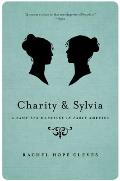
Earlier this month I saw an announcement of Tillie Walden’s new graphic novel Charity and Sylvia, published by Drawn & Quarterly, about a couple in Vermont in the early 1800s. I immediately connected that to Rachel Hope Cleves’s study Charity and Sylvia: A Same-Sex Marriage in Early America, published in 2014 by Oxford University Press.

I wondered if Walden had adapted Cleves’s work, or fictionalized it with her blessing. When I shared news of the graphic novel with the Boston Comics Roundtable, I added a mention of Cleves’s work.
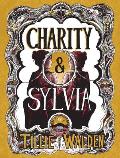
Unlike Dunbar and Rediker, Cleves isn’t credited as a coauthor of the graphic novel. In a line inside the book, an online bibliography and discussion of sources, and public talks, Walden cites Cleves’s Charity and Sylvia as a major source. But does that add up to enough acknowledgment for how much she relied on a previous author’s work?

Last night Cleves posted an open letter to readers that says in part:
I've tried to be happy that Walden's book is making their story more widely known, even if she chose to take my title and my cover design as well as my narrative and my research with only a single sentence of acknowledgement at the end of her book in her notes section. Walden's illustrations and storytelling are wonderful, as I told her when she reached out to me during the writing process. It would take nothing away from her hard work to be honest about how it is built on my hard work. But in Walden's publicity tour, she has repeatedly made the claim to have based her book on her extensive research in the archive without acknowledging that her book is, in fact, based on my book. . . .

I don't doubt that Walden spent time looking at letters at the Henry Sheldon Museum, but the story that Walden tells is not to be found there. It is a story that I pieced together from years of visits to at least twenty different archives and locations across the United States, not only in Vermont but in Massachusetts, New York, Illinois, and Washington State, as well. . . . Many of the details of that story which appeared in my book, and re-appear in Walden's, do not come from the Henry Sheldon Museum, where she claims to have done her research. They come from the countless additional archives I visited.
The process of creating a graphic novel is akin to dramatizing a narrative for stage or screen. The script turns narration and analysis into scenes with dialogue. The art builds on descriptions or imagination. Even the most nonfictional narrative comic is a fictionalizing adaptation of its sources.

With fiction, we readily recognize how a graphic novel or dramatization is a derived work. Unless the original story has entered the public domain, the new publication requires contracting for the right to adapt the original, crediting and compensating its author. After all, the story and characters wouldn’t exist without the first author’s creativity.

With nonfiction, the law is less clear. No one has a copyright claim on historical facts. No one can call dibs on the exclusive right to line up events in chronological order. As legal experts often say, copyright doesn’t protect ideas; it protects the expression of those ideas.

In her open letter, Cleves writes: “This is not just a question of facts but of story: the story of how Charity and Sylvia built a life together…” But was that “story” created by the subjects living their lives or by the historian reconstructing those lives in a meaningful form? Is a “story” a copyrightable expression of ideas that survives even when it’s expressed in a different form?

There’s no doubt that Cleves’s research unearthed facts about Charity Bryant and Sylvia Drake, produced enough detail to build a compelling story, and smoothed the path for future researchers. Unlike the tale of Ona Judge or the 1741 uprising in New York, there are no other books to draw from. So what claim should Cleve have on that subject? Our copyright law protects creative work, but should it also require compensation for hard work?

TOMORROW: Historical roots.

11 July 2020

Interpreting Incident at Hawk’s Hill through the Autism Lens

How are we to make sense of the 1971 novel Incident at Hawk’s Hill and the actual 1873 event at its root?

In 2004, Prof. Kenneth Kidd wrote about Allan W. Eckert’s novel for the children’s literature journal The Looking Glass. In that paper, titled “Leave It to Badger,” Kidd reported that he’d found no corroboration of Eckert’s claim that he had based the book on a real incident.

At the time, digital book and newspaper archives were in their infancy, so it wasn’t as easy to find the period sources I quoted back here, or the intervening secondary sources I analyzed here. Not only did Eckert have reason to believe he was working off a report of a real incident, but it’s clear that a lost little boy was indeed found in a badger hole in 1873 Manitoba. Would that knowledge have changed Kidd’s analysis?

Kidd made sense of the novel by applying the thinking in his book Making American Boys: Boyology and the Feral Tale. He discussed the story through the lens of folklore. Many cultures have stories about children being raised by animals, including such famous western examples as Romulus and Remus, Mowgli, and Tarzan. Viewed entirely as fiction, Eckert’s novel fits into that paradigm. Kidd saw an Oedipal dimension to such stories in general and Eckert’s novel in particular.

Of course, when the event at the core of Incident at Hawk’s Hill—a little boy lost on the prairie who survives by finding shelter in a badger’s hole—is real, then the ways people tell that story aren’t new examples of old folklore but attempts to understand what really happened. (Or, in the case of Eckert’s acknowledged fiction, to present what might have happened.)

Bruno Bettelheim’s paper “Feral Children and Autistic Children,” published in the American Journal of Sociology in 1959, was an attempt to explain similar events. Bettelheim posited that the root of many of those stories of children raised by animals is autism, a psychological condition he was groping to understand. Throughout history, he wrote, people had seen “severe cases of infantile autism with seemingly animal-like traits and habits” and explained that behavior by believing the children had been raised by animals.

Bettelheim’s own theory of autism was deeply flawed. In that same paper he posited that it was largely or entirely due to “extreme emotional isolation combined with experiences which they interpreted as threatening them with utter destruction.” As for the source of the emotional isolation, Bettelheim mostly blamed mothers (of course), saying they were the real “feral” ones.

While Bettelheim’s theories about autism and how to respond to it have fallen by the wayside, his suggestion that autism explains many examples of “feral children” has caught on. Uta Frith analyzed some historic cases of "feral children” in Autism: Explaining the Enigma (1989) and elsewhere. She suggested, “an unduly high proportion of feral children suffered from autism before they were abandoned. Indeed autism, with its often severe conduct problems, may be the cause for the abandonment in the first place.”

Frith’s book and others have helped to make our culture much more aware of autism since Incident at Hawk’s Hill appeared in 1971. We now recognize a spectrum of related conditions under the autism label. Not only do we better distinguish autism from other cognitive conditions, but we acknowledge autistic ways of thinking and viewing the world in high-functioning individuals.

That knowledge allows us a new perspective on how authors from earlier generations discussed the story of the little boy lost on the Manitoba prairie. The initial reports said almost nothing about the boy himself, only that he was scared when men came by. It’s not clear how much detail in the oral traditions is based on fact and how much was added by people seeking to comprehend the mystery. Nonetheless, the more detailed recounting by Ernest Seton Thompson and the fictionalized story of Allan W. Eckert lend themselves to interpretation through the lens of autism.

Seton was quite clear about little Harry Service not being normal:
He was a strange child, very small for his age, and shy without being cowardly. He had an odd habit of following dogs, chickens, pigs, and birds, imitating their voices and actions, with an exactness that onlookers sometimes declared to be uncanny.
For Seton, this affinity with animals was a strength. He linked kindness to animals with general goodness, and equated cruelty to animals with cruelty to people. Seton’s tale contained an explanation for how this boy survived in the badger’s hole—because the badger, having lost her own young, showed maternal kindness to this unusual newcomer. And he concluded with an optimistic suggestion that Harry’s experience with the wild badger cured him of his most obvious strangeness.

In Incident at Hawk’s Hill Eckert picked up on those details and made a major subplot of the boy’s parents wrestling with what we’d now call their youngest son’s special needs. Early in the novel, Bill MacDonald tells his wife:
“Oh, what’s the use of trying to fool ourselves? He isn’t normal, Esther, and we both know it, whether or not you’re willing to admit it. He not only isn’t normal physically, he’s not normal mentally, either. Look how he acts toward animals.”
When Eckert finally shifts his narration into the little boy’s own perspective, it states:
Ben had no idea why he was so afraid of people. He was not, as his father seemed to think, retarded in his mental processes. He was, in his way, quite intelligent. He could think things through very well for his age and he retained a surprising percentage of what was taught him by his mother and the others. It was just that he kept what he learned to himself. He didn’t like to talk to people.
Was this Eckert’s attempt to depict an autistic child? Someone he knew, something he felt? Or was he picking up imaginatively on the hints in Seton’s story? I have no idea. In the end, Eckert followed Seton’s line and portrayed the experience out on the prairie as making Ben open up more than ever, especially to his father.

Reflecting the greater awareness of autism today, many recent readers of Incident at Hawk’s Hill interpret Ben forthrightly as on the autism spectrum. Monado at Book Crossing describes him as “a boy, whom these days we’d describe as autistic,” while Lori Steinbach at enotes says he probably has “a condition something like autism.” The Home School Book Review said, “Ben would probably be considered somewhat autistic today.” At Goodreads, the Shayne-Train wrote, “now that I [re]read it with adult eyes, it may be the first novel I’d ever read that had an autistic protagonist.” And the study guide for the novel at Bookrags includes a whole section on autism.

Such a diagnosis is of course only a partial explanation for the character, or the history deep behind it. Did the little Service boy who got lost on the Manitoba prairie have some form of autism? How did that affect his lost time, or his family’s and neighbors’ interpretations of it? What experiences with autism, a condition not yet isolated and named in the early 1900s, did Seton have? What about Eckert, writing in 1971? Is it just coincidence that this modern example of a “feral child” story fits so easily with an autism reading, or are we still seeking an explanation with the partial knowledge we have?

10 July 2020

How a Real Story Became Incident at Hawk’s Hill

In 1873, a young boy went missing from his family’s farm in Manitoba. After more than a week, a man of Native and European ancestry found him hiding in a badger hole. That much we can read in nineteenth-century sources from Winnipeg.

In the early 1900s the nature writer Ernest Thompson Seton picked up that story from some Manitobans. He published a version that went into much more detail about how the little boy had actually shared that hole for days with a mother badger that had recently lost its young. Seton or his informants turned the mysterious event into a morality tale, which he published in at least three books.

This 1960 article from the Manitoba Historical Society’s Manitoba Pageant magazine mentions some other local recountings: by Archbishop Samuel Matheson in 1936, in Country Guide in 1951 by Margaret Arnett MacLeod, by the Manitoba Free Press in 1953. I haven’t seen those versions, so I don’t know what new details they provide and what evidence they were based on.

At some point the American writer Allan W. Eckert (1931-2011) came across Seton’s version of the story. Eckert had made himself a specialist in ecological writing, penning most of the scripts for Mutual of Omaha’s Wild Kingdom. He also found a niche writing on Native Americans, including outdoor dramas about Tecumseh and Blue Jacket. (That pairing of nature and Native Americans probably reflects a bias within our culture.)

Eckert’s nonfiction tended toward the imaginative. One of his early magazine sales was an article for the American Legion magazine in 1962 about the disappearance of the US Navy air training mission Flight 19 off the coast of Florida. Eckert appears to have added details not in the documentary record, and that event later became a keystone of the “Bermuda Triangle” legend.

Likewise, Kirkus said of Eckert’s 1992 biography of Tecumseh, A Sorrow in Our Heart, “in its interpretative zeal it strays from, or at least embellishes, the historical record to the point of being suspect.” Even Kirkus’s good review of That Dark and Bloody River noted Eckert’s method of “'reconstituting' credible dialogue among people in briefly reported events.”

On the other hand, Eckert’s fiction was often based closely on historical fact. His first novel was about the extinction of the great auk. Another was based on an event in the life of Daniel Boone. In the late 1960s Eckert started a series of historical sagas about the “Winning of America.”

Eckert saw the skeleton of a novel in Seton’s tale of the lost boy and the badger. The tale offered a chance to write about both the frontier past and the natural world. And it came with the gloss of nonfiction. When Eckert published his novel Incident at Hawk’s Hill in 1971, he stated up front in a short author’s note, “The story which follows is a slightly fictionalized version of an incident which actually occurred at the time and place noted.” Toward the end of the book, Eckert introduced characters who shared the names of two of Seton’s informants.

Eckert changed some details of the story, starting with calling the little boy not Harry (or Willie) Service but Benjy MacDonald. Seton had written that the event took place near “Bird’s Hill,” and Eckert turned that into “Hawk’s Hill,” named after a hawk the MacDonalds see. (The original Manitoba landmark was named after a settler named Bird, not an actual bird.)

Many other details and the plot of Eckert’s story came directly from Seton’s narrative. From the outset, the little boy shows more affinity for animals than for people. Seton’s villain—a nasty neighbor named Grogan—appears under the name of George Burton. He’s not a “half-breed,” however; in fact, he’s cruel to Natives as well as animals. As in Seton’s story, Benjy wanders away after a prairie chicken and needs to take shelter from a storm. A mother badger has been injured in the villain’s trap and lost her babies, leaving her with unfulfilled maternal instincts.

The real boy was lost for about ten days, but Incident at Hawk’s Hill draws that time out to two months. Eventually, Benjy is rescued by a relative rather than (as with the real boy) a stranger; where Seton wrote that that relative was a cousin, Eckert found more drama in making the rescuer a brother.

When Benjy returns, he initially behaves like a badger, but eventually returns to human behavior, stronger for his experience in the wild. Finally, just as in Seton’s telling, the villain shoots the badger, not realizing it has become a family companion, and the family unites to drive him away. The experience brings the MacDonalds closer, particularly father and son. But the family has also decided, with a visiting archbishop’s help, to keep the full story secret so as not to make Benjy appear stranger than people already think of him.

Eckert didn’t write Incident at Hawk’s Hill for children. The point of view skips around among many characters—adults, children, badger, and omniscient narrator. Though six-year-old Benjy is a central character, for many pages Eckert describes him entirely from the outside, and not in appealing terms—he’s small for his age, developmentally odd. It takes several chapters before readers are privy to Benjy’s thoughts, and then only when he’s the only human in the scene. Much of the book follows the drama of the MacDonald family searching for him or reacting to his return.

The early reviews treated Incident at Hawk’s Hill as an adult novel. Critics focused on Eckert’s reputation as a nature writer, with the New York Times calling the book a “folk fable” written “without recourse to undue anthropomorphism.” Kirkus’s reviewer, who could barely stand the story, concluded, “Were it not for Mr. Eckert’s natural history credentials one might think he had been sniffing too much meadow grass.”

Soon, however, people began to view Incident at Hawk’s Hill as a book for children. It was, after all, about a young boy and an animal making friends. It was on the short side, well under 200 pages. And it had pictures. Little, Brown commissioned scratchboard art from John Schoenherr, who had illustrated Sterling North’s Rascal (1963) and Walt Morey’s Gentle Ben (1965)—two novels about boys and animals written for children. (Schoenherr had an earlier career as a science-fiction illustrator. He would go on to win the Caldecott Medal for Owl Moon.)

The Bulletin of the Center for Children’s Books deemed Incident at Hawk’s Hill “An adult novel that should appeal to many young readers.” And in 1972 the novel was named a Newbery Honor Book. That year the judging committee appears to have been unusually generous, naming five Honor Books, more than in any other year in the 1960s and 1970s. From then on, Eckert’s novel was treated as a children’s book.

Disney adapted Incident at Hawk’s Hill into a 1975 television movie called The Boy Who Talked to Badgers. This treatment made Benjy, played by ten-year-old Christian Juttner, more of a likable hero. It switched some episodes around, but the basics of Seton’s and Eckert’s story remained. One notable addition was Denver Pyle as narrator, revealed at the end to be Benjy grown up.

Almost two decades later, in 1998, Eckert published Return to Hawk’s Hill, starting at the end of the first novel and then going over much the same ground. Benjy, a little older, wanders off again. Even the villain returns, despite having been run off before. But the new story had one major difference. This time, instead of a badger Benjy falls in with a community of mixed Cree and French descent who look after him, and his father learns to apologize for his prejudice against these Métis.

Return to Hawk’s Hill thus restored the helpful role of Métis in the real story of the lost boy in Manitoba. As specified in the nineteenth-century sources, a man of Cree and European ancestry rescued the boy from the badger hole. Seton’s early-1900s version had not only erased that rescuer from the story but made the villain a “half-breed.”

I have no idea whether Eckert had learned of those original sources by the time he wrote Return to Hawk’s Hill and set out to fill a deficit in his earlier novel. He may simply have wanted to create a sequel to one of his most successful books and looked to his interest in indigenous North Americans for inspiration. Either way, he added yet more significance in the mysterious story of a lost boy in the badger hole.

TOMORROW: Further meaning for 21st-century readers.

09 July 2020

How a Lost Boy Met a “Kindly Badger”

Yesterday I quoted two period sources about a Manitoba boy who was missing for over a week on the prairie before being discovered in a badger’s hole.

One of those items was a newspaper article from 1873, days after the boy’s return, the other a longer account from a local journalist about the search and discovery published in 1881. Those sources establish the basic veracity of the story of the missing boy.

Those sources also leave a lot of mystery. They have little to say about what the boy experienced. They say nothing about the badger that dug the hole where the child hid. It’s not even clear that there was a badger present—that hole might have been abandoned.

Decades later, in 1909, the nature writer Ernest Thompson Seton (1860-1946) included a version of the same story in his two-volume Life-Histories of Northern Animals. This account was independent of the sources published in the nineteenth century, which Seton probably never saw.

Instead, in 1909 Seton stated: “This was related to me by George Fraser, a native of Manitoba, and corroborated by his mother, Mrs. Fraser, of Kildonan, and Archbishop Matheson.” In publishing a longer version of the tale in 1913, Seton said skeptics could speak to “Archbishop Matheson, Dr. R. M. Simpson, or Mrs. George A. Frazer of Kildonan.” As I noted yesterday, people heard Archbishop Samuel Matheson retelling the story of the boy in the badger hole (including a detail contradicting the earliest accounts) as late as 1936.

Seton presented his version as based on what the little boy told his family after his return, which neighbors then passed down to him. Some of that information might have been garbled, smoothed, or augmented in transmission over the decades. Seton’s date for the event was off by two years, for instance. He called the boy “Harry” while the 1881 account used the name “Willie,” though I haven’t found confirmation of either. Most important, while the earliest sources were about the search for the boy, Seton wrote in confident detail about how the little boy survived outdoors for more than a week.

The 1909 version from Seton stated:
In 1871, a little seven-year-old boy, named Harry Service, wandering from his father’s house at Bird’s Hill, near Winnipeg, was lost for two weeks. When found, he was living in a den with a Badger. His clothes were torn so that he was nearly naked, and his face was all scratched. He told his parents that he had taken shelter in the hole during a rain-storm, and that the Badger came later and scratched his face. At first they fought, but the child was plucky and would not give up the hole. Later the Badger brought some food and, after another quarrel, allowed the child to eat some of it. In the days that followed the Badger brought him food several times. The beast always entered the den by one of the entrances not used by the child.

When found they were on terms of friendship, and the child cried bitterly when taken from his savage friend. The boy’s story, however, was not clear. He said at one time that he lived on mud. His face, mouth, and tongue were black with mud and much swollen. Nevertheless, his description of the Badger was beyond question. He even said it had five toes on one foot and four on the other.
Four years later, Seton published a longer version of the same story in his book Wild Animals at Home and in Boys’ Life. (In 1932 that version reappeared in Seton’s Famous Animal Stories.) In the book the tale was titled “The Story of the Kindly Badger.” In the magazine it became “The Badger Who Was Brother to a Boy,” though Seton was clear that the badger was acting as a mother.

This longer version left little room for what “was not clear” about the incident. It even explained why the number of toes on the animal’s feet mattered.

“The Story of the Kindly Badger” stated at the outset that Harry Service “was a strange child, very small for his age, and shy without being cowardly.” He followed animals, imitating their noises and behavior. Indeed, following a prairie chicken was how Harry got lost.

Another addition to the established tale was a neighbor Seton named as Grogan and labeled “The Evil One” and “The Human Brute.” A week before Harry wandered off, Grogan had killed a father badger and trapped a mother badger until she “chewed off one of her toes” to escape, but by the time she returned to her burrow her children were dead.

Lost on the prairie, Seton said, young Harry took shelter from a thunder storm in a badger hole. Then that mother badger with the missing toe came back. The two refugees fought over the space. Seton quoted Harry as saying, “I scratched the badger’s face and she scratched mine.” But then they accepted one another.

The badger brought in a prairie chicken, an egg, and other food for her dinner, and Harry was able to take some. Seton explained, “The child could not know, but the parents discovered later that this was a mother badger which had lost her brood and her heart was yearning for something to love.” Harry could only drink from mud, and “Possibly the mother badger wondered why he did not accept her motherly offerings,” which is as explicit as Boys’ Life could get about breast-feeding in 1913.

In this telling, Harry saw Grogan ride by and hid from him, as well as from other men. He developed the habit of running on all fours. Finally Harry’s “Cousin Jack” spotted him and dug him out of the hole, bringing him home by force with the mother badger following for a while.

At home, Harry behaved like a wild animal for a while until his mother’s “magic touch on his brow” calmed him and he began to speak. Then the badger appeared in the doorway. “My Badgie, my Badgie,” Harry cried while hugging her. The boy made a pet of the badger for a while, feeding her, sleeping with her, and playing with her on a dirt pile outdoors.

According to Seton, Harry Service said he hated his father because “he passed me every day and would not look at me.” That might be a remnant of the detail from the very first newspaper account, which reported that the little boy had once seen his father ride by and couldn’t get his attention.

But the real villain of this tale was Grogan, who reentered for the final act. Playing off the stereotypes of his time, Seton labeled Grogan a “hulking half-breed.” In fact, according to the nineteenth-century accounts, a “Half breed,” possibly Peter Fidler, Jr., was the hero who found the little boy and brought him back to his parents. Seton’s telling erased that figure from the story and credited one of the boy’s cousins with rescuing him instead.

As Seton recounted it, Grogan spotted the badger in the Services’ yard, assumed it was a wild pest, and shot it. Harry’s father ordered the man away. It took three weeks for Harry to recover from the loss. This tale concluded:
He grew up to be a fine young man, but he took no pleasure in the killing that was such sport to his neighbors’ sons, and to his dying day he could not look on the skin of a badger without feelings of love, tenderness and regret.
The 1913 version of the story was thus invested with much more meaning than all the earlier accounts. It’s impossible to know how much of that meaning came from what the boy actually told people, how much from the intervening informants, and how much from Seton’s recounting. The published tale certainly fit in with his approach to nature writing, which imbued animals with moral motivations. Seton got into debates with other naturalists about this attitude. He even wrote a book called The Natural History of the Ten Commandments (1907), later retitled The Ten Commandments in the Animal World (1925).

Fitting into that pattern, Seton’s 1913 tale had a moral about the importance of kindness to animals, and animals’ capacity to be kind to little humans in return. The Service boy’s survival was an utter mystery in the nineteenth-century stories, but Seton offered answers. The boy was unusually attuned to animals. The badger, missing her young, was “kindly” and “maternal.” Therefore, they got along fine (after a little scratching). Seton’s telling also provided a clear villain, a man who trapped and killed animals cruelly instead of recognizing their worth, and was non-white besides.

In sum, regardless of how much Seton deliberately fictionalized the mysterious 1873 incident of the boy in the badger hole, he assembled an intellectually and emotionally meaningful narrative, which is what we seek in fiction.

TOMORROW: The fully fictionalized version.

08 July 2020

The Boy in the Badger Hole

In June 1873, a young boy living on a farm in Springfield, Manitoba, outside Winnipeg, went missing. His family and neighbors searched the prairie. After a week, people despaired of finding the boy alive.

On 19 July, however, the Manitoba Free Press reported this news:
FOUND.—The little lost boy of Springfield has turned up alive and well, after a ten days subsistence on swamp water and what few strawberries the grasshoppers left for him. A Half-breed who resides in St. Paul’s, whose name we did not learn, discovered the little fellow at Little Lake, some eight miles from his father’s house. On seeing the man coming the little fellow became alarmed and concealed himself in a badger hole which for some time he had made his dormitory. On the day previous to his recovery, and [sic] boy had seen his father (who had been constantly searching for him since he had been lost) passing near, and ran shouting after him, but failed to attract his attention. We don’t know when we heard anything that surprised and pleased us so much as the above piece of news.
In 1881 a reporter for that newspaper, J. F. Galbraith, published a roundup of stories about life in the province under the pseudonym Jeff. Gee. That book, A Sketch of Both Sides of Manitoba, offered more detail about the case of the lost boy, starting:
There is, I have observed, in all very new countries, or sections of country, a bond of sympathy, that unites each man to his neighbor. So, when, one morning in June, a messenger arrived from Springfield with the announcement that a little four-year-old son of Mr. Wm. Service had strayed away from his home two days before, and all efforts to find him had been fruitless, there swelled through the Winnipeg pulse a great throb of sympathy. . . . Would Winnipeg supply fresh search parties? I should say so. Every man, woman and child wanted to turn out: the entire community would respond en masse, if need be.
Six days of searching didn’t turn up Willie Service, as Galbraith called him. The authorities offered a $200 reward. On the tenth day, however, the boy was found.

Galbraith then wrote more than two pages in the voice of the man who found the boy, whom he called a “French half-breed.” According to this account, the man saw cranes fly from a particular spot and decided that something around there must have disturbed them. He persisted in searching that area (with breaks for tea) even after his son and son-in-law gave up. And then he heard a strange noise.
“I get my gun ready and go on e-easy. Hear queer noise again, eight, ten yards off. I look: see dirt like badger hole. I stop. Then I put out my gun and walk close, slow. I point my gun, and look down. Hole dark; can't see nothing. I bend my head and look down, close. See hand—black, black; four fingers, no thumb. I draw back. I not afraid; but queer noise and black hand without thumb—don’t like it. I look again; hand move, and thumb come out from under. Then I make little noise, and two big eyes look up—wild wild. I see face. I drop gun, put out my hands and say,

“‘Oh, my poor little boy, come out, come out. Your father and mother look all over prairie and can’t find you. Come out and I take you to your mother.’

“He say nothing, but look—big eyes, scared. I ask him again come out, but he not move. Then I kneel down, and say,

“‘My poor little boy, come out, and I take you to your mother, I give you plenty bread, plenty tea, you poor little boy, you must be hungry. Come with me—I feed you, I warm you, I bring you home.’

“I reaching down all the time, and then I catch him by the hand, and say,

“‘Now, my little boy, I got you, I bring you to my wife. Don’t be afraid; I not hurt you.’

“He draw back, but I take him out, and put my arms around him, and hold him up tight, and pat him on the head, and he never say nothing. Then I take him to my wife, and my wife, and my daughter, and my son’s wife, hurry up, and make broth, and give him some in cup. My, but he hungry. Want to drink it all; but my wife say,

“‘No, not too much; I give you more after awhile.’

“Then he go to sleep, and my wife wake him soon and give him more broth. Then he sleep again, and my son go and tell his mother, and his mother come and take him away.”
Galbraith didn’t name the man who found the little boy.

According to a 1960 article in the Manitoba Pageant, transcribed here, that rescuer was Peter Fidler, Jr. (1820-1881). I don’t know the basis of that identification and thus how reliable it is. Fidler’s mother Mary was Cree; his father was not French but English by birth.

The same Manitoba Pageant article showed another way the story changed over time as people sought meaning in it:
When Archbishop [Samuel] Matheson told the story of Billy Service in 1936, he stated that Mrs. Fidler was said to have had a dream in which it was revealed to her that the boy could be found in a badger hole and that she induced her husband to go out and look for him.
In the 1880 account, the man who found the boy said nothing about a dream. He noticed unusual bird behavior, meaning he relied on experience in the world, not supernatural guidance.

TOMORROW: Another version of the same story, based on oral traditions.

29 August 2017

No Need to Visit Skull Castle

Seeing Dirk Gringhuis’s 1964 Mystery at Skull Castle in David Maxine’s collection made me curious about it. Fortunately, David has already shared a thorough review that answers nearly all my questions about the book and its connections to the Oz series.

Just a taste:
The boys [Bram and Piet] are secretly saving money to purchase a new buggy for Piet's uncle. They move their savings to the old burnt-out castle for safekeeping. While at the castle they find a stash of jewels and seconds later meet Major Willoughby, supposedly the long lost heir to the man who built the castle, and his East Indian servant, Singh. The Major cons the boys into leaving their money in the same niche that the jewels were in and tells them to keep quiet about the discovery. . . .

Bram and Piet are stupid and oblivious. They are gullible to every idiotic suggestion and notion the Major tells them. They ignore the truth even when little Bertram is telling them flat out he just watched the Major steal the jewels. Even after they manage to escape their bonds in the castle they don't run for help in town but allow themselves to be cornered on the shore of Lake Michigan where they cower until Piet's uncle solves the mystery (he recognized the red mud of the castle grounds on the major's wagon wheels) and comes down to the shore where he hears the commotion and shoots the Major. In a children's mystery, shouldn't the main characters be the ones to find the solution?

Not only do Bram and Piet not solve the mystery, their primary goal at the beginning comes to nothing, since the uncle has no interest in a new buggy.
Kirkus Reviews was no more complimentary in 1964: “An incredible, poorly plotted story . . . In the story which amounts to little more than a wild chase, the boys and lesser figures are paper thin.”

30 October 2014

Two Warrior Women

Tonight I went to two author events, one after another, both about female fighters.

One was Jill Lepore’s talk at the Radcliffe Institute in Cambridge about The Secret History of Wonder Woman. Comics fans already know about the unorthodox sexual habits of Wonder Woman creator William Moulton Marston, but Lepore has also linked Marston to Margaret Sanger and her circle of women‘s-rights activists.

The second was Alex Myers’s talk at the Old South Meeting House in Boston about his novel Revolutionary, based on the life of Deborah Sampson, soldier in the Continental Army at the end of the Revolutionary War. I was pleased to learn that Myers is another example of the generous mentorship of Alfred F. Young, author of the Sampson biography Masquerade.

25 August 2014

The Sheriff of Loving County

This New York Times article about radioactive waste and a very small county in west Texas included the photo shown above.

You might spot the detail that sent me on a research journey which ended at this Find-a-Grave page about Edna Reed Clayton Dewees, along with some Wikipedia entries. And that led to this set-up for a series of murder mysteries—

It’s January 1945 in a very small county in west Texas called Loving, tucked alongside the Pecos River. Twenty-three-year-old Edna Reed has been working at Pecos Army Air Field, having previously contributed to the war effort by operating a lathe in a Fort Worth aircraft plant. But before those jobs, Edna was Deputy District Clerk in another county, so she knows the levers of the local government.

When the position of Loving County sheriff becomes vacant and there aren’t enough young men around, the town fathers ask Edna to accept the post. Then she finds that she likes being sheriff. So, even though no woman has ever been elected sheriff in Texas, Edna Reed decides to run for the job.

For a wide-open place, Loving has a shady history. It was first incorporated by out-of-state businessmen who fled with all the official records when their fraud was exposed, then reincorporated in 1931 as its population was rising suddenly.

Now the war has ended and soldiers are coming back to Loving County. How will the local establishment deal with those men’s new ambitions, values, and troubles? Does any of them want to become sheriff, or become Edna’s husband? The place has very little reported crime, but what secrets lurk in its past? Can young Edna Reed keep the peace in Loving County without carrying a gun?

And so far, all that is nonfiction.

23 January 2014

Historical Fiction from Ancient History?

At the Oxford University Press blog, Yale professor Colleen Manassa suggests that ancient Egypt’s New Kingdom (1550-1070 BCE) saw the birth of historical fiction:
During the New Kingdom, particularly the Nineteenth and Twentieth Dynasties, the “Ramesside Period,” another literary efflorescence occurred. Among the genres of this new corpus of literary productions are stories that can be most properly described as works of “historical fiction.” Set in the past with attested historical characters, these works of historical fiction are an ancient Egyptian counterpart, albeit ultimately unrelated, to the mammoth corpus of modern historical fiction from Sir Walter Scott, Patrick O’Brien, and George McDonald Frasier to Ken Follett and Philippa Gregory. . . .

The second story, known by its modern title The Capture of Joppa, opens with an Egyptian army besieging ancient Joppa, located near modern Jaffa. The beginning of the story is lost, but the preserved portion describes a group of drunken individuals and chariot horses being safely put away lest they be stolen by the Apiru, a group of local brigands. The Egyptian general Djehuty — another attested historical individual — is holding a conference with the enemy rebel of Joppa, apparently in a neutral space outside of the city walls. The enemy ruler of Joppa, who remains unnamed, is obsessed with seeing the staff of pharaoh, and in a moment of slap-stick humor, Djehuty obliges by smiting the ruler with the staff.

With the ruler of Joppa incapacitated, but not dead, Djehuty puts into motion one of the first attested ruses in ancient military history: he pretends to surrender to the city of Joppa, presenting hundreds of baskets as the “tribute” of his capitulation. Unknown to the citizens of Joppa, Egyptian soldiers are hidden within the baskets, and they promptly capture the city in what can only be described as a Trojan-horse style story. While the basket stratagem is in the realm of fiction, the setting of the story, Joppa, and its protagonist, Djehuty, are known through archaeological and textual sources — The Capture of Joppa truly is one of the world’s first examples of historical fiction.
One of the hallmarks of historical fiction, I believe, is that both authors and readers understand that it’s fiction. Even something as carefully researched to accord with documented events as Hilary Mantel’s Wolf Hall is nonetheless presented as one author’s imagined recreation of the past, not as how people actually thought and events definitely occurred. How did the Egyptians of the New Kingdom understand these tales about figures and events they knew from their history? Did they consider The Capture of Joppa as an entertaining legend or as history?

Another hallmark of historical fiction for me is the determined effort to depict the past as different from the present. That makes it a different mode of storytelling from realistic contemporary fiction, more akin to fantastika in the challenge of smoothly introducing readers to an unfamiliar setting. Again, does that criterion apply to The Capture of Joppa and Manassa’s other examples of ancient historical fiction? Did Egyptians enjoying the story of Djehuty also hear clues that his world was not like theirs?

28 February 2013

The Lost Opportunity in Zero Dark Thirty

In turning the evacuation of six American diplomats out of Teheran in 1979 into a Hollywood movie, Argo had to distort the historical events, as I discussed back here. There simply could not have been a mass-market movie any other way.

In contrast, the historical distortions of Zero Dark Thirty are less apparent but also less necessary. The major issue, which has reached the level of critical letters from a bipartisan group of US Senators, is whether torturous interrogation methods led to information necessary for finding Osama bin Laden in Abbottabad, Pakistan. Much of the historical record is secret and debated, but there have been enough revelations to say that Zero Dark Thirty skews reality.

The movie opens with a harsh, extended torture-interrogation scene, the first that heroine Maya watches. As Steve Coll in The New York Review of Books explains:
There can be no mistaking what Zero Dark Thirty shows: torture plays an outsized part in Maya’s success. The first detainee she helps to interrogate is Ammar. He is tortured extensively in the film’s opening sequence, immediately after we hear the voices of World Trade Center victims. Ammar’s face is swollen; we see him strung up by ropes, waterboarded, sexually humiliated, deprived of sleep through the blasting of loud music, and stuffed into a small wooden box. During his ordeal, Ammar does not initially give up reliable information. After he has been subdued and fooled into thinking that he has already been cooperative while delirious, however, he gives up vital intelligence about the courier over a comfortable meal.

Some viewers might regard Ammar’s final confession in the midst of warm hospitality as an example of torture that did not work, or worked only partially. In fact, this sequence of the film depicts precisely how the CIA’s coercive interrogation regime was constructed to break prisoners…
Another prisoner gives Maya information while telling her, “I have no desire to be tortured again.” Coll concludes, “In virtually every instance in the film where Maya extracts important clues from prisoners, then, torture is a factor.” Those particular detainees are fictional composites, though the movie refers to other, real prisoners, such as “KSM,” or Khalid Sheikh Muhammed.

I think Zero Dark Thirty also suggests that the torture is horrifying, undesirable, even possibly harmful to everyone involved. It seems to burn out Maya’s mentor from the first scene. There’s a strong but implicit theme that Maya’s dogged, generally nonviolent techniques are better. In essence, the movie implies that she and her CIA colleagues have to grow beyond the violent interrogations. But the movie leaves out historical details that would have strengthened that theme.

First of all, the movie doesn’t show Maya or other investigators being thrown off by false leads that prisoners offered just to stop torture. It shows other sorts of dead ends and a sneak attack on Maya’s agency by Islamist terrorists. But Zero Dark Thirty ignores the drama inherent in one powerful argument against torture: it doesn’t produce reliable information.

Though the movie shows Maya debating with her colleagues and higher-ups about her conclusions, it never shows how some officials, notably the FBI, objected to the use of torture. The filmmakers bypassed that source of drama and the chance to show character growth.

Furthermore, Zero Dark Thirty presents torture sessions as directed, indeed improvised, by a CIA agent in the field. It doesn’t show the whole bureaucratic apparatus that our government built around the practice, with lawyers, psychologists, and physicians involved in planning and supervising interrogation sessions. Some intelligence professionals have called that inaccurate. The narrative effect is that Zero Dark Thirty insulates its audience from how the harsh treatment we’re seeing isn’t the tactic of one desperate agent but the considered policy of the US government.

I call those omissions unnecessary because a more accurate portrayal could have been just as dramatic, perhaps more so. Until the final raid on Abbottabad, the movie gets its drama from Maya’s push against her agency’s entrenched thinking, her struggle to find useful leads in a haystack of vague hints. Showing her come to doubt the value of the torture policy and struggle with false leads would have fit right into that storyline—and presented a more accurate history.

15 December 2012

I Am [in] “The Greatest”!

A story I wrote makes its debut today in a new anthology from Ninth Art Press: The Greatest of All Time Comics Anthology, edited by Dan Mazur and Jesse Lonergan.

Opinion is divided as to whether this should claim to be the greatest comics anthology of all time, but it definitely collects twenty stories in 124 pages clustered around the theme of “The Greatest.” Topics include the greatest rock band of all time, the greatest conspiracy theory ever, and one creator’s argument for the greatest bruise. Most of the book is in black and white, but two stories are printed in full color.

I was very fortunate to have as a collaborator Braden Lamb, currently sharing the art chores on the Adventure Time comic book with his wife, Shelli Paroline. (I’m also impressed that Braden got to do some colors on Teen Boat!)

Our story is titled: “The Greatest Spy of All Time.”

08 December 2012

Argo Nots

The movie Argo is a triumph of production design, recreating the look and sound of Teheran, Washington, and Hollywood in 1980. Which is absolutely necessary for the picture to work since the story is so outlandish that without complete realism in everyday details it would seem like Hollywood bullshit.

Director Ben Affleck was nine years old when the Iran hostage crisis began. He was thus recreating the milieu of his childhood, from new Star Wars action figures to grown men in three-piece suits. Early on there’s a scene in which his character watches television, and he made sure to show us the man standing up and clicking the dial from one VHF station to another. Every time the scene shifts to an office, we hear the busy sound of a Selectric typewriter. With no answering machines in sight (though they were on the market), the story’s telephone connections become even more tenuous.

During the closing credits, the filmmakers show off their work, pairing period photographs of the Iranian Revolution or decaying Hollywood with their careful recreations of the same sights.

Those credits also show the fake passports of the real American diplomats at the center of Argo’s story, and their haircuts really did look like that. Again, such details helped immensely to make them seem real since we see little of those characters beyond their plight. Affleck’s own performance as CIA “exfiltration” specialist Tony Mendez consists mainly of looking serious in a beard. The acting energy comes from the pacing and the supporting cast of pros: Alan Arkin, John Goodman, Bryan Cranston, and Victor Garber.

It’s disappointing, therefore, to learn that the movie’s realism in little things masks big liberties with what actually happened. The movie’s basic concept is true: Mendez and the CIA used the production of a science-fiction epic in turnaround called Argo as cover to fly six American diplomats out of Teheran.

But the exciting scenes—the last-minute interventions, the Republican Guards tumbling to what’s happening, the airport chase—are completely fictional. The Tony Mendez character arc, from separation back into his family’s bosom and from professional exile back to being a CIA hero, also doesn’t seem to reflect reality. Argo is a movie about Hollywood bullshit proving useful in the real world that’s actually built of Hollywood bullshit.

In real life, all of the challenges in the movie’s tense, exciting third act had already been cleared away through the least exciting activity American filmmakers can probably imagine: careful, quiet work by Canadian bureaucrats.

One visual element of the real story that didn’t make it into Argo consists of Jack Kirby’s designs for the planned epic and its related theme park, Science Fiction Land. This PDF from the Kirby Museum uses Kirby’s drawings to illustrate interviews about that grand project. The image above is the original announcement that the movie would start filming soon.

27 October 2012

Quandaries of Proofs and Historical Proof

Roger Sutton of The Horn Book just wrote about Unspoken, by Henry Cole, a picture book clearly designed around the myth of quilt patterns as guides on the Underground Railroad. The magazine was all set to publish a mixed review of the book, praising its art and storytelling but criticizing the perpetuation of a myth. But, just in time, the publisher changed the book’s afterword to remove all references to the myth.

Since the body of the book is wordless, there was no main text to change. The quilt remains a significant visual element, however. Sutton thinks the story remains “terrific and intriguing,” but he can’t help noticing that quilt hanging there.

By coincidence, this week I sent The Horn Book my review of an upcoming picture book about an event during the Revolutionary War, also generally praising its storytelling but pointing out a significant historical error. That error didn’t originate with the author-illustrator; it’s an all-too-common exaggeration of the event. The mistaken line could be removed without greatly affecting the larger story—but with the book already in proofs, it’s probably too late.

Sutton’s posting notes that Deborah Hopkinson and James Ransome’s picture book Sweet Clara and the Freedom Quilt linked quilt patterns and escaping from slavery in 1993. That was a story about a girl improvising a patchwork quilt to serve escapees as a map. The “quilt code” myth goes further, positing a widely known, prearranged, and yet secret code based on patchwork patterns, some not documented until after the U.S. Civil War.

Leigh Fellner, one of the quilt scholars working to disabuse of this myth, found the earliest manifestation of the quilt code myth to be a “brief statement in a 1987 feminist video” with no supporting citation. Sweet Clara… followed, probably independently and probably doing more to promote the linkage of quilts and escape routes.

After that picture book, a woman in Charleston, South Carolina, named Ozella McDaniel Williams told a similar story to Jacqueline Tobin while selling her quilts. After three years of fruitless searching for confirmation, Tobin went back to Williams and interviewed her at greater length. Based on that one source, Tobin wrote Hidden in Plain View with Raymond Dobard, Jr. One Oprah appearance later, and a new American myth was born.

26 December 2011

Cry Freedom

Over at Boston 1775, I’ve run an interview with Seamus Heffernan, the creator of a new independent comic called Freedom, set in an alternative 1779 when the American Patriots have lost their war for independence from Britain. We cover his inspiration, research, working methods, and plans for upcoming installments.

The first issue of Freedom is available now. It starts the adventures of Adam Farr, a fourteen-year-old Massachusetts farmboy going into redcoat-occupied Boston to work for a merchant who supports the Crown. Its website offers a preview, a scene in which Adam and his brother encounter trouble at an army checkpoint.

Freedom won a Xeric Foundation grant earlier this year, helping Heffernan to publish in an oversized 8" x 12" format that really shows off his art. This first issue raises a lot of questions, and the saga will probably take years to complete, but it’s off to a very intriguing start.

01 August 2011

Rewriting History for Laika

Back in 2008 I wrote about Nick Abadzis’s affecting and grim graphic novel Laika, arguing that it didn’t seem like a book meant for young readers despite being:

  • a dead-dog story.
  • in comics form.
  • picked up by a lot of Young Adult gatekeepers, part of a trend that convinced publisher First Second to stop trying so hard to issue graphic novels for adults.
In honor of Big Planet Comics’s 25th year in business in Washington, DC, Abadzis has created four alternative endings for Laika. One includes lots of “Kirby crackle” and allusions to 2001: A Space Odyssey. Two more are straight alternative histories, on the small and large scale. And one borrows atomic-age superhero tropes to give us the ending we’d been hoping for.

17 December 2010

It’s Not Superman (at least as I understand the story)

I finally figured out what in Tom De Haven’s It’s Superman! strikes me as a fundamental shift away from the core Superman myth, which of course reveals what I think that myth fundamentally is. That’s not to say I didn’t enjoy the book, but I wish I’d realized this point earlier so it wasn’t nagging at me as I read.

In the extended essay he wrote after this novel, Our Hero: Superman on Earth, De Haven says, “I’ve always been a Superman Guy.” I don’t make the same claim, so my reaction might be based on a more limited idea of the myth’s capacity.

My problem isn’t the book’s setting in Depression-era America. That fits perfectly with De Haven’s aim to offer a backstory for Clark Kent, Lois Lane, and Lex Luthor up to 1938, when Action Comics appeared on newsstands. Nor do I mind De Haven’s choice to shift the saga’s urban setting from generic Metropolis to New York City under Fiorello LaGuardia.

Like many other people writing novels about superheroes, De Haven seems to revel in long scene-setting descriptions and internal monologues that the comics don’t have space for. But he also does a good job with the twists and turns of plot, looping a relatively small cast of characters together to make the narrative keep flowing briskly.

Rather, my problem is with a single character: Willi Berg, aspiring photographer. All my unease comes down to this one addition to the usual cast of characters.

Otherwise, the story in It’s Superman! is familiar, if not exactly like any previous telling. The novel establishes Clark’s childhood in Smallville and his sole-survivor status. It leaves him as a new, bespectacled reporter at the Daily Planet.

Lois Lane is a more experienced reporter at the same paper. Clark is gaga for her; she thinks he’s a hick, a rival, and an unworthy shadow of his friend Superman. Lex Luthor is a criminal genius on the edge of respectability who once had red hair.

The novel eschews the aspects of Smallville established in the Superboy stories of the 1950s through 1980s. There’s no Pete Ross, Lana Lang, or Krypto. Clark doesn’t go to college or spend junior year abroad in Atlantis (added to the comics in the post-GI Bill 1950s, I think). But I never assimilated those details into my basic idea of Superman, anyway.

The myth has proved to be accommodating about whether Ma and Pa Kent are dead (the old canon), alive (the current canon), or dying in the course of the story (All-Star Superman, Smallville, etc.). Again, De Haven’s choice seems to fit into the acceptable limits.

But then there’s Willi Berg. At the start of the novel, he’s Lois Lane’s boyfriend, hustling photos to the tabloids. Soon he becomes an unwitting enemy of corrupt alderman Lex Luthor.

About a third of the way through the book, Willi meets Clark Kent in Kansas and tumbles to his immense strength. The two then travel America, hopping freight trains, working odd jobs, and ending up in Hollywood—Clark as a near-invulnerable stuntman, Willi as a cheesecake photographer.

All that while, Willi urges Clark to test and develop his powers. Together they come up with the notion of a “Superman” separate from Clark. Together they return to New York, connect with Lois, and take on Luthor again.

(It’s Superman! also depicts Clark finding a girlfriend in Hollywood before he starts wearing glasses. She sees he’s close to invulnerable, and she designs the suit with the S on the chest. I doubt she’ll have a problem recognizing Superman from the newsreels. But at least she’s on the opposite coast, and thus out of the picture.)

Unlike De Haven’s other additions, Willi strikes me as a fundamental change to the basic story. His presence means Clark has a friend in the city who knows all about his powers and secret identity. It means that the fraught relationship between Lois, Clark, and Superman has yet another corner. Indeed, Willi is lodged so deep into this version of the story that it’s impossible to imagine subsequent tales that don’t involve him (or at least his memory).

Even more important, Willi Berg changes Clark’s psychological situation. He’s no longer the only person outside his family who knows his secrets, no longer isolated—which in the usual story echoes his status as Krypton’s last survivor. When in the comics Superman shares his secrets with Batman, Lois, and/or the Justice League, that feels like a connection he’s earned from having spent decades alone.

Adding an intimate friend at the start of the Superman myth doesn’t just change its plotting, I think, but also its symbolic meaning. And symbolism is what superheroes are all about.

22 November 2010

Yummy: There Is No Rosebud Here

I remembered the case of Robert “Yummy” Sandifer from 1994 before reading Yummy: The Last Days of a Southside Shorty. I didn’t remember the boy’s name, but I remembered the news reports about an eleven-year-old killer on the run, eventually found murdered by his own gang in a tunnel.

I therefore knew how the title character’s story would end in Yummy, the comics-style retelling of that episode by G. Neri and Randy DuBurke. Younger readers might not, despite the phrase “Last Days” in the subtitle and the mention of death on the front flap.

G. Neri structures the narrative to maintain that suspense. It begins with Yummy Sandifer shooting a teen-aged girl, then circles back to his upbringing, entrance into gang life, and early crimes. When we return to the shooting, the story seems to have caught up with its telling. Though still in the past tense, there’s no sign of what’s to come.

The narrator Roger is another boy about Yummy’s age, a fictional neighbor and classmate. But he comes from a normative American family: mother, father, one other sibling. But we also see that Roger’s older brother was the member of the Black Disciples gang who recruited Yummy.

Like the reporter in Citizen Kane, Roger undertakes to find out more about Yummy, asking neighbors and friends. He describes his own encounters with the boy, who has sometimes seemed abused, sometimes a bully, sometimes just another kid. Neighbors share contradictory thoughts about Yummy and his behavior.

Unlike Orson Welles’s film, however, Yummy ends without an answer, even a facile one. (Citizen Kane was always more about audacious storytelling than about its story.) We never learn what made Yummy so much more violent than other “shorties,” or exactly why he shot two people on one August day.

We do, however, get a sense that Roger’s family has helped to keep him from that path. There’s even a family reconciliation at the end, providing the requisite “sense of hope.” But for the questions the narrator asks about Yummy Sandifer and the girl he killed, there are no adequate answers.

The artwork fits that stark story. Randy DuBurke’s panels are all in black and white; he uses hatching to create the illusion of grays, but there are no washes or half-tones. It’s a high-contrast world full of shadows and looming perspectives, with spindly-legged kids running for their lives.

(These comments based on a review copy sent by the publisher, Lee & Low Books.)

05 August 2010

What’s the Story Behind C. C. Colbert?

After reading the graphic historical novel Booth, scripted by C. C. Colbert and drawn by Tanitoc, I had a couple of questions.

The first was, What’s the story behind C. C. Colbert? The author bio on the back flap is awkwardly worded enough to suggest that whoever composed it was trying to write around something:

C. C. Colbert remains fascinated by the Civil War and has spent several years in the United States researching topics of American history. After earning a degree in history from Princeton, Colbert now lives and writes in Ireland.
I should hope that an author’s interest in Civil War history would not be exhausted by writing one book about it; otherwise, perhaps that person shouldn’t be writing that book. As for “researching topics” and “earning a degree,” I’ve done those things myself, so am I supposed to be impressed?

The author’s note inside refers to “my two sons,…and their father.” It also quotes the bleak opening of Dante’s Inferno: “midway in the journey…I came to myself in a dark wood, for the straight way was lost.” (Hollander translation, apparently.) What unstated psychological drama warranted a quote from Dante?

Publicity interviews lay bare the mystery. C. C. Colbert is the married name of Catherine Clinton, a noted historian of women’s lives in the era of the Civil War and biographer of Harriet Tubman and Mary Todd Lincoln. Several years ago she left full-time academia to write more books, including children’s books. More recently, in addition to experimenting with the comics form in Booth, Clinton has returned to the university life, at Queen’s University in Belfast.

So the vague phrase “earned a degree” blurs the fact that Clinton has a Ph.D. from Princeton, where she studied under James M. MacPherson, after earning a bachelor’s from Harvard and a master’s from the University of Sussex. Okay, now I’m impressed.

The clause “Colbert remains fascinated by the Civil War” has the invisible dependent clause “even though she’s written a fictional comic instead of another scholarly study,” apparently meant for an invisible audience of fellow scholars. And the mid-life shift in course is not, as I first theorized, a decision to leave academia, but a decision to return to it. Once again, I’m impressed.

TOMORROW: The second question about Booth.

06 July 2010

Crogan’s Moral Uncertainty

Crogan’s Vengeance, by Chris Schweizer, is a nicely told pirate comic. I especially liked the panels’ timing. There’s a moment on page 56 when I lost the narrative logic, but the other 184 pages sailed by.

Schweizer draws in a “cartoony” style and offers lots of visual humor. His lettering is thick, usually leaving space for only one character to speak per panel. That overall look makes for a curious mix with characters who take themselves very seriously and a story with a high body count.

The main story includes no female characters with dialogue, but it is set on a pirate ship, after all. There’s an important female character in the framing story, but she’s the antagonist, an elderly lady who wants kids to stay off her lawn.

That narrative frame for Crogan’s Vengeance raises the biggest questions in my mind. In the first six comics pages and the last three, young Eric Crogan’s father sets up the story of their pirate ancestor as a lesson in dealing with “a situation of moral uncertainty.”

So what do we learn from the pirate yarn in between? Like most pirate tales, it’s full of attacks, counterattacks, subterfuges, mutinies, storms, shipwrecks, strandings, brawls, whippings, and duels. There’s also a treasure, though we hear about it more than we see it.

Also like most pirate tales, the story is close to amoral. Readers root for one greedy, sneaky group instead of another because:

  • The first group is slightly less ruthless than the second, and/or
  • The narrative point of view forces our hand.
Both factors apply in Crogan’s Vengeance.

In the end Catfoot halts a particularly bullying pirate from sacking a port on a English-speaking Caribbean island. To me that would come across as more heroic if the story hadn’t established that Catfoot has several selfish reasons for doing what he does: personal revenge, winning back treasure, keeping the region safe for pirates, simple survival.

As a reward Catfoot receives a British letter of marque—a license to commit piracy on other empires for the duration of whatever war has just broken out. Of course, the British officials we’ve seen are craven incompetents, not worthy of such protection. This simply extends how Crogan’s Vengeance depicts all life at sea as an unjust struggle to survive. The reward thus comes across not as Crogan’s redemption in a “situation of moral uncertainty” but as another excuse for amoral behavior.

Or, as Eric’s dad explains, “Catfoot was given free rein to plunder…provided he kept to a set of rules.” How’s that for a valuable lesson about life?

(Here's a glimpse of Catfoot Crogan later in life, imparting a valuable lesson to his own son.)

11 February 2010

It’s a Floor Wax and a Dessert Topping!

This week’s “Notes from the Horn Book” includes editor Roger Sutton’s quick interview with Matt Phelan, creator of The Storm in the Barn. It starts with the news that Storm won this year’s Scott O’Dell Award for Historical Fiction from a panel of judges that include Roger, who wrote:

After some blogosphere discussion about whether The Storm in the Barn, a graphic novel with some ambiguous fantasy elements, was historical fiction [that would be me], I decided to see what the author/illustrator himself thought. . . .

Do you think of The Storm in the Barn as historical fiction?

Yes. I also think of it as a supernatural thriller and a family drama and a Jack tale. But when I was writing it, I only thought of it as a story. It wasn’t until after it was finished that I could step back and try to label it. It was a story first and foremost, even before I decided it would be a graphic novel.
Which is indeed how stories should start out. I’m just not convinced that any book can combine “historical fiction” and “supernatural thriller” at their core, but The Storm in the Barn certainly starts off by recreating life in the Dust Bowl in a most, well, graphic fashion.

Roger also asked about the differences between illustrating a picture book and creating a graphic novel, and this was Phelan’s reply:
From an illustration standpoint, they are fundamentally the same. Both are about rhythm and tone. The page turn is important in both. The illustrations have to convey the beat of the scene (or panel) in a clear and effective way. Of course, the really big difference is the number of illustrations needed for a 200-page graphic novel. The drawing time is much longer, and you need to stay focused and disciplined month after month.
It looks like I might have a chance to ask Phelan such questions myself this May.

TOMORROW: And that could be awkward.