Showing posts with label AUTHOR Agatha Christie. Show all posts

27 September 2020

More on Christie and Wodehouse
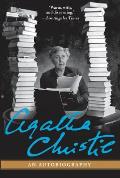
After posting about the possible influence of P. G. Wodehouse on Agatha Christie, I got a hold of Christie’s autobiography to see if it had any information to refute or confirm that hypothesis.

(I also looked at Laura Thompson’s biography, Agatha Christie: A Mysterious Life, but nothing in it contradicted Christie’s own statements.)

As a young writer, Christie tried to place her literary short stories: “I sent them to magazines, but expected them to come back, and come back the usually did.” However, her autobiography didn’t name those magazines, so I can’t say whether any were publishing Wodehouse in the mid-1910s.

Christie definitely had Dr. Watson in mind when she created Capt. Hastings for her first detective story, The Mysterious Affair at Styles, and she definitely didn’t think much of the character:
At that date I was well steeped in the Sherlock Holmes tradition. So I considered detectives. Not like Sherlock Holmes, of course: I must invent one of my own, and he would also have a friend as a kind of butt or stooge—that would not be too difficult.
That certainly doesn’t sound like she put a lot of thought into Hastings when she planned that story. “He was a stereotyped creation,” she wrote, though she “quite enjoyed” him.

As for her writing process, Christie’s autobiography confirmed that she “finished the last half of the book, or as near as not, during my fortnight’s holiday. Of course that was not the end. I then had to rewrite a great part of it—mostly the over-complicated middle.” Again, it’s not clear when she developed Hastings and his rapport with Poirot, which is where I see the resemblance to Wodehouse’s Bertie and Jeeves.

Christie started sending her rewritten manuscript to publishers during the World War. It stayed at The Bodley Head through the Armistice and for “nearly two years” before the publisher asked for revisions. Christie described those changes merely as the “last chapter” and “a few more alterations,” suggesting that by that point the main characterizations were intact.

Thus, it appears that Christie most likely developed Poirot and Hastings’s interactions during her 1917 revisions, after stories exploring the Jeeves and Bertie relationship had started to appear in British magazines. But the autobiography offers no additional evidence of possible influence from Wodehouse.

Christie did refer to her first husband’s wartime “soldier servant and batman” as “a kind of Jeeves—a perfection.” But of course she could have read Wodehouse’s stories anytime in the decades between her debut and when she wrote her memoirs.

07 September 2020

Did Wodehouse Influence Christie?

The Mysterious Affair at Styles made me wonder if Agatha Christie’s portrayal of the relationship between Capt. Arthur Hastings and Hercule Poirot might have been influenced by P. G. Wodehouse’s stories of Bertie Wooster and Jeeves.

In both cases, the narrator is a young upper-class Englishman with no professional responsibilities, affable manners, a weakness for pretty ladies, and modest intellectual ambitions that nonetheless exceed his capacities. This narrator describes how a punctilious man from a lower social class uses his brilliant mind to deduce solutions and put things right. Hastings and Bertie admire Poirot and Jeeves, but they also resent being pulled along, which produces some of the stories’ entertainment.

On the question of influence, the first factor I examined was when Christie wrote The Mysterious Affair at Styles. She reported writing the first draft in 1916, taking two weeks off work to check into a Torquay hotel to finish.

But then, I presume, Christie revised the manuscript. One strong indication of that is how subsequent Poirot stories (“The Affair at the Victory Ball,” The Murder on the Links) make clear that the action of the novel starts in July 1917 after Hastings has spent “some months” recuperating from being wounded in the Battle of the Somme, which took place in late 1916. Christie thus came to conceive of her first novel as taking place months after she had written her first draft.

It also took Christie years to find a publisher. When John Lane agreed to issue the book at the Bodley Head press, he insisted that Poirot reveal the murderer by gathering all the suspects in the drawing room, a device that had already become standard in murder mysteries. (Christie originally had Poirot share his revelations in court.) The book thus went through a final revision stage before it was published in 1920.

Therefore, we can date Christie’s creation of the full text of The Mysterious Affair at Styles to the period from 1916 to 1920. But we don’t know when in that period she cemented the characterization of Hastings and Poirot. Did she start with the characters and find a mystery for them, or start with the plot and develop the characters around it?

The next question is whether Agatha Christie read P. G. Wodehouse. Decades later, when they were both internationally bestselling authors, the two became friendly correspondents. In her first letter to Wodehouse, Christie said she enjoyed his 1913 novel The Little Nugget, which involves kidnappers, an upper-class hero at loose ends, and a Pinkerton detective working as a butler. But there’s no way to know when she read that book—as early as 1913 or just a few years before her letter. We also have no indication of whether Christie read the short stories Wodehouse sold to British magazines in the 1910s, which are the crucial texts in this question.

P. G. Wodehouse spent most of that decade in New York City, enjoying the excitement of America and the rewards of selling the same work to both American and British publishers. Many of his tales involved Englishmen in America, and among those was a series of short stories about a young gentleman named Bertie and his gentleman’s gentleman.

Those characters made their first appearance in the story “Extricating Young Gussie,” published in America’s Saturday Evening Post in September 1915 and in Britain’s The Strand Magazine in January 1916 (and of course it’s the latter date that pertains to the Christie question). At that point, Bertie didn’t have a last name, though he already had an Aunt Agatha. Jeeves was simply a generic valet. With “The Artistic Career of Corky”/“Leave It to Jeeves” (The Strand, June 1916), Wodehouse hit on the idea of Jeeves being a problem-solving genius.

Finally, Wodehouse started to explore the frictions between Bertie and Jeeves in “The Aunt and the Sluggard” (The Strand, August 1916) and “Jeeves and the Unbidden Guest” (The Strand, March 1917). He also wrote “Jeeves Takes Charge,” providing an origin story for the team, but that wasn’t published in Britain until 1923. In these tales we see Bertie pushing back against Jeeves’s sartorial advice, resenting his silences, and finally coming around to realizing his brilliance.

That’s the same dynamic I see in Capt. Hastings and Poirot, already fully realized in the published text of The Mysterious Affair at Styles. Comparing the dates show it was possible Christie was inspired by Wodehouse’s magazine stories as she developed her novel, particularly after the first draft. But there’s no conclusive clue about influence. The similarity might simply be the result of similar ideas occurring to two authors around the same time, like two separate characters out to snatch the same diamond necklace or handwritten will.

01 September 2020

Captain Hastings’s True Worth

In the end, after the drawing-room revelations that the publisher demanded, I enjoyed Agatha Christie’s The Mysterious Affair at Styles more as a series of character sketches and dialogues than as a murder mystery.

For me, the solution relied too much on esoteric aspects of poisons. (Christie was working at a wartime pharmacy.) The number of people administering said poisons, sneaking into bedrooms at night, and trying to frame or shield other people became incredible. In an excellent mystery, everything comes together at the end with an almost audible click. There was still a bit of scraping in this debut.

That said, the character of Hercule Poirot seems to have come out fully formed and delightful. There’s a rich vein of supporting characters with distinct personalities and speech patterns, most of whom pair off at the end like a Shakespearean comedy. And for the first time I appreciated Capt. Arthur Hastings as a comedic character.

Christie clearly took inspiration from Arthur Conan Doyle’s Holmes and Watson when she wrote about Poirot and Hastings, especially in the short stories that followed the success of this novel, in which the men share rooms in London. But Dr. John Watson was an intelligent, resourceful man, appearing incapable only because he was standing next to an obsessed genius. He helped Sherlock Holmes in many ways. He never came across as a doofus until the character was written that way for Nigel Bruce in the movies.

Hastings, in contrast, provides only one type of assistance to Poirot: entrée into upper-class British society. Well, two things if we add light entertainment in the course of a trying case, as shown in this discussion of the likely murderer:
“Someone with a good deal of intelligence,” remarked Poirot dryly. “You realize that he chose the one place in the house to hide it where its presence would not be remarked? Yes, he is intelligent. But we must be more intelligent. We must be so intelligent that he does not suspect us of being intelligent at all.”

I acquiesced.

“There, mon ami, you will be of great assistance to me.”

I was pleased with the compliment. There had been times when I hardly thought that Poirot appreciated me at my true worth.
Early in the book, Hastings, who’s recovering from a battlefield wound, speaks of becoming a detective. He coddles easy theories about the murder and records lots of clues whose significance passes him by completely. (Poisons not among them.)

Hastings’s attention is easily caught by beautiful women, though his code means he doesn’t pursue another man’s wife and impulsively proposes marriage to an unmarried woman he thinks is about to cry. As a narrator, Hastings alternately admires Poirot, feels baffled by his momentary “mistakes,” and occasionally resents his superiority and secrecy.

To sum up, in The Mysterious Affair at Styles Capt. Hastings behaves very much like Bertie Wooster toward Jeeves.

COMING UP: The Code of the Wodehouses?

26 August 2020

Christie Exercises the Little Grey Cells

Reading Agatha Christie’s first novel, The Mysterious Affair at Styles, for the first time, I was struck by how she used dialogue to give hints about action that she never described.

Examining those passages further, it seems clear that Christie uses that technique to make readers’ brains work a little harder—to different purposes.

During an early visit to a pharmacy department of the sort Christie herself was working in, the pharmacist says:
“If you people only knew how fatally easy it is to poison someone by mistake, you wouldn’t joke about it. Come on, let’s have tea. We’ve got all sorts of secret stories in that cupboard. No, Lawrence—that’s the poison cupboard. The big cupboard—that’s right.”
By making us perform a little extra effort to understand that Lawrence is interested in the poison cupboard, Christie implants him in our minds as a suspect. Actual culprit or red herring? We find out in the end.

About midway through the book comes another example of the same technique as our narrator, Col. Hastings, interviews a local rustic.
“Why, do the gentlemen from the Hall come here often?” I asked, as carelessly as I could.

He winked at me knowingly.

One does, mister. Naming no names, mind. And a very liberal gentleman too! Oh, thank you, sir, I’m sure.”
Christie never tells us outright that Hastings has responded to the farmer’s hint by giving him a little tip for his information. We have to recreate that bit of business from the farmer’s words.

And our brains are so occupied with reassembling that interaction from clues that we don’t notice the farmer hasn’t actually specified which gentleman from the hall has been visiting. Hastings is sure he knows, but, of course, he’s barking up the wrong tree entirely.

14 November 2013

The Wonderful Wizard of You

A tweet alerted me to this service, which offers to create an edition of L. Frank Baum’s Wonderful Wizard of Oz customized for yourself or a person of your choice.

This consists of stuffing your specified names (and, curiously, eye color) into the novel’s public-domain text. I tried it out, and this is part of the resulting preview:
They walked along listening to the singing of the brightly colored birds and looking at the lovely flowers which now became so thick that the ground was carpeted with them. There were big yellow and white and blue and purple blossoms, besides great clusters of scarlet poppies, which were so brilliant in color they almost dazzled John's brown eyes.

"Aren't they beautiful?" the girl asked, as she breathed in the spicy scent of the bright flowers.

"I suppose so," answered Buckingham Scarecrow. "When I have brains, I shall probably like them better."

"If I only had a heart, I should love them," added Pablo the Tin Woodman.

"I always did like flowers," said Harold the Cowardly Lion. "They seem so helpless and frail. But there are none in the forest so bright as these."

They now came upon more and more of the big scarlet poppies, and fewer and fewer of the other flowers; and soon they found themselves in the midst of a great meadow of poppies. Now it is well known that when there are many of these flowers together their odor is so powerful that anyone who breathes it falls asleep, and if the sleeper is not carried away from the scent of the flowers, he sleeps on and on forever. But John did not know this, nor could she get away from the bright red flowers that were everywhere about; so presently her eyes grew heavy and she felt she must sit down to rest and to sleep.
I think we might agree that there’s still one bug in the system.

The same site offers to treat various other classic (i.e., public-domain) texts in the same way. That means, I presume, you can stand in for Hercule Poirot in Agatha Christie’s first mystery novel, insert your name in Jane Austen’s roundelays, or head off to Treasure Island with Long John Silver—or rather Long Jason Silver if you prefer.

COMING UP: But wait! There’s more!

17 July 2013

Rowling as a Mystery Writer All Along

Last week’s revelation that J. K. Rowling has published a pseudonymous murder mystery sent folks back to the archives for clues they wished they had seen all along: her remarks that she might publish under another name, a brief mention of a Scottish mystery she was trying out.

But the most perspicacious commenter was probably trivia master Ken Jennings, who wrote back in 2007:

I read the Harry Potter books as enormously sophisticated Scooby-Doo mysteries.

Structurally, these aren’t fantasy novels at all. They’re fair-play mysteries in wizard’s clothing–novels with not just plots and characters and setpieces, but “solutions” as well. J. K. Rowling is justly praised for her elaborate and meticulous world-building, but I’m convinced that a lot of that endless detail is just there for standard detective-novel purposes: to distract, to confound, to envelop the real “clues” in a Cloak of Invisibility. . . .

Rowling seems to draw more from the Agatha Christie tradition: a multiplicity of colorful “suspects,” many with hidden agendas; red herrings galore; and a final drawing-room exposition-fest in which Hercule Dumbledore explains How It Was Done.

Just as in a murder mystery, the guilty party is always the least likely suspect. . . . Some of these reveals even involve the Hogwarts equivalent of a Scooby-Doo rubber mask coming off the crotchety caretaker: Quirrell’s turban, Pettigrew’s Animagus disguise, Barty Crouch, Jr.’s Polyjuice Potion. “Like, zoiks, Hermione–it was Old Man Milligrew all along!” . . .

I bet Rowling’s first post-Harry Potter book–talk about a hard act to follow–will be a classic mystery of some kind. I don’t know if it’ll be a hard-boiled gumshoe case, a true-crime police procedural, a classic manor-house throwback, or what, but it’ll be a mystery novel. She’s been writing them all along, after all. It’s just that no one’s noticed.
And couldn’t Rupert Grint play a fine Shaggy?

TOMORROW: What this should tell us about genre.

16 December 2009

Writing Advice with Health Implications

Any guide to good writing says that specific phrasing is stronger than vague generalities. Rich vocabularies can express more than narrow lexicons. Some repeated phrases might be poetic, but using the same words or phrases or constructions over and over is a good way to bore readers.

Specific terms and varied phrasing aren’t just the hallmarks of lively writing. They’re also markers of a healthy mind.

Psychologists have long known that there’s a link between how people write and the probability that they will develop Alzheimer’s disease. Some of the important work on this question was part of the ongoing nun study.

Researchers examined autobiographies that women wrote decades earlier when they joined a religious order, and then looked at who developed Alzheimer’s. Since those women shared living quarters and lifestyles for many years, they had generally equal exposure to environmental factors, giving more weight to genetics, early upbringing, and habits.

As the New York Times reported: “nuns who packed more ideas into the sentences of their early autobiographies were less likely to get Alzheimer’s disease six decades later.”

In particular, some of the prose markers of incipient Alzheimer’s disease are:

  • use of indefinite words, such as “thing” and “anything.”
  • breadth of vocabulary.
  • repeated phrases, such as “all sorts of.”
Earlier this year, as reported in McLean’s, professors of English and Computer Sciences at the University of Toronto collaborated to measure those elements in fourteen mystery novels that Agatha Christie wrote over her career. This study found a 31% drop in vocabulary between novels Christie wrote at 63—when she was already a facile, best-selling author, able to publish nearly anything—and the last she completed, at 81. Vague and repetitive phrasing went up.

Unfortunately, there’s no evidence that developing a livelier writing style staves off Alzheimer’s or other forms of dementia. But it can’t hurt.

29 July 2009

In New Book, Frog and Toad Aren’t Friends

I’m always suspicious about breathless announcements of newly discovered manuscripts by popular authors long after their deaths. Those authors had the market clout to interest publishers in almost any work they were proud of. Their unpublished manuscripts are therefore usually discards, as with the two “new” Agatha Christie stories announced earlier this year.

This month brought news of a “new Frog and Toad book” from Arnold Lobel, continuing the easy-reader series that started with Frog and Toad Are Friends in 1970. Different titles in that series won a Newbery Honor and a Caldecott Honor.

However, the most detailed report on the find, in the Los Angeles Times, reveals that the book about to be published is quite a different animal. The paper gamely tries to convince us that we’ll see “another facet of Frog and Toad in The Frogs and Toads All Sang.” But in fact:

The text was written some 10 years before the Frog and Toad books. . . .

The ten poems in the new book don't yet have the particular characters of Frog and Toad that readers came to know later. . . .

Lobel had not yet developed the friendship between Frog and Toad. . . .
So in this book frogs and toads aren’t friends. The text isn’t an easy-reader style. And we won’t see Frog and Toad.

What, therefore, besides Lobel’s authorship makes this book a new one in the series? The LA Times credulously points to these similarities:
  • ”Frog and Toad are never seen without their jackets unless they are hibernating, in which case it's gentlemanly pajamas. In the title poem...there is a party at which
    ”The ladies wore long dresses
    And the gentlemen wore pants.”
    I believe the convention of children’s-book animals dressed up in human clothing predates Lobel by quite a bit.
  • “Part of the gentle humor in the ‘Frog and Toad’ stories is that while the friends are highly civilized, they are also children...” Again, that’s standard in children’s books featuring anthropomorphic animals.
  • “Readers can see the beginnings of Toad's melancholy in the poem ‘Bright Green Frog’. . . . The frog plays his violin ‘with skill and grace’ but wears ‘a frown upon his face’.” So we see the roots of Toad’s grumpiness, which is a contrast to Frog’s sunniness, in...a frog?
The Frogs and Toads All Sang wasn’t even a manuscript that Lobel had in his drawer, awaiting the moment when the world might appreciate it. Rather, it was a booklet he made by hand for family friend Crosby Bonsall. There’s no indication that Lobel meant it for a wider audience, or would be pleased to see the text published as is. (His sketches were completed and colored by his daughter.)

That booklet and two more like it came into the hands of a book dealer, who offered it back to Adrianne Lobel. She and HarperCollins saw the manuscript’s potential in today’s publishing world. And indeed these early, private manuscripts might provide an interesting lens for viewing Lobel’s later Frog and Toad books. But they're not really an addition to the series.