Showing posts with label legal matters baby. Show all posts

03 July 2026

Credit Where It’s Due

I view the public discussion over fair credit for Rachel Hope Cleves’s Charity and Sylvia in Tillie Walden’s Charity and Sylvia from a particular perspective.

I’ve scripted indie comics, the field where Walden has made her name. I’ve written scholarly books and articles like Cleves. I’ve also worked in book publishing, so I know the considerations involved in adding more pages to a printed book or writing promotional copy about how ground-breaking a new title is.

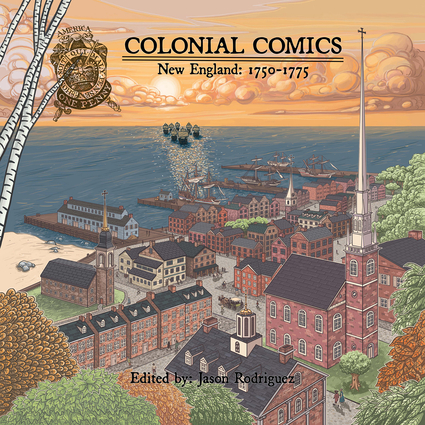
I’ve worked on both sides of the nonfiction-into-comic process. For Colonial Comics: New England, I adapted historical sources into stories about Samuel Maverick, Benjamin Franklin, and Crispus Attucks. I also supplied my nonfiction writing and research for other scripters to adapt into their own stories. I’ve seen artists add immeasurably to a tale in ways that go beyond what historical research could provide.

I also know what it’s like to have the work of historical research be rendered close to invisible. Years back, I worked with producers of the History Detectives television show to figure out the mysteries behind a couple of artifacts. I was never going to be paid, but for one of those two shows there were plans to interview me on camera. In the end, my name appeared as one short line in small type as the closing credits scroll by.

On my history blog I’ve published a series of posts about James McHenry and Elizabeth Willing Powell, drawing on new archival research and analysis. In 2019, the Washington Post published Zara Anishanslin’s article about Powell. She acknowledged relying on my work for one point, apologizing that the newspaper wouldn’t allow credit by name, only by a link. And then when a Post staffer wrote another article citing Anishanslin’s, that link didn’t survive. That’s a common problem in the major news media.

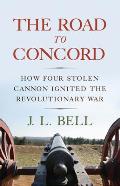
A few months back, I discovered my book The Road to Concord: How Four Stolen Cannon Ignited the Revolutionary War had been turned into a novel. A novel! The author never contacted me about obtaining derivative rights. The book contains one line of acknowledgement, grateful in tone but small in type. Since this novel was self-published, I decided simply to keep quiet about it.

At the same time, I think The Road to Concord could be adapted into a nifty movie. I’ve even taken a meeting with an aspiring producer about that prospect. If that ever happens, I darn well want credit and compensation, even though the whole point of the book and its many citations was to lay out the historical facts and sources for anyone to follow.

02 July 2026

Can This Marriage Be Saved?

On 1 July, the Comics Beat published an article about the disagreement over fair credit for Rachel Hope Cleves’s Charity and Sylvia in Tillie Walden’s Charity and Sylvia.

That article cites historian Cleves as saying Walden contacted her by email twice as she created her graphic novel: in August 2024 with news that Vermont Humanities had commissioned the project and in spring 2025 with a draft. Cleves’s workload prevented her from studying that material closely. She didn’t raise the question of adaptation rights. The two authors never connected for a phone or video conversation.

Although Cleves had spoken at the Henry Sheldon Museum through a Vermont Humanities grant in 2022, it doesn’t appear that either of those entities ever contacted her about the graphic novel. Nor did Drawn & Quarterly after it agreed to publish Walden’s finished work.

Given the initial understanding that Walden would draw only on documents at the museum, as I quoted yesterday, and given lack of objections from Cleves, people involved in the graphic novel might have convinced themselves that there was no need to seek a formal approval from her. But it’s clear that Walden came to rely on Cleves’s history more than originally planned. Walden and Drawn & Quarterly should have done more before publication. 

Comics Beat reports that Cleves wishes “to see Drawn & Quarterly option [her book] for adaptation and co-credit her, with appropriate compensation.”  

For now (and 1 July was a holiday in Canada), the publisher says it “stands by Tillie Walden’s research for her graphic novel” while drawing attention to her citations and praise for Cleves on the book’s website. In fact, the press says, those citations were too long to be included in the printed book. That may be right from an aesthetic or cost standpoint, but it only shows how Cleves deserves more credit in print than one laudatory line.

I suspect Drawn & Quarterly wants to protect its author from accusations of deliberate plagiarism or downgrading Cleves’s work. And to ensure Walden gets credit for the effort and creativity she put into the graphic novel, which by its nature is quite different from its source material.

Likewise, Cleves deserves credit for all the work she did in unearthing and telling Charity and Sylvia’s life stories, whether or not the graphic novel borrows specific language, which would be the strongest evidence in a copyright case.

Tillie Walden is a comics creator who has delightfully found success at a time when one can actually make a living at that work. Drawn & Quarterly is an artsy independent comics publisher based in Montréal. Rachel Hope Cleves is a respected history professor at the University of Victoria, British Columbia. The development of both versions of Charity and Sylvia was supported by humanities grants.

No one goes into any of those enterprises to make a lot of money. People spend years producing scholarly studies or graphic novels because they think the work is important. Yet that situation makes fair credit all the more important.

A graphic novel and a scholarly biography aren’t competing for the same sales—but the comic could promote the study, just as the study made the comic possible. So I really hope there’s a way for these projects to become mutually supporting.

22 May 2026

Ernie Morrison’s Tutor, Miss Zenobia Frierson

I first mentioned that Ernie Morrison had an individual tutor while he worked at the Hal Roach Studio back here.

At that time, I knew that tutor was a black woman. She appeared in a couple of photos that also showed Fern Carter teaching the white kids in the Our Gang movies. But I didn’t know that woman’s name.

News stories about Ernie’s departure from the studio in 1924 reveal his tutor at that time: Zenobia Frierson (her first name also rendered in newspapers as “Znobia” and “Zenovia”). Using newspapers and other information, I’ve assembled this brief profile of her.

Zenobia Evelyn Frierson was born in Texas—probably in 1897, though I’ve seen documents stating the year as 1895 and 1898. She studied at Wiley College in Marshall, a historically black college founded in 1873 by a bishop in the Methodist Episcopal Church. I haven’t found a yearbook or other document about her studies.

By 1924 Frierson was in Los Angeles, working as Ernie Morrison’s tutor. Under California law, he’d probably needed three hours of lessons on each working day since the fall of 1918, when he’d turned six. Given that Frierson probably graduated from college around that year, she may well not have been his first tutor. But she could have had the job in 1922–24 while Ernie was working on the Our Gang films.

After traveling with the Morrisons in 1925, Frierson returned to Los Angeles, where she married Louis Payton Allen on 15 Sept 1928. He was also from Texas, born in 1882. In the 1940 U.S. Census he was listed as a waiter on a railroad; if that had been his profession all along, he presumably traveled a lot. An October item in the California Eagle, the newspaper of Los Angeles’s black community, referred to the bride as “Mrs. Zenobia Frierson-Allen,” but she soon used only her husband’s surname.

In 1930, Zenobia Allen was living in a rented house on 49th Place in Los Angeles. Census records list her occupation as “secretary” of a “Christian organization.” She was head of a household that included her mother, Marjorie Blye, and a young roomer, Helen Boyd, but no children. Louis P. Allen wasn’t listed as living with them. Interestingly, the actress Louise Beavers and her family lived nearby.

In that decade Zenobia Allen appeared regularly in the Eagle as part of African-American social events. She helped to organize Wiley alumni gatherings. She signed a protest against hiring discrimination at the telephone company. In 1935 she started to work for the Angelus Funeral Home as a “receptionist”—though of course being the first person to speak to grieving families was a position with great responsibility. The photo above dates from 1934 or before.

By 1940, the Allens’ marriage had definitely broken up. Louis was living with a new wife, Inez. She was a manicurist while he worked for a railroad. He died that October.

After World War 2, Zenobia E. Allen gained national visibility as a “supreme epistoleus” of the Alpha Kappa Alpha sorority. In that role she traveled the country and corresponded with Mary MacLeod Bethune.

In 1955, after twenty years at the funeral home, Zenobia Allen moved to work at a local savings and loan. That fall she married Claude A. Jolly, a real estate and investment broker, with her mother looking on. The Los Angeles Tribune reported:
Romance of the popular and attractive Greekletter figure and the prominent businessman came as a surprise to the local community at large, where they are well known…
Unfortunately, Claude Jolly died in August 1957, less than two years later.

Zenobia Jolly continued to appear at AKA sorority events over the next few years, but she appears to have retired by the 1960s—probably comfortably, given her second husband’s wealth. Zenobia E. Jolly still owned real estate when she died in October 1982.

I haven’t found any mention of Zenobia Allen Jolly discussing how one of her first jobs was to tutor and travel with the young entertainer Ernie Morrison. She appears in print simply as a pillar of Los Angeles’s African-American community at mid-century. If she hadn’t had such a rare name, her connection with show business would be invisible.

06 May 2026

“Ended an eight-year engagement with Hal Roach”

Ernie Morrison starred in the Our Gang films regularly for more than two years, from January 1922 to March 1924.

The only other movies he made during that time were cameo appearances with the gang in other Hal Roach Studio comedies. He was too valuable to be an adult comic’s sidekick anymore.

Ernie had started at the studio at $100 per week, plus $30 for his father, Joseph Morrison, who played occasional roles for black men. (In the Our Gang series Joseph often played Ernie’s father, though in “Lodge Night” and “Circus Fever” he appeared prominently in other roles.)

By 1924 Ernie was making $250 per week, plus $50 for his father, according to Rob Demoss’s Lucky Corner website. That was the studio’s most expensive contract for an Our Gang member; freckle-faced Mickey Daniels also earned $250 per week, but with no added payment to a parent.

In early 2024, Joseph Morrison asked Hal Roach to increase his son’s pay. According to an article in the 31 Jan 1925 New York Age (published for the city’s African-American community), Joseph asked for Ernie to earn $300 a week.

That article also said that would have been a $75 raise for Ernie, which doesn’t add up. But perhaps Joseph also asked for his own weekly rate to rise by $25, which would be $75 more overall. In any event, it wasn’t an outlandish request.

Hal Roach said no. Roach’s employees liked the collaborative culture and working conditions he established, but he could be ruthless in negotiating salaries, even with his biggest stars.

“Quits Roach,” headlined the 1 Mar 1924 Los Angeles Evening Citizen News over a photo of Ernie smiling; “the child will not sign for another engagement because of financial differences.”

The 16 March Detroit News told readers: “‘Sunshine Sammy’…has ended an eight-year engagement with Hal Roach.” He’d been at the studio for less than five years, but Roach sometimes wrote his contracts to include options into the future.

The 23 March Omaha Morning Bee said: “the cute negro boy screener, has quite [sic] Hal Roach, due to a difference in salary demand on a new contract and may essay a trip into vaudeville.”

Those items appeared in long columns of other news from Hollywood, but other journalists had more to say.

COMING UP: Sunshine Sammy and the black press.

08 October 2025

“Film World Opens Doors Wide”

In November 1925, the New York American announced a “Motion Picture Contest” for children. For weeks it promoted that competition with articles and pictures of the entrants.

The top prize was $1,000, a trip to Culver City, and an appearance in a Metro-Goldwyn-Mayer movie at a weekly salary of $200 with an option for a two-year contract. The judges included Louis B. Mayer, Irving Thalberg, and other MGM executives.

On 4 Jan 1926, the newspaper announced the winner: “little Irene Nanette Butler, of 425 Riverside Drive,” age three. More stories about her ran over the next two days.

Later in the year little Irene appeared in The Fire Brigade along with the winner of a similar contest in California. She never made another picture.

On 13 January, however, the New York American shared an additional story with these headlines:
Film World Opens Doors Wide to “Skipper,” 5

$1,000 Check Starts Child Toward Fame

Elmer Lowery, Second Prize Winner in New York American Contest, to Go West
In fact, Elmer’s surname was spelled Lowry, his family nickname was “Skippy,” and he had turned six years old in December. But he was receiving all the benefits of the top prize, more than originally announced for the second-place winner, so who could complain?

In February, Elmer Lowry started performing before the cameras in Culver City—not at MGM but at the smaller Hal Roach Studio, in its Our Gang series. From then on he was “Scooter.”

The New York American said the boy came from Roosevelt, Long Island. But on 8 Aug 1926 the Chattanooga Times–Free Press claimed him for that city:
Chattanooga Boy in ‘Our Gang’ Comedy

Elmer (“Skippy”) Lowry, a Chattanooga boy, now in Hollywood, will appear at the Tivoli theater during the first part of the week in the latest “Our Gang” comedy, entitled “Thundering Fleas.”

“Skippy” is the son of H. D. Lowry, who is now connected with the Read house. “Skippy,” who is only 7 years old, has shown for some time an extraordinary histrionic ability that won the admiration of friends and that made him participate in several benefit shows.

While in New York with his mother, the New York American opened a contest, looking for young talent in the motion picture field. “Skippy” entered and won a prize of $1,000, securing at the same time a contract with Hal Roach as one of the cast in all the new “Our Gang” comedies.
Elmer’s father was named Willard D. Lowry, but even the local press didn’t get that right.

Elmer’s mother heading off to New York was probably a sign of trouble in the Lowry family. On 25 May 1927 the Knoxville News-Sentinel ran this United Press dispatch out of Chattanooga:
“Our Gang” Boy Hardly Needed Father’s Aid

“Yes, judge, I provided for my children as long as they needed it, but they don’t need it now,” said William D. Lowry when applying for a divorce before Judge Yarnell.

“But why don’t they need your help; they aren’t grown?” asked the court.

“Well, you see, judge, the youngest, my seven-year-old boy, Elmer Camden Lowry, belongs to the ‘Our Gang’ kids in the movies, and he makes $350 a week himself,” was Lowry’s reply.

He got the divorce from Anna Lowry on grounds of desertion.
(A briefer version appeared in that day’s Imperial Valley Press.)

Anna Lowry having taken the children off to Hollywood, Willard Lowry declared that she had left him. And he got out of child support on the grounds that Elmer was making so much money for the family—$350 a week!

In fact, Hal Roach was paying “Scooter” Lowry only $60 per week.

Even more sadly, the same month that divorce came through, the studio quietly ended its contract with “Scooter,” as I related yesterday. The movies he made in early 1927 would be released through the end of the year, but he no longer brought in a steady income.

According to IMDB, Elmer “Scooter” Lowry acted in only one more film: a small role in Chinatown Charlie, an independent production now lost in whole or in part.

COMING UP: An ex–gang member.

20 May 2025

Easy Cases Make Good Law?

The Washington Post and Forbes reported on how five US Supreme Court justices recused themselves on a copyright infringement case.

Four of those justices have book deals with Penguin Random House, a party in the case. There’s no obvious reason for the fifth justice’s decision, but people suspect some similar financial interest.

Some court observers saw these justices’ choice as an indication that they were paying more attention to ethical issues. Others saw danger in how many justices have income from book sales, potentially making it impossible for them to rule ethically about publishing law.

I have different thoughts. First, book income pales in comparison to the other outside income justices receive for appearing at exclusive legal conferences, especially compared to the work involved.

Furthermore, Justice Clarence Thomas has received millions of dollars in value through vacations, vehicles, and other presents for no work at all, and then repeatedly failed to disclose those gifts.

After the Thomas scandals broke, conservatives tried to build up Justice Sonia Sotomayor’s book deal into a comparable brouhaha. Justices had been publishing books for years before that (Thomas among them) without attracting so much criticism.

So while I do see the potential ethical problems when judges have financial interests aligned with large media companies, I don’t think that’s at the top of the list of what needs to be fixed at the Supreme Court.

Second, I looked at the case that the five justices recused from, Baker v. Coates et al., through this PDF. A man decided that Ta-Nehisi Coates had plagiarized his self-published book and sued not only Coates but lots of other people and corporations involved in other things Coates has written: The Atlantic Monthly, Disney (as owner of Marvel Comics), Oprah Winfrey and Apple (for broadcasting an interview), and so on. 

The filing includes pages and pages of side-by-side comparisons between Coates’s writing and the plaintiff’s—which show very little similarity. Unlike some plagiarism claims that make the news with obvious parallels, such as Pete Hegseth’s senior thesis, this one reveals no smoking guns. It doesn’t even offer water pistols.

A lower court dismissed that claim with prejudice—i.e., totally swatted it away. An appeals court upheld that decision. The Supreme Court’s inaction cements that result, but I think it’s extremely unlikely the court would have accepted this case anyway. The justices probably wanted nothing to do with it.

21 March 2025

Pulled into the World of AI Language Models

The Atlantic Monthly just published a searchable listing of works uploaded to the LibGen collection of pirated writing.

I found two things I wrote in that database: my book The Road to Concord and a book review published in the New England Quarterly.

The LibGen collection is based on material that was digitally published in some protected format, such behind a journal’s paywall or under some a form of DRM.

That means my first book, never published in electronic form, wasn’t there. It also means the database lacks everything I’ve written for the web, including this blog, the Boston 1775 blog, many articles, and a 600-page National Park Service study, even though (or because) those texts aren’t protected at all.

LibGen is a shadowy operation, apparently centered in Russia, though it receives material from all over the world. In December, a consortium of global publishers sued and shut down access to many LibGen domains. A US court also ordered LibGen to pay $30 million, but there’s no identified owner or manager to hold personally responsible.

In his article accompanying the Atlantic database, Alex Reisner reported on how the Meta corporation used all or part of that database to train its AI language model. The company decided that legal options would take, well, money and time.

Back in 2023 Reisner reported on a smaller pirated collection of 180,000 books called Books3 used by multiple companies for the same purpose. In fact, piracy appears to be so embedded in AI language programs that last year KL3M announced it was “the first Legal Large Language Model.”

As the Authors Guild reports:
Legal action is already underway against Meta, OpenAI, Microsoft, Anthropic, and other AI companies for using pirated books. If your book was used by Meta, you’re automatically included in the Kadrey v. Meta class action in Northern California without needing to take any immediate action. The court is first deciding whether Meta broke copyright laws, with a decision expected this summer, before officially certifying everyone as a class.
So I guess I’m involved in that lawsuit.

It seems clear to me that the LibGen operation breaks publishers’ legal licenses, in some cases to the detriment of royalty-earning authors. The downloading of that material by Meta and other corporations looks unethical, but I don’t know if any laws have been written that would make that act illegal.

06 March 2025

Raskin Returns, the Sequel

As Publishers Weekly points out, there’s poetic irony in two previously unknown literary projects surfacing from the literary estate of Ellen Raskin, author of The Mysterious Disappearance of Leon (I Mean Noel) and The Westing Game.

The industry organ reports:
International Literary Properties—a global company that invests in and manages literary estates—has acquired Raskin’s estate and, along with it, two previously unpublished manuscripts by the late author, including a sequel to her Newbery Award–winning mystery, The Westing Game. . . .

John Silbersack of the Bent Agency took on the role of Raskin’s literary agent nearly two decades ago, when Ellen’s daughter Susan Moore and son-in-law John first approached him to represent the estate. . . . Silbersack shared that at the time of Raskin’s death in 1984, “she had been working on—and had very nearly completed—a marvelous new story, very much in the vein of The Westing Game, titled A Murder for Macaroni and Cheese.

“Ellen’s practice was to rewrite and re-edit each prior chapter on the completion of a new chapter, so the earliest sections of the book were pored over time and again, while the very final chapters were more sketched out.” In an example of life imitating art, he said, “Ellen’s daughter, Susan, devoted herself to ‘solving’ the mystery and tying up all the loose ends, and the manuscript awaits a final polish and a worthy collaborator to bring it to a finale, which is at the top of our to-do list.”

Of the second book, a Westing Game sequel, he said, “Crafting a follow-up to one of the most beloved titles of all time is no small task. In conjunction with ILP, we’re currently in the process of bringing in another iconic middle grade author to work with us on this eagerly anticipated literary event. Watch this space!”
So in fact Ellen Raskin left two unfinished manuscripts, both needing considerable work by others to complete. A “global company” in now investing in those projects, seeking “a worthy collaborator” and “another iconic middle grade author” to make her notes publishable.

If Raskin told us anything, however, it’s to look beyond the surface. Back in 2012, Betsy Bird dug up a report from Publishers Weekly in 2007:
Stephanie Owens Lurie and Mark McVeigh at Dutton have acquired five books by Newbery Award–winner and The Westing Game author Ellen Raskin in a major six-figure deal negotiated by Alex Glass and John Silbersack at Trident on behalf of the Raskin estate. The books include two new puzzle mystery novels: The Westing Quest, a sequel to The Westing Game, and A Murder for Macaroni and Cheese, a never-before-seen manuscript nearly completed at the author’s death in 1984.
Bird then noted, “Years go by and not a peep is made about these books again.” Dutton reissued other Raskin titles in 2011. In the same year, the company announced A Murder for Macaroni and Cheese, issuing a brief blurb and an ISBN (9780525422914). But then that was pulled back.

The internet working as it does, lots of book websites (GoodReads, StoryGraph, Google Books, BooksWagon, etc.) sucked up the data attached to that ISBN and produced pages for A Murder for Macaroni and Cheese. So it already has the online profile of an out-of-print book when it’s never seen print at all.

14 March 2020

The Magic Wand of Tudor Jenks

I’ve been enjoying the Magic Wand book set by Tudor Jenks, published in 1905.

This collection of modern fairy tales first came to my attention because the volumes were illustrated by John R. Neill in between his work on L. Frank Baum’s Marvelous Land of Oz and John Dough and the Cherub. His style is immediately and delightfully recognizable.

Tudor Jenks was Baum’s near contemporary, born in 1857 and dying in 1922. He was a child of New York City rather than Syracuse, however, and he enjoyed the benefits of Yale College and Columbia Law School.

Jenks started a career in the law, interrupted that to spend fifteen years as an associate editor of St. Nicholas Magazine, and then went back to the law. But he continued to churn out books for young people, mostly nonfiction.

It was shortly after stepping away from the editorial desk that Jenks wrote the Magic Wand series for the Henry Altemus Company. The series consists of six short books about magic:
Each volume is a little over 100 pages long, printed in black and red, with many simple line drawings by Neill. None appears to have been in print for a very long time, but I’ve linked to scans of them all.

The stories are all independent. Some are set in what seems like modern America with a touch of magic. Others take place in countries with kings, queens, dragons, fairies, witches, and similar elements of European fairy tales—but also party line telephones, bicycles, and corporations that offer princess-rescuing services.

The tales show lots of fondness for traditional fairy stories but not too much reverence. They remind me of E. Nesbit’s “The Deliverers of Their Country,” George MacDonald’s The Light Princess, and some of Baum’s American Fairy Tales from the same years.

The plots can be perfunctory, possibly cut off once word or page counts had been achieved. Jenks had what feels to me like a lazy habit of naming his characters after roles from Shakespeare or everyday objects, as in Duchess Darningneedle or the pony Gallopoff. But his narrative voice is charming.

It’s also striking how often Jenks tells stories from an adult’s point of view, even though the protagonists are almost always children or teens. The result is a series of magical tales that kids of 1905 might well have enjoyed but that really reflect the sensibility of adults who would rather not be working office jobs.

15 November 2019

Breakdown

Let’s imagine that Donald Trump paid millions of dollars—assuming he actually has that much money to spend—to officials of a foreign government to announce a criminal investigation into his leading political opponent.

The officials didn’t even have to conduct the investigation. After all, Trump doesn’t criticize notoriously corrupt regimes, has cut the budgets of international anti-corruption programs, and is ignoring multiple laws and norms in the US. But for these millions of dollars Trump clearly wanted a big public announcement of that criminal probe that would damage his opponent.

Obviously, that would be a crime: bribing a foreign government for political purposes.

Now let’s imagine that Donald Trump took $391 million that the US Congress had allocated for a particular program and diverted it for his own political benefit. Again, that would obviously be a crime: a form of embezzlement and abuse of power.

Donald Trump did both those things at the same time.

14 November 2015

Planetary Copyright

Here’s an interesting wrinkle about international copyright protections:
The classic novella “The Little Prince” fell into the public domain this year in much of the world but remains under copyright in France because of an exception that grants a 30-year extension to authors who died during military service in World War I and II.
There’s a logic to that provision, I suppose. If a society bases copyright terms on an author’s life, but an author dies before his or her time while fighting for the society, then the society extends the copyright term to about what it would otherwise have been. Still, I wonder what specific cases gave rise to this exception.

That passage comes from a New York Times story on a dispute over the copyright of Anne Frank’s diary as originally published. That copyright is the main asset of a foundation, which wishes to extend its term by calling Anne’s father a coauthor of the text. Other institutions, hoping to make the diary more widely accessible and/or mindful of Holocaust deniers’ claims that Otto Frank invented the story to begin with, are resisting that move.

By the logic of the French law, the term of Anne Frank’s copyright could be extended based on what her natural lifespan would have been—meaning even longer protection than basing the term on her father’s lifespan. Of course, few countries follow France’s example.

Meanwhile, the foundation already authorized the editing and publication of a more complete version of Anne Frank’s diary, which has its own copyright term based on the life of the scholarly editor.

24 November 2014

Having Trouble with This Aspect of Darren Wilson’s Testmony

According to Officer Darren Wilson, after his first brief exchange on 9 August with Michael Brown and Dorian Johnson about walking in a Ferguson, Missouri, street, he backed up his police vehicle and confronted them again because one of them was wearing a black T-shirt.

In an interview on 10 August, the day after the shooting, Wilson stated: “I heard on the radio that there was a stealing in progress from the Ferguson Market on West Florissant. I heard a brief description of a black male with a black T-shirt.”

In his grand jury testimony several weeks later, Wilson repeated that: “I was on my portable radio, which isn’t exactly the best. I did hear that a suspect was wearing a black shirt and that a box of Cigarillos was stolen.” That description confirmed for him that he’d come across the two suspects from the store robbery: “I did a doublecheck that Johnson was wearing a black shirt, these are the two from the stealing.”

However, earlier this month the police radio dispatches from that day were released.

The dispatcher said, “it's going to be a black male in a white T-shirt.”

An officer confirmed, “Black male, white T-shirt.”

Four minutes later, another voice added: “He’s with another male, he’s got a red Cardinals hat, white T-shirt, yellow socks and khaki shorts.” That was an accurate description of what Michael Brown was wearing.

Officer Wilson couldn’t have heard anything about a “black shirt” on the radio. The radio calls, as recorded and released, mention only Brown’s “white T-shirt.” Three times.

How much did Wilson, consciously or unconsciously, massage his memory to conform to what he saw after shooting Michael Brown dead?

14 November 2014

Family Fairness, Then and Now

Back in early October, The Hill reported:

Congressional Republicans are outraged that President Obama may take executive action on immigration reform after the mid-term elections—perhaps by deferring deportations and providing work authorization to millions of unauthorized immigrants with strong family ties to the United States. However, past Republican presidents have not been shy to use the White House’s power to retool immigration policy. In fact, Obama could learn a lot from presidents Ronald Reagan’s and George H. W. Bush’s executive actions to preserve the unity of immigrant families, and move past Congressional refusal to enact immigration reform.
After President Reagan signed the 1986 immigration reform law, people noted that it could apply to some members of certain families but not all, thus putting the US government in the position of splitting up families. Advocates like the US Catholic bishops argued that the government should take care to prevent that, but bills went nowhere in Congress. In 1987, therefore, Reagan’s Immigration and Naturalization Service commissioner announced the agency was “exercising the Attorney General’s discretion” to defer deportation for many illegal immigrants.

Immigrant advocates worried that still left many families at risk. Legislation once more stalled in Congress. In February 1990 President Bush used executive action to implement the provisions of a bill that the Senate had passed overwhelmingly and the House hadn’t acted on. Bush’s INS commissioner explained the “family fairness” policy by saying, “we can enforce the law humanely. To split families encourages further violations of the law as they reunite.” The administration estimated that action would affect 40% of the illegal immigrants in the US at the time.

Today the Obama administration faces very similar challenges: keeping families intact, not coming down hard on children, bringing productive members of American society out of the shadows, a Congress too divided to act. The US people granted President Obama executive power in the 2008 and 2012 elections, which clearly includes the Reagan and Bush administration precedents. So far Obama has issued fewer executive actions than his recent predecessors.

And yet top Republicans in Congress are now saying that if President Obama uses the same executive power as Presidents Reagan and Bush to address the same problem, that would justify either shutting down the federal (again) or impeachment (again).

27 October 2014

When Harry Hardin Met Anna

Anna Todd’s After is taking the English-language publishing industry’s exploration of fanfiction to the edge of legality.

Originally published on Wattpad as a series of erotic adventures with Harry Styles of the pop group One Direction, the 2,500-page saga is being republished by Simon & Schuster as a series of erotic adventures with…a college boy named Hardin.

According to the Washington Post, Todd first wanted to keep using the names of the One Direction singers:
“I felt like, ‘Are you sure we have to do this? Can’t we just give Harry Styles all the money?’” Todd said in an interview.
But the S&S legal team rightly said no. The singers have whatever rights to control their public images that they haven’t already signed away to Simon Cowell.

What’s more, Todd’s original text might be considered libelous. Though Harry Styles is “the cute one” in One Direction, in her story the male lead is a boozing, lecherous bad boy—something a lot of Styles’s fans have resented.

The New York Times reported some additional changes for the print edition: “leaner punctuation and some extra content — mostly added and extended sex scenes.” So, given One Direction’s popularity with teen-aged girls, there’s a third minefield: potential complaints about selling pornography to minors.

Meanwhile, Todd’s original files remain intact on Wattpad for free instead of $64. This is quite an publishing experiment to watch.

17 February 2014

A Jury That Did Not Compromise

In the trial of Michael Dunn for killing Jordan Davis, the instructions to the jury offered the possible charges of first-, second-, and third-degree murder, plus manslaughter. That’s routine in such trials.

The jury couldn’t reach a verdict on that part of the trial. We may hear more from jurors this week. So far most of the commentary I’ve seen has focused on the fact that at least one juror (and possibly as many as eleven) was unable to see Dunn’s shooting and subsequent lies as clear evidence of murder.

The hung jury also suggests that at least one juror (and possibly as many as eleven) couldn’t see Dunn’s actions as anything less than first-degree murder. For centuries juries in the British and American legal tradition have compromised on verdicts that might not accord with the evidence but struck them as most just, given the facts of the case and the punishments involved. In this case, I suspect, some of the jurors felt that any such compromise would deny the enormity of Michael Dunn’s actions.

04 February 2014

A Testimonial to the Power of Lawsuits

Last fall Deadline.com reported a curious lawsuit involving the estate of Jack Haley, Jr., and Time Warner, current owner of rights to the 1939 Wizard of Oz movie.

Haley was a son of Tin Man actor Jack Haley and briefly husband of Judy Garland’s daughter Liza Minnelli. In 1989 he produced “The Wonderful Wizard of Oz: Fifty Years of Magic,” a television documentary about the making of the feature film. Its screenwriting team included Aljean Harmetz, John Fricke, Bill Stillman, and Jay Scarfone, all of whom have written books about the movie. The host was Angela Lansbury, who had no connection but was a big star.

That documentary was broadcast alongside the movie and included on a three-disc set released in 1990 and on later home-video releases. Some footage was reused in another behind-the-scenes documentary. In 2012 Turner Classic Movies showed it as part of a Garland tribute.

What are the legal issues? One is what company owns the documentary. Both Jack Haley Jr. Productions and Turner Entertainment, now part of Time Warner, were involved in making it. The project “has made over $4 million, of which the Haley estate has received $2,083,451 as of August 2013,” according to Deadline, suggesting the two companies split the gross evenly. (This analysis of the lawsuit suggests that the estate is arguing that Time Warner owes it more money, but that’s not part of the Deadline report.)

The real issue appears to be whether the documentary continues to have value and, if so, whether that value depends on the link to the MGM movie. A couple of years ago, Warner Bros. wanted to buy out the Haley estate’s portion of the project for a small six-figure amount. When the estate wanted more, Warner Home Video left the documentary out of the latest anniversary re-release of the movie. The lawsuit claims that caused financial harm to the estate, which it no doubt did. But when you own only part of your asset, and it’s a spin-off of the other owner’s much more valuable property, you don’t have a lot of bargaining power.

This isn’t the first lawsuit over the Haley estate. When Jack Haley, Jr., died in 2001, some relatives and household servants claimed bookkeeper Kelly Brandt had finagled control of his assets. Other articles at the time identified Brandt as Haley’s “longtime assistant,” and she broke the news of his death. However that dispute was settled, Brandt remains the trustee for the estate and filed the current lawsuit.

23 December 2013

Phil Robertson “Blind and Naïve to the Suffering of Others”

This month a widely discussed article in GQ quoted the duck-call magnate and reality-television personality Robertson saying, among other things:

I never, with my eyes, saw the mistreatment of any black person. Not once. Where we lived was all farmers. The blacks worked for the farmers. I hoed cotton with them. I’m with the blacks, because we’re white trash. We’re going across the field. ...They’re singing and happy. I never heard one of them, one black person, say, “I tell you what: These doggone white people” — not a word! ...Pre-entitlement, pre-welfare, you say: Were they happy? They were godly; they were happy; no one was singing the blues.
We have to wonder then where “singing the blues” came from.

The New York Times columnist Charles M. Blow, who also grew up in northern Louisiana, calmly commented on Robertson’s claim:
While this is possible, it is highly improbable. Robertson is 67 years old, born into the Jim Crow South. Only a man blind and naïve to the suffering of others could have existed there and not recognized that there was a rampant culture of violence against blacks, with incidents and signs large and small, at every turn, on full display. Whether he personally saw interpersonal mistreatment of them is irrelevant. . . .

Furthermore, Robertson doesn’t seem to acknowledge the possibility that black workers he encountered possessed the most minimal social sophistication and survival skills necessary to not confess dissatisfaction to a white person on a cotton farm (no matter how “trashy” that white person might think himself).
It’s not at all difficult to find signs of racial bigotry all around Phil Robertson as he grew up, allegedly untouched by that environment.

Phil Robertson was born in 1946 outside the town of Vivian, Louisiana, in the northwest corner of the state. That town is in Caddo Parish, where the big city and county seat is Shreveport. In the same year Robertson was born, a group of white men lynched a black war veteran named John C. Jones in the neighboring county. After the local law-enforcement system failed, the federal government stepped in, bringing men to trial in Shreveport. The all-white jury acquitted all the defendants in 1947. When Jones’s widow sued a sheriff for releasing her husband to the lynch mob, her suit was thrown out of court. Obviously Robertson played no role in those events, but he also seems blind to what message they sent to local African-Americans.

Like the rest of the American South, Vivian was strictly segregated on racial lines. Even today in the town’s Kansas City Southern railroad station, “Formerly segregated waiting rooms are found inside on each side of the ticket office.”

In 1954, when Robertson turned eight, the US Supreme Court ruled in Brown v. Board of Education that racially segregated schools were unconstitutional. Nevertheless, the schools in Caddo Parish remained racially divided for another decade. Robertson attended North Caddo High, which was all white. The school’s teams are called the Rebels, and until recently the mascot was a Confederate man.

Not until 1965, the year after Robertson graduated from high school, did the Caddo Parish schools start to integrate. In Shreveport, the C. E. Byrd High School opened to a total of three African-American students. One of them, Brenda Braggs, described her experience this way:
I cried many days. . . . They called me black this, and you black that. But my mother kept saying, “You can do this.” And I never gave up.
That effort to desegregate the Caddo Parish schools took several years. Officials tried redistricting, busing, and merging historically white and black schools. Whites launched private schools for their own children and cut the public-school budget.

Meanwhile, Robertson attended Louisiana Tech University, playing quarterback for its football team from 1965 to 1967. That university also desegregated under court order in 1965, and then expelled its first black student under what Breaking the Line author Samuel G. Freedman called “a dubious accusation of theft.” Robertson’s successor as Louisiana Tech quarterback was Terry Bradshaw, who in his autobiography Looking Deep wrote about not having any black teammates until he came to Pittsburgh; “It didn’t take me long to figure out I was prejudiced,” Bradshaw’s book says.

In his twenties, Robertson went into teaching. I can’t find information on where he taught or when he settled in Monroe, Louisiana, his current home. However, that city’s struggles against racial discrimination in the schools are well documented. Isabel Wilkerson’s history of the African-American migration, The Warmth of Other Suns, profiles Dr. Robert Joseph Pershing Foster, who left Monroe in 1953 because of the obstacles he encountered there. In 1960, the mayor of Monroe sent a telegram to the Louisiana state legislature urging them to continue fighting for racial segregation and “our traditional way of life.” The first black student to attend Monroe’s Neville High School in 1965 “suffered daily harassment and was often the victim of beatings by Monroe Police officers who, ironically, were assigned to protect him.” Canadian children’s book author Pamela Porter remembered moving to Monroe in 1968 and experiencing its schools:
Living there was quite an eye-opening experience for me because Louisiana was fighting very hard not to desegregate and only desegregated by a Supreme Court order. . . . Just ordinary experiences in that place were extraordinary for me because I hadn’t been used to seeing such blatant racism.
And of course Monroe wasn’t exceptional in the Deep South at the time. Hundreds of other cities were going through the same transition.

It’s impossible to credit Phil Robertson’s claim that he didn’t witness any of this. He just chose not to notice other people’s suffering.
17 December 2013

A Very Bad Man

Last week’s news that the federal government was going to extract some money from J. P. Morgan for its complaisance in Bernard Madoff’s investment fraud included the detail that the investment bank had ignored “Oz-like signals.”

I went looking for the context of that phrase. I couldn’t find the original document, only court filings that quote part of it, and always the same part. Michael Cembalest, Chief Investment Officer at J.P. Morgan’s Global Wealth division, wrote that “Oz-like signals…too difficult to ignore” were why he refused to do business with Madoff’s firm.

Among Cembalest’s “red flags,” according to Forbes, was that “his due diligence team was not allowed to meet Madoff and discuss his investment strategy.” And indeed, not meeting with visitors is a trait of the Wizard in both L. Frank Baum’s Wonderful Wizard of Oz and the MGM movie based on it.

However, it appears that Cembalest didn’t compose that metaphor until after Madoff’s fraud was revealed, according the court filing (PDF download). The quote came from a memo to investors assuring them, in a somewhat self-congratulatory way, that his division hadn’t done business with Madoff.

By then the Telegraph and other news media had begun to liken Madoff to the humbug Wizard. It seems to have become a standard trope: even a lawyer defending a Madoff employee used it in court this fall. Baum’s Wizard claimed to be a good man, just a poor wizard, and eventually he redeemed himself on both counts. We don’t seem to expect the same of Madoff.

15 November 2013

Lindsey Graham and the Unreliable Contractor

This fall Threshold Editions, an imprint of Simon & Schuster with an explicit politically conservative mandate, released The Embassy House: The Explosive Eyewitness Account of the Libyan Embassy Siege by the Soldier Who Was There, credited to “Sgt. Morgan Jones” and a writer named Damien Lewis.

As The Week reported:
Davies talked about scaling the 12-foot walls of the Embassy during the attack, hitting an al Qaeda member in the head with the butt of his rifle, and seeing J. Christopher Stevens, the U.S. ambassador to Libya, dead in the hospital.
Sounds like a good adventure novel, doesn’t it?

That quote refers to “Davies” because it turns out there was no “Morgan Jones”—that was the pseudonym of a British contractor named Dylan Davies. There was also no “Libyan Embassy Siege”—militants in Benghazi, Libya, attacked a US consulate and a larger CIA compound it was providing cover for, not an embassy. And Davies/Jones wasn’t “There,” despite offering an “Explosive Eyewitness Account” that supported stories that the people on the American right have been telling each other for years.

On 27 October, Sixty Minutes aired a segment interviewing Davies as Jones. The television show neglected to note that its network and Simon & Schuster are part of the same corporation—i.e., that the segment was part of the book’s publicity push. The McClatchy news service has since found other significant omissions and exaggerations in the televised piece. But the bulk of the story was the interview with Davies.

The next day, Sen. Lindsey Graham (R–S.C.) threatened to hold up all of President Barack Obama’s appointments, even for judgeships and the chairman of the Federal Reserve, unless there were new hearings about the events in Libya. He went on CNN, and the transcript shows that in making his case he referred twice to “the 60 Minutes piece” and “the 60 Minutes Story.”

Within days, however, Dylan Davies’s credibility was in tatters. He had given one story to his employer and the FBI shortly after the attacks. He then sold another story to the CBS corporation. (In between he apparently asked FOX for money for an interview.) When it became clear that Davies had changed his tale, the TV show apologized for its story. The publisher canceled the book.

How did that affect Lindsey Graham’s position? Not at all. “I never asked for the British contractor [as a hearing witness],” he claimed. “I didn't know he existed.” He made that claim despite having referred at least twice to the television story built around that man’s lies.

Media Matters noted other members of Congress who had touted the Sixty Minutes story: Sen. Kelly Ayotte (R–N.H.), Rep. Jason Chaffetz (R–Utah), and Rep. Frank Wolf (R–Va.). They too remain unbowed by not having the facts they thought they had. Wolf announced, “Our position on Benghazi hasn't changed.”

Significantly new facts should change how people think—but not when that thinking wasn’t based on facts to begin with. All along the American right wing’s fixation on Benghazi has been a symptom of OIP Derangement Syndrome. It’s politicized and interfered with a necessary look at American foreign policy and diplomatic security. Dylan Davies sensed an opportunity, and editors and politicians seized his bait.

If Sen. Graham must have hearings, they should cover questions like these:
  • What did he, Sen. John McCain (R–Ariz.), and Sen. Joseph Lieberman (I–Conn.) tell Muammar Qaddafi and his son when they met with him in 2009? The official diplomatic cable about that meeting, released through Wikileaks, contradicts McCain’s account, and Graham’s is somewhere in the middle. It would be good to clear up that discrepancy.
  • What’s the full story behind Dylan Davies’s fiction? When did he change his story to conform to right-wing talking points, and did his coauthor or editors encounter any reasons for doubt? How did Threshold Editions get time on Sixty Minutes, and how did politicians like Ayotte and Chafetz learn about the piece beforehand in order to promote it?
  • How do Graham, McCain, and their Republican colleagues justify blackballing UN Ambassador Susan Rice from the post of Secretary of State because she’d delivered mistaken talking-points about Benghazi despite supporting UN Ambassador Condoleezza Rice for the same post after she’d made false statements about Iraq?
  • In June 2011 Graham was saying, “The War Powers Act is unconstitutional, not worth the paper it’s written on. It’s an infringement on the power of the commander in chief.” He took a similar stance during the discussion of Syria. With opponents in his upcoming primary, will he propose to repeal that law?

23 August 2013

Rep. Kerry Bentivolio’s Plan to Avoid Being a Laughingstock

Rep. Kerry Bentivolio of Michigan provided this week’s example of OIP Derangement Syndrome. As quoted by Buzzfeed and elsewhere, Bentivolio responded to a question about presidential impeachment at a Birmingham Bloomfield Republican Club meeting by saying:
If I could write that bill and submit it, it would be a dream come true. I feel your pain and I know. I stood twelve feet away from the guy and listened to him. I couldn’t stand being there, but because he is president I have to respect the office. . . .

I went back to my office and I’ve had lawyers come in. These are lawyers, PhDs in history, and I said, “Tell me how I can impeach the president of the United States.”

Until we have evidence, you’re going to become a laughingstock if you’ve submitted the bill to impeach the president…
OIP Derangement Syndrome usually begins with a visceral feeling of dislike about seeing Barack Obama as President. That feeling is clear in the way Bentivolio emphasizes “pain,” how he “stood 12 feet away from the guy” and “couldn’t stand being there.” Physical proximity is not a factor in rationally disagreeing with someone else’s political ideas.

Many people with OIP Derangement Syndrome seek out an acceptable reason for that visceral feeling, an excuse to tell themselves and others. Bentivolio’s dislike is so strong that he dreams of writing a bill to impeach the President, which would suggest that he needs to find very strong reasons.

But the representative is still working on that last part. He’s ready to unseat a twice-elected President, but he doesn’t have “evidence.” For rational people, collecting evidence precedes making an important decision. For Bentivolio and others with OIP Derangement Syndrome, the desired conclusion comes first, then the attempt to justify it.

As a member of Congress, Bentivolio is actually a fluke. The Republican who represented that district in Michigan botched his reelection in 2012, leaving Bentivolio as the only party candidate on the ballot. He started as a “Tea Party” candidate trying to keep the congressman from moving to the left and ended up as congressman himself.

It’s unclear when Bentivolio started to develop his current political drive. According to Human Events, he was “a local volunteer in Republican campaigns going back to Ronald Reagan in 1980.” Yet the story he told National Review put more weight on a running into Tea Party protesters:
One weekend, as he drove around in a rented car, he noticed a group of what appeared to be Revolutionary War reenactors. Intrigued, he pulled over.

“People told me they were the Tea Party, and I said, ‘You’re supposed to be in Boston!’” he says with a laugh. “And I said, ‘Well, what do you mean by that?’ ‘It stands for Taxed Enough Already.’ I said, ‘Well that’s a good idea!’”
Such Tea Party demonstrations were a 2009 reaction to the election of President Barack Obama.

Bentivolio was, among other things, a schoolteacher, and by the 2011-12 year he had developed a bad reputation for talking “constantly in class about political stuff,” as reported in the Detroit Free Press.

But he also acted in a friend’s amateur movie called The President Goes to Heaven, released in 2011, about a Bush-like President faking an attack on New York skyscrapers. And there was an odd moment in his campaign when he and his brother traded accusations of mental instability. So we may well see more news from Rep. Bentivolio, once he concludes his important campaign against traffic cameras in the District of Columbia.