Showing posts with label my own writing. Show all posts

03 July 2026

Credit Where It’s Due

I view the public discussion over fair credit for Rachel Hope Cleves’s Charity and Sylvia in Tillie Walden’s Charity and Sylvia from a particular perspective.

I’ve scripted indie comics, the field where Walden has made her name. I’ve written scholarly books and articles like Cleves. I’ve also worked in book publishing, so I know the considerations involved in adding more pages to a printed book or writing promotional copy about how ground-breaking a new title is.

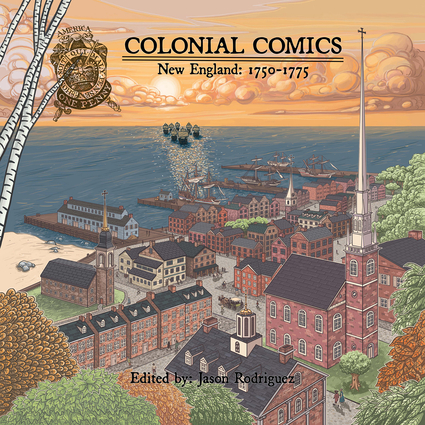
I’ve worked on both sides of the nonfiction-into-comic process. For Colonial Comics: New England, I adapted historical sources into stories about Samuel Maverick, Benjamin Franklin, and Crispus Attucks. I also supplied my nonfiction writing and research for other scripters to adapt into their own stories. I’ve seen artists add immeasurably to a tale in ways that go beyond what historical research could provide.

I also know what it’s like to have the work of historical research be rendered close to invisible. Years back, I worked with producers of the History Detectives television show to figure out the mysteries behind a couple of artifacts. I was never going to be paid, but for one of those two shows there were plans to interview me on camera. In the end, my name appeared as one short line in small type as the closing credits scroll by.

On my history blog I’ve published a series of posts about James McHenry and Elizabeth Willing Powell, drawing on new archival research and analysis. In 2019, the Washington Post published Zara Anishanslin’s article about Powell. She acknowledged relying on my work for one point, apologizing that the newspaper wouldn’t allow credit by name, only by a link. And then when a Post staffer wrote another article citing Anishanslin’s, that link didn’t survive. That’s a common problem in the major news media.

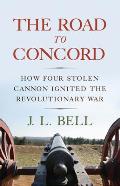
A few months back, I discovered my book The Road to Concord: How Four Stolen Cannon Ignited the Revolutionary War had been turned into a novel. A novel! The author never contacted me about obtaining derivative rights. The book contains one line of acknowledgement, grateful in tone but small in type. Since this novel was self-published, I decided simply to keep quiet about it.

At the same time, I think The Road to Concord could be adapted into a nifty movie. I’ve even taken a meeting with an aspiring producer about that prospect. If that ever happens, I darn well want credit and compensation, even though the whole point of the book and its many citations was to lay out the historical facts and sources for anyone to follow.

04 June 2026

“Expands into a fluffy cloud when microwaved”

In yesterday’s New Yorker crossword puzzle, clue 27 Down was:
Brand-name bath bar that expands into a fluffy cloud when microwaved
I’ve already stated my claim to be the first person to try microwaving bars of soap, or at least the first person to publish the eye-opening results of the process on one well-known brand, in my 1993 book Soap Science.

But I haven’t mentioned that I told that story for a short comic drawn by Dan Mazur in the Boston Comics Roundtable anthology Boundless, edited by Olivia Li, Jordan Stillman, and Neil Johnson in 2016.

That comic includes depictions of me and my dad in the 1970s and 1990s. In fact, the editors told me that the script won them over as soon as it called for pictures of me as a child. 

02 May 2026

Assessing the Ultimate Oz Universe for the Baum Bugle

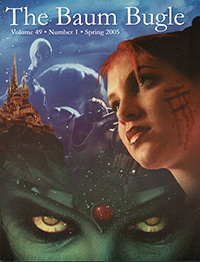
The spring 2026 issue of The Baum Bugle contains my review of The Lost Lands, the first volume of the Ultimate Oz Universe graphic retelling of L. Frank Baum’s Oz books.

There’s a big team behind this comic, some of them having worked for years to develop this version of Oz for various media. But the main creators of what we see on the book’s pages are the writers Cullen Blum and Larry King and the artist Mike Deodato, Jr.

My bottom line is that The Lost Lands is interesting to sample as an alternate version of Oz and often visually striking, but sadly not as original as it presents itself.

Firstly, there have been many “dark” adaptations of the Oz books in comics form over the years. The Ultimate Oz Universe is far from the first to recast Dorothy as a teenager, the Tin Woodman as a robot, the Scarecrow as truly scary, and so on.

Second, this graphic novel is a streamlined retelling of The Marvelous Land of Oz. Nothing wrong with that, but the project also draws without acknowledgment on work still under copyright, including later books and the syncretic maps created by James E. Haff and Dick Martin for the Oz Club.

Third, Deodato’s art is notable not only for its dramatic hyperrealism and solid comic-page design but its inconsistency on the details. I spent two paragraphs listing examples, such as:
Over one action sequence, Glinda’s sleeves grow from being short and off-the-shoulder to long and puffy. Mrs. Yoop’s shoes have straps in one panel but not the next. On a single spread, the Cowardly Lion’s belt takes on three separate designs.
Based on such discrepancies, other comics artists have accused Deodato of using AI imagery. He’s denied doing that. (Using AI should have been disclosed during the book’s Kickstarter campaign.) I don’t have hard evidence on that question, so I wrote simply about sloppiness in the visual details.

The overall lack of originality limits how compelling this volume can be. Fans of the Oz books already know the twist at the end of The Marvelous Land of Oz. Seeing the same basic story play out with a teen-aged Tip, a bipedal Cowardly Lion and Hungry Tiger, and other changes doesn’t make it a different story.

Other articles in thus Bugle issue cover the release of Wicked: For Good, a detailed analysis of the art of John R. Neill, a tour of the Hotel del Coronado, and a look at the Australian textile artist Raquel Caballero’s Ozzy work (showcased with eight pages of color), as well as many other reviews.

03 February 2026

Two More Tales of Oz

The 2025 edition of Oziana, the International Wizard of Oz Club’s creative magazine, is now available for purchase through Lulu.

This issue contains two stories by me.

“The Piglets and the Tin Soldier” is another short slice-of-life tale inspired by L. Frank Baum’s Little Wizard Stories of Oz, taking a couple of his established characters and bouncing them off each other.

The Nine Tiny Piglets first appeared from the Wizard’s pockets in Dorothy and the Wizard of Oz and made small cameos in the Emerald City after that, never getting individual names. 

Captain Fyter, the Tin Soldier, marched onto the scene in The Tin Woodman of Oz. At one point in that book the heroes meet the piglets’ parents. Afterward the soldier says, “I hope I’m not too particular about my associates, but I draw the line at pigs.” So there was a natural tension to work with.

David Valentin created digital artwork of the Tin Soldier and his basket of piglets for this story of a journey through the Munchkin Country.

“The Missing Key” is a mystery featuring Snip, the button boy who was a protagonist of Ruth Plumly Thompson’s The Lost King of Oz. She introduced Snip sneaking into Mombi’s kitchen and then spying on her, establishing him as a curious kid. Several years ago, I used that trait to bring Snip into a story called “Invisible Fence.” More recently I realized that would make him a good investigator for a mystery.

In this story, Snip sets out to retrieve the wind-up key that’s vanished from Tik-Tok’s back. David Lee Ingersoll supplied the illustrations, including one of Snip pinned to the ground by string-wielding field mice, inspired by scenes in The Wonderful Wizard of Oz and Gulliver’s Travels.

21 March 2025

Pulled into the World of AI Language Models

The Atlantic Monthly just published a searchable listing of works uploaded to the LibGen collection of pirated writing.

I found two things I wrote in that database: my book The Road to Concord and a book review published in the New England Quarterly.

The LibGen collection is based on material that was digitally published in some protected format, such behind a journal’s paywall or under some a form of DRM.

That means my first book, never published in electronic form, wasn’t there. It also means the database lacks everything I’ve written for the web, including this blog, the Boston 1775 blog, many articles, and a 600-page National Park Service study, even though (or because) those texts aren’t protected at all.

LibGen is a shadowy operation, apparently centered in Russia, though it receives material from all over the world. In December, a consortium of global publishers sued and shut down access to many LibGen domains. A US court also ordered LibGen to pay $30 million, but there’s no identified owner or manager to hold personally responsible.

In his article accompanying the Atlantic database, Alex Reisner reported on how the Meta corporation used all or part of that database to train its AI language model. The company decided that legal options would take, well, money and time.

Back in 2023 Reisner reported on a smaller pirated collection of 180,000 books called Books3 used by multiple companies for the same purpose. In fact, piracy appears to be so embedded in AI language programs that last year KL3M announced it was “the first Legal Large Language Model.”

As the Authors Guild reports:
Legal action is already underway against Meta, OpenAI, Microsoft, Anthropic, and other AI companies for using pirated books. If your book was used by Meta, you’re automatically included in the Kadrey v. Meta class action in Northern California without needing to take any immediate action. The court is first deciding whether Meta broke copyright laws, with a decision expected this summer, before officially certifying everyone as a class.
So I guess I’m involved in that lawsuit.

It seems clear to me that the LibGen operation breaks publishers’ legal licenses, in some cases to the detriment of royalty-earning authors. The downloading of that material by Meta and other corporations looks unethical, but I don’t know if any laws have been written that would make that act illegal.

21 January 2025

Two More Oziana Short Stories

Last week’s posting about a mystery story in Oziana 2024 made me realize I’d never noted Oziana 2023, which contains two of my stories.

As I reported last week, I’ve been seeking inspiration for new stories from pairing two recurring characters in the Oz books, as L. Frank Baum did in his Little Wizard Stories of Oz.

“The Soldier with the Green Whiskers and the Guardian of the Gates” is a natural pairing: two officers of the Wizard’s Emerald City government who kept their posts under the Scarecrow and then Princess Ozma, working together as friends.

The Oziana 2023 stories, in contrast, pair characters who have little in common and start out at odds with each other.

“Button-Bright and the Professor” shows the small boy from Philadelphia and the highly educated Wogglebug quarreling over directions before they’re forced to deal with a giant riddle-loving pangolin. This story was illustrated by Marcus Mébes.

“Glinda and the Glass Cat” follows the transparent feline to the China Country, the Hammerheads, and the Fighting Trees while the powerful sorceress seeks to make her curb her willful instincts. Anna-Maria Cool supplied fun art for this tale, and for the magazine’s cover.

Like other recent issues of Oziana magazine, the 2023 collection is sold through Lulu.

17 January 2025

A Mystery Tale from the Early Emerald City

Oziana is the International Wizard of Oz Club’s creative magazine for fiction and art inspired by the Oz books. It’s been published annually for about half a century now.

The latest issue, printed at the end of last year, includes my short story “The Soldier with the Green Whiskers and the Guardian of the Gates,” delightfully illustrated by Rob Lauer.

This story is set shortly after the end of The Wonderful Wizard of Oz. The Wizard has flown away, leaving the Emerald City under the rule of the now-brainy Scarecrow. And then the Scarecrow departed to escort his friend Dorothy to the castle of Glinda the Good. So the soldier and the guardian are the highest-ranking officials in town when Winged Monkeys start tearing a hole in the city wall.

I wrote the first version of this story when I was in junior high or high school, but was never fully satisfied with it. A few years ago I realized that it fit into a couple of trends in my newer Oz writing:
  • It was a mystery, and could be a better one.
  • It paired two recurring characters, a form L. Frank Baum used in his Little Wizard Stories of Oz and which I’ve been using to springboard other tales.
I wrote the story again from scratch, hopefully better. At the time I didn’t have a copy of the first version. Since then I came across an old photocopy, but I haven’t dared to read it, lest it be so much worse or even a tiny bit better.

If you care to read “The Soldier with the Green Whiskers and the Guardian of the Gates,” plus six more stories about the early history of Oz, all illustrated, and a closing poem, please order Oziana 2024 from Lulu.

17 December 2024

Maps and More in the Fall 2024 Baum Bugle

The latest triennial issue of the International Wizard of Oz Club’s Baum Bugle is the 200th. It’s arriving, wrapped in seasonal colors, at club members’ houses now.

I’m honored to be one of the contributors to this issue, in the midst of many Oz experts I like and admire:
  • Ruth Berman on the launch of the club and its journal.
  • Scott Cummings on a stage show that would have reunited L. Frank Baum with his first illustrator, the since-famous artist Maxfield Parrish.
  • Peter Hanff on the work of longtime Bugle editor and art director Dick Martin, with more samples of Martin’s work from David Maxine.
  • Memories of editing the Bugle in different periods from Bill Stillman, Michael Gessell, and John Fricke.
My article is about the maps of Oz and its neighbors published in Tik-Tok of Oz in 1914—how they came about and how they affected Baum’s storytelling in the novels that followed. Up until that book, Baum had never mentioned any maps. Afterwards, every book alluded to the map of Oz in one way or another.

That essay owed a lot to two studies of Oz and its representations. First, Michael O. Riley’s Oz and Beyond: The Fantasy World of L. Frank Baum (University Press of Kansas, 1997) snapped me out of the childhood habit of thinking of Oz as a stable place that the books gradually revealed and empowered me to think of Baum making it up as he went along. To be sure, by the time I read that book I’d studied literature in college, edited books for a decade, and even published my own fiction. But old habits stick around. Now I find it more interesting to analyze the fairyland from multiple perspectives.

Starting in 2012, David Maxine has shared a series of essays about the maps of Oz through the Hungry Tiger Press blog. This analysis starts with the earliest map, made for a theatrical presentation and now lost, and has worked its way to the Oz Club’s 1960s publication of maps that incorporated locations from the whole series and other Baum books as well.

Like other Oz fans, I enjoyed looking at the 1914 maps I first saw in Michael Patrick Hearn’s The Annotated Wizard of Oz. I had the Oz Club’s maps pinned on the bulletin board in my room for years. As many other fantasy authors and publishers discovered after Baum, there’s nothing like a map to make a fairyland seem more real.

17 April 2024

“Outside the Box” Opening Reception in Jamaica Plain, 21 April


With friends from the Boston Comics Roundtable, I’m helping to organize an exhibit of comics art in the gallery of the Footlight Club, America’s oldest continuously running community theater. It’s on Eliot Street in the Jamaica Plain neighborhood of Boston.

A few weeks back, a volunteer at that theater contacted our group about assembling a show. Its current production is Tuck Everlasting, a family musical based on Natalie Babbitt’s novel, so he wanted to showcase art that would appeal to kids.

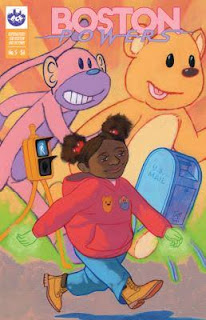
Many B.C.R. members have created comics for kids, and co-founder Dan Mazur published Boston Powers, a comic book with short, local superhero stories. So there was a good talent pool to choose from.

The exhibit has ended up featuring thirteen artists, including Boston Powers contributors, folks publishing on their own on paper or the web, a couple of graphic novelists (Jonathan Todd, Jerel Dye), and even a picture-book artist who works in comics form (Lindsay Leigh).

I’m represented through the work of Brendan Tobin, with pages from our “Stupendo and Secret Girl” collaboration.

This Sunday, 21 April, at 1:00 PM we’ll have a reception to celebrate the exhibit before a matinee performance of the musical. The art will remain up before, during, and after every show for families to enjoy. 

20 March 2024

The Characters of Oz “a real treat”

In the latest Baum Bugle from the International Wizard of Oz Club, Scott Cummings calls The Characters of Oz “a real treat and a fresh addition to the Oz reference shelf.”

I’m flattered by the review’s praise for my essay on the Wizard himself, especially how the “insightful comment that ‘Baum built most of his characters around contradictions’ casts a valuable light on the entire volume.” I’d been looking for a place to install that comment in Oz commentary. Those paragraphs got some extra airing back here.

Part of the brief for contributors to this collection was to examine the characters through multiple forms of the Oz mythos. The story has long sprawled across stage, screen, comics, and other media. Thanks to the public domain, there has been an explosion of adaptations in the last few decades, though only a few have really embedded themselves deep in the culture.

I could have applied my lens of “a good man but a bad wizard” to such later retellings as The Wiz, Wicked, and Oz the Great and Powerful. But I felt on surer ground looking at the Wizard as he appeared in the first forty years, from the original book to the MGM movie. That allowed for a more manageable narrative, and narrative is how I naturally think.

That choice evidently worked out, with Cummings calling that chapter, “Perhaps because of the tighter focus,…especially successful.”

Looking back, I see that approach paralleled how I looked at the first thirty years of Dick Grayson for another collection from the same publisher. So I guess that’s what I like.

19 March 2024

On the Road to CharlOz, Sept. 26–29

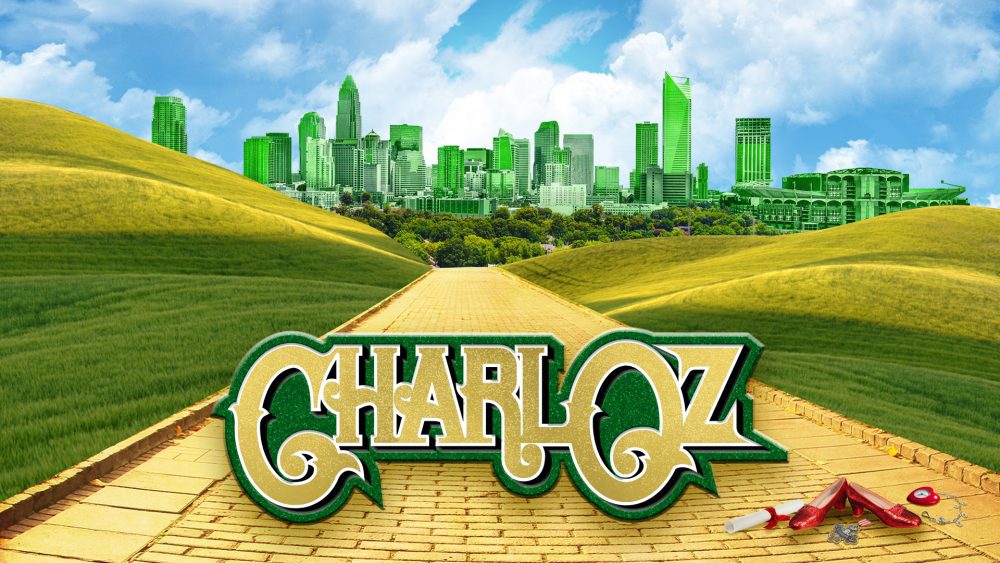
On September 26-29, 2024, the city of Charlotte, North Carolina; the University of North Carolina at Charlotte; and other local and national organizations will host CharlOz, a stretching over four days to explore the Oz mythos and its cultural legacy.

I’ll be there, speaking at two events on the schedule for Friday, 27 September:
  • a panel discussion of the new essay collection The Characters of Oz, featuring editor Dina Massachi and fellow contributors Mark West, Katharine Kittredge, Walter Squire, Paige Gray, Angelica Shirley Carpenter, and Gita Dorothy Morena.
  • a talk later that afternoon titled “‘My! what a lot of Kings and Queens!’: The Meanings of Monarchy in L. Frank Baum’s Fantasies.”
The schedule of CharlOz events includes many other speakers and presentations, including:
  • an opening keynote speech by novelist Gregory Maguire.
  • presentations by comics artists Eric Shanower and Janet R. Lee, puppeteer and director James Ortiz, and film restorer Nate Barlow.
  • talks by scholars Ryan Bunch, Angelica Shirley Carpenter, Atticus Gannaway, Judy Bieber, Anastasia Rose Hyden, Brady Schwind, Paige Gray, Katharine Kittredge, and many more.
  • a Saturday full of family programming.
  • theatrical, cinematic, and gallery interpretations of Oz.
The International Wizard of Oz Club will also have its national convention in Charlotte coinciding with this festival.

17 November 2023

The Return of “The Fuzzy Ghost”

This week I received my contributor’s copy of The Big Book of Things That Go Bump in the Night: A Collection of Utah Horror.

This anthology of “27 stories, poems, and flash fiction pieces, all geared toward kids” is published by Timber Ghost Press and available here.

My story, “The Fuzzy Ghost,” is much older than its target audience. It’s a tale about a family coming to terms with the death of a relative, and I wrote the first version in the 1990s after the death of my own older brother, Al.

At one point I had interest in the story from a kids’ magazine company, but the editor of the magazine I’d submitted to thought it would work better for the next-younger audience. I wrote another version, half the length to fit the second magazine’s specs. But for a story that depends on mood, that took away too much, and the revision didn’t sell.

Back then, kids’ magazines were practically the only market for such short fiction, and they had very strict limits on word counts. Technology has made internet magazines, micro-press anthologies, and even story vending machines viable, and that in turn has opened up the specs for stories.

Last year, as I continued to process the death of my mother, I spotted Timber Ghost Press’s call for submissions. I dug the latest draft of “The Fuzzy Ghost” out of my hard drive, updated it with specific period details, and sent it in. And now it’s come back to me inside a paperback book.

22 August 2023

Baum’s Contradictory Characters

In my Characters of Oz essay “A Good Man but a Bad Wizard?: The Shifting Moral Character of the Wizard of Oz,” I took the opportunity to talk about L. Frank Baum’s successful characterizations in general:
Baum built most of his best characters around contradictions. Ozma looks and plays like a young girl, but she is a dedicated monarch and, later books say, a powerful fairy. The Scarecrow and the Patchwork Girls are literally dummies made of cloth, straw, and cotton, yet they are among the most intelligent people in Oz. The Tin Woodman is metallic but warm-hearted. The Shaggy Man is a hobo proud of his ragged appearance. Jack Pumpkinhead is a tall man with the mind of a child. Tik-Tok the robot is utterly reliable and liable to run down at any moment. Even Dorothy is a paradox, a simple little girl who spends most of the first books in the series deposing one ruler after another like Napoleon sweeping through Europe.

Resolving those paradoxes, Baum came to understand, rendered the characters far less interesting. The Wonderful Wizard of Oz settled the contradiction inherent in the personality of the Cowardly Lion by dosing him with courage, leaving him as a stereotypically brave lion ruling the forest. That character was no longer as compelling, and he had no role in the next book. When Baum brought the Lion back in Ozma of Oz, the first thing the character says is to assure Dorothy and readers that he’s “As cowardly as ever.”
(That’s my original text. The printed page says, “Tik-Tok the robot is utterly unreliable,” shifting the contradictory fulcrum within the sentence by a couple of words. I’d never want to call Tik-Tok that when he could hear me—i.e., when he’s wound up. It’s not his fault that other people neglect to wind him.)

Of course, in the essay I then had to tackle why Baum resolved the interesting contradiction he originally built into the character of the humbug wizard by making him a real wizard. And does that make the Wizard uninteresting?

15 August 2023

“Dorothy the Conqueror” Now Online

Back in 2005, the International Wizard of Oz Club’s journal, The Baum Bugle, published my article “Dorothy the Conqueror.”

It discussed the character of Dorothy Gale as L. Frank Baum developed her, from a little girl who called herself “small and meek” into a bold adventurer. That boldness had always been part of her character, but after her first trip to Oz she knew it. By the end of Baum’s series, she was happy to set out for unknown parts of Oz because “all excitement is fun.”

The article also points out ways that the MGM movie’s treatment of Dorothy doesn’t reflect that character, especially in her baffling speeches at the end.

The Oz Club has now made the text of “Dorothy the Conqueror” available for anyone to read through this webpage. It even comes with citations in both Chicago and MLA style.

11 July 2023

Contents of The Characters of Oz

Last week I introduced The Characters of Oz, a collection of essays that I contributed to, edited by Dina Schiff Massachi.

Since I don’t yet see this information on the web in a form easy to search out, I’m sharing the contents of this book.
  • Introduction — Dina Schiff Massachi
  • Dorothy and the Heroine’s Quest — Mark I. West
  • But First, There Was a Scarecrow... — Katharine Kittredge
  • Heart Over Head: Evolving Views on Male Emotional Intelligence and the Tin Woodman — Dina Schiff Massachi
  • The Proto-Sissy, the Sissy, and Macho Men: The Cowardly Lion in The Wonderful Wizard of Oz, the MGM The Wizard of Oz, and Dark Oz Stories — Dee Michel and James Satter
  • A Good Man but a Bad Wizard? The Shifting Moral Character of the Wizard of Oz — J. L. Bell
  • Witches, Wicked and Otherwise — Robert B. Luehrs
  • Witch's Familiars or Winged Warriors? Liberating the Winged Monkeys — Dina Schiff Massachi
  • Glinda and Gender Performativity — Walter Squire
  • Ozma, Sorceresses, and Suffrage: Women, Power, and Politics in L. Frank Baum's Land of Oz — Mary Lenard
  • A Living Thing: The Very American Invention of Jack Pumpkinhead — Paige Gray
  • Trading Knitting Needles for Pistols: The Feminist, Violent, and Sexual Evolution of General Jinjur — Shannon Murphy
  • The Nome King — Angelica Shirley Carpenter
  • Piecing Together the Patchwork Girl of Oz — Gita Dorothy Morena
  • Afterword: Frank and His Imagination — Robert Baum
  • Bibliography: Further Oz Readings, Fiction and Nonfiction — Dina Schiff Massachi
In other (surprising) news about this book, it’s been printed, and McFarland is taking orders.

04 July 2023

The Characters of Oz and the Character of Oz the Wizard

Later this year McFarland will publish The Characters of Oz: Essays on Their Adaptation and Transformation, edited by Dina Schiff Massachi of the University of North Carolina at Charlotte.

The publisher says, “This collection of essays follows Baum’s archetypal characters as they’ve changed over time in order to examine what those changes mean in relation to Oz, American culture and basic human truths.”

Among those essays is my own “A Good Man But a Bad Wizard?: The Shifting Moral Character of the Wizard of Oz.”

One of the few lines that appeared in both L. Frank Baum’s original novel and the 1939 MGM movie was the Wizard’s insistence that he was “a good man, but a bad wizard.” Within that first novel the Wizard was a humbug whom people believed in, a tyrant who benefited his people, but ultimately someone Dorothy couldn’t rely on.

Just a few years later, however, the American public knew the Wizard of Oz unambiguously as a bad man in the Wizard of Oz stage extravaganza. And a few years after that, Baum brought the Wizard back as a stalwart friend for Dorothy and eventually a real magic-worker. This essay analyzes those changes in his persona across media and moral boundaries.

Other articles in this collection include Katharine Kittredge on Dorothy, Dee Michel and James Satter on the Cowardly Lion, Walter Squire on Glinda, Paige Gray on Jack Pumpkinhead, and Angelica Carpenter on the Nome King, among many other experts. Dina Massachi wrangled the contributors and provided her own exploration of the Winged Monkeys.

15 January 2022

Stupendo, Secret Girl, and Boston Powers, #5

The Boston Comics Roundtable just published Boston Powers, #5, its latest superhero comic book for young readers. For now it’s available at local events, and there are, alas, few local events, but I hope to share order information soon.

This magazine includes the second tale of Stupendo and Secret Girl, story by me and art by Brendan Tobin. This episode starts almost immediately after the pair’s first published adventure in Boston Powers, #2.

As you recall, Stupendo is a very strange visitor from another planet, and Secret Girl is a youngster from suburban Boston who’s taken on the task of turning Stupendo into a successful superhero.

In this installment, Emma’s parents are worried about her going along on Stupendo’s missions while someone in greater Boston is making things like babies and puppy dogs into gallumphing giants. Is this the end of the team of Stupendo and Secret Girl?

(No, it isn’t. I’ve already written the third and culminating episode in this story arc. But that, too, ends with the question: Is this the end of the team of Stupendo and Secret Girl?)

22 October 2020

The “Thomas Nast” Art Team, Part 3

Yesterday’s Boston Globe praised the approach of the Massachusetts Historical Society’s “Thomas Nast: A Life in Cartoons” online exhibit: “In a nice twist, the exhibition doesn’t emphasize Nast’s own work (though it offers links to many of his cartoons). Instead, nine contemporary cartoonists illustrate episodes from Nast’s life.”

I discussed six of those artists in the two preceding postings. Here’s the rest of the team.

Under Harper’s Weekly publisher Fletcher Harper, Nast had editorial freedom in the topics he chose and how he approached them. That often put him at odds with the magazine’s political editor, George William Curtis, who was more gentle and loyal to the Republican Party as a whole rather than just President U. S. Grant. We illustrated that conflict in what I later realized was yet another Nast-speaking-to-his-editor scene. But hey, his job was speaking to editors, and it’s a scene I know well.

The line “hit the enemy between the eyes” line came straight from Nast. The historical society understandably wanted more Massachusetts content, so this cartoon includes Nast’s unflattering caricatures of two Bay State politicians, Benjamin Butler and Charles Sumner.

The artist for this panel is Sam Cleggett. When the core team were thinking of cartoonists to recruit, two of the qualities we looked for were political work and visual style reminiscent of Nast. I pointed out, “Sam knows hatching,” and this energetic cartoon shows that he sure does. Sam also creates animation art for television and video games.

On top of his political cartoons, Thomas Nast’s biggest contribution to American culture was to popularize a certain look for Santa Claus. He had grown up with a German Christmas tradition of “Pelze-Nicol,” which he used to illustrate the Dutch tales of ”St. Nick” preserved in New York. Nast’s Santa was round and jolly, the size of a child, and swathed in fur.

For years Nast drew black and white pictures of Santa Claus for Harper’s. They became so popular that McLoughlin Bros., a pioneering picture-book publisher, offered to publish a book of Nast’s pictures converted to color lithographs. That technique approximated brown by printing black lines and highlights on a red field, with the result that the fur tinged toward red—and a red suit became what we expect Santa to wear.

Dan Mazur produced the cartoon of a McLoughlin brother showing Nast his page proofs for Santa Claus and His Works. As usual, he loaded it up with historical detail, hunting for the right sort of press and Pelze-Nicol himself.

Dan was also one of the organizers of this project, and he was one of the founders of both the Boston Comics Roundtable and the Massachusetts Independent Comics Expo. His latest comic as a publisher is the Boston Powers series, and his upcoming comic as an author-illustrator is Lunatic.

After losing his editorial independence, Thomas Nast left Harper’s Weekly. He launched his own magazine, which lasted only a few months. He went on the lecture circuit, but that was exhausting. He produced history paintings looking back on the Civil War. His investments went bust, leaving him in a precarious financial state.

For our final cartoon, I imagined a cheeky take on the moment when Nast accepted a post in the U.S. diplomatic corps under Theodore Roosevelt. Artist Nick Thorkelson chose to render that in three panels to enhance the timing of the vaudeville dialogue. Unfortunately, it wasn’t so funny when Nast caught yellow fever only a few months after arriving at his first assignment. (We didn’t illustrate that moment.)

Nick Thorkelson has made political cartoons for the Boston Globe and many other outlets. One of his specialties is graphic biography, with his latest being Herbert Marcuse: Philosopher of Utopia (2019).

So that’s our look at the career of American cartoonist Thomas Nast, from his childhood immigration to his death overseas.
17 October 2020

The “Thomas Nast” Art Team, Part 2

With the next set of pictures for “Thomas Nast: A Life in Cartoons,” we got into the political part of his career. And the three cartoonists drawing those moments all have experience in political art.

Nast joined the staff of Harper’s Weekly in 1859, just in time for the US Civil War. Some of the magazine’s artists, such as Winslow Homer, drew battle scenes from life. Nast, though he took some trips to camp, preferred symbolic scenes with unmistakable pro-Union messages. His images could be so powerful that the Republican Party adopted them as campaign material.

We illustrated that connection with a symbolic meeting between Nast and President Abraham Lincoln, drawn by Shea Justice. Lincoln voices oft-quoted praise for Nast’s work in front of three of his most famous works from the war years. I suggested adopting elements from two cartoon traditions: making Lincoln and Nast into a “Mutt and Jeff” pair, and borrowing Tom Toles’s technique of adding commentary on the main scene from a couple of characters in the corner.

As for that commentary, that grew from my inability even in the age of Google to find any source for Lincoln’s praise before A. B. Paine‘s 1904 authorized biography of Nast. Fiona Deans Halloran wrote the same in her modern biography, expressed in the polite language of a footnote.

Stated more bluntly, this “Lincoln quotation” seems to have come from, or at least through, Nast himself. After consulting with Halloran, we made her the voice of doubt (or reason) while Nast speaks up for printing the legend.

Shea Justice, MFA, is a teacher at Lincoln-Sudbury Regional High School and a member of the African-American Master Artists in Residence Program. His portraits of figures from African-American history have been collected in this volume.

To hear from Dr. Fiona Deans Halloran herself, check out this video of her far-ranging conversation with longtime political cartoonist Pat Bagley for the Massachusetts Historical Society.

The next cartoon looks at Nast’s campaign during Reconstruction for basic equality for all Americans, built around his iconic cartoon “Uncle Sam’s Thanksgiving Dinner.” Nast’s vision of equality was limited, though. His take on, and caricatures of, non-white Americans could be quite disparaging. And he particularly disliked Irish Catholics, as this cartoon highlights.

Originally I had Nast saying, “Except for the Irish Catholics!” But then my artistic colleagues noticed that one of the figures at Uncle Sam’s table—on the right, near where his finger rests—had the profile that Nast typically gave to his Irishmen. So I tweaked the wording to acknowledge that Nast even gave an Irish couple a seat at Thanksgiving.

E. J. Barnes drew this panel, as well as serving the whole project as art director. She did admirable work assembling all the images, a job that turned out to include not only cajoling the cartoonists but also securing workable reproductions of Nast’s drawings and inserting them into our modern drawings in the midst of the pandemic shutdown. E. J. sells her artwork and comics stories through Drowned Town Press.

The next panel dramatizes one of the most famous episodes in Nast’s career, the second time he helped to bring down William “Boss” Tweed of Tammany Hall. Nast drew a lot of cartoons about Tweed, rousing public opinion enough for other legal authorities to move in. When Tweed fled US custody to Spain, police there recognized him as a wanted man from a cover of Harper’s Weekly—though they weren’t clear about what he was wanted for. Information from across the Atlantic is easier to come by these days, as I found when I sought period images of Spanish police uniforms.

The artist for this panel is Heide Solbrig, another colleague from the Boston Comics Roundtable. With a doctorate in communication from UCSD, Heide has taught arts and media studies at various colleges in New England. She’s working a graphic memoir called The Dandelion King and a series of comics journalism reports about the US-Mexico border. I see a reflection of her interest in immigration at the center of her panel as people line up in front of that transatlantic ship.

COMING UP: Part 3.

15 October 2020

The “Thomas Nast” Art Team, Part 1

Here’s commentary on the “Thomas Nast: A Life in Pictures” web exhibit and how the pictures came together.

The exhibit starts with a portrait of that nineteenth-century political cartoonist by Paul Szep, twentieth- and twenty-first-century political cartoonist. He also did a video interview about political cartooning for the Massachusetts Historical Society this fall.

Szep was the Boston Globe’s cartoonist during the 1970s when I was growing up. I enjoyed finding his picture in each day’s paper, learning about what news stories he was addressing, looking for his daughter Amy’s name hidden in the hatching. I even remember getting his autograph on a Watergate-era collection at a book festival when I was about nine. I suppose Szep was the first professional cartoonist I ever met. So it’s nifty to see him involved in this exhibit.

The first cartoon my team created for the exhibit covers Thomas Nast’s childhood immigration from Bavaria to the US. Initially I imagined a single panel of a little boy in stereotypically German costume on a ship’s deck or a dock, mixed in with other immigrants. But I couldn’t find a Nast print of a nautical scene as a model.

Instead, I alit on a “diary comic” that Nast drew on his first trip across the Atlantic the other way when he was a young journalist, not published until Alfred Bigelow Paine’s 1904 biography. That page provided the structure. The impressionistic memories of the trip that Nast recounted to Paine provided the content—each vignette reflects a real recollection from early childhood.

Catalina Rufin, who’s creating stories about growing up, daily life, and fairies, made a great match for the concept of this cartoon.

The next panel shows Nast as a teenager handing in his first assignment to magazine publisher Frank Leslie. In looking for a Nast picture of an immigrant-crowded dock, I came across a print of the Hoboken ferry landing on eBay. From an anecdote and a little image in Paine’s book, I realized that was Nast’s first published work. So that print is now part of the Massachusetts Historical Society collection, and it became the focus of this cartoon.

Both artist Jerel Dye and I hunted for visual references to provide a reasonably accurate representation of Leslie’s workspace, down to that desk calendar. We used this panel to show how Leslie used assembly lines of artists to produce art for the press. At first Jerel drew Tommy Nast with a little wispy beard, but I objected that he was only fifteen at this time—he didn’t grow a little wispy beard until the next cartoon! Nast’s own caricature of his first meeting with Leslie appears here.

Jerel Dye drew the art for the graphic novel Pigs Might Fly, written by Nick Abadzis, and has created several short comics on his own. In healthy times he teaches at the Eliot School of Fine & Applied Arts. One day I hope to fly on one of Jerel’s spaceships.

COMING UP: Part 2.