Showing posts with label AUTHOR E. B. White. Show all posts

06 January 2022

“Every statement is an overstatement”
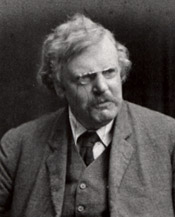
This passage appeared in a an essay by Adam Gopnik that appeared in The New Yorker in 2008. I’ve found it to offer one of the most useful observations of the millennium.

Gopnik was discussing how G. K. Chesterton had gone out of style:
The second big shift occurred just after the First World War, when, under American and Irish pressure, and thanks to the French (Flaubert doing his work through early Joyce and Hemingway), a new form of aerodynamic prose came into being. The new style could be as limpid as Waugh or as blunt as Orwell or as funny as White and Benchley, but it dethroned the old orotundity as surely as Addison had killed off the old asymmetry.

Chestertonian mannerisms—beginning sentences with “I wish to conclude” or “I should say, therefore” or “Moreover,” using the first person plural un-self-consciously (“What we have to ask ourselves . . .”), making sure that every sentence was crafted like a sword and loaded like a cannon—appeared to have come from some other universe. Writers like Shaw and Chesterton depended on a kind of comic and complicit hyperbole: every statement is an overstatement, and understood as such by readers. The new style prized understatement, to be filled in by the reader.

What had seemed charming and obviously theatrical twenty years before now could sound like puff and noise. Human nature didn’t change in 1910, but English writing did. (For Virginia Woolf, they were the same thing.) The few writers of the nineties who were still writing a couple of decades later were as dazed as the last dinosaurs, post-comet. They didn’t know what had hit them, and went on roaring anyway.
In the years since 2008, I perceive, our popular rhetoric has undergone the opposite shift. People now once again speak in hyperbole, especially online. We no longer simply have a fun time; we enjoy “the best Day EVER!” We no longer dislike someone; we say they “deserve to die.” I see people express anxiety about not having enough exclamation points in their business emails.

For someone who learned to write before this shift, I say with characteristic understatement and deflection, it’s a bit disconcerting.

04 June 2012

The Game of Life, the Universe, and Everything

This weekend the Boston Globe reviewed Jill Lepore’s The Mansion of Happiness, an examination of American life and values through board games—particularly the game Life itself.

Reviewer Buzzy Jackson wrote:
Lepore, a staff writer at The New Yorker and a professor of American history at Harvard who has written about the intellectual and political history of Colonial and 19th-century America, isn’t really interested in board games. Instead, she wants to know what [Milton] Bradley’s game can tell us about American values and aspirations. As in the game of Life, each chapter takes the reader a little further along the path of human development. . . .

The marriage chapter examines the life and work of Paul Popenoe, famous for posing the eternal question, “Can this marriage be saved?” The oddly contentious story behind E.B. White’s story, “Stuart Little,” makes up the chapter on childhood, and Lepore dismantles the myth of Taylorized efficiency in “Happiness Minutes,” the chapter on working.
Now did Lepore actually start her investigations and ruminations with board games, or did she realize that Bradley’s Life provided a structure to unite essays on several disparate concerns?

Lepore will speak about this book and the history of American board games, with pictures, at the American Antiquarian Society in Worcester on 5 June at 7:30. This illustrated lecture is free and open to the public.

13 April 2009

Hunting Down the False Passive

Mark Liberman at Language Log recently had cause to note how modern American prose stylists' dislike of the passive voice has morphed into something more:

In recording the mutation of the term "passive voice", I've been focusing on the way that the word passive has gradually lost its technical grammatical meaning, and taken on a sense crystallizing around notions of passive as "unassertive", "lacking in force", "failing to take responsibility for what happens", "submissive".
Specifically, a New Yorker writer had stated that Bernard Madoff spoke in "passive voice" when he said: "When I began the Ponzi scheme, I believed it would end shortly..." Grammatically, that's active voice (as well as a direct admission of starting a Ponzi scheme). But the second clause does have a bit of "failing to take responsibility."

Jan Freeman, the Boston Globe "The Word" columnist, noted how our relatively recent worry about the passive voice has long been linked to issues of gender:
Linguist Arnold Zwicky [also at Language Log] found the passive first described as a weakness in US writing handbooks of the 1930s and '40s, in discussion freighted "with images of strength, muscularity, and action (that is, symbolic masculinity)."

George Orwell spread the anti-passive gospel in "Politics and the English Language," his famous (and passive-laden) 1946 essay. American students imbibed it from Strunk and [E. B.] White's "Elements of Style," though probably a few of them noticed - as linguist Geoff Pullum did - that the book's section on the passive employs the passive...
Those mid-century decades were when Ernest Hemingway's muscular prose dominated American letters, part of a reaction to the ornate overstatement of the previous century. Naturally a literary technique labeled "passive" would be out of fashion (along with that "pathetic" fallacy).

In his new Chronicle of Higher Education attack on The Elements of Style, Pullum himself (another Language Log regular) noted that three of Strunk & White's four examples of passive constructions to avoid aren't grammatically passive at all. So nearly from the start our prohibition against the passive voice swept up other frequently vague or wishy-washy constructions as well.

Pullum explained the value of the passive voice this way:
We are told [by Strunk & White] that the active clause "I will always remember my first trip to Boston" sounds much better than the corresponding passive "My first visit to Boston will always be remembered by me." It sure does. But that's because a passive is always a stylistic train wreck when the subject refers to something newer and less established in the discourse than the agent (the noun phrase that follows "by").

For me to report that I paid my bill by saying "The bill was paid by me," with no stress on "me," would sound inane. (I'm the utterer, and the utterer always counts as familiar and well established in the discourse.) But that is no argument against passives generally. "The bill was paid by an anonymous benefactor" sounds perfectly natural. Strunk and White are denigrating the passive by presenting an invented example of it deliberately designed to sound inept.
In my writing groups I've noticed some members suffering another misconception about the passive voice: that a "was" or "were" construction is the tip-off to it. Yes, "I was hit by a wombat" is in the passive voice (and properly so according to Pullum, if the wombat is a "newer and less established" element). But "I was hitting the the wombat" is not only active voice, but an image of strength and muscularity.

20 August 2006

Some Opening: Charlotte's Web

Through McSweeney's, Ann Asher offers a discarded passage from Charlotte's Web, featuring the previously unrecorded character of Louis the Turkey. Louis has the instincts but not the hard-won tact of an editor: "I see where you're going with the 'Some Pig' thing, but don't you think it's so vague that it's not even worth writing? . . . "

And speaking of tactless editing, the first line of Charlotte's Web is often used as an example of a sterling opening for a novel:

"Where's Papa going with that ax?" said Fern to her mother as they were setting the table for breakfast.
That one sentence introduces little Fern, it sets the scene in time and space, and anything involving Papa and an ax is intriguing even before Fern's question forces us to think about the mystery.

But frankly I'd like to retire this example, for two reasons. First, it's getting old. Not the book itself; Charlotte's Web more than half a century old, but timeless. The example just feels shopworn. Hasn't everyone writing for kids for over a year already heard it? And since editors believe that today's young readers want novels to begin even faster, with more action and intrigue, there must surely be more recent examples of opening lines to learn from.

The second reason involves some of the things the start of Charlotte's Web does wrong, or at least should only be attempted by writers with E. B. White's experience and skill, if then. In the third paragraph, the narrator tells us that Fern didn't understand the ax and its connection with the newborn pigs because she "was only eight." CLANG! Condescension alert! Don't try this at home!

More important, the opening puts the focus on Fern, the girl. But in chapter 3, White shifts his point of view to Wilbur the pig. He and the other animals can talk to each other. Fern can't talk to the animals, but chapter 8 depends on her understanding them--and then shows us a conversation between her parents that she's not privy to. For the whole book White jumps between the overlapping but not intersecting worlds of animals and humans. In the last chapter Fern makes only a token appearance, her mind entirely on (gasp!) a boy, while the relationship of Wilbur and Charlotte's children carries all the emotional weight.

Now it would have been next to impossible for White to write the first scenes from Wilbur's point of view because the pig was a fragile newborn. For similar reasons, no doubt, Dick King-Smith started Babe from Farmer Hoggett's point of view. (An example of a novel written from a human newborn's point of view is Butler's The Incubator Baby, but that's social satire for adults.)

In recent decades, children's book reviewers and editors have emphasized a more tightly controlled point of view than White used. A book can have multiple points of view, but they tend to switch obviously one to another, not fade into each other. That trend will go out of fashion sooner or later, but for now Charlotte's Web and its Fern-centered opening for a Wilbur-centered novel may not be the best model for new writers.
