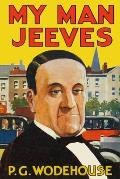
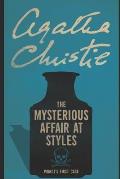
Showing posts with label AUTHOR P. G. Wodehouse. Show all posts

27 September 2020

More on Christie and Wodehouse

After posting about the possible influence of P. G. Wodehouse on Agatha Christie, I got a hold of Christie’s autobiography to see if it had any information to refute or confirm that hypothesis.

(I also looked at Laura Thompson’s biography, Agatha Christie: A Mysterious Life, but nothing in it contradicted Christie’s own statements.)

As a young writer, Christie tried to place her literary short stories: “I sent them to magazines, but expected them to come back, and come back the usually did.” However, her autobiography didn’t name those magazines, so I can’t say whether any were publishing Wodehouse in the mid-1910s.

Christie definitely had Dr. Watson in mind when she created Capt. Hastings for her first detective story, The Mysterious Affair at Styles, and she definitely didn’t think much of the character:
At that date I was well steeped in the Sherlock Holmes tradition. So I considered detectives. Not like Sherlock Holmes, of course: I must invent one of my own, and he would also have a friend as a kind of butt or stooge—that would not be too difficult.
That certainly doesn’t sound like she put a lot of thought into Hastings when she planned that story. “He was a stereotyped creation,” she wrote, though she “quite enjoyed” him.

As for her writing process, Christie’s autobiography confirmed that she “finished the last half of the book, or as near as not, during my fortnight’s holiday. Of course that was not the end. I then had to rewrite a great part of it—mostly the over-complicated middle.” Again, it’s not clear when she developed Hastings and his rapport with Poirot, which is where I see the resemblance to Wodehouse’s Bertie and Jeeves.

Christie started sending her rewritten manuscript to publishers during the World War. It stayed at The Bodley Head through the Armistice and for “nearly two years” before the publisher asked for revisions. Christie described those changes merely as the “last chapter” and “a few more alterations,” suggesting that by that point the main characterizations were intact.

Thus, it appears that Christie most likely developed Poirot and Hastings’s interactions during her 1917 revisions, after stories exploring the Jeeves and Bertie relationship had started to appear in British magazines. But the autobiography offers no additional evidence of possible influence from Wodehouse.

Christie did refer to her first husband’s wartime “soldier servant and batman” as “a kind of Jeeves—a perfection.” But of course she could have read Wodehouse’s stories anytime in the decades between her debut and when she wrote her memoirs.

08 September 2020

A Scarecrow in Wodehouse

“The Aunt and the Sluggard,” one of P. G. Wodehouse’s earliest stories about Bertie Wooster and Jeeves, turns out to have an Oz connection.

The plot revolves around an eccentric aunt who insists on her nephew taking in the thrills of 1916 New York City and relaying them to her so she can live vicariously. With Jeeves’s help, Bertie’s friend the nephew writes letters with passages like this:
We were quite a gay party. Georgie Cohan looked in about midnight and got off a good one about Willie Collier. Fred Stone could only stay a minute, but Doug. Fairbanks did all sorts of stunts and made us roar.
Fred Stone had become a huge Broadway star a bit over a decade earlier by playing the Scarecrow in the musical extravaganza The Wizard of Oz.

In reviewing the show Jack O’Lantern for Vanity Fair in 1917, Wodehouse wrote, “Fred Stone is unique. In a profession where the man who can dance can’t sing and the man who can sing can’t act he stands alone as one who can do everything.” So spotting him at one’s party would indeed be a big thrill.

To everyone’s surprise, the aunt shows up at Bertie’s apartment to enjoy New York herself.
“Good afternoon,” I managed to say.

“How do you do?” she said. “Mr. Cohan?”

“Er—no.”

“Mr. Fred Stone?”

“Not absolutely. As a matter of fact, my name’s Wooster—Bertie Wooster.”

She seemed disappointed. The fine old name of Wooster appeared to mean nothing in her life.
The nephew has to take the aunt out to nightclubs, and he gives Bertie this report by phone:
“She keeps asking me when Cohan and Stone are going to turn up; and it’s simply a question of time before she discovers that Stone is sitting two tables away.”
Fred Stone is thus an actual character in this story, not merely an allusion.

In contrast, Wodehouse named the rip-roaring evangelist who plays a role in the resolution as Jimmy Mundy, forbearing to import Billy Sunday into his version of New York. But to get the full power of theatrical celebrity, it seems, he had to use a real star.

Toward the end of this story, after the aunt and nephew have happily gone their separate ways, Bertie echoes Oz again: “Jeeves, there’s no place like home—what?”

To be sure, that’s a line Baum quoted from John Howard Payne’s 1823 song “Home, Sweet Home!” But Bertie gives it his own spin, what?

07 September 2020

Did Wodehouse Influence Christie?

The Mysterious Affair at Styles made me wonder if Agatha Christie’s portrayal of the relationship between Capt. Arthur Hastings and Hercule Poirot might have been influenced by P. G. Wodehouse’s stories of Bertie Wooster and Jeeves.

In both cases, the narrator is a young upper-class Englishman with no professional responsibilities, affable manners, a weakness for pretty ladies, and modest intellectual ambitions that nonetheless exceed his capacities. This narrator describes how a punctilious man from a lower social class uses his brilliant mind to deduce solutions and put things right. Hastings and Bertie admire Poirot and Jeeves, but they also resent being pulled along, which produces some of the stories’ entertainment.

On the question of influence, the first factor I examined was when Christie wrote The Mysterious Affair at Styles. She reported writing the first draft in 1916, taking two weeks off work to check into a Torquay hotel to finish.

But then, I presume, Christie revised the manuscript. One strong indication of that is how subsequent Poirot stories (“The Affair at the Victory Ball,” The Murder on the Links) make clear that the action of the novel starts in July 1917 after Hastings has spent “some months” recuperating from being wounded in the Battle of the Somme, which took place in late 1916. Christie thus came to conceive of her first novel as taking place months after she had written her first draft.

It also took Christie years to find a publisher. When John Lane agreed to issue the book at the Bodley Head press, he insisted that Poirot reveal the murderer by gathering all the suspects in the drawing room, a device that had already become standard in murder mysteries. (Christie originally had Poirot share his revelations in court.) The book thus went through a final revision stage before it was published in 1920.

Therefore, we can date Christie’s creation of the full text of The Mysterious Affair at Styles to the period from 1916 to 1920. But we don’t know when in that period she cemented the characterization of Hastings and Poirot. Did she start with the characters and find a mystery for them, or start with the plot and develop the characters around it?

The next question is whether Agatha Christie read P. G. Wodehouse. Decades later, when they were both internationally bestselling authors, the two became friendly correspondents. In her first letter to Wodehouse, Christie said she enjoyed his 1913 novel The Little Nugget, which involves kidnappers, an upper-class hero at loose ends, and a Pinkerton detective working as a butler. But there’s no way to know when she read that book—as early as 1913 or just a few years before her letter. We also have no indication of whether Christie read the short stories Wodehouse sold to British magazines in the 1910s, which are the crucial texts in this question.

P. G. Wodehouse spent most of that decade in New York City, enjoying the excitement of America and the rewards of selling the same work to both American and British publishers. Many of his tales involved Englishmen in America, and among those was a series of short stories about a young gentleman named Bertie and his gentleman’s gentleman.

Those characters made their first appearance in the story “Extricating Young Gussie,” published in America’s Saturday Evening Post in September 1915 and in Britain’s The Strand Magazine in January 1916 (and of course it’s the latter date that pertains to the Christie question). At that point, Bertie didn’t have a last name, though he already had an Aunt Agatha. Jeeves was simply a generic valet. With “The Artistic Career of Corky”/“Leave It to Jeeves” (The Strand, June 1916), Wodehouse hit on the idea of Jeeves being a problem-solving genius.

Finally, Wodehouse started to explore the frictions between Bertie and Jeeves in “The Aunt and the Sluggard” (The Strand, August 1916) and “Jeeves and the Unbidden Guest” (The Strand, March 1917). He also wrote “Jeeves Takes Charge,” providing an origin story for the team, but that wasn’t published in Britain until 1923. In these tales we see Bertie pushing back against Jeeves’s sartorial advice, resenting his silences, and finally coming around to realizing his brilliance.

That’s the same dynamic I see in Capt. Hastings and Poirot, already fully realized in the published text of The Mysterious Affair at Styles. Comparing the dates show it was possible Christie was inspired by Wodehouse’s magazine stories as she developed her novel, particularly after the first draft. But there’s no conclusive clue about influence. The similarity might simply be the result of similar ideas occurring to two authors around the same time, like two separate characters out to snatch the same diamond necklace or handwritten will.

01 September 2020

Captain Hastings’s True Worth

In the end, after the drawing-room revelations that the publisher demanded, I enjoyed Agatha Christie’s The Mysterious Affair at Styles more as a series of character sketches and dialogues than as a murder mystery.

For me, the solution relied too much on esoteric aspects of poisons. (Christie was working at a wartime pharmacy.) The number of people administering said poisons, sneaking into bedrooms at night, and trying to frame or shield other people became incredible. In an excellent mystery, everything comes together at the end with an almost audible click. There was still a bit of scraping in this debut.

That said, the character of Hercule Poirot seems to have come out fully formed and delightful. There’s a rich vein of supporting characters with distinct personalities and speech patterns, most of whom pair off at the end like a Shakespearean comedy. And for the first time I appreciated Capt. Arthur Hastings as a comedic character.

Christie clearly took inspiration from Arthur Conan Doyle’s Holmes and Watson when she wrote about Poirot and Hastings, especially in the short stories that followed the success of this novel, in which the men share rooms in London. But Dr. John Watson was an intelligent, resourceful man, appearing incapable only because he was standing next to an obsessed genius. He helped Sherlock Holmes in many ways. He never came across as a doofus until the character was written that way for Nigel Bruce in the movies.

Hastings, in contrast, provides only one type of assistance to Poirot: entrée into upper-class British society. Well, two things if we add light entertainment in the course of a trying case, as shown in this discussion of the likely murderer:
“Someone with a good deal of intelligence,” remarked Poirot dryly. “You realize that he chose the one place in the house to hide it where its presence would not be remarked? Yes, he is intelligent. But we must be more intelligent. We must be so intelligent that he does not suspect us of being intelligent at all.”

I acquiesced.

“There, mon ami, you will be of great assistance to me.”

I was pleased with the compliment. There had been times when I hardly thought that Poirot appreciated me at my true worth.
Early in the book, Hastings, who’s recovering from a battlefield wound, speaks of becoming a detective. He coddles easy theories about the murder and records lots of clues whose significance passes him by completely. (Poisons not among them.)

Hastings’s attention is easily caught by beautiful women, though his code means he doesn’t pursue another man’s wife and impulsively proposes marriage to an unmarried woman he thinks is about to cry. As a narrator, Hastings alternately admires Poirot, feels baffled by his momentary “mistakes,” and occasionally resents his superiority and secrecy.

To sum up, in The Mysterious Affair at Styles Capt. Hastings behaves very much like Bertie Wooster toward Jeeves.

COMING UP: The Code of the Wodehouses?

09 May 2013

The Tie That Binds

Speaking of British publishing’s fanfiction, this autumn will bring the first authorized revival of P. G. Wodehouse’s Jeeves and Bertie series, as The Independent reported in March. Hutchinson will publish Jeeves and the Wedding Bells in Britain, and St. Martin’s will publish it in the US.

The authorized author is Sebastian Faulks, a respected British novelist (Birdsong, A Week in December) who already wrote a well received pastiche of Ian Fleming’s James Bond novels in Devil May Care.

In The New Statesman, Michael Moran wrote:
I don’t describe Wodehouse as inimitable because I like his stuff. I describe Wodehouse as inimitable because he cannot be imitated. One might imagine Craig Brown or Hugo Rifkind making a decent fist of a Wodehouse knockoff for a page or so but a whole novel? This is hubris. We already have in the 11 Jeeves novels and 35 short stories an ample supply of Wodehouse's wit. We have no need of ersatz Plum.
And Wodehouse biographer Robert McCrum told The Guardian:
Wodehouse is a much tougher egg than Fleming and 007/Bond. For a PG Wodehouse fan to write a new Jeeves novel is a bit like asking a devout Christian to come up with a fifth gospel. . . . It looks perilously like Mission Impossible to me, but I wish Faulks the very best of luck. If anyone can pull it off, he can.
McCrum was himself authorized by the Wodehouse estate to write that biography, but it’s no hagiography.

02 February 2013

Wodehouse v. Milne

The Paris Review’s blog recently looked back on the falling-out between P. G. Wodehouse and A. A. Milne. I’d read versions of this story before in the Boston Globe and Robert McCrum’s fine biography of Wodehouse. A particularly pro-Wodehouse retelling appeared in the Daily Telegraph in 1996 and is archived by the Russian Wodehouse Society.

Wodehouse and Milne were the same age and from the same class. They socialized and played cricket together, and Milne put up some money for a stage adaptation of one of Wodehouse’s novels. Their careers ran in parallel for a while, both writers striving in various forms and media, particularly theater and fiction. Both men became very popular writers on both sides of the Atlantic, Wodehouse for his farcical novels about British twits and Milne for his four volumes of children’s verses and stories.

After Wodehouse was interned by the Germans near the start of World War 2 and recorded a few radio broadcasts for the Reich in 1941, many British authors wrote public letters lambasting him. Milne was among the sharpest critics. He reminded newspaper readers that Wodehouse had spent the previous World War far away in America and had moved around in the 1930s to find tax havens.

Many analyses of the rift say Milne was jealous of Wodehouse’s success. Wodehouse himself advanced this idea in his 1975 interview with The Paris Review, and it may have been true. The Milnes do seem to have been capable of nursing great resentment over time.

However, both authors were tremendously successful. The difference was that Milne hated how the public and critics had pigeonholed him while Wodehouse embraced those limits. Milne kept trying to write adult novels, plays, mysteries—anything but children’s books. Wodehouse had stopped writing quasi-serious novels like The Coming of Bill and musical comedies and dove into the capers his readers wanted. He also eschewed politics while Milne kept writing about that concern.

Another factor not usually noted is that Milne had helped his son Christopher join the British military. I don’t think it was coincidence that as another example of Wodehouse’s irresponsibility Milne quoted his quip that he wouldn’t care about a son until he was in the First Eleven. Milne knew that Wodehouse had no sons, and thus no sons in the war. (Yet another factor: Milne had been pacifist until shortly before the war, so he wrote with the zeal and gnawing conscience of a convert.)

Ironically, Wodehouse’s stepdaughter Leonora, whom he was very close to and who telegraphed him to stop broadcasting, died in 1943. Thus, by the time Wodehouse was free to digest the controversy, he had actually lost a child during the war. Christopher Milne survived to carry on his own resentments.

Twice in the 1950s Wodehouse, now permanently settled in America, used his fiction to attack Milne. In 1975 he claimed to have gotten over the feud, at least enough to appreciate Milne as a writer, but by then Milne was dead.

22 October 2012

Lemony Fish

Yesterday the Boston Globe ran an interview with Daniel Handler, representative of Lemony Snicket, which included this exchange about childhood reading:
BOOKS: What was the first adult book you read?

HANDLER: It was “Fish Preferred” by P.G. Wodehouse. I picked that one for its title…
If young Daniel had expected a story about a liking for fish, he would have been disappointed. Fish Preferred refers to the novel’s male lead, Ronnie Fish, and the ups and downs of his stock—not as in “fish stock” but as in “the stock market.”

When Fish Preferred was published in July 1929, speculating in the stock market was all the rage. Even ordinary readers knew the difference between “preferred stock” and “ordinary stock.” Of course, speculation by ill-informed investors was part of the stock bubble that burst just a few months later.

Wodehouse had originally titled that novel Summer Lightning. That was the name of the serialized versions that appeared in both the US and UK earlier that year, and that was the name on the British edition published the same month as the American.

The British edition includes a preface from Wodehouse that explains the situation:
It is related of Thackeray that, hitting upon Vanity Fair after retiring to rest one night, he leaped out of bed and ran seven times round the room, shouting at the top of his voice. Oddly enough, I behaved in exactly the same way when I thought of Summer Lightning. I recognized it immediately as the ideal title for a novel.

My exuberance has been a little diminished since by the discovery that I am not the only one who thinks highly of it. Already I have been informed that two novels with the same name have been published in England, and my agent in America cables to say that three have recently been placed on the market in the United States. As my story has appeared in serial form under its present label, it is too late to alter it now. I can only express the modest hope that this story will be considered worthy of inclusion in the list of the Hundred Best Books Called Summer Lightning.
That preface also contains Wodehouse’s reply to a common criticism:
A certain critic—for such men, I regret to say, do exist—made the nasty remark about my last novel that it contained “all the old Wodehouse characters under different names”. He has probably now been eaten by bears, like the children who made mock of the prophet Elisha; but if he still survives he will not be able to make a similar charge against Summer Lightning. With my superior intelligence, I have outgeneralled this man by putting in all the old Wodehouse characters under the same names. Pretty silly it will make him feel, I rather fancy.
And indeed, Summer Lightning/Fish Preferred is a sequel, one of the early Blandings Castle novels. Apparently all current editions have reverted to Wodehouse’s preferred title.

26 February 2011

“There Were a Lot of Them and They Were All 10”

Earlier this month Prof. Carlo Rotella of Boston College wrote in the Boston Globe about doing an elementary-school visit:

Recently I visited Mr. Sugarman’s fourth grade class at the Runkle School in Brookline to talk about writing. They’re doing a unit on researching and organizing information into essays. I do that for a living, and one of my kids is a fourth-grader, but that doesn’t mean I was prepared for the experience. The students were eager and engaged, and their teacher expertly cultivated a tone of purposeful curiosity that balanced classroom order and open inquiry . . . but there were a lot of them and they were all 10 years old.

The potent chaos of their collective thought process would produce a naively incisive question — “If a story is too long, how do you make it shorter without stopping in the middle of a sentence?” — and then one so tenuously connected to our conversation that it caused my mind to lurch wildly as I tried to retrace the logic that had led to it. I think I know how we got from a discussion of working with an editor to “How come my brother is always bothering me?,” but it still threw me.

The kids kept good decorum, but rogue flows of energy twisted their seated bodies into crazy shapes, and a bewildering variety of expressions raced across their faces. One fellow who frequently raised his hand had a habit of shifting his hoodie around his torso so that the hood hung down under his chin, and then all the way around to its normal position. Every time I looked at him, his parts appeared to have rotated another turn or two. He also seemed to grow visibly taller.
For some reason Rotella’s essay reminds me of P. G. Wodehouse’s short story “Bertie Changes His Mind,” the only Bertie Wooster adventure narrated by Jeeves. That tale appears in Carry On, Jeeves. (An untested audio recording is here.)

29 December 2010

An Early Effort by Wodehouse

This month I read P. G. Wodehouse’s The Intrusion of Jimmy (1910) for the first time. I may have read it earlier under its alternate title, A Gentleman of Leisure. If I’d forgotten, that’s not because it’s a typical Wodehouse farce but because it dates from before he found his basic formula, and he didn’t have enough material to make a memorable novel.

I’m rather fond of Wodehouse’s work from the 1910s, before he decided to focus on English country manors and city clubs, with an occasional intrusion from the working classes.

There’s the wild but toothless satire of invasion literature in The Swoop (1910). The semi-serious picture of a couple expecting their first child in The White Hope/Their Mutual Child/The Coming of Bill (1915). And my favorites, which follow characters from Wodehouse’s public school stories into the working world: Psmith in the City (1910), and Psmith Journalist (1915).

Psmith appears one more time in Leave It to Psmith (1923), which brings him to Blandings Castle, introduced in Something New/Something Fresh (1915). And those books were so successful that Wodehouse rarely tried something so fresh again.

The Intrusion of Jimmy/A Gentleman of Leisure is clearly a transitional novel. It starts in the world of New York theater and journalism that Wodehouse was then trying to enter, with a dollop of crime and corruption.

The setting then moves to an English manor house with the cast of characters that would soon be familiar: a spineless and penniless young lord, an overbearing moneybags uncle, a stern aunt, a pretty girl. Also a rope of diamonds and amateur theatricals.

Unfortunately, Wodehouse didn’t really develop those elements of the story as he later would, perhaps because he hadn’t yet realized he would have to distinguish the characters in this book from others quite like them. It wasn’t enough to have a stern aunt—one must do something with her.

The book has only one girl, and only two boys, one in love and the other not. The one in love is also the title character, admirable, and rich, so there’s no suspense in the love story. The narration keeps telling us how much that boy is in love with the one girl, but we don’t see that happen. There’s a lovely moment at the end where it becomes clear that she’s fallen in love back—we know that because she actually believes the plot that’s unfolded so far.

I kept waiting for one of the story’s bigger crooks to get some sort of comeuppance, but no. Some secrets are revealed, but there’s not enough follow-up. In a short time Wodehouse would learn to do so much more with similar ingredients.

The small number of rooms where action takes place made me wonder if Wodehouse had adapted this novel from a stage play, but things worked the other way round. A Gentleman of Leisure was Wodehouse’s first book adapted for the stage. Douglas Fairbanks played the lead on Broadway, and then John Barrymore in Chicago. There were even two silent movies made from this novel. (Trying to imagine silent Wodehouse is the biggest challenge I’ve had all month.)

That made A Gentleman of Leisure a big success for Wodehouse, which is probably why he went on to explore more manor houses, to better effect.

08 April 2008

Two Years of Bully's Life

Among the things I can't presently do because my commute usually runs from my bedroom to my desk downstairs is to read lots of books while waiting for the subway to ever start moving again. So I'd never be able to keep up with Bully's Wodehouse a Week project.

After all, diligently reading a P. G. Wodehouse book a week is an undertaking of slightly less than two years. As Bully explains:

Consider this when you want to mull the length of P. G. Wodehouse's writing career: he published his first book a year before the Wright Brothers' flight at Kitty Hawk. He published his final book during his lifetime five years after Neil Armstrong stepped on the moon.
Rather than reading in order, or by series, Bully appears to be picking titles nearly at random from all periods of Wodehouse's oeuvre. I say "nearly" because he seems to be saving the best titles for later, with the understandable exception of Joy in the Morning. Thus, I'll have to check back for Bully's thoughts on Leave It to Psmith, Summer Lightning, and Hot Water, among my other favorites.

But Bully can even appreciate the lesser books:
The beautiful thing about Pearls, Girls, and Monty Bodkin is not its originality or uniqueness, oh no no no.
Of course not. Late Wodehouse was just a fun riff on middle Wodehouse. But early Wodehouse? Well, that can be strange territory indeed, as he tried out different modes before confirming that his strength lay in a certain type of comedy rather than, say, the serious themes of The Coming of Bill, the broad farce of The Swoop, or even the children's story William Tell Told Again.

Bully analyzes each book with generous excerpts, and offers occasional other remarks, such as these in regard to Psmith in the City, Wodehouse's transition from school stories to novels of young men about town:
both [Mike and Psmith] wind up working as junior clerks at The New Asiatic Bank, a thinly disguised City of London financial institution not unlike the Hong Kong and Shanghai Bank in London Wodehouse himself toiled at for two years in the early twentieth-century. Ah, isn't that a name that takes you back? "The Hong Kong and Shanghai Bank." It seems to suggest romance and adventure and far away places. It's a pity there aren't any such banks these days, isn't it? Well, actually, stand on a street corner and look around. Can you spot a HSBC bank anywhere near you? Same company. Had I known this when I was looking for a new bank in Manhattan, I would have trotted into the lobby of the HSBC on Fifth and Thirty-Ninth, placed my clinking bag of dimes on the counter, fixed the teller with a stern stare and declared "I would like to deposit my money in a bank that Mister P. G. Wodehouse once worked in." And if they knew what I was talking about, then boy howdy, that's the bank for me.

But I digress.
Each review also comes with important bibliographical tips for folks who like their popular literature cheap:
The Swoop is back in print in at least a couple public domain editions. Mine (printed by Bibliobazaar) features the odd design choice of a peacock on the cover. There are no peacocks in this book.
Since many Wodehouse novels were published with different titles in the UK and the US, this is helpful for keeping them sorted out. (For more complete dissections of different editions, you can try PGWodehouseBooks.com.)

I should also note that Bully's blog is nominally about comics, so it's also generous enough to offer this tribute to Charlton Heston and a summary of "For the Man Who Has Everything", a Superman story by Alan Moore and Dave Gibbons that was probably the first Jason Todd's finest hour as Robin.

11 April 2007

Rookie Author

Adam Gopnik’s essay “The Rookie,” originally published in The New Yorker and reprinted in his 2003 book Paris to the Moon, is one of the finest essays ever written about the appeal of fantasy for children, and the power of storytelling for adults.

So when I learned that Gopnik had jumped onto the children's fantasy bandwagon with The King in the Window, I figured I should read it. As usual, I didn't get to the book until considerably after it was published, but now I'm pushing through. And it is a push.

Gopnik pulls details and plot twists out of the air when they become useful, which means they accumulate like cat hair. I counted eighteen short flashbacks in the first chapter (though, technically, half of those are flashbacks within a flashback). Young protagonist Oliver's behavior seems to be consistent with his character only when that won't interfere with what he must do to bring on Gopnik's next scene.

But finally, at page 134, Psmith shows up. Okay, he's not calling himself Psmith. He's calling himself Charlie Gronek of Allendale, New Jersey, and his fashion sense has changed greatly; he dresses as a skater boy with digital gadgets stuffed in every pocket. But I can recognize an old friend as soon as he opens his mouth--at this particular moment, opening it to explain the word supportive:

"It's--uh--it's an American word that means, sort of, you may be nuts but you have a right to be nuts in your own way. Hey, I like your thinking on this, Ollie. We had to do something like it for credit in symbolic archetype class--that's what they used to call English, but Randi decided to change it. Now we do archetypal symbolic analysis. I mean, we each had to create our own myth, and draw our own mandala and everything. And then we had to, like, analyze everybody's archetypes. Personally, I'm thinking of becoming a Buddhist. They worship lettuce."
Compare and contrast.

24 March 2007

Now We're Talking

Bookshelves of Doom’s T-shirt of the week:


Our first glimpse of Rupert Psmith in P. G. Wodehouse’s public-school novel Mike and Psmith:

A very long, thin youth, with a solemn face and immaculate clothes, was leaning against the mantelpiece. As Mike entered, he fumbled in his top left waistcoat pocket, produced an eyeglass attached to a cord, and fixed it in his right eye. With the help of this aid to vision he inspected Mike in silence for a while, then, having flicked an invisible speck of dust from the left sleeve of his coat, he spoke.

“Hello,” he said.

He spoke in a tired voice.

“Hello,” said Mike.

“Take a seat,” said the immaculate one. “If you don’t mind dirtying your bags, that‘s to say. Personally, I don't see any prospect of ever sitting down in this place. It looks to me as if they meant to use these chairs as mustard-and-cress beds. A Nursery Garden in the Home. That sort of idea. My name,” he added pensively, “is Smith. What’s yours?”

“Jackson,” said Mike.

“Are you the Bully, the Pride of the School, or the Boy who is Led Astray and takes to Drink in Chapter Sixteen?”

“The last, for choice,” said Mike, “but I’ve only just arrived, so I don’t know.”

“The boy--what will he become? Are you new here, too, then?”

“Yes! Why, are you new?”

“Do I look as if I belonged here? I’m the latest import. Sit down on yonder settee, and I will tell you the painful story of my life. By the way, before I start, there's just one thing. If you ever have occasion to write to me, would you mind sticking a P at the beginning of my name? P-s-m-i-t-h. See? There are too many Smiths, and I don’t care for Smythe. My father‘s content to worry along in the old-fashioned way, but I’ve decided to strike out a fresh line. I shall found a new dynasty. The resolve came to me unexpectedly this morning. I jotted it down on
the back of an envelope.”

12 June 2006

How to train your metaphors

After taking in an audiobook of How to Train Your Dragon, by Cressida Cowell (already optioned by DreamWorks, apparently because it's Shrek-like), I felt a pressing need to hunt down a list of bad metaphors I'd once read. And I found them at Funny2.com: a whole page of Questionable Analogies. Some samples:

Her eyes were like two brown circles with big black dots in the center. (Russell Beland, Springfield)

His fountain pen was so expensive it looked as if someone had grabbed the pope, turned him upside down and started writing with the tip of his big pointy hat. (Jeffrey Carl, Richmond)

He felt like he was being hunted down like a dog, in a place that hunts dogs, I suppose. (unknown)

Sometimes some of these lines are spread 'round the 'net as examples of poor student writing--evidence for each generation's smug belief that today's students are vastly worse than themselves. But it’s obvious that the authors of the lines were trying to create bad metaphors. If students had created them, they'd be signs of the ability to write, or at least to distinguish bad writing when it really matters. But in fact internal evidence suggests that Washington Post readers created many of these lines for the paper’s “Style International” column, retired in 1999.

What made me wish to seek deliberately bad metaphors as avidly as I wish to stop the Four Tops’ version of “Macarthur Park” from playing in the back of my brain? That Dragon book. This is a comic fantasy in exaggerated, crowd-pleasing style. (Well, boy-pleasing; there are no girls to be found.) It’s supposed to be told in the voice of an aged Viking warrior looking back on his youth.

Yet How to Train Your Dragon tells us that the glowworms illuminating a cavern of sleeping dragons resembled an array of low-wattage light bulbs. Apparently this book's Vikings not only made it to North America before Christopher Columbus, but they also developed light bulbs before Thomas Edison.

Metaphors don't just float in empty space like a bubble. They float in empty space like a GPS satellite, part of an interlaced system of imagery. They help to establish the mood, tone, and setting of stories. The two things that a metaphor compares (technically, the “tenor” and the “burden,” though I don’t recall which is which) have to resemble each other in a crucial way. But they should also fit with the story’s overall milieu. Otherwise, the metaphor stands out like bullet on a birthday cake and undercuts the story's verisimilitude.

So now I wish to cleanse my palate with a generous gulp of good metaphors. Luckily, I have P. G. Wodehouse's The Mating Season on my iPod. Wodehouse novels are an excellent place to start a simile hunt. But of course they're an excellent place for a great many things.