Showing posts with label L. Frank Baum. Show all posts

11 July 2023

Contents of The Characters of Oz

Last week I introduced The Characters of Oz, a collection of essays that I contributed to, edited by Dina Schiff Massachi.

Since I don’t yet see this information on the web in a form easy to search out, I’m sharing the contents of this book.
  • Introduction — Dina Schiff Massachi
  • Dorothy and the Heroine’s Quest — Mark I. West
  • But First, There Was a Scarecrow... — Katharine Kittredge
  • Heart Over Head: Evolving Views on Male Emotional Intelligence and the Tin Woodman — Dina Schiff Massachi
  • The Proto-Sissy, the Sissy, and Macho Men: The Cowardly Lion in The Wonderful Wizard of Oz, the MGM The Wizard of Oz, and Dark Oz Stories — Dee Michel and James Satter
  • A Good Man but a Bad Wizard? The Shifting Moral Character of the Wizard of Oz — J. L. Bell
  • Witches, Wicked and Otherwise — Robert B. Luehrs
  • Witch's Familiars or Winged Warriors? Liberating the Winged Monkeys — Dina Schiff Massachi
  • Glinda and Gender Performativity — Walter Squire
  • Ozma, Sorceresses, and Suffrage: Women, Power, and Politics in L. Frank Baum's Land of Oz — Mary Lenard
  • A Living Thing: The Very American Invention of Jack Pumpkinhead — Paige Gray
  • Trading Knitting Needles for Pistols: The Feminist, Violent, and Sexual Evolution of General Jinjur — Shannon Murphy
  • The Nome King — Angelica Shirley Carpenter
  • Piecing Together the Patchwork Girl of Oz — Gita Dorothy Morena
  • Afterword: Frank and His Imagination — Robert Baum
  • Bibliography: Further Oz Readings, Fiction and Nonfiction — Dina Schiff Massachi
In other (surprising) news about this book, it’s been printed, and McFarland is taking orders.

28 August 2018

The Shift from Woodman to Woodsman

One of the attractions at OzCon earlier this month was a showing of James Ortiz’s The Woodsman, produced in New York in 2015. It was a striking piece of theater stylishly adapted from L. Frank Baum’s story of the Tin Woodman.

Another attraction was a preview of R. F. Wohl’s performance as Baum. He was workshopping a new one-person show with an audience of knowledgable Oz fans. Afterwards I heard an attendee note that Baum consistently referred to his tin creation as a “Woodman,” not a “Woodsman”—though many people (not just James Ortiz’s play) now use the longer word.

That prompted some musing that perhaps one form had become more popular than the other, so I turned to the Google Books Ngram Viewer. I asked it to graph out the popularity of “woodman,” “woodsman,” and “woodchopper” from 1800 to 2000. I restricted the query to lowercase only, eliminating “Woodman” as a proper name (and almost all mentions of the Tin Woodman as well).

Here’s the result:

As you can see, “woodman” was the more popular word when Baum grew up and when he published The Wonderful Wizard of Oz in 1900. “Woodsman” rose suddenly in popularity starting in 1880 and around 1910 surpassed the shorter form. Both forms have been declining in print use since 1940 as we’ve moved away from a wood-based economy.

In addition to affecting how people speak of the Tin Woodman, that shift in everyday language has also affected how we quote the George Pope Morris poem that begins, “Woodman, spare that tree!”

13 July 2010

How Much Can Change in Two Years

Eric Gjovaag’s Wonderful Blog of Oz notes an Ozzy challenge on Jeopardy last night, and notes that the “answer” was inaccurately worded in two ways. The more interesting error was that, having died in 1919, L. Frank Baum was in no position to publish or manage any active verb a year later.

I’d seen this challenge in the show’s daily New York Times ad, and also noted that inaccuracy. In addition, I was struck that the category for this challenge was “1920s LIT.” Glinda of Oz was published in 1920, and thus indeed entered the cultural discourse of that decade. But it could only reflect the previous decade when Baum wrote. Like Billy Budd, which Herman Melville left unfinished when he died in 1891 but came into print in 1924, the book is part of two cultural eras.

Of course, a lapse of two years between composition and publication doesn’t mean much for Glinda. Hey, authors today have to expect to wait at least that long! (Good thing they can work on their book trailers.) But in one respect I think we can see that time gap affecting Baum’s last three Oz books.

Baum apparently wrote The Tin Woodman of Oz, The Magic of Oz, and Glinda of Oz one after another in 1917-18. He finished Magic in the fall of 1917, and Glinda in February 1918 (as I reconstructed events in an article for The Baum Bugle a few years back).

All three of those books depict soldiers or war, none in particularly favorable terms. They don’t show the boosterism of Baum’s Army Alphabet and Navy Alphabet rhyming books from 1900. We don’t see any military as an efficient source for good, like Glinda’s army in The Marvelous Land of Oz (1904).

Instead, Baum’s last two books revolve around wars motivated by egotistic, greedy manipulators. The Tin Soldier in the preceding novel is a stiff personality, not particularly useful, and harder to love than the Tin Woodman. We never see the harmless bumbling of Ozma’s army in Ozma of Oz.

However, larger events soon changed the environment for those books. In mid-1917 Woodrow Wilson decided not to keep us out of war after all. Baum’s eldest son, Frank Joslyn Baum, rejoined the army. (He’d previously served in the US attempt to subjugate the Philippines.) Both personally and politically, poking fun at warriors probably became harder for Baum.

I think we can see that atmosphere affect The Magic of Oz, even though the World War was over by the time it was published in 1919. At one point a villain plots to turn each of several monkeys into “a giant man, dressed in a fine uniform and armed with a sharp sword.” The “sword” suggests Baum pictured the sort of comic-opera soldiers who had appeared in his previous stories. But John R. Neill drew those giants as modern US soldiers straight off a recruiting poster.

Similarly, Magic shows the Nome King conning animals into a war that’s in nobody’s best interest, the way people against US entry into the World War described that situation. Yet Baum’s dedication says:

I dedicate this Book to the Children of our Soldiers, the Americans and their Allies, with unmeasured Pride and Affection.
Baum’s manuscript indicates that he added that line months after writing his story.

17 October 2009

Five Observations on The Wonderful Wizard of Oz Comic

As Eric Shanower and Skottie Young’s comics adaptation of The Wonderful Wizard of Oz continues its sojourn on the hardcover “graphic novels” bestseller list, I’m sharing some miscellaneous thoughts on how it retells Dorothy’s first adventure.

  • This comic was originally published as eight issues of a magazine, each of which needed its share of satisfying ups and downs to keep readers coming back for more. I read many such comic-book collections, and usually it’s apparent where one installment ends and the next begins (and not just because of a reprinted cover or placeholder page). There’s a shift in rhythm, and often a few panels to catch readers up with the story. I didn’t have that experience this time: the whole book felt seamless. I’m going to have to reread again to figure out how.

  • The only detail from L. Frank Baum’s book that I missed was how the great and powerful Oz is exposed. In this adaptation, the Lion roars so ferociously he blows open a curtain hiding the little man.

    In the book, the Cowardly Lion’s roar is “so fierce and dreadful that Toto jumped away from him in alarm and tipped over the screen” in front of Oz. (In the MGM movie, Toto deliberately pulls open a curtain. Frank Morgan then yanks it back while delivering his immortal “Pay no attention to the man…” line. You can watch Toto get yanked back as well since the curtain was apparently attached to his collar.)

    It may seem illogical for Oz to protect his vital secret with a screen so light that a startled terrier can knock it over. Nevertheless, I like the symbolic aspect of that moment: Toto makes things happen for Dorothy.

  • I saw one addition to this version which seemed to come from the MGM movie. After the Lion’s earlier, solo interview with the Wizard (appearing as a great ball of fire), the frightened beast runs out of the throne room and breaks through a door (“SCRUNCH”!). Quite reminiscent of the candy-pane window that Bert Lahr’s stunt double jumped through. But the book simply says:
    The Lion was angry at this speech, but could say nothing in reply, and while he stood silently gazing at the Ball of Fire it became so furiously hot that he turned tail and rushed from the room. He was glad to find his friends waiting for him, and told them of his terrible interview with the Wizard.
  • There are two double-page spreads in the book, both meaningful. The first comes when Dorothy and her companions are first allowed inside the Emerald City and take in the marvelous capital. Because it’s a walled city, however, the view feels as hemmed-in as it is expansive.

    The second spread comes toward the end of the book as the party approach Glinda’s castle. The MGM movie leaves out that entire leg of Dorothy’s journey, and many adaptations treat it as an anticlimax. But that trip is a very important part of the story. It allows Dorothy’s companions to prove their new abilities, and it’s important for her to reach a place of real magic, not humbuggery. Shanower knows that Glinda and her castle remain major centers of power in the Oz saga, and he scripted a grand entrance for them.

  • Months back, I wrote about how Oz: The Manga used many variations of word balloons for different characters’ speeches. This adaptation is more restrained in that regard. Each of the Wizard’s disguises has a different style of balloon and typography. And the field mice all speak in little letters.
  • 25 July 2007

    Who You Gonna Call?

    Last month New York-based schoolteacher Monica Edinger blogged about her unit on The Wonderful Wizard of Oz. In addition to Baum's original novel and its sequels (optional), she shares the Dreamer of Oz biopic with John Ritter; the famous MGM movie; and its depressive sequel, Return to Oz.

    One assignment for the fourth-graders is to post their thoughts on the MGM movie. Is it a good adaptation or a bad adaptation?

    Only one blog posting? I can do an hour on that topic! In fact I did, at a gathering of New England Oz fans a few years ago.

    Past Ms. Edinger classes have also created their own Oz boardgames, like "Witchbusters" above.

    23 July 2007

    Constabulary Notes from All Over

    From a story by Michael Jones in the 20 July Observer-Reporter of Washington, Pennsylvania:

    McDONALD - Follow the yellow-striped road through McDonald, and you'll see the characters from the "Wizard of Oz" greeting visitors at the borough's entrance.

    But a few brainless mischief-makers seemingly committed a cowardly and heartless act two weeks ago, when they stole the head of the Cowardly Lion, one of four metal statues standing in a line.

    The Lion, Scarecrow, Tin Man and Dorothy were built in recent years by Richard "Herky" Kendall of Candor, who died in April at age 69.

    The foursome face east along Noblestown Road in the Allegheny County portion of the borough. The maniacal Wicked Witch of the West, with glowing red eyes, rides her broom next to them.

    Kendall's widow, Loretta, said he originally made two tin statues and named them Mr. and Mrs. Valvoline - a tribute to their daughter's instant oil-change garage - and placed them on the family's farm for their grandchildren. Soon, he turned them into Dorothy and the Tin Man, and erected them in public.

    But some residents eventually asked Kendall, a construction worker for 47 years, to build the remaining Oz personalities. Loretta Kendall said people are still waiting for a metal-forged Toto . . .

    The head was discovered missing two weeks ago during the borough's McSummerfest activities. Police have no suspects, although a gang of flying monkeys is being sought for questioning.

    The Lion appears to have been an easy target because - besides his reluctance to fight - the head was never riveted to the neck. Instead, it swung freely from side to side.
    I haven't been able to find any online photos of this artwork, before or after defacement.

    Ironically, in chapter 21 of The Wonderful Wizard of Oz, the Lion becomes King of Beasts by knocking the head off "a most tremendous monster, like a great spider, with a body as big as an elephant and legs as long as a tree trunk."

    (Thanks to Scott Hutchins for the original tip.)

    13 June 2007

    Girls Are from Venus, Boys Are from Sky Island

    Here’s a little exchange from the first chapter of Sky Island, L. Frank Baum’s fantasy novel for 1912. Baum had introduced this book's heroine, a California girl nicknamed Trot, the previous year in Sea Fairies. This conversation has little to do with the plot that follows--it's just two kids getting to know each other.

    The boy sat down beside her on the flat rock.

    "Do you like girls?" asked Trot, making room for him.

    "Not very well," the boy replied. "Some of 'em are pretty good fellows, but not many. The girls with brothers are bossy, an' the girls without brothers haven't any 'go' to 'em. But the world's full o' both kinds, and so I try to take 'em as they come. They can't help being girls, of course. Do you like boys?"

    "When they don't put on airs or get roughhouse," replied Trot. "My 'sperience with boys is that they don't know much, but think they do."

    "That's true," he answered. "I don't like boys much better than I do girls, but some are all right, and--you seem to be one of 'em."

    "Much obliged," laughed Trot. "You aren't so bad, either, an' if we don't both turn out worse than we seem, we ought to be friends."
    The boy turns out to be Button-Bright, whom Baum introduced in The Road to Oz, now older and more articulate but no wiser.

    Though he has some heroic moments in Sky Island, when he reappears in Baum's later Oz books Button-Bright embodies what I suspect Trot and Dorothy find to be exasperating masculine traits. Button-Bright "don't know much," and the problem is not that he thinks he does but that he doesn't care whether he does or not. Furthermore, he rarely gets emotional about anything. He doesn't worry about other people's worries. And of course he never asks for directions.

    29 May 2007

    Meeting John Dough and the Cherub

    Hungry Tiger Press has just announced the publication of its centennial edition of John Dough and the Cherub, written by L. Frank Baum and illustrated by John R. Neill. This edition comes with a new, full-color cover; black and white reproductions of all the original illustrations; and an introduction by, well, me.

    When Baum wrote John Dough and the Cherub in 1906 (yes, the math for a centennial edition doesn't quite work out, but the book was a production headache), he had written two Oz books and didn't expect to write any more. But his publisher persuaded him to return to the land of his most popular books the next year.

    That in turn opened up the exciting possibility of cross-marketing. In The Road to Oz (1909), Baum brought the rulers of many of the other fairylands he'd invented to the Emerald City. No matter that such a gathering left no room for a plot in that part of the book. No matter that some of those earlier books implied that the rulers had grown up and perhaps even passed on. Everyone got an invitation to Ozma's birthday party. (And for me as a young reader, the result was one of my favorite books in the series. Someday I'll figure that out.)

    The illustration on the cover of the Hungry Tiger Press edition comes from the interior of Road to Oz, for the first time rendered in vivid color. It shows, left to right and foreground to background, John Dough, the American-made gingerbread man; the gender-neutral Incubator Baby named Chick the Cherub; Para Bruin, a bouncy rubber bear; and loyal subjects from Loland and Hiland. To learn how they all met, you'll just have to read the book.

    07 May 2007

    New Way to Read The Wizard of Oz

    Looking for Oz content, I'm taking a tip from Blair Frodelius's Ozmapolitan update and highlighting this unusual version of The Wonderful Wizard of Oz.

    It's a hand-drawn artwork depicting the main characters of the MGM movie on their way to the Emerald City, composed entirely of the letters of chapters 1-11. At the right is a blurry thumbnail of the upper left corner, where the book begins. The artist cleverly avoids the discrepancy of the book's silver shoes and the movie's ruby slippers by not showing Dorothy's footwear at all.

    Most of the other posters created in this format address adult concerns, but there is a page of nursery rhymes.

    07 April 2007

    The Scarecrow and the Tin Woodman

    These days, most Americans know L. Frank Baum's 1900 novel The Wonderful Wizard of Oz as the source for the 1939 MGM movie musical, but in his lifetime most Americans probably knew it as the source for a stage musical that premiered in 1903 and continued to tour for years. And the biggest stars to come out of that extravaganza were Fred Stone and David Montgomery, playing the Scarecrow and the Tin Woodman.

    How popular were they? Baum's first sequel to Wizard was fully titled The Marvelous Land of Oz: Being an Account of the Further Adventures of the Scarecrow and Tin Woodman, and it doesn't even include Dorothy or the Cowardly Lion. (They reappeared only in the third book.) Baum adopted the Tin Woodman's pre-metallic name in the stage script--Nick Chopper--for his books.

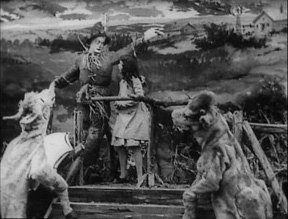
    The emotional high point of the first half of Land is the reunion of straw and tin men (shown here). They have been separated by their responsibilities to rule the Emerald City and Winkie Country, but at the end of that book, the Scarecrow cheerfully abdicates his throne and says, "We have decided never to be parted in the future."

    In succeeding books, however, the pair does separate. The Tin Woodman moves into a new castle made entirely of tin. The Scarecrow commissions a palace shaped like a giant corncob, about equidistant between his friend's home and the Emerald City.

    Baum didn't leave his stars living apart, however. The Tin Woodman of Oz (1918) opens with them reunited:

    The Tin Woodman sat on his glittering tin throne in the handsome tin hall of his splendid tin castle in the Winkie Country of the Land of Oz. Beside him, in a chair of woven straw, sat his best friend, the Scarecrow of Oz. At times they spoke to one another of curious things they had seen and strange adventures they had known since first they two had met and become comrades. But at times they were silent, for these things had been talked over many times between them, and they found themselves contented in merely being together, speaking now and then a brief sentence to prove they were wide awake and attentive.
    Baum never mentions the Scarecrow's own castle in this book; inconsistency rarely bothered him.

    The plot of Tin Woodman has the title character tracking down the young woman he was engaged to marry back before Wizard, when he was an ordinary woodchopper. That engagement ended after Nick Chopper found he no longer had a heart, and then he rusted in the forest. But now that he has both a heart and an oil can, a wandering youth asks him, don't you have a obligation to marry that young woman?

    So the Tin Woodman, the Scarecrow, and the youth set out to find the fiancée. Nick admits he doesn't love her--his heart is kind but not loving, he says. But he feels confident she's still pining for him, so it would be unkind to deprive her of his company. In the end, after many difficult adventures, it turns out his premise is mistaken.

    But is Nick really incapable of loving, or is he simply incapable of loving that woman? After losing his chance for a show marriage, the Tin Woodman gladly returns home with what the book calls his "chosen comrade": the Scarecrow. "The two friends were sure to pass many pleasant hours together in talking over their recent adventures," Baum assures us.

    To quote a Winkie on page 15:
    "Perhaps our Emperor is queer," admitted the servant; "but he is a kind master and as honest and true as good tin can make him; so we, who gladly serve him, are apt to forget that he is not like other people."

    26 March 2007

    Would You Like Big Staring Eyes with That?

    McDonald's® has started to sell Madame Alexander® Wizard of Oz® figurines, inspired by the MGM movie, as premiums in its Happy Meals®. These are apparently offered as alternatives to Teenage Mutant Ninja Turtle® dolls. Some websites indicate that girls receive a toy from one set, boys from another, but I doubt McDonald's® would officially court protest that way. Rather, I suspect they recognize some American parents still aren't ready to hop on the turtle bandwagon.

    I saw larger versions of the Madame Alexander® dolls at last year's Munchkin Convention. It was interesting to hear about how the company operates (the young ladies from marketing always referred to “Madame”®), but frankly the product creeps me out.

    12 March 2007

    Selig Wizard of Oz and More

    Displaying her prowess as a multimedia resource expert, Betsy Bird at Fuse #8 devoted her latest “Video Sunday” roundup to cinematic versions of The Wizard of Oz glimpsable on YouTube.

    They include the 1910 Selig short feature, the earliest surviving film of L. Frank Baum’s book. When I was growing up, this was thought to be (a) a re-edit of an earlier movie, made for Baum himself as part of an extravagant multimedia lecture tour that drove him into bankruptcy; and (b) totally lost.

    Now it appears that Baum assigned the right to film his book to the Selig Company as part of his bankruptcy settlement, and the company shot their own version of the story. As I recall, Oz expert Michael Patrick Hearn discovered it in a Kodak archive, or some such.

    21 February 2007

    "Bold Take" on Oz Coming to Chicago Stage

    Scott Cummings has spread the word about The Great and Powerful Wizard of Oz, a new adaptation of Baum's novel by Phillip C. Klapperich to be staged this March in Chicago. The Northlight Theatre's website says:

    The House Theatre of Chicago is at its best with this bold take on the classic novel and film. Though filled with familiar characters and quandaries, this wildly entertaining piece is infused with a cache of surprises that turn the show into a rich, lively and sometimes dark fairy tale!
    Performances are scheduled to run 1-11 March. The website promises photos, videos, a production blog, and other goodies. Right now some images appear in the downloadable PDF study guide (the words “study guide” always say “fun night at the theater” to me). There’s also an interview with playwright Klapperich in which he says:
    Our Oz is definitely darker than the MGM, but it's much closer in tone to the original Baum novel. Dorothy plops down in Oz at the top of the show and is immediately given a new name by the inhabitants of Oz: Dorothy Witchslayer. This is an identity Dorothy is not comfortable with and it runs contrary to everything she believes about herself and her identity.

    I've treated the trio of companions as realistically as I could, really playing with the ideas of their flaws and trying to make them live those flaws: Scarecrow is very brainless, the Lion is very scared, and the Tin Woodsman is as heartless as we could possibly get away with.
    Scott has invited fellow Oz Club members and friends to gather on Saturday, 10 March, to watch the 3:00 production of the show and have dinner afterward if they want. Email him at pla tin 8oh (all one word) then the at-sign then hotmail dot com.

    16 January 2007

    Living to Tell the Sea Fairies Tale

    It's been a while since I posted something Baumian, and even longer since I simply quoted a choice passage from one of L. Frank Baum's books, so here's a bit from the first chapter of The Sea Fairies.

    After Baum brought his first Oz series to a close after six books in 1910, he started a new fantasy series about a little California girl named Trot and her one-legged sailor friend, Cap'n Bill. Dorothy usually travels to fairyland on her own or is the most experienced traveler in her group; she also tends not to worry over how and why things came to be. In contrast, Trot looks up to Cap'n Bill and his wisdom--though, as this passage shows, her habit of thinking deeply about what he says can make for some awkward moments.

    The little girl was thoughtful for a moment. "But why do folks dive in the water when the mermaids smile an' wink?" she asked.

    "Mermaids," he said gravely, "is the most beautiful creatures in the world--or the water, either. You know what they're like, Trot, they's got a lovely lady's form down to the waist, an' then the other half of 'em's a fish, with green an' purple an' pink scales all down it."

    "Have they got arms, Cap'n Bill?"

    "'Course, Trot; arms like any other lady. An' pretty faces that smile an' look mighty sweet an' fetchin'. Their hair is long an' soft an' silky, an' floats all around 'em in the water. When they comes up atop the waves, they wring the water out'n their hair and sing songs that go right to your heart. If anybody is unlucky enough to be 'round jes' then, the beauty o' them mermaids an' their sweet songs charm 'em like magic; so's they plunge into the waves to get to the mermaids. But the mermaids haven't any hearts, Trot, no more'n a fish has; so they laughs when the poor people drown an' don't care a fig. That's why I says, an' I says it true, that nobody never sawr a mermaid an' lived to tell the tale."

    "Nobody?" asked Trot.

    "Nobody a tall."

    "Then how do you know, Cap'n Bill?" asked the little girl, looking up into his face with big, round eyes.

    Cap'n Bill coughed. Then he tried to sneeze, to gain time. Then he took out his red cotton handkerchief and wiped his bald head with it, rubbing hard so as to make him think clearer. "Look, Trot; ain't that a brig out there?" he inquired, pointing to a sail far out in the sea.

    "How does anybody know about mermaids if those who have seen them never lived to tell about them?" she asked again.

    "Know what about 'em, Trot?"

    "About their green and pink scales and pretty songs and wet hair."

    "They don't know, I guess. But mermaids jes' natcherly has to be like that, or they wouldn't be mermaids."

    She thought this over. "Somebody must have lived, Cap'n Bill," she declared positively. "Other fairies have been seen by mortals; why not mermaids?"

    "P'raps they have, Trot, p'raps they have," he answered musingly. "I'm tellin' you as it was told to me, but I never stopped to inquire into the matter so close before. Seems like folks wouldn't know so much about mermaids if they hadn't seen 'em; an' yet accordin' to all accounts the victim is bound to get drownded."

    "P'raps," suggested Trot softly, "someone found a fotygraph of one of 'em."

    "That might o' been, Trot, that might o' been," answered Cap'n Bill.
    Baum wrote a sequel to The Sea Fairies called Sky Island, one of his very best novels. But the Trot stories didn't sell as well as the Oz books, so in 1913 Baum returned to writing about Oz. With The Scarecrow of Oz he merged the two series by bringing Trot and Cap'n Bill to the Emerald City to stay.

    05 January 2007

    "You have to draw the gopher fairies!"

    At various times in his writing, L. Frank Baum described animals fairies who share the shape of the creatures they look after, just as his more traditional fairies did for humans. In John Dough and the Cherub, for example, the heroes escape to the realm of the fairy beavers behind a waterfall.

    Although Baum called The Discontented Gopher an "animal fairy tale," no fairies actually appear in his story. The gopher fairies who leave a special gift for Zikky remain off-stage.

    However, this new edition's designer, Mark Conahan, told the artist, "You have to draw the gopher fairies!" He could offer such advice not just as the designer but also as the artist's friend and spouse. According to her KOTA radio interview, Carolyn Digby Conahan had been struggling to find the right tone for the art, and drawing those gopher fairies (as shown on her website) provided the magical touch that got the project rolling.

    Likewise, Baum never mentions Zikky and his fellow gophers living and dressing like humans, but Conahan takes advantage of picture-book conventions and does some anthropomorphizing. Zikky's wealth is not simply a lifetime's supply of corn. Conahan shows how he's arranged those kernels and ears into a stately sitting room.

    In the first half of the book Zikky wears blue overalls, like his down-to-earth brothers. But after he becomes wealthy, he switches to a three-piece suit, like any gentleman of his time (including Rat, Mole, Badger, and Toad in The Wind in the Willows). The overalls reappear on the boys who cut off Zikky's tail and on the ordinary gophers he meets at the end.

    Some of Conahan's most striking illustrations convey the small gopher's point of view: looking up at a massive plowhorse, for example. Page 25 shows what must be one of the rare illustrations in children's literature of a large, angry rabbit, with little Zikky dwarfed in the background.

    Conahan's work transforms Baum's hundred-year-old magazine story into a fine modern picture-storybook, adding new dimensions and appeal.

    04 January 2007

    What Makes the Gopher So Discontented?

    Baum's story for The Discontented Gopher is a tale with a clear, even obvious moral. It starts with three gopher brothers choosing nuts to find which one gets a special gift from the gopher fairies. The youngest brother, Zikky, lucks out, and the other two scamper away, never to appear in the tale again.

    Zikky receives a choice between contentment and wealth. He chooses wealth, figuring he can therefore buy contentment. His mother sees trouble ahead but seems rather sanguine about it all; perhaps she knows him too well.

    The year before Baum published "The Discontented Gopher", he finished his Marvelous Land of Oz with Princess Ozma telling the Scarecrow and the Tin Woodman:

    "You are both rich, my friends,...and your riches are the only riches worth having--the riches of content!"
    So it's pretty clear that Zikky has chosen, as the old man at the end of Indiana Jones and the Last Crusade intones, "poooorly."

    The events that follow don't make up a smooth plot, but rather a psychological portrait in discontent. They show how Zikky is never satisfied, even after the fairies have brought him great gopher wealth in the form of a lifetime supply of corn.

    Zikky finds a home near one of those new places called "farms," where people with horses and machines literally spew corn onto the ground for him to pick up and store away. But of course he can't be content to remain in his safe, well-stocked burrow. He must explore the home of men, and that produces nothing but trouble. A series of painful encounters with men, dogs, and gophers' natural predators render Zikky wounded and bedraggled.

    Finally, two boys find Zikky close to death and cut off his tail to earn two cents from the authorities, as this edition's introduction explains. That prompts an odd authorial intrusion:
    (Two cents apiece for Gopher tails! That means a Gopher's life. Is it really worth while, I wonder, to write so much about one of God's creatures whose life is worth only two cents?)
    It was much more common in magazine stories of this time, including Baum's own "Juggerjook" for St. Nicholas, to go on about the sacred value of all creatures. But here he's being bitterly ironic, and ends up reflecting Zikky's own concern with wealth.

    As it happens, Zikky doesn't lose his life along with his tail. Badly wounded, he struggles back to his burrow and gradually recovers. But of course he can't recover from his original choice of wealth. He can't be content with having escaped. Ashamed of his tailless state, he never ventures outside his burrow again, and other gophers decide he's "stuck-up, and conceited!" There's no redemption in this tale, no second act for Zikky. He is, and will always be, the discontented gopher.

    "The Discontented Gopher," "Juggerjook," and all of Baum's published short stories are available in a single volume from the International Wizard of Oz Club.

    03 January 2007

    The Discontented Gopher in Book Form

    Back in November, I described hearing about a "New Baum Picture Book" called The Discontented Gopher. Having now received a copy of the book, I realize I should recategorize it as a "picture-storybook," that hybrid form that comes up mostly when new authors don't want to cut their picture-book manuscripts. (As in, "But there's something called a 'picture-storybook,' isn't there?" "Yes, but we still need to write very concisely.")

    The Discontented Gopher has the complete text of the "animal fairy tale" that L. Frank Baum originally wrote for The Delineator magazine in 1905. The style of his time was more discursive than our post-Hemingway prose, so this book has a lot more text than a typical picture book. This edition is about 7 x 8.5 inches, 32 pages long, with color art on every page spread, printed endpapers, and a nice dust jacket.

    The book starts with a three-page introduction on L. Frank Baum's life in Aberdeen, South Dakota, and the struggle between the region's farmers and gophers in the early 1890s. There's no name signed to this introduction, but I suspect it was written by Nancy Tystad Koupal, editor of this series for the South Dakota State Historical Society and also compiler of Baum's Our Landlady columns and the articles in Baum's Road to Oz.

    That introduction is quite impressive: it's written at a kid's level yet offers historical background valuable for readers of any age, starting with how the arrival of European farmers in South Dakota changed the environment for gophers and other local fauna. Baum's son Robert was among the many Plains boys who recalled collecting gopher tails for the two-cent bounty, which figures in the story.

    The last page of the book is also useful: a glossary of words that appear in Baum's text, some unfamiliar simply because nobody talks like that anymore ("anigh," "smote," "illumined"), and some because he was really writing for mothers and children together ("vainglory," "spasmodic," "tenacity").

    In my next posting I'll discuss Baum's text, and after that Carolyn Digby Conahan's illustrations for this edition. Folks wanting to hear more about the genesis of this book can check out KOTA's radio interview with Conahan and Koupal.

    29 November 2006

    Baum's 150th in The Baum Bugle

    The latest issue of The Baum Bugle is the Int'l Wizard of Oz Club's tribute to L. Frank Baum, the author who created Oz, during his sesquicentennial year. It contains several articles about different aspects of his life and writing:

    • An essay by Robert A. Baum about his great-grandfather's legacy.
    • Bill Thompson's study of Baum's Castorine Company in its earliest years. This product, a mix of petroleum and castor oil, was an excellent axle lubricant and produced a tidy fortune for the Baum family in the late 1800s. The family wealth let young Frank grow up in comfort and try out several artistic hobbies and professions (printing, stamp-collecting, acting, playwriting) before he joined the family firm as, basically, a marketing manager. Setbacks in the late 1880s led to the sale of the firm and sent Frank, his wife Maud, and their eldest sons out to Aberdeen, South Dakota, where he had to reinvent himself as a shopkeeper and writer-editor.
    • Prof. Fred Erisman's article on the earliest female aviators, and how a couple of well publicized crashes in 1912 probably doomed Baum's Flying Girl series and Margaret Burnham's Girl Aviators series in the market. Baum's two Flying Girl books reflect his faiths in feminism and technology.
    • A short, rare article by Baum himself about his late hobby of gardening, which ends with this verse.
    'Tis my retreat my worldly care;
    My one desire, indeed,
    Is that within my garden fair
    I'll some day go to seed.
    • An analysis of one of Baum's three surviving Oz book manuscripts, The Magic of Oz (published 1919) at the University of Texas's Harry Ransom Humanities Research Center. This was my own contribution to the issue. So far as I know, it's the first detailed study of Baum's creative process: how he wrote (without a whole lot of solid planning) and revised (rather little, but interestingly). At the end I hypothesize about the order in which Baum wrote his last three books, which recent biographers have disagreed on. I think the evidence suggests he wrote those books in the order in which they were published, and that he accidentally misdated the title page of his manuscript of Glinda of Oz (now at the Library of Congress), causing confusion.
    Finally, the Bugle offers its usual reviews of books, DVDs, and other Ozzy offerings; reports on events commemorating Oz; and news roundups, including a mention of Oz and Ends.

    Editor Sean P. Duffley, production manager Marcus Mébes, book review editor Joe Bongiorno, and the rest of the volunteer staff did a fine job on this extra-sized issue.

    27 November 2006

    New Baum Picture Book

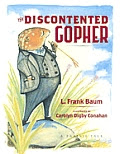
    The South Dakota State Historical Society is publishing a new picture book based on L. Frank Baum's short story "The Discontented Gopher." (That's he to the right.)

    The full-color illustrations are by Carolyn Digby Conahan (who alerted me to this book). After Trina Schart Hyman and Jean Gralley, Cricket chose her to draw the little creatures in the bottom margin of the magazine.

    Baum's "Gopher" tale originally appeared in The Delineator, a woman's magazine, in 1905. (It was common then for such magazines to include stories for readers to share with their children.) At the end of his life Baum hoped that it and his other "Animal Fairy Tales" would be published in a single volume, perhaps even as an Oz book, but that didn't happen until the stories entered the public domain. Then the International Wizard of Oz Club put out an Animal Fairy Tales collection, followed years later by Books of Wonder.

    The South Dakota State Historical Society promises more picture books in this "Prairie Tales" series, but I don't know if any will be by Baum. The next is Zitkala-Sa’s Dance in the Buffalo Skull.

    16 October 2006

    Analyzing All Forty-Plus Oz Books

    For ten years, starting in 1997, Oz fans on successive email lists called the Ozzy Digest, Nonestica, and (currently) Regalia have discussed each Oz book in turn, along with related titles by L. Frank Baum and his successors. Those discussions now total more than 992,000 words, and comprise the largest bulk of critical commentary and scholarship about the Oz series that I think has ever been committed to digits.

    Atticus Gannaway has now bravely compiled these discussions and, with Ivan Van Laningham's help, posted the record for all Oz fans to peruse. This archive is called the "Books of Current Focus." (That name was an attempt to avoid curtailing discussion of other books at the same time, or forcing each focused discussion into a certain month or other time unit. Of course, having undecipherable jargon like "BCF" is one way an online community distinguishes itself.)

    I think the most important concept for understanding the BCF discussions is the following distinction:

    • Oz-as-history: Imagining Oz and its neighbors to be real countries, with the Oz books as imperfect histories of those countries. In this approach, one tries to reconcile contradictions and explain illogical acts by determining what the most likely "real" events were. This can lead to ascribing motives to Oz characters that authors for children would have glossed over.
    • Oz-as-literature: Examining the books as stories created by a series of American writers seeking to entertain their changing audience. This approach treats those same contradictions and illogicalities as clues to the authors' changing visions, or to simple carelessness. Oz-as-literature also considers how the series reflects America's politics and social environment.
    I came upon and came into these discussions in September 1997, and rarely shut up after that. Now folks can judge for themselves whether that was an improvement.