Showing posts with label going on the stage. Show all posts

30 October 2025

At Last an Our Gang/Wizard of Oz Crossover

In 1962, as described yesterday, Starlight Musical Theatre of San Diego held tryouts for a production of The Wizard of Oz, using music from the MGM movie.

To play the Tin Woodman the company chose a local television personality: Johnny Downs!

Downs brought decades of experience as performer, starting with acting in Our Gang comedies in the mid-1920s. In fact, he had sung and danced alongside MGM’s Tin Man, Jack Haley, in such movies as Coronado and Pigskin Parade, which also featured fourteen-year-old Judy Garland.

Downs appears in this photograph scanned from the 3 June San Diego Union with Cammy Wesson as Dorothy, Ray Wilde as the Cowardly Lion, and John Bryce as the Scarecrow.

The director was Charlie Cannon, a co-founder of Starlight Musical Theatre (San Diego Civic Light Opera Company) years before. In 1978 the San Diego Evening Tribune reported:
Cannon is most proud of his “Wizard of Oz” production in 1962 featuring Johnny Downs, a TV personality, as the tin man. “We put close to 5,000 in the bowl for that one,” he said. “We even had people sitting in the aisles, and Downs would stay after the show for an hour signing autographs.”
That number may be an exaggeration since on 10 Aug 1964 the San Diego Union reported that 3,800 people was “a record crowd” at the Starlight Bowl. However, that record was set by the 1964 production of The Wizard of Oz—the show was so popular that the company brought it back after only two years.

In the revival Johnny Downs once again played the Tin Woodman, and was often listed first in newspaper notices. Cammy Wesson, now a college student, returned as Dorothy. Ole Kittleon played the Scarecrow and Forest Gantz the Cowardly Lion.

A new director reblocked the action for that run. In an interview with a high-school classmate for the 12 Aug 1964 Coronado Eagle and Journal, Wesson described having trouble at first knowing which way to turn. She added: “Johnny Downs, who plays the Tin Woodsman [sic], has adapted very well, but he’s a professional.”

Cammy Wesson went on to careers as an elementary school teacher, realtor, and financial advisor. As a sexagenarian back in Coronado, she took up marathon running.

29 October 2025

The Wizard of Balboa Park

The San Diego Civic Light Opera Association was founded in 1945. Its first show was Gilbert and Sullivan’s The Mikado in the Wegeforth Bowl at the San Diego Zoo.

Because of San Diego’s ideal weather, the organization staged its shows outside. It soon took on the name of the Starlight Opera.

On July 29, 1946, the San Diego Union and Daily Bee said: “If the new Starlight Opera company becomes any more popular it will have to move to Ford Bowl.” That was the amphitheater in Balboa Park built for a 1935 expo.

Indeed, the Starlight Opera Company was soon using that larger space. Around 1950 the amphitheater became known as the Starlight Bowl. (An amphitheater in Burbank was using the same name at that time, confusing matters.)

The Light Opera Association also widened its repertoire to include new, popular shows and operated under the same of Starlight Musical Theatre.

Because the amphitheater was right under the main flight path to Lindbergh Field, performers learned to freeze when a loud plane passed overhead. Starlight Musical Theatre’s old website called this “One of the most artistic innovations of productions at the Starlight Bowl.”

In 1962 the Starlight company planned a summer season of The Music Man, Can-Can, The Wizard of Oz, and Bye Bye Birdie.

About the third show the 7 Apr 1962 San Diego Evening Tribune explained:
“The Wizard of Oz,” was adapted originally for the stage by L. Frank Baum from his classic children’s story. It was first presented in 1903, starring the team of Fred Stone and David Montgomery. Their leading lady was Anna Laughlin, the mother of singer Lucy Monroe.

The version of “Wizard” which Starlight is using has been updated by Frank Gabrielson, and features the songs of Harold Arlen and E. Y. Harburg, composed for the highly successful 1939 movie.
That adaptation had originally been commissioned by the St. Louis Municipal Opera in 1942 and is therefore known as “the MUNY Version.” As the licensor says, it “features characters and events not seen in the MGM film”—and it also leaves out several characters and events.

The 1962 San Diego Evening Tribune article was headlined “Little Munchkins Needed for Starlight ‘Wizard of Oz’,” and its main news was:
Casting for Starlight’s production of “The Wizard of Oz” will be held for three days, instead of the usual two, due to the large number of children needed in the cast. . . .

The youngsters will be used for the Wizard of Oz’s “army,” composed of one private and 24 generals. They will also be used as munchkins—the little people enslaved by the Wicked Witch of the East and freed by Dorothy. . . .

Roles open for adults include that of the Scarecrow—which also requires dancing ability; the Tin Woodman and the Cowardly Lion. The leading role of Dorothy, calls for a teenage soprano with acting experience, age 18 at the maximum.
In 2010, after more than sixty straight years of productions, the San Diego Civic Light Opera Association went out of business. There’s now a Save Starlight campaign to fix up the abandoned amphitheater and stage new concerts and shows there.

TOMORROW: Crossing the streams.

28 October 2025

How Johnny Downs Grew Up

I mentioned Our Gang cast member Johnny Downs in this posting on Elmer “Scooter” Lowry going into vaudeville.

Johnny Downs was born in 1913, son of a naval officer, and spent his first years in San Diego. After he showed interest in performing, his mother gave him a Jackie Coogan haircut and brought him to Hollywood.

In 1924 Johnny acted in a couple of the kid-gang series launched after Our Gang’s success: the Reg’lar Kids movie “An Afternoon Tee” and the Juvenile Comedy “Wildcat Willie.” Late in that year the Hal Roach Studio hired him as a day player.

At first Johnny appeared in Our Gang films as a antagonist, but with a long-term contract at $50/week (and a new haircut) he became one of the gang.

When the studio announced Johnny Downs had joined the regular cast, it said he was nine years old. (He was eleven.) He made more than twenty Our Gang movies, remaining a regular until he was thirteen.

Johnny Downs was a handsome kid with a winning smile. He was rarely at the heart of the story, but sometimes his part stood out, as when he played a rich kid wanting friends in “Buried Treasure.” In “Telling Whoppers” he was cast as the neighborhood bully tormenting all the other boys; though he threw himself into the role, Johnny was just too naturally sunny to make it work.

In late 1926 the Hal Roach contract ended. Johnny spent twelve weeks in vaudeville before returning to Hollywood. Over the next few months he portrayed the young version of the hero in a few features: the young Tom Mix in Outlaws Of Red River, the young Fred Thomson in Jesse James, the young James Murray in King Vidor’s The Crowd. He made a brief return to the Our Gang unit to play an adolescent magician sporting a fake beard in “Chicken Feed.”

In 1928 Johnny went out on a vaudeville tour with fellow Hal Roach alumni Mary Kornman and “Scooter” Lowry, as discussed here. He sang a little, danced a little, told stories, showed audiences that sunny smile. Newspapers described his persona as “The All-American Boy.” That tour lasted through August 1929.

During the early 1930s Johnny Downs worked in musical revues, including shows on Broadway. Late in 1934, now an adult, he came back to Hal Roach again for the role of Little Boy Blue in the Laurel and Hardy musical Babes in Toyland.

In 1935 Downs signed with Paramount. Over the next few years he worked steadily as a juvenile lead, headlining small pictures (The First Baby, Blonde Trouble, Bad Boy) and playing small parts in vehicles for bigger stars (Algiers, Pigskin Parade, The Kid from Brooklyn). The lead role in the drag musical comedy All-American Co-Ed brought him back to the Hal Roach Studio again. He starred in a series of shorts for Columbia and a serial for Universal.

Of course, it’s harder to be a juvenile lead when you’ve hit thirty. After World War 2, Downs went back to Broadway. Then he tried television, hosting some shows and acting in others. In 1953, turning forty, Downs settled in Coronado, the region where he’d grown up. For well over a decade he was announcer and afternoon host for a San Diego television station, and also worked in real estate.

Johnny Downs never became a big star, but he was undoubtedly a small one, and he worked in show business for almost fifty years. Of all the regular members of Hal Roach’s Rascals in the silent era, Downs enjoyed the biggest and longest adult acting career.

18 October 2025

“Beyond a cute small-boy personality”

In late 1929, Elmer “Scooter” Lowry finished his vaudeville tour with fellow Our Gang veterans Mary Kornman and Johnny Downs. They had been on the road together for well over a year.

Then in October “Scooter” went back out, now teamed with thirteen-year-old Joe Cobb, whose long tenure at the Hal Roach Studio had ended that spring. Their act was called “Two Kids Kidding,” and it lasted into the first weeks of 1930.

For the rest of that year ten-year-old “Scooter” performed as a solo act. In 1931 he teamed up with Peggy Eames and another boy, sometimes falsely billed as an Our Gang alum; their act was called “Doin’ Tough” or “All in Fun,” and it included describing life on a movie set. By that time “Scooter” hadn’t made a film in four years.

Newspaper stories show that “Scooter” Lowry continued to perform in vaudeville through 1935.

That track record raises questions about how “Scooter” left the Hal Roach Studio in the spring of 1927. That departure happened suddenly, not only in the middle of a movie-making season but in the middle of the making of one movie, “Olympic Games.”

A younger castmate, Jean Darling, recalled many years later, “I was told Scooter left because he was rather disruptive. That’s all I know.”

Whatever disruption “Scooter” might have caused at Hal Roach didn’t stop him from headlining on stage, show after show, for at least seven more years. It didn’t stop three more prominent Our Gang performers—Mary, Johnny, and Joe—from signing up to tour with him. He could hit his marks, and he could get along with other kids.

I can imagine different scenarios to explain these circumstances. It’s possible the same energy that made “Scooter” a successful stage performer could wear out people at a movie studio while they were trying to hang lights or have business conversations. It’s possible the source of disruption wasn’t “Scooter” but his mother, pushing for more pay or more time in the spotlight.

Unfortunately for “Scooter” Lowry’s show-biz career, vaudeville was fading away in the early 1930s. Already live acts were competing for time with movies, and after sound came in, many theaters shifted to showing movies only.

On top of that, “Scooter” grew up and stopped being so cute. Reviewers were less impressed by his act than when he was eight, or maybe they just didn’t hold back. So there are notices like this, in the August 21, 1930, San Francisco Chronicle:
“Scooter” Lowry, the “tuff guy” of Our Gang comedy, makes a personal visit. The kid is clever. He has plenty of poise for such a small tad, and his dancing is really good. It is an act that makes its principal appeal to the youngsters, however. “Scooter” naturally has little to offer beyond a cute small-boy personality.
The June 6, 1931, Milwaukee Sentinel:
Scooter Lowry, one of the “Our Gang” screen comedians, heads the vaudeville bill. Scooter is the “tough guy” of Hal Roach’s kid pictures. But on the stage he impresses mothers in the audience as being a gentlemanly little fellow, and an industrious one. He tap dances well, tells proper stories and sings. His voice isn’t very big, but his smile is. An indulgent audience gave him a hand.
And ultimately the April 19, 1935, Worcester Evening Gazette:
Scooter Lowry, once a member of Hal Roach’s “Our Gang” in the movies, is on hand, taking the stage all to his little self to entertain the assemblage. Master Lowry dances a bit, sings a little, and, unfortunately, tells a joke or two.
“Scooter” turned sixteen at the end of that year, and there’s no evidence of him working in show business again.

COMING UP: Family troubles.

16 October 2025

“A tiny 8-year-old comedian”

As discussed back here, seven-year-old Elmer Lowry lost his contract with the Hal Roach Studio in the spring of 1927. By that fall he was trying the vaudeville circuit.

Later articles suggested that “Scooter” had performed in vaudeville before going to Hollywood in early 1926, but his stage experience seems to have been limited to local shows and amateur benefits. Now he was competing at the professional level.

Older Our Gang kids had made that transition. Ernie Morrison turned to vaudeville in 1924 at age eleven after his father unsuccessfully asked Hal Roach for a raise. Two years later the studio supplied a “trailer” of clips from Ernie’s movies to introduce his act.

Mary Kornman and Mickey Daniels outgrew the movie series in 1926 at age eleven and twelve, respectively. Roach filmed them “riding a goat cart from a movie studio to a vaudeville theater,” according to the Lucky Corner website, and they went out on the stage together. When Mary had to drop out of the tour for medical reasons, another Our Gang player, nine-year-old Peggy Eames, replaced her.

Once Mary Kornman had recovered in 1927, she was free to tour, and she joined Elmer “Scooter” Lowry and his older sister Lila in an act variously titled “Acting Out” and “Crashing Into Vaudeville.” Mary and “Scooter” had overlapped on only three movies, but she had been the series’ leading lady and films he’d performed in were still being released that fall, so they could draw audiences as movie stars.

In February 1928 the Chattanooga Times–Free Press, still claiming “Scooter” as a home-town boy, reported that he had “signed a two-year contract with the Keith circuit and has left for an eighty weeks’ tour throughout the United States.” Now the team was “Scooter,” Mary, and another former gang member Johnny Downs, age fourteen, as shown above. Their headlining act, “In and Out of the Movies,” included song, dance, and celebrity impressions.

Reviewers said good things about the kids’ act, and it’s striking how many singled out “Scooter.” For example, the May 8 Arkansas Gazette:
“Scooter” Lowry is easily the smallest and most popular of the three. He is only eight years old and he is a wonder for his years. . . . He caricatures Charlie Chaplin, dances and is a natural little comedian.
The June 18 Grand Rapids Press:
One of the hits on the highly entertaining new bill at Ramona is a tiny 8-year-old comedian, Scooter Lowry, the littlest and biggest member of the trio of clever youngsters from Hal Roach’s “Our Gang” film comedies who present the headline act. The kids are clever, Scooter’s imitation of Charlie Chaplin, his tap dancing and characterization of a “tough guy” would do credit to a comedian three or four times his age. . . . [Mary and Johnny] are good entertainers, but young Scooter is a riot.
The July 23 San Francisco Chronicle:
“Scooter” Lowry…is so preternaturally old, with a wizened, withered face, one rather places him among the midgets. He is tiny and wins the greater part of the applause for the act.
The July 20 Los Angeles Evening Express:
Roach Rascal Orpheum Bill Show-Stealer

A LAD about five hands high, and not very big hands at that, who talks out of the side of his mouth like George Cohan, walks like “The Brooklyn Kid,” and hoofs like George White, is the hit of the bill at the Orpheum this week. . . .

…it was little “Scooter” Lowry, the original tough guy of Hal Roach’s famous gang of rascals, who stole the honors last night. . . . The older pair dance and sing and pantomime very cutely, but “Scooter’s” swank and swagger lift the act into a featured niche.
The August 4 Billboard magazine:
Mary Kornman, Johnny Downs and “Scooter” Lowry, billed as “Our Gang” kids, scored in a manner that would make any performer envious, altho Lowry was the whole act. It is obvious he would not have fared as well without the support of the other two, whose dancing and personality made the act stand out more strongly.
Mary, Johnny, and “Scooter” toured together at least through August 1929.

TOMORROW: Back on the road.

25 July 2025

Marking the Many Media of Oz

Tori Calamito, host of the Oz Vlog, is doing a live online event called “Defying Gravity: The Evolution of Oz from Page to Stage to Screen” for local libraries.

The event description says:
This exclusive Zoom program offers a rare glimpse into over a century of Oz storytelling, from L. Frank Baum’s original book series to the latest Broadway productions and upcoming film. The Oz Vlog will share treasures from her extensive memorabilia collection while exploring how the Land of Oz has evolved across different media. Whether you’re a longtime fan of the 1939 MGM classic, a Broadway enthusiast who’s seen Wicked multiple times, or curious about the upcoming Wicked: For Good, this program has something magical for everyone.

Come prepared to be amazed by the depth and breadth of Oz’s influence on entertainment, and leave with a deeper appreciation for the wonderful world that has inspired some of the most popular characters of all time. This program is sponsored by The Oz Vlog who is donating her time to this event!
This event will take place on Wednesday, 30 July, starting at 7:00 Massachusetts time. Folks can register for this event through the Burlington Public Library.

In a similar vein, on Saturday, 16 August, Worldcon in Seattle will feature a panel discussion on “Oz: America’s First Multimedia Franchise,” organized and moderated by Eric Gjovaag.

That description is:
Known around the world for the famous film adaptation, The Wizard of Oz is back in everyone’s minds thanks to the current two-part Wicked movie. But Oz started life as a popular novel, which then spawned a Broadway musical, a series of other books, early silent movies, and more. Oz is a franchise that always grows and changes with the times. Learn more about the origins of The Wizard of Oz and how it has been reinterpreted on stage, television, and computers and in movies, comics, toys, games, and more from 1900 to the present day.
Panelists are A. J. Hackwith, J.R. Dawson, and Terri Ash. Eric will also moderate a panel the next day on “How The Wizard of Oz Has Shaped Science Fiction.”

15 August 2024

From Uncle Tom’s Cabin to Our Gang

As influential as Uncle Tom’s Cabin was on ante-bellum American culture and politics, stage adaptations of Harriet Beecher Stowe’s novel continued to shape popular culture for the next century.

In the theater, both straight and parodic, the novel’s black characters turned into racist caricatures. The Uncle Tom of the novel resists cruelty, dispenses moral wisdom, and becomes a martyr. In plays for post-Civil War white audiences and in minstrel-show offshoots, that character became old, feeble, and subservient.

The novel also included a young black girl named Topsy. In those dramatic adaptations, and especially in minstrelsy, Topsy became a comic grotesque, the prototype of the racist caricature of a pickaninny. In her book Racial Innocence: Performing American Childhood from Slavery to Civil Rights Robin Bernstein writes:
The pickaninny was an imagined, subhuman black juvenile [with…] dark or sometimes jet-black skin, exaggerated eyes and mouth, the action of gorging (especially on watermelon), and the state of being threatened or attacked by animals (especially alligators, geese, dogs, pigs, or tigers). Pickaninnies often wear ragged clothes (which suggest parental neglect) and are sometimes partially or fully naked. . . . the figure is always juvenile, always of color, and always resistant if not immune to pain.
The shadow of the theatrical Uncle Tom’s Cabin falls on Hal Roach’s Our Gang comedies—despite those movies being relatively progressive in showing black and white children playing together.

Racial inclusion was part of Roach’s plan for the movies from the start. In 1921 he built a short movie around one of his studio’s most popular supporting players, nine-year-old Ernie “Sunshine Sammy” Morrison. That movie was called “The Pickaninny” even though Ernie didn’t conform to that stereotype in his looks or persona. It didn’t do well enough for the distributor to want a series, perhaps because of resistance from Southern cinemas.

Roach then assembled a team of kids around Morrison, calling them his “Rascals.” The industry instead took the title of the first release, “Our Gang,” as the name of the series. From the start in 1922, those movies featured a bunch of white kids plus Ernie—usually from a poorer family, but always welcomed as a playmate and sometimes as a leader. At times his character would be called something cliché like “Booker T.,” but more often he was just “Ernie,” like the other actors using their own names.

Later in the spring of 1922, the Our Gang series brought on Allen “Sunny” Hoskins, less than two years old. His character, named “Farina,” was designed to match the pickaninny type: pigtails, shapeless sack dress, and oversized flat shoes. For months the movies presented Farina as Ernie’s baby sister, thus closer to Topsy.

The white filmmakers gave Farina other traits based on racist stereotypes. In “Giants vs. Yanks” (1923) toddler Farina carries a straight razor, as so many black men supposedly did, according to the cliché of the time. “One Wild Ride” (1925) ends with Farina literally buried in watermelons. The intertitles rendered his lines in a broad dialect with more malapropisms than the other gang members. 

Most troubling, there’s a pattern of Farina enduring more physical punishment and mess than the other kids, reflecting the notion that pickaninnies didn’t feel as much pain. Of course these are slapstick comedies, so the whole cast fell about, but “Sunny” Hoskins went through more than others.

The Our Gang movies never made a direct connection between Farina and Topsy, but they didn’t have to. Minstrel-show stereotypes were pervasive in early-20th-century American culture. In “The Big Show!” (1923), the gang acts out famous movies, several of the kids impersonating older movie stars of the day. What role was there for Ernie Morrison? He played Uncle Tom.

17 April 2024

“Outside the Box” Opening Reception in Jamaica Plain, 21 April


With friends from the Boston Comics Roundtable, I’m helping to organize an exhibit of comics art in the gallery of the Footlight Club, America’s oldest continuously running community theater. It’s on Eliot Street in the Jamaica Plain neighborhood of Boston.

A few weeks back, a volunteer at that theater contacted our group about assembling a show. Its current production is Tuck Everlasting, a family musical based on Natalie Babbitt’s novel, so he wanted to showcase art that would appeal to kids.

Many B.C.R. members have created comics for kids, and co-founder Dan Mazur published Boston Powers, a comic book with short, local superhero stories. So there was a good talent pool to choose from.

The exhibit has ended up featuring thirteen artists, including Boston Powers contributors, folks publishing on their own on paper or the web, a couple of graphic novelists (Jonathan Todd, Jerel Dye), and even a picture-book artist who works in comics form (Lindsay Leigh).

I’m represented through the work of Brendan Tobin, with pages from our “Stupendo and Secret Girl” collaboration.

This Sunday, 21 April, at 1:00 PM we’ll have a reception to celebrate the exhibit before a matinee performance of the musical. The art will remain up before, during, and after every show for families to enjoy. 

04 July 2023

The Characters of Oz and the Character of Oz the Wizard

Later this year McFarland will publish The Characters of Oz: Essays on Their Adaptation and Transformation, edited by Dina Schiff Massachi of the University of North Carolina at Charlotte.

The publisher says, “This collection of essays follows Baum’s archetypal characters as they’ve changed over time in order to examine what those changes mean in relation to Oz, American culture and basic human truths.”

Among those essays is my own “A Good Man But a Bad Wizard?: The Shifting Moral Character of the Wizard of Oz.”

One of the few lines that appeared in both L. Frank Baum’s original novel and the 1939 MGM movie was the Wizard’s insistence that he was “a good man, but a bad wizard.” Within that first novel the Wizard was a humbug whom people believed in, a tyrant who benefited his people, but ultimately someone Dorothy couldn’t rely on.

Just a few years later, however, the American public knew the Wizard of Oz unambiguously as a bad man in the Wizard of Oz stage extravaganza. And a few years after that, Baum brought the Wizard back as a stalwart friend for Dorothy and eventually a real magic-worker. This essay analyzes those changes in his persona across media and moral boundaries.

Other articles in this collection include Katharine Kittredge on Dorothy, Dee Michel and James Satter on the Cowardly Lion, Walter Squire on Glinda, Paige Gray on Jack Pumpkinhead, and Angelica Carpenter on the Nome King, among many other experts. Dina Massachi wrangled the contributors and provided her own exploration of the Winged Monkeys.

03 January 2022

The “Shipoopi” Problem

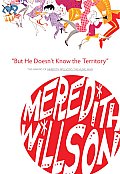
Over the holidays, Godson informed me that Godson’s Brother had never seen The Music Man, the stage and screen musical by Meredith Willson. Since Godson’s Brother is now in the business of theatrical production in Britain, I gave him a copy of Willson’s carefully wide-eyed account of developing the show, But He Doesn’t Know the Territory.

At some point I hope to sit down with both brothers to watch The Music Man, ideally in an environment that allows commentary, both wide-eyed and snarky. That brings up a potentially big problem: the “Shipoopi” number.

Back in college, a friend who was cowriting musicals used the word “Shipoopi” almost as profanity, shorthand for a stupid, unmotivated dance number plopped into the middle of a show. And indeed there’s a lot to sneer at in “Shipoopi.” The song title sounds silly, if not scatalogical. The lyrics are sexist. In the movie, the number ends with Marian in Harold’s arms, leaving no reason for them to go separately to the footbridge for their rendezvous.

Even more than some of the other “trunk songs” that Meredith Willson wrote before The Music Man and then tried to find places for, this song’s lyrics don’t arise out of the dramatic situation. They don’t reflect the characters’ emotions. All that granted, I can nonetheless make a case for “Shipoopi.”

Most of the early numbers in The Music Man uncover music in scenes of small-town daily life: the rhythm of the rail, the pitch of a salesman, a repetitive piano lesson, gossips’ prattle, the raised voices of the school committee. In coming to town, the title character brings the latent musicality of River City to the surface.

Of course, Marian the librarian already embodies music. As the piano teacher, she’s the only person in River City who knows about the subject. But her straight job requires, ironically, keeping patrons quiet and still. The town’s other ladies shun Marian for having been too friendly with Old Miser Madison, preferring a player piano to a real piano player.

By promising River City a boys’ band in “Seventy-Six Trombones,” Harold Hill makes the idea of music explicit and appealing. That song doesn’t just reveal the music in daily life; it’s about enjoying music itself. “Shipoopi” does the same in the second act—a whole chorus of townspeople knowingly sing and dance together. Musical subtext becomes text.

The significance of “Shipoopi” differs in the Broadway show and the movie because of when and how the song appears. On stage, early in Act 2, River City’s teenagers interrupt the ladies rehearsing their Grecian urns tableau in order to have a dance—the number shows the younger, more musically inclined generation taking over. On screen, “Shipoopi” comes later as part of a town celebration. It demonstrates community cohesion, not division.

Either way, “Shipoopi” shows how River City has moved to embrace music, an element of life repressed at the start of the story. That foretells the town’s acceptance of Harold and Marian at the end.

(Godson’s Brother said the little he knew about The Music Man made it seem thematically akin to Footloose, which tells me he’ll get this.)

16 September 2020

Coming Over the Wire

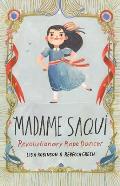
KidLit411 is featuring an interview with my writing colleague Lisa Robinson about her new picture book Madame Saqui: Revolutionary Rope Dancer, illustrated by Rebecca Green.

Here’s a sampling:
When Madame Saqui was briefly mentioned in a book I was reading about circus history, I knew her story needed to be told. Here was a daring woman who wirewalked over the Seine and between the towers of Notre Dame during the French Revolutionary era. . . .

Before I learned about Saqui, we owned a low tight wire that lives inside our house or in the yard during good weather. We got the wire for my children who love circus arts and go to Circus Smirkus camp during the summer. It wasn’t until I discovered Madame Saqui’s story that I decided to learn to wire walk, too.

The hardest part about wire walking is the fear and the tedium; the fear of falling and sustaining an injury; the fear of not being able to handle the next challenge, like completing a turn or a new dance step; the fear of humiliating yourself in front of an audience. It’s not a forgiving art — one misstep and you’re on the ground.

The tedium comes from the need to practice practice practice in order to progress. Once I decided I would wire walk at book stores to promote my book, I committed to walking on the wire for 30 minutes a day, every day, in order to build my confidence and skill enough to perform in front of an audience (which never happened due to the coronavirus pandemic).
And here’s Lisa as we don’t get to see her performing in person this pandemic year.

08 September 2020

A Scarecrow in Wodehouse

“The Aunt and the Sluggard,” one of P. G. Wodehouse’s earliest stories about Bertie Wooster and Jeeves, turns out to have an Oz connection.

The plot revolves around an eccentric aunt who insists on her nephew taking in the thrills of 1916 New York City and relaying them to her so she can live vicariously. With Jeeves’s help, Bertie’s friend the nephew writes letters with passages like this:
We were quite a gay party. Georgie Cohan looked in about midnight and got off a good one about Willie Collier. Fred Stone could only stay a minute, but Doug. Fairbanks did all sorts of stunts and made us roar.
Fred Stone had become a huge Broadway star a bit over a decade earlier by playing the Scarecrow in the musical extravaganza The Wizard of Oz.

In reviewing the show Jack O’Lantern for Vanity Fair in 1917, Wodehouse wrote, “Fred Stone is unique. In a profession where the man who can dance can’t sing and the man who can sing can’t act he stands alone as one who can do everything.” So spotting him at one’s party would indeed be a big thrill.

To everyone’s surprise, the aunt shows up at Bertie’s apartment to enjoy New York herself.
“Good afternoon,” I managed to say.

“How do you do?” she said. “Mr. Cohan?”

“Er—no.”

“Mr. Fred Stone?”

“Not absolutely. As a matter of fact, my name’s Wooster—Bertie Wooster.”

She seemed disappointed. The fine old name of Wooster appeared to mean nothing in her life.
The nephew has to take the aunt out to nightclubs, and he gives Bertie this report by phone:
“She keeps asking me when Cohan and Stone are going to turn up; and it’s simply a question of time before she discovers that Stone is sitting two tables away.”
Fred Stone is thus an actual character in this story, not merely an allusion.

In contrast, Wodehouse named the rip-roaring evangelist who plays a role in the resolution as Jimmy Mundy, forbearing to import Billy Sunday into his version of New York. But to get the full power of theatrical celebrity, it seems, he had to use a real star.

Toward the end of this story, after the aunt and nephew have happily gone their separate ways, Bertie echoes Oz again: “Jeeves, there’s no place like home—what?”

To be sure, that’s a line Baum quoted from John Howard Payne’s 1823 song “Home, Sweet Home!” But Bertie gives it his own spin, what?

20 July 2017

DeConnick Scripting from the Dialogue

In this 2011 interview with with Tom Spurgeon at the Comics Reporter, comics scripter Kelly Sue DeConnick described her method of writing dialogue:
DeCONNICK: I suspect that’s more a result of the actor training than anything else, but I’m sure they’re all related.

SPURGEON: You even work from dialogue first as opposed to structure or visual cues or graphic beats. How does a page form when you work from dialogue first?

DeCONNICK: A looooooot faster than if I try and break things down into panels as I go. [Spurgeon laughs] It took me a while to figure out that that was the best approach for me, and I still forget it sometimes and try to pound it out panel by panel and it’s just... torturous. And not very good.

Okay, so, when I get to scripting, I’ve already got my outline. So I know what the scene is and who's in it. Without sounding too pretentious—I hope!—I just kind of let them talk. It’s like…well, I was an actor, right, but I was also a professional improv actor for three-plus years. So, it's like improvising a scene—only I'm playing all the characters. I take down the dialogue and then I go back and look at it. I cut what I don’t like. Then I start breaking the scene down into beats the very same way an actor breaks down a script. The big beats? Those are page turns. The smaller ones are panel breaks. More important beats call for bigger panels—though I never dictate that sort of thing, I only suggest.

Some beats are silent. . . .

Oh, hey—I remembered something about actor training that is directly relevant to writing comics—psychological gesture. I thought of you this morning when I was acting out a panel at my desk trying to decide if the gesture I was asking for felt right.

SPURGEON: What is psychological gesture exactly? Can you describe what it is about a certain gesture that you feel is valuable to consider when putting together a script?

DeCONNICK: It’s pretty much exactly what you’d think—it’s something the actor does with his or her body to give the audience additional information about what’s going on in the character’s head. It’s a simple enough idea, but it’s one of the things that makes acting an art form and not just Pretty People Playing Telling Lies.

So, for instance, my scripts often indicate when characters are making eye contact—or more importantly, when they’re not. People sometimes touch their mouths when they’re lying, cover their eyes or foreheads when they’re ashamed. I consider it valuable because it adds information that isn’t in the dialogue.
I am, of course, not convinced that it’s so easy to tell when people are lying, or to convey that in a way most readers pick up. But I am intrigued by DeConnick’s approach to scripting as acting on the page.

15 December 2015

Marvelous Land in Minneapolis

Back in 1981, the Children’s Theatre Company and School of Minneapolis staged a production of L. Frank Baum’s The Marvelous Land of Oz. On its blog the company has posted some photographs and videos of the show, along with these production notes:
Originally, the production was to be mounted by a guest writer/director but, ultimately, his concepts were felt not to be a good aesthetic match with the Company and so, fairly last-minute, the production team changed. Artistic Director John Clark Donahue assumed the role of stage director and Thomas W. Olson, resident playwright who previously that season had created the scripts for "The Story of Babar, the Little Elephant" and "The Clown of God," quickly began working on a new adaptation, while Gary Briggle was engaged to write lyrics with Richard A. Dworsky's music. . . .

At the time, ticket prices were $6.95 for adults and $4.95 for children, general seating. . . .

With "The Marvelous Land of OZ," the Company embarked on a three-year relationship with professional video producers The Television Theatre Company, shutting down the theatre for two weeks at the end of the season and transforming the auditorium into a video soundstage. The following winter, "The Marvelous Land of OZ" was distributed by MCA/Universal for cablecast on Showtime/HBO (winning a cable ACE award for outstanding family entertainment) and was also made available for home purchase on videocassette.
I saw the show when it was on cable TV and was impressed by how closely it followed the book. It was obviously a filmed stage production, not a movie, but it was a good one.

At the bottom of this posting about the CTC’s 1980-81 season are more photos from The Marvelous Land of Oz, what looks like a complete scan of the program, and the Minneapolis Tribune review. Plus some shots of Edward Albee looking grumpy and (connected to a previous show) Tomie De Paola looking svelte.

09 December 2015

The Feelings We Once Had

Of all the famous dramatic adaptations of L. Frank Baum’s The Wonderful Wizard of Oz, The Wiz in its original form is the most faithful. But of course the 1939 MGM movie is now more famous than either version.

As I observed yesterday, that movie clearly dominated Harvey Fierstein’s thinking about how to adapt the book of The Wiz for Broadway and TV today.

I spotted some other debts/homages to the MGM film that don’t come from the original Wiz:
  • Dorothy wears shiny red sneakers at the start, though public-domain silver shoes later.
  • Aunt Em’s farm employs three farmhands played by the men who (lots of makeup later) play the Scarecrow, Tinman, and Lion.
  • Dorothy is magically faced with the image of a maternal figure (Aunt Em/her late mother) calling for her.
  • We get a view of the distant green spires of the Emerald City across a red-poppy landscape.
  • The Wiz has a “Pay no attention to the man behind the curtain!” moment.
  • Glinda comes to the Emerald City for the penultimate scene instead of Dorothy and her friends going to Quadlingland.
Other elements of Baum’s original story that made it into The Wiz were dropped from this live-broadcast version, such as the Kalidahs as tiger-bear hybrids, the Lion falling asleep among the Poppies instead of outwitting them, and the need to wear green glasses in the Emerald City.

I saw the original Broadway production decades ago, and some elements of its stagecraft have stuck with me. Most memorable was the tornado depicted by a dancer with fabric billowing from her head, an image that inspired the play’s trademark art. The TV production simulated the tornado instead with projected images and wire-flying—much less magical.

The TV version of the Yellow Brick Road consisted of illuminated parts of the stage, like Michael Jackson’s “Billie Jean” video. The stage original was four men in yellow costumes with poles—another image that stuck with me strongly since I first saw it, probably because it was such a bold staging choice for my young mind.

Curiously, Baum’s Winged Monkeys, which became Flying Monkeys in the 1939 movie and Funky Monkeys in The Wiz, were referred to only as “Winged Warriors” here.

08 December 2015

Fierstein Adding “a Little More Sense” to Oz

Last week NBC broadcast a restaging of The Wiz that’s also slated for Broadway next year. It has a new book by Harvey Fierstein, who boasted about his improvements in an interview with BroadwayWorld:
I've loved Wizard of Oz my whole life but have had questions. I was always a questioning kind of kid. I got to answer all the questions that I had. Where did Dorothy's parents go? There's this girl living with her aunt and uncle... well I killed off the uncle; he doesn't do anything anyway. Do we care about him just sitting on the porch rocking away? You have a girl living with her aunt, and it's never mentioned what happened to her parents. Dorothy's such a victim. She didn't create that storm; she gets taken away. She doesn't kill the witch; the house falls on her. She doesn't kill the other witch; she throws water to save her friend. She's just a victim. I said, "Why should she be just a victim? It's her dream! It's her fantasy!"

So I gave her a story, and we open with her running away from home trying to get home to Omaha where she was actually born. Her parents are dead. She hates her school; she hates Kansas. "I hate this place; I hate being out in the cornfield. I want to go home." Her answer is this is your home but your too old for me to tell you what to do. I could keep you here and force you, but at some point in your life you have to figure out where you really belong. She's sent off on this very different journey of going home to Omaha. She ends up in this place that's not Omaha and becomes much more of an active participant in it. In the end, when the Wiz turns out to be from Omaha when they get in the balloon. Instead of missing the balloon, I have her walk away from the balloon an say you're going to your home, I'm headed somewhere else. She finally figures out home is not where your feet are; it's where your heart is.
Clearly Fierstein’s playing off the 1939 MGM adaptation rather than L. Frank Baum’s novel. In the original, Dorothy doesn’t throw water on the Wicked Witch of the West to save the Scarecrow; she does so because she’s ticked off (a situation Fierstein rediscovered). Uncle Henry does more than sit on a rocker.

Fierstein’s characterization of Dorothy makes sense only if she’s a teenager, like nineteen-year-old Shanice Williams. Judy Garland was a teen, of course, but she played a younger girl. The Dorothy of the books is younger still.

In Baum’s books, the Wicked Witch of the East enchants the Tin Woodman because she (or another old woman) doesn’t want to lose the services of his beloved. Fierstein instead put those three characters into a love triangle:
I gave each of those characters a backstory that makes a little more sense. The Tin Man got turned into the Tin Man by the Wicked Witch because she had a thing for him. She caught him with this girl, and she blasted his ass and stole his heart. She said, "If I can't have your heart, no one can."
That “makes a little more sense” for an older audience, perhaps. But children haven’t had trouble understanding Baum’s original motivation for the witch.

Evidently the choice to cast Queen Latifah as the Wiz prompted Fierstein’s thinking about that character:
Queen Latifah's backstory [as the Wiz] is that she was a magician's assistant at a carnival so they gave balloon rides and all of that but you ever meet the person that is not bad enough they're unhappy, they have to make everyone unhappy and that was this guy. She jumps in the balloon to piss him off and this balloon landed me in Oz. Everyone came running so I put on the magic hat and did the magic act. They put me in here and I've been hiding ever since so nobody finds out that I'm not anything. I was the assistant. She is a woman escaping the world of men, which I thought would give a different color to Dorothy as well. It all has to come out of a little girl's imagination. If you don't believe it came out of her imagination it doesn't work.
Because then Oz would just be real, and who wants that?

29 September 2015

The Electric “Elements of Oz”

Elements of Oz is a new stage/video show that seems to combine an homage to the MGM movie with Ozma’s Magic Picture. (Which, as we all know, can show you any place or person you ask to see.)

Here’s a taste of the review in today’s New York Times:
At “Elements of Oz,” having its premiere as part of the Peak Performances season at Montclair State University here, viewers are encouraged to use smartphones or tablets during the performance. . . . You download a special app that instructs you to put your phone in airplane mode until the show starts. The app then provides access to various elements that enhance the production, primarily nifty filters that, when you point the phone at the stage, add new layers of imagery to the action. When Dorothy’s house in Kansas flies skyward, for example, you can hold up your phone and see a real corker of a tornado and slashing rain that isn’t apparent to the naked eye.

Directed by Marianne Weems, “Elements of Oz” was jointly created by James Gibbs and Moe Angelos. Ms. Angelos is also one of the three performers, alongside Sean Donovan and Hannah Heller. A loose, loopy and enjoyable seminar on the making of the movie and its influence on pop culture, the production combines live video and performance — several famous scenes from the movie are more or less filmed anew before us — with anecdotes about its production and other random arcana about the film and the book it was based on by L. Frank Baum. . . .

The live re-creations of scenes from the movie are technically marvelous; the digital video (by Austin Switser) is dazzlingly pristine, and it’s fun, at least for a while, to watch the wry comic impersonations of the performances in the movie. . . . But ultimately these sequences don’t provide enough comic stimulation to justify their length. It begins to feel a bit too much like a draggy day on the back lot, and you might find yourself tempted to escape the app and fire up the real movie on your phone…
The performers, who each play multiple roles, all get praise, as does Bert Lahr.

21 January 2015

Woodsman, Spare This Retelling

Today’s New York Times offers Laura Collins-Hughes’s review of The Woodsman, an hourlong play inspired by The Tin Woodman of Oz:
A movement piece with puppets, James Ortiz’s “The Woodsman” is an elemental reimagining of L. Frank Baum’s world of Oz. The spectacle is handmade, infused with breath and light.

This is the Tin Man’s back story: how a regular human named Nick Chopper (Mr. Ortiz) came to be a rusting pile of metal in need of a heart. The story, laid out in a spare spoken prologue in this largely wordless piece, involves the witch who rules this part of Oz. Her only apparent vulnerability is an aversion to sunlight.

When Nick falls in love with her barefoot slave Nimmee (an appealing Eliza Simpson), the witch schemes to prevent their union. She enchants an ax to cut off chunks of Nick, one by one. With prosthetics to replace them, soon he is wholly made of tin. Without a heart, he can no longer love. . . .

Mr. Ortiz’s puppets are fanciful and gorgeous: the witch, with her pinched face and dowager’s gown; the crows, whose wings in motion are all taffeta susurration; a fabulous golden-eyed monster, a cross between a tiger and a bear. (Oh, my.)
That would be a Kalidah, shown above.

Alas, Collins-Hughes concludes, “With so many pieces well in place, it seems churlish to complain, but one significant flaw holds ‘The Woodsman’ back: The storytelling isn’t clear enough. The visual language can be muddled, and important bits are sometimes rushed.” She obviously hopes a future staging will improve.

18 August 2014

Wisest Thing I’ve Read Today

Over the weekend the Boston Globe ran an interview with eleven-year-old actor Aidan Gemme. He’s currently starring as Peter Llewellyn in the unfathomable stage musical adaptation of Neverland, the unhistorical movie about J. M. Barrie writing Peter Pan.

One of Gemme’s earlier Broadway jobs was alternating in the role of the Boy in Waiting for Godot. Here’s how he described preparing to play that frustrating character:
The Boy doesn’t really have a personality, and you can’t get information on him. I didn’t step into him. I just stepped out of myself.

14 August 2014

Wrapping Up the Winkie Convention, part 3

Here’s the final schedule for the final day of the 2014 Winkie Convention in San Diego—Sunday, 10 August.

Sunday, 8:30 am
Ozzy Tai Chi led by grandmaster Parker Linekin
Brunch at the Hotel Del Coronado, where L. Frank Baum wrote several books

Sunday, 10:00 am
“The Making of ‘The Wizard of Oz’” Documentary with movie historian Aljean Harmetz (reprise)
Baum’s Boys with authors Paul Dana, Jared Davis, J. L. Bell, and Michael Gessell

Sunday, 11:00 am
75 Years of the MGM Wizard of Oz with movie experts Aljean Harmetz, Priscilla Montgomery, Robert A. Welch, Steve Cox, and Anthony Tringali
A New Oz Series: A Look Back with The Emerald Wand of Oz and Trouble Under Oz author Sherwood Smith and illustrator William Stout, interviewed by J. L. Bell—the first time Smith and Stout had met
Walking Tour of Coronado with the Coronado Historical Association (reprise)

Sunday, 12:30 pm
The Adventures of Queen Ann in Oz with authors Eric Gjovaag and Karyl Carlson and illustrators Bill Campbell and Irwin Terry—the first time this creative team had met, on the occasion of their book’s republication

Sunday, 1:30 pm
The Tik-Tok Man of Oz Audience Talk-Back with producer Eric Shanower, lighting designer Christopher Boltz, set and costume co-designer David Maxine, and performers Eduard Cao, Taylor Hamilton, Taylor Schwartz, and Laura Bueno

Sunday, 2:30 pm
Upcoming Oz Events and Closing Ceremonies with convention organizers David Maxine, Freddy Fogarty, Eric Gjovaag, and Karyl Carlson

That programming could not have happened without the audiovisual equipment loaned by SanSFiS (more on that group later), the tireless work of SanSFiS volunteer Barney Evans, and the half-dozen presenters who made their laptops available for other sessions.