Showing posts with label character development. Show all posts

20 March 2024

The Characters of Oz “a real treat”

In the latest Baum Bugle from the International Wizard of Oz Club, Scott Cummings calls The Characters of Oz “a real treat and a fresh addition to the Oz reference shelf.”

I’m flattered by the review’s praise for my essay on the Wizard himself, especially how the “insightful comment that ‘Baum built most of his characters around contradictions’ casts a valuable light on the entire volume.” I’d been looking for a place to install that comment in Oz commentary. Those paragraphs got some extra airing back here.

Part of the brief for contributors to this collection was to examine the characters through multiple forms of the Oz mythos. The story has long sprawled across stage, screen, comics, and other media. Thanks to the public domain, there has been an explosion of adaptations in the last few decades, though only a few have really embedded themselves deep in the culture.

I could have applied my lens of “a good man but a bad wizard” to such later retellings as The Wiz, Wicked, and Oz the Great and Powerful. But I felt on surer ground looking at the Wizard as he appeared in the first forty years, from the original book to the MGM movie. That allowed for a more manageable narrative, and narrative is how I naturally think.

That choice evidently worked out, with Cummings calling that chapter, “Perhaps because of the tighter focus,…especially successful.”

Looking back, I see that approach paralleled how I looked at the first thirty years of Dick Grayson for another collection from the same publisher. So I guess that’s what I like.

22 August 2023

Baum’s Contradictory Characters

In my Characters of Oz essay “A Good Man but a Bad Wizard?: The Shifting Moral Character of the Wizard of Oz,” I took the opportunity to talk about L. Frank Baum’s successful characterizations in general:
Baum built most of his best characters around contradictions. Ozma looks and plays like a young girl, but she is a dedicated monarch and, later books say, a powerful fairy. The Scarecrow and the Patchwork Girls are literally dummies made of cloth, straw, and cotton, yet they are among the most intelligent people in Oz. The Tin Woodman is metallic but warm-hearted. The Shaggy Man is a hobo proud of his ragged appearance. Jack Pumpkinhead is a tall man with the mind of a child. Tik-Tok the robot is utterly reliable and liable to run down at any moment. Even Dorothy is a paradox, a simple little girl who spends most of the first books in the series deposing one ruler after another like Napoleon sweeping through Europe.

Resolving those paradoxes, Baum came to understand, rendered the characters far less interesting. The Wonderful Wizard of Oz settled the contradiction inherent in the personality of the Cowardly Lion by dosing him with courage, leaving him as a stereotypically brave lion ruling the forest. That character was no longer as compelling, and he had no role in the next book. When Baum brought the Lion back in Ozma of Oz, the first thing the character says is to assure Dorothy and readers that he’s “As cowardly as ever.”
(That’s my original text. The printed page says, “Tik-Tok the robot is utterly unreliable,” shifting the contradictory fulcrum within the sentence by a couple of words. I’d never want to call Tik-Tok that when he could hear me—i.e., when he’s wound up. It’s not his fault that other people neglect to wind him.)

Of course, in the essay I then had to tackle why Baum resolved the interesting contradiction he originally built into the character of the humbug wizard by making him a real wizard. And does that make the Wizard uninteresting?

27 September 2020

More on Christie and Wodehouse

After posting about the possible influence of P. G. Wodehouse on Agatha Christie, I got a hold of Christie’s autobiography to see if it had any information to refute or confirm that hypothesis.

(I also looked at Laura Thompson’s biography, Agatha Christie: A Mysterious Life, but nothing in it contradicted Christie’s own statements.)

As a young writer, Christie tried to place her literary short stories: “I sent them to magazines, but expected them to come back, and come back the usually did.” However, her autobiography didn’t name those magazines, so I can’t say whether any were publishing Wodehouse in the mid-1910s.

Christie definitely had Dr. Watson in mind when she created Capt. Hastings for her first detective story, The Mysterious Affair at Styles, and she definitely didn’t think much of the character:
At that date I was well steeped in the Sherlock Holmes tradition. So I considered detectives. Not like Sherlock Holmes, of course: I must invent one of my own, and he would also have a friend as a kind of butt or stooge—that would not be too difficult.
That certainly doesn’t sound like she put a lot of thought into Hastings when she planned that story. “He was a stereotyped creation,” she wrote, though she “quite enjoyed” him.

As for her writing process, Christie’s autobiography confirmed that she “finished the last half of the book, or as near as not, during my fortnight’s holiday. Of course that was not the end. I then had to rewrite a great part of it—mostly the over-complicated middle.” Again, it’s not clear when she developed Hastings and his rapport with Poirot, which is where I see the resemblance to Wodehouse’s Bertie and Jeeves.

Christie started sending her rewritten manuscript to publishers during the World War. It stayed at The Bodley Head through the Armistice and for “nearly two years” before the publisher asked for revisions. Christie described those changes merely as the “last chapter” and “a few more alterations,” suggesting that by that point the main characterizations were intact.

Thus, it appears that Christie most likely developed Poirot and Hastings’s interactions during her 1917 revisions, after stories exploring the Jeeves and Bertie relationship had started to appear in British magazines. But the autobiography offers no additional evidence of possible influence from Wodehouse.

Christie did refer to her first husband’s wartime “soldier servant and batman” as “a kind of Jeeves—a perfection.” But of course she could have read Wodehouse’s stories anytime in the decades between her debut and when she wrote her memoirs.

07 September 2020

Did Wodehouse Influence Christie?

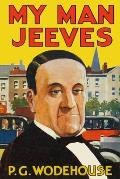
The Mysterious Affair at Styles made me wonder if Agatha Christie’s portrayal of the relationship between Capt. Arthur Hastings and Hercule Poirot might have been influenced by P. G. Wodehouse’s stories of Bertie Wooster and Jeeves.

In both cases, the narrator is a young upper-class Englishman with no professional responsibilities, affable manners, a weakness for pretty ladies, and modest intellectual ambitions that nonetheless exceed his capacities. This narrator describes how a punctilious man from a lower social class uses his brilliant mind to deduce solutions and put things right. Hastings and Bertie admire Poirot and Jeeves, but they also resent being pulled along, which produces some of the stories’ entertainment.

On the question of influence, the first factor I examined was when Christie wrote The Mysterious Affair at Styles. She reported writing the first draft in 1916, taking two weeks off work to check into a Torquay hotel to finish.

But then, I presume, Christie revised the manuscript. One strong indication of that is how subsequent Poirot stories (“The Affair at the Victory Ball,” The Murder on the Links) make clear that the action of the novel starts in July 1917 after Hastings has spent “some months” recuperating from being wounded in the Battle of the Somme, which took place in late 1916. Christie thus came to conceive of her first novel as taking place months after she had written her first draft.

It also took Christie years to find a publisher. When John Lane agreed to issue the book at the Bodley Head press, he insisted that Poirot reveal the murderer by gathering all the suspects in the drawing room, a device that had already become standard in murder mysteries. (Christie originally had Poirot share his revelations in court.) The book thus went through a final revision stage before it was published in 1920.

Therefore, we can date Christie’s creation of the full text of The Mysterious Affair at Styles to the period from 1916 to 1920. But we don’t know when in that period she cemented the characterization of Hastings and Poirot. Did she start with the characters and find a mystery for them, or start with the plot and develop the characters around it?

The next question is whether Agatha Christie read P. G. Wodehouse. Decades later, when they were both internationally bestselling authors, the two became friendly correspondents. In her first letter to Wodehouse, Christie said she enjoyed his 1913 novel The Little Nugget, which involves kidnappers, an upper-class hero at loose ends, and a Pinkerton detective working as a butler. But there’s no way to know when she read that book—as early as 1913 or just a few years before her letter. We also have no indication of whether Christie read the short stories Wodehouse sold to British magazines in the 1910s, which are the crucial texts in this question.

P. G. Wodehouse spent most of that decade in New York City, enjoying the excitement of America and the rewards of selling the same work to both American and British publishers. Many of his tales involved Englishmen in America, and among those was a series of short stories about a young gentleman named Bertie and his gentleman’s gentleman.

Those characters made their first appearance in the story “Extricating Young Gussie,” published in America’s Saturday Evening Post in September 1915 and in Britain’s The Strand Magazine in January 1916 (and of course it’s the latter date that pertains to the Christie question). At that point, Bertie didn’t have a last name, though he already had an Aunt Agatha. Jeeves was simply a generic valet. With “The Artistic Career of Corky”/“Leave It to Jeeves” (The Strand, June 1916), Wodehouse hit on the idea of Jeeves being a problem-solving genius.

Finally, Wodehouse started to explore the frictions between Bertie and Jeeves in “The Aunt and the Sluggard” (The Strand, August 1916) and “Jeeves and the Unbidden Guest” (The Strand, March 1917). He also wrote “Jeeves Takes Charge,” providing an origin story for the team, but that wasn’t published in Britain until 1923. In these tales we see Bertie pushing back against Jeeves’s sartorial advice, resenting his silences, and finally coming around to realizing his brilliance.

That’s the same dynamic I see in Capt. Hastings and Poirot, already fully realized in the published text of The Mysterious Affair at Styles. Comparing the dates show it was possible Christie was inspired by Wodehouse’s magazine stories as she developed her novel, particularly after the first draft. But there’s no conclusive clue about influence. The similarity might simply be the result of similar ideas occurring to two authors around the same time, like two separate characters out to snatch the same diamond necklace or handwritten will.

13 July 2014

Won Over by Grayson, #1

I was dubious about the premise of the Grayson comic book until I saw the preview pages.

When DC first announced that Dick Grayson would give up life as a costumed crime-fighter to become an undercover spy, an announcement accompanied by multiple images of Dick pointing a pistol at the viewer, I wasn’t convinced that move took his established character into account.

Rather, I thought DC’s editorial echelon had looked at what type of stories are popular with their main target demographic and not already covered by their line: the spy thrillers of Bond, Bourne, Chuck, Mission Impossible, and their heist counterparts. A few years back, I detected some Bourne influence in how Tim Drake was reworked into Red Robin, but espionage adventures represented an empty space in the company’s “New 52” lineup.

Yet that role seemed all wrong for Dick Grayson. A license to kill for a hero raised never to take a life, especially with guns? Anonymity for a character defined from the start in connection with other heroes, and established in the 1980s as the best and most popular team leader in the DC Universe? Undercover work for a natural entertainer raised in the spotlight? Those contradictions raised the specter of the company arbitrarily inserting a popular character into stories that would be all out of character.

The preview pages for Grayson, #1, showed that the magazine’s writing team, Tim Seeley and Tom King, understand those character traits. Their opening pages show Dick choosing not to fire his gun but to knock out an assailant by throwing it. (Of course we could ask why, if Dick had enough freedom of movement and leverage to throw that gun, he didn’t just conk the other guy on the head with it.) And we read Dick’s thoughts in caption lamenting: “The downside of a solo act. No one around to see you do the cool stuff.”

In other words, Seeley and King immediately reestablished the character as he’s been written for the last two decades. They recognize that precisely because being a gun-toting undercover agent isn’t the best fit for Dick Grayson, that role can create drama in his life as he tries to reconcile his old values with his new job. They couldn’t do much about Dick’s friendships with other heroes outside the “bat family” since those have been largely erased from the “New 52” Universe—but the issue’s final page indicates that Dick’s new role is still closely tied to all the remaining masked crime-fighters.

To be fair, DC’s editorial team might have been looking for that tension all along. But I still give Seeley and King credit for carrying it out.

TOMORROW: Grayson news from Tom King.

01 April 2012

The Sensational Character Find of 1965

This being the first of April, it seems appropriate to discuss the Titans’ resident jokester and comic relief: Gar Logan, known alternatively as Beast Boy and Changeling. But mainly how he fits alongside Dick Grayson as Robin/Nightwing. This shows the flexibility (or perhaps the tribulations) inherent in a superhero who’s a supporting character.

Writer Arnold Drake introduced Beast Boy in the Doom Patrol comics of the late 1960s: a green teen (probably inspired by Dean Stockwell’s role in The Boy with Green Hair) who could take the shape of any animal. Beast Boy was a kid sidekick, but not a junior version of any member of the Doom Patrol. At first he wasn’t even a member of the team, but eventually one of those heroes adopted him.

When that magazine was canceled and Drake killed off his creations, young Gar survived as an orphan. After he appeared in some Teen Titans issues of the 1960s and ’70s, Marv Wolfman and George Pérez brought him into their New Teen Titans magazine in 1980 as the team’s gag man. He was one of the five main characters to make the leap to the Teen Titans TV cartoon in 2003.

As a character, Beast Boy has always worked best as part of an ensemble. In 1999 Geoff Johns and Ben Raab wrote a short miniseries with him as the main character, but notably it also featured Dick Grayson and other old teammates. Logan’s most memorable moments in comics have come in the various Titans series, and at the top of that list is “The Judas Contract,” in which Logan fell in love with a cute new Titan named Terra who turned out to be much more trouble than he’d dreamed.

In recent years, DC Comics has moved sharply away from the concept of a single “continuity” or history codifying all forms of its mythology. The Teen Titans of the cartoon aren’t the same as the team in Wolfman and Pérez’s New Teen Titans, or those of their New Teen Titans: Games, or the hybrid team now appearing in the Young Justice cartoon, or the parody versions in Tiny Titans.

The origins, personalities, and powers of DC’s main characters—Superman, Batman and Robin, Green Lantern, etc.—don’t change greatly from one continuity to another, but relationships among them can vary and the histories of secondary characters can change greatly. (The company also treats Wonder Woman as a main character, but her underpinnings do change as creators struggle to figure out what she best represents.)

As a secondary character, Gar Logan is therefore often in flux. New Teen Titans and its offshoots established him as a lovelorn wise guy, a bit younger than his teammates, who submerges his losses and neediness behind jokes.

But in the Young Justice cartoon, Dick Grayson as Robin is the group’s nerdy little wise guy. He’s the youngest of the group and deeply into computers and word games. So what space does that leave for Beast Boy?

In an episode broadcast last month, Young Justice showed us Garfield Logan as an eight-year-old living in Africa with no special powers. He gets a blood transfusion from the hero Miss Martian, a green-skinned shapeshifter. Frankly, that sets up a better explanation of why little Gar might grow up to be a green-skinned shapeshifter than the mysterious disease-and-cure interaction established in Doom Patrol decades ago. But for now that continuity still doesn’t have a Beast Boy.

In Tiny Titans, Robin is the put-upon central figure infatuated with a red-haired girl, and the whole comic is comic relief. So what space does that leave for Beast Boy?

Creators Art Baltazar and Franco re-established his crush on Terra as a more demonstrative one-sided relationship than Robin’s crushes—which is to say that Terra throws rocks at him. Otherwise, however, that comics’ Beast Boy seems more worldly than Robin. And in the magazine’s final issue, he actually comes up a winner.

The Tiny Titans versions of all six of the other New Teen Titans regulars look on happily from the center of this panel.

Finally, where’s Beast Boy in DC Comics’ new main continuity? He’s been changed to a red shapeshifter, more consistent with another animal-based hero. His debut in May will reveal more about that character’s name and history. Rather than part of the revamped Teen Titans, this Beast Boy’s in a related group.

In sum, Beast Boy is going in all directions, as dictated by the storytelling needs of whatever ensemble he’s assigned to.

11 March 2012

All the “Reasons for Robin”

For a while I’ve felt I should collect the links for my “Reasons for Robin” postings into one handy round-up, and I’m finally getting around to it.

  1. So Batman can have someone to talk to.
  2. So Batman can have someone not to talk to.
  3. Younger readers can identify with Robin.
  4. Robin displays a broad range of emotions.
  5. He slips, he falls!
  6. Robin, the Boy Hostage!
  7. Under age and undercover!
  8. Comic relief!
  9. Robin is still a kid.
  10. Robin isn’t evil.
Some of those postings connect on to other essays. And eventually, I suppose, lead back to here.

07 February 2012

A Lesson from Sir Hokus

My thoughts on the value of a ongoing characters having an unresolvable foundational conflict have their roots, I realize, in thinking about a character far less known than Superman.

It was Sir Hokus of Pokes, the first recurring character that Ruth Plumly Thompson added to Oz. He’s an old knight that Dorothy and the Cowardly Lion find in The Royal Book of Oz (1921). He moves to the Emerald City and plays a supporting role in several more adventures, rather as L. Frank Baum used the Shaggy Man. He’s not rounded, and I doubt he’s many people’s favorite, but he becomes a comfortable part of the fabric of Thompson’s Oz.

As such, Sir Hokus reflects Thompson’s sensibility, based on older European fairy tales. In contrast, Baum’s usually tried to find magic in contemporary American culture for Oz.
I think Sir Hokus’s unresolvable foundational conflict is that he’s a man out of time. He speaks in a medieval lingo, constantly expressing a wish to rescue fair maidens and slay dragons. His anachronism is underscored by his age. Like Lewis Carroll’s White Knight, he’s an old man, still active but gray. In both respects, he’s removed from his prime period, no longer able to undertake all the quests he yearns for.

In The Yellow Knight of Oz (1930), Thompson made Sir Hokus one of her protagonists. He goes off on a solo quest at last. Along the way, complications ensue. By the end of that book, Sir Hokus is no longer a man out of time; he’s ensconced in a medieval-style culture. Furthermore, he’s young again.

As a result, the character is no longer the least bit interesting. Sir Hokus’s foundational conflict has been resolved. Even though Dorothy looks in the younger man’s eyes and says he’s the same friend she knew, it’s no surprise that he makes only token appearances in the rest of Thompson’s series.

John R. Neill liked drawing Sir Hokus so much, evidently, that he brought the old knight back in his three Oz books, once more chasing dragons without being able to slay them. Neill offered no explanation of how, but neither consistency nor logic was part of his storytelling.

06 February 2012

Superman’s On-Again, Off-Again Relationship

Thinking about serial characters led me to consider Superman’s relationship to Lois Lane, and his relationship to his unresolvable foundational conflict.

For more than fifty years, starting with Action Comics, #1, Lois was in a love triangle with Superman’s two identities: mild-mannered, often doofy reporter Clark Kent and world-saver Superman. Clark loved her, she loved Superman, Superman didn’t want to reveal his other identity, and the whole situation seemed unresolvable.

Not only did that tension fuel many stories in Action Comics and Superman, but it was the drive behind Superman’s Girl Friend Lois Lane (reported monthly sales in 1960: 458,000).

Occasionally DC editors would let their writers explore resolutions, but only in “imaginary” stories. After the company developed the concept of Earth 2, it showed an aging Superman marrying an aging Lois—but in that secondary universe only.

Alan Moore’s saga-ending “Whatever Happened to the Man of Tomorrow?” resolved the triangle by showing Lois married to a friendly fellow named neither Clark nor Superman—but, curiously, he had the same chin as both.

That love triangle was also part of the Superman radio show of the 1940s, the television show of the 1950s, and the first Christopher Reeve movies. And it was right at the core of the early 1990s television show Lois and Clark.

To give viewers something new after a couple of seasons, the producers of that TV decided to have their title characters marry. DC Comics scrambled to follow. The magazines showed Lois realizing that Clark and Superman are one and the same and eventually marrying the big lug (with a one-year delay while he was dead).

I wasn’t keeping up with superhero comics at the time. I heard that Superman had died, and knew he would come back to life. But when I resumed reading the comics a few years ago, I was shocked to find that the Clark-Lois-Superman triangle was no more. What had seemed like an unresolvable foundational conflict had been resolved—yet the story was still going on.

But not on TV. The ratings for Lois and Clark plummeted in its fourth season, coincident with the change in the title characters’ relationship. Even heavily hyped wedding episodes didn’t help. I suspect that version of the mythos was so tied to the three-way relationship as an unresolvable foundational conflict that it lost its raison d’être and appeal once that tension changed.

In contrast, breaking the love triangle didn’t seem to damage the comics much at all. (Well, their sales fell over time, but so did sales of all superhero comics.)

By the 1990s, Lois Lane’s role in the older comics had become embarrassingly anachronistic, anyway. The love triangle’s classic form rested on misogynistic assumptions: girls were icky, women’s desires were shallow, a married woman would give up her career, and so on. With the new relationship, DC could finally acknowledge that Lois Lane, ace reporter, had been right about Clark Kent’s secret all along.

And it turned out that Superman stories could be fueled by a different unresolvable foundational conflict: the title character’s struggle to protect his adoptive planet from every threat while also living on it as a regular human.

In its new universe, DC has returned to the status quo sevente: Clark Kent is once again single and pining for Lois Lane, who once again won’t give him the time of day but is curious about this new super-man. I don’t know if that relationship is at the center of the saga again, though.

05 February 2012

Dick Grayson’s Unresolvable Foundational Conflict

This weekly Robin is a follow-up to last week’sToB’s comment on it, and the thoughts that inspired about how open-ended series need main characters with unresolvable foundational conflicts.

Adventure comics, in both newspaper and magazine form, have for the most part been open-ended, and thus demanded such characters. As Robot 6’s Tom Bondurant wrote in a Grumpy Old Fan column on the Watchmen prequels:
Superman and Swamp Thing were created to be ongoing characters with no definite endpoint, but Watchmen, [James] Robinson’s Starman, [Garth] Ennis’ Hitman, and [Neil] Gaiman’s Sandman were all finite series.
(At least they became so—I don’t recall Gaiman describing such a plan at the outset of Sandman when he was still a starry-eyed British freelancer happy for his big break.)

That’s why DC has commissioned prequels to Alan Moore and Dave Gibbons’s graphic novel. Those new stories won’t affect the characters’ ultimate fates as Watchmen portrayed them. They’ll play out the characters’ foundational conflicts, but everyone who’s read the novel will know how those conflicts resolve. (And how different is that from the usual superhero comics?)

From the 1940s to the 1960s, the unresolvable foundational conflict of Batman and Robin was the tension between their comfortable “real” lives and the challenges of fighting crime while dressed in garish costumes and masks.

Every story about secret identities played off that conflict. Every time Bruce Wayne’s life as a playboy millionaire or Dick Grayson’s as a high-school kid interfered with the Dynamic Duo, that plot grew out of the same foundation.

In most 1940s issues of Batman, one of the four stories focused on the Dynamic Duo’s relationship under pressure from their double lives. “Bruce Wayne Loses the Guardianship of Dick Grayson” (issue #20) was one example. Others include:
  • “Batman Plays a Lone Hand” (#13): Bruce kicks Dick out of Wayne Manor with no explanation in order to protect him from criminals.
  • “Robin Studies His Lessons” (#18): Dick can’t fight crime until he gets his grades back up.
  • “Collector of Millionaires” (#19): Bruce is kidnapped and a double takes his place.
Most of those stories would be impossible if Bruce and Dick gave up their secret identities, their crime-fighting, or their millions. (Or if they just talked to each other more.)

Batman and Robin let some partners in on their secret identities, starting with Alfred and Superman. That didn’t change the foundational conflict, however, because most of the world still didn’t know.

The imaginary tale “The Marriage of Batman and Batwoman” (#122) shows Bruce marrying Kathy Kane. Later imaginary tales of that couple show that the stories could keep coming as long as there was some circle of secrecy. But in that tale, Kathy accidentally reveals Batman’s identity, and the saga screeches to an imaginary end.

Of course, most Batman stories from those decades were driven by that month’s villains, or aliens, or plan to travel back in time through hypnosis. They could have worked with other heroes. It wasn’t until the 1980s that writers began to focus on longer story arcs and more complex motivations for ongoing readers. And then the “we have to preserve our secret identities” conflict just wasn’t enough.

Since 1980 or so, the unresolvable foundational conflict for Bruce Wayne has been his drive to fight crime, avenging his parents and defending innocents, even though that impossible mission threatens his health, his sanity, and his relationships.

For Dick Grayson, the unresolvable foundational conflict has been his relationship with Bruce Wayne. As critic Douglas Wolk put it in Reading Comics, Robin’s “symbolic value is as a son trying to learn from his father’s experience and wisdom without making his father’s mistakes.”

As Nightwing, Dick took a step away from Batman and had his own adventures, but his larger story kept coming back to his relationship to Bruce Wayne. Could he measure up to his mentor? Is taking his own path disrespectful, or a cop-out? Is being the most liked, respected hero on the planet enough when your father figure is so emotionally distant?

When Grant Morrison led DC into making Dick Grayson into Batman for a couple of years, that resolved the hitherto unresolvable conflict. Yes, Dick could be Batman. In some ways, he was a better Batman. He mentored his own Robin, more damaged and dangerous than his predecessors. He defeated Batman villains, Titans villains, and some new villains. He helped to get Bruce Wayne back from time.

But the problem with resolving a character’s unresolvable foundational conflict is that there’s no place further to go. The central question has found its answer. The story has reached its end. DC could put that Dick Grayson back into the Nightwing costume, but why? Better to let that version of the Dick Grayson saga end successfully, and then go back a few steps and a few years to start another one with the same symbolic value but no resolution in sight.

02 February 2012

The Second Oz Series

When L. Frank Baum returned to the Oz series, he had left Dorothy and Ozma in a good place. Too good a place, in fact. Supposedly he wasn’t even able to contact them any more. Solving that problem (through the new technology of wireless) was less challenging, however, than coming up with a new fuel for stories about Oz now that Dorothy could live with her family in the Emerald City and Ozma could feel safe about Oz.

Furthermore, since Baum evidently now planned to keep writing Oz books as long as he could, he was no longer thinking ahead to a series end. He needed to keep his characters interesting, or come up with new ones.

With a story called “Little Dorothy and Toto” in The Little Wizard Stories of Oz (written for younger readers than the novels), Baum found a new unresolvable foundational conflict for Dorothy. Though she has a perfectly comfortable, safe home in the royal palace, she insists on wandering into the countryside and heading off on dangerous missions. In that story, the Wizard tries to cure Dorothy of this bad habit. It doesn’t work.

Thus, in The Magic of Oz, Dorothy’s idea of birthday shopping means going into a forest of wild beasts and asking to borrow a dozen monkeys. In Glinda of Oz she’s eager to go to the edge of Prof. Wogglebug’s map to get involved in a war. In The Patchwork Girl of Oz she invites herself on Ojo’s quest, and in Rinkitink in Oz she heads to the Nome Kingdom.

As for Ozma, she continues to be so kind-hearted that she has trouble governing. In Glinda of Oz, the title character advises her to stay out of the turmoil in one corner of Oz, and she insists on heading there anyway and telling her subjects they should be nice. In The Lost Princess of Oz she gets kidnapped, and Dorothy (of course) heads out to rescue her.

But for most of in his second series of Oz books, Baum had antagonists drive the plot, or found other young protagonists: Ojo, Betsy, Trot, Button-Bright, Inga, and Woot. Most of those new kids didn’t hold up for more than one adventure because they didn’t have unresolvable foundational conflicts. Once Inga rescues his parents, or Betsy finds a home, there’s nothing left for their characters to do.

The two young characters who play important, distinct roles in more than one of Baum’s novels came with foundational conflicts that continued to drive them into adventures. Trot is little, but curious and just as brave as Dorothy. Button-Bright gets lost whether he means to or not. If either of those sources of conflict ever disappeared, so would their stories. Like Dorothy and Ozma, Trot and Button-Bright are built for an open-ended series.

01 February 2012

Characters in Need of Unresolvable Foundational Conflicts

In a traditional story with a closed ending, we want the main characters to resolve some conflict. Bud (not Buddy) finds a family. Jim in Treasure Island finds the treasure. Harriet the Spy learns a valuable lesson about friendship. Huck Finn manages to get freedom for Jim. That resolution doesn’t have to come at the end of one book: Harry Potter doesn’t defeat Voldemort until book 7/movie 8.

However, when authors ask us to follow characters through a series of stories with no planned ending, those characters need some foundational conflicts that they don’t resolve. If they ever put those conflicts to rest, then their story has effectively reached an ending. And perhaps run out of fuel for more.

That foundational conflict could be a frustration that will never end: Bruce Wayne will never get his parents back, for instance, and he will never preserve Gotham City from all crime. It may be an internal contradiction: Princess Ozma’s wish to be kind to all will always make it hard for her to deal with really nasty people.

To be sure, there are some characters in series whose personalities and situations don’t include some unresolvable. The Hardy Boys, for example, don’t have inner lives or difficult circumstances. But kids don’t read those books (at least the older versions) for character growth; they’re all about external events, and they depend on a never-ending supply of crime. If criminals ever stay out of Idaville or Bugs Meany gets sent away to reform school, there would no longer be an engine to produce Encyclopedia Brown stories.

Applying this thought to the Oz books, at the end of The Wonderful Wizard of Oz, all the main characters have had their problems solved: Dorothy is back in Kansas, and her three companions have gained what they thought they were missing.

But the 1903 Broadway hit produced a market for a new book, and L. Frank Baum came up with The Marvelous Land of Oz. That story also seemed to end with resolutions all around: Oz has a rightful ruler, Tip has found a new life, and the Scarecrow and the Tin Woodman can go off into the sunset together.

Returning to Oz for more books, however, Baum chose to tell more stories about Dorothy. For the next three adventures, she’s once again faced with the conflict of the first: she’s away from home and wants to go back. Each book ends with her back with her family, so what’s the foundational conflict? It’s how she’d be welcome (and powerful) in the beautiful Emerald City, but needs to return to her family.

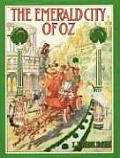
At the start of The Emerald City of Oz, Baum resolves that foundational conflict for Dorothy. Uncle Henry and Aunt Em loses their farm to the mortgage-holder, and Dorothy insists that they all move to Oz. So Dorothy no longer has an unresolved foundational conflict.

The rest of the book has a mildly adventurous travelogue interspersed with the Nome King’s preparations for a terrible invasion. That takes us to Ozma’s foundational conflict: how she can preserve her values even when faced with such a threat. The Scarecrow helps her, and then (as quoted back here) Glinda apparently removes all such threats in the future. So Ozma no longer has an unresolved foundational conflict.

That wasn’t a problem because Baum planned to end the series with that book. He had brought his main characters to resolutions of their problems. There was no evident engine for future stories.

TOMORROW: But what about the next eight books?

06 December 2011

Our First Glimpse of Evardo XV

The picture above, by John R. Neill, comes from the end of Ozma of Oz. It shows the dowager queen of Ev and her eldest son, the new King Evardo XV.

L. Frank Baum earlier described Evardo this way: “He was a grave and quiet youth, and would doubtless rule his people wisely and with justice.” He narrates this scene thusly:
Then the Queen took her eldest son out upon a balcony that overlooked the crowd of subjects gathered below, and said to them:

“Here is your future ruler, King Evardo Fifteenth. He is fifteen years of age, has fifteen silver buckles on his jacket and is the fifteenth Evardo to rule the land of Ev.”

The people shouted their approval fifteen times, and even the Wheelers, some of whom were present, loudly promised to obey the new King.

So the Queen placed a big crown of gold, set with rubies, upon Evardo’s head, and threw an ermine robe over his shoulders, and proclaimed him King; and he bowed gratefully to all his subjects and then went away to see if he could find any cake in the royal pantry.
He is fifteen, after all.

Baum has even less to say about most of the queen’s other children, aside from the youngest: Prince Evring, whom Dorothy rescues. The rest of the siblings are simply names: “The Princesses were named, Evanna, Evrose, Evella, Evirene and Evedna, while the Princes were Evrob, Evington, Evardo and Evroland.”

Baum derived the names of Evrob and Evedna from those of one son and his fiancée. Robert Baum was also inspiration for the young hero of Baum’s science-fiction novel The Master Key, and Edna Drucker was a family neighbor. They were in their early twenties when Ozma of Oz appeared, clearly older than the queen’s children.

As to other details of the Ev princes and princesses, especially as individuals, Baum’s book is basically silent.

TOMORROW: Filling in the gaps, one way or another.

06 November 2011

Robin Around the Web This Week

At Comics Should Be Good!, Brian Cronin asked for reader suggestions of the Greatest Tim Drake Stories Ever. That evolved into the Greatest Robin/Red Robin Stories Ever.

Some patterns stood out:
  • Six of the top ten were written by Chuck Dixon.
  • Only two of those ten appeared in the last ten years. Most date from the early and mid-1990s.
  • Many crucial events in Tim Drake’s career (his mother’s death, meeting Spoiler, joining Young Justice, joining the Teen Titans, his father’s death, shift to Red Robin, deducing that Bruce Wayne was lost in time) don’t appear in any of these stories. 
Cronin doesn’t include vote counts, and I may be projecting here, but the level of commentary on those posts makes me suspect fans had a hard time coming up with top ten lists. Yet the same website had another fan poll that placed Tim Drake as DC’s eighth best character this year. (Dick Grayson, coming off a year in the batsuit, came in a solid #3.)

The character of Tim Drake, as a symbol and as a member of the shifting casts of people around Batman and/or of DC’s young heroes, may well be better and more beloved than individual stories about him.

Elsewhere, the artists at Comic Twart focused on Damian Wayne; the panel above comes from Evan Shaner. It looks like some contributors knew much more about the character going in than others. (“Gerads told me this is all that kid says.” “So apparently Damian Wayne is 10.”) The resulting exercise might therefore be less successful than it could have been.

The group’s tribute to Bucky Barnes seems more sure-footed. I especially like Tom Fowler’s mash-up of the finale of Dr. Strangelove with Baron Zemo’s rocket.

05 July 2009

What’s So Funny About Batman?

As I discussed in the last weekly Robin installment, starting in the early 1980s DC Comics writers began to treat Dick Grayson's sense of humor as more than a long-established character trait to entertain readers. It was a long-established character trait with meaning. Dick's puns (1940-c. 1970) were presented as a manifestation of his boyishness.

During the 1990s, the character of Batman became more grim, moving closer to the driven character in Frank Miller's The Dark Knight Returns. Batman became known in the DC Universe for not making jokes--or at least every time he does so, it's cause for comment.

That of course makes a big contrast with Dick Grayson's usually light-hearted attitude. To build on Douglas Wolk's argument in Reading Comics that superheroes symbolize different ideas, Bruce and Dick show us different approaches to life, bound up in how willing each man is to joke.

Does Batman have to be grim? (Well, he wasn't grim from 1940 to 1965 or so, but that's another story.) DC is exploring that question now that Bruce has temporarily died and Dick has taken on the cowl. In the upcoming issue of Batman, characters and preview readers observe that the Caped Crusader is actually smiling.
And that's not all. Over the past twenty years, DC's writers have presented Dick's sense of humor as having important meaning for Bruce Wayne. Despite his dark personality and pessimism, Bruce enjoyed Dick's jokes and happy attitude. Seeing Dick have fun kept Bruce level.

Thus, Robin's puns, which started in 1940 as simple comic relief during fight scenes, have developed into a trait that illuminates not just his character but other characters around him.

This isn't an individual scripter's portrayal, but the collective vision of many writers and editors riffing off what's come before. The two major comic-book universes are the creations of hundreds of people, most of whom grew up visiting earlier versions and trying to figure them out.

Why did the original Batman have a "laughing young daredevil" at his side? Why was Robin always cracking jokes? Those things couldn't be in the magazines just to entertain us--not if the DC Universe were to have internal coherence and logic. By putting together two logic-defying aspects of the Dynamic Duo, DC's creators found their way to portraying a more complex relationship between the two icons.

04 July 2009

Interviewing an Author on Interviewing Characters

Something to chew on from the Institute of Children's Literature's online interview and chat with Cynthia Leitich Smith on her preparation for writing her novels:

seasplash: How do you interview your characters?

Cynthia: I tend to do a Q&A of each one especially the protagonist and antagonist. I think writers tend to underestimate the complexity and importance of the antagonist. I ask them a lot of questions about themselves, but also the other characters. Sometimes the character's best friend or worst enemy will reveal something that they won't.

COCOA: When you start to write a story, how much of the plot do you have to set in your head? Is it all plotted out or do you sort of figure it out as you go along?

Cynthia: I usually have an opening line. Sometimes, but not always a whole scene. But I have a good idea of what the protagonist thinks he/she wants. Usually, it takes a lot of drafts before he/she (for that matter I) figure out what the deeper, true goal is.
Which is, of course, something that interviewing the character can't answer because he or she doesn't know yet.

And of course everyone in children's books should know about Smith's Cynsations website.

05 February 2007

The Dreaded Sequel

Word on the street in Boston is that William Monahan, the screenwriter of The Depahted, is working on a story for Mark Wahlberg’s character. Both men have been nominated for Oscars, the movie was a hit, and, frankly, it didn’t leave a whole lot of other sequel potential.

On the down side, Wahlberg portrayed a flat character, according to the dichotomy E. M. Forster proposed in his most enlightening Aspects of the Novel:

A “flat” character, according to Forster, can be summed up in a single sentence and acts as a function of only a few fixed character traits. “Round” characters are capable of surprise, contradiction, and change; they are representations of human beings in all of their complexity. Forster’s aim, however, is not to elevate the round at the expense of the flat, although he admits that the round is on the whole always a more interesting creation. Instead, he argues that there are compelling artistic reasons for a novelist to employ flat characters.
Can a flat character carry a movie? (Well, a good movie?) Or will Wahlberg’s role have to be filled out with (gasp!) a personal life?

This Hollywood news made me think of US Marshals, the 1998 vehicle created for Tommy Lee Jones and his supporting cast after The Fugitive brought in so much money and an Oscar for Jones. Marshal Sam Gerard, Jones’s character, was also flat in Forster’s sense, obsessed with chasing down his quarry, but Jones delighted us with unexpected details.

Once those details had become expected, however, the delight faded. The sequel smelled stale right out of the box, even though it was years ahead of its time in depicting Wesley Snipes on the run from federal agents.

Still, US Marshals has one line that is useful in many situations.
Robert Downey Jr character reacting to something Tommy Lee Jones character has done: Is this guy crazy?

Joe Pantoliano character: No, but he’s a carrier.