Showing posts with label ARTIST Dave Gibbons. Show all posts

26 April 2012

Alan Moore and the Pitfalls of Unforeseen Success
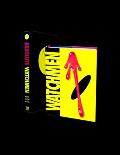
Folks who blog about superhero comics are apparently supposed to have a moral stand on DC Comics’s decision to commission prequels to Alan Moore and Dave Gibbons’s Watchmen, despite the former’s vociferous opposition.

I don’t view that as a major ethical issue, but rather a business venture that will find its judgment in the marketplace. The American superhero comics industry has grown over the decades from writers and artists taking inspiration from and contributing to collective narratives. Moore knew that when he signed his contracts with DC in the 1980s, and in fact much of his work has grown from other writers’ creations.

Moore’s main beef with DC now is not that the company isn’t abiding by the contracts he signed, but that it is. He just didn’t expect those contracts would still apply to him.

That’s not because Moore thought his work was special. It’s because he didn’t think it would be as successful as it’s been. Moore assumed that Watchmen would go out of print after just a few years. He’s said as much in many interviews, but here’s a recent one from Kurt Amacker:
KA:  I thought we could discuss the initial ownership dispute you had with DC back in the 1980s, wherein you and Dave Gibbons expected to get the rights to Watchmen and its characters back a year after the trade paperback went out of print. But, it never went out of print--and one suspects DC probably knew it wouldn't.

AM:  We were told that. That was the understanding upon which we did Watchmen--that they understood that we wanted to actually own the work that we'd done, and that they were a "new DC Comics," who were going to be more responsive to creators. And, they'd got this new contract worked out which meant that when the work went out of print, then the rights to it would revert to us--which sounded like a really good deal. I'd got no reason not to trust these people.  They'd all been very, very friendly. They seemed to be delighted with the amount of extra comics they were selling. . . .

Now, I've since seen the Watchmen contract, which obviously we didn't read very closely at the time. It was the first contract that I'd ever seen--and I believe that it was a relatively rare event for a contract to actually exist in the comics business. Most of the time, people just signed away all their rights on the back of their invoice voucher. But, I was so pleased with the deal with Watchmen, that I suggested to David Lloyd that we do the same thing on V for Vendetta--which was, again, something that we owned and that we wanted to carry on owning.  The contracts actually are some of the most anti-creator contracts imaginable.  They've got clauses such as, if I refuse to sign for any reason any agreements in the future, DC can appoint an attorney to sign them instead of me. 
Actually, that last is a rather common clause, but not one that publishers try invoking often, if at all. No company wants to work with someone who can’t stand to work with it. I also don’t know if there are any strong precedents for that clause standing up in court.

As for the provision that most arouses Moore’s resentment—that a publisher keeps the copyright holders’ license to issue a literary work as long as it remains in print—that’s completely standard for the book industry.

I’m sure that Ernest Hemingway signed contracts with that clause, and Stephen King, and J. K. Rowling—even after they became bestselling authors. Most authors are happy when a publisher keeps selling a book. That’s a lot easier and more lucrative and less ego-deflating than when a publisher puts a book out of print and reverts the rights. Moore has never denied DC’s statements that the company’s paid him all the Watchmen royalties he’s due—a considerable sum, given the book’s sales in the millions.

It’s probably true that Moore, Gibbons, and DC didn’t expect Watchmen to still be selling strongly nearly thirty years later. No one had the superpower of being able to foresee that future. As Moore admits, he recognized that mid-1980s contract as far better than anything he’d seen before and didn’t consider its terms carefully. But a good contract is negotiated to anticipate all possible outcomes. The Watchmen contract spelled out what would happen if the book stayed in print, and that arrangement is simply industry standard.

By his own account, Moore took the same approach to his movie rights, including not only Watchmen but League of Extraordinary Gentlemen. This spring he spoke about that in a BBC interview, quoted here on semi-coherence:
Originally, I was under the illusion that the way that films worked was that you got a lot of option money, and then after a couple of years they decided that they weren't going to make the film. Which was the perfect result, the film didn’t get made, you got the money. Then they actually made a couple of my films, and at that point I decided, well, I'll just distance myself from them as much as is possible.
Again, Moore signed contracts anticipating the most common outcome but didn’t think through the possibility of success.

Perhaps that reflects Moore’s upbringing in the working class of northern England, where folks might not expect anything to work out well, much less phenomenally well. The American publishers and movie producers, in contrast, were ready for things to work out better than they expected. Maybe that’s characteristic of American businesspeople, or maybe it’s just why they were willing to put up the money.

27 June 2010

The Short, Happy Life of the First Jason Todd

When I posited that Reason for Robin #10 is that “Robin Isn’t Evil,” I promised to discuss the two major counterexamples. Actually, back when I conceived of that series, I had only one counterexample in mind: the second Jason Todd. And to lay the groundwork, I have to address the first Jason.

Back in 1940, Dick Grayson went from meeting Batman to becoming his costumed companion in the course of a few panels on one page. His decision to leave the partnership in the early 1980s took considerably longer, aided by the huge success of the New Teen Titans magazine. Leading DC’s hottest team (in every sense of the word), Dick became an independent young adult.

The pivotal moment arrived when a meeting of writers Gerry Conway and Marv Wolfman, artist George Pérez, and their editors concluded that Dick Grayson should break free from the Batman books and adopt a new identity—eventually Nightwing. Meanwhile, Conway could develop a new character to take his place at Wayne Manor.

This was the first Jason Todd. Conway had a traditional understanding of how Robin functioned in Batman stories, and his Jason was very much like Dick Grayson. To the extent of being a young trapeze artist whose parents are murdered by criminals and goes to live with billionaire Bruce Wayne.

Jason fought crime in a costume and mask in Detective Comics, #526—the 500th appearance of Batman in that magazine, and Conway’s last issue. But it took the rest of 1983, and some black hair dye, before he officially became Robin. One milestone in that period was when Dick Grayson graciously passed on the red, green, and yellow outfit. For merchandising reasons (all those pajamas with Robin’s picture on them), Jason had to look exactly like Dick.

Just like the Robin of the 1940s through 1960s, the first Jason Todd was occasionally impetuous and immature. He made mistakes, and showed more emotional reactions than Batman. He was, after all, still a kid.

In that period, each superhero comic usually had a complete adventure in one issue, but subplots extending over many months. The first Jason Todd became the object of a custody battle between Bruce Wayne and Natalia Knight, the criminal Nocturna; basically, he went undercover as her adoptee. Again, that plot emphasizes how Robin is still a child.

Robin scholar Mary Borsellino quotes a letter from a reader in Detective Comics, #530, calling this Jason a “quiche eater,” an allusion to the 1982 bestseller Real Men Don’t Eat Quiche. But of course a Boy Wonder isn’t supposed to be a Real Man—yet.

In Alan Moore and Dave Gibbons’s terrific Superman story, “For the Man Who Has Everything” (1985), an extraterrestrial conqueror dismisses Jason as “the little yellow one.” Yet who saves the world in the end? That tale is the first Jason Todd’s finest hour.

(In that story, Jason had also grown up enough for Batman to famously remind him, “Think clean thoughts, chum.” But different artists depicted him at different stages of adolescence.)

Then two major events jolted the DC Universe. The first was Wolfman and Pérez’s Crisis on Infinite Earths (1985-86), which opened the door for DC to relaunch and redefine all its major franchises.

The second was Frank Miller’s The Dark Knight Returns (1986), the story of a potential future Batman. Among its innovations was a female Robin. Among its allusions to the standard comics was a brief line about Jason Todd being dead; clearly, this was a rougher Batman in a rougher world. This series was highly stylized, highly violent, and highly successful.

Post-Crisis, DC commissioned Pérez to retell the origin of Wonder Woman, John Byrne to relaunch Superman, and Miller to set a new tone for the regular Batman series. Editors thought that the character’s origin myth still worked, but that readers would appreciate more grit. The audience for superhero comics now consisted of young adults in specialty shops, not kids browsing in drugstores.

In Batman, #404-7 (1987), Miller and David Mazzucchelli showed the start of Bruce Wayne’s career as Batman. Like Miller’s earlier series, Batman: Year One was stylized, stark, and very successful.

The first Jason Todd, cheerful former circus acrobat, had come out of the Crisis of 1986 intact, and appeared in a few more months of stories. But DC’s editors felt that his character didn’t fit the new, grittier Batman’s world. Therefore, in Batman, #408, the Caped Crusader met a new Jason Todd.

COMING UP: Battling for the soul of a new Robin.

26 August 2009

No Smoking in the Watchmen Movie

One of the distinctive visual details in the graphic novel Watchmen, written by Alan Moore and drawn by Dave Gibbons, is the lollipop-shaped glass pipes that several characters smoke instead of cigarettes. In particular, the female lead, Laurie, used such a pipe.

I missed that detail in the movie. Some of the bad guys smoked: the Comedian and Big Figure had cigars, and Moloch was down to his last cigarette. But none of the heroes did, and the movie lost one of the book's vaguely-out-of-this-world details. (Are these pipes somehow a result of Dr. Manhattan’s molecular manipulation?)

It turns out the pipes vanished because of Warner Bros. executive Alan Horn. Director Zack Snyder told the i09 site:

Alan hates smoking. Alan Horn - the head of the studio - that's his biggest, biggest thing. The Comedian can smoke, because he might be a bad guy, he's the bad guy, but that's it. That was the line that he drew.
Almost everything in the Watchmen novel connects with something else, however, so the loss of those pipes had costs.

In one scene, Laurie and her old heroing comrade Dan fight off some muggers, then engage in what's clearly a parody of post-coital behavior, with her having a smoke. That prefigures their deeper relationship to come, and keeps up a theme of crime-fighting as physical fulfillment. In the movie, the same scene has no such resonances (and a lot more blood).

Later Laurie is in Dan's flying owlship, looking for the lighter so she can have a smoke, and she accidentally turns on the flamethrower. (Don't you hate when that happens?) In the movie, there's no reason for Laurie to hit the red button with a flame on it. The scene just makes her look stupid.

Finally, damienoujia at this Comicvine forum noted another moment where Lori's smoking habit illuminated her character:
Her first meeting with the Comedian and it seems he's hitting on her...he lights what we presume is her first cigarette. Her mom comes in and she [Laurie]'s all embarrassed about being caught smoking. It just changes the dynamic of the scene.
I don’t like tobacco anymore than Alan Horn does, but there's no doubt this no-smoking policy came at an artistic cost.

10 April 2009

“America Was Like This Fabled Foreign Land”

I've quoted Neil Gaiman on trying to decipher American culture through American comic books. Here's Watchmen artist Dave Gibbons on the same topic, from an interview with Time:

When you and Alan [Moore] were making Watchmen, how important was it that you guys were English, and working in the UK, far away from the watchful eye of the mother ship in New York?

Actually it was a big deal. I think the whole thing of Brits working for American comics was a big deal. Because America was like this fabled foreign land. When I first came to New York City, what I was thrilled about was not the Empire State Building, or the Statue of Liberty, it was the fireplugs in the street. These things that Jack Kirby had drawn. Or these cylindrical water towers on top of buildings that Steve Ditko's Spider-Man fights used to happen in and around.

So it's always been this kind of exotic babylon. And that's so for Alan as well. We used to get the American comics imported, and it wasn't just the stories, it was the whole thing of Tootsie Rolls and Schwinn bicycles. This is the kind of thing we'd talk about for hours on the phone. All this stuff that to you Americans is everyday stuff, as boring to you as our everyday stuff is to us.

So I think that we were able to stand back from American culture, stand back from comic books, although we'd read them all our lives. I can't imagine that we could have done Watchmen if we hadn't had that detachment. You know? Love for the subject matter, love for the culture, but a detachment. And perhaps a slight British cynicism? Impressed, but not impressed.
Gaiman also mentioned the mystery of fire hydrants. Why did the New York water supply hold such fascination for London youngsters? Perhaps because they grew up in a climate where they didn't need to worry about water--it was more often than not falling on their heads.

TOMORROW: What inspired that previous generation of American comic artists the same way?
