Showing posts with label AUTHOR E. Y. Harburg. Show all posts

29 October 2025

The Wizard of Balboa Park

The San Diego Civic Light Opera Association was founded in 1945. Its first show was Gilbert and Sullivan’s The Mikado in the Wegeforth Bowl at the San Diego Zoo.

Because of San Diego’s ideal weather, the organization staged its shows outside. It soon took on the name of the Starlight Opera.

On July 29, 1946, the San Diego Union and Daily Bee said: “If the new Starlight Opera company becomes any more popular it will have to move to Ford Bowl.” That was the amphitheater in Balboa Park built for a 1935 expo.

Indeed, the Starlight Opera Company was soon using that larger space. Around 1950 the amphitheater became known as the Starlight Bowl. (An amphitheater in Burbank was using the same name at that time, confusing matters.)

The Light Opera Association also widened its repertoire to include new, popular shows and operated under the same of Starlight Musical Theatre.

Because the amphitheater was right under the main flight path to Lindbergh Field, performers learned to freeze when a loud plane passed overhead. Starlight Musical Theatre’s old website called this “One of the most artistic innovations of productions at the Starlight Bowl.”

In 1962 the Starlight company planned a summer season of The Music Man, Can-Can, The Wizard of Oz, and Bye Bye Birdie.

About the third show the 7 Apr 1962 San Diego Evening Tribune explained:
“The Wizard of Oz,” was adapted originally for the stage by L. Frank Baum from his classic children’s story. It was first presented in 1903, starring the team of Fred Stone and David Montgomery. Their leading lady was Anna Laughlin, the mother of singer Lucy Monroe.

The version of “Wizard” which Starlight is using has been updated by Frank Gabrielson, and features the songs of Harold Arlen and E. Y. Harburg, composed for the highly successful 1939 movie.
That adaptation had originally been commissioned by the St. Louis Municipal Opera in 1942 and is therefore known as “the MUNY Version.” As the licensor says, it “features characters and events not seen in the MGM film”—and it also leaves out several characters and events.

The 1962 San Diego Evening Tribune article was headlined “Little Munchkins Needed for Starlight ‘Wizard of Oz’,” and its main news was:
Casting for Starlight’s production of “The Wizard of Oz” will be held for three days, instead of the usual two, due to the large number of children needed in the cast. . . .

The youngsters will be used for the Wizard of Oz’s “army,” composed of one private and 24 generals. They will also be used as munchkins—the little people enslaved by the Wicked Witch of the East and freed by Dorothy. . . .

Roles open for adults include that of the Scarecrow—which also requires dancing ability; the Tin Woodman and the Cowardly Lion. The leading role of Dorothy, calls for a teenage soprano with acting experience, age 18 at the maximum.
In 2010, after more than sixty straight years of productions, the San Diego Civic Light Opera Association went out of business. There’s now a Save Starlight campaign to fix up the abandoned amphitheater and stage new concerts and shows there.

TOMORROW: Crossing the streams.

07 May 2013

Yip Harburg and “Over the Rainbow”

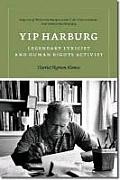
Here’s how E. Y. “Yip” Harburg described writing “Over the Rainbow,” as recorded in a 1980 radio interview and published by Harriet Hyman Alonso in Yip Harburg: Legendary Lyricist and Human Rights Activist:

I worked very well with Harold [Arlen], excepting when we got to the ballad, but you always have trouble writing a ballad. . . . this particular ballad was a ballad for a little girl who was at odds with her schoolteacher and her mother [sic] and she was in trouble, and like all little girls, wanted to get away from where she was at. And where was she at? Kansas. A dry, arid, colorless place. She had never seen anything colorful in her life except the rainbow. Well, where would a little girl like that go? Over that rainbow. On the other side of the rainbow. So I had that idea of a little girl wanting something, a place somewhere that was around that rainbow. And I told Harold about it and he went to work on a tune.

The contract is for 14 weeks and we’re on out 14th week now and we don’t get paid after the 14th week. And he surely sweated it out and he couldn’t get a tune for that until one night he called me. It was about 12 o’clock at night…and he played me this tune. . . .

I said, “Harold, that’s for Nelson Eddy. It was a symphony. It’s not for a little girl yearning to be over a rainbow,” and his spirits fell and we both more or less respected each other and I went home, very sad, and he did too, and for two weeks after, without money from Metro, he was still working on that tune and finally he called me and said, “Yipper, I feel this tune—this is a great tune, now you must write it.”
The middle of the song, Harburg recalled, came from the way Arlen whistled for “Pan, a silly little dog who ran away.”

In a 1979 Canadian Broadcasting Company interview, Harburg described the team calling in Ira Gershwin to mediate their impasse, just as he and Arlen refereed disagreements between the Gershwin brothers.
I said, “Ira, Harold’s got a tune here…and here’s the situation.” I told him I was too involved emotionally [to] analyze the thing, to put my finger on, to communicate to Harold, but Ira…said, “Harold, will you play that tune with a little more rhythm?” And Harold sat down, said, “What do you mean? This way?” And he played. . . . And the whole thing cleared up for me.
Harburg also claimed that “Over the Rainbow” inspired the MGM movie’s famous switch from sepia to Technicolor, saying there was no rainbow in the material he started with.

23 April 2013

“Yip” Harburg and the Wizard’s Speech

I had long heard that E. Y. “Yip” Harburg was responsible for the Wizard’s oft-quoted speech as he gave out gifts to Dorothy’s three companions in MGM’s The Wizard of Oz. But I wasn’t sure what point he made his input. Was he hanging about the set during filming?

According to Harriet Hyman Alonso’s biography Yip Harburg: Legendary Lyricist and Human Rights Activist, Harburg was involved fairly early. The studio already had some scripts when assistant producer Arthur Freed contacted Harburg and his musical partner, Harold Arlen, in New York. But according to Harburg’s memory, “Finally Arthur [Freed] agreed with my that we needed a new concept, to experiment, and let the lyrics and music wag the plot.”

What did that mean? Harburg continued:

So we put aside the six or seven existing scripts and started from scratch. We let the songs tell the story, and wrote the scenes around the songs, saving as much of the existing scripts as we were able to cue into the songs. . . .

Whatever weakness existed in the original story we replaced with new ideas. For example, my satiric sense rebelled when the Wizard gave the Tin Man a red pill for a heart and the Scarecrow a white pill for a brain. It was pat—and meaningless. My humorous spirit said, “Put a little bit into this. Why not show up some of the follies we live by?” When a guy goes to college, he doesn’t emerge with any more wisdom than when he went in. All he’s got is a diploma. So let’s be realistic: give the Scarecrow a diploma—and ipso facto, a brain.

In like manner, the do-gooders of the world never achieve hearts, but testimonials. Ergo, a watch for the Tin Man—that ticks like a heart. Plus an inscription for good deeds done. . . . I demonstrated all the parts to Louis B. Mayer and others with all the passion of my schoolboy experience. Thank you, P.S. 64!
Scholars of musical comedies note that the Wizard doesn’t have any songs in the MGM movie. When it’s been adapted for the stage, as Andrew Lloyd Webber has just done, producers often cast a big (if aging) star as the Wizard and insert a number for him. But really the speech Harburg wrote functions like a good patter song.

The interview quoted above originally appeared in Bernard Rosenberg and Ernest Goldstein’s Creators and Disturbers: Reminiscences by Jewish Intellectuals of New York (1982), one of the many sources, published and unpublished, that Alonso drew on. In Max Wilk’s They’re Playing Our Song: Conversations with America’s Classic Songwriters, Harburg restated his approach:
I loved the idea of having the freedom to do lyrics that were not just songs but scenes. That was our own idea, to take some of the book and so some of the scenes in complete verse, such as the scenes in Munchkinland. It gave me wider scope.
To Aljean Harmetz, author of The Making of “The Wizard of Oz”, he said: “The whole Munchkin sequence was done in prose. I threw it out and lyricized it. That was daring…the whole 10 minutes in rhyme. Never done before or since. All rhymed up.”

Harburg also took credit for suggesting Bert Lahr as the Cowardly Lion and even said things like, “I was torn between whether to have Haley as Scarecrow and Bolger as Tin Man because I thought Haley more of a weakie, more pathos. . . . I would have preferred Buddy Ebsen for either part to Haley or Bolger.”

In fact, Ebsen was cast as the Scarecrow until Bolger asked for a switch to accommodate his dance style, then as the Tin Man during early filming until he became dangerously ill from the makeup. Only then was Jack Haley brought in. So I’m not sure how much Harburg was really involved in casting, aside from perhaps tossing out ideas to producers Mervyn Leroy and Freed.

13 April 2013

Really Most Sincerely

The biggest Oz news of the weekend is a collision of politics, historical accuracy, and poor taste that arose in the UK in the wake of Margaret Thatcher’s death.

Opponents of Thatcher’s policies made a concerted effort to drive up sales of a 51-second version of “Ding, Dong, the Witch is Dead,” written by E. Y. Harburg and Harold Arlen for the 1939 Wizard of Oz movie. As with the nation’s annual competition to put particular songs on the top of the British charts at Christmas, this wasn’t so much a matter of what music people actually want to hear as what statement they want to make charts make.

The campaign got the song to #3, which normally would mean that BBC Radio 1’s “Official Chart Show” would play it as part of a Top Ten list. But the controller of that station decided that the show would instead report on the song’s placement in its newscast and play a short clip. The whole song won’t appear in the countdown. At least not this week.

As a Facebook commenter noted, Harburg would be pleased—not because of a fresh batch of royalties accruing to his estate but because he was committed to the political left. Harriet Hyman Alonso’s biography Yip Harburg: Legendary Lyricist and Human Rights Activist, published last year, goes into great detail about his political activity as well as his songwriting.

Thatcher might have the last word, though. Thousands of her opponents probably now have that song stuck in their heads. And so, probably, do you.

01 January 2013

“Nothing for Dorothy”?

The Daily Ozmapolitan tipped me to this recent profile of Andrew Lloyd Webber in the Toronto Globe and Mail. The occasion was the Toronto opening of Lloyd Webber’s reworking of the MGM Wizard of Oz for the stage as it creeps closer and closer to direct competition with Wicked on Broadway.

The Globe and Mail states:
He’s teamed up with his old writing partner [Tim] Rice to pen a number of new songs to add into this stage version of the 1939 movie, which he admires for having “arguably one of the best songs ever written” but he does not think works as well in the theatre: “It has nothing to set up Dorothy in Kansas; it has nothing for the Wizard; and there’s nothing for either of the witches.”
And here I thought Harold Arlen and E.Y. Harburg’s “Over the Rainbow” did set up Dorothy in Kansas. But the article goes on to quote Lloyd Webber explaining: “There’s nothing for Dorothy – she’s supposed to be this feisty little girl who wants to get out of Kansas and we don’t have anything that suggests [this].”

Indeed, that’s not how the MGM moviemakers dared to depict her. When their Dorothy does try to “get out of Kansas,” she’s punished with the cyclone and her nightmare journey to Oz. She ends up promising Glinda that she’ll never look for her heart’s desire any farther than her yard. MGM didn’t want Dorothy to be “feisty” or to be rewarded for being adventurous.

L. Frank Baum’s original Dorothy got carried off to Oz not because she’d been running away but just by chance. While there she learned about her own strengths. And although she finished that book telling Aunt Em it’s good to be home again, the next time we see her she’s on a ship to Australia during a storm. That’s feisty.

The paper also quotes Lloyd Webber as saying Avril Lavigne “would be good. Very, very good” as Dorothy. It’s a sign of my age that I have no idea what that implies.

20 November 2012

Baum Quotations, Real and Imagined

Jared Davis of the Royal Blog of Oz recently asked about a quotation that many websites and a few books attribute to L. Frank Baum:
Whenever I feel blue, I start breathing again.
None of those sites and books identifies any specific book or article as a source. The idiom “feel blue” was current in the late 1800s, so Baum could have said this. But that’s not good enough. People making a historical claim have the responsibility to provide evidence for it, not shift the burden of proof to skeptics to disprove the claim.

In this case, the quotation doesn’t ring bells with any of us older Oz fans who imbibed our knowledge in past decades, and since close to 99% of Baum’s surviving writing was published before 1920, it would be unusual for a quotable line to be so unfamiliar. I checked Google Books and saw that the “feel blue” saying appeared in books through about 2005 without attribution, and with Baum’s name attached only since 2009.

The internet is a marvelous hothouse for false quotations. As soon as a quote appears on one website, it gets picked up and spread around on others. And soon someone doing a search for a quotation’s source will see what looks like a critical mass of confirmation. Even this page could look like further evidence.

I checked out Goodreads’ page of Baum quotations, and it’s a big mix. There are many quotations from Baum’s books. But there are also many quotations from the 1939 MGM movie misattributed to Baum:
  • Toto, I have a feeling we’re not in Kansas anymore.”
  • “Some people without brains do an awful lot of talking, don’t you think?”
  • “Nobody gets in to see the Wizard. Not nobody.”
  • “It’s so kind of you to want to visit me in my loneliness.”
  • “Going so soon? I wouldn’t hear of it. Why my little party’s just beginning.”
  • “My world, my world... How can such a good little girl like you destroy all of my beautiful wickedness?” [Actually, that’s even a misquote of the movie line: “Oh, what a world! What a world! Who would have thought a good little girl like you could destroy my beautiful wickedness?”]
  • “Pay no attention to the man behind the curtain!”
  • “If I ever go looking for my heart’s desire again, I won’t look any further than my own back yard. Because if it isn’t there, I never really lost it to begin with.” [Which makes no sense at all.]
  • “I’ll miss you most of all, Scarecrow.”
  • “Now I know I’ve got a heart because it’s breaking.”
Lines original to the screenplay should probably be credited to Noel Langley, Florence Ryerson, and Edgar Allan Woolf, the screenwriters. Even that attribution might be questionable, however, since several other writers also worked on the movie, the last being John Lee Mahin.

In fact, the one person losing the most credit to Baum at Goodreads is probably E. Y. “Yip” Harburg, who wrote the movie’s lyrics and the Wizard’s speech as he presents the gifts to Dorothy’s companions. Harburg deserves credit for:
  • “If I [only] had a heart…”
  • “Lions and tigers, and bears, oh my!”
  • “Courage! What makes the flag on the mast to wave? What makes the elephant charge his tusk in the misty mist, or the dusky dusk? What makes the muskrat guard his musk? Courage! What makes the sphinx the seventh wonder? Courage! What makes the dawn come up like thunder? Courage! What makes the Hottentot so hot? What puts the ‘ape’ in apricot?”
  • “Hearts will never be practical until they can be made unbreakable.”
  • “And remember, my sentimental friend, that a heart is not judged by how much you love, but by how much you are loved by others.”
The screenwriters adapted some of Baum’s dialogue closely. But even on Goodreads people remember the movie version:
“Oh – You’re a very bad man!"

“Oh, no, my dear. I’m a very good man. I’m just a very bad Wizard.”
Baum’s original exchange was:
“I think you are a very bad man,” said Dorothy.

“Oh, no, my dear; I’m really a very good man, but I’m a very bad Wizard, I must admit.”
Then there are oddities in the list like this one, which has a grammatical error of agreement in the first sentence:
“People would rather live in homes regardless of its grayness. There is no place like home.”
Baum actually had Dorothy say:
“No matter how dreary and gray our homes are, we people of flesh and blood would rather live there than in any other country, be it ever so beautiful. There is no place like home.”
Of course, the final line predates The Wonderful Wizard of Oz by decades. It comes from John Howard Payne’s song “Home, Sweet Home!” (1823).

Here’s another commonly seen quotation:
“Never give up. No one knows what’s going to happen next.”
In The Patchwork Girl of Oz Dorothy really bucks up the moody young protagonist this way:
“Never give up, Ojo,” advised Dorothy. “No one ever knows what’s going to happen next.”
Finally, there’s a platitude that I can easily imagine someone today writing and then attaching to Baum to make the sentiment seem more authoritative:
“Stunt, dwarf, or destroy the imagination of a child, and you have taken away its chances of success in life. Imagination transforms the commonplace into the great and creates the new out of the old.”
But Baum actually said that in a 1909 interview with a magazine called The Advance.

25 April 2011

Harburg and Arlen

American Songwriter just posted a profile of E. Y. “Yip” Harburg, lyricist and uncredited collaborator on the screenplay of the 1939 Wizard of Oz movie.

Harburg was probably the most politically minded American songwriter to achieve popular success. And he came to those beliefs early:
After attending City College, Harburg chose to work in a Uruguay factory in 1917, which provided him an opportunity to make a decent wage, while avoiding being drafted against his beliefs into the First World War. Following the war, he married, fathered two children and became the co-owner of an electrical appliance company, that did well, but after seven years went bankrupt during the 1929 economic crash. After his business failure, Yip gravitated to songwriting. “I left the fantasy of business for the harsh reality of musical theatre”, he later joked.
In other Oz-musical news, Scott Thompson and Fred Barton are raising money to produce One for My Baby, “a sexy new song-and-dance book musical” built around songs by Harburg’s sometime collaborator Harold S. Arlen. Unlike some of his songwriting contemporaries, Arlen composed most of his classics for revues or Hollywood movies. He tried Broadway after World War 2, including the Tony-nominated Jamaica and the Truman Capote collaboration House of Flowers, but none of those were big hits.

10 March 2011

Boston Pops Seeks “Over the Rainbow” Videos

Yesterday someone from a certain local nationally-known orchestra contacted me with news about the its new Oz-related project:

To pay respect to the shared cultural heritage of the American Songbook, the Boston Pops is asking for video submissions of fans singing “Over the Rainbow” for inclusion in a video collage to be shown at Boston Pops performances throughout the season.

Voted number one on the RIAA and NEA’s “Songs of the Century” list, Harold Arlen [and Yip Harburg]’s “Over the Rainbow” is an American Songbook selection that unites generations and ties the 2011 Spring Pops Season together—from the Opening Night Judy Garland tribute to the finale “Triple Crown” performance celebrating America’s Heartland.

The signature Boston Pops sing-along has long been an audience favorite, so this year the orchestra is opening the sing-along to a national choir. Participants of all ages can submit video of themselves singing “Over the Rainbow,” by adding a video to YouTube and emailing a link and contact info to overtherainbow@bso.org.

Videos will be featured on the Boston Pops YouTube channel, on the Boston Pops website, and at Boston Pops performances throughout the season. All video submissions are due by Saturday, April 26, 2011.
The Pops’ season opens on 11 May with a tribute to Judy Garland featuring singer Linda Eder. Accompanied by the orchestra under the direction of Keith Lockhart, she’ll perform “By Myself,” “Me and My Shadow,” “Zing! Went the Strings of My Heart,” and of course “Over the Rainbow.”

26 November 2010

“Somewhere Over the Rainbow” in Germany

This week I heard a BBC report that the late Hawai’ian singer Israel Kamakawiwo’ole’s recording of “Somewhere Over the Rainbow” has been #1 on German music charts for eight weeks. It’s also apparently spurred a boom in ukelele sales in that country.

The BBC reporter speculates that the song’s popularity might reflect the economic times:

“Over the Rainbow” was written by a left-wing New Yorker called Yip Harburg at the end of the 1930s as the world was coming out of depression.

He also wrote “Brother, Can You Spare a Dime?” in 1929, when the world was as deep in depression as it could go.

The earlier song is about economic despair, and the second one is about economic hope.

Does the success of “Over the Rainbow” mean Germans feel the worst is behind them?
But as I understand things, the worldwide recession never hit Germany as badly as a lot of other economies. Its current center-right government has certainly been antsy about other governments’ requests for aid or plans for domestic stimulus spending.

I suspect the recording’s popularity is simply because it’s a great song that Kamakawiwo’ole remade with lovely simplicity. And while Harburg was one of the most politically-driven of the great mid-20th-century American songwriters, at least some of the credit for “Over the Rainbow” belongs to composer Harold Arlen.