28 August 2018

The Shift from Woodman to Woodsman

One of the attractions at OzCon earlier this month was a showing of James Ortiz’s The Woodsman, produced in New York in 2015. It was a striking piece of theater stylishly adapted from L. Frank Baum’s story of the Tin Woodman.

Another attraction was a preview of R. F. Wohl’s performance as Baum. He was workshopping a new one-person show with an audience of knowledgable Oz fans. Afterwards I heard an attendee note that Baum consistently referred to his tin creation as a “Woodman,” not a “Woodsman”—though many people (not just James Ortiz’s play) now use the longer word.

That prompted some musing that perhaps one form had become more popular than the other, so I turned to the Google Books Ngram Viewer. I asked it to graph out the popularity of “woodman,” “woodsman,” and “woodchopper” from 1800 to 2000. I restricted the query to lowercase only, eliminating “Woodman” as a proper name (and almost all mentions of the Tin Woodman as well).

Here’s the result:

As you can see, “woodman” was the more popular word when Baum grew up and when he published The Wonderful Wizard of Oz in 1900. “Woodsman” rose suddenly in popularity starting in 1880 and around 1910 surpassed the shorter form. Both forms have been declining in print use since 1940 as we’ve moved away from a wood-based economy.

In addition to affecting how people speak of the Tin Woodman, that shift in everyday language has also affected how we quote the George Pope Morris poem that begins, “Woodman, spare that tree!”

27 August 2018

Looking Back on an “Errand of Mercy”

A couple of years ago, I collaborated with artist Olivia Li, cover artist Catalina Rufin, editor E. J. Barnes, and the Massachusetts Historical Society to produce a short history comic about the Irish potato famine and Boston’s response to it.

Rick Silve at Comic a Day just posted a nice review of “Errand of Mercy: The Irish Potato Blight and the Good Ship Jamestown”:
Eight page b/w minicomic with a color cover. This begins with a general overview of the history of potatoes in Ireland and the potato blight and famine in the mid-1800s. It then goes on to document the response of Irish immigrants in Boston, who organized a relief effort, securing approval for the sending of the USS Jamestown, a navy ship, with a cargo of 800 tons of food and clothing to Cork, Ireland in 1847.

Considering the space limitations of the minicomic format, this book does a nice job of exploring the political complexities involved in mounting the mission of mercy.

This was a good snapshot of a moment in this history of Ireland and of Boston.
All I wanted was something better than Boston’s Irish Famine Memorial statues.

(Shown above is one interior page; all eight can be read on Olivia Li’s website.)

23 August 2018

Another Job Lost to Advancing Technology

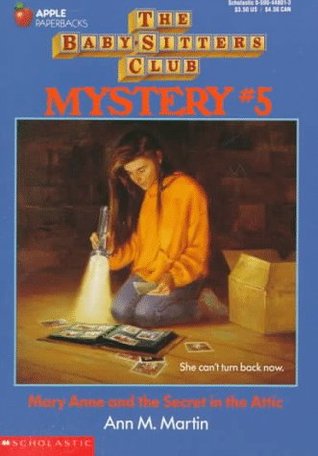
From the Los Angeles Review of Books’s interview with Holly Tommasino, who created the hand-lettered journal entries in the original Baby-Sitters Club books. Tommasino was first an in-house designer for Scholastic, then a freelancer, then out of a job:
What was your role with The Baby-Sitters Club?

When all the design elements for the series were initially coming together, I created the handwriting styles for each character. And then I handwrote all portions of the manuscripts that were flagged by editorial — usually BSC journal entries, but also the postcards and letters and lists that popped up from time to time. I continued to produce the handwriting even after I left Scholastic.

What happened then?

I worked as a freelancer until 1996. At that point, due to advances in technology, I was sent font forms by a company. They asked me to letter each character’s handwriting in spaces on the form. And these forms were long! They had me do a few different y’s and then write a w attached to a y or a t attached to a y. They didn’t want the handwriting samples to look totally uniform, so it was quite an extensive process. After that, the freelance work stopped, but the books continued.
The 1986-2000 series has of course been rejuvenated with comics adaptations by Raina Telgemeier and then Gale Galligan. Those editions appear to be the bestsellers today.

In contrast, 2010 Scholastic reissued two early titles, evidently retaining or reproducing the cursive writing, but those books didn’t spark a new craze among the children of the original readers. The latest reissue is clearly for the nostalgia market. Was the cursive handwriting, which kids today are said not to be able to read, to blame?

21 August 2018

Discovering Lost Tales of Oz

Joe Bongiorno’s Royal Publisher of Oz releases its latest book today: the short-story anthology Lost Tales of Oz, featuring illustrations by the multiple-Eisner winning artist Eric Shanower. This volume contains eighteen stories—over 500 pages of new fiction in all—inspired by and adhering to the Oz book series.

One of those stories is a little piece by me called “Ojo and the Woozy.” For folks who haven’t read The Patchwork Girl of Oz, in the jacket art above Ojo is the boy dressed in Munchkin blue and frills near the left side, and the Woozy is the cubist blue creature at the far left.

In the same year that he released The Patchwork Girl of Oz, L. Frank Baum wrote six short books collectively titled Little Wizard Stories of Oz. Each was about two established characters, such as Dorothy and Toto, or Jack Pumpkinhead and the Sawhorse, having a brief adventure together.

Several years back, I set out to create a new story along those lines, using some pair of characters Baum didn’t get to. Ojo and the Woozy felt like a natural choice. In Baum’s seventh Oz book they travel together to the Emerald City. The Woozy is almost always calm, cheerful, and straightforward while Ojo is a moody fellow, so their personalities can play off each other.

My “Little Wizard” story ended up never leaving the vicinity of the Emerald City. The drama of Ojo and the Woozy’s adjustment to life there after having spent years in isolated forests was too interesting. As a result, this tale offers its heroes no greater challenge than being a shy new boy who doesn’t know how to play the local sports.

Which is, of course, a great challenge indeed. I may have given Ojo some of my own childhood experiences.

Lost Tales of Oz is available in hardcover and paperback via Lulu.

07 August 2018

Heading Out to Oz

“In May I began describing, photographing, and re-housing a discrete collection of posters within the Ludlow-Santo Domingo (LSD) Library collection,” Rachel Parker writes on the blog of the Houghton Library at Harvard. “Tackling the Ludlow-Santo Domingo Library poster collection has been exciting, in part because of the descriptive challenges in title creation.”

Elsewhere the library explains, “The Ludlow-Santo Domingo Library is the world’s largest private collection of material on altered states of mind.” Which is to say, “The 50,000-plus-item collection documents psychoactive drugs and their physical and social effects.”

One suspects the initials LSD don’t just stand for Ludlow–Santo Domingo, even if the collection was produced by “Julio Mario Santo Domingo Jr.’s acquisition and integration of the Fitz Hugh Ludlow Library of San Francisco in 2001.”

The Houghton library blog credits the poster above to “James McMullen” at an unknown time. That artist spells his name James McMullan. Another website credits it to “The Push Pin Graphic, Issue 52 (1966).” (Seymour Chwast authored a 2004 book looking back on The Push Pin Graphic, and some poster-reprinting websites carelessly credit the image to him.)

In other news, I’m heading out to OzCon this week.

06 August 2018

Emilie and Ella

I had the pleasure of seeing Emilie Boon’s picture book Ella and Monkey at Sea develop in a writers’ group.

It’s just been published, and Emilie wrote about drawing on her own childhood experiences at the Nerdy Book Club:
I often explain to students I teach that not everything in the book happened to me in exactly the way I wrote it. I changed details for the sake of a clearer and more resonant story, while remaining faithful to the emotional truth I knew deep inside.

I always knew I had a story to tell about this voyage, but I wasn’t always sure how to go about telling it. I found a way into the story through the main character, Ella. Once I finally decided how to develop the character visually, her personality and voice came quickly. This is an example of the added benefit of being both the author and the illustrator where the pictures inform the story and the story informs the pictures.

Just like Ella, I drew a sun with crayon during the turbulent Atlantic crossing. How could the grown ups not like a picture of the sun amidst the stormy seas, winds and rain? In real life I even won a prize for that picture, but I didn’t think that was important for the story I wanted to tell.

I was more interested in the fact that a child can envision the good, or a happy ending, in the middle of a difficult situation, reflecting the amazing resiliency that many children have. As long as they have at least one loved one close, I think children can be strong and adaptable. Expressing fears, anxieties, and hopes for better times through art, is a well-documented way children can process adversity.
Congratulations to Emilie on making part of her own story into a story for many children!

13 December 2017

Happy Holidays from Highlights

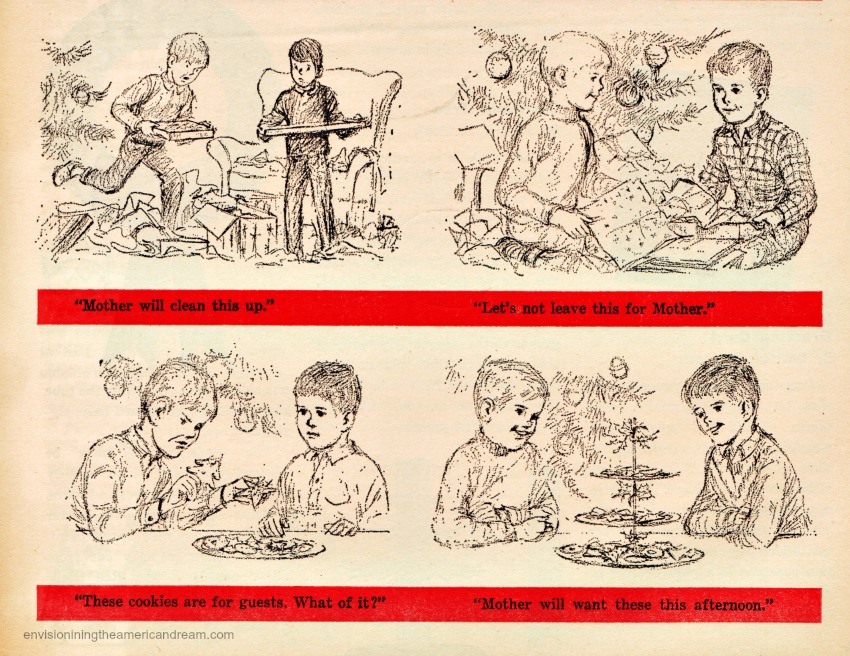
This week H-Net’s American Studies discussion site published Patrick Cox’s article “What's Wrong with Christmas in Highlights for Children?” While certainly not saying this was a Bad Thing, Cox noted a significant change in how the magazine has presented Christmas to young readers:
Santa Claus, arguably the most prominent figure in wondrous childhood, has been almost entirely absent from the pages of Highlights over the past 30 years. Santa used to appear multiple times in every December issue in stories and images, as did elves and flying reindeer, since the magazine was founded in 1946. Other Christmas-y pages in December Highlights issues of Chistmases past included short non-fiction pieces on, for example, the history of Christmas trees or Christmas celebrations in other countries, and short fiction about children at Christmas who typically learn valuable lessons about giving and kindness. Recurring characters The Timbertoes and The Bear Family celebrated christmas. Overt Christianity was also prominent in the early years of the magazine all year round and the December issues always included bible stories, sheet music of religious carols, and images of the nativity and angels.

Jesus and Santa both appear less and less frequently in Highlights beginning in the 1950’s. By the 1990’s, Highlights is beginning to look a lot less like Christmas. Santa and Jesus are both almost completely absent, as are the decorations, the bright colors, the piles of gift wrapped presents. They’re replaced by pleas to keep Christmas simple, emphasizing time with family and friends, giving to charities, and making presents by hand. Several pages are given to instructions on making homemade presents and homemade decorations. . . .

The children in Highlights are very often white, as I suspect most of their readers are, and main characters in stories and comics in the magazine are most often male, never queer, and pretty much always comfortably middle class. But at Christmas, their anti-consumerist pragmatism is surprisingly non-conformist.
But what should we expect from a magazine so un-American that it includes no advertising?

(Above: Goofus and Gallant do Christmas, courtesy of Envisioning the American Dream.)

07 December 2017

Guest Reviewer on The Book of Dust: La Belle Sauvage

Godson has some things to say about The Book of Dust: La Belle Sauvage:
…the book ostensibly isn’t on the scale of the trilogy. I was somewhat worried, until I realised that whilst the book limits itself to the Thames, almost entirely to Oxfordshire, and for swathes two buildings, the adventure is still epic beyond belief.

To think critically for a moment, this book can almost be called magic realism, not fantasy. Or at least it is fantasy of the Terry Pratchett school - it can tell very ordinary stories on a heroic scale. The echoes of Pullman’s predecessors and contemporaries are obvious. Add Pratchett’s humour to Gaiman’s dark twist (Pullman jokingly called La Belle Sauvage ‘His Darker Materials’) to C. S. Lewis’ storytelling and worlds to Lewis Carroll’s allegory (and, as one critic pointed out, the fact that Pullman’s heroine is called Alice is slightly on-the-nose) and you begin to approach Pullman’s brilliance.

Approach, mind you - La Belle Sauvage is a clinic in how to structure a novel, allaying each fear I had almost as soon as I had it, the pattern mimetic of the action itself. It brought to my mind the episodic nature of the Icelandic Sagas at one point, a Christie-esque murder mystery at another, thrillers, love stories and epics at others. It transcends genre, and does so to the tune of Pullman’s beautifully simple prose, that captures in the same way as the originals a Romantic quality that is inherently readable for everyone.
The full essay is on his school’s book blog.

18 October 2017

“Comics and Medicine” Coming to MICE, Oct. 21

The Massachusetts Independent Comics Expo (MICE) is coming up this weekend, and on Saturday I’ll moderate a panel on “Comics and Medicine.”

This session is being organized by Matthew Noe, the Graphic Medicine Specialist for the National Network of Libraries of Medicine, New England Region. He wrote about it here on the agency’s blog.

Here’s an extract from Matthew’s posting:
In anticipation of this panel, I asked each panelist to say in a few sentences what graphic medicine is to them. Here are their responses – a bit of a teaser of the panel to come!

Cathy Leamy: Graphic medicine is anything involving comics/cartooning and health and illness. I love that it’s not rigid and nailed down; the door is open for all kinds of explorations and investigators. Health education comics, illness memoirs, analysis of comics for medical themes, art therapy, teaching self-expression and empathy through comics making – so many applications are possible, and we all benefit from the cross-pollination of being exposed to them.

Kriota Willberg: My goal as a cartoonist making GM is to normalize medicine and the body. I hope to make illness, anatomy, and science a benign and familiar trio of actors in our lives, thereby mitigating the anxiety and confusion that often effects patients and their families, and stigmatizes the ill.

Iasmin Omar Ata: [To me, graphic medicine is] using unique mediums to heal through the power of art. Particularly in comics and games, there exists such an opportunity for those with illness to speak, be heard, listen, and heal.

Matthew Noe: Graphic medicine, beyond the strict definitions and the difficult task of reigning in what exactly it means to be a comic, is about communication. Patients communicating with physicians. Physicians communicating with patients. Family communicating with family. Comics can give voice to the voiceless, clarity to the unclear, and can help us refocus medicine on the human.
I’m looking forward to hearing more! Our session is at 11:00 A.M. on Saturday in the Auditorium of University Hall, 1815 Massachusetts Avenue, Cambridge.

06 October 2017

Choice Bits from M. T. Anderson

Entertainment Weekly’s interview with M. T. Anderson about his new novella, Landscape with Invisible Hand, focused on its timeliness and political overtones—which came as a surprise to the author. Here are some of his remarks, insightful as always:
I wrote the first version of it like four years ago at this point. Supposedly I had no idea what this political climate was. There is a health care element — like this kid has this weird disease, somehow alien-inspired disease, and his health care won’t cover it. And at the time I actually remember thinking “Oh, with the ACA going into effect, by the time this is published I bet that this will seem kind of backwards.” Like it would seem like a throwback. . . .

I think that the tension that was probably there in my mind — that I was expressing — was after the 2008 crash, suddenly a couple of years later, everyone is saying, “Look, the economy’s doing great!” But of course, the “economy” — that did not extend to about 95 percent of the population; 95 percent of the population was still in a horrible state. I didn’t think of this as I did it, but then it was immediately clear later: Even the fact that the wealthy now, literally, there is space between them and the rest of the population in this book because the wealthy are now hovering in aerial condos a mile above the Earth’s surface, with access to all this vuvv tech and all this alien tech and all this alien medicine and everything else, while the rest of us are falling around on Earth still. That is, in a sense, I feel also a great representation of how it feels right now. Kind of like a gap between that upper one percent and the rest of us. . . .

If you had talked to people 10 years ago to say that their book was somehow relevant to specific political events, it seemed really kind of embarrassing. It felt like that was a cop-out somehow. . . . there was a phase where dystopian fiction was in but it did not yet have that feeling of complete urgency, except for stuff like Cormac McCarthy. It was a little bit more fun window-dressing to suggest teen angst than it was about a truly political situation in some ways.
In an alternate universe, as the kids say, we’d still be talking about dystopian, apocalyptic near-future science fiction that way.