Showing posts with label AUTHOR C. S. Lewis. Show all posts

16 February 2025

Wisest Thing I’ve Read Today

From Katherine Rundell’s essay “Why Children’s Books?” in the London Review of Books:

It’s easier to trust a writer who writes great food: they are a person who has paid attention to the world. Children have very little control over what or when they eat, and evolution has given them a sweet tooth far stronger than an adult’s to ensure they consume enough calories during growth spurts – of course their longings are colossal. Fictional food provokes real hunger: it makes the story into a bodily thing. Food is a way to open the door to the space in which the capacity for imaginative and intellectual freedom is built: you lure them in with real appetites.

Perhaps the best book ever written about postwar rationing is Charlie and the Chocolate Factory. Published in 1964, ten years after rationing ended in Britain, it has an entire nation’s hunger for fresh tastes and wild luxury encoded in its pages.

And there is The Lion, the Witch and the Wardrobe, written in 1950, when sugar and fruit and treats were still scarce (in 1942, according to a survey, many children did not believe that bananas were real): Edmund’s Turkish Delight stands in for every lost and longed-for glory. What child forgets the seismically disappointing discovery that the English version tastes like jellied flowers dusted in soap powder?

27 December 2019

The Oxford and Cambridge Schools of British Fantasy

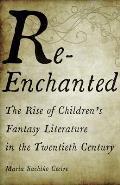
From Slate’s interview with Maria Sachiko Cecire, professor at Bard and author of Re-Enchanted: The Rise of Children’s Fantasy Literature in the Twentieth Century:
J.R.R. Tolkien and C.S. Lewis, of course, as many people know, were friends and colleagues, but they were actually working to reform the English curriculum at Oxford, in addition to writing their own fantasy.

They were the architects of this curriculum, which went into effect in 1931. And they really had an enormous role to play in the kinds of questions that were set in examinations, the texts that were required for undergrads to read; then this had this kind of huge knock-on effect in terms of what people were studying for the next nearly 40 years at Oxford. There’s still some vestiges of that curriculum in the Oxford education today. Then the younger authors I was looking at were Susan Cooper, Kevin Crossley-Holland, Diana Wynne Jones, and Philip Pullman. They all studied this curriculum and got their degrees between 1956 and 1968.

This curriculum at Oxford was really heavy on medieval literature, just at the moment when most other universities were going in the direction of modernism and the kinds of writing that we now associate with literary fiction in the 20th and 21st centuries. At Oxford they were doubling down on medieval literature and also looking at it not just as examples for linguistic analysis—which was how it had been primarily studied in the 19th century under philology—but really looking at it as literature. Really seriously asking students to meditate on both the English medieval past and also this idea of magic and enchantment. . . .

And for comparison’s sake, I also went to the archive at a few other universities, including Cambridge, which went in a really different direction from Oxford in the ’20s and ’30s—much more intentionally towards modernism, towards more contemporary texts, and cutting out medieval requirements for their undergraduate English degree.

And interestingly, Cambridge didn’t really have the same legacy of children’s fantasy writers. T.H. White was at Cambridge at a really interesting time, when there was still a medieval requirement, but right as they were ending it. If you compare his The Once and Future King to, say, The Lord of the Rings, they’re so different in the way they talk about the Middle Ages, with a different level of reverence. There’s anachronism in White’s writing, and pretty profound critiques of the warlike nature of the Middle Ages and of a lot of the nostalgia for that period. Whereas Tolkien and his students tend to be a lot more reverent of that material.
See previous discussions of Tolkien as a teacher of future fantasy writers in 2010 and 2011.

23 September 2014

Finding Neverland Has a Lot to Answer For

In 2004 Miramax released Finding Neverland, with Johnny Depp playing a handsomer-than-real-life James M. Barrie, Kate Winslet as a more-widowed-than-real-life Sylvia Llewellyn Davies, and Freddie Highmore as one of her less-doomed-than-real-life sons.

It was a modern “prestige picture,” with a historical setting, literary roots, paeans to preserving childhood imagination, and a noble dying parent. All the odd aspects of Barrie’s relationship with the Llewellyn Davies family and of late-Victorian Britain were blurred away.

That movie made $116 million worldwide, more than four times its production budget. More important, it was nominated for seven Oscars and won one (for best score), which is what studios want in a prestige picture. Harvey Weinstein is now producing a Broadway musical based on it.

Two years later the Weinstein Company offered Miss Potter, starring Renee Zellweger as Beatrix Potter. Last year Disney (owner of Miramax) gave us Saving Mr. Banks, with Emma Thompson as P. L. Travers and Tom Hanks as Walt Disney; the company entered that deal to protect its brand, but the result was another prestige picture that distorted literary history.

There were, to be sure, earlier biopics about British children’s-book writers, such as Dreamchild (1985) with Ian Holm as Lewis Carroll and Shadowlands (1993) with Anthony Hopkins as C. S. Lewis. But those were about the contrasts between childhood literature and adult life, not about fantasy stories making everybody happy again.

It’s possible that Hollywood now thinks it’s run out of dead British children’s authors who are famous in the States. (Evidently E. Nesbit is not well known enough, and her solution to family troubles too worrisome.) The studios have therefore moved on to American children’s-book writers.

This week the Hollywood Reporter broke the news that New Line Cinema bought the script for Road to Oz, a biopic about L. Frank Baum. The writer, Josh Golden, has even been working with one of the Finding Neverland producers, Nellie Bellflower. (And somehow the team of Golden and Bellflower doesn’t seem like they would turn out an unflinching look at the human condition.)

The John Ritter TV movie The Dreamer of Oz (1990) already showed it’s possible to fit Baum’s life into the arc of a man prone to fantasizing who redeems himself through telling children’s stories. Oz proved its potential to generate international box-office success with Oz the Great and Powerful last year (and its potential to lay an egg with this year’s Legends of Oz: Dorothy’s Return). So this screenplay might actually get made.

Interestingly, New Line is part of the same Time Warner corporation that owns rights to the 1939 MGM movie. This biopic might therefore be able to use elements from that film, which Baum never saw, but which could trigger the requisite warm nostalgia from viewers who don’t know the real story.

09 December 2011

Tolkien the Teacher

Back in early 2010, I quoted reminiscences about J. R. R. Tolkien at Oxford from Diana Wynne Jones and Susan Cooper, as collected by Leonard Marcus. Cooper said, “He was a wonderful lecturer,” but Jones said his lectures were “absolutely appalling.”

It looks like many more people shared Jones’s response. Adam Gopnik’s recent article in the New Yorker about high fantasy for young readers begins:

At Oxford in the nineteen-forties, Professor John Ronald Reuel Tolkien was generally considered the most boring lecturer around, teaching the most boring subject known to man, Anglo-Saxon philology and literature, in the most boring way imaginable.

“Incoherent and often inaudible” was Kingsley Amis’s verdict on his teacher. Tolkien, he reported, would write long lists of words on the blackboard, obscuring them with his body as he droned on, then would absent-mindedly erase them without turning around.

“I can just about stand learning the filthy lingo it’s written in,” Philip Larkin, another Tolkien student, complained about the old man’s lectures on “Beowulf.” “What gets me down is being expected to admire the bloody stuff.”
Since Jones and Cooper were at Oxford at about the same time, and since Cooper can appreciate theatricality when she sees it, most likely she was remembering the more popular lectures of C. S. Lewis.

According to Philip Pullman, Tolkien left his stamp on the Oxford curriculum even after he had retired from teaching: “every undergraduate had to read and study—and suffer—Anglo-Saxon.”

08 June 2011

Divided by a Common Language in Narnia


This is a detail from Amy Goldwasser and Peter Arkle’s Sketchbook page at the back of the last New York Times Book Review, headlined “Literature sue l’Herbe.” They asked different New Yorkers what they were reading in Central Park. The Lawsons were reading C. S. Lewis.

I had the same question that Matthew asks when I read about the Turkish delight in The Lion, the Witch, and the Wardrobe. And I’d never seen a wardrobe; here in America we don’t forget to build closets into houses. It’s amazing the book found any sort of American audience at all.

29 March 2010

Conflicting Recollections of Prof. Tolkien

In his book The Wand and the Word: Conversations with Writers of Fantasy, literary scholar Leonard S. Marcus asked a number of established fantasy writers about their influences, particularly J. R. R. Tolkien.

Diana Wynne Jones (born in 1934) and Susan Cooper (born in 1935) attended Oxford University at about the same time, and they gave Marcus completely different memories of Tolkien.

Cooper said:

I never met him, but I went to his lectures on Anglo-Saxon literature, along with hundreds of other students. He was a wonderful lecturer. Like C. S. Lewis, whose lectures I also attended, he was a tweedy, pipe-smoking, middle-aged man. We were all waiting for the third volume of The Lord of the Rings to come out.
But Jones told Marcus:
I went to his public lectures. They were absolutely appalling. In those days a lecturer could be paid for his entire course even if he lost his audience, provided he turned up for the first lecture. I think that Tolkien made quite a cynical effort to get rid of us so he could go home and finish writing The Lord of the Rings.

He gave his lectures in a very, very small room and didn’t address us, his audience, at all. In fact he looked the other way, with his face almost squashed up against the blackboard. He spoke in a mutter. His mind was on finishing The Lord of the Rings, and he was really musing to himself about the nature of narrative.

But I found this so fascinating that I came back week after week, as did one other person. I’ve always wondered what became of him, because he was obviously equally fascinated. And because we stuck there, Tolkien couldn’t go away and write Lord of the Rings!

He would say the most marvelous things about the way you take a very basic plot and twitch it here and twitch it there—and it becomes a completely different plot.
Perhaps these writers are remembering different series of lectures, and Tolkien was more engaged in the topic of Anglo-Saxon than in his “public lectures.” Perhaps Cooper’s memory of Tolkien is mixed with her memory of Lewis, whom Jones recalls as a polished, popular speaker in a large, packed auditorium.

15 October 2008

The Clerical Strain in British Children's Literature

While in London last summer, I visited the Science Museum's exhibit on British technological progress in the 1950s and 1960s, which was "branded" with the characters of the Dan Dare comics series.

I didn't think the exhibit made a good case for linking the comics' sci-fi with the creation of radios only slightly larger than shoeboxes, even if they did appear at the same time. But I suppose the familiar faces made the exhibit more interesting for people who grew up reading Dan Dare.

The thought that struck me hardest as I learned about Eagle, the magazine that published that comic, is how the line of British fantastic literature for children includes several notable books from clergymen:

  • Charles Lutwidge Dodgson, better known as Lewis Carroll, author of Alice in Wonderland. (I should note that Dodgson worked as a college professor rather than a minister, but he was ordained.)
  • George McDonald, author of The Light Princess and The Princess and the Goblin and a Congregationalist minister.
  • Marcus Morris, vicar and founder of Eagle magazine.
  • W. V. Awdry, vicar and creator of Thomas the Tank Engine.
  • G. P. Taylor, retired vicar, author of Shadowmancer and numerous press releases.
In addition, these British authors of Very Important children's novels also published widely read books of theology: And there might be more.

I can't think of any equivalents in American children's literature. I'm not thinking about people who wrote religious books for captive young audiences, but authors who were either religious professionals or respected theologians and also created books that a significant number of children from other faiths have enjoyed.
