31 July 2012

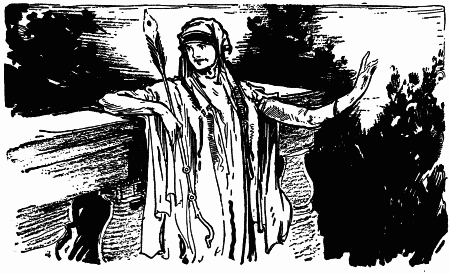
The Legacy of Oz in Culver City

Yesterday I went on the Sony Pictures Studios tour, which shows people working sets and backstage departments instead of giving them a theme-park ride.

The guide told us that an area where the ground had been painted yellow was connected to Sam Raimi’s upcoming Disney movie Oz, the Great and Powerful, about young Oscar Z. Diggs’s arrival in Oz. This seemed resonant since Sony Pictures Studios is the remaining part of the old MGM lot, including buildings where Judy Garland went to school and where the studio recorded its music while making its 1939 Wizard of Oz.

Through a complex series of corporate setbacks and real-estate transactions, the regal MGM lot now celebrates the legacy of once-low-rent Columbia Pictures. (In the same way, the MGM Wizard of Oz is now Warner Bros. intellectual property.)

Right now the Sony studio is undergoing a major construction project: a 90-foot-tall rainbow that will arc from a spot in front of the executive offices, over some other buildings, to another spot. That of course commemorates The Wizard of Oz, even though no rainbow appears in the film. If we hadn’t already been on the border of tourism and movies, it would all have been very ironic.

30 July 2012

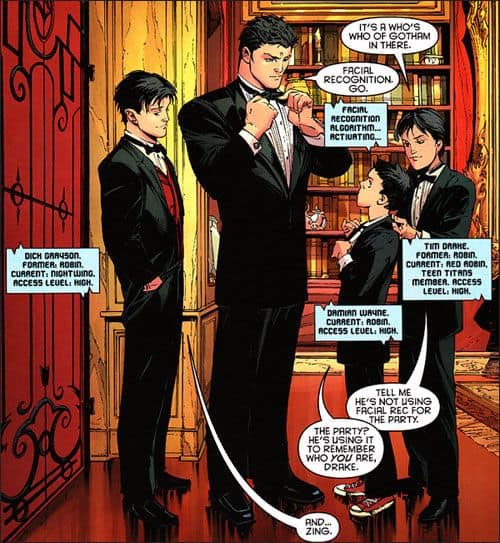
Robin Controversies, part 2

This extended version of the weekly Robin is brought to us by the letters B, I, and N.

Best Robin. GrayHaven Comics asked fans to vote on who was the best Robin. This question comes up often in fan forums, and perhaps we should consider what the Robins themselves might say.

I imagine that the second Jason Todd would refuse to participate, and the final results would therefore be four votes for Dick Grayson, one for Damian Wayne (his own), and one for Tim Drake (Dick’s vote).

Iconic Robin. TV Guide ran a preview of the Smallville comic book being scripted by Bryan Q. Miller, which will introduce Batman into that quirky version of the Superman myth. It showed a young woman as Batman’s partner, Nightwing. The article made clear that in that character Miller was writing a new version of Stephanie Brown.

At some point, however, DC’s top editors asked Miller to change plans, and that Nightwing is now Barbara Gordon, elsewhere known as Batgirl or Oracle. Fans of Stephanie Brown were upset, and a great deal of energy has gone into parsing the back-and-forth on DC’s extempore statements and excuses that the company wanted to use the most “iconic” or widely recognized versions of its characters.

This kerfuffle wouldn’t even be a kerfuffle if the comics industry and fan culture hadn’t come to depend on seeing “previews” of works in progress. If this issue of Smallville had simply hit the newsstands (not that there are those anymore, a major factor in the current marketing methods), then people could just have gotten excited at a new use of the Nightwing trademark and the Barbara Gordon name.

As it is, the only source of Milller’s writing about Stephanie Brown is the three volumes of his Batgirl series. And the last volume includes one striking page of Stephanie as Nightwing. It’s very satisfying work.

New Robin. In the national effort to dissect the enjoyable, impressive mess of The Dark Knight Rises, even Time, Forbes, and of course MTV have weighed in on possible futures for the character played by Joseph Gordon-Levitt.

I don’t think it gives away too much about The Dark Knight Rises to say that Gordon-Levitt plays a beat cop who’s figured out that Bruce Wayne was the Batman. He reveals that early in the movie. Did Officer John Blake observe the Batman in action when he was a child, as Tim Drake did? Did he stumble across important information in his work? Is he an especially brilliant investigator? The movie never says.

But in a series that digs into the compromises made by Wayne, his butler Alfred, his comrade Commissioner Jim Gordon, his love interest Selina Kyle, and many others, one thing stands out about Gordon-Levitt’s character: John Blake isn’t evil. He’s the voice of uncompromising integrity and perseverance. Along with his relative youth, that makes him the movie’s stand-in for Robin, and the final minutes explore that possibility further, with the symbolic message clear but the details ambiguous.

Perhaps lost in the shuffle is how the coming-of-age figure in Christopher Nolan’s Batman films isn’t any version of Robin but is Bruce Wayne himself. Batman Begins is of course an origin story. The Dark Knight Rises, more closely tied to that first movie than to The Dark Knight, returns to the question of how Bruce Wayne can become a successful adult. What part does being the Batman play in his growth? Is the Dark Knight a stage, a dead end (literally), or all that an adult man can be?

29 July 2012

Robin Categories and Controversies, part 1

This page from Detective Comics, #208 (June 1954), comes courtesy of little Bully’s Tumblr stream “What the ’Tec?” To play along with its categories, it’s useful to know that “Animals” means “Mammals.” And it’s useful to know a mammal that begins with N.

This weekly Robin plays categories with recent Robin controversies (which are really no more than kerfuffles).

Red Robin. DC Comics may already be revising the history of its Tim Drake character in the current continuity. Two of the much-hyped #1 issues stated that he had served as Robin. However, at the San Diego Comic-Con, Teen Titans, #0, writer Scott Lobdell suggested that that character went straight into the Red Robin identity.

Such speed could have been a response to fan complaints that new universe’s Batman had gone through kid sidekicks like they were Kleenex. But the change and the thought that this Tim has never been Robin (and thus never experienced even a version of the adventures people read from 1989 to 2011) produced even more fan exasperation. I wouldn’t be surprised if the final text of Teen Titans, #0, restores a bit of that history.

That said, I can imagine quick adoption of the Red Robin identity being quite in character for Tim Drake. His superhero origin would go something like this.

“Batman needs a Robin, sir.”

“Go home, kid.”

Two days later. “Is this Mr. Wayne? My name is Timothy Drake. Batman needs a Robin.”

“How did you get this number? Uh, why are you speaking to me about Batman? Hello? Hello?”

Three days later. “Good takedown, Batman, but a little rough. See, Batman needs a Robin.”

“Leave me alone! You know the last Robin didn’t work out.”

Six days later. “Hello, Batman.”

“Why are you wearing a costume?”

“Nightwing helped me with it.”

“I told you both: I don’t want another Robin.”

“I’m not Robin, sir. I’m Red Robin!”

Sigh. All right.”

Old Robin. Retronaut shared a portfolio of Andy Warhol and Nico dressed up as the Dynamic Duo for a magazine photo shoot in 1967. This was of course during the era of television-fueled Batman camp.

TOMORROW: Controversies for letters B, I, and N.

28 July 2012

“Online Oz” Panel Tomorrow

Tomorrow morning I’ll moderate a panel at this year’s Winkie Convention titled “Online Oz.” More specifically, we’ll talk about blogging.

The panelists will be:
In addition, I hope to show off other exemplary Oz blogs and websites:
My experience with presentations is that the more they’re about technology, the more likely the presentation tech will fail. The last time I did a panel on blogging, at the 2009 Organization of American Historians conference, we had to start forty-five minutes late using a laptop borrowed from someone in the audience. No one ever got to see the moderator’s introductory video.

So I’m trying to keep it simple. First step: Putting all the links into an Oz and Ends posting so they’re easy to find.

27 July 2012

OIP Derangement Syndrome and Conspiracy Theories

On Sunday the Boston Globe plumbed the depths of OIP Derangement Syndrome in Leon Neyfakh’s article headlined “Revealed! Obama’s Secret Agenda”:

On the fringes of American politics, on conservative radio, and even on the campaign trail, a whole parallel Obama has emerged over the course of the 2012 race—a shadowy figure who has craftily concealed his ideological extremism and is merely awaiting his second term to unleash it. Taken as a whole, this other Obama—and what you might call his “Muahahaha strategy” of post-election bait and switch—offers a vivid picture of the fears that the president has inspired in some critics, fears that appear only to have grown during a real-life first term that has failed to produce much in the way of radical legislation.

As fanciful as they may sound, these rumors reflect something real in the nation’s political imagination—and shine a light on the particular kind of distrust that tends to accumulate around those in power. And they’re also seeping into mainstream political discourse, even into the race itself. Mitt Romney has invoked the issue of Obama’s secret intentions, telling a group of newspaper editors recently that Obama “doesn’t want to share his real plans before the election, either with the public or with the press,” and that it was up to journalists to make him come clean. “His intent is on hiding; you and I are going to have to do the seeking,” Romney said. “He wants us to reelect him so we can find out what he’ll actually do.”
Of course, Romney is keeping plenty of secrets himself, both about his personal finances and about the cuts he’d have to make to keep his outlandish budget promises.

Neyfakh acknowledges that there’s long been a paranoid strain in American politics, but not on this scale:
But in modern times, no presidential candidate has been accused of keeping more secret plans in his back pocket than Obama. Part of it is rooted in suspicion of his strange name and his ethnic background, of course, but it’s more than that. The speed of his ascent to national fame, his early days as a hipster in New York, even the fact that he may or may not be sneaking cigarettes outside the Oval Office, have all combined to fuel a frothy, nightmarish vision of a comic-book-style supervillain: frightening, fascinating, and very good at hiding things.
As the Globe noted, people on the far right have spread and expanded upon their rumors without being able to point to much in Barack Obama’s policies to support them. For example, even after two highly publicized mass shootings by lunatics who bought extra-big ammunition clips to kill more people, the White House hasn’t campaigned for reasonable gun control. But that doesn’t stop conspiracy-minded  lobbyists!
Perhaps the most widely circulated theory about Obama’s secret intentions is that he’s going to go after the rights of gun owners and eventually abolish the Second Amendment. NRA executive vice president Wayne LaPierre has called it a “silent but sophisticated long-term conspiracy,” . . . As for the actual long-term plan that Lapierre has alluded to, [NRA spokesman Andrew] Arulanandam declined to be specific, returning instead to Obama’s existing record. “Who knows what he’s cooking up?” he said.
When one has no evidence whatsoever, it’s always wise to decline to be specific. Because people in the throes of OIP Derangement Syndrome don’t need evidence. The lack of evidence is evidence enough:
But the most significant reason why there have been so many theories about Obama’s radical second-term plans may be rooted in something less intuitive: namely, that his first term, so far, has turned out to be surprisingly—that is, suspiciously—moderate. And while the president’s most ardent critics on the right may disagree, the fact is his approach to foreign policy has been downright hawkish, while his signature domestic policy achievement to date is a health care plan whose most controversial provision was originally hatched by a conservative think tank.

For his most vocal detractors, that can only mean one thing: He’s been deliberately prudent, so as to save up his political capital for when he no longer has to worry about reelection. The less evidence of his radicalism, in other words, the stronger the case that he is, in fact, hiding something.
Especially for people who find the sight of this President disquieting all by itself.

26 July 2012

“An impressive job of publicising his work”

Yesterday I quoted from a recent BBC conversation with British fabulist G. P. Taylor. Back in September 2008 Taylor complained to the Telegraph that the BBC was refusing to book him on its interview shows. ”Once they had decided that I was promoting Christianity in my books I found the door firmly shut,” he claimed.

A BCC spokesman responded, “There is no truth in the claim that there is a BBC ban on G P Taylor.” Jonathan Wynne-Jones, the paper’s religious affairs correspondent, did some additional reporting on Taylor’s claim:

Internal correspondence between BBC staff, obtained by the author under the Freedom of Information Act, shows unease about the writer, although the documents question his character rather than his faith.

One email was sent by Christine Morgan, BBC radio’s executive producer of religion. She wrote: “He does an impressive job of publicising his work but he is not universally admired... He has a very high opinion of his own books and in recent press releases there were constant references to him being the writer to take on J K Rowling’s mantle. There’s something quite revealing about their tone."
In that same Telegraph article Taylor dropped another pronouncement:
He says that once his present series of books is complete, he will write under another name and employ an actor to do any public appearances, in an attempt to stop his work being “discriminated” against.
About a year later, in October 2009, told the Yorkshire Post that he was “ending his career prematurely to look after his 11 year-old daughter,” who was unfortunately having to deal with a chronic illness.

Since 2009 Taylor has published four books, including a new series. In addition to speaking to the BBC in favor of age labels on children’s books, he’s currently involved in some movie adaptations.

The Film Stage reports that European producers are casting for Taylor’s Mariah Mundi, with Martin Sheen among the actors considered. “Notarius316” commented on that story:
I think Sheen will be amazing and having read the full story in Variety I am looking forward to the Mariah film.
Interestingly, Notarius316’s Disqus profile indicates he/she also commented on a blog posting about the career of G. P. Taylor:
would you like a chat so I can tell you what went on with Putnam?
GP
email me via my website ...
An impressive job, indeed.

25 July 2012

G. P. Taylor, Vampire Hunter

A posting at Bookshelves of Doom made me look again at the intellectual peregrinations of G. P. Taylor. In 2005 he told the BBC about how concerns about children being attracted to the occult prompted him to write and publish Shadowmancer for children:

“If it wasn’t true that books like Harry Potter, Philip Pullman’s work, Buffy the Vampire Slayer weren’t leading children to the occult, why did the Pagan federation appoint a youth officer to deal with all the inquires from children who wanted to become witches? . . . look in the Buffy books or in some other witch books out at the moment and some of it is genuine stuff…”
For his British audience Taylor rejected the idea that he wrote “to promote the Christian agenda.” However, in 2007 he offered the American public an open letter that claimed:
The reason why I wrote the book and all the others in the series was because of one man and the damage that his books were likely to do to the Christian Church.
I dissected the discrepancies in that letter back here.

Already, however, Stephenie Meyer’s Twilight series was becoming a huge hit, with the Breaking Dawn volume winning a 2008 British Book Award. So what did Taylor do? As he just told the BBC:
“I was going to a lot of schools, I was seeing what kids were writing, and I just thought this is what children want to read,” he said. “So I wrote a book about vampires which was very dark and scary and realistic…”
So much for worries about Buffy! Within a span of ten months in 2010-11 Taylor published three volumes of the Vampyre Labyrinth series.

In October 2010, in the midst of his marketing campaign, Taylor told the Yorkshire Post that he was “having to keep the details of a nationwide school tour secret, for fear of lobbying from Evangelical Christians”:
“I am about to embark on a school tour and talk to 20,000 children. . . . I am concerned that there is a real threat that some people may start lobbying bookshops and schools to stop children buying the book. . . . The book has recently earned the title ‘the most terrifying children’s book ever written’. Many people are saying that it is far too frightening and that children should be warned before opening the pages.”
In fact, a search for the phrase “most terrifying children’s book ever written” doesn’t produce a single Google hit independent of this article. But that complaint about “a real threat” from religious zealots gained Taylor a little press in the UK. (He had made similar claims of “an insidious hate campaign” four years before, except then the undocumented threat was supposedly from anti-religious zealots.)

A year and a half later, and the latest voice to join the chorus against the Vampyre Labyrinth books is—oh, come on, you saw this coming!—G. P. Taylor. In his recent BBC conversation he declared:
“I wrote the Vampyre Labyrinth, it came out, I hadn’t really read it when I wrote the book, and people who were reading it and reviewing it were saying this is the most frightening thing that has ever been written for kids,” said Taylor. ”I have changed my mind: I think children’s literature has gone too far.”
So G. P. Taylor has now come out against a book that he himself wrote. But didn’t really read. Because it went too far. Or so he’s been told. And he’s happy to use the radio to proclaim his own book as “the most frightening thing that has ever been written for kids.” While also positioning himself as a proponent of traditional values.

24 July 2012

“I’ve the right to make new laws, haven’t I?”

For the last two Tuesdays I’ve been following L. Frank Baum’s discussion of governance in the Pink Country in Sky Island. What Polychrome called “the customs of the country, absurd though they may be,” require that:

Because of the first rule, the book’s heroine, Trot, is made Queen of the Pinks, and because of the second she has to wear a plain pink dress with no flounces and live in a rough hut.
Trot and Button-Bright, with Cap’n Bill and Rosalie the Witch, went to the humble palace, where they had a simple supper of coarse food and slept upon hard beds. In the houses of the City, however, there was much feasting and merrymaking, and it seemed to Trot that the laws of the country which forbade the Queen from enjoying all the good things the people did were decidedly wrong and needed changing.

The next morning Rosalie said to the little girl, “Will you make Tourmaline the Queen again when you go away?”

“I’ll send for her and see about it,” replied Trot. But when Tourmaline arrived at the palace, dressed all in lovely, fluffy robes and with a dainty pink plume in her pink hair, she begged most earnestly not to be made the Queen again.

“I’m having a good time just now after years of worry and uncomfortable living in this uncomfortable old hut of a palace,” said the poor girl, “so it would be cruel for you to make me the servant of the people again and condemn me to want and misery.”

“That seems reason’ble,” replied Trot thoughtfully.

“Rosalie’s skin is just as light a pink as my own,” continued Tourmaline. “Why don’t you make her the Queen?”

“I hadn’t thought of that,” said Trot. Then she turned to Rosalie and asked, “How would you like to rule the Pinkies?”

“I wouldn’t like it,” replied the Witch with a smile. “The Queen is the poorest and most miserable creature in all the kingdom, and I’m sure I don’t deserve such a fate. I’ve always tried to be a good witch and to do my duty.”

Trot thought this over quite seriously for a time. Then one of her quaint ideas came to her—so quaint that it was entirely sensible. “I’m the Queen of the Pinkies just now, am I not?” she asked.

“Of course,” answered Rosalie. “None can dispute that.”

“Then I’ve the right to make new laws, haven’t I?”

“I believe so.”

“In that case,” said the girl, “I’m goin’ to make a law that the Queen shall have the same food an’ the same dresses an’ the same good times that her people have; and she shall live in a house jus’ as good as the houses of any of her people, an’ have as much money to spend as anybody. But no more. The Queen can have her share of ever’thing ’cordin’ to the new law, but if she tries to get more than her share, I’ll have the law say she shall be taken to the edge an’ pushed off. What do you think of that law, Rosalie?”

“It’s a good law and a just one,” replied the Witch approvingly. So Trot sent for the Royal Scribbler, who was a very fat Pinky with large, pink eyes and curly pink hair, and had him carefully write the new law into the Great Book of Laws. The Royal Scribbler wrote it very nicely in pink ink, with a big capital letter at the beginning and a fine flourish at the end.
Trot then makes Rosalie her successor as queen because, she explains, “you’ve got more sense than Tourmaline has and your powers as a witch will help you protect the people.” That perpetuates the benevolent dictatorship usually found in children’s fairylands.

Baum thus had Trot institute equality between the governor and the governed, but not interfere with a law that conferred elite status on the color of a person’s skin. Did that reflect the dominant values among American progressives in 1912, when Sky Island was published?

Baum’s Sky Island is one of the books highlighted in the program at the Winkie Convention, which starts this Friday in Asilomar, California. I’ll moderate a panel on Oz blogs on Sunday morning.

23 July 2012

Gatsby as “a magical magic guy”

Sunny Chanel at Babble bribed her six-year-old daughter with toys to look at the covers of various famous adult novels and guess what they were about.

About The Great Gatsby, our young critic said:
I think it's a book about a haunted theme park and it stars a magical magic guy and he's good and evil and he's trying to get rid of the ghosts. And I think at the end, since it's haunted by a ghost, he tried to make the park go on fire and it did.
Now that could sell.

A few years back I was doing research in the Special Collections at Princeton University Library, and I spotted the Great Gatsby cover hung over one staffer’s desk. Except that it was the original cover art, part of the Charles Scribner’s Sons collection. How’d you like those eyes looking down on you all day?

22 July 2012

Dick Grayson’s First Kiss

Batman, #107 (Apr 1957) contained a story from Bill Finger and Sheldon Moldoff titled “Robin Falls in Love.” According to the Batman volume of the Encyclopedia of Comic Book Heroes, this was the first time Robin the Boy Wonder developed a crush on a girl.

Robin rescues Vera Lovely, a fourteen-year-old figure skater. She kisses him; I haven’t seen the panel in question, but I assume it was an unreciprocated kiss on the cheek. [ADDENDUM: The Robin Appreciation Group on Facebook have kindly posted that panel, confirming my hunch.] Nonetheless, for a while he’s gaga, with little red hearts orbiting around his head.

But at the end of the story, Robin and Vera agree to be just good friends, and the situation returns to the status quo ante.

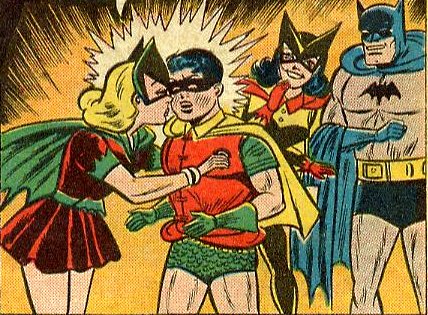
In seven stories of the early 1960s, Betty Kane comes to Gotham and takes up the mantle of Bat-Girl, mostly because she has a crush on the dreamy Boy Wonder. For a long time he doesn’t return her feelings.
In “Prisoners of Three Worlds” (Batman, #153, Feb 1963), Finger and Moldoff showed Bat-Girl finally getting her wish. The teen crime-fighters share a full-on, lip-to-lip kiss. At the end of the story the young masked couple even goes off together, presumably to do some more necking.

But that’s the pre-“New Look” Dick Grayson. It’s not the Dick Grayson of the 1986-2011 DC Universe. His first kiss appears in the story “Grimm” in Batman: Legends of the Dark Knight, #149-53. (Since that magazine told stories outside the concurrent Batman continuity, it’s possible that this was yet another version of Dick Grayson, but I’m assuming not.)

In this story, Dick is eleven years old. It’s about a month after he started to patrol Gotham City as Robin the Boy Wonder, about two months after he became Bruce Wayne’s ward. (So much for years of careful training.) Batman and Robin are still struggling to trust themselves as a team and a family.

One night Robin chases down a young teen thief called Wily Wendi. She nearly kisses him, as shown in the panel at top, and slips away. After that, Dick can’t get Wendi out of his mind.
He sits in his oddly cluttered room “thinking about The Girl” and puzzling over “such a strange feeling rippling through me.”

In the adventure that follows, Robin leaves Wayne Manor to go into the underground world of Mother Grimm, where Wendi and other orphaned children live. There are various completely unbelievable twists, spectacularly illustrated by Trevor Von Eeden and José Luis Garcia-López. Von Eeden’s website discusses the background of the story and displays some of the line art.

Mother Grimm’s haven catches on fire. Batman and Robin manage to rescue all the children, with Robin carrying Wendi from a burning hospital. And at last they really kiss.
How do we know that’s this Dick Grayson’s first kiss? Because he tells us (even if he doesn’t admit as much to Wendi).
The story ends with Mother Grimm and her twin sister, both murderous loons, disappearing down a raging river, and Batman having to find new homes for all of the orphans. The whole experience cements Dick’s relationship to Bruce, and his confidence as Robin.

And what about Wendi? Dick, narrating the story in his third Nightwing costume and thus in his mid-twenties, tells us she’s “getting a master’s in journalism.” The art shows us that he keeps tabs on her through the bat-computer. The caption says she’s “just as…memorable” for him as before.

But are they still in touch in any way? Might he run into her in Gotham City, as either Dick Grayson or Nightwing? J. M. DeMatteis’s script leaves a loose thread just perfect for fanfiction, but I couldn’t Google up a single story about Wily Wendi.

How long will it take now before such a story appears?