31 January 2014

Keeping Executive Orders in Order

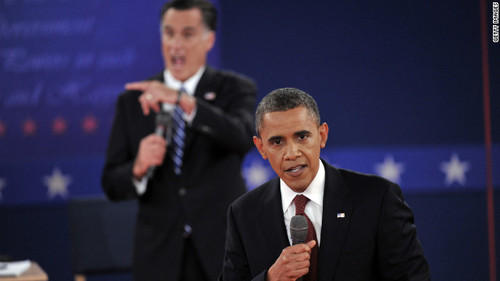
Faced with a resistant Republican minority in the Senate and majority in the House (albeit not one that gained a majority of Americans’ votes in 2012), President Barack Obama has announced that he will do what he can for the country through executive orders.

Naturally, people who think Obama doesn’t deserve to be President, despite being elected and reelected by majorities, have to find something wrong with him exercising the powers of the Presidency. Even before the State of the Union address, rookie Rep. Randy Weber (R-Texas) was tweeting that Obama was becoming a “Kommandant-In-Chef” [sic].

But the American Presidency Project tabulates Presidents’ executive orders. Its figures show that:
  • Presidents have used the power of executive orders since George Washington. That includes all the first generation of Presidents from the right wing’s beloved Founding Fathers.
  • The last President who issued fewer executive orders in his first term than President Obama was Benjamin Harrison, well over a century ago.
  • Among all Presidents since Franklin D. Roosevelt, as Steve Benen showed at the Meddow Blog, President Obama has issued the fewest executive orders per year in office. He could issue as many orders in the next three years as George W. Bush issued in his first four and still not match the total issued by Ronald Reagan.
And, of course, very few of the President’s critics on this issue can point to evidence that they made similar complaints about the previous administration’s use of executive power.

Again, the problem isn’t actually the mechanism of executive orders. It’s the visceral dislike some people feel on seeing Barack Obama exercise any Presidential authority, forcing them to search for a socially acceptable way to justify their feelings.

30 January 2014

Balloonacy at the B.C.R.

This evening the Boston Comics Roundtable did an activity I invented called Balloonacy. It didn’t pan out exactly as I’d imagined since we’d talked so long about how to make the group more active that there wasn’t as much time left for an actual activity. But I think it was fun and productive for those involved.

I started by drawing the classic ellipsoid balloon with a short pointy tail and the letters “B.C.R.” inside. I posited that that’s the comics equivalent of a sentence with a period at the end. It’s a straightforward statement.

Then I challenged folks to draw balloons in which the lettering, punctuation or other marks inside the balloon, balloon shape, tail shape, or some other visual detail would give the letters “B.C.R.” a different meaning and perhaps sound.

The group then drew (in no particular order):
  • classic thought balloon.
  • dotted whisper balloon.
  • balloon with four tails, for four (or more) people speaking simultaneously.
  • balloon with nine tails over a cityscape to signal a chorus of millions.
  • collage of balloons all saying the same thing.
  • fancy letters for ornate speech.
  • The Yellow Kid with a message on his nightshirt.
  • balloon shaped like a luscious pair of lips.
  • burst balloon for shouting.
  • scroll-shaped balloon with blackletter/Gothic letters for a town crier.
  • three connected balloons each containing one letter for a single, slow, deliberate speaker.
  • three separate balloons each containing one letter pointing to a single depressed figure.
  • three separated balloons each containing one letter with tails pointing different places to denote three speakers.
  • balloon with tail going off the page to an off-panel speaker.
  • block letters and block balloon for a carnival barker.
  • two forms of white letters dropped out of a black balloon, one with the wavery white border that Todd Klein gave to Dream in Sandman. (We also looked at his Delirium balloons.)
  • wavery letters for a spooky voice.
  • icicle-dripping balloon for disdain.
  • two variations of rebuses spelling out “B.C.R.,” one assigned to a mime.
  • balloon with a long, meandering tail suitable for a character who talks and talks without getting to the point.
  • balloon containing musical notes as well as letters for singing.
  • letters strung out on an undulating musical staff for more singing.
  • wavery-bordered balloon with its tail dropping off the bottom of the page where the speaker is collapsing in a faint.
  • two balloons, one overlapping the other to show an interruption.
  • balloon blocked by the side of a panel as something interrupts.
  • vertical balloon containing Japanese kanji sounding approximately like “B.C.R.” 
  • huge letters from a loud character flattening other characters.
  • tiny, lowercase letters within a big balloon for quiet speech.
  • two examples of giant block letters crowding the edges of their balloon.
  • square block letters in a squarish balloon for a real square.
  • letters drawn within concentric radio waves spreading from an antenna.
  • jagged-edged balloon and with a lightning-bolt tail to denote electronic communication.
  • big block letters with small exclamation points instead of periods—verging on a sound effect!
  • round balloon with no tail for a disembodied or off-panel speaker.
  • squarish balloon and lettering for a robot.
  • balloon with its tail ending in a starburst against a window—a recent way of showing that someone is speaking inside that building.
  • various typographical symbols before the letters to indicate profanity.
  • chevrons on either side of the letters and an asterisked footnote to indicate speech in a foreign language (or, some people thought, HTML).
  • tailless thought balloon broken up with breath marks to denote psychic communication.
  • a long, boring speech wallpapered on the back of a panel.
We also came up with three balloons that not everyone agreed on how to interpret.
  • thought balloon with a pointed tail instead of the trail of puffs that thought balloons usually have. Could this indicate thinking aloud?
  • three numbered boxes each containing one letter. I didn’t catch the discussion on that one.
  • balloon butted up against the edge of a panel. That usually means the same thing as a balloon fully inside a panel—it doesn’t seem to reflect anything more than the available space and the preference of the editor and letterer who place that balloon. But perhaps it could have storytelling significance. Say, one dominant character’s speech balloons are always in the center of a panel and another’s are always crowded to one side.
  • word balloon in the shape of a real helium balloon with a knot at the bottom. What might this symbolize?
And that was just balloons. We haven’t yet talked about other ways comics show the invisible.

29 January 2014

The Anti-Marriage Activists

For the last few years I’ve used the term “anti-marriage” for people trying to limit marriage only to couples they approve of. They claim they’re in favor of marriage, even trying to protect it. But if you’re trying to limit or restrict a behavior, you’re against that behavior.

After all, people who want to restrict access to abortion are anti-abortion. People who want to limit access to guns are anti-gun. People who want to minimize pollution, or crime, or musical comedies are anti-pollution, anti-crime, and anti-musical comedy, respectively.

But I didn’t foresee a politician fulfilling that definition by proposing to do away with marriage laws entirely. That’s what state representative Mike Turner has proposed to do in Oklahoma.

As Think Progress noted, this mirrors one of the “massive resistance” tactics in the Jim Crow states, shutting down public schools for all students rather than integrating them. Of course, those segregationists insisted they were trying to protect education.

28 January 2014

Oz Comes to Kansas

This 1906 postcard shows a scene from the popular stage extravaganza based on L. Frank Baum’s The Wizard of Oz. The producers made such cards available at the end of each performance in the hopes that people would recommend the show to their friends—as “Will” did with this one.

The Cowardly Lion is at the left, Imogene the Cow (the show’s more-easily-performed substitute for Toto) at the far right. The Tin Woodman stands above the word “funny” and the Scarecrow above the W in “Will.” Dorothy kneels near the center. The figure upstage in the center with striped sleeves is the Good Witch, bringing on a snowstorm to counteract the effect of the Poppy Field—a plot point invented for this show and then reused in the 1939 MGM movie.

This postcard is from the University of Kansas library’s new “Magic of Oz” exhibit, featuring documents and artifacts from the collection of alumna Jane Albright. Jane’s been very active in the International Wizard of Oz Club for many years, especially in organizing events.

Unfortunately, the opening of this exhibit has coincided with a health crisis in Jane’s family, so she’s been unable to visit it herself. Everyone in the Oz fan community wishes Jane’s husband a swift and full recovery so they can enjoy sharing her impressive collection with folks in Kansas.

27 January 2014

Alice in Guildford

Charles Dodgson settled his sisters in Guildford, England, and died there in 1898. In 1990, the town commemorated his most famous work by installing a couple of impressive statues.

On the grounds of Guildford Castle, near the Dodgson home, is Jeanne Argent’s statue of Alice going through the looking-glass. Details include striped stockings. The glass can make impressive effects on film.
On a river bank sits Edwin Russell’s “Alice and the White Rabbit.” Though her hair and dress may seem more modern, this Alice looks more like the real Alice Liddell.

26 January 2014

Robins of the Future, Glimpses of the Past

Detective Comics, #27, in DC’s new numbering is a collection of out-of-continuity Batman stories inspired by how that character debuted in the first volume of Detective Comics, #27.

I wasn’t thrilled. The most Robin-heavy story shows four of Batman’s companions from the 1986-2011 continuity returning to the bat-cave to celebrate Bruce Wayne’s birthday. Peter J. Tomasi’s tale aims too hard to please fans by avoiding all sign of loss. Damian is a trenchcoated crusader as in Batman, #666, but, unlike what that story told us about that future, Dick Grayson is still alive. Dick even has both eyes, unlike in the current Batman Beyond series, and blue fingerstripes. Tim Drake is still active too, also unlike the Batman Beyond continuity. Barbara Gordon is walking again. Even Alfred is alive, and Bruce can still kick butt. It’s a story nominally about aging with no actual change or physical deterioration.

Another story set in another future introduced a new Robin for a version of the 23rd century.
This is the only glimpse of the character. His name and history are blanks.

I’m not the only comics history fan who saw this image and found myself thinking of Dwayne McDuffie’s December 1989 memo to colleagues at Marvel about the lack of diversity in the publisher’s pantheon. McDuffie wrote:
In the past year, 25% of all African-American super-heroes appearing in the Marvel Universe possessed skateboard-based super powers. In an attempt to remain on the cutting edge of comics, I hereby propose a new series that will fully exploit this exciting new trend…

Teenage Mutant Negro
THRASHERS

When a group of teen-aged negroes from cosmic-powered skateboards, their lives are forever changed! A team of distinct characters join together, swearing an oath to use their powers for good.

ROCKET RACER: A black guy on a skateboard.

NIGHT THRASHER: A black guy on a skateboard.

DARK WHEELIE: A black guy on a skateboard.

And their leader, a mysterious black guy on a skateboard known only as “that mysterious black guy on a skateboard.”
Rocket Racer and Night Thrasher were in fact two new heroes in the Marvel Universe. I think Dark Wheelie was just a joke.

Less than four years later, McDuffie cofounded Milestone Media with three other African-American comics writers and artists—Denys Cowan, Michael Davis, and Derek T. Dingle. They aimed to fill a market and cultural gap with comics about an array of superheroes of color living in the Midwest city of Dakota.

Of the Milestone heroes, the most successful proved to be Static, created by McDuffie, Robert L. Washington III, and John Paul Leon. Static was a teenager. He had a superpower, controlling electricity. He was black. But he didn’t have a flying skateboard!

No, he had an electromagnetically levitating disk, at first a garbage can lid and later a manhole cover, that he stood on as it flew through the air. Very much like a, well, flying skateboard.

25 January 2014

The “Owl and Pussycat” Experiment

The Boston Comics Roundtable is conducting a group exercise we call “The Working Method.” One member writes a short comics script—only three pages in all. Artists take that script as far as they choose—character designs, thumbnails, pencils, or all the way to inks and letters.

Members did this first a couple of years ago, at the suggestion of artist Jay Kennedy. One of the resulting comics, “Amazons v. Valkyries” by Lindsay Moore and Laurel Lynn Leake, was eventually published in the Minimum Paige anthology.

The current exercise is using a script by me titled “Owl and Pussycat.” I gave myself the challenge to tell a superhero tale in only three pages, a story that I as a kid could have picked up and understood at the basic level. There are, to be sure, many unanswered questions left about Owl, Pussycat, and their evil nemesis Dr. Megalo—unanswered even for me.

At this point participating BCR artists are sharing their designs for Owl and Pussycat on a Tumblr page. The sketch above is by Roho, for instance. I see my job now as to keep quiet about how I might have imagined those characters or the setting, page layout, overall look, etc. in order to leave the artists with maximum freedom to make their own choices. At the end of February the whole group will sit down and discuss the different choices people made.

This exercise is also open to folks who aren’t involved in the Boston Comics Roundtable, or even in Boston. Here’s the link. We expect to post further scripts of different sorts in the future.

24 January 2014

Politifact Profiles

This week Politifact released a list of the top-ten politicians it and its regional affiliates have fact-checked.

Because the service launched in 2007, Barack Obama has been President for most of its existence, so it’s not surprising that he’s the most fact-checked person. Nor is it surprising that the people ranking second and third behind him are his main opponents from 2012 and 2008, Mitt Romney and John McCain. But Politifact has fact-checked Obama far more often (500 times) than Romney (204) and McCain (170) combined.

What’s more significant lies underneath those rankings in Politifact’s findings on each politician. It ranked President Obama’s statements True or Mostly True 46% of the time. In contrast, Romney was True or Mostly True only 31% of the time and McCain 38%. Add the Half True category to the men’s totals—after all, they are politicians, used to emphasizing one side of the argument—and the percentages are Obama 73%, Romney 59%, and McCain 56%.

We can also look at the three men’s numbers from the bottom up. Politifact gave only 2% of the Obama statements its lowest rating of Pants of Fire, and deemed another 13% False (total: 15%). Romney had 9% Pants of Fire and 16% False (total: 25%). McCain had 5% Pants on Fire and 22% False (total: 27%).

Either way we look at it, President Obama adhered to the facts more often than his major opponents. He made fewer statements that the service judged to be whoppers. And not just by a little bit, but by a 10% margin or more.

Nevertheless, one of the beliefs that people with OIP Derangement Syndrome share is that President Obama is dishonest. But that’s just another way they’ve divorced themselves from reality. In actual fact, Politifact has subjected Obama to more scrutiny than any other politician, and has assessed him to be more factual than the Republican Party’s chosen candidates.

23 January 2014

Historical Fiction from Ancient History?

At the Oxford University Press blog, Yale professor Colleen Manassa suggests that ancient Egypt’s New Kingdom (1550-1070 BCE) saw the birth of historical fiction:
During the New Kingdom, particularly the Nineteenth and Twentieth Dynasties, the “Ramesside Period,” another literary efflorescence occurred. Among the genres of this new corpus of literary productions are stories that can be most properly described as works of “historical fiction.” Set in the past with attested historical characters, these works of historical fiction are an ancient Egyptian counterpart, albeit ultimately unrelated, to the mammoth corpus of modern historical fiction from Sir Walter Scott, Patrick O’Brien, and George McDonald Frasier to Ken Follett and Philippa Gregory. . . .

The second story, known by its modern title The Capture of Joppa, opens with an Egyptian army besieging ancient Joppa, located near modern Jaffa. The beginning of the story is lost, but the preserved portion describes a group of drunken individuals and chariot horses being safely put away lest they be stolen by the Apiru, a group of local brigands. The Egyptian general Djehuty — another attested historical individual — is holding a conference with the enemy rebel of Joppa, apparently in a neutral space outside of the city walls. The enemy ruler of Joppa, who remains unnamed, is obsessed with seeing the staff of pharaoh, and in a moment of slap-stick humor, Djehuty obliges by smiting the ruler with the staff.

With the ruler of Joppa incapacitated, but not dead, Djehuty puts into motion one of the first attested ruses in ancient military history: he pretends to surrender to the city of Joppa, presenting hundreds of baskets as the “tribute” of his capitulation. Unknown to the citizens of Joppa, Egyptian soldiers are hidden within the baskets, and they promptly capture the city in what can only be described as a Trojan-horse style story. While the basket stratagem is in the realm of fiction, the setting of the story, Joppa, and its protagonist, Djehuty, are known through archaeological and textual sources — The Capture of Joppa truly is one of the world’s first examples of historical fiction.
One of the hallmarks of historical fiction, I believe, is that both authors and readers understand that it’s fiction. Even something as carefully researched to accord with documented events as Hilary Mantel’s Wolf Hall is nonetheless presented as one author’s imagined recreation of the past, not as how people actually thought and events definitely occurred. How did the Egyptians of the New Kingdom understand these tales about figures and events they knew from their history? Did they consider The Capture of Joppa as an entertaining legend or as history?

Another hallmark of historical fiction for me is the determined effort to depict the past as different from the present. That makes it a different mode of storytelling from realistic contemporary fiction, more akin to fantastika in the challenge of smoothly introducing readers to an unfamiliar setting. Again, does that criterion apply to The Capture of Joppa and Manassa’s other examples of ancient historical fiction? Did Egyptians enjoying the story of Djehuty also hear clues that his world was not like theirs?

22 January 2014

The Yellow Block Road

The search for an image for yesterday’s posting led me to Nick Pascale’s recreations of scenes from the MGM Wizard of Oz in Lego blocks. It looks like Pascale confined himself to Lego pieces that were commercially available, not modifying them as other hobbyists do. That still offered a wide range of pieces.
Pascale’s scenes start with Uncle Henry’s farm in black-and-white photos and move on to the full-color scenes in Oz. I don’t see a way to link to only the Wizard of Oz pages within his Storybook Characters series, but they’re all down at the bottom of that alphabetical compendium.
Meanwhile, another Lego hobbyist, Jeremiah KC, has proposed a special “Road to Oz” set for Lego to release this year during the movie’s 75th anniversary.

And on a bigger scale, Gizmodo reported on how twelve builders collaborated on a huge Wizard of Oz Lego landscape at the Brickworld convention last year.