30 August 2011

Elementary Adaptations of Oz

Back in March, Blair Frodelius’s Daily Ozmapolitan noted an article in the Fort Wayne Journal Gazette about the St. Joseph Central Elementary School’s unusual adaptation of The Wonderful Wizard of Oz:
A witch made an appearance, as in most versions, but this rendition included cameos by aliens, pilgrims and a time machine.

After 13 weeks of preparation, the students were finally ready for their regional Destination ImagiNation competition, which took place last weekend in Bourbon. About 50 students from St. Joseph Central participated in the event, which challenged students to use critical thinking, problem-solving and communication skills. Winners will go on to the state championship in April.

St. Joseph Central had several teams participate in different events. Eleven-year-old Katelyn Kiernan and her teammates were involved in the “Triple Take Road Show” portion of the competition, which focused on fine arts.

The students had to tell “The Wizard of Oz” three different ways to three different audiences and come up with inventive ways of getting from one audience to the next (hence the time machine).
It makes sense to use The Wizard of Oz in an exercise like this because the core story is so elemental to begin with and so well known in America. I’ve seen American community college writing teachers speak about The Wizard of Oz as the only example of a plot all their students recognize.

That said, I still have trouble understanding the innovation in Wizard of Oz stage plays shown in the photo above, from Annaghmore Primary School in Northern Island: dancing skeletons in Oz. They seem to show up most often in school productions outside the US, where people don’t feel they have to be so faithful to the 1939 movie.

These are part of an adaptation commissioned by the St. Louis Municipal Opera in 1942, which uses the E. Y. Harburg/Harold Arlen score and a few more numbers, such as “Ghost Dance.” The skeletons stand in for the Flying Monkeys, which I suppose are harder to depict outside of a movie screen—though half of my own stage debut in second grade was as the Monkey Who Grabs Toto.

28 August 2011

“Bressler’s breathing into his mouth”

The last weekly Robin was all about the Dynamic Duo demonstrating the Heimlich maneuver on national television, and how that cartoon might have saved a Minnesota child’s life.

This week shows an example of an early Batman comic showing how not to resuscitate a child.

The artists have obviously worked hard to hide the sight of Officer Bressler giving “the breath of life” to the injured kid. First they positioned one of several Gothamites-with-hats in the way, and then they moved in the Boy Wonder. DC Comics must not have wanted to show mouth-to-mouth contact between males, even in an emergency.

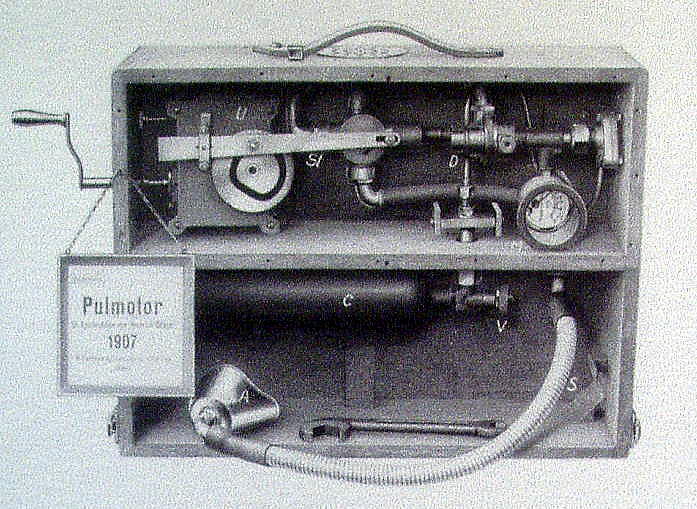
The “Pulmotors” mentioned in the first panel would have solved that problem. Sold to American emergency services by the Dräger company starting in 1907, they were high-tech devices to aid respiration.
Pulmotors had a crank and everything. But somehow that photo lacks drama.

As this essay appears, I’m starting a trip that will eventually take me to London. The next weekly Robin will be a report on Batman Live, unless I still need resuscitating.

26 August 2011

One Never Knows, Do One?

PBS’s website is displaying an interview from Scientific American with James Pennebaker, a professor of psychology at the University of Texas:

In the 1980s, my students and I discovered that if people were asked to write about emotional upheavals, their physical health improved. Apparently, putting emotional experiences into language changed the ways people thought about their upheavals. In an attempt to better understand the power of writing, we developed a computerized text analysis program to determine how language use might predict later health improvements. In other words, I wanted to find if there was a healthy way to write.

Much to my surprise, I soon discovered that the ways people used pronouns in their essays predicted whose health would improve the most. Specifically, those people who benefited the most from writing changed in their pronoun use from one essay to another. Pronouns were reflecting people's abilities to change perspective.
Of course, correlation doesn’t indicate causation—Pennebaker’s analysis suggests that changing how one uses pronouns wouldn’t lead to better health because what matters is an underlying ability. But who knows?

That first unexpected finding about pronouns and health outcomes led Pennebaker and his research team to investigate further using the same language-analysis tools. Further conclusions:

  • “men use articles more than women, when you might guess there'd be no difference. . . . Across dozens and dozens of studies, women tend to talk more about other human beings. Men, on the other hand, are more interested in concrete objects and things. To talk about human relationships requires social and cognitive words. To talk about concrete objects, you need concrete nouns which typically demand the use of articles.”
  • “We've compared the pronoun use of suicidal versus non-suicidal poets. Basically, poets who eventually commit suicide use I-words more than non-suicidal poets.”
  • “One of the most interesting results was part of a study my students and I conducted dealing with status in email correspondence. Basically, we discovered that in any interaction, the person with the higher status uses I-words less (yes, less) than people who are low in status. The effects were quite robust and, naturally, I wanted to test this on myself. . . . When undergraduates wrote me, their emails were littered with I, me, and my. My response, although quite friendly, was remarkably detached — hardly an I-word graced the page. And then I analyzed my emails to the dean of my college. My emails looked like an I-word salad; his emails back to me were practically I-word free.”
  • “Several labs, including ours, have now conducted studies to evaluate the prospect of building a linguistic lie detector. The preliminary findings are promising. In controlled studies, we can catch lying about 67 percent of the time where 50 percent is chance. Humans, reading the same transcripts, only catch lying 53 percent of the time. This is actually quite impressive unless you are a person in the judicial system.”
  • “we can predict people's college performance reasonably well by simply analyzing their college admissions essays. Across four years, we analyzed the admissions essays of 25,000 students and then tracked their grade point averages (GPAs). Higher GPAs were associated with admission essays that used high rates of nouns and low rates of verbs and pronouns. The effects were surprisingly strong and lasted across all years of college, no matter what the students’ major.”
This being an interview, it doesn’t come with statistics showing how close the correlations are, or sample size and limits. Still, it gives one pause to think.

25 August 2011

Blood, Toil, Sweat, and Tiers

Carol Burrell of Lerner Graphic Universe just offered a posting on comics page design that gave me cause to think:
  • “If we compare comics to prose, I like to think of a panel as a sentence.” Okay, that makes sense: a panel and a sentence are both discrete, complete units of a whole.
  • “A horizontal row of panels is called a tier. I like to think of the tier as a paragraph. Like a paragraph, it is a unifying element. The start a new paragraph is the start of new idea, it signals change. A new tier is also great opportunity to signal change.” In scripts I’ve been thinking in terms of pages; I don’t think I’ve gotten down to tiers. Burrell’s own SPQR Blues webcomic usually came in installments of a single tier each, suitable for assembling into pages, so it would be natural for her to approach those tiers as discrete and complete units, too.
  • “A big panel equals a big moment.” That’s basic, but can’t be repeated enough. Burrell offers some good visual examples (particularly from Scott McCloud) of how a big panel works alongside others.
  • “Creating a good page of comics, and then a good sequence of pages, is a bit like solving a puzzle.” I definitely agree with that.
In fact, envisioning a comics page seems more like doing a puzzle than telling stories in any other media I can think of. That’s because every few “sentences” and “paragraphs” have to fit together to fill a set amount of space—the page. They can’t take up less space than nearly the whole page; we feel cheated as readers if there’s too much blank. And panels can’t fill more than a page because paper doesn’t stretch. (Digital comics have more flexibility, of course.) So designing a comics page is like creating sentences and paragraphs and then playing Tetris with them.

24 August 2011

Jane Yolen: “The children don’t care about the politicians”

The Capital Times of Madison, Wisconsin, just ran an interview with author Jane Yolen, prompted by her response to news that Sen. Ron Johnson (R-Wisc.) had read a picture book she wrote at a public appearance. She expressed a hope that politicians like him would do more than just read to children while the cameras are on—that they would recognize the value and virtue of funding libraries, for instance.

Though Yolen is quite clear on her dislike and distrust of the “Tea Party” movement that (with his employer’s money) helped elect Johnson over Russ Feingold, I think it’s notable that she avoids easy potshots at the man’s approach to children’s literature:
CT: Did he seem to understand the moral of your story about the dinosaur correctly? (In my article I quote him telling children that they will make their parents very happy by following the "lessons" the dinosaur teaches them about cleaning up after themselves, putting their toys in neat rows, and not shoving dirty laundry to the back of drawers.)

JY: It is a book that is not just about manners, but as they say in Britain is also taking the micky out of regular manners books. The dinos in the books are really children who can be naughty and natural and charming at one and the same time. And their parents who still love them even when they have their moments of outrageousness.

CT: Is it exciting when celebrities or politicians read your books like this? Which others have done so?

JY: Not exciting at all. I'd rather the parents were reading to the children. Or the librarian. The children don't care about the politicians. . . .

CT: The senator said that he read "Curious George" books to his three children except that when his son [Johnson’s first two children were daughters] was four or five he started reading him the Wall Street Journal. Any comment about what could happen to a four-or five-year-old child raised on the Wall Street Journal?

JY: My youngest child's favorite book at that age was "Peterson's Bird Guide." Bird-watching with his father was his most passionate interest at the time. If you have a struggling reader, you go where the child is, not push books on them in which they have no interest. He's still a passionate birder and now an award-winning nature photographer.
Of course, that generous perspective was lost on some in the right wing, who can’t abide any criticism.

23 August 2011

Knitting Needles in Oz

The September/October 2011 issue of Piecework magazine (current link here, but it won’t last) has the theme of “needlework in literature.” Among the knitting and crochet patterns tied ever so gently to books is Joanna Johnson’s “Jinjur’s Jumper,” accompanied by an article on that character from L. Frank Baum’s The Marvelous Land of Oz.

I’m sorry to say that Johnson’s dress pattern isn’t designed like the outfit that General Jinjur and her soldiers wore in John R. Neill’s illustrations, one of which accompanies the article and another of which appears below. Nonetheless, it’s rooted in Victorian style, pretty, and impressively seamless.

The magazine’s little model for that dress wears a knitting needle in her hair, as Jinjur’s soldiers did. They used those sharp sticks to attack men who tried to stop their conquest of Oz. But knitting needles proved no match for the spears and swords of Glinda’s army.

While Baum never shows Jinjur or her soldiers actually knitting, he depicts a number of other female characters doing so:
  • Mme. Grogrande in John Dough and the Cherub.
  • Grandmother Gnit (of course) of the Fuddlecumjigs in The Emerald City of Oz.
  • Trot’s mother in Sea Fairies and Sky Island.
  • Reera the Red, a reclusive and powerful magic-worker, in Glinda of Oz.
There’s something magical about knitting and crochet—taking a cord that seems one-dimensional and producing something two- or three-dimensional out of it.

Johnson’s article provides a brief introduction to Baum, his Oz books, and his support for women’s suffrage. It unfortunately repeats a myth that he and artist W. W. Denslow struggled to find a publisher for The Wonderful Wizard of Oz: “nearly every publisher in Chicago refused the book initially because of its fantastic subject matter and extensive color plates, which were very expensive to print.” Really?

In fact, as Michael Patrick Hearn traces in The Annotated Wizard of Oz, Baum completed his first draft on 9 Oct 1899; he preserved his pencil with the date. By that time, Baum and Denslow’s Father Goose was a big hit, and the Geo. M. Hill Company had an option on their next book.

That small publisher asked the team to pay for the color plates and cover dies—not uncommon terms at the time. Baum and Denslow agreed, and they signed a publishing contract on 16 November. Less than six weeks passed between complete draft and contract, and I know of no evidence that the creators even spoke to other publishers.

21 August 2011

How Robin Saved a Life—Through Television

In one of Marc Tyler Nobleman’s interviews with people behind the Superfriends television cartoons of the 1970s and early 1980s, artist Darrell McNeil recalled a proud moment:
[A] girl in Ohio, I think, saved her sister from choking with [the Heimlich] maneuver, which she learned from watching Batman and Robin do it on All-New Super Friends. And since I did all the clean-up animation on that sequence (and took ribbing from my oversexed colleagues—especially Sandy Young; god, whatta mouth! LOL). Well, it’s one of the prouder moments of my career.
After diligent Googling, I found a passage from New Times magazine in 1978 which mentioned some footage about this topic:
In it there was an interview with a Minneapolis fourth-grader who had saved the life of a girlfriend choking on a piece of candy by employing something called the Heinlich [sic] maneuver. She testified that she had seen the technique on ABC’s Saturday morning cartoon show “Super-friends,” where Robin demonstrated it on Batman. The narrator mentioned many other examples of ABC’s educational and instructional value to children.
This is notable for two reasons.

First, the Heimlich maneuver, or abdominal thrust, was a new thing then—which is why New Times misspelled its advocate’s name. Dr. Henry Heimlich had published instructions in Emergency Medicine only in 1974. Until 1985, the American Heart Association and American Red Cross still recommended helping a person who’s choking by first slapping him on the back. (In 2006, the AHA returned to recommending backblows before abdominal thrusts.)

These days most Americans have been exposed to the Heimlich maneuver, but back in 1978 millions of people had probably never seen it before Superfriends. (I don’t recall this clip, but to this day I have a vivid memory of seeing Aquaman show how to get something out of your eye without rubbing.) So that clip might have contributed to saving more lives in the years that followed.

Second, ABC highlighted that story of a life being saved because back in 1978 the network was under pressure to increase the educational content of its programs for kids. That was around the high-water mark in American culture for the idea that the highest purpose of government was to help the unfortunate and vulnerable instead of to protect people’s existing advantages.

Under pressure from groups like Action for Children’s Television, the networks’ National Association of Broadcasters adopted limits on commercials and some content. They created short educational bits to slip in between the adventure cartoons, such as Schoolhouse Rock and, yes, Batman and Robin demonstrating the Heimlich maneuver. To fend off calls for stricter regulation, the network made a film highlighting “examples of ABC’s educational and instructional value,” as New Times reported.

Then Ronald Reagan was elected President, reflecting and accelerating a new view of government, as Daniel T. Rodgers discusses in The Age of Fracture. Rules were out; markets are in. The Superfriends stopped giving health advice, Schoolhouse Rock went off the air in 1985, and the Fairness Doctrine was abolished in 1987. In 1990, Congress passed the Children’s Television Act, but without public pressure the networks didn’t try to seed educational content everywhere.

20 August 2011

“The gates of magic were open to everyone…”

This afternoon I happened to be thinking about how L. Frank Baum portrayed Dorothy in his Oz books as an “ordinary little girl,” not inherently magical or unlike her readers. Of course, if she got her hands on the Magic Belt, watch out!

That presents a world of possibility fundamentally different from what’s proffered in series like Susan Cooper’s Dark Is Rising, J. K. Rowling’s Harry Potter, and Rick Riordan’s Percy Jackson. Those portray an innate, unbreachable divide between people who can work magic and those who can’t.

Jonathan Stroud’s Bartimaeus books depict a situation in between, a world where some people are have natural magical aptitude but—to the magicians’ dismay—“ordinary” humans can break the barrier.

This evening I found that novelist David Liss has been pondering the same issues in an essay at io9:
In my research, what I found most interesting was how common and ordinary magic was to people in the past. There was also dark and mysterious magic, which was part of a hidden world populated by unknowable beings, but mostly there was ordinary, routine magic that was incorporated into everyday life. It was part of this world and part of nature, and most people didn't trouble themselves too much with how or why it worked. That it did work was taken for granted.

In the past, people generally believed they could acquire magic in two ways: through learning the craft, either from another practitioner or from books; or through obtaining magic from a powerful being-think Faust or the classic, demonized witch, both of whom get their mojo from Satan. Anyone could learn magic as long as he or she had access to the knowledge or could make a connection with the right supernatural entity. The important point is that in theory, the gates of magic were open to everyone, and what I find most interesting is how that has changed in popular culture. . . .

Magic has gone from being an open system to a closed one. Their massive popularity make the Harry Potter novels and films the most glaring example, but it's everywhere, and has been for decades now: TV shows like Charmed and Wizards of Waverly Place, books like those of Laurell K. Hamilton and Charlaine Harris. More often than not, magical practitioners are born, not made. Magic is an exclusive club. You can watch and be envious, but you can't join.

I can't prove it, but I strongly suspect the turning point is the TV show Bewitched.
Of course, that show was inspired by the 1942 film I Married a Witch, itself adapted from the novel The Passionate Witch, and the 1958 film Bell, Book, and Candle. All three use innate magic as a metaphor for the power a woman might sacrifice in marrying. The theme of innate, unobtainable powers has been around for a long time. What may be new is the dominance of one approach over others.

In response to Liss’s essay, Alyssa Rosenberg at Think Progress writes, “I wonder if a sense of biological magic also correlates to a sense of unease about how much power we have to impact our lives and to change the world”—by which she means how little power. Of course, kids fantasize about getting the call to Hogwarts or Camp Half-Breed, not being left behind.

18 August 2011

Does Your Book Have Enough Motion?

I was struck by this GalleyCat report on a web service called BookLamp that tries to do for reading what Pandora does for music: suggest what else you’d like based on what you’ve chosen in the past.

Pandora analyzes music according to what it calls “genes,” about 400 of them. What variables does BookLamp look at? According to GalleyCat, they’re:

  1. Motion: “Motion refers to the level of physical motion in a scene or book”.
  2. Description: “Description refers to the level of descriptive language that the author uses in his or her writing.”
  3. Pacing: “Pacing refers to the layout of the text on the page. A scene with high Pacing will have characteristics that quickly move the reader’s eye down the page.”
  4. Density: “Density refers to the complexity of the text. Text with high Density will take longer to read than a text of equal length with low density.”
  5. Dialog: “Dialog refers to the amount of spoken text between two or more characters in a scene.”
This reminds me of the old joke about the man looking for his keys under a lamppost not because he dropped them there but because the light was better. Are these really the metrics we use to choose books? Or are they just what a computer can easily measure?

When I checked out the BookLamp site and its underlying Book Genome project, I realized that there are a lot more variables involved. The five above seem to be part of what the creators call LanguageDNA. So the system seemed more promising.

I tried typing in Billy Bathgate as a novel I’ve liked. BookLamp suggested…another historical novel by E. L. Doctorow. I don’t think I needed software for that suggestion.

16 August 2011

Discovering Illustrator Frank Kramer

The latest issue of The Baum Bugle, the research journal of the International Wizard of Oz Club, is very impressive. Most of the content is former editor Atticus Gannaway’s study of Frank Kramer, illustrator of Jack Snow’s The Magical Mimics in Oz (1946) and The Shaggy Man of Oz (1949).

I won’t deny that this is a specialized topic: the work-for-hire illustrator of two of the least beloved later sequels in the Oz series, whose other art appeared mostly in pulp magazines and sports novels. But Atticus’s research is especially impressive because:
  • Very little was documented about Kramer before, even within fan circles. Basically, all the information we had came from Snow’s Who’s Who in Oz; though Snow was in the best position to know about Kramer’s career, he wasn’t thorough or reliable.
  • The articles assemble findings from many different approaches: archival research, interviews, analysis of illustrations, round-up of critical commentary. 
I was particularly struck by some behind-the-scenes details about how Kramer worked on his two Oz books. I hadn’t known that Magical Mimics was ready for publication a year or two before it appeared; wartime shortages caused the publisher, Reilly & Lee, to postpone it. That meant it took Snow even longer than I’d thought to finish a sequel (which he eventually did by borrowing a lot from L. Frank Baum’s John Dough and the Cherub, then out of print).

Jack Snow evidently found Kramer through the pulp magazines, a market both men were working. Snow thought Kramer’s line style and experience with out-of-this-world subjects meant he could stand in for longtime Oz illustrator John R. Neill, who had died in 1943. I think Kramer manages some impressive effects in his books (Atticus quotes my praise for one illustration), though I agree he didn’t give Snow’s child heroes any more life than Snow did.

Most surprising, the article shows that Reilly & Lee gave Snow instructions to pass on to Kramer. I’d never heard of a publisher working that way—usually they try to insulate the author and artist from each other. I guess that shows how pitifully Reilly & Lee was scraping along by the late 1940s.

Some people don’t like to know the commercial stories behind their favorite books, any more than they like watching laws or sausage being made. At least in my adulthood, I find that topic almost endlessly fascinating.