Showing posts with label alert the media. Show all posts

11 September 2026

“Mrs. Woodbury then secured a complaint against Mulligan”

Sometime in the winter of 1911, Helen G. Woodbury fired her chauffeur, F. J. Mulligan, and turned him out of her home in Los Angeles.

Early on the morning on 22 March, Mulligan returned to the house. The Los Angeles Examiner reported that he came for “some clothes which he had left there when discharged.”

Other newspapers focused on a different detail. The Los Angeles Herald said Mulligan returned “while drinking.” The Los Angeles Times said he was “partially under the influence of liquor.”

All three newspapers agreed that Mulligan behaved rudely to Woodbury. He “called her names,” “using profane and abusive language.” She “told him to keep quiet and go away.” When he didn’t, she called the police.

The Times stated:
Patrolmen West and Cornwall were sent from the University Police Station and they placed Mulligan under arrest. Mrs. Woodbury then secured a complaint against Mulligan from Deputy District-Attorney [Michael Francis] Shannon and had the case brought up in Police Court.
The charge was disturbing the peace. Presiding over the trial was police judge Henry H. Rose (shown above). Like Woodbury, he had come to Los Angeles from Wisconsin. He was soon to be the city’s mayor.

The newspapers made a point of Woodbury’s gentility. The Times headlines referred to her as “Wealthy Woman” and “Rich Resident.” She had a “fine home on Van Ness avenue,” in “the exclusive residence district.”

“Mulligan had sobered up by the time he was taken into court and he pleaded guilty,” the Times recounted. But, said the Herald, “he evidently didn’t expect as stiff a sentence” as the judge handed down: a $20 fine or twenty days in the city jail.

“Mulligan searched his pockets,” said the Times, “but found only a few dollars.” The Herald pegged the sum at “$2 and some change.” Sorrowfully, Mulligan asked to speak to Woodbury.

“She made her way to the prisoner’s rail,” the Herald stated. “A whispered conversation ensued,” reported the Times. Mulligan, per the Herald,
asked her to pay the fine. If she would, he said he would behave.

“No, no, I can’t trust you; you’ve betrayed my confidence before,” she answered.

“Try me just once more,” Mulligan pleaded. “I’ll behave and will pay you back.”

“That isn’t the question,” she replied, and then after a moment of reflection: “Promise before these officers that you will not disturb me any more and I’ll pay your fine.”
Patrolmen West and Cornwall witnessed Mulligan’s “promise to behave himself in the future and return the amount advanced as soon as he could.”

Woodbury “then handed the court clerk $20,” said the Times. Judge Rose “severely reprimanded Mulligan and told him that in the future he would better curb his appetite for liquor.”

The local newspapers played up the paradox of Woodbury paying Mulligan’s fine after he had “berated her.” The Times’s main headline was “PAYS FOR NAMES HE CALLED HER.” The Examiner said Woodbury acted “rather than see him go to jail.”

But the press didn’t praise Helen Woodbury for being merciful. Instead, they emphasized her inconsistency: “after resolutely prosecuting a charge,” she had “evidently experienced a change of heart.” The coverage seemed to hint her decision was personal, not principled.

The Herald’s article concluded, “the principals walked out of court”—together? Was this case the outcome of a lovers’ quarrel? What exactly did Mulligan shout at Woodbury? Would their future relationship go beyond him owing her $20?

This would not be the last time that Los Angeles newspapers reported on Helen G. Woodbury being caught in a mysterious dispute with a man.

TOMORROW: A cowboy from Elmira.

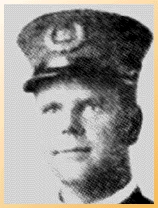
(The second photograph above shows Sgt. Judson S. Cornwall, killed on a police detail at a speedway in 1926. He was a patrolman in 1911, but the LA force then also included a W. A. Cornwall, so I can’t say which man responded to Mrs. Woodbury’s call. Surprisingly, there’s only one candidate for the other patrolman: Evert A. West.)

10 September 2026

Mrs. Helen Woodbury of Los Angeles

On 10 Dec 1907, Mrs. F. E. Woodbury of Milwaukee checked into the Hayward Hotel in Los Angeles, California (shown here).

Given our present concerns about privacy, it’s eye-opening to see that 120 years ago the Los Angeles Times was reporting all the new arrivals in the city for any local to read about. (The paper also reported the names of people from LA registered at New York hotels.)

Online newspaper databases also mean I can track Helen G. Woodbury traveling halfway across the country from her husband, the mining engineer Frederick E. Woodbury. That fact gives me yet more pause.

Helen must have enjoyed southern California because a year later the 10 November Los Angeles Herald Examiner reported that she had commissioned a one-story home at 1624 Van Ness Avenue (shown below).

The US Census for 1910 found Helen living in Los Angeles while Frederick continued to live in Milwaukee.

In March 1910 the Los Angeles Times listed “Mrs. Helen Woodbury” among the Angelenos checked into San Francisco hotels. In February 1911 the Los Angeles Examiner listed “Mrs. F. E. Woodbury…of Los Angeles” registered at the Casa Loma Hotel in Redlands.

In 1914, after Frederick Woodbury was killed at the Newport Mine, Milwaukee newspapers variously stated that “Mrs. Woodbury has been living in California because of her health, while Mr. Woodbury made his home in the Milwaukee club,” and Mrs. Woodbury was “spending the winter” in California.

Helen Woodbury may indeed have been spending only part of the year in California—all the newspaper mentions of her there come from the months November through March. But during these years, the name of “Mrs. F. E. Woodbury” stopped appearing in the Milwaukee papers at all.

Whether Helen initially went to California for her health, whether she was there for the whole year or merely a large part, whether Helen and Frederick had made an explicit agreement about their marriage, they definitely appear to have lived separately in the early 1910s.

TOMORROW: The drunken chauffeur.

11 July 2026

The Facts Behind the First News Stories about an “Our Gang Curse”

My last two postings have posited that the long-lived public discussion of an “Our Gang curse” started with a couple of wire-service articles in early 1959, spurred by the deaths of Carl “Alfalfa” Switzer and Don “Fats” Law.

Carl Switzer had indeed been a star of many Our Gang shorts. He had a bad death, shot in the groin in a fight over $50 for training a hunting dog. He was only thirty-one. Yes, that can sound cursed.

But Don Law, who “died of an intestinal disorder” a couple of weeks later, was never in the Our Gang movies, much less in twenty of them as his obituary claimed. That series never had a character named “Fats.” Law’s death got nationwide attention because it came so soon after Switzer’s, and that concatenation launched the “Our Gang curse.” Yet that coverage was based on a lie.

The long May 1959 article by Rick Du Brow about the Our Gang alumni as a “pathetic group of Hollywood ‘has-beens’” rested on similar misinformation. It offered a list of five Our Gang alumni who had “died in the past seven years” alone. Two were Switzer and Law, so right away the pattern was weaker than presented.

That list of recent deaths included the actress Helen Parrish, but she was never in the Our Gang series. Parrish had been a child actress in the 1920s, appearing in one Smitty short with Donald Haines, who was later part of the gang, but that’s as close as she got.

Clifton “Bobby” Young did appear in a bunch of Our Gang shorts in the late 1920s and early 1930s before his adult acting career. He died in a fire in 1951, and thus not in “the past seven years.”

Billy “Froggy” Laughlin (not McLaughlin, as Du Brow had it) was a regular in the late Our Gang shorts from MGM. He died at age sixteen after a motor scooter crash in 1948. Again, that wasn’t in the preceding seven years. Du Brow obviously stretched for examples to produce the illusion of a trend.

Du Brow also mistakenly listed Eddie Bracken and Nanette Fabray as Our Gang alumni. He wrote that embezzler Lea Artye Folz had been in the gang; she had small roles in three shorts but more appearances in rival series and features.

Du Brow said the Rev. Ben Griffith had played Mickey McGuire in Our Gang; that was the title character in a rival series, played by Mickey Rooney and Marvin Stephens. Griffith did claim to have played that part in Our Gang as early as 1950 and as late as his 1988 autobiography, but I don’t see confirmation anywhere.

I also mentioned a Miami News article from early 1959 listing four locals as Our Gang regulars. Only one was: Shirley Jean Rickert, who made six appearances in 1931 followed by an equal number of Mickey McGuire shorts in 1933–34. Geraldine Fay and Sy Rich had no discernible link to Hollywood. Jack Ray made a fleeting appearance in one Our Gang movie in 1926, but he never played “Freckles” in the series as the Miami story said. (Ray did, however, spend most of his childhood appearing in theaters across the US, Canada, and western Europe claiming to have played “Freckles” in Our Gang. I’m still collecting information on him.)

Thus, in 1959 a lot of people were telling false stories about being in Our Gang as children, possibly because of work on other series, possibly out of wishfulness. Yet Du Brow was actually in touch with Fern Carter, who knew exactly which kids she had taught. And he still got a lot of names wrong.

Bob Thomas’s earlier Associated Press article started with “the legend that the famed little rascals have been ill-fated,” but it was actually an interview with producer Hal Roach. He knocked down the idea of a jinx, saying that “176 kids” had appeared in his series, and many had “turned into happy respected citizens, including doctors and lawyers here in Los Angeles.” (Early Our Gang player Jack Davis was indeed a doctor. I can’t think of an alumnus who became a lawyer, though.)

Some newspapers therefore gave Thomas’s AP dispatch headlines like “‘Our Gang’ Normal Group of Kids—Roach” (Morris Herald-News, 17 February) and “Roach Denies Ill Fate Plagues ‘Our Gang’” (Duluth News-Tribune, 18 February). But that fact-based argument didn’t have the appeal of the “Our Gang curse.”

In his UPI story, Du Brow cited an even higher number of kids in the series—“more than 300 youngsters.” But then he ignored the consequences of that math. He wrote that four highly successful performers were “just a fraction” of the total while five deaths (which included two people with no part in the series) were representative of the larger group.

Clearly those reporters sensed that the public would lap up the idea of an “Our Gang curse.” And the longevity of that idea—bolstered, to be sure, by some sensational deaths after 1959—shows that their sense was right.

[The photo above shows Fern Carter teaching arithmetic to Pete the Pup, Allen “Farina” Hoskins, and Jean Darling during a publicity tour in 1928.]

10 July 2026

“Possibly the most pathetic group of Hollywood ‘has-beens’”

Yesterday I quoted the February 1959 story from the the Associated Press’s Hollywood columnist Bob Thomas that began:
The recent deaths of two former members of “Our Gang”—one shot in an argument over $50—adds to the legend that the famed little rascals have been ill-fated in later life.
That article ran nationwide under headlines like “Was ‘Our Gang’ Jinxed?” (Illinois State Register, 17 February) and “‘Our Gang’ Ill-Fated in Later Life” (Sarasota Journal, 20 February).

As I wrote yesterday, that’s the first example I’ve found of the American media portraying veterans of the Our Gang comedies as prone to suffering sad adult lives.

A couple months later, Rick Du Brow of United Press International filed a longer story expanding on the same topic. When it appeared in the San Francisco News on 9 May, the headline was “Tragedy Stalks ‘Our Gang’.” Du Brow began:
Possibly the most pathetic group of Hollywood “has-beens” are the many former Our Gang child stars who flickered briefly to fame and prosperity only to come to grief as adults.

Five members of the “Gang” have died in the last seven years—some violently. . . .

Some “Our Gang” graduates, of course, have achieved success. These include Jackie Cooper, Eddie Bracken, Nanette Fabray and Johnny Downs. But they represent just a fraction of the more than 200 youngsters who made up of the most famous “gang” of all time in the last 38 years.
Having interviewed George “Spanky” McFarland back in February, as mentioned yesterday, Du Brow ran those quotes again to indicate McFarland was “having trouble.”

Darla Hood (shown above in a shot for TV Guide in 1955) was noted for her appearances in night clubs, on radio, and in TV shows, but she wasn’t included in that initial list of successful performers.

Du Brow spoke to Fern Carter, the kids’ regular teacher at the Hal Roach and MGM studios. She kept in touch with as many of her former pupils as she could. I doubt she liked how this article portrayed them as adults with troubled marriages and worse.

The article listed these five recent deaths:
  • Carl “Alfalfa” Switzer, shot the preceding January.
  • “Helen Parrish, 35-year-old TV actress, died last February of cancer.”
  • “Don Law, who played ‘Fats,’ died of an intestinal disorder at the age of 38 in Meadsville, Pa.”
  • “Froggy McLaughlin…killed in a motor scooter accident several years ago near Huntington Beach, Cal.”
  • “Clifton Young…died in a 1951 Los Angeles hotel fire.”
Du Brow also noted Scotty Beckett’s well publicized troubles with the law, Shirley Jean Rickert’s appearances in burlesque, and Mickey Daniels having “fled to Africa in search of a new life” (he worked in construction and mining).

One paragraph stated:
Tough guy Mickey McGuire became the Rev. Ben Griffith, a Los Angeles evangelist. And Lea Artye Folz, 38, was placed on probation three years ago after being charged with embezzling $5000 from a bank.
Did being a minister cancel out being charged with theft? Or were both activities signs of a troubled adulthood?

As mixed up as that portrayal of the Our Gang cast was, articles like Thomas’s and Du Brow’s appear to have established the idea in American culture that those kids were unusually liable to have sad adult lives and early deaths. Even today, websites address the question of an “Our Gang curse.”

But both those nationwide wire service dispatches were full of bad reporting, spun out of sensationalism, shoddy math, and lies.

TOMORROW: The facts behind the headlines.

09 July 2026

“Death has taken a second former member of the ‘Our Gang’ movie comedy cast”

Carl “Alfalfa” Switzer died of a gunshot wound during a fight on 21 Jan 1959.

Switzer had been a big star in the Our Gang film series from 1935 to 1940, and those shorts were finding a new audience on television.

Switzer had also been fairly successful at maintaining a career as a character actor with bit parts in movies and larger parts on TV.

And of course his violent death at age thirty-one was sensational.

As a result, Switzer’s death was widely reported in American newspapers.

A couple of weeks later, on 6 February, an Associated Press dispatch out of Meadville, Pennsylvania, began:
Death has taken a second former member of the “Our Gang” movie comedy cast within the past three weeks.

Don Law, 38, who played “Fats” in some 20 of the old-time child comedy films, died here following a brief illness.
Newspapers headlined that story with variations on “2d Our Gang Star Dead” (Boston American).

That concatenation produced follow-up stories. On 8 February, the Miami News ran “‘Our Gang’ Deaths Hit Home in Miami” by Denis Sneigr. With the news of Switzer and Law as a hook, that article collected the movie-making memories of four locals: Geraldine “Sissy” Fay; Jack “Freckles” Ray; Gilda Edwards, formerly known as Shirley Jean Rickert; and Sy Rich.

George “Spanky” McFarland called up Rick Du Brow of United Press International, “spurred to comment by the death last month of his co-star” and his own wish to restart his Hollywood career. In the 15 February Memphis Commercial-Appeal, that story was headlined, “Spanky Knows Why Many Child Stars Go Bad.”

That same week, the Associated Press’s Hollywood columnist Bob Thomas filed a story that began:
The recent deaths of two former members of “Our Gang”—one shot in an argument over $50—adds to the legend that the famed little rascals have been ill-fated in later life.
As far as I can tell, this was the first public discussion of a “jinx” or “curse” on the Our Gang cast.

There was earlier reporting on child stars in general feeling “jinxed” when they tried to continue their acting careers as adults; an article in the 19 Aug 1954 Long Beach Independent actually held up Carl Switzer as a counterexample. But that’s a long way from suggesting that Our Gang veterans in particular were cursed.

Though Thomas’s article mentioned only two “ill-fated” Our Gang actors, not even by name, the idea of a jinx had legs. Soon another reporter picked up the theme.

TOMORROW: The story takes hold.

03 July 2026

Credit Where It’s Due

I view the public discussion over fair credit for Rachel Hope Cleves’s Charity and Sylvia in Tillie Walden’s Charity and Sylvia from a particular perspective.

I’ve scripted indie comics, the field where Walden has made her name. I’ve written scholarly books and articles like Cleves. I’ve also worked in book publishing, so I know the considerations involved in adding more pages to a printed book or writing promotional copy about how ground-breaking a new title is.

I’ve worked on both sides of the nonfiction-into-comic process. For Colonial Comics: New England, I adapted historical sources into stories about Samuel Maverick, Benjamin Franklin, and Crispus Attucks. I also supplied my nonfiction writing and research for other scripters to adapt into their own stories. I’ve seen artists add immeasurably to a tale in ways that go beyond what historical research could provide.

I also know what it’s like to have the work of historical research be rendered close to invisible. Years back, I worked with producers of the History Detectives television show to figure out the mysteries behind a couple of artifacts. I was never going to be paid, but for one of those two shows there were plans to interview me on camera. In the end, my name appeared as one short line in small type as the closing credits scroll by.

On my history blog I’ve published a series of posts about James McHenry and Elizabeth Willing Powell, drawing on new archival research and analysis. In 2019, the Washington Post published Zara Anishanslin’s article about Powell. She acknowledged relying on my work for one point, apologizing that the newspaper wouldn’t allow credit by name, only by a link. And then when a Post staffer wrote another article citing Anishanslin’s, that link didn’t survive. That’s a common problem in the major news media.

A few months back, I discovered my book The Road to Concord: How Four Stolen Cannon Ignited the Revolutionary War had been turned into a novel. A novel! The author never contacted me about obtaining derivative rights. The book contains one line of acknowledgement, grateful in tone but small in type. Since this novel was self-published, I decided simply to keep quiet about it.

At the same time, I think The Road to Concord could be adapted into a nifty movie. I’ve even taken a meeting with an aspiring producer about that prospect. If that ever happens, I darn well want credit and compensation, even though the whole point of the book and its many citations was to lay out the historical facts and sources for anyone to follow.

30 March 2026

“The 3-year-old comedian is so proud of his injury”

The 22 Oct 1922 Portland Oregonian, and probably some other newspapers around the same time, ran this story from Hollywood:
Jackie Condon, the little tousled-haired kid playing in Pathé’s “Our Gang” comedies, is the proudest kid around the Hal Roach Studios. Jackie broke his right arm in two places the other day while working on a new picture—hence his proudness.

Bob McGowan was directing the scene in which the youngsters stage a county fair. Little Jackie fell from a “death-defying slide” and became unconscious. He was rushed to Dr. Hull of Culver City, who diagnosed the injury as a compound fracture.

The arm was placed in splints and Jackie taken home, but he is so intent on his screen career that he appeared on the Roach lot in the afternoon, ready for work. The 3-year-old comedian is so proud of his injury that he exhibits it on the slightest provocation to everyone who comes near him.
Jackie Condon (1918–1977) was actually four years old at this time, but Hollywood publicists routinely underreported child actors’ ages.

The article glossed over the circumstances of Jackie’s fall. Was he doing a scene or playing unsupervised? Was this a foreseeably dangerous stunt? Was he simply too short to go on that ride? Emphasizing his plucky return and pride smooths over the fact of a four-year-old with a compound fracture.

According to Rob DeMoss’s Lucky Corner website, Hal Roach Studio records show Jackie suffered his injury on 8 August during the filming of what became “The Big Show!”

The still photo above was taken as that movie was made. It shows most of that season’s gang posed on a merry-go-round built to be whirled around by their dog. The kids never appear in this configuration in the finished film, so this shot was most likely constructed for the poster.

Jackie Condon sits on an arm of the merry-go-round at the left. His right forearm is obviously not injured, meaning this picture was taken before his fall. Knowing what lies ahead, one wishes he had a better grip on the apparatus.

Though the news story about Jackie’s injury uses the present tense to describe him showing off his splint, more than two months had passed since his fall.

The first Our Gang movies were screened for the industry early in 1922 and garnered enough enthusiasm for Hal Roach to order up more that summer. But the series didn’t launch into wide release until September. Pathé offered the second film, “Firefighters” on 8 October; Jackie Condon played a prominent role in that one as the smallest boy who gets to be the fire chief because he’s the only fellow who has the right hat.

That explains why the movie publicists were pumping the story of Jackie’s injury in October. Publicity back in August, before the Our Gang movies were in cinemas, wouldn’t have benefited the series.

COMING UP: Working around an injury.

08 October 2025

“Film World Opens Doors Wide”

In November 1925, the New York American announced a “Motion Picture Contest” for children. For weeks it promoted that competition with articles and pictures of the entrants.

The top prize was $1,000, a trip to Culver City, and an appearance in a Metro-Goldwyn-Mayer movie at a weekly salary of $200 with an option for a two-year contract. The judges included Louis B. Mayer, Irving Thalberg, and other MGM executives.

On 4 Jan 1926, the newspaper announced the winner: “little Irene Nanette Butler, of 425 Riverside Drive,” age three. More stories about her ran over the next two days.

Later in the year little Irene appeared in The Fire Brigade along with the winner of a similar contest in California. She never made another picture.

On 13 January, however, the New York American shared an additional story with these headlines:
Film World Opens Doors Wide to “Skipper,” 5

$1,000 Check Starts Child Toward Fame

Elmer Lowery, Second Prize Winner in New York American Contest, to Go West
In fact, Elmer’s surname was spelled Lowry, his family nickname was “Skippy,” and he had turned six years old in December. But he was receiving all the benefits of the top prize, more than originally announced for the second-place winner, so who could complain?

In February, Elmer Lowry started performing before the cameras in Culver City—not at MGM but at the smaller Hal Roach Studio, in its Our Gang series. From then on he was “Scooter.”

The New York American said the boy came from Roosevelt, Long Island. But on 8 Aug 1926 the Chattanooga Times–Free Press claimed him for that city:
Chattanooga Boy in ‘Our Gang’ Comedy

Elmer (“Skippy”) Lowry, a Chattanooga boy, now in Hollywood, will appear at the Tivoli theater during the first part of the week in the latest “Our Gang” comedy, entitled “Thundering Fleas.”

“Skippy” is the son of H. D. Lowry, who is now connected with the Read house. “Skippy,” who is only 7 years old, has shown for some time an extraordinary histrionic ability that won the admiration of friends and that made him participate in several benefit shows.

While in New York with his mother, the New York American opened a contest, looking for young talent in the motion picture field. “Skippy” entered and won a prize of $1,000, securing at the same time a contract with Hal Roach as one of the cast in all the new “Our Gang” comedies.
Elmer’s father was named Willard D. Lowry, but even the local press didn’t get that right.

Elmer’s mother heading off to New York was probably a sign of trouble in the Lowry family. On 25 May 1927 the Knoxville News-Sentinel ran this United Press dispatch out of Chattanooga:
“Our Gang” Boy Hardly Needed Father’s Aid

“Yes, judge, I provided for my children as long as they needed it, but they don’t need it now,” said William D. Lowry when applying for a divorce before Judge Yarnell.

“But why don’t they need your help; they aren’t grown?” asked the court.

“Well, you see, judge, the youngest, my seven-year-old boy, Elmer Camden Lowry, belongs to the ‘Our Gang’ kids in the movies, and he makes $350 a week himself,” was Lowry’s reply.

He got the divorce from Anna Lowry on grounds of desertion.
(A briefer version appeared in that day’s Imperial Valley Press.)

Anna Lowry having taken the children off to Hollywood, Willard Lowry declared that she had left him. And he got out of child support on the grounds that Elmer was making so much money for the family—$350 a week!

In fact, Hal Roach was paying “Scooter” Lowry only $60 per week.

Even more sadly, the same month that divorce came through, the studio quietly ended its contract with “Scooter,” as I related yesterday. The movies he made in early 1927 would be released through the end of the year, but he no longer brought in a steady income.

According to IMDB, Elmer “Scooter” Lowry acted in only one more film: a small role in Chinatown Charlie, an independent production now lost in whole or in part.

COMING UP: An ex–gang member.

21 April 2020

The Strange Death of the Virus Vanguard!

On 20 April, the government of Singapore presented a new tool in the public-health armamentarium fighting the coronavirus epidemic: superheroes!

The Virus Vanguard team, created with the help of a large collective named Band of Doodlers, consisted of five heroes:
  • Dr Disinfector, who can spot, smell, and hear viruses and bacteria.
  • Fake News Buster, wielding his Mallet of Truth against false claims and fake news.
  • Circuit Breaker, a solar-powered robot mentally controlled by a young girl who volunteers at a nursing home.
  • Care-Leh Dee, pronounced “care lady,” who “uses empathy to absorb all negativity.”
  • MAWA Man, who Must Always Walk Alone, pushing people away with force beams.
A day later, the government took down the webpage and disavowed the team.

What happened? It looks like the saga began with a large collective named Band of Doodlers who do public art in a graffiti style.

On 7 April, on the Band of Doodlers’ Facebook page, an artist named Mas Shafreen presented the first proposal for the Covid Warriors, including Safe-Distancing Girl, Santizer Soze, Contact Tracer, Expressman, and the Nurse. They fought the evil King Corona. It looks like other artists and writers joined in the fun.

At some point, it appears, the government got involved. The heroes probably went through a committee process, emerging with a team that conformed to epidemiological priorities.

Once the Virus Vanguard was official, however, it became fair game for much more criticism than just a bunch of superheroes created by a friendly band of artists stuck at home with lots of time.

People complained that for the government to promote superheroes as thousands of people got sick and died was a waste of time and in poor taste.

Critics judged that not only were the characters derivative [duh!—they’re superheroes], but some of the artwork was clearly traced from others’ work.

But the most passionate criticism seems to have focused on MAWA Man. He’s of course supposed to embody the virtue of keeping two meters away from everyone. Mas Shafreen and his colleagues gave MAWA Man this tragic backstory: “a fanatical Manchester United fan who grew up in the 80s when Liverpool kept winning titles and he was constantly taunted by his two Liverpool fan brothers. This made him despise everything Liverpool including their motto You’ll Never Walk Alone (YNWA).”

Now that seems obviously satirical to me, but many football fans are passionate about their teams and their fight songs. Liverpool fans probably feel such slights even more keenly now that Man U has been on top for several years. Those fans, too, complained volubly about the Virus Vanguard and even started an online petition.

So the Singapore government took the webpage down, Mas Shafreen has apologized and even offered to leave the Band of Doodlers, and the world is bereft of the only Covid-19-fighting superheroes.

But wait! Now there’s a growing backlash against the backlash, supporting Band of Doodlers for its efforts.

24 November 2010

News That Would Break His Heart

This week the Associated Press issued a story about tests it commissioned on drinking glasses bought at the Warner Brothers Studio store. Those tumblers turned out to have high levels of lead and cadmium.

AP’s testing, conducted by ToyTestingLab of Rhode Island, found that the enamel used to color the Tin Man had the highest lead levels, at 1,006 times the federal limit for children’s products.

Every Oz and superhero glass tested exceeded the government limit: The Lion by 827 times and Dorothy by 770 times; Wonder Woman by 533 times, Superman by 617 times, Batman by 750 times and the Green Lantern by 677 times.
Also involved are glasses made with a Return of the Jedi license, and those for particular soft-drink and fast-food brands.

It appears that these glasses were made in China, where standards are loose, and compliance and enforcement lax—which is one reason why American manufacturers can find such cheap prices there. Now American companies are scrambling to take these products off their shelves.

There are political dimensions to this problem. One is whether the glasses are children’s products, as opposed to products for adult collectors. For biological reasons, safety standards for lead are much more strict when it comes to things children are likely to put in their mouths. The glasses would therefore be illegal as children’s products, but legal as adult products.

Another question is whether the government should regulate cadmium on “design surfaces,” meaning the outside of glasses like these. Tests show that the lead- and cadmium-based paint flake off under normal use, but it’s unclear whether it would be ingested.

And of course there’s the broad political question: whether the Republican approach to safety regulation, giving businesses a freer hand in the name of…business, serves the public well when it comes to balancing costs with safety. We may soon find out.

03 March 2009

Passing of a Generation

Clarence Swensen, who played one of the Munchkin soldiers in the MGM Wizard of Oz, died on 25 February at the age of 91. This picture of flowers in his memory on the Munchkins' star in Hollywood's Walk of Fame comes from Karen Owen of Storyland Collectables.

I wrote about Swensen back here:

Those surviving Munchkin performers tend to have been in their late teens in 1938, when they shot their scene. That means they were about twenty years old when the Japanese military attacked Pearl Harbor, bringing the US into World War 2. The young men therefore faced the question of how to serve their country. But because of their height, they were all classified as 4-F, ineligible for military service.

If there's a Q&A session at a convention [about Oz], I ask the men about their experiences of the war, and the answers are usually quite interesting. . . .

Texan Clarence Swenson worked on repairing the radar equipment in planes at airbases in the US. He found that his small size gave him an advantage in reaching inside the nosecones, letting his crew avoid the delay of having another team come out to remove those cowlings and thus to cut the planes' time out of service.
Swensen was the last of the men who played Munchkin soldiers, I believe--certainly the last making public appearances.

20 January 2009

The Times Finds a Typo

The New York Times's City Room blog asks, "Is That an Emoticon in 1862?"

The answer is, "No."

Emoticons built with parentheses don't have to be paired with other parentheses, as this parenthesis mark obviously is.

18 October 2008

Events We Did Attend

The New Yorker website offers a baldly factual report on last weekend's Int'l Wizard of Oz Club convention in Fayetteville, Manlius, and Syracuse, New York. This blog entry won't appear in the printed magazine.

There was also a documentary filmmaker there, so footage might surface on the Smithsonian Channel next year. (I didn't even know there was a Smithsonian Channel.)

Because this convention fell during the school year, the attendance was all grown-up, as the NYer's correspondent noted. Kids often come to Oz Club events in summer. Indeed, I attended my first club gatherings as a young teenager, and they were my first experience of interacting with adults who treated me as a peer, for which I'll always be grateful. So I'm sorry young people couldn't have such experiences at this month's convention, but it was fun for me and other "considerably older" folks.

02 October 2008

Last Year’s Most Overlooked

The San Francisco Bay Guardian offers a long story on Sonoma State University's annual report on the "top 25 stories the mainstream media failed to report or reported poorly." These were nominated by "worldwide alternative news sources," evaluated by Project Censored, and are discussed at greater length in the new book Censored 2009.

The newspaper notes that "the stories were not necessarily overtly censored. But their controversial subjects, challenges to the status quo, or general under-the-radar subject matter might have kept them from the front pages." Another factor is the complexity of the some of these developments, which makes them tough fits for a headline-news approach.

The article discusses the top ten in Project Censored's latest volume and lists the remaining fifteen. Here's part of #8:

The Bush administration's Office of Legal Counsel in the Department of Justice has been issuing classified legal opinions about surveillance for years. As a member of the Senate Intelligence Committee, Sen. Sheldon Whitehouse (D-R.I.) had access to the DOJ opinions on presidential power and had three declassified to show how the judicial branch has, in a bizarre and chilling way, assisted President Bush in circumventing its own power.

According to the three memos:

"There is no constitutional requirement for a President to issue a new executive order whenever he wishes to depart from the terms of a previous executive order. Rather than violate an executive order, the President has instead modified or waived it";

"The President, exercising his constitutional authority under Article II, can determine whether an action is a lawful exercise of the President's authority under Article II," and

"The Department of Justice is bound by the President's legal determinations."

Or, as Whitehouse rephrased in a Dec. 7, 2007, Senate speech: "I don't have to follow my own rules, and I don't have to tell you when I'm breaking them. I get to determine what my own powers are. The Department of Justice doesn't tell me what the law is. I tell the Department of Justice what the law is."
Whitehouse concluded, "When the Congress of the United States is willing to roll over for an unprincipled President, this is where you end up." The bill in question involved surveillance of Americans traveling outside the US, but the principles those memos violate involve the basic rule of law.

18 April 2008

Big Time

Alison Morris's Shelftalker blog at Publishers Weekly recounted several author events that the Wellesley Booksmith recently handled, with photos. Among them was the Belmont Children's Picture Book Festival, organized by Melissa Stewart.

And one of the photos from that event shows the back of my head while Timothy Basil Ering reads Necks Out for Adventure! Good thing I got that haircut.

31 January 2008

Kids “Universally” Dislike Clowns?

This month, the Reuters wire burned with a new scientific finding: Kids hate clowns. The dispatch stated:

The news that will no doubt have clowns shedding tears was revealed in a poll of youngsters by researchers from the University of Sheffield who were examining how to improve the decor of hospital children's wards.

The study, reported in the Nursing Standard magazine, found all the 250 patients aged between four and 16 they quizzed disliked the use of clowns, with even the older ones finding them scary.

"As adults we make assumptions about what works for children," said Penny Curtis, a senior lecturer in research at the university.

"We found that clowns are universally disliked by children. Some found them quite frightening and unknowable."
This prompted complaints from clowns who visit hospital wards, as a follow-up dispatch reported:
Unhappy clowns from around the world say a study that reported that children didn't like them has wiped the big smile from their faces, and have been falling over their large shoes to put their case. . . .

In a deluge of emails to Reuters, they say they misrepresent just how popular they really are.

"The 'universe' of 250 children used for the Sheffield University study was miniscule compared to the 250,000 one-to-one bedside visits made by Clown Care to hospitalized children annually," said Joel Dein, director of communications at the Big Apple Circus in New York.
I can’t read the original article without a Nursing Standard subscription, but I have doubts about any study that surveys fewer than 300 English children and then prompts a declaration that “clowns are universally disliked.” Social scientists rarely speak in such absolutes.

On the other hand, amidst all the caterwauls and chuckles, the news media lost track of the confines of the original study. The Sheffield team didn’t research kids’ thoughts on actual clowns; they’re studying how to design and decorate children’s hospital wards. As HospitalHealthCare.com reported, the lead researcher “said that children preferred colourful spaces and references to contemporary culture.”

Well, of course they do. This study basically asked kids aged four to sixteen in a social environment (i.e., where there was every possibility of peer pressure to be cool) how they’d like their bedrooms decorated. How many kids today are going to demand a circus theme? But that doesn’t mean kids, in hospital or not, dislike the clowns who come to entertain them once in a while.

(Creepy image of card-playing, cigarette-smoking child clowns above by artist Ron English, available as a poster. Now that’s decorating!)

13 December 2007

Oz Fandom Catches the NY Times

Today The New York Times ran this vitally important correction:

A television review in Weekend on Nov. 30 about “Tin Man,” a mini-series on the Sci Fi Channel based on “The Wonderful Wizard of Oz” by L. Frank Baum, referred imprecisely to an interpretation of Baum’s having Dorothy wear silver shoes on the yellow-brick road. While the juxtaposition of the colors has been seen by some as indicating Mr. Baum’s support for the monetary system of bimetallism, he is not known to have advocated that system.
The review in question was also changed on the Times website. Originally, as preserved here at Muley's World, it said, "The notion of silver shoes ambling on a yellow brick road is thought to stand for Baum's advocacy of bimetallism..." The review now reads:
The notion of silver shoes ambling on a yellow brick road is thought to stand for bimetallism,...although Baum is not known to have advocated that system.
I'd thought that the paper simply appended its corrections to the bottom of the affected articles. This approach makes it impossible to tell from the online article what's had to be changed. On the other hand, it keeps misinformation out of search databases.

The correction was probably prompted by messages from Oz fans who know that Baum's politics were more Progressive Republican than Populist Democrat. I saw one message crediting Oz expert Michael Patrick Hearn with the suggestion that people write to the Times. I think my first published letter to a newspaper (aside from one accompanying a tiny donation to Globe Santa when I was a preschooler) was about this very myth, and that was about twenty-five years ago. So I must confess I didn't get up the energy to complain that the misconception was still around.

In that long-ago letter, I suggested that people seeking economic policy prescriptions from the Oz books to look instead at this quotation from The Emerald City of Oz.

For evidence of Baum's political affiliations, see Prof. David B. Parker's "The Rise and Fall of The Wonderful Wizard of Oz as a 'Parable on Populism'." (Fallen, perhaps, but obviously not dead yet.)