Showing posts with label divided by a common language. Show all posts

07 September 2020

Did Wodehouse Influence Christie?
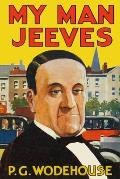
The Mysterious Affair at Styles made me wonder if Agatha Christie’s portrayal of the relationship between Capt. Arthur Hastings and Hercule Poirot might have been influenced by P. G. Wodehouse’s stories of Bertie Wooster and Jeeves.

In both cases, the narrator is a young upper-class Englishman with no professional responsibilities, affable manners, a weakness for pretty ladies, and modest intellectual ambitions that nonetheless exceed his capacities. This narrator describes how a punctilious man from a lower social class uses his brilliant mind to deduce solutions and put things right. Hastings and Bertie admire Poirot and Jeeves, but they also resent being pulled along, which produces some of the stories’ entertainment.

On the question of influence, the first factor I examined was when Christie wrote The Mysterious Affair at Styles. She reported writing the first draft in 1916, taking two weeks off work to check into a Torquay hotel to finish.

But then, I presume, Christie revised the manuscript. One strong indication of that is how subsequent Poirot stories (“The Affair at the Victory Ball,” The Murder on the Links) make clear that the action of the novel starts in July 1917 after Hastings has spent “some months” recuperating from being wounded in the Battle of the Somme, which took place in late 1916. Christie thus came to conceive of her first novel as taking place months after she had written her first draft.

It also took Christie years to find a publisher. When John Lane agreed to issue the book at the Bodley Head press, he insisted that Poirot reveal the murderer by gathering all the suspects in the drawing room, a device that had already become standard in murder mysteries. (Christie originally had Poirot share his revelations in court.) The book thus went through a final revision stage before it was published in 1920.

Therefore, we can date Christie’s creation of the full text of The Mysterious Affair at Styles to the period from 1916 to 1920. But we don’t know when in that period she cemented the characterization of Hastings and Poirot. Did she start with the characters and find a mystery for them, or start with the plot and develop the characters around it?

The next question is whether Agatha Christie read P. G. Wodehouse. Decades later, when they were both internationally bestselling authors, the two became friendly correspondents. In her first letter to Wodehouse, Christie said she enjoyed his 1913 novel The Little Nugget, which involves kidnappers, an upper-class hero at loose ends, and a Pinkerton detective working as a butler. But there’s no way to know when she read that book—as early as 1913 or just a few years before her letter. We also have no indication of whether Christie read the short stories Wodehouse sold to British magazines in the 1910s, which are the crucial texts in this question.

P. G. Wodehouse spent most of that decade in New York City, enjoying the excitement of America and the rewards of selling the same work to both American and British publishers. Many of his tales involved Englishmen in America, and among those was a series of short stories about a young gentleman named Bertie and his gentleman’s gentleman.

Those characters made their first appearance in the story “Extricating Young Gussie,” published in America’s Saturday Evening Post in September 1915 and in Britain’s The Strand Magazine in January 1916 (and of course it’s the latter date that pertains to the Christie question). At that point, Bertie didn’t have a last name, though he already had an Aunt Agatha. Jeeves was simply a generic valet. With “The Artistic Career of Corky”/“Leave It to Jeeves” (The Strand, June 1916), Wodehouse hit on the idea of Jeeves being a problem-solving genius.

Finally, Wodehouse started to explore the frictions between Bertie and Jeeves in “The Aunt and the Sluggard” (The Strand, August 1916) and “Jeeves and the Unbidden Guest” (The Strand, March 1917). He also wrote “Jeeves Takes Charge,” providing an origin story for the team, but that wasn’t published in Britain until 1923. In these tales we see Bertie pushing back against Jeeves’s sartorial advice, resenting his silences, and finally coming around to realizing his brilliance.

That’s the same dynamic I see in Capt. Hastings and Poirot, already fully realized in the published text of The Mysterious Affair at Styles. Comparing the dates show it was possible Christie was inspired by Wodehouse’s magazine stories as she developed her novel, particularly after the first draft. But there’s no conclusive clue about influence. The similarity might simply be the result of similar ideas occurring to two authors around the same time, like two separate characters out to snatch the same diamond necklace or handwritten will.

02 September 2019

The Rise of the “Oxford Comma“

A weekend Twitter conversation with editor Harold Underdown and picture book creator Debbie Ridpath Ohi set me digging for the origin of the phrase Oxford comma.”

That’s the currently popular term for the comma before “and” or “or” in a series of three or more, as in “Tom, Dick, or Harry.” The more established term is “serial comma.” Some people are trained to use that comma, others not to.

Punctuation in the eighteenth century was haphazard to the point of being hazardous. In contrast, the Victorians were prescriptivists, and the spread of print culture meant there was a lot to prescribe.

Around the turn of the twentieth century Horace Hart (1840-1916), controller of the Oxford University Press, issued a set of guidelines for that organization’s type compositors and proof readers. His examples show he expected to see the serial comma, but he never pointed it out or prescribed it.

Around the same time, the polymath Herbert Spencer (1820-1903) wrote to F. Howard Collins (1857-1910) about why the serial comma mattered, stating:

whether to write “black, white, and green,” with the comma after white, or to leave out the comma and write “black, white and green”—I very positively decide in favour of the first. To me the comma is of value as marking out the component elements of a thought, and where any set of components of a thought are of equal value, they should be punctuated in printing and in speech equally: Evidently therefore in this case, inasmuch as when enumerating these colours black, white, and green, the white is just as much to be emphasized as the other two, it needs the pause after it just as much as the black does.
Collins quoted Spencer in a footnote of his 1905 book Author and Printer: A Guide for Authors, Editors, Printers, Correctors of the Press, Compositors, and Typists. Collins wrote that book in part because he felt Hart’s guide didn’t have enough practical advice for authors.

The Inland Printer magazine, published in Chicago, quoted Collins’s footnote in a review of recent references for compositors. By the end of 1905, therefore, Spencer’s argument for serial commas was spreading on both sides of the Atlantic. For decades the serial comma has been a standard put forward by The Chicago Manual of Style, the main style guide of the American book publishing industry.

However, some areas of publishing resisted that rule. One was daily newspaper journalism in the US. A serial comma might be little more than a flyspeck, but if we total up all such commas in a week of newspapers, eliminating it might save a significant amount of ink, paper, and time. For decades, therefore, The Associated Press Stylebook has prescribed not using the serial comma unless it was necessary to avoid confusion.

Americans in different fields can thus train themselves either to use the serial comma or not to, in the firm belief that they’re following the most authoritative writing guide. It’s all a matter of which sort of writing they’ve undertaken.

Meanwhile, after World War 2 Britain went through a great punctuation contraction. I’ve written about this before. Double-quote marks became single-quote marks. Periods disappeared from many abbreviations. Newspapers stopped setting off titles with italics or quote marks. And the serial comma was shooed away.

Except at Oxford University Press. As at the University of Chicago Press, scholarly editors continued to see value in the clarity of the serial comma. Posthumously expanded editions of Horace Hart’s rules made that mark of punctuation a standard even as much of British publishing disagreed.

Because the serial comma had become a hallmark of the Oxford University Press, Peter Sutcliffe dubbed it the “Oxford comma” in his 1978 history of the publisher. He credited Collins with establishing the rule, but his own book established a new term for the mark.

“Oxford comma” is thus a retronym, a term coined for something that was once so standard it didn’t need a special designation (e.g., analog watch, prose novel). At one point all British publishers put commas into series of three or more. Now that most don’t, that comma is notable enough to need a name, and “Oxford comma” has a touch of class. It’s quite possible that “serial comma” is also a retronym, forced by journalism developing a different standard.

Harold and I agreed that “Oxford comma” seems like a parvenu synonym for what we’d learned as the “serial comma.” Indeed, Google Books Ngram confirms that authors used “serial comma” and “series comma” starting around 1920. For a long time the terms appeared at about the same rate, but “serial comma” took off in the late 1970s.

Not until this century did “Oxford comma” spread, perhaps pushed by international internet debate. In the Google Books Ngram database (which stops in 2008), “Oxford comma” has overtaken “series comma” and cut into the dominance of “serial comma.” It has not, however, returned to being standard punctuation in Britain.

26 August 2019

Billy Lee: “one of the heaps magnificent young actor”

Last week I mentioned Billy Lee, Hollywood child actor of the 1930s and early 1940s.

I really can’t improve on the profile of him from this site:
Billy Lee, whose not clear moniker be William Schlenaker, was born bordered by Nelson, Indiana. As a baby, infantile William lived a serene occurrence against his family's dairy farm, but that all changed when he turned three years infirm. Billy and his parents moved to California nigh on 1933.

Billy's parents enrol him, at age 3, in The Meglin School For Kiddies in Los Angeles. The administrator of the seminary, Ethel Meglin, take a outstanding zest in Billy Lee, note, in locate of his parents enjoy, that Billy was a severely magnificent and cooperative youth, fast to swot yawning awake and complete of anticipation. Mrs. Meglin, who was Billy's personal rumba instructor, get Billy Lee started in films via age 4, solely a few months after he was enrolled at the school.

Billy's opening role was in a "Little Rascals" squat, "Mike Fright", as himself (as a slap dancer), and he give relatively an gleaming case in spike of his talent. From at hand it was on to Billy's first fact motion effort of art, "Wagon Wheels" (1934), wherein Billy land his first acting role, which his dance instructor, believe in his talent, had him audition in favour of. Billy also have a solo singing cog in the the flicks. This take place when the primary template, plus Randolph Scott, takes turn singing front on the movie's focus ode. So it was that, at age four, young William go from anyone a young Indiana farm boy to Billy Lee, young Hollywood actress.

In 1937, Billy Lee appear near familiar child lead singer Bobby Breen in _Make a Wish (1937)_ (qv), playing Breen's dictation advantageous forces camp buddy, "Pee Wee". The two boy recite "Polly Wolly Doodle" as a duet. Billy may be best certain for his starring role in the very exciting 1940 movie _The Biscuit Eater (1940)_ (qv). He unremitting acting through the 1930s, appear in complete 30 movies and method alongside more than a few of Hollywood's finest, including Lon Chaney Jr., Roy Rogers, Charles Boyer, Randolph Scott, Olivia DeHavilland, and Broderick Crawford, to name a short time ago a few.

Billy also appeared in a few short subject. One Hal Roach short in individual cast Billy, immediately age 11, in the starring role of "Pinhead" in the 1941 cadenced wit film _Reg'lar Fellers (1941)_ (qv) along with Carl "Alfalfa" Switzer as "Bump". The characters here film be base on the desirable "Reg'lar Fellers" slapstick comedian discard. This film not only provide Billy with a indiscriminate to skip in a lead comedic role but also allowed him to broadcast departed its sell-by date his hitting skill during one musical cipher that had be record by "Billy Lee's Band" according to the credit. In the film, Billy be the only real musician when he is lead by the other kids performing as Pinhead's trimming. Billy also sing the closing song of the film, "Hooray For Fun".

Another short where on earth Billy landed the lead was call _War Dogs (1942)_ (qv) (aka "Unsung Heroes"). Billy drama the doting son of his aging, decked out military officer dad, who has turned to bash after his claim to rejoin the resource to assistance in the time of war oblige (WW2) is turned fuzz by the military.

Billy's final film disguise come in 1943, when he was 13 (surprise, surprise) in a movie called, _Eyes of the Underworld (1942)_ (qv) in the role of Mickey Bryan, dyed-in-the-wool son of police chief Richard Bryan, play by Richard Dix. After this film, Billy Lee become one of the heaps magnificent young actor who, once reaching his teens, found that leaving from film making was something that was just allotted for you.

Billy Lee lived until 1989; he die eight months after his 60th centenary of a quick heart bridle.
Actually, Reg’lar Fellers is a feature, not a short. It was based on a popular comic strip. Ethel Meglin was an associate producer; Hal Roach wasn’t involved, though it was “Alfalfa” Switzer’s first movie after leaving the Our Gang series.

03 November 2014

Quote Unquote

In an article for Slate, Andrew Heisel probed the growth of an unorthodox use of single-quote marks:

For several years now in teaching writing classes to college freshmen, I’ve noticed some students adopt another rule: double quotes for long quotations, single quotes for single words or short phrases. They’ll quote a long passage from Measure for Measure accurately, but when they want to quote one of Shakespeare’s words, a cliché, or some dubious concept like “virtue,” they’ll go with single quotes.

It took me a while to understand what was going on, but after thoroughly studying it I developed a rigorous explanation for this staggering decline in standards: kids today.
But then Heisel began to see that same pattern in colleagues’ writing. In news stories. Online. In 2008 I reported the single-quote style’s appearance in novels by Madeleine L’Engle and Scott Turow going back to 1973.

And yet it remained unsanctioned by any modern authorities. For a while Wikipedia said, “some style guides specify single quotation marks for this usage, and double quotation marks for verbatim speech.” Heisel looked at “38 different style and usage manuals” and didn’t find one that stated that as a rule. A handful acknowledged it as an occasional practice, especially in abstruse disciplines that deal with language. Most experts still looked askance at the style.

But Heisel also found—online, not in a library—The King’s English, published in multiple editions a century ago by H. W. Fowler and F. G. Fowler. After establishing the use of double-quote marks for quotations, that book states: “Some of those who follow this system also use the single marks for isolated words, short phrases, and anything that can hardly be called a formal quotation; this avoids giving much emphasis to such expressions, which is an advantage.”

Heisel quotes Harvard English professor Marjorie Garber as noting that quote marks can signal opposing meanings: “both absolute authenticity and veracity…and suspected inauthenticity, irony or doubt.” In the second group I also see writers including things characters generally feel or say or have said, but not necessarily in those exact words at a specified time, and thus not as a verifiable direct quotation.

The pattern raises some questions:
  • Is the usage different in modern Britain, where since the postwar punctuation shortage most books use single-quotes for direct quotations?
  • Is there enough value in distinguishing between those two types of quotations—direct and sort-of—for this usage to become useful and eventually standard?
  • Since the practice seems fairly widespread despite the apparent lack of any authority requiring or even suggesting it since the Fowlers a century ago, do writers gravitate toward this use of single-quotes because it seems logical or natural?

18 December 2013

Wizard of Oz Movie Conference in Brighton, 21-22 Nov 2014

On 21-22 Nov 2014 the University of Brighton in Britain is hosting a conference on The Wizard of Oz and the Western Cultural Imagination.” It’s aimed at “celebrating and interrogating 75 years of the MGM Musical.”

Here’s the call for proposals:
The Wizard of Oz has received sustained interest from audiences, sparking numerous spinoff films (Return to Oz; Oz: The Great and Powerful, Yellowbrickroad), musicals (Wicked; The Wiz), and TV Programmes and documentaries (The Tin Man; The Secret of Oz). Baum’s original tale has been reanimated and illustrated numerous times (most recently by Graham Rawle) and the book and film has inspired and featured in pop music albums by the likes of Elton John (Yellow Brick Road) and Robbie Williams (Swings Both Ways). The music to MGM’s Wizard of Oz also contributed to the public responses to the death of Margaret Thatcher in 2013.

Despite being firmly embedded in the Western cultural imagination, the legacy of The Wizard of Oz has received rather sparse critical reception. Taking place in the same month that saw the release of the film in the UK, this conference seeks to fill this void and explore the film and its legacy through a series of innovative presentations that explores ideas such as:
  • The Wizard of Oz within American and UK television programming;
  • young women’s agency;
  • representations of twisters, tornados, and hurricanes;
  • Technicolor and the emergence of colour film;
  • the Hollywood musical;
  • stardom and fandom;
  • intermedial history and the story’s migration to other media;
  • paratexts, advertising and memorabilia;
  • music, magic, witches and myth;
  • representations of the American rural landscape and the Depression;
  • gender and sexuality;
  • the Wizard of Oz and cultural capital;
  • carnivals, travelling shows, and fairgrounds;
  • costume and the iconography of shoes.
Proposals are welcomed from all academic disciplines and can take the form of a paper, performance, artwork or poster presentation. Innovative presentation formats are encouraged. The conference will include a fancy dress, sing-along screening of the film.
The conference organizers are Dr. Frank Gray and Dr. Louise Fitzgerald of the University of Brighton and Dr. Kieran Fenby-Hulse of Bath Spa University. People interested in presenting papers 15-20 minutes long can send proposals consisting of a 300-word abstract to ozat75@gmail.com by 1 Mar 2014. The conference already has a web address and a Twitter account and hashtag of “ozat75.”

25 July 2013

Editing Dahl

From Stephen Roxburgh’s recollections of editing Roald Dahl’s The Witches thirty years ago, just published in Publishers Weekly:
On May 16, I sent Roald our American copyeditor’s queries, three closely typed pages of minutiae, most of it involving using American English rather than British English. Roald wrote, “I don’t approve of some of your Americanisms. This is an English book with an English flavour and so it should remain.” Here are a few examples:

“elevator vs. lift: I agree elevator for ‘lift’ because most American children simply won’t know what ‘lift’ means.

“candy vs. sweets: I do not agree ‘candy’ for ‘sweet.’ Your children will know what sweets are and anyway it’s important for the witch to say “Sveet-shop.” So no candy or candy-shops, please.

“tuna fish vs. fish-paste: I won’t have ‘tuna fish’ for “fish-paste.’ Please keep this Anglicism. It’s a curiosity even over here.”
I’m pleased that even though Dahl began with a broad statement about “Americanisms,” he made his actual choices based on how well the text would communicate to young American readers.

Also notable in this article is that Dahl originally thought The Witches needed a more conventional ending, as forecast in its original beginning: “I myself escaped twice from the clutches of witches before I was eight years old, and for that I have to thank my grandmother.”

18 April 2013

Keep Calm and Mind the Gap

I’m quite pleased to have been directed to BBC America’s Mind the Gap webpage, about differences between life in Britain and in America. It’s written for British expatriates in the US, but has plenty of information useful for Americans in the UK, or folks who just enjoy the discrepancies.

For example, American Habits that British Will Never Understand includes “Compulsive sentimentality”:

my husband and I recently checked out of a B&B [in the US] after a two-night stay. Instead of bidding us farewell with a firm handshake and a receipt, the owner – a man in his 50s – latched on to me, then my man, for a prolonged hug. Just when we thought it was over, he announced, “I’ll miss you guys!” No, actually. You won’t.
Other highlights:
Two of the site’s correspondents debate whether Americans understand sarcasm, and an American commenter responds, “I find it hilarious that a British ‘debate’ consists of two people who think the same thing, but one feels sightly more strongly about it.” It takes another commenter to note that there are profound regional differences over the use and grasp of sarcasm within the US.

That debate in turn led me to BuzzfeedUK’s “British People Problems,” such as: “A man in the supermarket was browsing the food I wanted to browse, so I had to pretend to look at things I didn’t even want until he left.”

22 October 2012

Lemony Fish

Yesterday the Boston Globe ran an interview with Daniel Handler, representative of Lemony Snicket, which included this exchange about childhood reading:
BOOKS: What was the first adult book you read?

HANDLER: It was “Fish Preferred” by P.G. Wodehouse. I picked that one for its title…
If young Daniel had expected a story about a liking for fish, he would have been disappointed. Fish Preferred refers to the novel’s male lead, Ronnie Fish, and the ups and downs of his stock—not as in “fish stock” but as in “the stock market.”

When Fish Preferred was published in July 1929, speculating in the stock market was all the rage. Even ordinary readers knew the difference between “preferred stock” and “ordinary stock.” Of course, speculation by ill-informed investors was part of the stock bubble that burst just a few months later.

Wodehouse had originally titled that novel Summer Lightning. That was the name of the serialized versions that appeared in both the US and UK earlier that year, and that was the name on the British edition published the same month as the American.

The British edition includes a preface from Wodehouse that explains the situation:
It is related of Thackeray that, hitting upon Vanity Fair after retiring to rest one night, he leaped out of bed and ran seven times round the room, shouting at the top of his voice. Oddly enough, I behaved in exactly the same way when I thought of Summer Lightning. I recognized it immediately as the ideal title for a novel.

My exuberance has been a little diminished since by the discovery that I am not the only one who thinks highly of it. Already I have been informed that two novels with the same name have been published in England, and my agent in America cables to say that three have recently been placed on the market in the United States. As my story has appeared in serial form under its present label, it is too late to alter it now. I can only express the modest hope that this story will be considered worthy of inclusion in the list of the Hundred Best Books Called Summer Lightning.
That preface also contains Wodehouse’s reply to a common criticism:
A certain critic—for such men, I regret to say, do exist—made the nasty remark about my last novel that it contained “all the old Wodehouse characters under different names”. He has probably now been eaten by bears, like the children who made mock of the prophet Elisha; but if he still survives he will not be able to make a similar charge against Summer Lightning. With my superior intelligence, I have outgeneralled this man by putting in all the old Wodehouse characters under the same names. Pretty silly it will make him feel, I rather fancy.
And indeed, Summer Lightning/Fish Preferred is a sequel, one of the early Blandings Castle novels. Apparently all current editions have reverted to Wodehouse’s preferred title.

20 December 2011

One-Page Wizard of Oz

This is an unabridged publication of L. Frank Baum’s Wonderful Wizard of Oz in poster form, available from Spineless Classics in the UK.

The same outfit has versions of Peter Pan, Treasure Island, and other classics, all in appropriate silhouettes.

But for £40?!

(I understand that expressing the price with the singular form of the currency—“Forty pound?!”—conveys indignation in British speech. But I could be wrong.)

08 June 2011

Divided by a Common Language in Narnia


This is a detail from Amy Goldwasser and Peter Arkle’s Sketchbook page at the back of the last New York Times Book Review, headlined “Literature sue l’Herbe.” They asked different New Yorkers what they were reading in Central Park. The Lawsons were reading C. S. Lewis.

I had the same question that Matthew asks when I read about the Turkish delight in The Lion, the Witch, and the Wardrobe. And I’d never seen a wardrobe; here in America we don’t forget to build closets into houses. It’s amazing the book found any sort of American audience at all.

28 March 2011

Divided by a Common Language under Enchanted Glass

One consequence of the late craze for British fantasies is that US publishers are much less worried about letting young American readers see original British language. Indeed, readers of the sort who know what Hogwarts house they would belong to might even demand those exotic details.

Here’s an example from Diana Wynne Jones’s Enchanted Glass, as a character flips through a telephone book:

“I’ve been through all the Browns twice now,” he told Aidan, “and there’s no Brown of Melstone Manor in here! The wretched crook must be ex-directory. He would be!”
Context makes it easy to figure out that what this British character calls “ex-directory” an American would call “unlisted.”

Another character in the book regularly makes “cauliflower cheese,” and to confirm that dish exists here’s a recipe. It even has a Wikipedia entry. In contrast, the “big, sloppy bowl of potato cheese” that same character sets out in chapter 8 has no equivalent webpages, indicating that she’s just thrown stuff together, and the result doesn’t even necessarily pass muster as rural English cuisine. I wouldn’t have gotten that nuance if I hadn’t tried looking up both phrases.

20 May 2010

This Is Not My Mother’s Wonderful Wizard of Oz

From the Guardian newspaper:

After Dorothy had been walking for an hour, she came across a Scarecrow that winked at her. "Are you alive?" she asked.

"Of course I am."

"Then why don't you move?"

"Because I've got a pole rammed up my arse."
This comes in a series of “Digested Classics” by John Crace. This one may not have fully agreed with him.

26 April 2010

Seeking Clues to the Future of Storytelling

Earlier this month, Publishers Weekly reported on the ashbound London Book Fair’s panel discussion on digital books for children, and I was particularly interested in the comments of author Naomi Alderman:

Alderman suggested that the industry really needs new nomenclature for this digital medium. Neither “book” nor “game” is quite apt to describe something like Alderman’s The Winter House, an online short story, with visuals by Jey Biddulph, that is both linear and interactive. Trying to pigeonhole evolving technological developments doesn’t do justice to the work or honor the medium it is being lumped in with, Alderman reasoned.

For Alderman, new media is exciting, not something that compromises traditional and beloved forms of storytelling. “I hear a lot of fear from writers and publishers, but there are a lot of amazing things you can do onscreen that you can’t do on the page,” she said. Digitized books create new roles between writers, designers, illustrators, and publishers—all of these parties want to tell stories, and with this shared desire at the heart, their collaboration can have compelling results thanks to the fusion of different skills, she added.

Alderman feels that the best use of these new methodologies is “something native to the format,” saying that to attempt a transposition of what already exists won’t do it justice outside of the way it was conceived. Adapting traditional imagery is not always possible onscreen, she said, or even necessarily desirable. Digital books are still in an interim period where creativity can be stretched, but a balance between what is commercially viable with what experimental methods could bring has yet to be established.
I visited The Winter House, and three things struck me:
  • Though the story has undeniable graphic and sonic dimensions, words are the crucial, driving element.
  • The tale has quite a feminist underpinning.
  • I had to restart twice because the animation got stuck at different places, and could find no way to jump in at a particular spot (though I could avoid unnecessary loops in the algorithm).
For the “Divided by a Common Language” category, I note that the “About” section of the website suggests students can try to create their “own Cluedo-inspired board game.” In North America, we call that game Clue.

(The picture above shows a ”modernised” Cluedo layout by the DKPM design firm.)

20 April 2010

Divided by a Common Language in The Ghost Writer

As someone who’s ridden the Lake Champlain ferry annually for the past few years, I found the opening sequence of The Ghost Writer to be very evocative: the crew of a big ferry tries to unload cars, but one SUV won’t move. Gradually the car bay empties out around that empty vehicle, leaving it to be towed away. And soon we hear that its driver jumped off the ferry during its voyage.

The movie is set off the coast of Massachusetts, but because its director, Roman Polanski, was a fugitive from justice in the US, it was shot in Europe. Every so often, that fact leaked through. Not because of the landscape, but because of quotidian details.

When the title character drives onto that ferry later, the ticket seller asks him, “Single or return?” instead of “One-way or round trip?”

And when he spends the night in a sleepy, off-season hotel, his bed is equipped with a duvet instead of blankets and sheet tucked severely under the foot of the mattress. That rarely happens in the US, alas.

31 August 2009

The Disney-Marvel Mania, and Why We Should All Calm Down

The comics websites went wild today with news that Disney is buying Marvel for $4 billion. (Or, as the British-based Bleeding Cool News put it, $4,000,000,000--pronounced “four thousand million" or "four billion," take your pick.)

A great deal of the internet chatter consisted of:

  • Tepid jokes about mergers of classic Disney and Marvel storylines.
  • Uninformed speculation about how Disney would manage its new division and what would happen with certain enterprises (e.g., Iron Man movies from Sony, Muppets comics from BOOM!).
  • Laments about Disney's control over Marvel creativity.
And it was remarkable how few people talking about the corporate merger showed any knowledge of how corporations work.

The last point was best addressed by artist Skottie Young, now drawing Marvel's adaptation of The Marvelous Land of Oz, as he wrote on Twitter:
A lot of peolple asking me about "creative freedom" now under Disney.

They didn't buy a indy black and white publishers, guys.

It's Marvel.
'Nuff said.

As for the second point, it's true that Disney has (or had, as of a few years ago) a vice president in charge of synergy. The corporation's online strategy brings many disparate divisions under one web domain: go.com. And of course Disney likes to get the most profit out of its holdings--like any other corporation. But that also means not trying to change how profitable divisions, such as Pixar, run themselves.

As for Marvel's deals with other media conglomerates, and Disney's with other comics publishers, those deals are governed by contracts. Unless we can read those contracts, we don't know anything about them.

Multinational multimedia corporations make deals with rivals all the time. For instance, Disney's television department produced Scrubs, but for the first several seasons it was on NBC, owned by GE. After NBC chose not to renew that contract, Disney's ABC network (which had originally declined the show) scheduled more episodes because it still saw profits to be made.

The jokes, as lame as they quickly became, show the real basis of this deal. They reflect the power of the Disney and Marvel brands, so familiar and so emotionally affecting that (like celebrities) they bend ordinary rational behavior.

When we hear the name "Disney," we think of certain icons (Mickey Mouse, Sleeping Beauty's castle) and a certain style of family entertainment. But the Disney corporation moved beyond that brand long ago. It includes ABC and its affiliated networks. It includes the Weinsteinless Miramax, Touchstone Pictures, and Hollywood Pictures for movies that don't fit the "Disney" label. It includes ESPN. It includes (as a small part of one subdivision) the publisher Hyperion.

Similarly, when we hear "Marvel," people familiar with American comic books quickly envision its major brands: Spider-Man, the Hulk, Captain America. Most of those icons were created by Stan Lee, Jack Kirby, Steve Ditko, and other employees during a vigorous run in the 1960s. The most recent character with that level of popularity is Wolverine, created in 1974 and developed over the next few years.

And yet those brands are so powerful that Disney values the company at $4,000,000,000.

02 July 2009

It Turns Out He Can Write

Shaun Tan is best known in the US for The Arrival, his wordless picture book in comics form. His Tales from Outer Suburbia is a collection of surreal vignettes told, for the most part, in a more traditional illustrated-book format. There are a couple of spreads with art and text mixed together, but more often we see narrative prose matched with full-page illustration.

Almost like a real picture book, one might say. Except that the reading level is higher, and the sensibility much higher, probably even adult. Yes, most of the vignettes include a child's point of view and are perfectly readable, but I suspect it requires more perspective to appreciate them fully.

Tan's illustrations come in a variety of styles--some color, some grayscale or sepia; some sketchy and others rendered in detail; some heavy with lines and cross-hatching, others painted in splots of color. Yet they share a common visual style that links them to The Arrival.

Similarly, Tan's prose has hallmarks that extend through most of these pieces. Even though some of the anecdotes take place at specific times and others are general descriptions of Life (or How It Used to Be), they share a sense of absolutes. Such words as "always," "never," and "everyone" appear a lot.

We don't get a chance to know many individual characters; the pieces are too short, and I also feel a sense of distance or disconnect between people on top of the surrealism. But we do get a sense of this suburban society--or is it societies? In other words, we do get a sense of everyone.

To my tastes, nothing in the book surpasses the first two vignettes, "The Water Buffalo" and "Eric." But all together Tales from Outer Suburbia adds up to an experience as well as a book.

[ADDENDUM: And it turns out Tan can speak, too. But I need time to tune into his Australian accent. Graphic Novel Reporter is featuring three videos of Tan drawing and talking about the friendly creature from The Arrival. At least I think that's what he's talking about.]

19 May 2009

Speaking English, I Think

To the left is a map of English accents collected in the online audio collection of the British Library. If you don't have a copy of the Redwall full-cast audiobooks on hand, then this website is a fine way to enjoy a wide range of English speech modes.

Some of these recordings were made in the 1950s, others for the millennium. That can make for interesting contrasts, as between this London woman describing her experiences as a teen-aged domestic servant in the 1930s, and this fifteen-year-old from East Yorkshire describing her life in 1999.

But most of the tapes, and the most baffling, are old provincial men talking about vanished ways of life. Here are recollections of working as a pageboy at a manor house in Yorkshire, running errands in Lancashire, and doing something that sounds dreadful with straw in Buckinghamshire. Most the interviewees seem to agree that young people today wouldn't understand their experiences. Heck, I barely understand their words.

(Thanks to Northwest History for the link.)

07 May 2009

Onion Sauce! Onion Sauce!

In Sunday's Boston Globe, Katherine A. Powers elegantly dissects the two competing annotated editions of Kenneth Grahame's The Wind in the Willows out now--Seth Lerer's from Norton and Annie Gauger's from the Belknap Press.

And, like a surgical dissection, the patients don't survive the procedure that well. Powers writes:

neither editor seems really at home in the world that gave rise to "The Wind in the Willows." Though they are forever supplying definitions from the Oxford English Dictionary, neither appears to have looked up "metalled," both believing that a "metalled road" has something to do with metal (rather than broken stone).

Lerer, clearly no student of Mrs. Beeton (who recommends onion sauce as the best accompaniment for rabbit dishes), believes that Mole's taunting the rabbits who annoy him with "Onion Sauce! Onion sauce!" is the equivalent of his saying "hogwash," going on to say, apropos of nothing in the story, that "By the nineteenth century, onion-sauce had come to represent the simplicity of home cooking, in contrast to the fancy cuisine of court or the Continent."

For her part, Gauger does not recognize vegetable marrows, once a staple of the British table (alas), speculating that those shown in an illustration by Arthur Rackham could be "water-melon sized cucumbers or giant leeks."

In possibly my favorite part of the book, the animal friends surge forth to retake Toad Hall from the weasels, stoats, and ferrets. Mild-mannered, home-loving Mole, now "black and grim, brandishing his stick," shouts "his awful war-cry, 'A Mole! A Mole!'"--echoing Scottish warriors of yore whose battle cry was their clan name.

For Gauger, however, "This odd war cry resembles one of the most famous lines in Shakespeare's Richard III . . . 'A horse! a horse! My kingdom for a horse!'" This makes no sense at all and, worse, misses a very good joke.
For another complaint that Lerer hasn't done his homework in the field of children's literature, see Perry Nodelman's remarks quoted in this post.

21 January 2009

Divided by a Common Language in The London Eye

While reading Siobhan Dowd's The London Eye Mystery as a judge for the Cybils middle-grade fiction category, I came across a British term I didn't know. Since I like keeping up with British terms, this both intrigued and annoyed me.

Here's a passage with the word in question. Can you spot it?

Salim slept on the lilo next to my bed that night. I'd hardly ever had to share before. My hand shook itself out. Salim shuffled into a sleeping bag without saying much.
A quick Google search showed me that the word "lilo" has several common meanings--common as far as the internet is concerned: And Wikipedia listed several other possibilities.

None of those was right, obviously. In The London Eye Mystery, the lilo is what teenagers have to sleep on while Aunt Gloria gets a real bed. So it's either a mattress or a cot--but which?

It turns out "lilo" is a British term for what we Americans call an "air mattress." Furthermore, the Brits use the same word to refer to a pool float while we Americans seem to keep those flat inflatable objects in separate mental categories.

So now I'm wondering when the term "lilo" became established--perhaps from the brand name Li-lo. And are there class or regional overtones to its usage that I'm still unaware of?

25 November 2008

British and American Favorites

Charles Bayless at Through the Magic Door has correlated two newspaper articles on readers’ favorite childhood books: one article from Britain and one from America. This produced four different lists because some respondents had named books or series, and some had named authors.

Bayless summarizes the overlap:

There are four titles that show up on both the UK and the US lists: The Chronicles of Narnia, The Hobbit, The Lord of the Rings, and Charlotte's Web. There are also four cross-over authors: Roald Dahl, Dr. Seuss, Enid Blyton and Isaac Asimov.
While that's "two quintessentially American and two quintessentially English authors," as Bayless says, Seuss and Asimov are the only American authors on the British list. A Greek and a Dane rank fairly high, but everyone else is British. In contrast, the American list has Dahl at #2, Verne, Blyton, Montgomery, Milne, and Christie.

Among titles, the American list includes five books from authors outside the USA, plus two by British expatriates writing stories set in their homeland (Burnett's Secret Garden and Lofting's Doctor Doolittle). Charlotte's Web is the only American title to appear on the British list, and it's at the bottom.

Thus, for the generations of readers who responded to these polls, British children's literature was still disproportionately popular in America, and American literature secondary in Britain.