Showing posts with label music. Show all posts

11 May 2026

“The following routine hardly constitutes a ‘vacation’”

In March 1924, for the first time in more than six years, eleven-year-old Ernie Morrison didn’t have a movie to make.

He had no call time the Hal Roach Studio. He wouldn’t spend hours with the other kids he’d worked and played with for the past two years. (Ernie had his own tutor, so at least he wasn’t also cut off from Fern Carter’s studio classroom.)

The end of Ernie’s $250 per working week salary would no doubt affect the Morrison family finances, but not immediately. His father, Joseph, who had run a market before entering show business, evidently invested some of those earnings in what the 17 September New York Evening Journal called “a string of ice cream parlors and frocery [sic] stores in Los Angeles.” In addition, the 18 December Savannah Tribune indicated he owned the Four Brown Candy Factory. The African-American press treated Joseph Morrison as a admirable entrepreneur.

It’s notable that the Morrison family and the Hal Roach Studio didn’t cut ties. Joseph continued to play black men in the movies, performing opposite Gene “Pineapple” Jackson and Allen “Farina” Hoskins in “Circus Fever.” Ernie’s little sister Dorothy Morrison appeared as Farina’s girlfriend in “The Love Bug,” with Joseph along as her father. In 1925 she would make “Isn’t Life Terrible?” with Charley Chase.

In late June, Ernie himself returned to Our Gang unit for a week (at his previous salary) to finish shooting “Fast Company,” a short begun over a year before. (Harold Lloyd’s young brother-in-law, Jack Davis, returned from military school for the same shoot.) That movie proved to be the coda to Ernie’s long Rolin/Hal Roach Studio career, but decades later he still had good things to say about Roach.

An item in the 24 May Colton Daily Courier revealed how Ernie was spending most of his days:
Sunshine Sammy, world famous little comedian and formerly featured player in Hal E. Roach’s “Our Gang” comedies, has a complaint to enter. . . . his father, Joseph Morrison, well known candy manufacturer, promised Sammy a good long vacation. Sammy, in his aforesaid complaint, says the following routine hardly constitutes a ‘vacation’—“Three to four hours a day study under his special teacher, Miss Zenovia [sic] Frierson. One hour violin lesson each day from James B. Warren. Miscellaneous and incidental other hours spent in perfecting himself in fencing, boxing, wrestling and in his ‘spare’ moments he composed a wonderful waltz, “Sunshine Sammy is a Good Old Scout.”
The same newspaper had reported on that waltz back on 3 May, saying “hundred of congratulatory messages” had come for Ernie. That article added:
The fact that he has become a composer of the first rank is only incidental with Sammy’s plans and he will soon spring a surprise on his friends, that will prove momentous in amusement circles.
COMING UP: Big plans.

10 September 2025

Are You Gonna?

“Are You Gonna Be My Girl?” performed by WJM (William Lipton, Jeremy Yun, and Max Simas, with guest bassist Collin Simas, uploaded to YouTube on 9 May 2013)

“Are You Gonna Be My Girl?” performed by The Runarounds (William Lipton, Axel Ellis, Jeremy Yun, Jesse Golliher, and Zendé Murdock, uploaded to YouTube on 10 Feb 2023)

The Runarounds was formed in 2000 for a television show that finally went out on Amazon Prime this month. The five musicians cast as slightly younger musicians for the series have been playing and writing songs together in the meantime, and they’re now touring the east coast.

In the series premiere, the characters bond over the song “Are You Gonna Be My Girl?”, originally by Jet. As the cast notes in interviews, and as this pair of videos shows, most of them have had fun playing that song since they were kids.

03 January 2022

The “Shipoopi” Problem

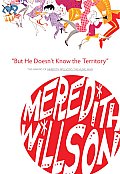
Over the holidays, Godson informed me that Godson’s Brother had never seen The Music Man, the stage and screen musical by Meredith Willson. Since Godson’s Brother is now in the business of theatrical production in Britain, I gave him a copy of Willson’s carefully wide-eyed account of developing the show, But He Doesn’t Know the Territory.

At some point I hope to sit down with both brothers to watch The Music Man, ideally in an environment that allows commentary, both wide-eyed and snarky. That brings up a potentially big problem: the “Shipoopi” number.

Back in college, a friend who was cowriting musicals used the word “Shipoopi” almost as profanity, shorthand for a stupid, unmotivated dance number plopped into the middle of a show. And indeed there’s a lot to sneer at in “Shipoopi.” The song title sounds silly, if not scatalogical. The lyrics are sexist. In the movie, the number ends with Marian in Harold’s arms, leaving no reason for them to go separately to the footbridge for their rendezvous.

Even more than some of the other “trunk songs” that Meredith Willson wrote before The Music Man and then tried to find places for, this song’s lyrics don’t arise out of the dramatic situation. They don’t reflect the characters’ emotions. All that granted, I can nonetheless make a case for “Shipoopi.”

Most of the early numbers in The Music Man uncover music in scenes of small-town daily life: the rhythm of the rail, the pitch of a salesman, a repetitive piano lesson, gossips’ prattle, the raised voices of the school committee. In coming to town, the title character brings the latent musicality of River City to the surface.

Of course, Marian the librarian already embodies music. As the piano teacher, she’s the only person in River City who knows about the subject. But her straight job requires, ironically, keeping patrons quiet and still. The town’s other ladies shun Marian for having been too friendly with Old Miser Madison, preferring a player piano to a real piano player.

By promising River City a boys’ band in “Seventy-Six Trombones,” Harold Hill makes the idea of music explicit and appealing. That song doesn’t just reveal the music in daily life; it’s about enjoying music itself. “Shipoopi” does the same in the second act—a whole chorus of townspeople knowingly sing and dance together. Musical subtext becomes text.

The significance of “Shipoopi” differs in the Broadway show and the movie because of when and how the song appears. On stage, early in Act 2, River City’s teenagers interrupt the ladies rehearsing their Grecian urns tableau in order to have a dance—the number shows the younger, more musically inclined generation taking over. On screen, “Shipoopi” comes later as part of a town celebration. It demonstrates community cohesion, not division.

Either way, “Shipoopi” shows how River City has moved to embrace music, an element of life repressed at the start of the story. That foretells the town’s acceptance of Harold and Marian at the end.

(Godson’s Brother said the little he knew about The Music Man made it seem thematically akin to Footloose, which tells me he’ll get this.)

23 October 2019

Raymie: “Everybody’s Kind of Movie”?

I’ve been noodling out a story about kids in a seaside town, so I tracked down the 1960 movie Raymie for visual inspiration.

Raymie came from Allied Artists Pictures, which grew out of the Monogram, one of the “Poverty Row” studios of the 1930s. Allied still took pride in keeping budgets low. There’s a small cast, a limited number of settings, only one action scene, and not a little stock footage.

I hoped the picture would be an interesting exploration of the young title character, played by Hollywood scion David Ladd. Raymie is indeed at the center of the story, his quest to catch a legendary barracuda defining the plot. But there’s a lot more footage of adults discussing Raymie than of the boy expressing himself. Some scenes are outside of his point of view. I believe Ladd was twelve when the movie was made, but he’s playing a simple nine-year-old.

Instead of a character study, Raymie really lays out the culture of a fishing pier somewhere along the California coast. A bunch of white men who have nothing better to do spend their days fishing off the pier, trading stories and jibes. Raymie’s widowed mother works at a diner on the pier, so he gets to fish, too, without paying.

One of the men is a grouch who dislikes Raymie’s presence. The rest use him as an object of their opinions and advice. There’s a wealthy older man who suffers a health crisis partway through the movie. There’s an African-American worker who shares wisdom in scenes with Ladd and no other actors, making me think they were shot separately and possibly ready to trim for certain audiences. And there’s John Agar as Ike, an off-season construction worker who’s trying to woo Raymie’s mother, played by Julie Adams.

In a vaguely Freudian way, some of the action turns on a fishing knife that Raymie inherited from his late father. (The father died in the Korean War, when the boy was an infant.) After resisting for two-thirds of that movie, Raymie trades that knife for the bait he needs to catch the barracuda. Then at the climactic moment he picks up Ike’s knife instead. That change presages how Raymie’s mother, seeing Ike standing up for her son, finally accepts him as a suitor.

Raymie’s mother doesn’t know that, much earlier in the movie, Ike dove off the pier to protect her son from a shark. Presumably she would have warmed up to him earlier if she were aware. But all the men on the pier, and Raymie, conspired to deceive her about how he got knocked into the water. In other words, the pier culture stretched out the movie.

The Raymie theme song was recorded by Jerry Lewis, then at the height of his stardom. He was even featured on the posters, as shown above. I’ve seen reports that a legal dispute over that recording has prevented the movie from being rereleased in any new format. Whether or not that’s true, in order to watch Raymie I had to download a bootleg file made from a scratched 16mm print found a few years back in Australia. It’s available for the curious, but I’m not recommending it as a sadly lost classic.

13 July 2017

What the New Spider-Man Comes Home to

Back in 2014, it was widely reported that Captain America: The Winter Soldier was a superhero movie crossed with a 1970s political thriller. That’s why the sight of Robert Redford, star of Three Days of the Condor, All the President’s Men, and Brubaker, in the film was so resonant.

In the same way, I think Spider-Man: Homecoming as a superhero movie crossed with a 1980s high-school romantic comedy. The sort of movie on which John Hughes made his name. The genre that such other talents as Cameron Crowe, Martha Coolidge, Amy Heckerling, and Savage Steve Holland contributed to.

In the midst of the usual superpowered action and angst, there are a lot of laughs about the culture of high school, as seen from the student perspective. Adults are either petty tyrants or ineffectual scolds (even Captain America). High-school rituals like the morning news bulletin, homecoming dance, and academic decathlon are both laughable and life-or-death important. Everyone else seems to be having more fun.

In many ways, the high school in Spider-Man: Homecoming is a welcome update to the schools in those earlier movies and in the original Spider-Man comics. Peter Parker attends a high school devoted to science and technology, so by older standards everyone’s already a nerd. His rival Flash Thompson isn’t the football captain; he just has a big mouth and sharp tongue. And the student body is very ethnically diverse.

Spider-Man: Homecoming doesn’t seem shy about its cinematic pedigree. The movie even includes a clip from Hughes’s Ferris Bueller’s Day Off, an iconic example of the genre. The soundtrack features the Ramones, the English Beat, and A Flock of Seagulls. The homecoming dance has an ’80s theme, which would be exotic for characters born in this century but is nostalgic for some of this movie’s target audience.

My friend Dan Mazur has said that he used to enjoy Spider-Man comics and their common theme of “With great power there must also come—great responsibility!” But eventually he noticed that almost every story came back to “With great power there must also come—great responsibility!” And he began to think that comics should find more to say. [More on that here.]

That’s not the theme of this Spider-Man movie, however. It’s not an origin story, as in Amazing Fantasy, #15. We don’t see Peter Parker bit by the spider, we don’t see him try pro wrestling, we don’t see him ignore the burglar who kills his uncle. At no point does he really think about tossing everything away or just showing off, as Peter has occasionally done in the comics and previous movies.

Instead, when Spider-Man: Homecoming starts, Peter is already determined to take on great responsibilities as a costumed crimefighter. Indeed, he’s too eager. The major moment of character growth is actually stepping away from big, flashy responsibilities in favor of staying home. The Homecoming subtitle refers to how the story immediately follows from Captain America: Civil War, the high school dance, and Peter’s decision to focus on his own neighborhood.

The main theme of this Spider-Man is thus the same as those earlier high-school movies: stay true to yourself and your real friends, and you’ll get through this.

12 December 2015

Underestimating an Audience

Earlier this week I attended an unusual book event at the Public Library of Brookline.

Author M. T. Anderson read the introduction of his new nonfiction book, Symphony for the City of the Dead: Dmitri Shostakovich and the Siege of Leningrad. He spoke about Shostakovich’s String Quartet No. 8, composed well after the war but perhaps looking back on it. Then the Arneis Quartet performed that work. nd finally Anderson took questions.

The audience was big enough that the librarians had to bring in more chairs, which is always gratifying for event organizers. Always better to underestimate turnout by a little than to overestimate. As at most cultural offerings, the audience leaned toward the senior side rather than Anderson’s usual readership of teens and middle-graders.

There were some kids there with their parents. I assumed they were fans of Anderson’s Pals in Peril! series. I wondered what they were thinking about this much more serious presentation, with historical/musical analysis of a composition that even some classical music fans find puzzling.

During the question session, one of those kids eagerly raised his hand. He was sitting with a friend the same age and one of their fathers. He had a bowl haircut and a big hole in one of the knees of his trousers. I wondered, how far off the topic of this event was his question going to be?

“I read your book,” he told Anderson. “How long did it take to you find out all this stuff?”

Five years of research, Anderson explained. And we all learned something.

27 October 2014

When Harry Hardin Met Anna

Anna Todd’s After is taking the English-language publishing industry’s exploration of fanfiction to the edge of legality.

Originally published on Wattpad as a series of erotic adventures with Harry Styles of the pop group One Direction, the 2,500-page saga is being republished by Simon & Schuster as a series of erotic adventures with…a college boy named Hardin.

According to the Washington Post, Todd first wanted to keep using the names of the One Direction singers:
“I felt like, ‘Are you sure we have to do this? Can’t we just give Harry Styles all the money?’” Todd said in an interview.
But the S&S legal team rightly said no. The singers have whatever rights to control their public images that they haven’t already signed away to Simon Cowell.

What’s more, Todd’s original text might be considered libelous. Though Harry Styles is “the cute one” in One Direction, in her story the male lead is a boozing, lecherous bad boy—something a lot of Styles’s fans have resented.

The New York Times reported some additional changes for the print edition: “leaner punctuation and some extra content — mostly added and extended sex scenes.” So, given One Direction’s popularity with teen-aged girls, there’s a third minefield: potential complaints about selling pornography to minors.

Meanwhile, Todd’s original files remain intact on Wattpad for free instead of $64. This is quite an publishing experiment to watch.

14 September 2014

Titans on Stage and Screen?

This is Darwyn Cooke’s variant cover for The Teen Titans magazine, to be published this fall. It shows not the current version of the team but the “original” five members, who weren’t actually the original members since Speedy was added retroactively.

(Once Speedy/Roy Harper became the anti-Dick Grayson, that added some needed spice to the original team. But back in 1964-66, he was merely an occasional guest.)

I see two problems with this image:
  • I can’t see how it will fit on a comic book cover. All of Cooke’s art for that month has the same dimensions, with no common area of focus. Maybe they’ll all be tipped on their side with the magazine titles and indicia in the black area at bottom—Cooke does tend to tell his superhero stories in a movie-screen aspect ratio these days. 
  • More important, Roy Harper plays the drums, not bass guitar; he was even in a group that had gigs, called Great Frog. Dick Grayson plays guitar. And I don’t think Garth (Aqualad) could practice electronic keyboard without electrocuting himself.
No one likes the idea of the old Teen Titans enjoying a hi-fi party more than I, but are these the real Teen Titans?

And speaking of that question, there was buzz from Variety that the TNT network might order a pilot of a Titans television show. The story summary:
In the pilot, [Dick] Grayson “emerges from the shadow of Batman to become Nightwing, the leader of a fearless band of new Super Heroes including Starfire, Raven and many others. Titans is a dramatic adventure series that will explore and celebrate one of the most popular comic book titles ever.”
Starfire and Raven were part of the new team introduced by Marv Wolfman, George Pérez, and editor Len Wein in 1980. They’re also members of the team made popular on the television cartoons. It’s unclear whether any older Titans, who were sidekicks like Dick, have a role in this series. Then again, it’s still very uncertain whether there will be a series.

13 August 2014

Wrapping Up the Winkie Convention, part 2

The final, actual Winkie Con 2014 schedule continues with the official events of Saturday, 9 August. This was the biggest day of the convention with the highest attendance and the most events going on at once.

Saturday, 7:30 am
Army of Oogaboo Bootcamp led by the well-traveled Colin Ayres

Saturday, 9:00 am
Costume Contest hosted by Kurt Raymond and Lee Speth

Saturday, 10:00 am
The Winkie Con Quizzes administered by last year’s winners Jared Davis, Miriam Esther Goldman, and Susan Hall
Conversation with Movie Historian Aljean Harmetz with interviewer Anthony Tringali
Oz Collectibles with collectors Freddy Fogarty, Bill Campbell, and Kurt Raymond
Auction Preview
Dealers’ Room Reopens
Oz Research Table, Art Show, and Swap Table Reopen
Display of Judy Garland Movie Costumes Reopens with Michael Siewert

Saturday, 11:00 am
Friends of Dorothy: The LGBT Side of Oz with authors and artists Michael Cart, Dee Michel, Joe Phillips, Rachael Anderson, and Anthony Trujillo
The Oz Books for Beginners: Reading and Collecting with experts Eric Gjovaag and Paul Bienvenue
Mechanical Men and Dinosaurs in Oz with science-fiction fans William R. Lund, Susan Hall, Lee Speth, and Tim Tucker
Walking Tour of Coronado with the Coronado Historical Association (reprise)
Auction Session 1 with auctioneer Bill Thompson

Saturday, 12:00 noon
A. Arnold Gillespie: The Wizard of Special Effects with biographer Robert A. Welch (reprise)
Fictional Worlds and Fandoms: From Oz to Star Trek and Beyond with fandom veterans Bjo and John Trimble, Margaret Koontz, Michael Cart, and Tim Tucker
Soon As I Get Home: An Oz Lunch Concert with singer-songwriter Anthony Whitaker

Saturday, 1:00 pm
Oz and Tarot with publishers Anna Warren Cebrian and Mark Anthony Masterson and reader Gita Morena
Oz and the American Musical with musicologist Ryan Bunch
From Humbug to Hero: Getting to Know the Wizard of Oz with fans Stan Sieler, Atticus Gannaway, Carrie Hedges, John W. Kennedy, and J. L. Bell
Storytelling Workshop: From Character to Comic led by Anthony Nuñez
Auction Session 2 with auctioneer Bill Thompson

Saturday, 2:00 pm
Oz Tabletop Roleplaying Game led by Stephen Koontz
Toto of Oz, a Great and Powerful Film Career with Patricia Watson
Today’s Publishing Options with authors Henry Herz, Paul Dana, Edward Einhorn, and Kevin Gerard
Tarot Readings by Gita Morena

Saturday, 3:00 pm
Conversation with Bjo and John Trimble with interviewer Jack Plummer
Storytelling in Someone Else’s Sandbox with authors Melissa Wiley, Caroline Spector, Edward Einhorn, and Gina Wickwar

Saturday, 4:00 pm
Conversation with Priscilla Montgomery, an MGM Munchkin, with interviewer Anthony Tringali
Crafting Oz with artists Dave Kelleher, Karyl Carlson, and Bill Campbell
The Baum Bugle: Meet the Editors! with Craig Noble and Jared Davis

Saturday, 6:00 pm
The Grand Winkie Banquet and awards ceremony

Saturday, 8:00 pm
The Tik-Tok Man of Oz Musical Play directed by Chrissy Burns

Saturday, 11:00 pm
Tik-Tok’s Robotic Ragtime Revelry after-party with the Heliotrope Ragtime Ensemble

The image above is sheet music from The Tik-Tok Man of Oz, produced in 1913. That musical extravaganza was L. Frank Baum’s attempt to recreate the huge success he’d enjoyed with the 1902 stage version of The Wizard of Oz. What we saw on Saturday night was a game attempt to produce a coherent drama from the fragmentary surviving scripts and songs. Always lively, full of delights, and produced for just the right audience.

16 April 2014

Oz on Stage as “a full-on visual assault”

Andrew Lloyd Webber’s adaptation of the MGM Wizard of Oz has reached Clearwater, Florida, and the Tampa Bay Times’s critic Stephanie Hayes reviewed it thusly:
Since The Wizard of Oz story has been around more than 100 years, and on screen since 1939, everyone has been conditioned to accept that flying monkeys and yellow brick roads and emerald palaces and Ambien poppy fields and smallish people who dance in curly shoes and eat lollipops are totally regular. But they're not! This stuff is wonderfully weird even today and can withstand a modern polish.

Andrew Lloyd Webber and director Jeremy Sams' adaptation of The Wizard of Oz for the stage makes good use of the trippy, Cirque du Soleil elements of the narrative. This is a full-on visual assault designed by Robert Jones, in a good way, with pyrotechnics, animation, moving parts, rainbows, lights and glitter — so much glitter.
There’s also a local production of The Wiz.

24 March 2014

A Thoroughly Modern Debate

The theater program at my old high school has been making news—indeed, prominent news in the Boston Globe—with a production of Thoroughly Modern Millie.

As the show was in preparation and then nearing its premiere, Asian-American parents and teachers complained that it would present old-fashioned stereotypes of Chinese immigrants into the U.S.

Which it does. When I saw this musical at the Kennedy Center in Washington a few years back, I was surprised by how much the story relied on hoary ideas of the threat of “white slavery” and Chinese laundries.

Of course, Thoroughly Modern Millie was always a deliberately old-fashioned tale, its title ironic from the start. It began as a 1967 movie spoofing the 1920s. The 2002 stage adaptation was an even broader spoof on the 1920s—including the racial attitudes of that time.

The show was developed in years when much of American pop culture was supposed to be ingested ironically. The team adapting the movie into a 21st-century stage show seems to have tried to make clear that they were portraying those bigoted notions of the 1920s only to laugh at them. Or at least audiences could come away telling themselves that.

One of the second act’s laughs comes from the audience’s recognition that “Muqin,” a song the Chinese laundry workers are singing about their mother, has the same tune as “My Mammy.” (My grandmother loved that moment because she finally recognized something.) Does that moment convey the realization that all people are the same at heart? Or that it’s funny to hear Chinese syllables in place of English? The show seemed to both ride on ethnic humor and assure us that we all know better now.

Some of the stage show creators’ thoroughly modern tweaks can’t be discussed without giving away details of their ending. Most notably, ***SPOILER*** one of the laundry workers ends up rescuing the second female lead and thus becoming the second male lead—a significant figure in the American musical comedy form. That was a change from the 1963 movie, not to mention from 1920s America. (New York never had “anti-miscegenation” laws, but many people there would still have frowned on such an “interracial” relationship, and the young woman could have lost her US citizenship.)

Presenting a stereotypical characterization for a extended stretch, only to reveal hidden depths, is a risky dramatic ploy. Back here I described how the producers of the Young Justice TV show did it with the character of Miss Martian, prompting internet rants about her silly female behavior before the show revealed just why she was conforming to that stereotype. It was impossible for the producers to respond to those complaints without giving away an important moment of the story they’d crafted and thus an important comment on adolescent behavior. Such examples raise the question of just how much of a work of art we have to take in before passing judgment on it.

In this case, I did see the modern Thoroughly Modern Millie without knowing what to expect, and I did find it problematic. Despite its many roles for dancing girls (always a plus in youth theater), it’s surprising to see the show getting so many school productions.

18 March 2014

Oz and the Riverside Orchestra

On 13 April, the University of California at Riverside Orchestra will offer a program titled “American Fairy Tales,” celebrating the life and work of L. Frank Baum.

The orchestra’s description says:
We celebrate The Wizard of Oz and its creator, L. Frank Baum: the world premiere of Tim Labor’s A Royal Pair, musically telling two tales by Baum, and concert suites from The Wizard of Oz and its two offspring Wicked and Oz the Great and Powerful. The brilliant Johanna McKay returns as narrator.
Ruth Charloff (shown here) will conduct.

On Facebook, Jane Albright reports that A Royal Pair is based on Baum’s “The Queen of Quok” from American Fairy Tales—and perhaps a second tale? Composer Tim Labor is on the UCR music faculty; on Facebook he mentioned only one tale, so perhaps plans changed.

I mention this not because I know any of the folks involved or expect to attend a concert on the other side of the country. Rather, it’s because I attended symphony concerts in Riverside while still in the womb, and my mother introduced me to the Oz books.

11 January 2014

The Everlys Apart

On Thursday I quoted record producer Dave Edmunds on working with the Everly Brothers as they tentatively recorded again after a decade apart. Edmunds also noted:
Something that struck me about Don and Phil was, that I have never before encountered such a disparity of personalities and opposing values in two brothers. You get on well with one, at the cost of not getting on well with the other. I never met anyone who was close to both. While Don and I hit it off so well, I never managed to unravel Phil, and vice versa.
On the other hand, Joel Selvin found Phil more congenial, as he wrote in the San Francisco Chronicle this week:
These two brothers could fight. They refused to do joint interviews and only posed for photographs together by appointment. Their contract not only called for separate dressing rooms, but separate stage entrances. “I don’t know,” Phil Everly once told me. “You’re up there nose-to-nose at the microphone and pretty soon, he starts breathing your air.”

It was a Biblical torture. Two brothers forced together, unable to make their separate ways in the world, dependent and resentful of one another the whole way. . . .

The two brothers couldn't have been more dissimilar. When they were out on the road together, Don was a raucous, outgoing, life-of-the-party type, while his brother was a quiet, cordial and soft-spoken gentleman.

A mutual friend, songwriter Sharon Sheeley, sent me to meet Phil Everly backstage at a show at the Circle Star Theater in the late ’80s. A loud party spilled out of one dressing room into the hallway. A bunch of biker-types and their ladies crowded into the room, drinking bourbon out of Styrofoam cups. In the center of the throng was Don Everly.

Down the hall, at the far end of the corridor, in another dressing room, sitting on an upended suitcase and looking at a magazine all by himself was Phil Everly. He was glad to have company.
I have a couple of compilations of the brothers’ solo recordings from the 1970s and early ’80s. Many of the tracks sound incomplete, like their demos. Every so often one pops out because of the double-tracked harmonies.

As All Music said about one collection, “Don, freed of the brotherly harmonies, usually likes to sing solo lead against backup choruses, while Phil often re-creates brother-like duo vocals.” As hard as the Everlys found it to work together, that was when they were truly the best.

09 January 2014

Recording the Everlys’ Comeback

In the early 1980s Don and Phil Everly patched up their professional partnership for the sake of their rabid British fans. They had a reunion concert in London and then recorded a couple of albums there. Here’s some of what producer Dave Edmunds said about the struggle of getting the brothers back into the recording studio at the same time:
The band and I would show up at noon and work on the arrangements, as far as we could without Don and Phil’s input and participation. Don would arrive at about 3 p.m., and could be persuaded to sing a guide vocal and discuss arrangements, but would usually prefer to sit in the control room relaying humorous anecdotes from his legendary career, as though deferring the awful moment of commitment.

While I was quite happy listening, enthralled by his stories of the early recordings they had made, the methods they employed, and the impressive musicians they had available to them, along with many hair-raising tales of their early touring years, we were making slow progress in the vocal department.

Phil would arrive at the studio even later than Don, and, both having made prior dinner arrangements, would consequently leave the studio around seven in the evening. It was even more problematic coaxing Phil up to the microphone. At first he suggested that Don should sing his part first, and that he would add his harmony later.

Now, anyone familiar with their music, and who has listened to Don Everly’s solo work, will be aware of the fact that Don sings completely differently on his own, constantly altering his phrasing, and will rarely sing anything the same way twice. It is inconceivable that Phil was not aware of this fact, but insisted that we do it his way. It was like trying to separate yin from yang. We tried this approach once, but I found it to be a miserable experience, with Phil becoming frustrated and throwing the occasional prima-donna fit. Eventually, after some prodding, I persuaded them to share the microphone, with some magnificent results, once they warmed up and became familiar with the songs.
My favorite track on that EB84 album was “You Make It Seem So Easy,” written by Don. Listen to how they put six syllables into “you”—followed by a cascading seven in “easy.”

08 January 2014

Plenty of Everly Brothers Songs to Discover

I was sad to hear about the death of Phil Everly over the weekend. No musicians have given me more pleasure than him and his brother Don. Their 1950s hits for Cadence ensured that the voice of the American teenager was central to rock’n’roll music, but their harmonies (and the guitar licks Don usually came up with) made those songs last.

Of course, one downside of classics is that they become familiar. Almost all those early Everly songs are about teenage love or (more often) heartache, or they’re self-consciously quaint Americana. Phil helped to build that repertoire by writing “(Girls, Girls, Girls Are) Made to Love” and “When Will I Be Loved?”—crystalline in their emotion but subtle. Luckily, their main songwriters, Felice and Boudleaux Bryant, could draw variations on the main theme. “Wake Up, Little Susie” played the awkward end of a teenagers’ date for tragedy; “Poor Jenny” played it for farce.

But after the Everlys signed a giant contract with Warner Bros. and then lost the Bryants’ services, their catalogue turned toward the maudlin. The tempos slowed, the tears jerked. The singing was still wonderful, but those early-1960s records aren’t my favorites.

And then the hits dried up. The Everlys also hit some personal rough patches. Those things happened around the time that the Beatles arrived in America; ironically, the brothers had two more good years on the British charts. Yet they continued to write and record songs together through the late 1960s and into the early ’70s, first for Warners and then under a new contract with RCA.

And a lot of those songs are terrific. In what turned out to be his last interview, with Paste magazine, Phil Everly ruled out ever recording or touring with Don again but added:
Have you heard our Pass the Chicken and Listen album? It’s a strange damn title, but Chet Atkins produced it. So for anybody who’s actually interested in our stuff and wanted to hear something, they ought to listen to that album. It’s a very interesting album. I don’t sit around and listen to our stuff at all—it’s just what I remember. And my favorite song on the thing is called “Lay It Down, Brother.” But whenever people talk about Don and I recording again—which almost everybody usually mentions—I always say ‘Well, there’s plenty of things that you haven’t heard! Plenty of things out there to discover!’
Casting around for a hit or an older audience meant the Everly Brothers got away from the formulas of their early career. Their love songs became more mature. “Up in Mabel’s Room” (co-written by Phil) is on the edge of blue. “Woman, Don’t Try to Tie Me Down” is caddish. They tried the quasi-medieval “Lord of the Manor,” the singer-songwriter confessional “I’m Tired of Singing My Song in Las Vegas” (by Don), even mild psychedelia. Nothing like their big familiar hits, but all immediately identifiable as Everly Brothers recordings. And all fresh to the ears.

26 December 2013

Keep the Holiday Spirit Rolling

Most people haven’t had the pleasure of seeing comedy writer Steve Young clean a kitchen, but I promise you it’s artistry.

The same attention to sanitary detail pervades the holiday songs that he’s recently shared on YouTube and CBS’s Late Show website. Tune in to these videos for some fine finger-picking and rhyming:
Steve is also coauthor of Everything’s Coming Up Profits: The Golden Age of Industrial Musicals, which now offers compilations through iTunes.

20 November 2013

The “Wizard of Ahhhs” and the Man Behind the Curtain

Here’s another latter-day remake of the MGM Wizard of Oz. Called “The Wizard of Ahhhs,” it features the vocal group Pentatonix, from TV’s music-contest show The Sing-Off, and actor-director Todrick Hall, who was a finalist of some sort on American Idol. (A hat tip to Betsy Bird at the Fuse for alerting me to this video.)

Pentatonix is an a cappella group consisting of five vocalists, one offering beats. Their early interviews make a big deal of not using an Autotuner, but the songs for this video really sound like computers are involved. Kirstie Maldonado is the only female member of the group, so she plays not only Dorothy but also, with camera moves and a body double, Glinda and the Wicked Witch of the West. Director Hall plays the Wizard in a striking, Wiz-like interpretation.

This video uses only one song from the MGM movie—the iconic “Over the Rainbow,” of course—and drops in a whole bunch of recent pop songs for the rest of the score. Here’s the full list of songs from Aaron Coney. The recording is available through iTunes.

As far as the storytelling goes, the video’s so short that it’s designed to evoke our emotional memories of the MGM original without bothering to have a coherent story. Of course, the same strategy worked for Oz the Great and Powerful.

Starting as a teenager, Hall has been working on his own Oz: The Musical and staging it with young casts. The collapse of one touring production in 2010 brought some complaints from young performers’ parents who had invested in the show. In 2011 Hall turned to Kickstarter, and there are impressive videos of that production, but it has also produced complaints about unfufilled promises. It sounds like he has lots of ideas and talent but needs a John Houseman to manage his Orson Welles.

10 November 2013

Investigating the Presets on the Batmobile Radio

That awkward moment when you look back and realize your mentor’s music was cooler than your hair.

07 November 2013

Fresh Music on Fresh Air

I remember discovering Terri Gross and her Fresh Air radio interviews soon after I started work in publishing. I thought they were terrific, and of course my firm wanted to get our authors booked on that show. I don’t recall if we ever did.

Last week my old friend Steve Young sat down to talk with Terri Gross, so now I’m jealous. He was in the studio along with lyricist Sheldon Harnick and performer John Russell to discuss “industrial musicals” of the late twentieth century: musical shows written and performed at a professional level for big American corporations’ sales conferences and trade shows.

Steve just co-wrote a book documenting that little-known art form: Everything’s Coming Up Profits. He’s assembled a website that shares some of the surviving recordings. The songs are both catchy and hilarious, and it’s clear in the lively radio conversation that Terri Gross loved hearing and learning about them. If only we’d known what would catch her attention.

07 May 2013

Yip Harburg and “Over the Rainbow”

Here’s how E. Y. “Yip” Harburg described writing “Over the Rainbow,” as recorded in a 1980 radio interview and published by Harriet Hyman Alonso in Yip Harburg: Legendary Lyricist and Human Rights Activist:

I worked very well with Harold [Arlen], excepting when we got to the ballad, but you always have trouble writing a ballad. . . . this particular ballad was a ballad for a little girl who was at odds with her schoolteacher and her mother [sic] and she was in trouble, and like all little girls, wanted to get away from where she was at. And where was she at? Kansas. A dry, arid, colorless place. She had never seen anything colorful in her life except the rainbow. Well, where would a little girl like that go? Over that rainbow. On the other side of the rainbow. So I had that idea of a little girl wanting something, a place somewhere that was around that rainbow. And I told Harold about it and he went to work on a tune.

The contract is for 14 weeks and we’re on out 14th week now and we don’t get paid after the 14th week. And he surely sweated it out and he couldn’t get a tune for that until one night he called me. It was about 12 o’clock at night…and he played me this tune. . . .

I said, “Harold, that’s for Nelson Eddy. It was a symphony. It’s not for a little girl yearning to be over a rainbow,” and his spirits fell and we both more or less respected each other and I went home, very sad, and he did too, and for two weeks after, without money from Metro, he was still working on that tune and finally he called me and said, “Yipper, I feel this tune—this is a great tune, now you must write it.”
The middle of the song, Harburg recalled, came from the way Arlen whistled for “Pan, a silly little dog who ran away.”

In a 1979 Canadian Broadcasting Company interview, Harburg described the team calling in Ira Gershwin to mediate their impasse, just as he and Arlen refereed disagreements between the Gershwin brothers.
I said, “Ira, Harold’s got a tune here…and here’s the situation.” I told him I was too involved emotionally [to] analyze the thing, to put my finger on, to communicate to Harold, but Ira…said, “Harold, will you play that tune with a little more rhythm?” And Harold sat down, said, “What do you mean? This way?” And he played. . . . And the whole thing cleared up for me.
Harburg also claimed that “Over the Rainbow” inspired the MGM movie’s famous switch from sepia to Technicolor, saying there was no rainbow in the material he started with.