11 July 2026

The Facts Behind the First News Stories about an “Our Gang Curse”

My last two postings have posited that the long-lived public discussion of an “Our Gang curse” started with a couple of wire-service articles in early 1959, spurred by the deaths of Carl “Alfalfa” Switzer and Don “Fats” Law.

Carl Switzer had indeed been a star of many Our Gang shorts. He had a bad death, shot in the groin in a fight over $50 for training a hunting dog. He was only thirty-one. Yes, that can sound cursed.

But Don Law, who “died of an intestinal disorder” a couple of weeks later, was never in the Our Gang movies, much less in twenty of them as his obituary claimed. That series never had a character named “Fats.” Law’s death got nationwide attention because it came so soon after Switzer’s, and that concatenation launched the “Our Gang curse.” Yet that coverage was based on a lie.

The long May 1959 article by Rick Du Brow about the Our Gang alumni as a “pathetic group of Hollywood ‘has-beens’” rested on similar misinformation. It offered a list of five Our Gang alumni who had “died in the past seven years” alone. Two were Switzer and Law, so right away the pattern was weaker than presented.

That list of recent deaths included the actress Helen Parrish, but she was never in the Our Gang series. Parrish had been a child actress in the 1920s, appearing in one Smitty short with Donald Haines, who was later part of the gang, but that’s as close as she got.

Clifton “Bobby” Young did appear in a bunch of Our Gang shorts in the late 1920s and early 1930s before his adult acting career. He died in a fire in 1951, and thus not in “the past seven years.”

Billy “Froggy” Laughlin (not McLaughlin, as Du Brow had it) was a regular in the late Our Gang shorts from MGM. He died at age sixteen after a motor scooter crash in 1948. Again, that wasn’t in the preceding seven years. Du Brow obviously stretched for examples to produce the illusion of a trend.

Du Brow also mistakenly listed Eddie Bracken and Nanette Fabray as Our Gang alumni. He wrote that embezzler Lea Artye Folz had been in the gang; she had small roles in three shorts but more appearances in rival series and features.

Du Brow said the Rev. Ben Griffith had played Mickey McGuire in Our Gang; that was the title character in a rival series, played by Mickey Rooney and Marvin Stephens. Griffith did claim to have played that part in Our Gang as early as 1950 and as late as his 1988 autobiography, but I don’t see confirmation anywhere.

I also mentioned a Miami News article from early 1959 listing four locals as Our Gang regulars. Only one was: Shirley Jean Rickert, who made six appearances in 1931 followed by an equal number of Mickey McGuire shorts in 1933–34. Geraldine Fay and Sy Rich had no discernible link to Hollywood. Jack Ray made a fleeting appearance in one Our Gang movie in 1926, but he never played “Freckles” in the series as the Miami story said. (Ray did, however, spend most of his childhood appearing in theaters across the US, Canada, and western Europe claiming to have played “Freckles” in Our Gang. I’m still collecting information on him.)

Thus, in 1959 a lot of people were telling false stories about being in Our Gang as children, possibly because of work on other series, possibly out of wishfulness. Yet Du Brow was actually in touch with Fern Carter, who knew exactly which kids she had taught. And he still got a lot of names wrong.

Bob Thomas’s earlier Associated Press article started with “the legend that the famed little rascals have been ill-fated,” but it was actually an interview with producer Hal Roach. He knocked down the idea of a jinx, saying that “176 kids” had appeared in his series, and many had “turned into happy respected citizens, including doctors and lawyers here in Los Angeles.” (Early Our Gang player Jack Davis was indeed a doctor. I can’t think of an alumnus who became a lawyer, though.)

Some newspapers therefore gave Thomas’s AP dispatch headlines like “‘Our Gang’ Normal Group of Kids—Roach” (Morris Herald-News, 17 February) and “Roach Denies Ill Fate Plagues ‘Our Gang’” (Duluth News-Tribune, 18 February). But that fact-based argument didn’t have the appeal of the “Our Gang curse.”

In his UPI story, Du Brow cited an even higher number of kids in the series—“more than 300 youngsters.” But then he ignored the consequences of that math. He wrote that four highly successful performers were “just a fraction” of the total while five deaths (which included two people with no part in the series) were representative of the larger group.

Clearly those reporters sensed that the public would lap up the idea of an “Our Gang curse.” And the longevity of that idea—bolstered, to be sure, by some sensational deaths after 1959—shows that their sense was right.

[The photo above shows Fern Carter teaching arithmetic to Pete the Pup, Allen “Farina” Hoskins, and Jean Darling during a publicity tour in 1928.]

10 July 2026

“Possibly the most pathetic group of Hollywood ‘has-beens’”

Yesterday I quoted the February 1959 story from the the Associated Press’s Hollywood columnist Bob Thomas that began:
The recent deaths of two former members of “Our Gang”—one shot in an argument over $50—adds to the legend that the famed little rascals have been ill-fated in later life.
That article ran nationwide under headlines like “Was ‘Our Gang’ Jinxed?” (Illinois State Register, 17 February) and “‘Our Gang’ Ill-Fated in Later Life” (Sarasota Journal, 20 February).

As I wrote yesterday, that’s the first example I’ve found of the American media portraying veterans of the Our Gang comedies as prone to suffering sad adult lives.

A couple months later, Rick Du Brow of United Press International filed a longer story expanding on the same topic. When it appeared in the San Francisco News on 9 May, the headline was “Tragedy Stalks ‘Our Gang’.” Du Brow began:
Possibly the most pathetic group of Hollywood “has-beens” are the many former Our Gang child stars who flickered briefly to fame and prosperity only to come to grief as adults.

Five members of the “Gang” have died in the last seven years—some violently. . . .

Some “Our Gang” graduates, of course, have achieved success. These include Jackie Cooper, Eddie Bracken, Nanette Fabray and Johnny Downs. But they represent just a fraction of the more than 200 youngsters who made up of the most famous “gang” of all time in the last 38 years.
Having interviewed George “Spanky” McFarland back in February, as mentioned yesterday, Du Brow ran those quotes again to indicate McFarland was “having trouble.”

Darla Hood (shown above in a shot for TV Guide in 1955) was noted for her appearances in night clubs, on radio, and in TV shows, but she wasn’t included in that initial list of successful performers.

Du Brow spoke to Fern Carter, the kids’ regular teacher at the Hal Roach and MGM studios. She kept in touch with as many of her former pupils as she could. I doubt she liked how this article portrayed them as adults with troubled marriages and worse.

The article listed these five recent deaths:
  • Carl “Alfalfa” Switzer, shot the preceding January.
  • “Helen Parrish, 35-year-old TV actress, died last February of cancer.”
  • “Don Law, who played ‘Fats,’ died of an intestinal disorder at the age of 38 in Meadsville, Pa.”
  • “Froggy McLaughlin…killed in a motor scooter accident several years ago near Huntington Beach, Cal.”
  • “Clifton Young…died in a 1951 Los Angeles hotel fire.”
Du Brow also noted Scotty Beckett’s well publicized troubles with the law, Shirley Jean Rickert’s appearances in burlesque, and Mickey Daniels having “fled to Africa in search of a new life” (he worked in construction and mining).

One paragraph stated:
Tough guy Mickey McGuire became the Rev. Ben Griffith, a Los Angeles evangelist. And Lea Artye Folz, 38, was placed on probation three years ago after being charged with embezzling $5000 from a bank.
Did being a minister cancel out being charged with theft? Or were both activities signs of a troubled adulthood?

As mixed up as that portrayal of the Our Gang cast was, articles like Thomas’s and Du Brow’s appear to have established the idea in American culture that those kids were unusually liable to have sad adult lives and early deaths. Even today, websites address the question of an “Our Gang curse.”

But both those nationwide wire service dispatches were full of bad reporting, spun out of sensationalism, shoddy math, and lies.

TOMORROW: The facts behind the headlines.

09 July 2026

“Death has taken a second former member of the ‘Our Gang’ movie comedy cast”

Carl “Alfalfa” Switzer died of a gunshot wound during a fight on 21 Jan 1959.

Switzer had been a big star in the Our Gang film series from 1935 to 1940, and those shorts were finding a new audience on television.

Switzer had also been fairly successful at maintaining a career as a character actor with bit parts in movies and larger parts on TV.

And of course his violent death at age thirty-one was sensational.

As a result, Switzer’s death was widely reported in American newspapers.

A couple of weeks later, on 6 February, an Associated Press dispatch out of Meadville, Pennsylvania, began:
Death has taken a second former member of the “Our Gang” movie comedy cast within the past three weeks.

Don Law, 38, who played “Fats” in some 20 of the old-time child comedy films, died here following a brief illness.
Newspapers headlined that story with variations on “2d Our Gang Star Dead” (Boston American).

That concatenation produced follow-up stories. On 8 February, the Miami News ran “‘Our Gang’ Deaths Hit Home in Miami” by Denis Sneigr. With the news of Switzer and Law as a hook, that article collected the movie-making memories of four locals: Geraldine “Sissy” Fay; Jack “Freckles” Ray; Gilda Edwards, formerly known as Shirley Jean Rickert; and Sy Rich.

George “Spanky” McFarland called up Rick Du Brow of United Press International, “spurred to comment by the death last month of his co-star” and his own wish to restart his Hollywood career. In the 15 February Memphis Commercial-Appeal, that story was headlined, “Spanky Knows Why Many Child Stars Go Bad.”

That same week, the Associated Press’s Hollywood columnist Bob Thomas filed a story that began:
The recent deaths of two former members of “Our Gang”—one shot in an argument over $50—adds to the legend that the famed little rascals have been ill-fated in later life.
As far as I can tell, this was the first public discussion of a “jinx” or “curse” on the Our Gang cast.

There was earlier reporting on child stars in general feeling “jinxed” when they tried to continue their acting careers as adults; an article in the 19 Aug 1954 Long Beach Independent actually held up Carl Switzer as a counterexample. But that’s a long way from suggesting that Our Gang veterans in particular were cursed.

Though Thomas’s article mentioned only two “ill-fated” Our Gang actors, not even by name, the idea of a jinx had legs. Soon another reporter picked up the theme.

TOMORROW: The story takes hold.

03 July 2026

Credit Where It’s Due

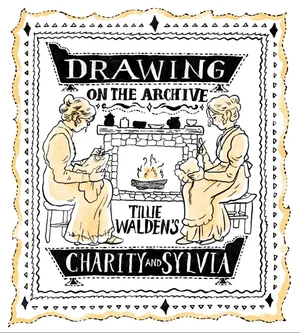
I view the public discussion over fair credit for Rachel Hope Cleves’s Charity and Sylvia in Tillie Walden’s Charity and Sylvia from a particular perspective.

I’ve scripted indie comics, the field where Walden has made her name. I’ve written scholarly books and articles like Cleves. I’ve also worked in book publishing, so I know the considerations involved in adding more pages to a printed book or writing promotional copy about how ground-breaking a new title is.

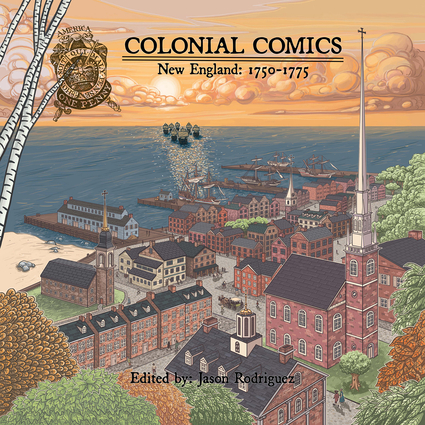
I’ve worked on both sides of the nonfiction-into-comic process. For Colonial Comics: New England, I adapted historical sources into stories about Samuel Maverick, Benjamin Franklin, and Crispus Attucks. I also supplied my nonfiction writing and research for other scripters to adapt into their own stories. I’ve seen artists add immeasurably to a tale in ways that go beyond what historical research could provide.

I also know what it’s like to have the work of historical research be rendered close to invisible. Years back, I worked with producers of the History Detectives television show to figure out the mysteries behind a couple of artifacts. I was never going to be paid, but for one of those two shows there were plans to interview me on camera. In the end, my name appeared as one short line in small type as the closing credits scroll by.

On my history blog I’ve published a series of posts about James McHenry and Elizabeth Willing Powell, drawing on new archival research and analysis. In 2019, the Washington Post published Zara Anishanslin’s article about Powell. She acknowledged relying on my work for one point, apologizing that the newspaper wouldn’t allow credit by name, only by a link. And then when a Post staffer wrote another article citing Anishanslin’s, that link didn’t survive. That’s a common problem in the major news media.

A few months back, I discovered my book The Road to Concord: How Four Stolen Cannon Ignited the Revolutionary War had been turned into a novel. A novel! The author never contacted me about obtaining derivative rights. The book contains one line of acknowledgement, grateful in tone but small in type. Since this novel was self-published, I decided simply to keep quiet about it.

At the same time, I think The Road to Concord could be adapted into a nifty movie. I’ve even taken a meeting with an aspiring producer about that prospect. If that ever happens, I darn well want credit and compensation, even though the whole point of the book and its many citations was to lay out the historical facts and sources for anyone to follow.

02 July 2026

Can This Marriage Be Saved?

On 1 July, the Comics Beat published an article about the disagreement over fair credit for Rachel Hope Cleves’s Charity and Sylvia in Tillie Walden’s Charity and Sylvia.

That article cites historian Cleves as saying Walden contacted her by email twice as she created her graphic novel: in August 2024 with news that Vermont Humanities had commissioned the project and in spring 2025 with a draft. Cleves’s workload prevented her from studying that material closely. She didn’t raise the question of adaptation rights. The two authors never connected for a phone or video conversation.

Although Cleves had spoken at the Henry Sheldon Museum through a Vermont Humanities grant in 2022, it doesn’t appear that either of those entities ever contacted her about the graphic novel. Nor did Drawn & Quarterly after it agreed to publish Walden’s finished work.

Given the initial understanding that Walden would draw only on documents at the museum, as I quoted yesterday, and given lack of objections from Cleves, people involved in the graphic novel might have convinced themselves that there was no need to seek a formal approval from her. But it’s clear that Walden came to rely on Cleves’s history more than originally planned. Walden and Drawn & Quarterly should have done more before publication. 

Comics Beat reports that Cleves wishes “to see Drawn & Quarterly option [her book] for adaptation and co-credit her, with appropriate compensation.”  

For now (and 1 July was a holiday in Canada), the publisher says it “stands by Tillie Walden’s research for her graphic novel” while drawing attention to her citations and praise for Cleves on the book’s website. In fact, the press says, those citations were too long to be included in the printed book. That may be right from an aesthetic or cost standpoint, but it only shows how Cleves deserves more credit in print than one laudatory line.

I suspect Drawn & Quarterly wants to protect its author from accusations of deliberate plagiarism or downgrading Cleves’s work. And to ensure Walden gets credit for the effort and creativity she put into the graphic novel, which by its nature is quite different from its source material.

Likewise, Cleves deserves credit for all the work she did in unearthing and telling Charity and Sylvia’s life stories, whether or not the graphic novel borrows specific language, which would be the strongest evidence in a copyright case.

Tillie Walden is a comics creator who has delightfully found success at a time when one can actually make a living at that work. Drawn & Quarterly is an artsy independent comics publisher based in Montréal. Rachel Hope Cleves is a respected history professor at the University of Victoria, British Columbia. The development of both versions of Charity and Sylvia was supported by humanities grants.

No one goes into any of those enterprises to make a lot of money. People spend years producing scholarly studies or graphic novels because they think the work is important. Yet that situation makes fair credit all the more important.

A graphic novel and a scholarly biography aren’t competing for the same sales—but the comic could promote the study, just as the study made the comic possible. So I really hope there’s a way for these projects to become mutually supporting.

01 July 2026

“The possibility of rendering Bryant and Drake’s relationship in a graphic novel”

Looking at the history of the new Charity and Sylvia graphic novel by Tillie Walden might shed light on the brewing controversy over its debt to the older Charity and Sylvia history by Rachel Hope Cleves.

In February 2024, Seven Days reported on the upcoming project this way:
Christopher Kaufman Ilstrup, the executive director of Vermont Humanities, first learned about the Weybridge couple [Sylvia Drake and Charity Bryant] from [Rachel Hope] Cleves’ book. Then the senior philanthropic adviser of the Vermont Community Foundation, he awarded a grant to the [Henry] Sheldon Museum to sponsor an exhibition of the Bryant-Drake archive and a lecture by Cleves at Middlebury College.

Kaufman Ilstrup saw the possibility of rendering Bryant and Drake’s relationship in a graphic novel. He thought the story of the two 19th-century women, who lived openly as a married couple before the vocabulary existed to describe their relationship, deserved a wider audience. When [Tillie] Walden, who teaches at the Center for Cartoon Studies in White River Junction, became the state’s cartoonist laureate last year, “it was like a bolt of lightning for me, frankly,” Kaufman Ilstrup said.

He emailed Walden and asked if he could pitch her an idea.
As a marker of how Vermont a story this was, their conversation took place at the King Arthur Baking Company in Norwich.

At the end of that same month, the Middlebury Campus newspaper announced announcing the start of Walden’s residency in that town. (A Bluesky user with the handle Queerkitty spotted this article, which led me to the one above).

The Middlebury article reported:
Tillie Walden, Vermont’s renowned cartoonist laureate, will take up residency at the [Henry Sheldon] museum beginning in May in order to write a graphic novel about the couple’s life. . . .

Walden’s upcoming book will differ from the only previous narration of Bryant and Drake’s lives, “Charity and Sylvia: A Same-Sex Marriage in Early America,” written by Rachel Hope Cleves, a professor at the University of Victoria in British Columbia, in 2014. While Cleves used records from places outside of Vermont and focused on the couples’ intimate relationship, Walden will exclusively rely on the Sheldon museum archives to tell the story of Bryant and Drake’s years living together in Vermont, according to Garcelon-Hart.

Walden’s project was commissioned by nonprofit arts organization Vermont Humanities and the Vermont branch of the National Endowment for the Humanities.
There’s no question, therefore, that Cleves’s history led to the graphic novel, with everyone involved aware of the earlier book. The museum’s YouTube page offer Cleves’s lecture from 2022, also supported by Vermont Humanities.

Yet the comic was supposed to be entirely independent of that history book, whether to avoid the issue of derivative rights, to highlight Vermont resources, or to provide Walden with free rein to interpret the sources at the Sheldon Museum.

However, according to Cleves, portions of the comic are based on material not in the museum collection, material she found and described in her book. Walden’s online bibliography acknowledges how she consulted Cleves’s book regardless of the initial plans in February 2024.

The news articles also show how Walden produced her Charity and Sylvia in an amazingly short time: it was just over two years from when she started the museum residency to its publication. That shows what a hard-working graphic novelist can produce with financial support. But that schedule might also have raised the pressure to follow an established narrative rather than develop a new one.