Showing posts with label words of wisdom. Show all posts

16 February 2025

Wisest Thing I’ve Read Today

From Katherine Rundell’s essay “Why Children’s Books?” in the London Review of Books:

It’s easier to trust a writer who writes great food: they are a person who has paid attention to the world. Children have very little control over what or when they eat, and evolution has given them a sweet tooth far stronger than an adult’s to ensure they consume enough calories during growth spurts – of course their longings are colossal. Fictional food provokes real hunger: it makes the story into a bodily thing. Food is a way to open the door to the space in which the capacity for imaginative and intellectual freedom is built: you lure them in with real appetites.

Perhaps the best book ever written about postwar rationing is Charlie and the Chocolate Factory. Published in 1964, ten years after rationing ended in Britain, it has an entire nation’s hunger for fresh tastes and wild luxury encoded in its pages.

And there is The Lion, the Witch and the Wardrobe, written in 1950, when sugar and fruit and treats were still scarce (in 1942, according to a survey, many children did not believe that bananas were real): Edmund’s Turkish Delight stands in for every lost and longed-for glory. What child forgets the seismically disappointing discovery that the English version tastes like jellied flowers dusted in soap powder?

22 September 2023

Fitzgerald and “Second Acts”

At lunch today, a friend and I invoked the line “There are no second acts in American life,” and then weren’t sure where it came from. We thought it was F. Scott Fitzgerald, but how, and what did he mean?

So this afternoon I looked it up. The line did come from Fitzgerald. But the source and meaning are debatable.

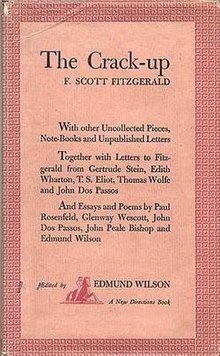
Around 1935 Fitzgerald wrote an autobiographical essay called “My Lost City” that said: “I once thought there were no second acts in American lives, but there was certainly to be a second act to New York’s boom days.” In 1945 that text was published in the posthumous collection The Crack-Up.

In addition, the notes that Edmund Wilson published with The Last Tycoon after he reconstructed Fitzgerald’s unfinished manuscript included this line: “There are no second acts in American life.” It’s not clear to me how closely that scrap was connected to that novel, but Wilson thought it was.

The line as published with The Last Tycoon has become famous. But the line in “My Lost City” suggests Fitzgerald was reconsidering that observation, or at least didn’t think it applied everywhere.

Furthermore, we’ve attached a different significance to the line. We tend to interpret the “second act” as meaning a comeback, a second chance, or more of someone’s story.

However, in “My Lost City” the “second act” that Fitzgerald described was the early years of the Great Depression when New Yorkers were feeling the effects of the stock market crash. People he had just described as being worth millions in stock were back at their laboring jobs.
Full of vaunting pride the New Yorker had climbed here and seen with dismay what he had never suspected, that the city was not the endless succession of canyons that he had supposed but that it had limits—from the tallest structure he saw for the first time that it faded out into the country on all sides, into an expanse of green and blue that alone was limitless. And with the awful realization that New York was a city after all and not a universe, the whole shining edifice that he had reared in his imagination came crashing to the ground.
Fitzgerald himself was struggling in these years, no longer the golden boy of American fiction and beset by personal problems.

As Fitzgerald used the phrase, there was a “second act” in American life, even if it tended to catch Americans by surprise. And that second act was a reckoning, not an encore.

17 August 2019

Only Two Plots?

The two prose stories about Jex and Ticca exemplify the adage that “there are only two plots: A stranger rides into town, and A man goes on a journey.”

In “Relief,” the young narrator flies to other planets in Jex’s spaceship. In “Just,” the narrator finds Jex has arrived on her moon and gotten caught in a murder investigation.

Quote Investigator looked into the origin of that adage, which has been attributed to many authors in recent years. It found that:
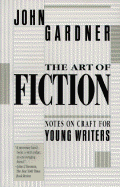
  • Credit most commonly goes to John Gardner, author of The Art of Fiction.
  • He never wrote that, though he wrote an exercise in starting a novel in omniscient voice that could be stretched and misconstrued into that statement.
  • Gardner was being credited with making that pronouncement as early as 1986, four years after his death.
Therefore, if you find wisdom in the adage, give Gardner the credit. If you think it’s far too reductive and at best it’s a rubric for starting a story, be pleased there’s no proof he said it.

12 November 2014

Writing Advice from Leonard and Busiek

In 2001, Elmore Leonard published an essay in the New York Times’s “Writers on Writing” series headlined “Easy on the Adverbs, Exclamation Points and Especially Hooptedoodle”.

Leonard offered advice like:
3. Never use a verb other than ”said” to carry dialogue.

The line of dialogue belongs to the character; the verb is the writer sticking his nose in.
Eventually that article was the seed of Elmore Leonard’s 10 Rules of Writing.

Last August, when Leonard died, the comics scripter Brian Michael Bendis featured that on his Tumblr site. In the way that Tumblr works, the scripter Kurt Busiek quoted it on his but added these comments:
I disagree with almost all of Elmore Leonard’s rules for writing, largely because any time someone says “never do X,” I immediately try to think of times it works.

But all of his rules are worth thinking about, and can be extremely useful in thinking about whether to use them. If you decide not to use a rule because you’re aware of the hurdle Leonard’s warning of but have overcome that hurdle another way, then the rule was still useful, because it got you to think about how to avoid the problem.

03 September 2014

Just Like Starting Over

From novelist and book critic Lev Grossman’s interview with Publishers Weekly:

Whenever I finish a novel I think: aha, I get it now, I know how to write books. I was doing it wrong before, but this time it’s going to be easy. I’ll get it right, first try.

And now I’m onto my next book and I’m floundering all over again. I forgot how hard it is. You fall right down to the bottom of the ladder again.
Grossman’s latest is The Magician’s Land.

10 July 2013

“Have the end in sight”

The Guardian asked five children’s-book editors with books up for an award [that I’ve never heard of—“Branford Boase”?] for their advice for new authors.

David Fickling of The Phoenix magazine and many books included this in his answer:
People always say that a story must have a beginning, a middle and an end. If that is true then by far the most important part is the end. Before you set off on a writing project it saves a lot of time to have the end in sight.

That doesn't mean you have to know exactly what is going to happen at the end of your story, but you should have a sense of the ending note in mind. This may also help tell you how long your text is going to be.

And you don't need to tell the editor or publisher what will happen or what it's about either, that's your business. All the editor or publisher really needs is the reassurance that there is an ending and that the narrative will be good. Editing is all about trust.
The last part of Fickling’s comment runs directly counter to what American agents and editors say about synopses: you have to divulge the ending. Otherwise, they won’t trust you to supply a good one. But perhaps Fickling is now used to working with authors who’ve built up trust with him.

17 January 2013

Martin Luther King and “A Right Delayed”

An awful lot of websites and books published in the last twenty years quote Dr. Martin Luther King, Jr., as saying “A right delayed is a right denied.” Those publications come from both the left and the right, but the citation is currently spreading with people who want to buy more and more guns. (Apparently they can’t see the incongruity of quoting a pacifist murdered by a right-winger with a gun.)

And I don’t think King even said those words. None of those attributions provide a specific article, speech, or book as a source, which is always suspicious. The phrases don’t appear in authorized collections of his work. Instead, the line seems to be a poor rendering of something else King wrote repeatedly: “Justice too long delayed is justice denied.” (Which makes sense—“justice” can be delayed, but “a right” either exists or not.)

However, King never claimed to have coined that line. In a December 1961 speech to the AFL-CIO titled “If the Negro Wins, Labor Wins,” he stated: “There is a maxim in the law—justice too long delayed, is justice denied.”

King quoted the line again in his “Letter from Birmingham Jail” in April 1963. In different versions of this text, King ascribed the quote to “one of our distinguished jurists” and “the distinguished jurist of yesterday.”

In the 9 Mar 1964 Nation, King wrote: “This is the test to which concerned national leaders are put—not by civil rights leaders as such, but by conditions too brutal to be endured, and by justice too long delayed to be justified.”

In “Civil Right No. 1,“ published in the New York Times in March 1965, King wrote: “The delays inherent in test cases, where the U.S. Supreme Court must ultimately rule, make sadly pertinent the comment of Chief Justice Earl Warren in the school desegregation cases: ‘Justice delayed is justice denied.’” Clearly King was trying to invoke authority for his side of the argument, just as people try to invoke King’s name for theirs now.

I can’t find Warren writing those words in a desegregation decision, but I found an essay in which the Chief Justice wrote, “Justice delayed is often justice denied.” However, as King initially stated, that was a legal maxim, not Warren’s coinage. Those same words also appeared in an issue of The Outlook in June 1909. And former Colorado governor C. S. Thomas delivered a speech titled “Justice Delayed is Justice Denied” to the Iowa Bar Association in 1910.

So how far back can we go? In March 1868, during debate in Parliament over the disestablishment in Ireland, William Ewart Gladstone said:
But, above all, if we be just men, we shall go forward in the name of truth and right, bearing this in mind—that, when the case is proved and the hour is come, justice delayed is justice denied.
And further back! The British writer Walter Savage Landor used the line “Delay in justice is injustice” in an “Imaginary Conversation” between “Peter Leopold and President Du Paty” published before 1846.

And back still further! On 19 Dec 1825 Condy Roguet, a grumpy American diplomat in Brazil, wrote: “Justice, too long delayed, ceases to be justice.”

On the other hand, if folks want an exact source for “A right delayed is a right denied,” its earliest appearance seems to be the transcript of a Senate Committee on Foreign Relations hearing on the “Czechoslovakian claims fund” in 1957. Much less inspirational than Martin Luther King.

20 November 2012

Baum Quotations, Real and Imagined

Jared Davis of the Royal Blog of Oz recently asked about a quotation that many websites and a few books attribute to L. Frank Baum:
Whenever I feel blue, I start breathing again.
None of those sites and books identifies any specific book or article as a source. The idiom “feel blue” was current in the late 1800s, so Baum could have said this. But that’s not good enough. People making a historical claim have the responsibility to provide evidence for it, not shift the burden of proof to skeptics to disprove the claim.

In this case, the quotation doesn’t ring bells with any of us older Oz fans who imbibed our knowledge in past decades, and since close to 99% of Baum’s surviving writing was published before 1920, it would be unusual for a quotable line to be so unfamiliar. I checked Google Books and saw that the “feel blue” saying appeared in books through about 2005 without attribution, and with Baum’s name attached only since 2009.

The internet is a marvelous hothouse for false quotations. As soon as a quote appears on one website, it gets picked up and spread around on others. And soon someone doing a search for a quotation’s source will see what looks like a critical mass of confirmation. Even this page could look like further evidence.

I checked out Goodreads’ page of Baum quotations, and it’s a big mix. There are many quotations from Baum’s books. But there are also many quotations from the 1939 MGM movie misattributed to Baum:
  • “Toto, I have a feeling we’re not in Kansas anymore.”
  • “Some people without brains do an awful lot of talking, don’t you think?”
  • “Nobody gets in to see the Wizard. Not nobody.”
  • “It’s so kind of you to want to visit me in my loneliness.”
  • “Going so soon? I wouldn’t hear of it. Why my little party’s just beginning.”
  • “My world, my world... How can such a good little girl like you destroy all of my beautiful wickedness?” [Actually, that’s even a misquote of the movie line: “Oh, what a world! What a world! Who would have thought a good little girl like you could destroy my beautiful wickedness?”]
  • “Pay no attention to the man behind the curtain!”
  • “If I ever go looking for my heart’s desire again, I won’t look any further than my own back yard. Because if it isn’t there, I never really lost it to begin with.” [Which makes no sense at all.]
  • “I’ll miss you most of all, Scarecrow.”
  • “Now I know I’ve got a heart because it’s breaking.”
Lines original to the screenplay should probably be credited to Noel Langley, Florence Ryerson, and Edgar Allan Woolf, the screenwriters. Even that attribution might be questionable, however, since several other writers also worked on the movie, the last being John Lee Mahin.

In fact, the one person losing the most credit to Baum at Goodreads is probably E. Y. “Yip” Harburg, who wrote the movie’s lyrics and the Wizard’s speech as he presents the gifts to Dorothy’s companions. Harburg deserves credit for:
  • “If I [only] had a heart…”
  • “Lions and tigers, and bears, oh my!”
  • “Courage! What makes the flag on the mast to wave? What makes the elephant charge his tusk in the misty mist, or the dusky dusk? What makes the muskrat guard his musk? Courage! What makes the sphinx the seventh wonder? Courage! What makes the dawn come up like thunder? Courage! What makes the Hottentot so hot? What puts the ‘ape’ in apricot?”
  • “Hearts will never be practical until they can be made unbreakable.”
  • “And remember, my sentimental friend, that a heart is not judged by how much you love, but by how much you are loved by others.”
The screenwriters adapted some of Baum’s dialogue closely. But even on Goodreads people remember the movie version:
“Oh – You’re a very bad man!"

“Oh, no, my dear. I’m a very good man. I’m just a very bad Wizard.”
Baum’s original exchange was:
“I think you are a very bad man,” said Dorothy.

“Oh, no, my dear; I’m really a very good man, but I’m a very bad Wizard, I must admit.”
Then there are oddities in the list like this one, which has a grammatical error of agreement in the first sentence:
“People would rather live in homes regardless of its grayness. There is no place like home.”
Baum actually had Dorothy say:
“No matter how dreary and gray our homes are, we people of flesh and blood would rather live there than in any other country, be it ever so beautiful. There is no place like home.”
Of course, the final line predates The Wonderful Wizard of Oz by decades. It comes from John Howard Payne’s song “Home, Sweet Home!” (1823).

Here’s another commonly seen quotation:
“Never give up. No one knows what’s going to happen next.”
In The Patchwork Girl of Oz Dorothy really bucks up the moody young protagonist this way:
“Never give up, Ojo,” advised Dorothy. “No one ever knows what’s going to happen next.”
Finally, there’s a platitude that I can easily imagine someone today writing and then attaching to Baum to make the sentiment seem more authoritative:
“Stunt, dwarf, or destroy the imagination of a child, and you have taken away its chances of success in life. Imagination transforms the commonplace into the great and creates the new out of the old.”
But Baum actually said that in a 1909 interview with a magazine called The Advance.

09 August 2012

“A book is whittled down from hope”

From Keith Ridgway in The New Yorker:

I don’t know how to write. Which is unfor­tu­nate, as I do it for a liv­ing. Mind you, I don’t know how to live either. Writ­ers are asked, par­tic­u­lar­ly when we’ve got a book com­ing out, to write about writ­ing. To give inter­views and explain how we did this thing that we appear to have done. We even teach, as I have recent­ly, stu­dents who want to know how to approach the pecu­liar occu­pa­tion of fic­tion writ­ing. I tell them at the begin­ning—I’ve got noth­ing for you. I don’t know. Don’t look at me.

I’ve writ­ten six books now, but instead of mak­ing it eas­i­er, it has com­pli­cat­ed mat­ters to the point of absur­di­ty. I have no idea what I’m doing. All the deci­sions I appear to have made—about plots and char­ac­ters and where to start and when to stop—are not deci­sions at all. They are com­pro­mis­es. A book is whit­tled down from hope…
Ridgway’s latest is Hawthorn and Child, but neither it nor the accompanying digital short story appear to be available in the US now. As you might be able to tell from the attitude of the preceding passage, he’s Irish.

27 March 2010

Feeling Grateful for Sid Fleischman

As a lad, I read a novel about a family of traveling magicians in the Old West. It wasn’t one of my favorite books, but it was entertaining, and parts of it stuck with me. Just not the name of the author.

Until I heard Sid Fleischman speak at an SCBWI New England conference, and he mentioned that his first novel for kids was about a family of traveling magicians in the Old West. The book’s title is Mr. Mysterious & Company.

Sid, who died this month at the age of ninety, went on to write many books that have gained bigger audiences or more awards, such as The Whipping Boy (Newbery Medal), Humbug Mountain (Boston Globe-Horn Book Award), and Escape!: The Story of the Great Houdini (Boston Globe-Horn Book Honor). He even has an award named after him, given by SCBWI for the best humorous book for kids.

At that same writing conference, I heard Sid say what he finds necessary to start a story. He’s stated this advice elsewhere, including his memoir The Abracadabra Kid. This formulation is from Tracy Barrett’s website:

The author Sid Fleischman says that one idea is like a stick: you can’t do much with it. But two ideas are like two sticks: you can rub them together, and if you’re lucky, you’ll get a fire.
For example, Mr. Mysterious & Company might have been the cross-pollination of Sid’s memories of working as a young magician, his experience as a young father, and the milieu of the classic American western. The Ghost in the Noonday Sun plays off our understandings of both pirates and ghosts. The mix makes resonant but familiar (i.e., potentially cliché) ideas fresh.

I’ve found that advice to be very helpful in developing story ideas. Rather than try to squeeze more out of a single idea, I try laying it alongside another and see if they mix well. Living in a magical world with no magical powers? Kids’ caper with Wodehousean plot twists? Washing out of espionage training? Satire of common classroom projects? Knight who wants to be an inventor? Tale of dual narrators, both with secret identities? The right combination, however arbitrarily generated, sparks off more ideas.

At one SCBWI conference, Sid sat down with a pile of his books to autograph for volunteers. He started to sign The Whipping Boy for me and then got pulled away, so the book came back with half a signature. That evening, Sid heard what had happened and promised me he’d finish signing the book if I’d send it to him. I never got around to doing so because I rather liked the distinction of having a half-autographed book. After all, Sid must have autographed a lot of books in his long career, but I bet he only half-autographed a few.

In a decade or so I may even improve my story and hint that this was the last book that Sid ever started signing. “A writer to the end,” I can murmur, and let people draw their own conclusions about my copy. Somehow I think Sid would get a kick out of that.

23 February 2010

Wisest Thing I’ve Read Today

From Lester Dent’s Pulp Paper Master Fiction Plot:

First line, or as near thereto as possible, introduce the hero and swat him with a fistful of trouble.
Plus, make sure there’s a “surprising plot twist” every 1,500 words.

19 December 2009

Writing Advice That Overturns the World

I’m finishing off what ended up being “Writing Advice Week” at Oz and Ends with a look ahead from publishing consultant Mike Shatzkin:

…selling content as a publisher is a business that is going to just get harder and harder until it won’t really be much of a business anymore.

This has nothing to do with piracy or DRM [digital rights management] or Amazon’s promotional ebook pricing. It has to do with the most basic of economic laws: supply and demand.

Until the digital age, content was scarce. It wasn’t scarce because people didn’t create it; it was scarce because it required an investment to distribute it. That’s no longer true. Anybody with an Internet connection can make anything they write (or snap or video or sing) available to anybody else with an Internet connection. For just about free. That’s just one reason — among many — why the amount of content choices available to everybody has mushroomed in the past 15 years.

When the supply of something goes up faster than demand, the price of the something drops. Or, put another way, money flows to scarcity. And content is anything but scarce. . . .

What is the new scarce item that will attract the dollars if IP [intellectual property] is so common that it becomes hard to sell? The answer is the attention of people: eyeballs.
Many writers are already working in media that make most of their money by selling eyeballs: anything advertising-supported, such as most periodicals, most websites, and commercial broadcasting. Of course, some of those media aren’t really making money.

Book authors aren’t working within that model. In fact, book publishing has developed an anti-commercial ideology. That doesn’t mean publishers and authors don’t want to sell books. Of course we want to sell books. But we don’t want to sell other stuff in our books. Advertising in books? Tacky. Product placement? Even tackier! Those eyeballs are meant for us alone!

Which would still work fine as long as people with eyeballs are looking for our stuff. But it would be harder for new writers to establish themselves in the content-saturated future Shatzkin sees.

The good news is that this model would still reward writers who entertain and inform the most readers; indeed, they could be more in demand than ever. The bad news is that there would probably be a long and awkward transitional period to the new model.

18 December 2009

Writing Advice on Responding to Criticism

There’s the wrong way, as in the recent case study dissected by Teresa Nielsen Hayden at Making Light. And there’s the right way, from an anecdote the poet Alexander Pope told about himself and the first Earl of Halifax, who actually did a spot of writing himself, what what:

When I had finished the two or three first books of my translation of the Iliad, that Lord desired to have the pleasure of hearing them read at his house. Addison, Congreve, and Garth were there at the reading.

In four or five places Lord Halifax stopped me very civilly, and with a speech each time of much the same kind, “I beg your pardon, Mr. Pope, but there is something in that passage that does not quite please me. Be so good as to mark the place, and consider it a little more at your leisure: I am sure you can give it a better turn.”

I returned from Lord Halifax’s with Dr. Garth, in his chariot; and as we were going along, was saying to the Doctor, that my lord had laid me under a good deal of difficulty, by such loose and general observations; that I had been thinking over the passages ever since, and could not guess what it was that offended his lordship in either of them.

Garth laughed heartily at my embarrassment; said I had not been long enough acquainted with Lord Halifax to know his way yet; that I need not puzzle myself in looking those places over and over again when I got home. “All you need do,” said he, “is to leave them just as they are; call on Lord Halifax two or three months hence; thank him for his kind observations on those passages; and then read them to him as if altered. I have known him much longer than you have, and will be answerable for the event.”

I followed his advice; waited on Lord Halifax some time after; said I hoped he would find his objections to those passages removed, and read them to him exactly as they were at first. His lordship was extremely pleased with them, and cried out, “Ay, now, Mr. Pope, they are perfectly right; nothing can be better.”
Of course, the famously thin-skinned Pope was probably a lot more emotional during the reading and the chariot ride than this story suggests. But Pope was also entirely dependent on rich patrons, so he had to grit his teeth. In 1714 he gave the same earl the first volume of his Iliad translation and wrote a fawning letter that said, in part: “It is indeed a high strain of generosity in you, to think of making me easie all my life, only because I have been so happy as to divert you an [h]our or two…”

17 December 2009

Writing Advice That Assembled Be Must

Over at Fomagrams, Dave Elzey shared some thoughts on the end of the linear narrative in fiction, and particularly how that might mean something different for boys:

male readers prefer non-fiction to fiction and respond well to non-linear narratives. All those boys who struggle reading novels for school but could spend hours with The Guinness Book of World Records do so because they like the puzzle of putting a narrative together in their heads. It’s why boys take things apart to figure out how they work. It’s how their brains understand the world.
I agree that a lot of boys read nonfiction avidly as a way to understand the world—or, rather, to master one exciting, possibly scary, and well defined part of it: dinosaurs, sports, automotive vehicles, collectible Japanese cartoon monsters, Marvel superheroes, what have you.

I’m not sure I agree that such Guinness Book readers are assembling narratives. Rather, mastering a pool of impressive facts and immersing oneself in a cause-and-effect, conflict-and-resolution story are different ways to mentally organize life into understandable, ordered form. (That said, conquering a realm of knowledge is a heroic narrative that a reader of the male persuasion can tell about himself.)

Dave goes on to further discussion on the limits of linear narratives and the potential for non-linear ones, stories that require readers to do more work putting events together:
Linear narratives are a way to tell stories but we tend to think they are the only way. It fits our natural sense of order, our understanding of time being forward-moving, our progression shuffling from point A to B. But movies have shown us there are ways to tell a story that bend time with flashbacks and fast-forwards that are accepted without jarring our sense of order.
There are older examples of such stories, starting with Tristram Shandy and including such Modernist experiments as Hopscotch and The French Lieutenant’s Woman. The approach may have come to young people’s literature relatively recently with the sorts of books discussed in Eliza T. Dresang’s Radical Change.

Or, as Dave hints, that non-linear approach might have been available for kids all along, just not treated as part of traditionally plotted fiction. The Encyclopedia Brown books, for example, have a gaping hole at the end of each story that readers must fill in through their mastery of facts and observation; few adult mysteries make their readers turn to the back to assemble the complete narrative. Richard Scarry’s What Do People Do All Day? creates a world through snippets of story and lots of information, not a linear narrative.

But are boys more attracted to those books than girls? The most prominent recent example of the to-be-assembled form is the Cathy’s Book series, by Sean Stewart and Jordan Weisman. Those books have a teenaged girl at their center and, I thought, a predominantly female readership. Of course, by that age, the book industry may have given up on winning over more male readers.

16 December 2009

Writing Advice with Health Implications

Any guide to good writing says that specific phrasing is stronger than vague generalities. Rich vocabularies can express more than narrow lexicons. Some repeated phrases might be poetic, but using the same words or phrases or constructions over and over is a good way to bore readers.

Specific terms and varied phrasing aren’t just the hallmarks of lively writing. They’re also markers of a healthy mind.

Psychologists have long known that there’s a link between how people write and the probability that they will develop Alzheimer’s disease. Some of the important work on this question was part of the ongoing nun study.

Researchers examined autobiographies that women wrote decades earlier when they joined a religious order, and then looked at who developed Alzheimer’s. Since those women shared living quarters and lifestyles for many years, they had generally equal exposure to environmental factors, giving more weight to genetics, early upbringing, and habits.

As the New York Times reported: “nuns who packed more ideas into the sentences of their early autobiographies were less likely to get Alzheimer’s disease six decades later.”

In particular, some of the prose markers of incipient Alzheimer’s disease are:

  • use of indefinite words, such as “thing” and “anything.”
  • breadth of vocabulary.
  • repeated phrases, such as “all sorts of.”
Earlier this year, as reported in McLean’s, professors of English and Computer Sciences at the University of Toronto collaborated to measure those elements in fourteen mystery novels that Agatha Christie wrote over her career. This study found a 31% drop in vocabulary between novels Christie wrote at 63—when she was already a facile, best-selling author, able to publish nearly anything—and the last she completed, at 81. Vague and repetitive phrasing went up.

Unfortunately, there’s no evidence that developing a livelier writing style staves off Alzheimer’s or other forms of dementia. But it can’t hurt.

15 December 2009

Writing Advice That Goes Deep

Earlier this month the Editorrent blog discussed the challenges of “Deep POV”, explaining:

Deep POV is a variety of single POV, where an entire scene (or chapter, or book) is told through the perspective (or point of view) of one of the characters in the scene. Deep POV takes this further—the narration is done not just in the perspective but in the voice of the POV character. It’s meant to establish almost no distance between the narrator and the reader—rather like a first-person feel with third-person pronouns.
I hadn’t come across this term, and Google Books hadn’t picked up on it, either, so I figured it’s relatively recent. Indeed, it appears to be a coinage of author Suzanne Brockmann, who explained it this way in a 2005 interview with Writers Write:
Deep Point of View was a phrase that I came up with when I was trying to explain my writing style. Point of view can be subjective (picture a hand-held camera on top of a character’s head) or objective (picture something like a security camera, bolted into place in the corner of a room).

In my books, I use subjective point of view, but I’m not satisfied with merely showing the reader what that camera sees from its perch atop a character’s head. I bring the camera down, inside of that character’s head, so we see the world through that character’s eyes. We hear things through his ears. We smell what he smells, feel what he feels, think what he think. With deep POV, I write using words that that character would use. I tell the story with that character’s voice.

Deep POV is very similar to writing first person. (I, me, mine...) Except it’s third person. (Sam’s, He, him, his...) When I use deep POV (which is pretty much all the time!), I don’t need to write “he thought,” or “he felt”—it’s understood that the words I’m writing are this character’s thoughts and feelings. This makes for tighter pacing and a livelier voice.
Brockmann works in the romance genre, and no doubt as a result most of the other websites discussing “deep POV” are also focused on romance. Editorrent’s write-up suggests a lot of writers are trying it, not all successfully. But there are no doubt examples from other types of novels as well.

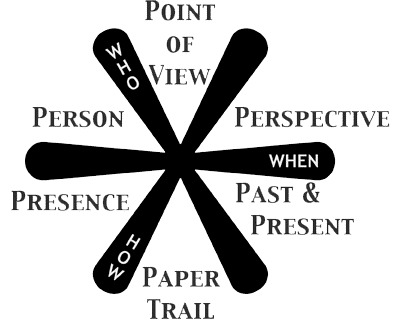
But what I really cared about was how this approach to narration fits into my “Six Parameters of Narrative Voice.” Does it require a new parameter? Which would be a bother since I’ve run out of P-words to label them.

But I decided that deep POV fits in just fine; it’s just a relatively uncommon combination of these parameters:
  • Point of View, which we can define through that camera analogy as well as anything else: Tight single.
  • Person, a grammatical measure: Third.
  • Perspective, my term for the amount of time that passes between events and narration: Immediate, totally in the moment.
  • Past and Present, another grammatical choice: Either.
  • Presence of author: None at all.
  • Paper Trail, or the presentation of the story through documentary forms: None.

14 December 2009

Writing Advice That Packs a Punch

After you’ve read two or three books about writing novels, they start to seem familiar. You read two or three more, and they’re really familiar.

Of course, there are still stand-outs, like E. M. Forster’s Aspects of a Novel and Annie Lamott’s Bird by Bird. But part of what makes those books stand out (and what makes them not for everybody) is that they concentrate on particular aspects of writing, with a personal point of view. They don’t try to be comprehensive from the ground up. Books that do usually end up sounding pretty much the same because the author’s quirks get diluted in everything else that’s not so quirky.

So I was tickled when I came across a writing-advice website that offered tips on “Common Problems with Psychic Heroes,” a “Questionnaire for Nonhuman Characters,” and guidance on “How to Give Your Superhero a Day Job.”

Folks, meet Superhero Nation, which offers advice on writing superhero comics and novels. Oh, sure, it also gives advice on manuscript formatting, communicating with agents and editors, showing not telling, and the other usual stuff. And to be frank, I’m not sure how successfully website creator B. Mac has been able to put his advice into practice.

But by golly this writing advice has a point of view. Many critics have noted how superhero comics often have trouble depicting realistic and multidimensional women in a respectful way. Only Superhero Nation tackles the complementary challenge of how female writers can write more realistic men. (Cataloguing details of another guy’s body? Wrong. Genuinely caring about sports? Hell, yes!)

08 December 2009

Five Favorite Useful Quotations from Time Bandits

From the Time Bandits screenplay by Terry Gilliam and Michael Palin.


RANDALL (David Rappaport):
You never start at one! Whoever heard of anybody starting at one!


RANDALL:
Do you want to be leader of this gang?
STRUTTER (Malcolm Dixon):
No, we agreed: No leader!
RANDALL:
Right. So shut up and do as I say.


FIDGIT (Kenny Baker):
Oh, so that’s what an invisible barrier looks like.


EVIL GENIUS (David Warner):
Dear Benson, you are so mercifully free of the ravages of intelligence.


SUPREME BEING (Sir Ralph Richardson):
I am the Supreme Being. I’m not entirely dim.


One of these lines wasn’t actually in the original shooting script. The encounter with the invisible barrier replaced a longer scene that was at least partially shot, involving murderous spider-women and a scary forest. As for things never shot, in 1996 Gilliam’s collaborator Charles McKeown drafted a sequel.

27 November 2009

Pirates Go After the Big Ships, Not the Little Ones?

Publishing consultant Mike Shatzkin offered more to think about in a posting addressing established publishers’ fears about piracy. In particular, Shatzkin invoked a couple of points that non-establishment publisher Tim O’Reilly made in 2002, including:

Piracy is a kind of progressive taxation, which may shave a few percentage points off the sales of well-known artists (and I say “may” because even that point is not proven), in exchange for massive benefits to the far greater number for whom exposure may lead to increased revenues.

Our current distribution systems for books, music, and movies are skewed heavily in favor of the “haves” against the “have nots.” A few high-profile products receive the bulk of the promotional budget and are distributed in large quantities; the majority depend, in the words of Tennessee Williams’ character Blanche DuBois, “on the kindness of strangers.”
Shatzkin elaborated:
…piracy, or file-sharing that may fall short of actual piracy, can serve the purpose of spreading the word about a book and triggering more sales.

Except there are some authors, and those are the ones that sell the most books for the biggest publishers, who don’t need marketing to inform their audience; their audience, in effect, informs their audience! And those are the ones who would surely lose sales if there were no DRM [i.e., anti-copying protections] and books could be freely shared or are made available through illicit channels.

But those authors are also the ones who have the biggest personal followings. They are the most capable of adding material: notes about what they’re working on, correspondence with fans or critics, even observations about other people’s books, that would add some value for many of the readers of their stories. In fact, a regular “update to my readers” from a top-flight author that is available only in their ebooks, or to purchasers of their ebooks, would be an attraction to many and could serve as a constant reminder that downloading their books from illegitimate sources is cheating them.
A lot of Americans perceive their interests as aligned with the wealthy. Indeed, back in 2000 a Time-CNN poll asked a cross-section of voters if they were in the top 1% of income earners; 19% said yes, and 20% said they expected to be. (One almost suspects 5% planned to do so by playing in the NBA.)

That perception helps to skew national discussions of progressive taxation, inheritance taxes, health insurance reform, and many other political issues. Even people who insist they’re acting only for their self-interest don’t know what will really benefit them, much less benefit society as a whole.

Does a similar perception affect how beginning and intermediate authors and other creative artists view piracy? Do we worry about unauthorized copying when that’s really a problem only for the people and companies who can best afford the costs (and make the loudest complaints)?

20 August 2009

“Two Kinds of Fantastic Fiction”?

In a foreword for the second collection of Neil Gaiman’s Sandman comics, Clive Barker wrote:

May we open this celebration of the work in your hand by defining two kinds of fantastic fiction? One, the kind most often seen in horror novels and movies, offers up a reality that resembles our own, then postulates a second invading reality, which has to be accommodated or exiled by the status quo it is attempting to overtake.

Sometimes, as in any exorcism movie--and most horror movies are that, by other names--the alien thorn is successfully removed from the suppurating flank of the real. On other occasions the visitor becomes part of the fabric of “everyday” life. Superman is, after all, an alien lifeform. He’s simply the acceptable face of invading realities.

The second kind of fantastique is far more delirious. In these narratives, the whole world is haunted and mysterious. There is no solid status quo, only a series of relative realities, personal to each of the characters, any or all of whom are frail, and subject to eruptions from other states and conditions.

One of the finest writers in this second mode is Edgar Allen Poe, in whose fevered stories landscape, character--even architecture--become a function of the tormented, sexual anxious psyche of the author; in which anything is possible because the tales occur within the teller’s skull.

Is it perhaps freedom from critical and academic scrutiny that has made the medium of the comic book so rich an earth in which to nurture this second kind of fiction?
Barker goes on to praise Gaiman’s comics for achieving the latter effect, which is also what his own stories are known for.

I took a moment to consider Barker’s dichotomy and realized that I could think of at least three other types of fantastic fiction:
  • Our reality coexists with another, where fantastic or supernatural rules apply, but the two realms are largely separate. Often these stories are narratives of journey and return, as in Alice in Wonderland, The Wonderful Wizard of Oz, or The Phantom Tollbooth.
  • Much of the setting seems like our reality, but there are magical elements. Unlike the situation in Barker’s first group, however, those supernatural elements are not part of “a second invading reality” to be rooted out, but a recognized part of life, as in the world of Diana Wynne Jones’s Chrestomanci or James and the Giant Peach.
  • The entire story takes place in another reality quite unlike our own, where magic or other forces apply, but that reality is as firmly grounded and consistent for the characters as this reality is to us. Examples include high fantasy of The Lord of the Rings.
And perhaps more as well.

I suspect Barker’s vision was narrowed by his experience writing horror, seeking to create “fantastic fiction” at its most frightening rather than exploring other emotional goals. But this was back in 1990, and since then he's stretched in many other approaches to fantastic fiction.