“Just an amazingly good looking guy.”

After work at other companies, DC hired Shooter to script some new Legion stories in the past decade. Among the assignments was to take a stab at creating a new Superboy since the courts might assign the copyright of that character to the heirs of co-creator Jerry Siegel. (Long story.) Shooter shared his response in a posting titled “Super Lad.”
I’m among the many people who can’t keep the Legion straight, and I don’t care about the original Superboy. What interested me about Shooter’s posting is what he, as an industry vet, saw as the necessary essence of Superman. In other words, what DC had to retain for a “Super” character if they couldn’t use any of the character history that would become the intellectual property of the Siegel family:
If a Super were anything but a noble being with an iron will and tremendous self control, impervious to the failings bad writers nonetheless foisted upon him or her, the Super would have been a villain. Period. And all the rest of the heroes, all the world for that matter, would have had nothing on their minds, and nothing else worthy of devoting their efforts to than destroying the Super. Period. . . .Fair enough. But comics are a visual as well as verbal medium. How would that character be embodied in art? Shooter wrote:
I see him as a genuine good guy. Someone who does the right thing, who has tremendous willpower and courage, who is smart and reasonable. Smart about using his powers, as he learns how. The nicest, best guy you ever met. NOBLE, in the best senses of the word. Not that he can't make mistakes, not that he doesn't have humanity--but he's the best of humankind, one of the few survivors of his particular kind, determined, therefore, to give a good account of himself.
Elliot S! Maggin once wrote an imaginary story in which Kal-el did not become Superman. Since that didn't occur, he was chosen as the Green Lantern of his sector because he among all beings there had the greatest courage, greatest will and noblest spirit. Right on. That was ES!M's finest hour.
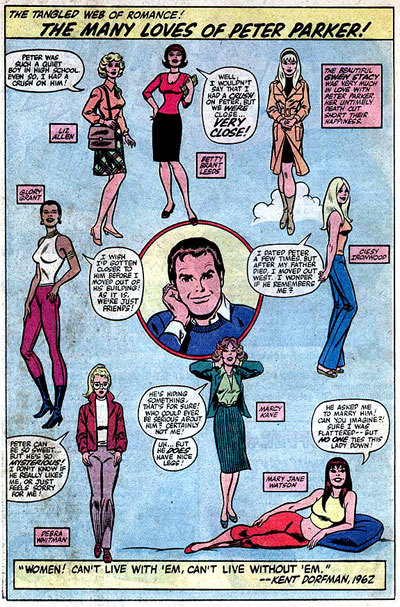
- A strong, young man's physique. NOT overbuilt, NOT Hercules. Strong-looking but slim. Like Ditko's early Spider-man. An ATTAINABLE build. He's Kryptonian. He doesn't have to be absurdly musclebound.In sum, a good superhero has to look good. Really good. Even if he’s not musclebound or lantern-jawed, he has to be “amazingly good looking.” Or, as critic Douglas Wolk put it in Reading Comics:
- Handsome. A really, really good looking guy. No lantern jaw, no jock sensibility. Just an amazingly good looking guy.
- Haircut: timeless. A haircut that wouldn't look out of place in almost any era. I wouldn't mind something pretty close to Superman's. Nothing dated or trendy. No mullet, no crew cut, no high-and-tight, no long hair, no Pet Detective, no spike-y do, no dreads, no curls, no mop. Timeless.
The default style of the superhero mainstream [is] designed to read clearly and to provoke the strongest possible somatic response. You’re supposed to react to it with your body before you think about it. Most of its characters, especially the heroic ones, are drawn to look as “sexy” as possible…The result is that the most underrepresented group among superheroes isn’t women, or non-white ethnic groups, or sexual minorities—not that those people aren’t underrepresented relative to their proportion of the general public. It’s people who are plain or unattractive.
Male or female, young or old, whatever color or orientation, superheroes are almost all drawn as physically attractive people. The main alternative is physically attractive people who turn into wildly exaggerated monsters.
Comics readers have long pointed out how artists routinely draw female heroes with big busts and little costumes, but are there any female heroes who aren’t conventionally attractive to begin with? As for men:
- Are there any mainstream balding superheroes? Not hairless, like Steel or today’s Luke Cage—balding. Even the star of the new Captain America movie (who previously played the Human Torch) says “How horrible would it be if this superior man has male pattern baldness?” But unless you’re Firestorm, what does hair have to do with heroics?
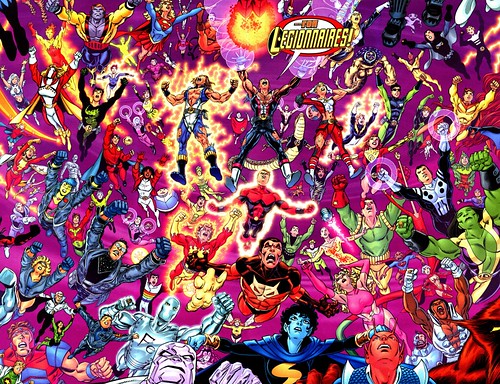
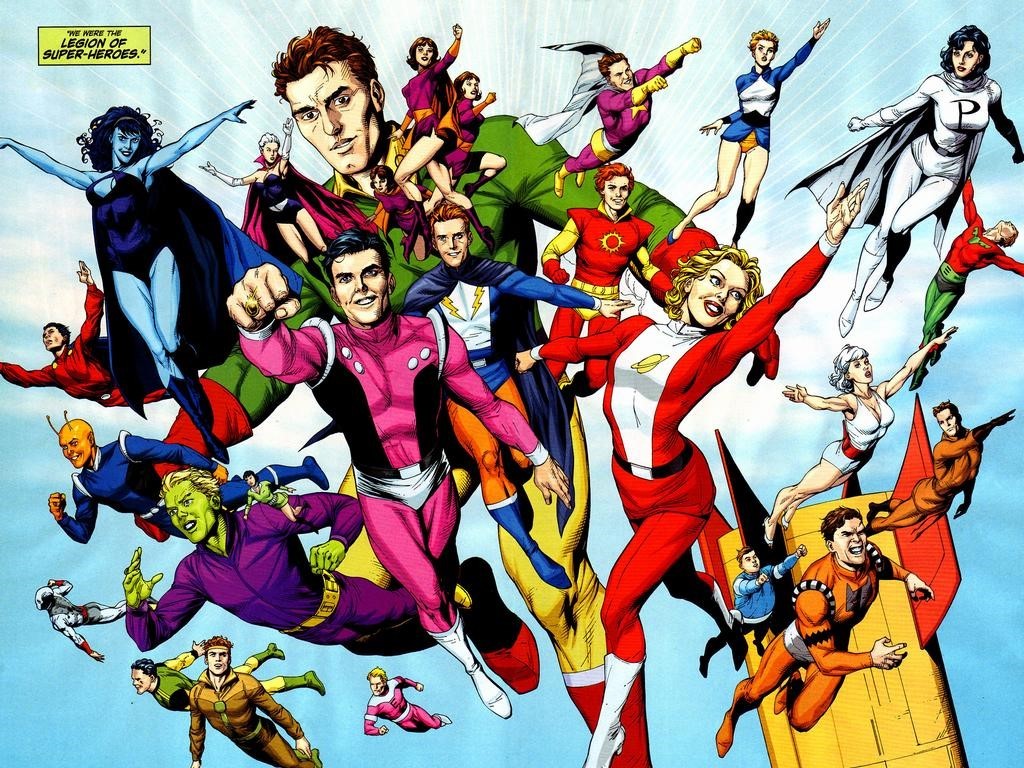
- Any potbellied guys besides Bouncing Boy, a third-string Legionnaire introduced for comic relief and later retired to the background? (Incidentally, also co-created by Jerry Siegel.)
- Any men with receding chins? crooked noses? one droopy eye?