The First Whiff of Gunsmoke
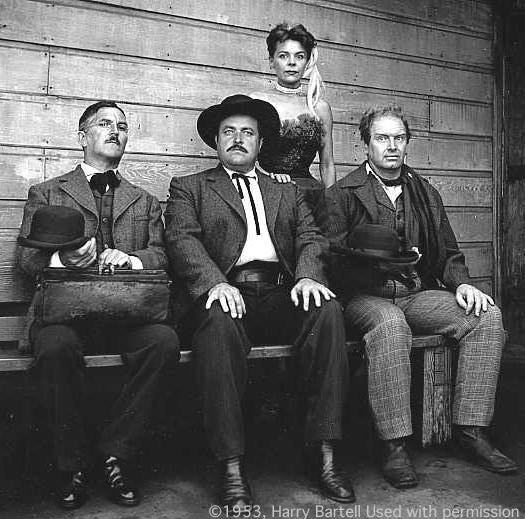
At the time, most western shows on the radio were aimed for kids, in the mold of The Lone Ranger. In contrast, this show was supposed to air in the evening and appeal to adult listeners.
CBS executive Harry Ackerman, who produced the Philip Marlowe radio show, had writers Mort Fine and David Friedkin take one of their scripts from Mike Shayne, another hard-boiled detective show, to create a pilot called “Mark Dillon Goes to Gouge Eye.”
The influence of Raymond Chandler on that script is obvious. Dillon serves as narrator as well as protagonist, his voiceover is full of elaborate metaphors. The plot checks off several requirements of the hard-boiled genre, such as the detective being knocked out for a while.
In the summer of 1949 Ackerman recorded two versions of the pilot with different actors playing Mark Dillon. But then the project stalled over contract issues.
A short time later, Philip Marlowe producer Norman Macdonnell and writer John Meston also started to develop an adult western radio drama. They produced an episode of their series Romance called “Pagosa” featuring a lawman named Jeff Spain. Macdonnell and Meston proposed a “Jeff Spain” show.
Ackerman told Macdonnell and Meston that CBS was ready to air their adult western, but it had to grow out of the network’s existing pilot. And it had to be called Gunsmoke.
With a hole opening in the network’s schedule in early 1952, Macdonnell and Meston had only a couple of weeks before going on the air. They changed the lawman’s name to Matt Dillon, cast busy radio actor William Conrad in that role, and recorded the first episode in time to air in April.
Gunsmoke had little to no narration after the first episodes, but the voice of the protagonist introduces each show in full Chandleresque mode:
I’m that man, Matt Dillon, United States Marshal–the first man they look for and the last they want to meet. It’s a chancy job, and it makes a man watchful…and a little lonely.The first episode starts with the murder of a man who has just robbed a bank out of desperation and gets darker from there, with Dillon shooting the dead man’s brother when he comes leading a lynch mob. The marshal snaps at friends and locks up an innocent man on little evidence. The town doctor is gleeful over the number of corpses to autopsy.
Yet the most direct signal to listeners that this was not your kid’s western might come in the character of a young runaway whom Marshall Dillon tries to take under his wing. Billy was played by Dick Beals, an actor who had a glandular condition that meant his voice never deepened, so he played a lot of child roles on radio and in cartoons.
As the shows ends, Dillon realizes that young Billy knifed that bank robber to steal his gun. But by then the boy has grabbed a horse and ridden off to a life of crime under the name of, as the episode title says, “Billy the Kid.” So not only was this not a kids’ western, but the cute little kid was the most hard-boiled of them all.
(All episodes mentioned here available through the podcast OTR Westerns.)