Showing posts with label AUTHOR Tillie Walden. Show all posts

02 July 2026

Can This Marriage Be Saved?

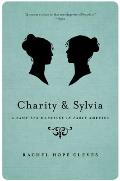
On 1 July, the Comics Beat published an article about the disagreement over fair credit for Rachel Hope Cleves’s Charity and Sylvia in Tillie Walden’s Charity and Sylvia.

That article cites historian Cleves as saying Walden contacted her by email twice as she created her graphic novel: in August 2024 with news that Vermont Humanities had commissioned the project and in spring 2025 with a draft. Cleves’s workload prevented her from studying that material closely. She didn’t raise the question of adaptation rights. The two authors never connected for a phone or video conversation.

Although Cleves had spoken at the Henry Sheldon Museum through a Vermont Humanities grant in 2022, it doesn’t appear that either of those entities ever contacted her about the graphic novel. Nor did Drawn & Quarterly after it agreed to publish Walden’s finished work.

Given the initial understanding that Walden would draw only on documents at the museum, as I quoted yesterday, and given lack of objections from Cleves, people involved in the graphic novel might have convinced themselves that there was no need to seek a formal approval from her. But it’s clear that Walden came to rely on Cleves’s history more than originally planned. Walden and Drawn & Quarterly should have done more before publication. 

Comics Beat reports that Cleves wishes “to see Drawn & Quarterly option [her book] for adaptation and co-credit her, with appropriate compensation.”  

For now (and 1 July was a holiday in Canada), the publisher says it “stands by Tillie Walden’s research for her graphic novel” while drawing attention to her citations and praise for Cleves on the book’s website. In fact, the press says, those citations were too long to be included in the printed book. That may be right from an aesthetic or cost standpoint, but it only shows how Cleves deserves more credit in print than one laudatory line.

I suspect Drawn & Quarterly wants to protect its author from accusations of deliberate plagiarism or downgrading Cleves’s work. And to ensure Walden gets credit for the effort and creativity she put into the graphic novel, which by its nature is quite different from its source material.

Likewise, Cleves deserves credit for all the work she did in unearthing and telling Charity and Sylvia’s life stories, whether or not the graphic novel borrows specific language, which would be the strongest evidence in a copyright case.

Tillie Walden is a comics creator who has delightfully found success at a time when one can actually make a living at that work. Drawn & Quarterly is an artsy independent comics publisher based in Montréal. Rachel Hope Cleves is a respected history professor at the University of Victoria, British Columbia. The development of both versions of Charity and Sylvia was supported by humanities grants.

No one goes into any of those enterprises to make a lot of money. People spend years producing scholarly studies or graphic novels because they think the work is important. Yet that situation makes fair credit all the more important.

A graphic novel and a scholarly biography aren’t competing for the same sales—but the comic could promote the study, just as the study made the comic possible. So I really hope there’s a way for these projects to become mutually supporting.

01 July 2026

“The possibility of rendering Bryant and Drake’s relationship in a graphic novel”

Looking at the history of the new Charity and Sylvia graphic novel by Tillie Walden might shed light on the brewing controversy over its debt to the older Charity and Sylvia history by Rachel Hope Cleves.

In February 2024, Seven Days reported on the upcoming project this way:
Christopher Kaufman Ilstrup, the executive director of Vermont Humanities, first learned about the Weybridge couple [Sylvia Drake and Charity Bryant] from [Rachel Hope] Cleves’ book. Then the senior philanthropic adviser of the Vermont Community Foundation, he awarded a grant to the [Henry] Sheldon Museum to sponsor an exhibition of the Bryant-Drake archive and a lecture by Cleves at Middlebury College.

Kaufman Ilstrup saw the possibility of rendering Bryant and Drake’s relationship in a graphic novel. He thought the story of the two 19th-century women, who lived openly as a married couple before the vocabulary existed to describe their relationship, deserved a wider audience. When [Tillie] Walden, who teaches at the Center for Cartoon Studies in White River Junction, became the state’s cartoonist laureate last year, “it was like a bolt of lightning for me, frankly,” Kaufman Ilstrup said.

He emailed Walden and asked if he could pitch her an idea.
As a marker of how Vermont a story this was, their conversation took place at the King Arthur Baking Company in Norwich.

At the end of that same month, the Middlebury Campus newspaper announced announcing the start of Walden’s residency in that town. (A Bluesky user with the handle Queerkitty spotted this article, which led me to the one above).

The Middlebury article reported:
Tillie Walden, Vermont’s renowned cartoonist laureate, will take up residency at the [Henry Sheldon] museum beginning in May in order to write a graphic novel about the couple’s life. . . .

Walden’s upcoming book will differ from the only previous narration of Bryant and Drake’s lives, “Charity and Sylvia: A Same-Sex Marriage in Early America,” written by Rachel Hope Cleves, a professor at the University of Victoria in British Columbia, in 2014. While Cleves used records from places outside of Vermont and focused on the couples’ intimate relationship, Walden will exclusively rely on the Sheldon museum archives to tell the story of Bryant and Drake’s years living together in Vermont, according to Garcelon-Hart.

Walden’s project was commissioned by nonprofit arts organization Vermont Humanities and the Vermont branch of the National Endowment for the Humanities.
There’s no question, therefore, that Cleves’s history led to the graphic novel, with everyone involved aware of the earlier book. The museum’s YouTube page offer Cleves’s lecture from 2022, also supported by Vermont Humanities.

Yet the comic was supposed to be entirely independent of that history book, whether to avoid the issue of derivative rights, to highlight Vermont resources, or to provide Walden with free rein to interpret the sources at the Sheldon Museum.

However, according to Cleves, portions of the comic are based on material not in the museum collection, material she found and described in her book. Walden’s online bibliography acknowledges how she consulted Cleves’s book regardless of the initial plans in February 2024.

The news articles also show how Walden produced her Charity and Sylvia in an amazingly short time: it was just over two years from when she started the museum residency to its publication. That shows what a hard-working graphic novelist can produce with financial support. But that schedule might also have raised the pressure to follow an established narrative rather than develop a new one.

30 June 2026

Two Takes on Charity and Sylvia

In recent years, publishers have worked with historians to adapt their scholarly studies into other types of books, more welcoming to teenagers and other regular people, and thus with potential for large and lasting sales to schools.

For example, after publishing Never Caught: The Washingtons’ Relentless Pursuit of Their Runaway Slave, Ona Judge in 2017, Erica Armstrong Dunbar worked with Kathleen Van Cleve to produce a Never Caught, the Story of Ona Judge: George and Martha Washington’s Courageous Slave Who Dared to Run Away, a “Young Readers Edition” published in 2019.

Marcus Rediker initiated collaborations with David Lester and Paul Buhle on graphic novels adapted from his books: Prophet Against Slavery: Benjamin Lay, a Graphic Novel; Under the Banner of King Death: Pirates of the Atlantic, A Graphic Novel; and Revolution by Fire: New York’s Afro-Irish Uprising of 1741, a Graphic Novel.

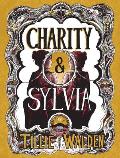
Earlier this month I saw an announcement of Tillie Walden’s new graphic novel Charity and Sylvia, published by Drawn & Quarterly, about a couple in Vermont in the early 1800s. I immediately connected that to Rachel Hope Cleves’s study Charity and Sylvia: A Same-Sex Marriage in Early America, published in 2014 by Oxford University Press.

I wondered if Walden had adapted Cleves’s work, or fictionalized it with her blessing. When I shared news of the graphic novel with the Boston Comics Roundtable, I added a mention of Cleves’s work.

Unlike Dunbar and Rediker, Cleves isn’t credited as a coauthor of the graphic novel. In a line inside the book, an online bibliography and discussion of sources, and public talks, Walden cites Cleves’s Charity and Sylvia as a major source. But does that add up to enough acknowledgment for how much she relied on a previous author’s work?

Last night Cleves posted an open letter to readers that says in part:
I've tried to be happy that Walden's book is making their story more widely known, even if she chose to take my title and my cover design as well as my narrative and my research with only a single sentence of acknowledgement at the end of her book in her notes section. Walden's illustrations and storytelling are wonderful, as I told her when she reached out to me during the writing process. It would take nothing away from her hard work to be honest about how it is built on my hard work. But in Walden's publicity tour, she has repeatedly made the claim to have based her book on her extensive research in the archive without acknowledging that her book is, in fact, based on my book. . . .

I don't doubt that Walden spent time looking at letters at the Henry Sheldon Museum, but the story that Walden tells is not to be found there. It is a story that I pieced together from years of visits to at least twenty different archives and locations across the United States, not only in Vermont but in Massachusetts, New York, Illinois, and Washington State, as well. . . . Many of the details of that story which appeared in my book, and re-appear in Walden's, do not come from the Henry Sheldon Museum, where she claims to have done her research. They come from the countless additional archives I visited.
The process of creating a graphic novel is akin to dramatizing a narrative for stage or screen. The script turns narration and analysis into scenes with dialogue. The art builds on descriptions or imagination. Even the most nonfictional narrative comic is a fictionalizing adaptation of its sources.

With fiction, we readily recognize how a graphic novel or dramatization is a derived work. Unless the original story has entered the public domain, the new publication requires contracting for the right to adapt the original, crediting and compensating its author. After all, the story and characters wouldn’t exist without the first author’s creativity.

With nonfiction, the law is less clear. No one has a copyright claim on historical facts. No one can call dibs on the exclusive right to line up events in chronological order. As legal experts often say, copyright doesn’t protect ideas; it protects the expression of those ideas.

In her open letter, Cleves writes: “This is not just a question of facts but of story: the story of how Charity and Sylvia built a life together…” But was that “story” created by the subjects living their lives or by the historian reconstructing those lives in a meaningful form? Is a “story” a copyrightable expression of ideas that survives even when it’s expressed in a different form?

There’s no doubt that Cleves’s research unearthed facts about Charity Bryant and Sylvia Drake, produced enough detail to build a compelling story, and smoothed the path for future researchers. Unlike the tale of Ona Judge or the 1741 uprising in New York, there are no other books to draw from. So what claim should Cleve have on that subject? Our copyright law protects creative work, but should it also require compensation for hard work?

TOMORROW: Historical roots.