Showing posts with label AUTHOR Coy Watson Jr.. Show all posts

03 February 2025

“One day I showed up at the studio barefoot”

In his 2001 interview with Richard W. Bann, Bud McDonald shared one memory from working at the Hal Roach Studio at age seven:
We were supposed to work out at the ranch on an Our Gang. Down home, in the summer time, I went barefoot, like everyone else. . . . One day I showed up at the studio barefoot. I didn’t put any shoes on and my mother never noticed. She had to drive all the way back to Bell to get my shoes, and in the meantime they went and bought a new pair of shoes for me at the studio. They had to scuff ’em up real bad.
Movies from the 1920s confirm that it wasn’t unusual for southern California boys to go barefoot. Coy Watson, Jr., didn’t wear shoes while starring in “A Nick-of-Time Hero” (1921) or playing a newsboy in “Galloping Bungalows” (1924). Neither did some players in the earliest Century Kids comedies and later Mickey McGuire movies.

More often, however, it’s ordinary kids called in as extras or hanging around in backgrounds who are shoeless. In the Our Gang movie “Big Business” (filmed September 1923, released 1924; Lucky Corner; YouTube), every anonymous walk-on is barefoot. One special example is the early Laurel and Hardy and James Finlayson short “Sugar Daddies” (1927; YouTube; Dave Lord Heath): a little fellow in overalls is so curious about what the comedians are doing on the Venice Pier that he pads alongside them staring for twenty seconds.

The Lucky Corner website reports that Buddy McDonald’s first three Our Gang movies were filmed on this schedule:
  • “Pups Is Pups” April–May 1930
  • “Teacher’s Pet” May 1930
  • “School’s Out” June 1930
Since McDonald referred to his shoeless arrival as happening “in the summer time,” that was most likely during the June shooting of “School’s Out.” That short was a sequel to “Teacher’s Pet,” with Jackie Cooper still mooning over teacher Miss Crabtree. Buddy was once again in the core group of school kids, though he didn’t have as many lines or close-ups as in the previous movie.

I suspect that the shoes incident affected how people at the Hal Roach Studio perceived Buddy McDonald. To begin with, he appears to have become the studio’s choice to play barefoot country boys.

Sometime later that year, Buddy and occasional Our Gang member Bobby Mallon shot a scene for the Laurel and Hardy’s first feature Pardon Us (Dave Lord Heath). That movie grew from a short subject as the studio kept adding episodes over several months, and I can’t tell when this scene was filmed.
Buddy and Bobby played two kids in overalls and straw hats, fishing and listening to Stan and Ollie discuss their criminal past. Ultimately that scene was cut from the English-language picture, but it survives in the treatment, this one publicity photo, and possibly the German print.

Buddy’s next release for Roach, filmed in February–March 1931, was the Charley Chase comedy “One of the Smiths” (YouTube; IMDB; Dave Lord Heath). He played a hillbilly kid, as shown at top. Though this character doesn’t have lines, his actions are crucial to the plot.

(McDonald also recalled a line he delivered in another Charley Chase movie, with Chase perhaps playing a druggist, but no one’s found that footage. It’s therefore possible Buddy filmed that scene before “One of the Smiths,” but I’m guessing not.)

COMING UP: Another effect of Buddy’s barefoot arrival may not have been so positive.

27 November 2024

“Real honest to goodness…pie slinging contests”

Mass pie-tossing definitely returned to American movies in 1927, and not just in Laurel and Hardy’s “Battle of the Century,” released in December.

The surviving examples appeared first in a particular type of movie: the kid gang comedy. That makes sense because the core viewers of those movies were so young they weren’t:

  • tired of the Keystone-style comedy of the previous decade, given that they had probably never seen those films.
  • influenced by what the press deemed properly funny for modern audiences.
In May 1927, the Bray Studios registered a short called “The Big Pie Raid,” directed by Stan De Lay (IMDB; YouTube; clearer extract on YouTube). This was part of the McDougall Alley series, running from 1926 to 1928—an obvious imitation of the Our Gang comedies, but with even more blatant racism.

The Library of Congress filing for “The Big Pie Raid” summarized its plot like this:
The two gangs are having it out on the football field. The winning team has been promised a party by one of the girl spectators. Oatmeal, a little colored lad, wins the day for his side and the result is that the team goes down to enjoy the blowout. After much ice cream and cake and speech making they adjourn to the lawn to play games.

The losers of the football game however are on the job and attack the party with mud pies. Real honest to goodness mud pie slinging contests ensue with the victors of the morning coming out victorious but not until all the pies of a bakery wagon had been used and not until Oatmeal had come to the rescue with his little friend Farina [sic—Fatima], that gasser of animals, the skunk.
At around the twelve-minute mark, a wagon helpfully labeled PIES loses a wheel near the kids’ mud fight. That leads to a “Real honest to goodness” pie fight, with combatants and one spectator hit. Since Bray named the movie after that part of the scenario, the studio clearly saw the pie fight as an attraction for its target audience.

The typographical error inserting the name Farina into the synopsis of “The Big Pie Raid” shows how much the makers of this series had the Our Gang movies on their minds. McDougall Alley featured a little black child called Oatmeal, played by Hannah Washington. Just as the character of Farina was variously identified as a girl or a boy in early years, “The Big Pie Raid” presents Oatmeal as a boy so that he can play in the football game.

Even though Oatmeal is the hero of both the football game and the subsequent fight, he and his Chinese-stereotype friend Free-Gin have to be snuck into the older white kids’ party. One difference between this movie and the typical Our Gang shorts is that the McDougall Alley kids are more bourgeois than their rivals rather than poorer.

In December 1927, Fox released “Wild Puppies,” directed by Clyde Carruth (IMDB; YouTube; Library of Congress shot list). Like “The Big Pie Raid,” this short comedy moves from a football game to a gang fight that parodies trench warfare. However, its special effects are more elaborate and amusing. While most of the missiles are vegetable, ultimately fat boy Albert Schaefer throws pies down onto three members of the rival gang. The climactic bits show the bad guys trying to escape a lion, scenes that actor Coy Watson, Jr., wrote about in The Keystone Kid.

In both “The Big Pie Raid” and “Wild Puppies,” the leader of the rival gang, and the person whose face takes the most mess, was Jack McHugh. He’d been the center of an earlier kid gang series from Century before being upstaged by Malcolm Sebastian as “Big Boy,” his little brother.

McHugh would make one appearance in an Our Gang film: “Shivering Shakespeare” (1930). Once again, he played a rival gang leader who starts a pie fight. It seems to have been a specialty.

COMING UP: But that wasn’t the first pie-throwing in an Our Gang movie.

24 July 2024

The Mystery of “Honeymoon Hardships”

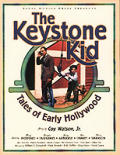
In his memoir, The Keystone Kid: Tales of Early Hollywood, Coy Watson, Jr., devoted considerable space to the Mack Sennett Comedies short “Honeymoon Hardships” (1925).

That section, headed “The Craziest Picture I Ever Worked On,” runs for nine pages, longer than any other in the book.

About half those pages are about learning to swim, which young Coy did in order to work on that movie safely. The rest describe the filming, limited of course to the scenes Coy himself appeared in.

Watson recalled two scenes in detail: a dinner party interrupted by the explosion of a water heater upstairs and a car full of relatives driving into and out of a lake.

According to Watson, the dinner party involved some pratfalls and gags with mashed potatoes, followed by the rain of lots of debris. The drive into the lake was performed in a disguised swimming pool, and the principal difficulty was getting all the cast, including plump actress Sunshine Hart, to fully submerge. On top of it all, some of the cast (including young Coy) were to find this all extremely laughable while others acted aghast and dead-pan.

“Honeymoon Hardships” can now be viewed on Youtube and the Internet Archive. It contains neither of those scenes.

Some other details of the movie don’t match what Watson wrote. He recalled the director as Del Lord. Modern references credit Ralph Ceder. Watson described his fellow child actors, the White triplets, as playing “city kids”; they appear to be from another country family. He dated the film to 1924, which was when he worked on it, but it was released in January 1925.

Filmographers have found inaccuracies in The Keystone Kid, not surprising in a memoir about working as a child in a poorly documented industry decades earlier.

In this case, however, Watson’s book offers two stills taken on the set, clearly showing him interacting with the White triplets and the movie’s adult cast: Hart, Billy Bevan, Alice Day, Raymond McKee, and so on.

Coy, Jr., barely appears in the surviving print, but he can be glimpsed in a couple of scenes—as the family decides to go fishing and then piles into their car, there are four boys instead of just three. So he was there.

Furthermore, the dynamic Watson described with a rural family laughing at one disaster after another while visiting honeymooners try to endure is indeed the main theme of the movie. The scenes Watson recalled could easily fit into the scenario on screen. He also wrote about his father working on special effects for those scenes, and we know Coy Watson, Sr., had that specialty.

My first thought about this discrepancy is that the 21-minute version on the web had been edited down from a longer original to fit the needs of a reissue or for television. However, an advertisement for “Honeymoon Hardships” said it was two reels, or about 20 minutes long. In all likelihood, we’re seeing what Sennett released to theaters.

I therefore conclude that the scenes Coy Watson, Jr., worked on so hard and remembered so vividly decades later were left out of the final cut.

The Sennett studio may have felt the movie needed a stronger climax. “Honeymoon Hardships” now ends with a train chase and the husband rescuing his new wife from a charging cow, with a hint that they’re never going back to their country cousins. That provides an ending to the story arc. Maybe Del Lord filmed the original scenes and Ralph Ceder oversaw the reshoots, thus getting final credit for the picture.

However it happened, there’s a version of “Honeymoon Hardships” with some elaborate special-effect scenes that survived only in Coy Watson, Jr.’s memories.