Showing posts with label family and friends. Show all posts

04 June 2026

“Expands into a fluffy cloud when microwaved”

In yesterday’s New Yorker crossword puzzle, clue 27 Down was:
Brand-name bath bar that expands into a fluffy cloud when microwaved
I’ve already stated my claim to be the first person to try microwaving bars of soap, or at least the first person to publish the eye-opening results of the process on one well-known brand, in my 1993 book Soap Science.

But I haven’t mentioned that I told that story for a short comic drawn by Dan Mazur in the Boston Comics Roundtable anthology Boundless, edited by Olivia Li, Jordan Stillman, and Neil Johnson in 2016.

That comic includes depictions of me and my dad in the 1970s and 1990s. In fact, the editors told me that the script won them over as soon as it called for pictures of me as a child. 

03 January 2022

The “Shipoopi” Problem

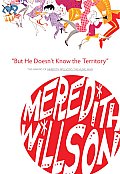
Over the holidays, Godson informed me that Godson’s Brother had never seen The Music Man, the stage and screen musical by Meredith Willson. Since Godson’s Brother is now in the business of theatrical production in Britain, I gave him a copy of Willson’s carefully wide-eyed account of developing the show, But He Doesn’t Know the Territory.

At some point I hope to sit down with both brothers to watch The Music Man, ideally in an environment that allows commentary, both wide-eyed and snarky. That brings up a potentially big problem: the “Shipoopi” number.

Back in college, a friend who was cowriting musicals used the word “Shipoopi” almost as profanity, shorthand for a stupid, unmotivated dance number plopped into the middle of a show. And indeed there’s a lot to sneer at in “Shipoopi.” The song title sounds silly, if not scatalogical. The lyrics are sexist. In the movie, the number ends with Marian in Harold’s arms, leaving no reason for them to go separately to the footbridge for their rendezvous.

Even more than some of the other “trunk songs” that Meredith Willson wrote before The Music Man and then tried to find places for, this song’s lyrics don’t arise out of the dramatic situation. They don’t reflect the characters’ emotions. All that granted, I can nonetheless make a case for “Shipoopi.”

Most of the early numbers in The Music Man uncover music in scenes of small-town daily life: the rhythm of the rail, the pitch of a salesman, a repetitive piano lesson, gossips’ prattle, the raised voices of the school committee. In coming to town, the title character brings the latent musicality of River City to the surface.

Of course, Marian the librarian already embodies music. As the piano teacher, she’s the only person in River City who knows about the subject. But her straight job requires, ironically, keeping patrons quiet and still. The town’s other ladies shun Marian for having been too friendly with Old Miser Madison, preferring a player piano to a real piano player.

By promising River City a boys’ band in “Seventy-Six Trombones,” Harold Hill makes the idea of music explicit and appealing. That song doesn’t just reveal the music in daily life; it’s about enjoying music itself. “Shipoopi” does the same in the second act—a whole chorus of townspeople knowingly sing and dance together. Musical subtext becomes text.

The significance of “Shipoopi” differs in the Broadway show and the movie because of when and how the song appears. On stage, early in Act 2, River City’s teenagers interrupt the ladies rehearsing their Grecian urns tableau in order to have a dance—the number shows the younger, more musically inclined generation taking over. On screen, “Shipoopi” comes later as part of a town celebration. It demonstrates community cohesion, not division.

Either way, “Shipoopi” shows how River City has moved to embrace music, an element of life repressed at the start of the story. That foretells the town’s acceptance of Harold and Marian at the end.

(Godson’s Brother said the little he knew about The Music Man made it seem thematically akin to Footloose, which tells me he’ll get this.)

22 May 2020

Family Puzzles

I grew up doing jigsaw puzzles with my family. There were puzzles for the whole family that took up a side table or a dedicated board. And there were small puzzles that belonged just to me.

Not only were puzzles part of my family culture but my family had a particular culture when it came to puzzles. I knew families that sprayed completed puzzles with lacquer and hung them, as works of art or trophies. We just disassembled them after a day and a couple of months later brought out another.

One of our strongest family customs, which I credit to my dad, was that we didn’t consult the picture on the box after opening it. We had to build up the picture from memory and the pieces themselves. I didn’t realize how rare this was until I started to participate in the “community puzzle” at my local library and declined to look at the box there.

Together my family got through some fiendish jigsaw puzzles, such as Little Red Riding Hood’s Hood, a circle that was entirely one shade of red. And puzzles got us through a hard time: in the year after my brother died in his twenties, my mother and I did a lot of puzzles silently in the side room.

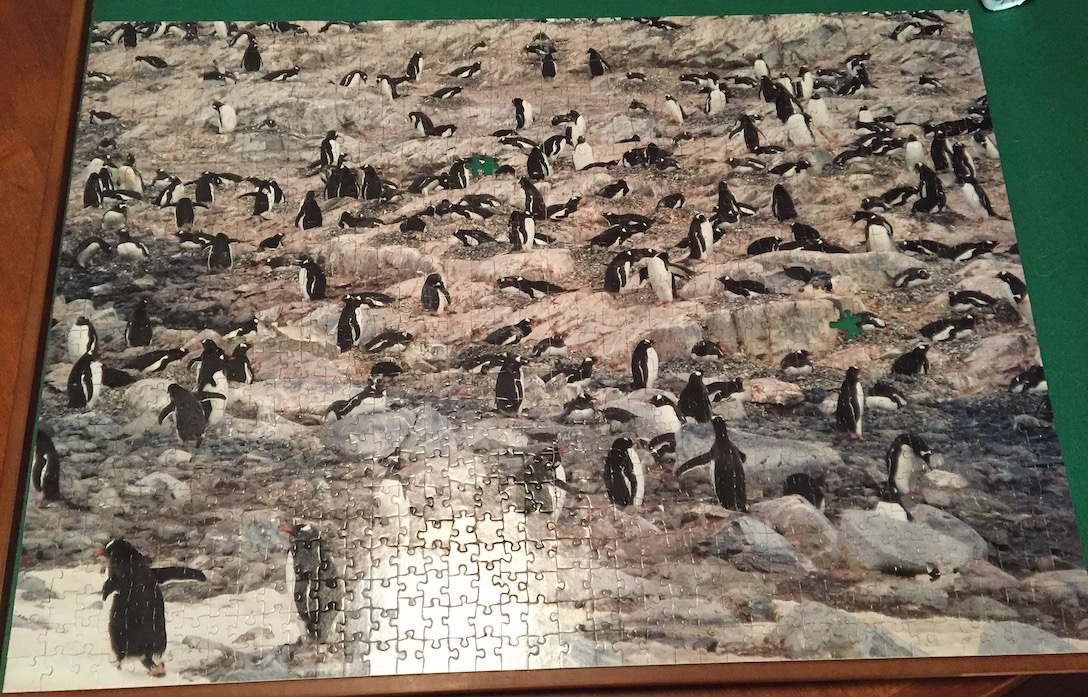
Five years ago, my dad went to Antarctica. He was in his late seventies, so that was a notable feat. (Since then, he’d been on an Arctic cruise, so maybe not so notable.) He came back with lots of photos to show me on his laptop.

One of those images showed scores of black and white (and orange-beaked) penguins on the slushy gray Antarctic landscape. I looked at that and thought, “That could be a jigsaw puzzle.” A damned hard jigsaw puzzle, to be sure. So I snuck the file onto my thumb drive, sent it off to a company that makes custom puzzles, and gave it to Dad as a present.

This month, four and a half years and one global plague that keeps everyone home later, Dad reported that he had completed the penguin puzzle!

07 December 2017

Guest Reviewer on The Book of Dust: La Belle Sauvage

Godson has some things to say about The Book of Dust: La Belle Sauvage:
…the book ostensibly isn’t on the scale of the trilogy. I was somewhat worried, until I realised that whilst the book limits itself to the Thames, almost entirely to Oxfordshire, and for swathes two buildings, the adventure is still epic beyond belief.

To think critically for a moment, this book can almost be called magic realism, not fantasy. Or at least it is fantasy of the Terry Pratchett school - it can tell very ordinary stories on a heroic scale. The echoes of Pullman’s predecessors and contemporaries are obvious. Add Pratchett’s humour to Gaiman’s dark twist (Pullman jokingly called La Belle Sauvage ‘His Darker Materials’) to C. S. Lewis’ storytelling and worlds to Lewis Carroll’s allegory (and, as one critic pointed out, the fact that Pullman’s heroine is called Alice is slightly on-the-nose) and you begin to approach Pullman’s brilliance.

Approach, mind you - La Belle Sauvage is a clinic in how to structure a novel, allaying each fear I had almost as soon as I had it, the pattern mimetic of the action itself. It brought to my mind the episodic nature of the Icelandic Sagas at one point, a Christie-esque murder mystery at another, thrillers, love stories and epics at others. It transcends genre, and does so to the tune of Pullman’s beautifully simple prose, that captures in the same way as the originals a Romantic quality that is inherently readable for everyone.
The full essay is on his school’s book blog.

22 December 2015

Slice of Life

At the Hungry Tiger Talk blog, David Maxine has written about the one-of-a-kind Oz-related item that was part of our first meeting, when we were teenagers. This is my side of the story.

Back in 1979, at the age of thirteen, I attended my first International Wizard of Oz Club convention. This was the Munchkin Convention, meaning it drew Oz fans from the eastern part of the United States. In the books, you see, the Munchkins live in the eastern part of Oz. (In most of the books. It’s a long story, which David summarized here.)

That year the Munchkin Convention was in Cherry Hill, New Jersey, a reasonably short car ride from my grandparents’ home in suburban Philadelphia. I’d already done some air travel by myself, so I felt confident flying down to visit Grandpa and Grandma.

I wasn’t so confident about meeting the Munchkin conventioneers. I was a shy kid, and I’d never been at that sort of gathering before, much less on my own. It turned out to be a milestone event because it was the first time adult strangers treated me as a peer. For that, I’ll always be grateful to the Oz Club.

There were other teenagers there as well, or at least one: Judy Bieber. But she intimidated me. I was thirteen, and she was (and remains) a couple of years older, which felt like an incredibly significant gap. She was also smart, pretty, and seemingly very much at home in Munchkinland. She created the quiz about the Oz books for that year. She and her father Herm were selling older Oz editions. She appeared to have everything.

To the surprise of the room, and the astonishment of myself, I won Judy’s quiz. The Oz books were the first field of knowledge I really tried to master, and my brain is good at retaining trivial information. And, though I didn’t know it at the time, previous winners were probably sitting out that event. The prize that Judy supplied was an abridged “Junior” edition of Rinkitink in Oz with some John R. Neill color plates. I’m sure that was the first time I’d ever seen one of those abridgments. It may have been the first time I ever knew about them.

By the end of that day, while I was waiting for my grandmother to pick me up, I was already worrying about my responsibilities for the following year. The winner of each year’s quiz had to write the next year’s quiz and supply the prize. I remember another attendee congratulating me on winning and asking if I was already thinking about new questions, and me replying that I was already thinking about the prize.

Making the quiz was fun. I decided to base it on Neill’s pictures and books, and I had fun laying it out. But for a prize? I didn’t have much money to spend, I didn’t know the range of possibilities, and I wasn’t linked into collectors’ networks. I also wasn’t good at asking for help (I’m still not). I wanted to solve this problem on my own—since I was acting as an adult, and all that.

So I decided to use my time in woodworking class to make a prize. A pair of O and Z bookends didn’t work out, but I grabbed a piece of mahogany and figured out a design for a cheese board that incorporated Neill’s OZ symbol in its handle. I didn’t do a great job with the carving, but it was a one-of-a-kind Oz-related trophy. And its real value was symbolic, right?

As David guessed, during the 1980 Munchkin Convention I decided to augment that cheese board with an edition of The Wizard of Oz autographed by Margaret Hamilton, who was there. So now I can also say that I had a brief conversation with her. Very brief.

The person who won my quiz was David Maxine, who had come from out west all the way to Cherry Hill. He was also a teenager. But, like Judy, he was (and is) a couple of years older than me. The difference is minuscule now—we’re all part of what I called the “white cover generation” of Oz fans. But back then David was also daunting.

Looking back, I realize that my thinking at thirteen was skewed by the universal adolescent assumption that every other teen is having more fun than you. To me David seemed like an old hand at Oz conventions and collecting and life. I should have perceived that this was his first time at the Munchkins, and he had no idea I was at just my second gathering. We had more in common than I realized.

If I’d known the winner of my quiz was going to be another teen, I probably wouldn’t have made a kitchen implement. If I’d had the boldness to befriend Judy the year before, I could probably have asked her and Herm to snatch up one of those abridged editions for the 1980 prize. But I couldn’t see any of those possibilities at the time.

I also couldn’t see that David and I would reconnect in something called “online” almost twenty years later. During some Ozzy conversation he mentioned that he still had the cheese board, which was both astonishing and gratifying. (As he’s pointed out, it’s compact and almost impossible to break.) And now that we’re both adults and have had online exchanges about such things as Swiss chard, a kitchen implement turns out to have been more appropriate than we knew. It’s come to symbolize a real-world friendship rooted in Oz.

07 December 2015

“Uncomfortable with how he came to have it”

From Eula Biss’s essay “White Debt” in yesterday’s New York Times Magazine:
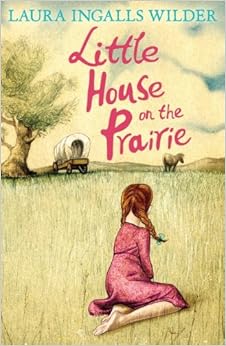
I read several hundred pages of Little House on the Prairie to my 5-year-old son one day when he was home sick from school. Near the end of the book, when the Ingalls family is reckoning with the fact that they built their little house illegally on Indian Territory, and just after an alliance between tribes has been broken by a disagreement over whether or not to attack the settlers, Laura watches the Osage abandoning their annual buffalo hunt and leaving Kansas. Her family will leave, too.

At this point, my son asked me to stop reading.

“Is it too sad?” I asked.

“No,” he said, “I just don’t need to know any more.” After a few moments of silence, he added, “I wish I was French.”

The Indians in Little House are French-speaking, so I understood that my son was saying he wanted to be an Indian. “I wish all that didn’t happen,” he said. And then: “But I want to stay here, I love this place. I don’t want to leave.” He began to cry, and I realized that when I told him Little House was about the place where we live, meaning the Midwest, he thought I meant it was about the town where we live and the house we had just bought.

Our house is not that little house, but we do live on the wrong side of what used to be an Indian boundary negotiated by a treaty that was undone after the 1830 Indian Removal Act. We live in Evanston, Ill., named after John Evans, who founded the university where I teach and defended the Sand Creek massacre as necessary to the settling of the West. What my son was expressing — that he wants the comfort of what he has but that he is uncomfortable with how he came to have it — is one conundrum of whiteness.
This five-year-old’s reaction could not have been solely based on what Laura Ingalls Wilder and her daughter wrote in that book, which reflects previous centuries’ views of that conflict (Ma Ingalls’s even more old-fashioned than Pa’s and the authors’). That suggests that, at least for him, he’s picking up a broader perspective about the long, often fatal conflict over land in North America.

This anecdote reminded me of time nearly a decade ago when I accompanied Godson and Godson’s Brother, along with their parents, to Plimoth Plantation. The boys were about six, and they enjoying tearing around the recreated meetinghouse/fort in that museum village, peering down the cannon barrels out across the stockade.

Then Godson’s Brother stopped and told me very seriously that if he were able to go back to Plymouth in 1627, he would give the Natives rifles. (Actually, he said “wifles,” because he was still having trouble with some consonants.) I rather hoped he was thinking about establishing a fairer balance of power rather than more deadly fighting, especially since some of my ancestors would have been on the other side of those mythical rifle shots. Again, comfort and discomfort, and a broader perspective from today’s kids.

18 November 2015

Big Nate in a Small Pond

One of the minor pleasures of visiting my dad in the Washington, DC, area is the Washington Post comics page. For some reason it’s unusually large. (Perhaps the Rev. Sun Myung Moon, founder and major owner of the rival Washington Times, didn’t like comics?)

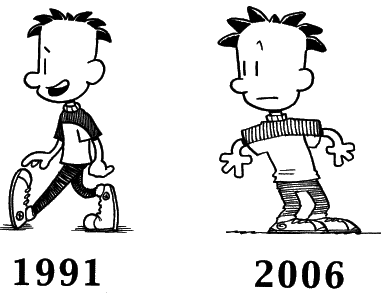
Among the comic strips I enjoyed there, years before it came to the Boston Globe, is Big Nate by Lincoln Peirce. Given its quality and longevity, and its appeal to kids, I assumed that there were Big Nate collections like the bestselling collections of Peanuts, Garfield, and Calvin and Hobbes when I was young. But with fewer and fewer children reading newspapers, that ready market no longer existed.

Lincoln Peirce kept plugging away, the way daily-strip artists have to do. He also generously offered advice to a hopeful artist eight years younger. This Washington Post story from five years ago tells that story:
It was the early '90s, and [Jeff] Kinney was an aspiring cartoonist at the University of Maryland, as well as a big fan of the comic strip "Big Nate," which he read in The Post. Kinney wanted advice on how to break into the business, so he wrote several cartoonists, including Peirce, creator of the recently syndicated "Big Nate."

Up in New Hampshire, Peirce was struck by Kinney's outreach. "His letter was so different from other letters," Peirce recalls. "And not just because it was five to six pages long. Even early on, he was very talented and very ambitious."

Instead of eyeing him warily, Peirce did the professionally generous thing: "I wrote him back."

Kinney the college cartoonist was thrilled. "It was a handwritten letter, which included many drawings that provided guidance on how I could improve my prospects," he recounts.

For more than two years, mentor and student exchanged handwritten and hand-drawn insights into their craft.
Meanwhile, the world wide web grew, and the newspaper business shrank. It was not a good time to start a career as a daily newspaper cartoonist. Kinney ended up working as a designer for an online “edutainment” company.

TOMORROW: Returning the favor.

(Thanks to Karen Jordan Allen for the link.)

24 March 2014

A Thoroughly Modern Debate

The theater program at my old high school has been making news—indeed, prominent news in the Boston Globe—with a production of Thoroughly Modern Millie.

As the show was in preparation and then nearing its premiere, Asian-American parents and teachers complained that it would present old-fashioned stereotypes of Chinese immigrants into the U.S.

Which it does. When I saw this musical at the Kennedy Center in Washington a few years back, I was surprised by how much the story relied on hoary ideas of the threat of “white slavery” and Chinese laundries.

Of course, Thoroughly Modern Millie was always a deliberately old-fashioned tale, its title ironic from the start. It began as a 1967 movie spoofing the 1920s. The 2002 stage adaptation was an even broader spoof on the 1920s—including the racial attitudes of that time.

The show was developed in years when much of American pop culture was supposed to be ingested ironically. The team adapting the movie into a 21st-century stage show seems to have tried to make clear that they were portraying those bigoted notions of the 1920s only to laugh at them. Or at least audiences could come away telling themselves that.

One of the second act’s laughs comes from the audience’s recognition that “Muqin,” a song the Chinese laundry workers are singing about their mother, has the same tune as “My Mammy.” (My grandmother loved that moment because she finally recognized something.) Does that moment convey the realization that all people are the same at heart? Or that it’s funny to hear Chinese syllables in place of English? The show seemed to both ride on ethnic humor and assure us that we all know better now.

Some of the stage show creators’ thoroughly modern tweaks can’t be discussed without giving away details of their ending. Most notably, ***SPOILER*** one of the laundry workers ends up rescuing the second female lead and thus becoming the second male lead—a significant figure in the American musical comedy form. That was a change from the 1963 movie, not to mention from 1920s America. (New York never had “anti-miscegenation” laws, but many people there would still have frowned on such an “interracial” relationship, and the young woman could have lost her US citizenship.)

Presenting a stereotypical characterization for a extended stretch, only to reveal hidden depths, is a risky dramatic ploy. Back here I described how the producers of the Young Justice TV show did it with the character of Miss Martian, prompting internet rants about her silly female behavior before the show revealed just why she was conforming to that stereotype. It was impossible for the producers to respond to those complaints without giving away an important moment of the story they’d crafted and thus an important comment on adolescent behavior. Such examples raise the question of just how much of a work of art we have to take in before passing judgment on it.

In this case, I did see the modern Thoroughly Modern Millie without knowing what to expect, and I did find it problematic. Despite its many roles for dancing girls (always a plus in youth theater), it’s surprising to see the show getting so many school productions.

18 March 2014

Oz and the Riverside Orchestra

On 13 April, the University of California at Riverside Orchestra will offer a program titled “American Fairy Tales,” celebrating the life and work of L. Frank Baum.

The orchestra’s description says:
We celebrate The Wizard of Oz and its creator, L. Frank Baum: the world premiere of Tim Labor’s A Royal Pair, musically telling two tales by Baum, and concert suites from The Wizard of Oz and its two offspring Wicked and Oz the Great and Powerful. The brilliant Johanna McKay returns as narrator.
Ruth Charloff (shown here) will conduct.

On Facebook, Jane Albright reports that A Royal Pair is based on Baum’s “The Queen of Quok” from American Fairy Tales—and perhaps a second tale? Composer Tim Labor is on the UCR music faculty; on Facebook he mentioned only one tale, so perhaps plans changed.

I mention this not because I know any of the folks involved or expect to attend a concert on the other side of the country. Rather, it’s because I attended symphony concerts in Riverside while still in the womb, and my mother introduced me to the Oz books.

02 January 2014

All the Young Humans

Humans of New York is Brandon Stanton’s photography blog, which recently featured this portrait. The blog led to a book of the same title published this year by St. Martin’s.

The collection is wonderful, full of color and personality and very short stories. Stanton is particularly good at capturing kids. Of course, it helps that he’s walking the streets of New York, where the combination of human density, variety, and appreciation of difference produces a very wide spectrum of style, even in the young.

I was planning to recommend the book even before I spotted one of my college roommates, Jefferson Mays, and his wife inside.

07 November 2013

Fresh Music on Fresh Air

I remember discovering Terri Gross and her Fresh Air radio interviews soon after I started work in publishing. I thought they were terrific, and of course my firm wanted to get our authors booked on that show. I don’t recall if we ever did.

Last week my old friend Steve Young sat down to talk with Terri Gross, so now I’m jealous. He was in the studio along with lyricist Sheldon Harnick and performer John Russell to discuss “industrial musicals” of the late twentieth century: musical shows written and performed at a professional level for big American corporations’ sales conferences and trade shows.

Steve just co-wrote a book documenting that little-known art form: Everything’s Coming Up Profits. He’s assembled a website that shares some of the surviving recordings. The songs are both catchy and hilarious, and it’s clear in the lively radio conversation that Terri Gross loved hearing and learning about them. If only we’d known what would catch her attention.

19 June 2013

Suburb Reverting to Nature?

Early this month, a coyote bit the dog of one of my writing-group friends, Karen Day. This was, the local newspaper reported, one of more than fifty recent coyote sightings in town.

In addition, our suburb’s police killed a black bear that was hanging in a tree over the highway. Wild turkeys are walking the roads—twenty roosted in my side yard a couple of years ago. I routinely see rabbits on the sidewalks.

Indeed, there are so many rabbits in the suburbs close to Boston that Longfellow House–Washington’s Headquarters has invested in a artificial coyote (as shown above) to scare them away from the plantings. It doesn’t seem to be working; the site’s Facebook page featured a photo of a rabbit sitting happily beside the coyote figure. But perhaps the coyote that bit Karen’s dog will make its way there.

I grew up in this area, and the only wild mammals I remember seeing are raccoons, squirrels, and chipmunks. I saw ducks and geese down at the ponds but no turkeys. I was a kid; I would’ve gotten all excited about bunnies, and my parents would certainly have taken note of coyotes and bears.

What’s changed? One possibility is that we’re simply seeing the result of population cycles among those species. Another is that decades of environmental improvements have made this neighborhood more hospitable to turkeys, rabbits, and other wildlife, and the predators have followed. And then there’s the opposite explanation: that more development further out from the city has driven those animals out of their previous homes into ours.

01 June 2013

G-Man, Come Home!

G-Man: Coming Home brings a lot of delights, but I found it less satisfying than G-Man: Cape Crisis. This book picks up just after the end of that previous volume when G-Man (Mikey) and his older brother Great Man (David) have regained the magic cape and belt that provided their powers. The world thinks of Great Man as dead, but that isn’t worrying him because it gets him out of the house.

One plotting problem for G-Man writer-artist Chris Giarrusso is evident on the back cover (visible by scrolling down on this page): he’s created a world that’s too fun for his heroes. Below portraits of the brothers is an assemblage of other characters with special powers. We see the boys’ five loyal buddies: Kid Thunder, Suntrooper Solazzo, Tan Man, Billy Demon, and Sparky. We see the seven Color Girls, who function as a single source of unfathomable energy and emotion (the way many middle-grade boys view girls). We see this world’s mightiest adult hero team: Racing Stripe, Miss Victory, Cool Wraps, Captain Thunderman, Lugg, Color Queen, and Suntrooper Captain Davis. Also on the scene but not shown are the boys’ mentor, wizard Glendolf, and the godlike creature they rescued in the last volume, Khrysomallos.

In sum, for something to threaten G-Man and Great Man in this volume, it would have to be tremendously powerful and/or to strip away those allies. The first bad guy (also shown on the back cover, the only antagonist there) has a giant robot. Well, in the first chapter he does. After the Color Girls bring him down, he has nothing on his side but a fake moustache.

The second antagonist is the head of the Suntroopers, upset that the boys’ magic cape and belt can negate his troops’ solar suits. The Suntroopers function in this universe like the Green Lantern Corps, a space-based patrol system. Everyone sees them as heroes. They would be a formidable enemy for G-Man and Great Man, except that, well, the boys’ cape and belt can negate the Suntroopers’ solar suits. Plus, the head of the force and his chosen deputies quickly come across as incompetent hotheads. There’s a moment at the end of chapter 3 when it appears Suntrooper Captain Davis will follow orders rather than protect the brothers, but otherwise that conflict, explained and re-explained, produces more parties at superhero headquarters than anxiety.

Furthermore, adults handle a lot of the major problem-solving in this book—often without even telling the kids. Almost needless to say, Suntrooper Captain Davis has a clever plan all along. “We didn’t have time to tell you the plan!” Captain Thunderman tells his son. Cool Wraps informs the brothers that he kept them “incapacitated so you wouldn’t accidentally give away the plan!” The result is less satisfying, as well as less nerve-wracking, than if the kids were on their own.

But then comes chapter 5, when G-Man and Great Man are on their own as their parents race off to the hospital to deliver their baby sibling. (No, David and Mikey didn’t see that coming, either.) This single issue has everything I love about G-Man: out-of-this-world plot twists, snarky humor, obdurate personalities, and family dynamics where no amount of friction can break the underlying bonds. The rest of G-Man: Coming Home has all that too, but not in such concentrated form.

15 April 2013

The Mystery

You might remember this photograph from 2007. That is Godson’s Brother, engrossed in a mystery.

For their shared birthday I usually send Godson and his Brother books, sometimes comics and sometimes prose. My choice for Godson last month was Tui and Kari Sutherland’s The Menagerie. For Godson’s Brother, who reads everything that his eyes fall on, I sprang for two paperbacks: Ellen Raskin’s The Mysterious Disappearance of Leon, I Mean Noel and The Westing Game.

Their mother is a stickler for thank-you notes, which arrived this weekend. Godson’s says in part:
I am very much looking forward to reading them. Captain Awesome away!
(Captain Awesome, the other side of the notecard makes clear, has telekinesis.)

Godson’s Brother wrote:
I really enjoyed reading them!
Well, I thought, that’s what I should expect. Two books couldn’t keep him occupied for long. Probably onto four more by now. Hardly made a dent.

But it looks like Godson’s Brother’s use of the past tense might have been a little poetic license. Today their mother emailed me that Godson’s Brother
ran into our bedroom at 6:10 this morning and exclaimed, “EUREKA! I GOT IT! I FIGURED OUT”…waving The Westing Game around. He sat on the floor, started to read again and said “Ohhhhhhh…”, got up, and wandered out.

04 January 2013

Fastest Game in Chestnut Hill

This is a retrospective posting about what I did on Friday. Godson and family were in town, so we all went to the Yale–Boston College hockey game. Godson’s mother took the photo of the rink above. I’m on the left and Godson’s Uncle is on the right.

Toward the back you can see the glow of the Jumbotron. At one point Godson, Godson’s Brother, and their cousins were all on the big screen, jumping around to be noticed—a highlight of the evening.

The Jumbotron also figured into the introduction of Boston College’s team. At the start of the season, it appears, all the varsity players were videotaped in their uniforms, voguing for the cameras with their sticks across their shoulders. I kept thinking that the choreography was developed with the expectation that they would be shirtless. “Big baggy maroon and gold jerseys? Oh, honey, you should have told me! I was thinking little bow ties. Well, it’s too late now.”

Anyhow, Yale won 3-3. Which is to say, the Bulldogs were ranked lower going into the game but dominated the play and outshot the Eagles more than two-to-one. Excellent goalkeeping by BC’s Parker Milner and successful penalty killing meant that the home team lead for most of the way. Then Yale rolled off three straight goals before getting into their own penalty trouble. But in the end, even the BC Hockey Blog agrees, the Eagles were lucky to come out with a tie.

17 December 2012

Year Eleven

Godson and Godson’s Brother visited from London today. I shepherded them to the New England Mobile Book Fair, where the new management is actually starting to shelve new books by category and author regardless of publisher! Later we went to the Outer Limits comics store, and Godson’s Father became concerned the boys’ heads would explode.

In the photo above by Godson’s Mother, Godson and I discuss the available Nightwing graphic novels. But our real find was the stack of Sonic the Hedgehog floppies in the 50¢ bin. Godson’s Brother staggered out with four volumes of The Flash, but declined an Impulse collection as not serious.

17 September 2012

Upcoming Events in Boston Teen Lit

On Tuesday, 18 September, Boston GLOW is sponsoring two panel discussions on the theme of “Fight Like a Girl” at Hosteling International, 19 Stuart Street in Boston.

The middle-grade panel (ages 8-12) starting at 5:00 P.M. will feature authors Linda Mullaly Hunt, Padma Venkatraman, Erin Dionne, Jennifer Carson, and Ellen Booraem. The YA panel (ages 12+) follows at 7:00, and will include Terry Farish, Gina Damico, A.J. Paquette, Diana Renn, and Susan Carlton.

Boston GLOW is “a nonprofit aimed at fostering leadership skills among girls and women.” Its poster for the event is here.

The Boston Teen Author Festival is being organized by Emerson College’s publishing-program undergraduates with support from the Boston Book Festival. It is scheduled to take place on Sunday, 28 October, from 1:00 to 6:00 P.M., at the Bill Bordy Theatre of Emerson College, 216 Tremont Street in Boston.

Authors scheduled to attend are A.C. Gaughen, Amelia Atwater-Rhodes, Caitlin Kittredge, Daniel Waters, Diana Renn, Erin Dionne, Huntley Fitzpatrick, Jack Ferraiolo, Karsten Knight, Laurie Stolarz, Leigh Fallon, Marissa Doyle, Steven Goldman, Susan Carlton, and Wendy Wunder.

20 August 2012

You Had to Be There

Right-handed comics creator Jesse Lonergan is gave his left hand a workout sketching people at the Boston Comics Roundtable meeting. The results are sort of like the spot illustrations in British mid-twentieth-century reprints of classic novels.

Last among the recognizable faces on that page is Ben Prager, whose webcomic is Bazzelwaki.

18 August 2012

The Ancient Games

I may have mentioned that Godson and Godson’s Brother live in London. Where they just had the Olympics. In fact, some bicycle race passed two blocks away from their house. Their back yard looked out onto ceremonies on the Thames. And the family had tickets to a number of events.

So I asked the lads:

  • What was your favorite thing that you saw at the Olympics?
  • Was it more or less cool than this would be?
Godson wrote back:
My Favorite thing was the fencing (Aka hitting people with sticks made of metal) which was great as I fence myself…
Godson’s Brother said:
I liked the Taekwondo and the Handball…
But they agreed on one thing:
G: …however it did not involve the fencers riding dinosaurs!

GB: …but it was less cool.
So there you have it. For eleven-year-old boys, dinosaur walking through mall trumps Olympics. Dinosaur even trumps hitting people with sticks made of metal.

01 August 2012

Not to Be Overlooked

Yesterday I was walking around a scenic overlook off Mulholland Drive in Los Angeles with some friends from college. I lifted a colorful page of newspaper off the ground, thinking I’d find a trash bin somewhere.

It turned out to be a page of Sunday funnies from the Los Angeles Times. Dated 21 July 1946.

Atop the first page is a Superman strip from the Sunday series titled “The Unhappiest Clown in the World.” At this time the newspaper strip was still credited to Jerry Siegel and Joe Shuster, though it seems clear Shuster didn’t draw these panels. In another year the team would sue DC and lose their legal claim on the character for decades. Funny thing is, my friends and I had just been discussing Superman.

Below the Superman strip are sequential-art ads for Colgate (“It Cleans Your Breath While It Cleans Your Teeth!”) and Veto (“Colgate’s Amazing New Antiseptic Deodorant” endorsed by four registered nurses).

On the reverse side are the strips “Harold Teen” (hijinks of a lovelorn fellow at the beach), “Grin and Bear It” (a collection of single-image gags, including a kneeslapper about the postwar housing shortage), and “Napoleon” (about a big dog who’s read Aesop’s Fables). Finally there’s an one-color sequential-art ad for Alka-Seltzer as cold relief.

The page is in good condition, considering it had been lying on the ground in a scenic overlook for an unknown time. There’s some discoloration and a small tear. Now all I have to do is figure out how to get it back home.