Showing posts with label genres of genres. Show all posts

05 January 2022

“You don’t expect a benefit”

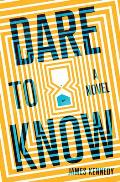
From Ian Benke’s Authority Magazine interview with James Kennedy, author most recently of Dare to Know:
There is no benefit to reading science fiction. Or at least, I hope there isn’t. And if there is, I hope nobody finds out what it is.

The worst thing that can happen to art is for it to become respectable, to be considered as something that is “good for you.” Science fiction had its golden age when literary people considered the genre to be juvenile, unserious, and embarrassing. Now that science fiction has become more respectable, is it really as exciting? Vital, unruly punk energy resists being enlisted for causes, it rightfully doesn’t want to help you, it goes its own swinging way and if you’re lucky, maybe it’ll let you tag along.

The adventure of art is that you submit to it. You let it take you somewhere. You don’t expect a benefit, you don’t even want one. Maybe you’ll get hurt, maybe you won’t, maybe it’ll be a good experience, maybe bad, but for me, the whole thrill is surrendering myself to it, without any expectation of earning some new virtue or snagging some nugget of information. I just want to be overwhelmed, thrilled, transported.

25 February 2020

Art for “The Axman’s Arm”

At Skookworks, David Lee Ingersoll has just shared his illustrations from the 2006 issue of Oziana magazine, which I edited and produced for the International Wizard of Oz Club.

David created the art for a story I wrote called “The Axman’s Arm,” a horror tale exploring what happened to the Tin Woodman’s left arm after it was chopped off in The Wonderful Wizard of Oz. That arm wasn’t around for the assembly of the character of Chopfyt, introduced in The Tin Woodman of Oz—so where did it go?

I rarely tell horror stories, but the Oz books’ premise that people and animals can survive being sliced up leads inevitably to that mode.

For that issue of Oziana, David also illustrated Adrian Korpel’s poem “Rivals” with pictures of the Scarecrow, Tin Woodman, and Cowardly Lion looking bitter and angry—and yet completely recognizable. I’d seen some of the pictures David drew for the Oz Squad project, so I knew he could do a great job with that challenge. I don’t view those poems as “canonical,” but they offered an interesting alternative view of favorite characters.

23 January 2014

Historical Fiction from Ancient History?

At the Oxford University Press blog, Yale professor Colleen Manassa suggests that ancient Egypt’s New Kingdom (1550-1070 BCE) saw the birth of historical fiction:
During the New Kingdom, particularly the Nineteenth and Twentieth Dynasties, the “Ramesside Period,” another literary efflorescence occurred. Among the genres of this new corpus of literary productions are stories that can be most properly described as works of “historical fiction.” Set in the past with attested historical characters, these works of historical fiction are an ancient Egyptian counterpart, albeit ultimately unrelated, to the mammoth corpus of modern historical fiction from Sir Walter Scott, Patrick O’Brien, and George McDonald Frasier to Ken Follett and Philippa Gregory. . . .

The second story, known by its modern title The Capture of Joppa, opens with an Egyptian army besieging ancient Joppa, located near modern Jaffa. The beginning of the story is lost, but the preserved portion describes a group of drunken individuals and chariot horses being safely put away lest they be stolen by the Apiru, a group of local brigands. The Egyptian general Djehuty — another attested historical individual — is holding a conference with the enemy rebel of Joppa, apparently in a neutral space outside of the city walls. The enemy ruler of Joppa, who remains unnamed, is obsessed with seeing the staff of pharaoh, and in a moment of slap-stick humor, Djehuty obliges by smiting the ruler with the staff.

With the ruler of Joppa incapacitated, but not dead, Djehuty puts into motion one of the first attested ruses in ancient military history: he pretends to surrender to the city of Joppa, presenting hundreds of baskets as the “tribute” of his capitulation. Unknown to the citizens of Joppa, Egyptian soldiers are hidden within the baskets, and they promptly capture the city in what can only be described as a Trojan-horse style story. While the basket stratagem is in the realm of fiction, the setting of the story, Joppa, and its protagonist, Djehuty, are known through archaeological and textual sources — The Capture of Joppa truly is one of the world’s first examples of historical fiction.
One of the hallmarks of historical fiction, I believe, is that both authors and readers understand that it’s fiction. Even something as carefully researched to accord with documented events as Hilary Mantel’s Wolf Hall is nonetheless presented as one author’s imagined recreation of the past, not as how people actually thought and events definitely occurred. How did the Egyptians of the New Kingdom understand these tales about figures and events they knew from their history? Did they consider The Capture of Joppa as an entertaining legend or as history?

Another hallmark of historical fiction for me is the determined effort to depict the past as different from the present. That makes it a different mode of storytelling from realistic contemporary fiction, more akin to fantastika in the challenge of smoothly introducing readers to an unfamiliar setting. Again, does that criterion apply to The Capture of Joppa and Manassa’s other examples of ancient historical fiction? Did Egyptians enjoying the story of Djehuty also hear clues that his world was not like theirs?

16 November 2013

Print on Demand Has Gone Too Far

On Thursday I noted a website that allows customers to insert their names into The Wonderful Wizard of Oz and other classic (i.e., public-domain) works of literature. As disturbing as that prospect might be, it wasn’t the aspect of the site that worried me most.

Even more alarming, the business offers generic romances, mysteries, and “teen books” ready for customization and delivery. What are the “teen book” choices now?

  • Black Lace - Paranormal Romance
  • First Bite - Vampire Romance
  • Night Wolf - Werewolf Suspense
  • Prom & Prejudice - High School Fun
  • Sea Spell - Fantasy Romance
So one reason publishers are telling us that paranormal romance is over-published might be that the offerings have become so generic that final texts can be produced by machine.

As with the classics, the site asks customers to enter certain traits for each character—up to nineteen characteristics. To generate a preview requires only a handful of traits, such as name, gender, and hair color. Of course, this can be the result:
After a pause, Abelone said, "Whats with the third clue?"

Preservia re-read the clue and looked at the numbers.

"It just looks weird to me," Abelone told Preservia. "The number of words doesn't seem to fit."

The two pondered the list silently, playing absently with her light brown hair.
(Is that last line an editing error or a hint of something more erotic?)

Even the generic novels aren’t what really bugs me about this site. No, that irksome detail is the site’s name: BooksbyYou.com. It says, “You co-author our personalized novels…” Those titles appear under categories like “Romance By You” and even “Classic Book By You.”

That suggests that the only thing involved in co-authoring a novel is to choose the name and superficial characteristics of the major characters. The characters’ personalities and desires, the plot, the voice, the setting, even the copyediting—those are someone else’s responsibilities.

18 July 2013

Sorting Out Genres and Modes

J. K. Rowling’s Harry Potter books are overstuffed (sometimes literally). Fellow fantasist Bruce Coville credited her, especially at the start of the series, with putting more neat stuff into every chapter than anyone else. But the books also hit all the buttons for several storytelling genres at once.

There’s the genre of the British school story, itself a subsection of coming-of-age narratives. There’s the mystery genre, as Ken Jennings noted. In some books there’s the sports-book genre, where conflicts get worked out on the playing field. And of course there’s the chosen-one-battles-against-evil genre, which many people mistake for all fantasy.

In fact, I don’t think fantasy is a genre at all. It’s what I call a mode. Genres are defined by the plots readers expect: detective solves puzzling crime, couple gets together, gang pulls off heist (or not), soldiers carry out mission, chosen one defeats evil, and so on.

In contrast, modes are defined by their settings and what is possible in those fictional worlds. The major modes I see are:

  • contemporary realistic—stories set in the world that readers recognize as like their own.
  • historic, and thus constrained to some extent by past events.
  • fantastic, breaking the currently known laws and limits of physics. This mode could be defined through science (science fiction) or magic (fantasy). 
  • heightened, in which coincidences, emotions, and stakes are turned up a couple of notches above the realistic. When played for laughs, this produces farce. When played seriously, it’s melodrama.   

Genre stories can be told within each of those modes. Thus, there are mysteries set in a fantasy world, romances told in the historical mode, sports stories with extraterrestrials, crime novels either farcical and melodramatic, and so on.

17 July 2013

Rowling as a Mystery Writer All Along

Last week’s revelation that J. K. Rowling has published a pseudonymous murder mystery sent folks back to the archives for clues they wished they had seen all along: her remarks that she might publish under another name, a brief mention of a Scottish mystery she was trying out.

But the most perspicacious commenter was probably trivia master Ken Jennings, who wrote back in 2007:

I read the Harry Potter books as enormously sophisticated Scooby-Doo mysteries.

Structurally, these aren’t fantasy novels at all. They’re fair-play mysteries in wizard’s clothing–novels with not just plots and characters and setpieces, but “solutions” as well. J. K. Rowling is justly praised for her elaborate and meticulous world-building, but I’m convinced that a lot of that endless detail is just there for standard detective-novel purposes: to distract, to confound, to envelop the real “clues” in a Cloak of Invisibility. . . .

Rowling seems to draw more from the Agatha Christie tradition: a multiplicity of colorful “suspects,” many with hidden agendas; red herrings galore; and a final drawing-room exposition-fest in which Hercule Dumbledore explains How It Was Done.

Just as in a murder mystery, the guilty party is always the least likely suspect. . . . Some of these reveals even involve the Hogwarts equivalent of a Scooby-Doo rubber mask coming off the crotchety caretaker: Quirrell’s turban, Pettigrew’s Animagus disguise, Barty Crouch, Jr.’s Polyjuice Potion. “Like, zoiks, Hermione–it was Old Man Milligrew all along!” . . .

I bet Rowling’s first post-Harry Potter book–talk about a hard act to follow–will be a classic mystery of some kind. I don’t know if it’ll be a hard-boiled gumshoe case, a true-crime police procedural, a classic manor-house throwback, or what, but it’ll be a mystery novel. She’s been writing them all along, after all. It’s just that no one’s noticed.
And couldn’t Rupert Grint play a fine Shaggy?

TOMORROW: What this should tell us about genre.

06 January 2013

When Batman and Robin Went Sci-Fi

“The Isle That Time Forgot,” from Batman, #10, is one of the first Batman stories that definitely borrowed from science fiction. Earlier tales of the Caped Crusader had touched on the fantastic, but through the genres of Gothic horror and even fairy tales rather than science-inspired tropes.

That story from April-May 1942 showed the Dynamic Duo landing Dick’s new miniature batplane on an island that appears—to the Boy Wonder at least—to be infested with living dinosaurs. Robin keeps saying he’s seen the giant creatures; Batman keeps telling him to stop talking nonsense. (More specifically, he snaps, “Don’t get gay!”) As shown above, Robin also falls down a bit. I’m not spoiling a good story when I ***SPOILER*** this one: there really are dinosaurs on the island, but they’re mechanical.

In Batman, #24 (Aug-Sept 1944), the Dynamic Duo had their first real time-travel adventure. That is, if we accept that Prof. Carter Nichols could actually send Bruce Wayne and Dick Grayson back to ancient Rome through nothing but hypnosis. That story has lately been credited to Dr. Joe Samachson. The Nichols character appeared in several more Batman time-travel adventures as recently as this decade’s “Time and the Batman.”

Joseph Greene is credited with scripting “The Year 3000” in Batman, #26 (Dec 1944–Jan 1945). This is an unabashedly futuristic adventure featuring Bruce Wayne’s distant descendant (and his young pal Ricky!) fighting an invasion from Saturn.

Finally, Batman, #41 (June-July 1947), went all out with Batman and Robin running into real extraterrestrial visitors, and on the cover yet. Gardner Fox is usually credited with writing “Batman, Interplanetary Policeman!” He wrote some of the earliest Batman scripts and continued to work for DC Comics until 1968.

Thus, within a decade of his invention, Batman was involved in science-fiction adventures on top of his usual crime-fighting. The idea of Batman in space is usually associated with the “Silver Age” of DC Comics, starting in 1956. And indeed Pat Curley at Silver Age Comics has mapped the peak of stories in which Batman and Robin meet aliens (not including Superman himself) as from 1958 to 1963. But the tradition goes back to the 1940s.

At that peak time, Julius Schwartz was reinventing DC’s superhero universe with new sci-fi versions of old trademarks like the Flash, Green Lantern, Hawkman, and the Atom. Superman editor Mort Weisinger was reportedly leaning on Batman editor Jack Schiff to shift toward science fiction. When Schwartz took over the Batman books in 1964 with the “New Look,” he reversed course back to goofy crime stories, but he also integrated Batman and Robin into the larger, now sci-fi-driven DC Universe.

Thus, it was only a matter of time before Dick Grayson would have a hot alien girlfriend.


05 September 2012

Make Your First Novel a Murder Mystery?

Physicist turned science-fiction novelist and social commentator David Brin recently shared this advice for new storytellers:
No matter what genre or style they want to create for a living, I recommend that new authors make their first major project a murder mystery.

The reason is simple. All other genres let the author get away with flaws in plotting and suspense, by distracting the reader with genre-specific razzle-dazzle, e.g. romantic tears or dying dragons or scifi tech-speak. But in a murder mystery, just one question is paramount; did the dramatic, whodunit revelation pay off? Was it simultaneously both well foreshadowed and surprising?

Does the reader experience a pleasurable moment of shock and self-loathing? "It was all there and I just missed figuring it out! I'm sooooo stoooopid!" If that's how your reader feels, at the crucial moment of whodunit disclosure, then she or he will buy your next book. That's the wonderful, ironic fact.
You might see why David calls his blog Contrary Brin.

This advice also shows the value of a distinction I invented for an SCBWI presentation a few years back: between genre and mode. Mystery is a genre, defined by readers’ expectations for the plot. Science fiction, fantasy, historical fiction, futuristic dystopia, melodrama, farce, and contemporary realism are modes, defined by what readers expect can happen in different worlds—i.e., elements of the setting. A mystery (or a romance, or a dead-dog story, or a heist caper, or almost any other genre) can be told within different modes. That’s how a science-fiction novel can also be a murder mystery.

As another example of this overlap, the new Soho Teen imprint publishes nothing but mysteries and thrillers for young adults. But, as editor David Ehrenhaft said at Cynsations, some of those books have fantastic or dystopic settings. Mystery is the genre; paranormal is the mode.

Now if I keep defining and using those terms for twenty years, maybe they’ll catch on.

30 June 2012

The Wicker Man as a Musical

Last night I watched The Wicker Man, the 1973 cult horror film starring Christopher Lee, Edward Woodward, and Britt Ekland. Shot in Scotland, it follows an uptight police sergeant as he searches for a missing child on an island whose populace has reverted to scenic British pagan rituals.

And all throughout the movie, till the very last scene, I was thinking, “This is an effin’ musical!” The cast keeps breaking into song and dance. Not the uptight sergeant, of course, but everybody else from the local schoolboys dancing around the Maypole to Lee at his piano and Ekland (and her body double) in nothing at all. Those musical scenes do more to reveal character than most of the spoken dialogue—though of course most of the characters are hiding something.

In that respect, The Wicker Man plays like an inverse of The Music Man. In Meredith Wilson’s masterpiece the stranger brings music to a community, while in Anthony Shaffer’s story the stranger finds a disturbing community already absorbed by music. In both cases, the community absorbs the stranger in its own way.

I see by the web that the National Theater of Scotland actually decided to adapt The Wicker Man into a stage musical earlier this year. The Guardian reported, “Previous attempts to stage The Wicker Man have stalled over failure to secure the rights to the music. [Co-writer Greg] Hemphill proudly promises that their version will feature every note of the original.” That soundtrack included genuine folk songs and new compositions by Paul Giovanni. I doubt the stage can get the eerie effect of bad lip-synching, though.

On the other hand, the Guardian’s Danny Leigh really didn’t like the sing-along Wicker Man screenings two years ago. Horror films and musicals are supposed to be two different kinds of fun.

28 April 2012

Cold Wind and the Limits of the Superhero Genre

Cold Wind is a short adventure comic written by Dan Mazur and drawn by Jesse Lonergan, independently published by Mazur’s Ninth Art Press.

I saw this story grow from a script that Dan shared with the Boston Comics Roundtable to its final form. Dan writes in screenplay format, not breaking his story into pages and panels. Often he draws his own art, so that’s obviously not a problem. In this case, he left it up to Jesse—who’s scripted his own Flower and Fade, Joe and Azat, and other tales—to divide the screenplay into images. Yet another approach to collaboration.

Dan’s told me a couple of times how he’s no longer a fan of superhero comics because of their repetitive themes. He reads one Spider-Man story, learns that “With great power comes great responsibility,” reads another story—and learns the same thing.

As former Marvel editor Jim Shooter has commented:
Comic books have become like opera. You go to see a particular performance of an old story, not a new story. How will this performer handle that familiar role...?
That familiarity is part of the appeal of a series, or a genre.

At the last roundtable meeting, Dan wondered aloud if Cold Wind is a superhero comic. I said it qualified, despite his ambivalence about the genre. It’s a pumped-up action story taking place against a fantastic landscape. Its characters are largely symbolic, and they work out the fate of the world through violence.

But Cold Wind reflects Dan Mazur’s take on the superhero genre, with the theme that things don’t change significantly. For all the adventure’s sound effects and fury, its surviving characters achieve only a short pleasure before the world spins on.

Cold Wind is on sale today at the MoCCA Festival, in the better Boston-area comics shops, and over the web.

18 April 2012

A Taxonomy of Fantasy

This weekend I’ll be at the Society of Children’s Book Writers and Illustrators’ annual New England conference, this year in Springfield (Seuss Country), Massachusetts. I’ll be part of a panel on independent editors and the future of publishing, will teach a workshop on “Defining the Borders of Reality,” and may give away some door prizes.

“Defining the Borders of Reality” is really about fantasy literature, and I’m doing my usual thing of categorizing and defining types. In this I’m guided by such scholars as Farah Mendelsohn in Rhetorics of Fantasy, but I’ve ended up with my own system and labels.

To begin with, I call fantasy literature a “mode,” not a “genre.” My definition of “genres” involves reader expectations for plot while “modes” are defined mainly by setting, including the level of coincidence, action, and emotional reaction that characters of that world accept. Thus, in the phrase “paranormal romance,” the first word indicates the fantasy mode while the second defines a genre demanding certain plot points. Stories from many genres can be told in the fantasy mode. Conversely, a genre like mystery or romance can be told in the realistic, fantastic, historical, melodramatic, or farcical mode.

And then there are my labels for types of fantasy.

Immersion Fantasy. These stories take place entirely in a fantastic world where the laws of physics, mortality, biology, and other aspects of the universe we know don’t apply. Within immersion fantasy, there are many approaches: from “high fantasy” to “magical realism,” from traditionally rooted fairy tales to entirely new cosmologies.

Portal Fantasy. Protagonists travel from an ordinary, recognizable, and unmagical world into a magical one. The plot usually involves getting back home, often after setting things right in the other place. As Mendelsohn points out, portal fantasies are usually quest stories.

Intrusion Fantasy. Something magical enters the ordinary world, and usually has to be forced back, helped back, or experienced and declined. The world typically ends much as it was when the story begins, but the protagonists have learned a valuable lesson about life.

Shadow Fantasy. A world very much like the readers’ own turns out to have magical people or creatures hiding within it. These stories often revolve around protecting those creatures, or protecting oneself from them.

Dimension Fantasy. A world very much like the readers’ own turns out to have pervasive magical layers and forces that most people never perceive. The typical protagonist turns out to have some special aptitude or role in the magical dimension. The universe turns out to be a much bigger, scarier place.

Alternate-Life Fantasy. Through time travel, body-switching, or some other means, protagonists get a chance to view how their lives might be different. These books are usually about, well, learning how life can be different.

Have I left anything out?
22 March 2012

Making Sense of Manga Man

Manga Man, written by Barry Lyga and illustrated by Colleen Doran, explores the premise of a typical manga hero coming to earth in an American high school.

Of course, there is no “typical manga hero.” Ryoko Kiyama is a typical “bishonen” or “beautiful boy” type from one genre of Japanese comics. He’s an adolescent with big eyes and extraordinary hair. He has a tendency to express emotions by turning into a cute, small chibi version of himself. Given his background, Ryoko is comfortable with barely explained gender-shifting, robot attacks, and sitting still to watch nature for several panels.

For Marissa Montaigne, the prettiest girl in her high school, Ryoko is a delightful change from her ex-boyfriend the football captain, but their attraction doesn’t go any deeper than that.

Artist Colleen Doran does a fine job of fitting characters in both styles into the same panels. Scripter Barry Lyga also seems to focus on that contrast rather than on the characters’ relationship, and I didn’t think all his ideas panned out.

For example, because Japanese comics are read right to left, a couple of times Ryoko finds himself moving opposite to his American classmates. He can even foresee the future in a limited, one-panel way. I kept waiting for that to become a major part of the plot, but it didn’t.

At another point, Ryoko reveals his ability to move into the gutters between panels, and thus to move supernaturally between scenes, again emphasizing his identity as a comics character. But then he shows his love interest, Marissa Montaigne, how to do this as well, meaning that she’s also living in a comics universe.

For me that shifts Manga Man from being about a comics character visiting the real world to a Japanese comics character visiting some form of American comics—but not one matching the conventions of any genre I know. And the American characters just weren’t developed enough to stand on their own without a genre background.

Then the reality shifts back again as Ryoko gets in trouble for fighting too rough with his romantic rival. He expects to cause no more damage than in his typical stories, but Marissa’s old boyfriend ends up on a ventilator. Which left me further confused since a long-standing complaint about American comics is that they show unrealistic violence without consequences.

07 November 2011

Trying to Claim Fantasy Literature for Christianity

Reviewing two fantasy novels in the Jewish Review of Books back in 2010, Michael Weingrad asked “Why There Is No Jewish Narnia.” However, he starts with C. S. Lewis and J. R. R. Tolkien, which naturally points the discussion in a particular way. (We could do worse than ask whether there have been many Jewish dons at Oxford who felt secure enough to publish fantasy novels.)

Then Weingrad dismisses respected counterexamples by writing:
Haven’t modern Jewish writers, from Kafka and Bruno Schulz to Isaac Bashevis Singer and Cynthia Ozick, written about ghosts, demons, magic, and metamorphoses? But the supernatural does not itself define fantasy literature, which is a more specific genre. It emerged in Victorian England, and its origins are best understood as one of a number of cultural salvage projects that occurred in an era when modern materialism and Darwinism seemed to drive religious faith from the field.
No, that’s not what defines fantasy literature. It may be part of the definition of “high fantasy,” with its emphasis on magic-infused lands and epic battles between good and evil, but that’s only one part of the corpus. Weingrad tries to define fantasy as wholly separate from science fiction, where there are, he acknowledges, many Jewish authors. He also disregards all fantasy storytelling outside the prose form: no comics, no movies.

Weingrad’s critique immediately prompted replied from more knowledgeable critics like Farah Mendelsohn, Abigail Nussbaum, and Spencer Ackerman.

D. G. Myers just followed up with a Commentary essay titled “Fantasy Is a Genre of Christianity.” This is an even less tenable thesis, explored in less depth at less length. Myers can manage even that much only because he gets to define his terms: “The bedrock premise of fantasy, which cannot be waived without voiding the genre, is the existence of a spirit realm.”

There’s no “spirit realm” in, for example, Mary Norton’s The Borrowers, Walter R. Brooks’s Freddy the Pig, or E. B. White’s Stuart Little—only unseen corners of everyday life. Myers’s definition also excludes all fiction that provides a non-mystical explanation, however scientifically stretchy, for the unfamiliar.

Furthermore, the “spirit realm” is neither the creation nor the exclusive property of Christianity. It’s Platonist. The philosophical movement later labeled “Middle Platonism” infused early Christian theological writings, but its ideas are independent of that faith.

05 July 2011

“They don’t feel smart enough to be on our panels”

From Rose Fox at Genreville:

I’ve been putting together the program for Readercon, and I was entirely shocked when two women we invited told me they don’t feel smart enough to be on our panels. I’ve never heard anything like that from a man. [EDIT: A woman has emailed me to say she heard a man once say "Readercon is where I go to feel stupid"--though I wouldn't classify that the same way as withdrawing from the program.]

I’m also pretty sure I received more “may I be on your program?” requests from men than from women (I’ll try to remember to keep statistics next year). It’s pretty well known that that sort of behavior is socially gendered.

I would not be at all surprised if female authors are more likely to self-sabotage by saying “I’m not good enough to be in this anthology” or “I don’t have anything that works for this” or “I can’t write in that genre”, while men might be more likely to send in a story that’s a little off-topic, or send something unsolicited even if the anthology is supposedly closed to submissions.
This particular discussion involves the world of science fiction, and its awards and anthologies. The situation is probably different in other literary genres; as one example, as Fox quotes Liz Williams, “in urban fantasy…women do seem to be on strong ground.” (According to Library Journal in 2008, “Contemporary urban fantasy started as an offshoot of horror fiction rather than sf/fantasy but has blended with other genres, most notably romance and mystery.”)

03 February 2011

Banville, Black, and Beam

In my SCBWI New England workshop on writing within and without genre last year, I used the example of John Banville, the Irish novelist. Under his own name, he writes Man Booker Prize-winning literary fiction, such as The Sea. Under the name Benjamin Black, he writes murder mysteries—a popular genre.

The pseudonym isn’t even an open secret anymore, an the Boston Globe columnist Alex Beam makes clear in a new interview:

Q. How do Black and Banville divide their time?

A. I’ve got a schedule now. I do a Benjamin Black in the spring and early summer. I hate summer, so this is a wonderful excuse to sit in my room and pound away at a crime book. I write those quickly on the computer, in three to four months.

What I want from Benjamin Black is spontaneity; John Banville writes in longhand with a fountain pen. I can’t do them both at the same time. Banville was never much interested in character, dialogue, and plot, and Black is entirely character and dialogue and plot.
Which is indeed a common distinction between literary and genre fiction. Whether future generations will consider that distinction worthwhile is another matter.

08 November 2010

Par: A Normal Romance

Last month we learned that Barnes & Noble was reorganizing its teen fiction shelves into three categories: Paranormal Romance, Fantasy, and everything else. Including contemporary realism—originally the heart of YA—plus historical, comedic, professional, adventure, horses, dead mothers, and any other type of teen fiction ever invented. And B&N is, as usual, following the market.

Literary agent Mary Kole just used her Kid Lit blog to discuss what that market situation means for “everything else”:

today’s kidlit market, which got going in earnest over a decade ago with HARRY POTTER and has now been given another injection of money and attention by the TWILIGHT franchise, has always been anchored in fantasy and paranormal. And that’s where the trends — somewhat unfortunately for me and my contemporary/realistic tastes — all seem to be going. Even if there’s no outright fantasy, magic, or paranormal element, novels would rather be set in dystopian times than in the good old real world.

Not only do I know this from observation of bookstore shelves and publishers’ upcoming catalogues, but I’ve heard countless editors discussing how difficult it is to get a straight contemporary/realistic story through their acquisitions committees. . . . So what can writers of contemporary realism do in order to make their books more saleable? Well, romance is a huge hook. . . . And you do have to have a really strong hook. It’s not enough to just have a story of one girl’s senior year as she experiences different relationships and events at school. “Coming of age” is no longer a great sales hook, because every book for the kidlit market is, in one way or another, a coming of age story.
After surveying some recent non-fantastic hits in teen fiction, Kole concludes: “What sets all of these books apart, in my mind, is character, voice, and one high-concept element in the plot that makes the premise a great read. I do think a romantic element, or at least an unrequited crush, is vital to a contemporary/realistic YA story.”

21 October 2010

Paranormal Romance Bursts Out of Teen Fiction at B&N

Just in case we need more evidence that teen fantasy fiction dominates the children’s-publishing world now, Publishers Weekly reports:

Barnes & Noble is in the midst of rearranging its teen fiction section chain-wide this week. . . . Already teen fiction is the biggest book growth category at Barnes & Noble, according to Mary Amicucci, v-p of children’s books. In terms of volume, it is the second largest subject, behind adult fiction. . . .

the chain pushed the go button to reorganize all its teen sections by separating out the two most popular genres—paranormal romance and fantasy and adventure—from teen fiction. . . . In addition to helping teens discover new books, the rearranged sections will enable them to easily filter out books they’re not interested in and go straight to the genre that they’re looking for. [In other words, they might discover new books, but they won’t run the risk of discovering new types of books.] . . .

Combined, the new paranormal and fantasy and adventure sections are slightly larger than teen fiction. [So they were already the tail wagging this dog.]
In addition, B&N’s publishing arm, Sterling, will launch its own imprint of fiction for teens, starting with a five-volume supernatural romance saga. That announcement carries interesting implications about using digital tags and electronic editions to get readers into B&N stores.

Now I have to go figure out how to stick this information into my “Writing Within and Without Genre“ workshop at SCBWI New England’s ENCORE! session next weekend.

16 August 2010

Wisest Thing I’ve Read Today

Alicia at Editorrent discusses one powerful aspect of writing within genres, or what she calls “pop fic”:

I think of popular fiction as a type of folk art (like folk music), building on a long tradition, with old practitioners teaching new respect for the tradition, and the new ones innovating in often subtle ways while maintaining the traditions. Well, one advantage this gives pop fic writers is that we can count on readers to know the traditions about as well as we do, and that gives us an additional layer to build on: What is expected.

We pop fic writers can play on the traditions, tease reader expectation, present the expected and then withdraw it and replace it with something new. The "something new" is more fun, more surprising, more meaningful, balanced on the familiar and expected. That is, we get double here-- the reader is set up for the familiar, kind of writes the familiar story in her mind, and so has that done when the writer presents something contrasting, something unexpected.
And then the posting goes all Hegelian. I’m going to have to think more about that part.

Last week I heard that I’ll be delivering my “Writing Within and Without Genre” presentation for SCBWI New England in Providence on 30 October.

27 July 2010

Working Through the Horowitz Family Lore

Back when I read the first Alex Rider book by Anthony Horowitz, I disliked the snobbery and xenophobia built into it. Those qualities may have been borrowed from the British spy thriller’s genre conventions, but Horowitz chose to perpetuate them. (And revisit them.)

All the odder, I thought, given that Horowitz hadn’t grown up as an insider in British society, especially when attending the Rugby public school in the 1960s as, well, a Horowitz. But then I read that his family legend, as described among other places in this interview with the Jewish Exponent, actually presented his father as a rich insider:

his father’s secret service as a so-called “fixer” for Prime Minister Harold Wilson couldn’t fix the financial problems at home once the Jewish family’s fortunes evaporated. . . .

But secrets got the best of his dad, whose survival of bankruptcy banked on certain Swiss accounts that held a secret fortune in his name.

Unfortunately, says his son, those accounts held numbers as unfamiliar to the rest of the family as the Da Vinci codes. “He died of cancer at age 55, when I was 22,” his cache of cash unfound.

“And all of a sudden, these letters started arriving from different banks, starting out the same way, offering their condolences about my father’s death, but then saying how he owed them hundreds of thousands of pounds.” . . .

“Somewhere in Switzerland, he had all this money. My mother went there two or three times searching for it. She never found it. We had to sell everything,” says Horowitz. “My mother had to go back to work.”
I’ve read enough family and local lore that my historian alarms immediately went off. That narrative seemed far too tidy, explaining away all faults and losses and lack of evidence.

Back in mid-2007 I prepared some notes for a blog posting expressing doubt that the senior Horowitz ever had much actual money, or close ties to Harold Wilson (who was known within British politics as his own “fixer”). I was going to suggest the senior Horowitz’s possible similarities to the father figures in John Le Carré’s A Perfect Spy (based on the author’s own father) and Graham Greene’s The Captain and the Enemy—i.e., men conning the world, their loved ones, and themselves.

But at the end of that year, without any butting in from me, Horowitz began to rethink his family lore, as revealed in this Telegraph profile:
He took his family’s wealth for granted; but when his father died, he found himself, aged 21, a pauper. There was only a notebook filled with indecipherable squiggles related to Swiss bank accounts. Despite a year-long attempt to find the missing wealth, it has remained a mystery — as has its origin. “I don’t think my father was a crook, but I don’t know,” he says. “I recently found that one of his closest associates was wanted on fraud charges.[”]
The old story still surfaced occasionally, as in this 2008 interview with the Independent, but the senior Horowitz was never such a mythical hero as first described. Horowitz now writes of his family [hat tip to Gail Gauthier] with more overt and admirable skepticism. Leaving me with less to complain about.

14 June 2010

“They sounded vaguely fantastical”

I got a kick out of the essay on the back page of yesterday’s New York Times Book Review, in which John Feffer expresses gratitude for his teen-age hobby of buying paperbacks in bulk:

It all took place at a book sale that happened one weekend a year, just before Halloween, in a church around the corner from my house in suburban New Jersey. After Saturday soccer practice I’d hurry over to the church, still dressed in my sports gear, cleats skittering among the fallen leaves. . . .

Wandering through the tables piled high with unsorted books, I vacuumed up all the Heinlein, Asimov and Bradbury I could find at 10 cents a pop. I stocked up on authors — George Orwell, Anthony Burgess, Kurt Vonnegut — I mistakenly thought wrote nothing but science fiction. Then there were the titles that caught my eye because they sounded vaguely fantastical, like “Ten Days That Shook the World” (about an asteroid strike?) and “Invisible Man” (clearly the inspiration for Claude Rains). . . .

Drawn in by “The Metamorphosis,” I became a fan of Kafka. I read everything by Aldous Huxley, eventually reconciled to the fact that “Brave New World” and “Island” were not representative of his work. . . .

Right now, as I toy with the idea of writing a screenplay, I find a battered copy of “The Disenchanted,” Budd Schulberg’s roman à clef about F. Scott Fitzgerald in Hollywood, to be utterly enchanting.
Even if young Feffer might have bought that novel because he thought it was about…some sort of enchantment.

This gives me an opening to recommend the Good Show, Sir blog, featuring the most baffling, ugly, and embarrassing-for-the-species covers for science-fiction paperbacks; and Pop Sensation, an exploration of one person’s paperback library.