Showing posts with label gendered fiction. Show all posts

26 August 2024

Falling for Farina

As related back here, Hal Roach and the makers of the Our Gang comedies modeled the character of Farina, played by Allen “Sunny” Hoskins, on the pickaninny stereotype.

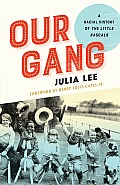
Gloria Lee writes in Our Gang: A Racial History of the Little Rascals:
His hair was tied in pigtails and white ribbons. He ate watermelons, fell into vats of flour, and smoked a corncob pipe. He wore the clownlike, oversized shoes of a minstrel. . . .

Farina became the vehicle of all the most hackneyed and racist sight gags. He appeared in whiteface while his white friends appeared in blackface. When he got the measles, white spots were painted on his face instead of black ones. He clutched voodoo amulets and was terrified of ghosts. He was called “Shine” while Mickey was called “Freckles” or “Speck” and Joe Cobb was called “Fatty.”

But something strange started to happen. Despite his genesis in the flattest of stereotypes, Farina started to become—how else to put it?—human. He went through the minstrel motions, but even the narrowness of his scripted roles couldn’t suppress his outsized personality. The public fell in love with him.
Just as rival studios needed an equivalent of Ernie Morrison in their kid gangs, many also had a younger black child in this stereotypical form. In the McDougall Alley Kids and Buster Brown series that counterpart was a girl named “Oatmeal,” played by Hannah Washington.

One manifestation of public interest the character, and of recognizing that a real child played the role, was the demand to know if Farina was a boy or a girl. For a while the movies were ambiguous, as were newspaper stories. Roach milked the question, playing coy in press releases.

Eventually, however, the studio acknowledged that “Sunny” Hoskins and the character of Farina were little boys. The costume changed to have pants, but it retained a couple of the pickaninny traits. Sunny wore one pair of shoes inside another because Farina had flat oversized feet. He kept his hair long enough for pigtails for years. Farina continued to suffer a disproportionate amount of mess and rough treatment.

From 1925 to 1931 Farina was the series’ main black character. In several films he was clearly the lead: “Your Own Back Yard,” “One Wild Ride” (1925), “Monkey Business” (1926), “Love My Dog,” “Chicken Feed” (1927), “Spook-Spoofing,” “The Smile Wins” (1928), “Election Day,” “Fast Freight” (1929). In some movies Sunny’s sister Jannie played Farina’s little sister, often called Mango.

Sunny made the transition to talkies while some other Our Gang kids struggled. Lee notes that one issue in that shift was that he’d been born in Boston and grown up in Los Angeles, so he didn’t speak in the broad “Southern” dialect the intertitles had assigned to Farina. It looks like he figured out how to deliver those lines for the microphones not quite as broadly but still with enough rural character to please the public.

Ultimately, Sunny Hoskins outlasted a second generation of fellow players. His seniority in the series matched his line deliveries, which projected a long-suffering personality. Having started as a toddler, he ended up appearing in more Our Gang movies than any other actor.

This series of postings started by noting the roots of the Farina persona in the character of Topsy in stage productions and parodies of Uncle Tom’s Cabin. Farina actually played Topsy in the 1926 short “Uncle Tom’s Uncle,” when the gang put on their own version of the show. Pudgy Joe Cobb portrayed the title character in blackface, his mom repeatedly telling him to wash his face and do his chores. That reflected the ongoing influence of Harriet Beecher Stowe’s novel on American culture.

11 July 2023

Contents of The Characters of Oz

Last week I introduced The Characters of Oz, a collection of essays that I contributed to, edited by Dina Schiff Massachi.

Since I don’t yet see this information on the web in a form easy to search out, I’m sharing the contents of this book.
  • Introduction — Dina Schiff Massachi
  • Dorothy and the Heroine’s Quest — Mark I. West
  • But First, There Was a Scarecrow... — Katharine Kittredge
  • Heart Over Head: Evolving Views on Male Emotional Intelligence and the Tin Woodman — Dina Schiff Massachi
  • The Proto-Sissy, the Sissy, and Macho Men: The Cowardly Lion in The Wonderful Wizard of Oz, the MGM The Wizard of Oz, and Dark Oz Stories — Dee Michel and James Satter
  • A Good Man but a Bad Wizard? The Shifting Moral Character of the Wizard of Oz — J. L. Bell
  • Witches, Wicked and Otherwise — Robert B. Luehrs
  • Witch's Familiars or Winged Warriors? Liberating the Winged Monkeys — Dina Schiff Massachi
  • Glinda and Gender Performativity — Walter Squire
  • Ozma, Sorceresses, and Suffrage: Women, Power, and Politics in L. Frank Baum's Land of Oz — Mary Lenard
  • A Living Thing: The Very American Invention of Jack Pumpkinhead — Paige Gray
  • Trading Knitting Needles for Pistols: The Feminist, Violent, and Sexual Evolution of General Jinjur — Shannon Murphy
  • The Nome King — Angelica Shirley Carpenter
  • Piecing Together the Patchwork Girl of Oz — Gita Dorothy Morena
  • Afterword: Frank and His Imagination — Robert Baum
  • Bibliography: Further Oz Readings, Fiction and Nonfiction — Dina Schiff Massachi
In other (surprising) news about this book, it’s been printed, and McFarland is taking orders.

11 August 2019

Robin and Gender Shifts in American Naming

Last year the Life of Words blog discussed how over time many American names have flipped from being predominantly male to predominantly female—and, in a few cases such as Stacey and Lacey, flipped back.

Here’s the prevalence graph for the name Robin, based on US Census and Social Security data.

As you can see, until 1850 basically all Americans named Robin were male. Gradually more women named Robin appeared and then around 1930 there was a sudden shift and Robin became a predominantly, though not exclusively, female name.

The character Robin made his debut in 1940 shortly after that shift to a female name. However, the men who created him—Jerry Robinson with Bill Finger and Bob Kane—came from a generation that knew Robin even more predominantly as a male name.

In 1970 the trend of Robin being a female name in America peaked. As of 2000, we were heading back to the range in which the shift happened back around 1930. Was there another sudden change?

08 September 2017

Golding and the Girls

Recently news broke that a Hollywood studio optioning a remake of William Golding’s Lord of the Flies with marooned schoolgirls instead schoolboys. I saw some people suggesting that adaptation missed how the novel is a critique of male behavior; others said that wasn’t what Golding had in mind at all. So I decided to look into the question.

As the book was being published, Golding told his publisher:
The theme is an attempt to trace the defects of society back to the defects of human nature. The moral is that the shape of a society must depend on the ethical nature of the individual and not on any political system however apparently logical or respectable. The whole book is symbolic in nature except the rescue in the end where adult life appears, dignified and capable, but in reality enmeshed in the same evil as the symbolic life of the children on the island.
It seems clear not only that Golding hadn’t set out to discuss male behavior. Indeed, his use of the generic word “children” for the all-boy cast of characters hints that he believed boys were representative of all children.

And that’s confirmed by Golding’s later comments. Peter Brook, who eventually directed the best movie adaptation of the novel, recalled hearing Golding respond to Hollywood producer Sam Spiegel’s suggestion to add girls to the cast:
Mr. Spiegel, I wanted the film to be an allegory on the human race. “Man” suggests all, “boy” equally—if you bring in boys and girls you’re forced to bring in secondary side issues, sexual attractions, conflicts, problems of puberty…
Indeed, a teacher casting the play in a co-ed school found something similar: “while having the female actors read lines with the male actors during auditions, Williams noticed that the teasing dialogue had turned into flirting.” Surely Golding, a schoolteacher, understood those issues arose in an all-male group as well, but they weren’t as open, especially with such young boys.

However, that quotation also shows that Golding was considering male as the default gender, especially when discussing “the human race.” In the introduction for a reissue of the novel, Golding expressed that idea at even more length:
When girls say to me, and very reasonably, “Why isn’t it a bunch of girls? Why did you write this about a bunch of boys?” my reply is I was once a little boy. I have been a brother, I have been a father, I’m going to be a grandfather, I have never been a sister or a mother or a grandmother, so this is why I wrote it really about little boys. That’s one answer. Another answer is of course to say if you, as it were, scaled down human beings, scaled down society, if you land with a group of little boys, they are more like scaled-down society than a group of little girls would be.

Don’t ask me why, and this is a terrible thing to say because I’m going to be chased from Hell to breakfast by all the women who talk about equality. This has nothing at all to do with equality at all. Women are foolish to pretend they’re equal to men. They are far superior and always have been. But one thing you cannot do with them is take a bunch of them and boil them down so to speak into a set of little girls who would then become a kind of image of civilization, of society. That’s another reason why they were little boys.

The other thing is, why weren’t they little boys and little girls? We being who we are, sex would have raised its lovely head, and I didn’t want this book to be about sex. I mean, sex is too trivial a thing to get into with a story like this, which is about the problem of evil and the problem of how people would work together in society.
After considering these quotations, I concluded that it was clear Golding didn’t intend to write about masculinity, but also couldn’t conceive of masculinity as an issue in the problems he set out to explore. Which looks like an aspect of the male behavior up for critique. Unknowingly, or in defiant denial, Golding portrayed the worst of male behavior while insisting he’d done no such thing.

12 July 2017

Gendered Journaling

This is from the opening of Henry Reed, Inc., written by Keith Robertson and published in 1958.

This is a journal, not a diary. Diaries are kept by girls and tell all about their dates and what they think of different boy friends. My mother says that men keep diaries too, that the most famous diary in the world was kept a long time ago by an Englishman named Pepys. That may be so, but when I read about pirates and explorers and sea captains they always keep journals, so this is going to be a journal. It is going to be a record of what happens to me this summer in New Jersey.
And this is the opening of Diary of a Wimpy Kid, by Jeff Kinney, as first published on the FunBrain website in 2004 (later published on paper in 2007).
More than four decades and a wave of feminism separate the two books, but both young male narrators insist, “This is a journal, not a diary.”

12 November 2015

Kryptonian Babysitting Service

There’s a lot to like in the new Supergirl television series, but there’s one detail in the introductory voiceover that I don’t like at all.

That line repeats a detail from the pilot, which shows Kara’s family sending her from Krypton to Earth. Her mother is a judge, showing how Kryptonian women could exercise authority.

In those scenes, Kara is about thirteen years old. Her cousin Kal-El is still a little baby. And their parents know that when the kids arrive on Earth they’ll have extraordinary powers—the yellow sun, you know.

But the women don’t tell Kara that she’ll have to be careful not to hurt the natives, or that she can be a hero. They say her job is “to look after your baby cousin, Kal-El.”

Kara replies, “I won’t fail Kal-El, or you.”

The grown-ups don’t tell Kara that she should do this “because you’re older, and he’s just a baby.” They don’t say she should do this “until he can look after himself.” They present this as her one and only mission in life.

The credits go on to explain that Kara’s spaceship was knocked off course, causing her not to arrive on Earth until her cousin has already grown up and become Superman. But she’s still in her teens. The series picks up a few years later when she’s in her early twenties. (Most comic-book versions of Supergirl are in their teens, but there is some precedent for a twentysomething.)

At first Kara says, “I didn’t have a mission anymore. But even though I had all the same powers he did, I decided the best thing I could do was fit in. After all, Earth didn’t need another hero.” Over the first couple of episodes, she decides to discard that attitude and be a superhero as good as her cousin.

Comics writers have gotten a lot of stories out of Supergirl’s wish to match her older, established cousin’s heroism. I have no problem with that being a big theme in this series. But here that theme is tied onto the notion that her job was to look after the family’s sole surviving male.

08 November 2015

“Some outstanding work” in Dick Grayson, Boy Wonder

Here are nice quotes from reviews of Dick Grayson, Boy Wonder, edited by Kristen L. Geaman and published this year by McFarland.

John DeNardo, Kirkus Reviews:

“Dick Grayson, aka. Robin, Batman’s young sidekick, [has] been around nearly as long as the caped crusader but rarely sees any media attention. That is, until now, with this collection of scholarly essays. Dick Grayson, Boy Wonder: Scholars and Creators on 75 Years of Robin, Nightwing and Batman is an interesting collection that features critical analyses and essays about the most overshadowed sidekick in comics. Also included are interviews with the Boy Wonder’s past and current creators Chuck Dixon, Devin Grayson and Marv Wolfman. Collectively, these essays examine Robin’s place in comics and his evolution across the decades—all within various contexts like trauma, friendship, feminism and masculinity.”
Nick Smith, ICv2 (4 Stars out of 5):
“Some outstanding work . . . for anyone who wants insights into the detailed history of Dick Grayson, as Robin and as Nightwing, and into the creative processes that have guided the character over such a long time, this is a valuable work, well worth reading. It should also be of interest to anyone interested in writing any company-owned character, because the history and interviews may prevent career-threatening pitfalls. Its price may keep it out of the hands of some fans, but it belongs in most libraries, at the least.”
As I wrote last week, the preview function on Barnes and Noble and Amazon websites offers an overview of the book and a good chunk of the first essay, by me.

11 November 2014

“Perhaps the women are made of cast-iron”

In The Marvelous Land of Oz, L. Frank Baum introduces the character of General Jinjur, leader of an army of girls. She aims to depose the Scarecrow as ruler of the central part of Oz. Why? “Because the Emerald City has been ruled by men long enough, for one reason,” she says.

Jinjur is thus a comedic version of turn-of-the-century suffragists. And soon she succeeds in conquering the Emerald City. When the Scarecrow returns with his friend the Tin Woodman and others, they find domestic society turned upside-down:
As they passed the rows of houses they saw through the open doors that men were sweeping and dusting and washing dishes, while the women sat around in groups, gossiping and laughing.

“What has happened?” the Scarecrow asked a sad-looking man with a bushy beard, who wore an apron and was wheeling a baby-carriage along the sidewalk.

“Why, we’ve had a revolution, your Majesty as you ought to know very well,” replied the man; “and since you went away the women have been running things to suit themselves. I’m glad you have decided to come back and restore order, for doing housework and minding the children is wearing out the strength of every man in the Emerald City.”

“Hm!” said the Scarecrow, thoughtfully. “If it is such hard work as you say, how did the women manage it so easily?”

“I really do not know” replied the man, with a deep sigh. “Perhaps the women are made of cast-iron.”
At the end of the book, Glinda conquers Jinjur and crowns the young princess Ozma. As for the conflict between the genders, Baum writes:
At once the men of the Emerald City cast off their aprons. And it is said that the women were so tired eating of their husbands’ cooking that they all hailed the conquest of Jinjur with Joy. Certain it is that, rushing one and all to the kitchens of their houses, the good wives prepared so delicious a feast for the weary men that harmony was immediately restored in every family.
Baum was on record as a supporter of woman suffrage, and had even written about a female US President by the 1990s. His mother-in-law, Matilda Gage, was one of America’s most radical feminist authors. Without that history, however, I don’t know if people would be so quick to read this part of the book as a gentle parody of feminism rather than a dismissal of it.

10 November 2014

Hellcat Press Wants Horror Comics from Female Creators

Lindsay Moore, a Boston comics writer who has had several stories published in Hellbound, In a Single Bound, and other local anthologies, and who has shepherded her own pop-music superhero comic The Quartette into print, has announced the formation of Hellcat Press to publish horror comics.

Hellcat’s first anthology, scheduled for publication next fall, will be titled Dark Lady. From the press’s Facebook page, here are extracts from that call for submissions:
Dark Lady is an all-female horror anthology. If you’re a woman with a horror story to tell, then Hellcat Press wants to read it!

All stories must fall under the horror genre. That being said, the horror genre is vast and all-encompassing.

Can I adapt a pre-existing short story (such as “The Black Cat” by Edgar Allan Poe) into comic-book format?
No. We are looking for original work.

If my story is accepted and published, can I still print minis and sell them at conventions?
Yes.

If my story is accepted and published, can I still submit it to other anthologies?
Yes.

What will I get out of this?
In addition to having your work published, you will receive one (1) free copy of the book and ten (10) dollars. As of right now, ten dollars is all that Hellcat Press can provide. You may receive more depending on sales.

What are the specs?
The book will be printed in black and white. The pages are 8.5 x 11 inches (standard magazine size). Keep all type 1/4" away from the edge to ensure that no text is cut off. Please keep your stories ten pages or under.

Is there a submission process?
Yes, there is! Please email me with your pitch before February 1, 2015. Please send in either a detailed outline/synopsis of your story or a full script (if you have one). Anything submitted after February 1, 2015 will not be considered. If your proposal is accepted, you will be notified as quickly as possible.

What is the deadline for finished artwork?
August 1, 2015.

Where will you be selling this book?
Hopefully, at all the conventions that the Boston Comics Roundtable attends (Boston Comic Con, MECAF, MICE, Hartford Comic Con, New York Comic Con, etc). I also hope to get it into a few local stores (Comicazi, The Million Year Picnic, The Outer Limits, Comicopia, etc). Once Hellcat Press’s website launches, we will also sell copies online.

Can you pair me with an artist/writer?
I cannot guarantee anything, but I will try.
Future collections may feature male artists and writers, or other themes.

Here are the technical specs for people preparing files to submit, an announced on the email list of the Boston Comics Roundtable:
The book will be printed in black and white. The pages are 8.5 x 11 inches (standard magazine size). Please keep your stories ten pages or under.
Safe image area: 8" (width) by 10.5" (height)
Full bleed: 8.75" (width) by 11.25" (height)
Trim size: 8.5" (width) by 11" (height)
NOTE: Keep all type 1/4" away from the edge to ensure that no text is cut off.
Please deliver files as .pdf files at 300 dpi, grayscale, at the final size. Please flatten your files before sending them.
These long wintry nights are a fine time to start working on stories for next year.

30 September 2014

A Myth about Oz’s “Women in Strong Leadership Roles”

A new myth about banning The Wonderful Wizard of Oz has cropped up and spread on the web.

Back in March 2013, R. Wolf Baldassarro posted a blog essay about objections to the book. Baldassarro isn’t a librarian, educator, or scholar. He’s a “seasoned paranormal investigator” who happens to feel strongly about book banning.

I found several faults with that essay, including falling for a 2004 Deadbrain hoax about Jerry Falwell and misquoting sources.

Baldassarro’s essay also said about the book:
Nevertheless, it has come under attack several times. Ministers and educators challenged it for its “ungodly” influence and for depicting women in strong leadership roles. They opposed not only children reading it, but adults as well, lest it undermine longstanding gender roles.

In 1928, the city of Chicago banned it from all public libraries.
Note that the words “depicting women in strong leadership roles” were Baldassarro’s own. While ascribing that thought to “Ministers and educators,” he didn’t cite any source, person, place, or date for that complaint.

Despite (or because of) how it overstated the evidence, Baldassarro’s essay got quoted on Buzzfeed and other sites.

Then this February Kristina Rosenthal at the University of Tulsa’s McFarlane Library posted her own essay on the book’s troubles with librarians and censors, which said:
In 1928 all public libraries banned the book arguing that the story was ungodly for “depicting women in strong leadership roles”. This argument remained the common defense against the novels from ministers and educators through the 1950s and 60s.
Baldassarro’s statement about a supposed policy in Chicago thus became a statement about “all public libraries,” and his phrase “depicting women in strong leadership roles” appeared as if it were a direct quotation from those 1928 book banners. That’s shoddy scholarship.

Furthermore, that statement doesn’t stand up to the briefest historical scrutiny. In 1928, Reilly & Lee was publishing one book every year in the Oz series, and would continue to do so for over a decade. How would that have remained economic if “all public libraries banned the book”? Hollywood adapted The Wonderful Wizard of Oz as a feature film in 1925, a cartoon in 1933, and a major feature in 1939. If the book had so many opponents, why was it so broadly popular?

Was there really widespread opposition to “women in strong leadership roles,” even in a fairy tale, in 1928 America? Women had just finished serving as governors of Wyoming and Texas. In 1929 nine women took seats in Congress, including one elected from Illinois.

Finally, people who actually read The Wonderful Wizard of Oz know that its “women in strong leadership roles” consist of Glinda and possibly the Good Witch of the North; two others, the Wicked Witches, are actually eliminated. Meanwhile, the story shows the Scarecrow, Tin Woodman, and Lion all becoming males in strong leadership roles.

I don’t think there’s any evidence of widespread, powerful objections to The Wonderful Wizard of Oz or its sequels based on their depiction of Glinda, Ozma, or Dorothy as strong females. There’s certainly no evidence that was cited in 1928 as a reason for “all public libraries” or any to ban the book. That’s a myth based on our wish to see ourselves as greatly superior to the people of past decades.

29 September 2014

Here Be Monsters! Animated at Last

As the movie The Box-Trolls opened this weekend, I thought it was interesting to look at what I wrote about its source material, Alan Snow’s novel Here Be Monsters!, back in 2007:
Snow's art reminds me of the great Quentin Blake's, and most of the fun of the book starts with them. Indeed, it looks like the whole story grew from the illustrations, and Snow was creating animations alongside his manuscript. Some of those short videos can be viewed at the book's homepage, or this page from Atheneum.

And that may be a reason I just wasn't turned on by Here Be Monsters! It feels like the scenario for an animated movie. In that format, the whimsical plot and characters could play out without interference from the prose. The actions are nifty and new, but the descriptions of those actions are flat and the depictions of emotions even more so. (Page 48: "...Willbury asked in a puzzled voice." Page 49: "Arthur looked sad.")

Here Be Monsters! also suffers from a quality shared by a number of classic animated movies: a dearth of significant female characters. By page 100, we've met young foundling Arthur, his grandfather, his powerful and eccentric protector Willbury, four little refugees from the underground, two even tinier refugees--and they're all male. We've glimpsed a secret society of cheese-hunters--also all male.

Sure, there's a woman who swipes at Arthur's artificial wings when he steals bananas from her greenhouse (a quickly vanishing antagonist). There's an unintelligible sea-cow separated from her children (a purely symbolic mother figure). Willbury mentions a female colleague. And the "Taxonomy of Trolls and Creatures" in the frontmatter hints at the eventual arrival of "Rabbit Women," sort of: "Very little is known about these mythical creatures..." Well, that's the problem, isn't it?

Page 110 finally brings the first extended glimpse of the women of Ratbridge:
There were an awful lot of ladies doing an awful lot of cackling. And as they cackled, they tottered slowly down the streets, their bottoms wobbling behind them. Arthur had not seen bottoms like these before. From the way the ladies paraded their derrieres, it seemed that to have an interesting behind was very much the thing!
These ladies are in thrall to a "Fashion Princess" who's obviously a nasty con artist, and just a little less obviously the male villain in drag. And by that point I'd stopped reading.
The book has indeed become an animated feature film. Significantly, it now has a girl alongside young Arthur as one of the main characters, prominently featured in the advertising. At least one review has commented on how the box-trolls themselves are still all male, but at least there was some progress in the intervening seven years.

04 September 2014

Viewing Bad Houses

While reading Bad Houses, a graphic novel by Sara Ryan and Carla Speed McNeil, I got to thinking about the trope of the “Manic Pixie Dream Girl.”

Because one of the story’s main characters, Anne, could fit that mold. She dresses quirkily. She has interesting hair—with a stripe of dye and locks designed to look like a sunflower, as revealed by making-of pages in the back of the book. And her romantic interest definitely jolts the story’s young male lead, Lewis, out of a rut.

But Anne’s not a “Manic Pixie Dream Girl” because the story isn’t told just from Lewis’s point of view. We also get to see Anne’s story, including her background and secrets, down to her embarrassment about the hole in her bright striped stockings. We also see the stories of the young people’s mothers, one a hoarder filling up a house and the other an estate-sale specialist emptying them.

So one key to avoiding the cliché of the “Manic Pixie Dream Girl” may be—surprise!—to treat young women as full characters in their own right.

28 August 2014

Indomitable

Last weekend the New York Times Book Review ran an interview with Malala Yousafzai, the Afghan teenager attacked by Taliban gunsels because she continued to attend school. Her answers included this surprise:
Were there particular books that helped you get through the recovery process after the attack on you by the Taliban?

“The Wonderful Wizard of Oz” was the first book I read in the hospital. I had been having headaches and couldn’t read or focus properly for a while. It is a lovely book, and it was given to me by [Prime Minister] Gordon Brown — he sent me 25 books, and this was my favorite.
I like to think that the simplicity of that book’s storytelling, and its indomitable heroine, were what Yousafzai needed at that time.

25 August 2014

The Sheriff of Loving County

This New York Times article about radioactive waste and a very small county in west Texas included the photo shown above.

You might spot the detail that sent me on a research journey which ended at this Find-a-Grave page about Edna Reed Clayton Dewees, along with some Wikipedia entries. And that led to this set-up for a series of murder mysteries—

It’s January 1945 in a very small county in west Texas called Loving, tucked alongside the Pecos River. Twenty-three-year-old Edna Reed has been working at Pecos Army Air Field, having previously contributed to the war effort by operating a lathe in a Fort Worth aircraft plant. But before those jobs, Edna was Deputy District Clerk in another county, so she knows the levers of the local government.

When the position of Loving County sheriff becomes vacant and there aren’t enough young men around, the town fathers ask Edna to accept the post. Then she finds that she likes being sheriff. So, even though no woman has ever been elected sheriff in Texas, Edna Reed decides to run for the job.

For a wide-open place, Loving has a shady history. It was first incorporated by out-of-state businessmen who fled with all the official records when their fraud was exposed, then reincorporated in 1931 as its population was rising suddenly.

Now the war has ended and soldiers are coming back to Loving County. How will the local establishment deal with those men’s new ambitions, values, and troubles? Does any of them want to become sheriff, or become Edna’s husband? The place has very little reported crime, but what secrets lurk in its past? Can young Edna Reed keep the peace in Loving County without carrying a gun?

And so far, all that is nonfiction.

17 August 2014

One Family’s Robin Debate

This week Brad Guigar of the Evil, Inc. webcomic (sample above) posted a podcast debate among himself, his eight-year-old son Max, and his twelve-year-old son Alex on the vital question of who’s the best Robin.

Some observations about the discussion:
  • The gents are almost totally concerned with DC’s post-Crisis, pre-New 52 universe, with perhaps a bit of the animated cartoons thrown in. It’s no surprise to hear them skip Jason Todd’s pre-Crisis past as a trapeze artist since that goes against what made the character most meaningful, but the guys also don’t acknowledge the history of the second Tim Drake, appearing in comics now.
  • The panel amalgamates Carrie Kelley, the possible future female Robin from Frank Miller’s Dark Knight Rises, with Stephanie Brown, the short-lived female Robin from the regular continuity about a decade ago. (And of course they don’t bother with the current Stephanie Brown, who had a shorter history.) I think that mostly shows how girls remain an unfathomable mass to preteen boys.
  • The older son makes a sharp distinction between the Robin he likes most as a character (Jason) with the character he thinks is or was the best Robin. In fact, he ranks Jason low on the Robin scale.
  • Neither young panelist sees much to like in Damian Wayne. I believe young readers still want a Robin they can look up to or imagine as their own best selves. Damian’s popularity rests with older readers who get off on his brattiness or neediness.
Thanks to Eric Gjovaag for the pointer to this podcast.

28 April 2014

Going Online to Act Out Stereotypes?

From Jesse Singal’s interview with Ubisoft research engineer Nick Yee in the Boston Globe:
We start off by asking players what they thought men and women stereotypically prefer to do in these games, and...people, both men and women, strongly stereotype female players as preferring supportive roles in the game, that female players prefer to heal [rather than fight]....

We actually had access to “World of Warcraft”’s server data....We had thousands of players fill out surveys. We knew what their gender was in real life. We went and grabbed their data in “World of Warcraft,” and we found that that stereotype was false, that men and women actually heal about the same amount in “World of Warcraft.”

Where there was a finding was in the avatar gender. Female avatars heal more than male avatars, and the effect was entirely driven by gender-bending [playing a character of the opposite gender]. When men gender-bend, they play a female character, they heal more, and when women gender-bend, when they play a male character, they heal less. So, again, we have this notion of virtual worlds allowing us to transcend kind of our social categories and social norms in the real world. But what’s happening is that there’s a stereotype. It turns out to be false, but via play, we create this virtual world where women do appear to prefer to heal, where via play, this false stereotype becomes true.
Yee’s new book about videogames and virtual worlds is The Proteus Paradox.

13 April 2014

Old Teen Titans for Old Fans

DC Comics made news a couple of weeks back by announcing the end of its Teen Titans series, and then last week by announcing the start of a new Teen Titans series. As to what was new—not that much. The team has had a small membership change, but nothing more significant than what happens regularly in superhero team stories.

Newsarama asked new writer Will Pfeifer, “As you start with a new #1 issue, what are your thoughts about relaunching the title? This team doesn't look that different from the last one — why the relaunch and new #1?”

To which the correct answer would be, “Why are you asking me? You know very well how editorially driven DC Comics is these days. You know that writers don’t decide on issue numbering. You know that for decades a #1 issue has been a way to sell extra copies and draw new attention to a title.”

But Pfeifer offers a game try by saying, “…that #1 lets the reader know that this isn’t just a continuation of the other series. Yes, the Titans are the same heroes, and no, we’re not going to kick things off with a year of origin stories, but we are heading in a new direction and exploring some new themes.”

Of course, he can’t say much about those new things because adventure comics depend on a series of surprises. And because they’re probably no different from the “new direction” at the end of any storyline and any writer’s tenure. One idea Pfeifer repeats a lot in this interview is that these Titans as teenagers are prone to overenthusiasm and mistakes. Will that resonate with teen readers and boost sales?

Former DC editor Janelle Asselin doesn’t think DC is even trying for that new audience. She unloaded on the cover for the new #1 issue, starting with how the image focuses one’s eyes on Wonder Girl’s breasts:
The problem is not that she's a teen girl with large breasts, because those certainly exist. The main problem is that this is not the natural chest of a large-breasted woman. Those are implants. On a teenaged superheroine. Natural breasts don't have that round shape (sorry, boys). . . .

A secondary problem is that no girl with breasts that large is going to wear a strapless top for anything, much less a career that involves a lot of physical activity. . . . we're one bounce away from a nipslip. On a teenager. In case you forgot that entirely relevant point.
Asselin also finds the cover to be lacking in visual coherence and perspective, full of distracting visual details from the paper airplane in the sky to the artist’s neon signature, and lacking the exciting action of previous Titans covers.

But the real lost opportunity in this relaunch, Asselin argues, is that DC’s aiming for an old audience instead of a new one.
You know who loves Teen Titans? People who enjoyed the early 2000s Teen Titans animated show, many of whom are female and many of whom are teenagers or young 20-somethings today. Market research could and does back this up. . . . Say a quarter of those fans actually tried a Teen Titans comic aimed at their demographic—you’re going to have a significantly higher number than the 26,000 copies Teen Titans is estimated to have sold in March. . . .

Virtually all of DC’s New 52 books appear to be aimed at the exact same demographic: Males 18-39. And this cover is made for that demographic. It shows that, once again, DC is relaunching a book with no thought to targeting wider demographics or a new audience. This is not a cover you run if you’re trying to appeal to teenagers, and it’s especially not going to appeal to teen girls.
That said, in one way DC is clearly pulling back from its ’90s-comics-inspired “New 52” revision and trying to appeal to the Titans’ TV audience: Gar Logan as Beast Boy is once again green and elfin, rather than red and badass.

18 January 2014

Free to Be…You and Me in Retrospect

The H-Childhood list just published a review of When We Were Free to Be: Looking Back at a Children’s Classic and the Difference It Made, a scholarly anthology looking back on Free to Be…You and Me edited by Lori Rotskoff and Laura L. Lovett:
In their introduction to the collection, Rotskoff and Lovett note that “the landscape of childhood (now) harkens back to the sharply divided sex roles of the Leave It to Beaver era,” a shift that left them asking: “What happened to the ideals that inspired Free to Be ... You and Me?” (p. 2). It is this broad and deeply important question that motivates the book, a nostalgic look back that is firmly rooted in a thoughtful social and political analysis. They treat the original text “as an artifact that registered concerns unique to the moment that produced it, and as a cultural landmark that still generates new meanings today” (p. 3). Overall, the collection attends not only to questions of gender, which are of course central, but also to their intersections with questions of race, ethnicity, and to some extent sexuality. . . .

One of the many strengths of this collection comes from the great variety of vantage points from which the contributors reflect on and analyze this cultural phenomenon and its impact forty years later. Rotskoff and Lovett are historians, and the collection includes pieces by other academics: specialists in history, sociology, psychology, politics, gender studies, and cultural studies. Some contributors are celebrity artists and activists, like Free to Be’s creator Marlo Thomas herself, as well as Alan Alda and Gloria Steinem. They are joined by composers, producers, television and film writers, and performing artists of many stripes. Some contributors are leading journalists and bloggers who write about gender issues, family, media, and politics. . . .

Right from the outset, in their introduction, the editors explicitly welcome readers drawn to the title by their own personal memories of Free to Be, and the book is written and edited in a manner that will indeed welcome those readers. But there is also thoughtful, nuanced work of scholarship here. The essays engage Free to Be from a diverse array of perspectives, situate it in a clear and compelling historical context, and bring to bear satisfying cultural analysis and cultural criticism.
Free to Be…You and Me wasn’t one of my favorite books by any means, but it was certainly a touchstone of my childhood. I recall school chorus presentations based on it. In college I became friends with a girl who appeared in the accompanying movie.

In fact, growing up in a progressive family and suburb, it was hard to imagine anyone rejecting its affirmations. Even now I find myself considering issues of gender through the lens that Free to Be provided (which actually feels somewhat limiting when it comes to transgender issues).

31 December 2013

The Two Dorothys

From the Charlotte Observer’s web coverage of an Oz exhibit at the local UNC library:
In the novels, Dorothy is a heroine, an adventurer who strikes out on her own and often saves the male characters in the story. But in the movie, she’s the damsel in distress, who needs men to lead her to safety.

“In the book, Dorothy kicks butt. She takes action. She’s on a quest. She is the person in charge,” said [English professor Mark] West. “In the movie, Dorothy says, ‘If I ever seek my heart’s desire again, I shall look no further than my own backyard.’ She is basically like a dog with her tail between her legs.”
To be fair, in the movie Dorothy wets the Wicked Witch of the West while she’s saving the Scarecrow from fire. But in the book she deliberately throws water on the old lady because she’s angry.

I blame MGM and Louis B. Mayer’s rah-rah ideology for the changes.

(Hat tip to Blair Frodelius’s Daily Ozmapolitan.)

16 December 2013

Networks Toying With Us?

In the latest “Fat Man on Batman” podcast, writer Paul Dini spoke candidly about recent trends in superhero cartoons on television (as transcribed by Vi):

There’s been…a sudden trend in animation, with super-heroes. Like, “It’s too old. It’s too old for our audience, and it has to be younger. It has to be funnier.” And that’s when I watch the first couple of episodes of Teen Titans Go!, it’s like those are the wacky moments in the Teen Titans cartoon, without any of the more serious moments. “Let’s just do them all fighting over pizza, or running around crazy and everything, ’cause our audience—the audience we wanna go after, is not the Young Justice audience any more. We wanna go after little kids, who are into—boys who are into goofy humor, goofy random humor, like on Adventure Time or Regular Show. We wanna do that goofy, that sense of humor, that’s where we’re going for.” . . .

They’re all for boys. “We do not want the girls.” I mean, I’ve heard executives say this…, saying like, “We do not want girls watching this show.” . . . They. Do. Not. Buy. Toys. The girls buy different toys. . . .

I’ll just lay it on the line: that’s the thing that got us cancelled on Tower Prep, honest-to-God was, like, “We need boys, but we need girls right there, right one step behind the boys”—this is the network talking—“one step behind the boys, not as smart as the boys, not as interesting as the boys, but right there.” And then we began writing stories that got into the two girls’ back stories, and they were really interesting. And suddenly we had families and girls watching, and girls really became a big part of our audience, in sort of like they picked up that Harry Potter type of serialized way. . . . But, the Cartoon Network was saying, “Fuck, no, we want the boys.” Action, it’s boys’ action, this goofy boy humor we’ve gotta get that in there. . . . And I’d say, but look at the numbers, we’ve got parents watching, with the families, and then when you break it down—“Yeah,…we’ve got too many girls. We need more boys.” . . .

And then that’s why they cancelled us, and they put on a show called Level Up, which is, you know, goofy nerds fighting CG monsters. It’s like, “We don’t want the girls because the girls won’t buy toys. . . . Boys, boys, boys. Boys buy the little spinny tops, they buy the action figures, girls buy princesses, we’re not selling princesses.”
In fact, we already knew this.

Back in 2010, as Young Justice was launching on the Cartoon Network, co-creator Greg Weisman said:
I think, from an economic standpoint, we have to hit boys 6 – 14 for Cartoon Network to sell their ad space or whatever, so if you think of it as a bull’s eye with concentric circles, that’s the bull’s eye we have to hit.
I quoted that back here. Weisman and his fellow creators wanted to do more than that, and they created a fine show that appealed to a wider set of viewers. In fact, it did all the things that Dini just said the Cartoon Network didn’t appreciate. The mood was generally serious instead of goofy. There were lots of female characters and relationships. The story was serialized. And in the second season, the story became even more complex, with more adult themes.

When Young Justice wasn’t renewed after two seasons, Rich Johnston at Bleeding Cool declared amid comma splices that the decision was “down to lower toy sales than expected.” As Weisman told the Denver Comic-Con, merchandise sales can make up a large part of the revenue for a show for the Warner Bros. A surplus of Green Lantern merchandise was a factor in the simultaneous cancellation of the Green Lantern animated show.

But in fact the Young Justice toy line was cancelled in April 2012, weeks before the second season launched. Production on that season continued through October, and the show itself ran until March 2013. Though the lack of toy revenue would have affected the larger corporation’s calculations about the show (both Warner Bros. and the Cartoon Network are part of what’s still for the moment called Time Warner), the show still had the chance to pull in an audience.

But that had to be the right sort of audience. As viewers of commercial television, we always have to remember that networks don’t make their money by providing us with entertainment. Their business is to supply their advertisers with our attention. And if those advertisers want the delivery of males aged six to fourteen, because that’s who will ask for their products, a larger audience of other eyeballs isn’t going to offer them much more value. In this era of “narrow-casting,” basic cable channels and Saturday-morning cartoons all have niche audiences to deliver.
