Showing posts with label the academic world. Show all posts

19 March 2024

On the Road to CharlOz, Sept. 26–29

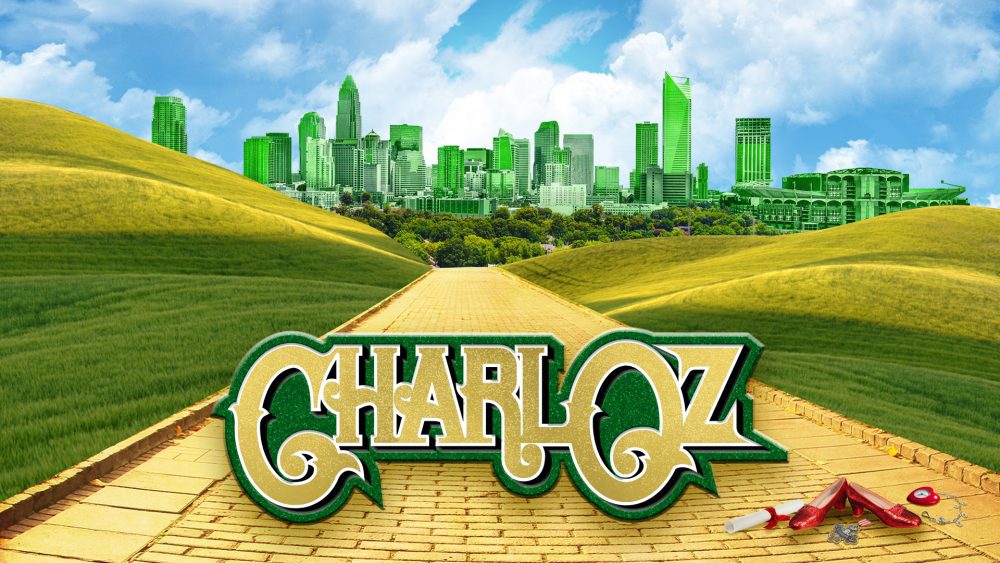
On September 26-29, 2024, the city of Charlotte, North Carolina; the University of North Carolina at Charlotte; and other local and national organizations will host CharlOz, a stretching over four days to explore the Oz mythos and its cultural legacy.

I’ll be there, speaking at two events on the schedule for Friday, 27 September:
  • a panel discussion of the new essay collection The Characters of Oz, featuring editor Dina Massachi and fellow contributors Mark West, Katharine Kittredge, Walter Squire, Paige Gray, Angelica Shirley Carpenter, and Gita Dorothy Morena.
  • a talk later that afternoon titled “‘My! what a lot of Kings and Queens!’: The Meanings of Monarchy in L. Frank Baum’s Fantasies.”
The schedule of CharlOz events includes many other speakers and presentations, including:
  • an opening keynote speech by novelist Gregory Maguire.
  • presentations by comics artists Eric Shanower and Janet R. Lee, puppeteer and director James Ortiz, and film restorer Nate Barlow.
  • talks by scholars Ryan Bunch, Angelica Shirley Carpenter, Atticus Gannaway, Judy Bieber, Anastasia Rose Hyden, Brady Schwind, Paige Gray, Katharine Kittredge, and many more.
  • a Saturday full of family programming.
  • theatrical, cinematic, and gallery interpretations of Oz.
The International Wizard of Oz Club will also have its national convention in Charlotte coinciding with this festival.

16 March 2024

“Historic Children’s Voices” Coming from American Antiquarian Society

The American Antiquarian Society in Worcester will launch a website on “Historic Children’s Voices, 1799-1899.”

Its introductory page explains: “The holdings to be digitized are not children’s literature, i.e., works created BY adults FOR children, but rather are direct testimony as well as imaginative works created BY children. As such, they constitute an archive of historical evidence not previously accessible.”

The materials to be digitized include diaries, letters, stories, poems, and the AAS’s “large amateur newspaper collection—most printed on home parlor presses.” There will be 15,000 pages of content in all.

Those presses were very popular in the late 1800s. When L. Frank Baum issued the Rose Lawn Home Journal and later self-published works on stamp collecting and chicken farming, he was among thousands of young people working their own small presses.

Accompanying the website, the AAS will host an in-person and online symposium on 2–3 May featuring panel discussions on “Authentic Children’s Voices,” “Archival Silences,” “Visual Culture of Children’s Production,” and “Hearing the Child’s Voice.”

On 5–9 August, the AAS will host an institute for K-12 teachers on the subject, with hands-on workshops using the collection and a field trip to Lowell National Historical Park.

18 July 2023

Call for Presentations at the CharlOz Festival

On September 27-29, 2024, the city of Charlotte, North Carolina; the University of North Carolina at Charlotte; and other organizations, local and national, will host CharlOz, a three-day festival exploring The Wonderful World of Oz and its cultural legacy.

The event is now open to proposals for presentations on almost any aspect of Oz, particularly:
  • History and Culture: Oz’s reflection of American history and/or culture
  • Social and Economic: Aspects of Oz relating to race, class, disability, or childhood
  • Visual and Performing Arts: Analysis of the visual or performing arts as they relate to Oz
  • Literary Arts: Authors and/or illustrators who have adapted Oz, and how those adaptations fit into the larger framework Oz provides
  • Gender Studies: Oz themes that examine gender roles/norms/traditions and sexualities, including LGBTQIA+ Oz portrayals of education, love, herosim, self-reliance, and teamwork
  • Technology: Application of non-traditional technologies that include podcasts, games, making, or other examinations of how varied technology transforms Oz themes
  • Mass-Marketing: Presentations of how a creator’s mass-marketed Oz work fits within the larger Oz world
Presentations can take the form of individual talks, group talks, workshops, roundtables, or panels.

The guidelines for submitting a 250-word proposal are on this page. The submission deadline is November 17, 2023. The organizing committee will respond to submitters by the end of January.

11 July 2023

Contents of The Characters of Oz

Last week I introduced The Characters of Oz, a collection of essays that I contributed to, edited by Dina Schiff Massachi.

Since I don’t yet see this information on the web in a form easy to search out, I’m sharing the contents of this book.
  • Introduction — Dina Schiff Massachi
  • Dorothy and the Heroine’s Quest — Mark I. West
  • But First, There Was a Scarecrow... — Katharine Kittredge
  • Heart Over Head: Evolving Views on Male Emotional Intelligence and the Tin Woodman — Dina Schiff Massachi
  • The Proto-Sissy, the Sissy, and Macho Men: The Cowardly Lion in The Wonderful Wizard of Oz, the MGM The Wizard of Oz, and Dark Oz Stories — Dee Michel and James Satter
  • A Good Man but a Bad Wizard? The Shifting Moral Character of the Wizard of Oz — J. L. Bell
  • Witches, Wicked and Otherwise — Robert B. Luehrs
  • Witch's Familiars or Winged Warriors? Liberating the Winged Monkeys — Dina Schiff Massachi
  • Glinda and Gender Performativity — Walter Squire
  • Ozma, Sorceresses, and Suffrage: Women, Power, and Politics in L. Frank Baum's Land of Oz — Mary Lenard
  • A Living Thing: The Very American Invention of Jack Pumpkinhead — Paige Gray
  • Trading Knitting Needles for Pistols: The Feminist, Violent, and Sexual Evolution of General Jinjur — Shannon Murphy
  • The Nome King — Angelica Shirley Carpenter
  • Piecing Together the Patchwork Girl of Oz — Gita Dorothy Morena
  • Afterword: Frank and His Imagination — Robert Baum
  • Bibliography: Further Oz Readings, Fiction and Nonfiction — Dina Schiff Massachi
In other (surprising) news about this book, it’s been printed, and McFarland is taking orders.

26 March 2020

“Literary texts might be doubly infectious”

I just learned about this book, but I had a tag all set up for it already.

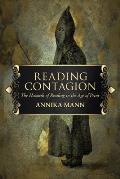
Reading Contagion: The Hazards of Reading in the Age of Print, by Annika Mann:
Eighteenth-century British culture was transfixed by the threat of contagion, believing that everyday elements of the surrounding world could transmit deadly maladies from one body to the next. Physicians and medical writers warned of noxious matter circulating through air, bodily fluids, paper, and other materials, while philosophers worried that agitating passions could spread via certain kinds of writing and expression. Eighteenth-century poets and novelists thus had to grapple with the disturbing idea that literary texts might be doubly infectious, communicating dangerous passions and matter both in and on their contaminated pages.

In Reading Contagion, Annika Mann argues that the fear of infected books energized aesthetic and political debates about the power of reading, which could alter individual and social bodies by connecting people of all sorts in dangerous ways through print. Daniel Defoe, Alexander Pope, Tobias Smollett, William Blake, and Mary Shelley ruminate on the potential of textual objects to absorb and transmit contagions with a combination of excitement and dread. This book vividly documents this cultural anxiety while explaining how writers at once reveled in the possibility that reading could transform the world while fearing its ability to infect and destroy.
This eighteenth-century worry seems to have resurfaced now that we’re are hunkering down with reading material and mail-order packages while word goes around that those same packages might carry the virus we’re hunkering down to avoid.

However, as science journalist Zeynep Tufekci tweeted: “Future generations will be driven batty by the amount of concern over contamination from cardboard boxes—a tail risk: porous surface, exponential decay—compared with protecting the pathways to OUR RESPIRATORY SYSTEM WITH MASKS FOR A RESPIRATORY ILLNESS WITH ASYMPTOMATIC SPREAD.”

13 December 2017

Happy Holidays from Highlights

This week H-Net’s American Studies discussion site published Patrick Cox’s article “What's Wrong with Christmas in Highlights for Children?” While certainly not saying this was a Bad Thing, Cox noted a significant change in how the magazine has presented Christmas to young readers:
Santa Claus, arguably the most prominent figure in wondrous childhood, has been almost entirely absent from the pages of Highlights over the past 30 years. Santa used to appear multiple times in every December issue in stories and images, as did elves and flying reindeer, since the magazine was founded in 1946. Other Christmas-y pages in December Highlights issues of Chistmases past included short non-fiction pieces on, for example, the history of Christmas trees or Christmas celebrations in other countries, and short fiction about children at Christmas who typically learn valuable lessons about giving and kindness. Recurring characters The Timbertoes and The Bear Family celebrated christmas. Overt Christianity was also prominent in the early years of the magazine all year round and the December issues always included bible stories, sheet music of religious carols, and images of the nativity and angels.

Jesus and Santa both appear less and less frequently in Highlights beginning in the 1950’s. By the 1990’s, Highlights is beginning to look a lot less like Christmas. Santa and Jesus are both almost completely absent, as are the decorations, the bright colors, the piles of gift wrapped presents. They’re replaced by pleas to keep Christmas simple, emphasizing time with family and friends, giving to charities, and making presents by hand. Several pages are given to instructions on making homemade presents and homemade decorations. . . .

The children in Highlights are very often white, as I suspect most of their readers are, and main characters in stories and comics in the magazine are most often male, never queer, and pretty much always comfortably middle class. But at Christmas, their anti-consumerist pragmatism is surprisingly non-conformist.
But what should we expect from a magazine so un-American that it includes no advertising?

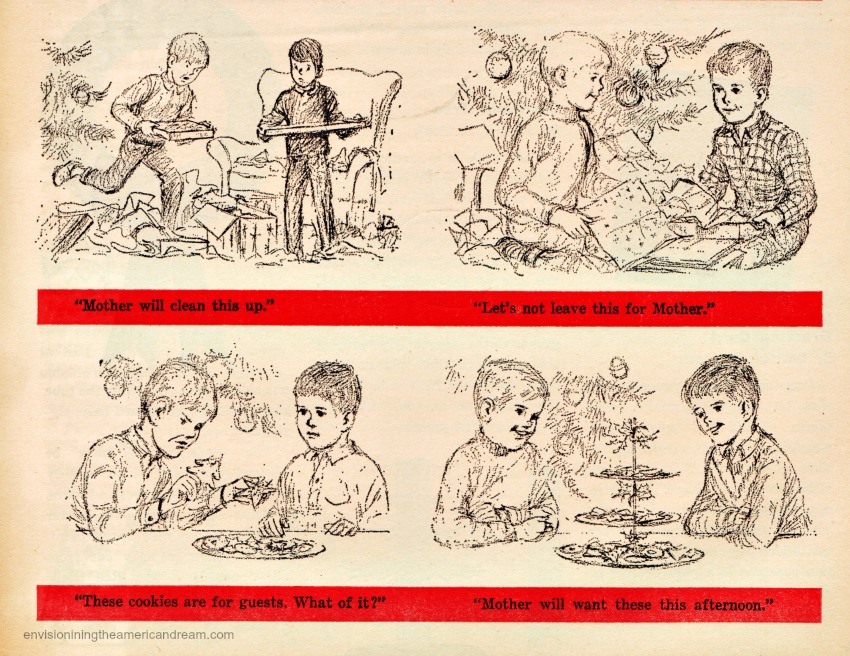
(Above: Goofus and Gallant do Christmas, courtesy of Envisioning the American Dream.)

15 July 2017

Work with Children and Animals

This call for papers came up on the H-Childhood email list:

Child-Animal Relationships in Comics: Historical and Transcultural Perspectives

Many of the most well-known comics protagonists have pets or animal friends, loyal sidekicks in their daily lives and adventures: Charlie Brown has Snoopy, his independent, precocious dog, Calvin has Hobbes, a stuffed tiger acquiring life through the boy’s imagination, Beano’s Dennis the Menace eventually acquired an equally destructive canine companion called Gnasher, Tintin (successfully eluding the adult-child distinction, but remaining in many ways a child with a degree of agency accorded only to adults) has Snowy.

Already the Yellow Kid was accompanied by several stray dogs, cats and other animals, who accentuated the action and the humor. Decades later, the importance of animal sidekicks persist, as exemplified by the series devoted to Spirou’s fantastic, semi-domestic Marsupilami. That these children and their animal friends combine characteristics of both adults and children not only accounts for their appeal to a broad audience but also highlights the complexity underlying these characters in spite of their flattened, polyvalent essence. Thus, for Umberto Eco, “Schulz’s children create a little universe in which our tragedy and our comedy are performed” and “Snoopy carries to the last metaphysical frontier the neurotic failure to adjust”.

Even though child-animal relationships have been a staple of comics production, they remain overlooked by comics scholarship, which is only tentatively broaching the study of children and comics, as exemplified by recent publications (Abate and Sanders; Gordon; Heimermann and Tullis). In expanding on existing scholarship and combining it with studies on picture books and comics as well as animals in comics (Groensteen; Hatfield; Hatfield and Svonkin; Sanders), this anthology seeks to build stronger bridges between the fields of comics studies, childhood studies and animal studies in order to take a first step towards a more profound and holistic understanding of the roles and relationships of animals and children in comics. It is particularly interested in historical studies (from the mid-nineteenth century onwards) and transcultural comparisons of child-animal relationships in comics that engage with one or more of the following aspects:
  • extent of questioning or reproduction of conceptualizations of childhood and childishness
  • relationship to adults and adulthood
  • degree of agency accorded to both children and animals
  • role of eccentricity for both child and animal characters as well as the supporting cast
  • othering and interaction with others
  • representations and roles of family life
  • portrayal and presence of schools and other civil and social institutions
Please send abstracts of 500 words (for a 7000 word contribution) to Maaheen Ahmed by 31 August 2017. Accepted contributions are due by 31 January 2018.

The volume will be published in late 2018 by the University Press of Liège as part of the ACME series on comics studies.
03 December 2015

A Clanging Cymbal in Oklahoma

Everett Piper, President of Oklahoma Wesleyan University, has been getting a lot of attention recently for his blog posting, “This Is Not a Day Care; It’s a University.” He wrote:
I actually had a student come forward after a university chapel service and complain because he felt “victimized” by a sermon on the topic of 1 Corinthians 13. It appears that this young scholar felt offended because a homily on love made him feel bad for not showing love. In his mind, the speaker was wrong for making him, and his peers, feel uncomfortable.
It’s worth looking at what that sermon was about. This is a standard translation of what that chapter in 1 Corinthians says about love:
Though I speak with the tongues of men and of angels, but have not love, I have become sounding brass or a clanging cymbal. And though I have the gift of prophecy, and understand all mysteries and all knowledge, and though I have all faith, so that I could remove mountains, but have not love, I am nothing. And though I bestow all my goods to feed the poor, and though I give my body to be burned, but have not love, it profits me nothing.

Love suffers long and is kind; love does not envy; love does not parade itself, is not puffed up; does not behave rudely, does not seek its own, is not provoked, thinks no evil; does not rejoice in iniquity, but rejoices in the truth; bears all things, believes all things, hopes all things, endures all things.
It’s also useful to consider what sort of place Oklahoma Wesleyan University is. It’s an “evangelical Christian university” formed in 2001 from the mergers of several smaller Christian colleges that had been around since 1909. It serves about 900 students. Its principles include the Bible as “the inerrant and authoritative written Word of God.”

None of that could have been a surprise to the student Piper spoke to. In other words, a student at a very conservative religious college objected to how this sermon asked that he and his fellow students show more love. It’s not clear what sort of compassion this student felt pressured into, but humans are usually slowest to show love for people who are distant or different from us.

How did Piper interpret that in his blog post? He wrote:
Our culture has actually taught our kids to be this self-absorbed and narcissistic. Any time their feelings are hurt, they are the victims. Anyone who dares challenge them and, thus, makes them “feel bad” about themselves, is a “hater,” a “bigot,” an “oppressor,” and a “victimizer.”
Whoa! That took a sudden turn. Piper twisted from one conservative Christian student complaining that he shouldn’t have to show love to suggesting that other young students complaining about bigots and oppressors are simply “self-absorbed and narcissistic.” Piper rolled straight over the very real possibility that there are bigots and oppressors who try to bully others—especially those who seem distant or different from themselves—into feeling bad.

Are there such people at Oklahoma Wesleyan University? Let's start with Piper. In August, he announced that he was withdrawing the university from the Council for Christian Colleges and Universities because two other colleges in that organization had decided to hire same-sex couples. So when Piper talks about “showing love,” he has strict limits in mind.

11 November 2015

Appropriate and Appropriation

Smart analysis from Timothy Burke, history professor at Swarthmore College:

What’s being called appropriation in some of the current activist discourses is how culture works. It’s the engine of cultural history, it’s the driver of human creativity. No culture is a natural, bounded, intrinsic and unchanging thing. A strong prohibition against appropriation is death to every ideal of human community except for a rigidly purified and exclusionary vision of identity and membership.

Even a weak prohibition against appropriation risks constant misapplication and misunderstanding by people who are trying to systematically apply the concept as polite dogma. To see one example of that, look to the New York Times article, which describes at one point a University of Washington advice video that counsels people to avoid wearing a karate costume unless you’re part of the real culture of karate. But karate as an institutional culture of art and sport is already thoroughly appropriated from its origins in Okinawa, and it was in turn an appropriation of sorts from Chinese martial arts–and no martial arts form in the world today is anything even remotely like its antecedents in practice, form or purpose. Trying to forbid karate costuming to anyone but a truly authentic “owner” of the costume is a tragic misunderstanding of the history of the thing being regulated. It’s also a gesture that almost certainly forbids the wearing of a costume that has a referent that is not wholly imaginary. If a karate outfit is appropriation for anyone but a genuine Okinawan with a black belt, then so also are firefighters, police, soldiers, nurses, doctors, astronauts and so on. Even imaginary characters are usually appropriations of some kind of another, drawn out of history and memory.

It is precisely these kinds of discourses about appropriation that are used by reactionaries to protest Idris Elba being cast as Heimdall, or to assert that a tradition of a particular character or cultural type being white or male or straight means it must always be so. It might be possible to configure a critique so that appropriation from below is always ok and appropriation from above is never ok, but that kind of categorical distinction itself rests on the illusion of power being rigid, binary and fixed rather than fluid, performative and situational.

What I think many activists mean to forbid is not appropriation but disrespect, not borrowing but hostile mockery. The use of costumes as weapons, as tools of discrimination. But it’s important to say precisely that and no more, and not let the word appropriation stand in for a much more specific situational critique of specific acts of harmful expression and representation. “Appropriation” is being used essentially to anticipate, to draw a comprehensive line proactively in order to avoid having to sort out with painful specificity which costumes and parties are offensive and which are not after the fact of their expression.
I’ve been trying to remember Halloween costumes from my years at Yale. I don’t remember the types of costume that the administration felt compelled to warn students against this year. In fact, I have a hard time imagining anyone in that period thinking variations on blackface would ever be appropriate—and I do remember clear moments of racism and other bigotry. But maybe I just didn’t go to those parties.

01 November 2015

A Robin Reader

Dick Grayson, Boy Wonder is a collection of serious essays about the sensational character find of 1940, published on the occasion of his 75th anniversary.

The book’s editor is Kristen L. Geaman, a medievalist, and many of the other contributors are also academics. Most don’t specialize in comic books or popular culture but are long-time fans of Dick Grayson in his various roles in the DC Universe. They combine rigorous scholarship with affection for the character. And one of those contributors is me.

In fact, my essay is the first in the book because I volunteered to cover the first thirty years of Dick Grayson stories, from his debut in 1940 to his departure for college in late 1969. I discuss the storytelling advantages of a sidekick, the emotional depth that Dick brought to the Batman saga, and Dr. Fredric Wertham’s complaints about the Dynamic Duo’s relationship.

On both Amazon and Barnes & Noble’s website, it’s possible to read a good chunk of my essay through the preview feature. Check it out and see if you want a copy of the whole book in print or digital form.

(Dick Grayson, Boy Wonder doesn’t contain any illustrations from the comics, and it wasn’t authorized by DC Comics—hence the non-trademark-conforming costume on the cover.)

29 October 2014

“Wonderlands” Conference and Call for Papers

The University of Chichester’s Sussex Centre for Folklore, Fairy Tales and Fantasy is hosting a symposium on “Wonderlands: Reading/ Writing/ Telling Fairy Tales and Fantasy” on 23 May 2015.

The event is “Timed to coincide with the 150th anniversary of Alice’s Adventures in Wonderland, this event is primarily aimed at postgraduate students and early career researchers, although other scholars and the general public will be welcome.”

The call for papers says:
We are seeking papers which explore all aspects of reading, writing, and telling fairy tales and fantasy. In particular, we invite discussion of wonder lands in fantastical literature, classic and modern fairy tales, and contemporary oral storytelling.

Possible topics of focus include, but are not limited to:
  • Other worlds, otherworldliness, Wonderland, and wonder lands
  • Relationships between reading, writing, and/or telling fantasy
  • Contemporary scholarship in children’s and adult’s fantasy literature
  • Storytelling as a vehicle for the fantastic
  • Practice and performance of fairy tales
  • Fantastical non-fiction
  • Relationships between real and imagined wonder lands
  • Meta-textual conversations with classic fantasy literature
  • Imagining the fantastical world through illustrations and picture books
We also welcome paper submissions or panel presentations which include a creative or performative element.

Please submit abstracts of no more than 300 words (or panel proposals of 1,000 words) and a short personal bio to the organisers, Joanna Coleman, Joanne Blake Cave, and Rose Williamson at wonderlands.symposium@gmail.com. The deadline for submission will be 31st January 2015.
The keynote lecturer will be Oxford professor Diane Purkiss, who has also co-written as Tobias Druitt. As a promise or threat, the announcement ends, “The day will close with a series of performances from professional storytellers which engage with the theme of wonder lands.”

(h/t to Karen Graham at Telling Tales)

09 October 2014

Journey into the Footnotes

I’ve been musing about comics and history here and on Boston 1775, but didn’t realize until now that I’ve already been cited in the literature.

Bridget M. Marshall quoted a sentence I wrote about George O’Connor’s excellent first graphic volume in her essay “Comics as Primary Sources: The Case of Journey Into Mohawk Country.”

That was published in Comic Books and American Cultural History: An Anthology, edited by Matthew Pustz in 2012. Looking at the contents, I realize I must get my hands on a copy.

07 October 2014

A Call for Papers on Maps in Children’s Books

I recently saw this call for papers on “Maps and Mapping in Children's Literature”:
Literature for children and young adults is a rich source of material for the study of literary maps, one that has been largely overlooked, despite the growth in academic interest in this area of study. We are therefore seeking contributions for a proposed collection on maps in children’s literature that will bring together the best current thinking on the topic, which will become a resource for scholars, and provide a springboard for further study in this area, particularly in terms of interdisciplinary and international discourses.

Possible areas for consideration include, but are not limited to:
  • The interplay of literary maps and texts
  • The historical and aesthetic development of maps and mapping in children’s literature
  • The impact of genre and form on maps (for example in works of fantasy and picturebooks)
  • The cultural, ideological, pedagogical, metaphorical, cognitive, narrative and imaginative function of maps in children’s literature
  • Differences in form and function between literary maps in children’s literature and those found in adult literature
  • The shifting iconography of literary maps
  • Issues of representation in maps and mapping
  • The use of maps in works of non-fiction for children
  • The role of maps and mapping in constructions of children’s spatial, personal (including gendered), regional, international and global identities.
  • The poetics and politics of maps and mapping in writing for children
Contributions might cover a range of maps from different sources or times, or focus on maps in a single series. We are particularly keen to enlarge the discussion beyond English language texts and maps, and so we welcome contributions that discuss literary maps and mapping in children’s books from non-Anglophone countries.

Please send a 250-300 word abstract as a Word attachment outlining your proposed content, brief biographical information, and a preliminary bibliography to both editors: Dr. Hazel Sheeky Bird and Dr. Anthony Pavlik. E-mails should have the subject line “literary maps”. Questions regarding proposals can also be directed to the editors prior to submission and abstracts should be sent no later than November 21st, 2014.

Full articles of no more than 6,000 words will be required no later than September 25th 2015.

Acceptance of abstracts will not guarantee inclusion in the final collection. All contributions will be peer reviewed, and responsibility for obtaining copyright permissions lies with the contributor.

22 March 2014

Dummy Type

Book designers, especially those packaging books that haven’t been written yet, often use “dummy type” to show how words will look on the page. Back when I was in publishing, American designers tended to use English text, but British designers used a passage that began:

Lorem ipsum dolor sit amet, consectetur adipiscing elit. Nam hendrerit nisi sed sollicitudin pellentesque. Nunc posuere purus rhoncus pulvinar aliquam. Ut aliquet tristique nisl vitae volutpat. Nulla aliquet porttitor venenatis.
I remember my first department head saying how when she’d started in the business she’d always been impressed by design samples from Britain because they looked so classy.

But it turns out that this isn’t real Latin—it’s a jumble of Latin-like words and phrases reminiscent of Cicero and established in the 1600s. The London Review of Books just published a Cambridge graduate student’s translation of the whole paragraph, designed to recreate the feeling of reading the original as if it were meaningful. It begins:
Rrow itself, let it be sorrow; let him love it; let him pursue it, ishing for its acquisitiendum. Because he will ab hold, uniess but through concer, and also of those who resist. Now a pure snore disturbeded sum dust. He ejjnoyes, in order that somewon, also with a severe one, unless of life. May a cusstums offficer somewon nothing of a poison-filled.
Equally enjoyable, the British scholar who produced that prose is named Jaspreet Singh Boparai, showing how bad Latin and bad English both became worldwide languages.

04 March 2014

Disability Studies and the Wizard of Oz

The Sentinel of Shippensburg, Pennsylvania, reports that Joshua R. Eyler, director of the Center for Teaching Excellence at Rice University, will deliver a presentation on “If I Only Had a Brain: Disability and Difference in the Oz Narratives,” on Thursday, 6 March, at Shippensburg University.

The paper explains:
Eyler’s talk will examine Baum’s fiction about the land of Oz and the literary and cinematic legacies of this Oz mythology, using the lens of disability studies. Although disability is not the first thing that comes to mind when reading the Oz narratives, disability unquestionably and powerfully appears as a thematic current running throughout the tradition. The talk will explore how each text within the tradition picks up the theme anew to construct its own particular meaning.
Eyler has been working on this topic since at least 2007, when he and colleague Gretchen Nevins presented a talk at Columbus State University titled “Figuring Disability in L. Frank Baum’s The Wonderful Wizard of Oz.” Last fall the Children’s Literature Association Quarterly published Eyler’s article “Disability and Prosthesis in L. Frank Baum’s The Wonderful Wizard of Oz.” He’s stated that reading about characters searching for a brain, a heart, and courage can “help the story’s young readers learn difficult lessons about empathy” and that “the book works very well as a way to introduce many ideas about disability and society to young readers.“

Eyler’s talk will begin at 7:00 in the Old Main Chapel at Shippensburg University. It’s free and open to the public.

23 January 2014

Historical Fiction from Ancient History?

At the Oxford University Press blog, Yale professor Colleen Manassa suggests that ancient Egypt’s New Kingdom (1550-1070 BCE) saw the birth of historical fiction:
During the New Kingdom, particularly the Nineteenth and Twentieth Dynasties, the “Ramesside Period,” another literary efflorescence occurred. Among the genres of this new corpus of literary productions are stories that can be most properly described as works of “historical fiction.” Set in the past with attested historical characters, these works of historical fiction are an ancient Egyptian counterpart, albeit ultimately unrelated, to the mammoth corpus of modern historical fiction from Sir Walter Scott, Patrick O’Brien, and George McDonald Frasier to Ken Follett and Philippa Gregory. . . .

The second story, known by its modern title The Capture of Joppa, opens with an Egyptian army besieging ancient Joppa, located near modern Jaffa. The beginning of the story is lost, but the preserved portion describes a group of drunken individuals and chariot horses being safely put away lest they be stolen by the Apiru, a group of local brigands. The Egyptian general Djehuty — another attested historical individual — is holding a conference with the enemy rebel of Joppa, apparently in a neutral space outside of the city walls. The enemy ruler of Joppa, who remains unnamed, is obsessed with seeing the staff of pharaoh, and in a moment of slap-stick humor, Djehuty obliges by smiting the ruler with the staff.

With the ruler of Joppa incapacitated, but not dead, Djehuty puts into motion one of the first attested ruses in ancient military history: he pretends to surrender to the city of Joppa, presenting hundreds of baskets as the “tribute” of his capitulation. Unknown to the citizens of Joppa, Egyptian soldiers are hidden within the baskets, and they promptly capture the city in what can only be described as a Trojan-horse style story. While the basket stratagem is in the realm of fiction, the setting of the story, Joppa, and its protagonist, Djehuty, are known through archaeological and textual sources — The Capture of Joppa truly is one of the world’s first examples of historical fiction.
One of the hallmarks of historical fiction, I believe, is that both authors and readers understand that it’s fiction. Even something as carefully researched to accord with documented events as Hilary Mantel’s Wolf Hall is nonetheless presented as one author’s imagined recreation of the past, not as how people actually thought and events definitely occurred. How did the Egyptians of the New Kingdom understand these tales about figures and events they knew from their history? Did they consider The Capture of Joppa as an entertaining legend or as history?

Another hallmark of historical fiction for me is the determined effort to depict the past as different from the present. That makes it a different mode of storytelling from realistic contemporary fiction, more akin to fantastika in the challenge of smoothly introducing readers to an unfamiliar setting. Again, does that criterion apply to The Capture of Joppa and Manassa’s other examples of ancient historical fiction? Did Egyptians enjoying the story of Djehuty also hear clues that his world was not like theirs?

18 December 2013

Wizard of Oz Movie Conference in Brighton, 21-22 Nov 2014

On 21-22 Nov 2014 the University of Brighton in Britain is hosting a conference on The Wizard of Oz and the Western Cultural Imagination.” It’s aimed at “celebrating and interrogating 75 years of the MGM Musical.”

Here’s the call for proposals:
The Wizard of Oz has received sustained interest from audiences, sparking numerous spinoff films (Return to Oz; Oz: The Great and Powerful, Yellowbrickroad), musicals (Wicked; The Wiz), and TV Programmes and documentaries (The Tin Man; The Secret of Oz). Baum’s original tale has been reanimated and illustrated numerous times (most recently by Graham Rawle) and the book and film has inspired and featured in pop music albums by the likes of Elton John (Yellow Brick Road) and Robbie Williams (Swings Both Ways). The music to MGM’s Wizard of Oz also contributed to the public responses to the death of Margaret Thatcher in 2013.

Despite being firmly embedded in the Western cultural imagination, the legacy of The Wizard of Oz has received rather sparse critical reception. Taking place in the same month that saw the release of the film in the UK, this conference seeks to fill this void and explore the film and its legacy through a series of innovative presentations that explores ideas such as:
  • The Wizard of Oz within American and UK television programming;
  • young women’s agency;
  • representations of twisters, tornados, and hurricanes;
  • Technicolor and the emergence of colour film;
  • the Hollywood musical;
  • stardom and fandom;
  • intermedial history and the story’s migration to other media;
  • paratexts, advertising and memorabilia;
  • music, magic, witches and myth;
  • representations of the American rural landscape and the Depression;
  • gender and sexuality;
  • the Wizard of Oz and cultural capital;
  • carnivals, travelling shows, and fairgrounds;
  • costume and the iconography of shoes.
Proposals are welcomed from all academic disciplines and can take the form of a paper, performance, artwork or poster presentation. Innovative presentation formats are encouraged. The conference will include a fancy dress, sing-along screening of the film.
The conference organizers are Dr. Frank Gray and Dr. Louise Fitzgerald of the University of Brighton and Dr. Kieran Fenby-Hulse of Bath Spa University. People interested in presenting papers 15-20 minutes long can send proposals consisting of a 300-word abstract to ozat75@gmail.com by 1 Mar 2014. The conference already has a web address and a Twitter account and hashtag of “ozat75.”

15 December 2013

How Do Comics Represent Kids? In Multisyllabic Words or Less

The 2012 issue of The Journal of Graphic Novels and Comics focused on comics, picture books, and childhood. Now there’s a call for proposals for an anthology on the “Representations of Childhood in Comics”:
Childhood is now widely recognized as a social construct (Fass, Jenks, Mintz). As the artifice behind the construction of childhood has been revealed, there has been a marked increase in the analysis of children and childhood in contemporary culture (Demarr and Bakermann, Edelman, Latham, McLennan, Renner, Stockton).

Despite the increase in scholarly attention, depictions of childhood in comics and other forms of comic art are ripe for further study. . . . This is an especially interesting area of inquiry given the somewhat vexed association comic books have traditionally maintained with childhood.

In an attempt to continue developing the scholarly focus on childhood, as well as comics, we seek proposals for scholarly articles that analyze, explore and interrogate depictions of childhood in comics or comic art for inclusion in a book-length anthology. We welcome all proposals, although, based on responses so far, we are particularly interested in more submissions regarding depictions of childhood in comics aimed at adults.
The editors’ potential topics include:
  • What do comics teach us about current constructions of childhood?
  • How do comics resist or undermine contemporary constructions of childhood?
  • How can comics help us better understand the role of children in a given societal context?
  • How do comics shed light on the relationship between children and adults? Between adults and their own childhood?
  • How can depictions of childhood be understood as metaphors for specific cultural phenomena, values, disruptions or evolutions?
  • What anxieties regarding culture, politics, education, etc. do comics reveal?
  • How have ideas regarding childhood affected comics?
Proposals should consist of an abstract of 300 words and a short curriculum vitae. Send them to Mark Heimermann, University of Wisconsin-Milwaukee, and Brittany Tullis, St. Ambrose University, at heimermanntullis@gmail.com by 1 Jan 2014. Full papers will be due by 1 June 2014.

13 October 2013

A Festschrift for Dick Grayson?

Soon after I started the weekly Robin, I realized that the 75th anniversary of the introduction of Dick Grayson/Robin was going to arrive in 2015. Of course, sometime when I was a lad I realized that I’d be around for the 500th anniversary of Columbus’s arrival in America, and that turned out to be a bust.

DC Comics and its fans like anniversaries of all sorts: notable years (60th!), notable issues (#500!), and even some milestones notable only to insiders (the upcoming Detective Comics, vol. 2, #27, will be special because Detective Comics, vol. 1, #27, introduced Batman, don’t you know?).

So the company probably has something planned, but will it reflect all that the character represents? I doubt it, especially since two years ago the company decided to erase from its current continuity most of the history that made Dick Grayson notable.

This weekend the medievalist behind Thoughts About Dick Grayson proposed a collective celebration in some form, perhaps including scholarly essays. There’s a tradition of that with Batman, including semi-authorized collections Batman Unauthorized, edited by Dennis O’Neil; Batman and Psychology; and Batman and Philosophy. Surely those Caped Crusader anthologies need a brightly colored companion volume!

Mary Borsellino’s Boy and Girl Wonders: Robin in Cultural Context, published in digital form through Lulu, is the only book-length study of the Robin mythos that I know of. And its focus is rather narrow, growing out of Project Girl Wonder.

Self-publishing technology makes it possible for such a volume to reach fans. Indeed, such a volume might have to be created non-commercially. In 2010 Keith Dallas, author of The Flash Companion, wrote: “DC has significantly raised its licensing fee to the point where it's now cost prohibitive to produce material like this.” But would a scholarly book require the same official authorization as that TwoMorrows volume, full of pictures of DC’s trademark characters? On the other hand, would a scholarly publisher see enough green in Robin?

09 October 2013

Parity in Publishing?

On Wednesday, 16 October, the University of Connecticut in Storrs will host a panel on “Gendered Publishing: The State of the Profession for Women Writers and Illustrators of Children’s Literature.” The discussion starts at 6:30 in the Class of 1947 Room of the Homer Babbidge Library. Participants are:

  • Barbara McClintock, author/illustrator
  • Gene Kannenberg, Jr., director of ComicsResearch.org
  • Lisa Rowe Fraustino, professor and department chair of English at Eastern Connecticut State University (ECSU)
  • Susannah Richards, associate professor of Education at ECSU and member of the 2013 Newbery Award Committee
On that recurring topic, last month The Horn Book published Martha Parravano’s essay “It’s Always Men’s Night at the Caldecott.” Since we live in the Most Overstated Era EVUH!, we can accept that Parravano’s “Always” actually referred to men winning the Caldecott Medal 63% of the time over seventy-five years. Over the last twenty years, male artists have been even more commonly rewarded: sixteen men and four women have won the Medal.

However, a commenter signing on as “Scope Notes” noted:
Total side note here, but an interesting thing I’ve found is that the Newbery has nearly identical numbers, but in reverse – 66% female to 34% male.
Over the past twenty years, fourteen women and six men have won the Newbery Medal—again, a growing disparity.

Of course, we should include a much harder factor to measure: how many men and women are writing or illustrating children’s books? Which gets us to another question: how many women and men are trying?

I started attending SCBWI conferences about twenty years ago, and immediately saw how women outnumbered men in the audience. In organizing those conferences, we always ask the host hotel to turn a men’s bathroom into a ladies’ room for the day. Yet the gender ratio of people on the podium—i.e., the authors and artists who have achieved recognition in the field—is usually closer to parity.

Adding to the complexity of the issue is how most parts of the children’s-literature chain—literary agencies, publishing departments, review journals, library staffs—are more female than male, though not as often at the top. And then there’s the question of who’s reading the most books.