Showing posts with label in MY day. Show all posts

22 December 2015

Slice of Life

At the Hungry Tiger Talk blog, David Maxine has written about the one-of-a-kind Oz-related item that was part of our first meeting, when we were teenagers. This is my side of the story.

Back in 1979, at the age of thirteen, I attended my first International Wizard of Oz Club convention. This was the Munchkin Convention, meaning it drew Oz fans from the eastern part of the United States. In the books, you see, the Munchkins live in the eastern part of Oz. (In most of the books. It’s a long story, which David summarized here.)

That year the Munchkin Convention was in Cherry Hill, New Jersey, a reasonably short car ride from my grandparents’ home in suburban Philadelphia. I’d already done some air travel by myself, so I felt confident flying down to visit Grandpa and Grandma.

I wasn’t so confident about meeting the Munchkin conventioneers. I was a shy kid, and I’d never been at that sort of gathering before, much less on my own. It turned out to be a milestone event because it was the first time adult strangers treated me as a peer. For that, I’ll always be grateful to the Oz Club.

There were other teenagers there as well, or at least one: Judy Bieber. But she intimidated me. I was thirteen, and she was (and remains) a couple of years older, which felt like an incredibly significant gap. She was also smart, pretty, and seemingly very much at home in Munchkinland. She created the quiz about the Oz books for that year. She and her father Herm were selling older Oz editions. She appeared to have everything.

To the surprise of the room, and the astonishment of myself, I won Judy’s quiz. The Oz books were the first field of knowledge I really tried to master, and my brain is good at retaining trivial information. And, though I didn’t know it at the time, previous winners were probably sitting out that event. The prize that Judy supplied was an abridged “Junior” edition of Rinkitink in Oz with some John R. Neill color plates. I’m sure that was the first time I’d ever seen one of those abridgments. It may have been the first time I ever knew about them.

By the end of that day, while I was waiting for my grandmother to pick me up, I was already worrying about my responsibilities for the following year. The winner of each year’s quiz had to write the next year’s quiz and supply the prize. I remember another attendee congratulating me on winning and asking if I was already thinking about new questions, and me replying that I was already thinking about the prize.

Making the quiz was fun. I decided to base it on Neill’s pictures and books, and I had fun laying it out. But for a prize? I didn’t have much money to spend, I didn’t know the range of possibilities, and I wasn’t linked into collectors’ networks. I also wasn’t good at asking for help (I’m still not). I wanted to solve this problem on my own—since I was acting as an adult, and all that.

So I decided to use my time in woodworking class to make a prize. A pair of O and Z bookends didn’t work out, but I grabbed a piece of mahogany and figured out a design for a cheese board that incorporated Neill’s OZ symbol in its handle. I didn’t do a great job with the carving, but it was a one-of-a-kind Oz-related trophy. And its real value was symbolic, right?

As David guessed, during the 1980 Munchkin Convention I decided to augment that cheese board with an edition of The Wizard of Oz autographed by Margaret Hamilton, who was there. So now I can also say that I had a brief conversation with her. Very brief.

The person who won my quiz was David Maxine, who had come from out west all the way to Cherry Hill. He was also a teenager. But, like Judy, he was (and is) a couple of years older than me. The difference is minuscule now—we’re all part of what I called the “white cover generation” of Oz fans. But back then David was also daunting.

Looking back, I realize that my thinking at thirteen was skewed by the universal adolescent assumption that every other teen is having more fun than you. To me David seemed like an old hand at Oz conventions and collecting and life. I should have perceived that this was his first time at the Munchkins, and he had no idea I was at just my second gathering. We had more in common than I realized.

If I’d known the winner of my quiz was going to be another teen, I probably wouldn’t have made a kitchen implement. If I’d had the boldness to befriend Judy the year before, I could probably have asked her and Herm to snatch up one of those abridged editions for the 1980 prize. But I couldn’t see any of those possibilities at the time.

I also couldn’t see that David and I would reconnect in something called “online” almost twenty years later. During some Ozzy conversation he mentioned that he still had the cheese board, which was both astonishing and gratifying. (As he’s pointed out, it’s compact and almost impossible to break.) And now that we’re both adults and have had online exchanges about such things as Swiss chard, a kitchen implement turns out to have been more appropriate than we knew. It’s come to symbolize a real-world friendship rooted in Oz.

18 November 2015

Big Nate in a Small Pond

One of the minor pleasures of visiting my dad in the Washington, DC, area is the Washington Post comics page. For some reason it’s unusually large. (Perhaps the Rev. Sun Myung Moon, founder and major owner of the rival Washington Times, didn’t like comics?)

Among the comic strips I enjoyed there, years before it came to the Boston Globe, is Big Nate by Lincoln Peirce. Given its quality and longevity, and its appeal to kids, I assumed that there were Big Nate collections like the bestselling collections of Peanuts, Garfield, and Calvin and Hobbes when I was young. But with fewer and fewer children reading newspapers, that ready market no longer existed.

Lincoln Peirce kept plugging away, the way daily-strip artists have to do. He also generously offered advice to a hopeful artist eight years younger. This Washington Post story from five years ago tells that story:
It was the early '90s, and [Jeff] Kinney was an aspiring cartoonist at the University of Maryland, as well as a big fan of the comic strip "Big Nate," which he read in The Post. Kinney wanted advice on how to break into the business, so he wrote several cartoonists, including Peirce, creator of the recently syndicated "Big Nate."

Up in New Hampshire, Peirce was struck by Kinney's outreach. "His letter was so different from other letters," Peirce recalls. "And not just because it was five to six pages long. Even early on, he was very talented and very ambitious."

Instead of eyeing him warily, Peirce did the professionally generous thing: "I wrote him back."

Kinney the college cartoonist was thrilled. "It was a handwritten letter, which included many drawings that provided guidance on how I could improve my prospects," he recounts.

For more than two years, mentor and student exchanged handwritten and hand-drawn insights into their craft.
Meanwhile, the world wide web grew, and the newspaper business shrank. It was not a good time to start a career as a daily newspaper cartoonist. Kinney ended up working as a designer for an online “edutainment” company.

TOMORROW: Returning the favor.

(Thanks to Karen Jordan Allen for the link.)

21 April 2014

The Marathon Tradition Endures

I live about three blocks from the route of the Boston Marathon as the race winds through Boston’s suburbs toward the Back Bay. For many years every Marathon Day looked much like the photo above, with families lining both sides of Commonwealth Avenue to watch, cheer, and pass out cups of water or other replenishment.

Naturally, the kids clapping and holding out water would edge into the road, and every half hour or so a motorcycle cop would roll slowly along the gutter, herding everyone back. Early in the race people would wait for a break in the runners and then dash across to visit friends on the other side, sometimes getting stranded until the field thinned out again. Some parties brought multiple lawn chairs, campers, and spreads of food, either to eat or to sell to other spectators.

But that was before last year’s bombs.

Three days ago, we found that the whole of the race route through town had been marked off with orange plastic delineators, or “candlesticks” as a cousin told me the professionals call them. On the side of the street away from driveways, a cord had already been threaded through those plastic stakes. Clearly the public-safety officials were planning to keep everyone off the road.

Meanwhile, race organizers issued several strict warnings about this year’s event. No unauthorized runners. No running in costume. No march along the route by service people. No backpacks, coolers, or thick blanket rolls. All understandable regulations, but I feared the Marathon I enjoyed would disappear.

I’m pleased to say that even with cords strung on both sides of the road and signs warning that all coolers, backpacks, and other bags were subject to search, the atmosphere is much the same. Kids were still edging out into the road, just not as far. People still dashed from one side to the other, just not as often. There were plenty of lawn chairs, coolers, and unrolled blankets, as well as plenty of security officers. And at least one runner in a tutu.

17 April 2014

Some People Just Can’t Lego

When The Lego Movie came out this spring, it prompted debate about its political implications. Kyle Smith at the New York Post offered a round-up of different interpretations, including:
The Economist noted that whatever its story might imply, “The film is also an hour-and-a-half-long commercial for costly toys made by a multinational corporation based in Denmark; a commercial, moreover, that people must pay to see.”

Almost alarmingly full of spectacle and movement, The Lego Movie offers us storytelling irony with sprinkles on top and let us eat it, too. It made fun of the clichés of “chosen one” plots, and it still showed the designated hero saving the day. It let us laugh at the notion of a made-up prophecy that must be true because it rhymes, and it let us believe wise words must be true because they come in the voice of Morgan Freeman. It offered a chance to laugh at cookie-cutter, feel-good pop culture, and it costarred Lego Batman.

The political “message” of the movie came in how its chief villain is Lord Business, who has also made himself President Business. Different critics emphasize different parts of his symbolic meaning, depending on how they feel about business or, at this historical moment, Presidents. In fact, he’s a plastic avatar of a suburban father who doesn’t have time to play with his son (though he does have time to play with his Legos). “Business” here has no economic or political import; it’s just what keeps Dad in the office.

The end of the movie assures us that it’s crucial to express yourself fully and flexibly, and spend time with your family, as long as you do that with lots of Legos. Lots and lots of Legos.

(I have to acknowledge here that I hardly ever played with Legos at home. We were a Tinkertoy family.)

14 April 2014

Reacting to “Kids React to…”

I grew up with dial telephones. The family of my best friend in first grade had a “princess” phone with a smaller dial in the handset, but that was as exotic as home phones got. Touchtone phones were confined to offices.

In fact, I grew up in a town that once had an exchange named “Woodland,” so a lot of the local numbers I dialed started 969- or 965-. I spent many seconds of my school years waiting for the dial to rotate almost the whole way back—and I’m never getting those seconds back.

Since dial telephones were already established when I was a kid, they seem indeterminably old to me. Yes, my mother had stories about something called a “party line,” which was clearly ancient, but I can easily accept dial telephones as historic.

I could therefore enjoy the “Kids React to Rotary Phones” video easily. Though these twenty-first-century kids are baffled by the old technology, they’re also smart and lively and often able to figure out the implications of that device once the video makers explain it to their incredulous ears.

The kids display those same qualities in “Kids React to Walkmans”, but there’s a sharper edge for me. Because I remember when the Walkman was new. And cool. And, like all widely used new technology, a cause for tsk-tsking social concerns. Yes, I understand that they’ve long been superseded by, well, phones. But they’re not really old, are they?

20 January 2014

Non-Fiction over Novels in Schools?

Natasha Vargas-Cooper’s essay “Why We Should Stop Teaching Novels to High School Students” at BookForum starts like this:
It wasn’t until my second reading of Hemingway’s The Sun Also Rises, over a decade after it first had been assigned to me by my public high school English teacher, that I understood that Jake’s dick didn’t work. The word “impotence” never shows up in the book, and in my teenage mind it didn’t pose a huge problem between him and Lady Brett. Couldn’t they just dry hump as everyone else in the tenth grade did? Abstract notions of emasculation—how that related to bullfighting, trench warfare, loss, diminution, dying—did not even occur to me.
That particular novel seems like an odd choice for high-schoolers, not just because of its sexual import but also because it’s about disillusioned adults approaching middle age. I know reading is supposed to broaden a person, but developmentally teens have their own concerns to deal with.

Vargas-Cooper’s solution for such disconnects is for high-school classes to teach more nonfiction. However, that nonfiction could be just as foreign to teenagers’ concerns.

In fact, I recall reading a wide range of literature in high-school English: not just novels and plays and some poetry but also John McPhee and Joan Didion and other essayists. I don’t know how my high school in the 1980s compares to Vargas-Cooper’s, but from what I read today, I’m more concerned that today’s English classes are all about writing the five-paragraph essay demanded by tests instead of either good fiction or nonfiction.

18 January 2014

Free to Be…You and Me in Retrospect

The H-Childhood list just published a review of When We Were Free to Be: Looking Back at a Children’s Classic and the Difference It Made, a scholarly anthology looking back on Free to Be…You and Me edited by Lori Rotskoff and Laura L. Lovett:
In their introduction to the collection, Rotskoff and Lovett note that “the landscape of childhood (now) harkens back to the sharply divided sex roles of the Leave It to Beaver era,” a shift that left them asking: “What happened to the ideals that inspired Free to Be ... You and Me?” (p. 2). It is this broad and deeply important question that motivates the book, a nostalgic look back that is firmly rooted in a thoughtful social and political analysis. They treat the original text “as an artifact that registered concerns unique to the moment that produced it, and as a cultural landmark that still generates new meanings today” (p. 3). Overall, the collection attends not only to questions of gender, which are of course central, but also to their intersections with questions of race, ethnicity, and to some extent sexuality. . . .

One of the many strengths of this collection comes from the great variety of vantage points from which the contributors reflect on and analyze this cultural phenomenon and its impact forty years later. Rotskoff and Lovett are historians, and the collection includes pieces by other academics: specialists in history, sociology, psychology, politics, gender studies, and cultural studies. Some contributors are celebrity artists and activists, like Free to Be’s creator Marlo Thomas herself, as well as Alan Alda and Gloria Steinem. They are joined by composers, producers, television and film writers, and performing artists of many stripes. Some contributors are leading journalists and bloggers who write about gender issues, family, media, and politics. . . .

Right from the outset, in their introduction, the editors explicitly welcome readers drawn to the title by their own personal memories of Free to Be, and the book is written and edited in a manner that will indeed welcome those readers. But there is also thoughtful, nuanced work of scholarship here. The essays engage Free to Be from a diverse array of perspectives, situate it in a clear and compelling historical context, and bring to bear satisfying cultural analysis and cultural criticism.
Free to Be…You and Me wasn’t one of my favorite books by any means, but it was certainly a touchstone of my childhood. I recall school chorus presentations based on it. In college I became friends with a girl who appeared in the accompanying movie.

In fact, growing up in a progressive family and suburb, it was hard to imagine anyone rejecting its affirmations. Even now I find myself considering issues of gender through the lens that Free to Be provided (which actually feels somewhat limiting when it comes to transgender issues).

09 December 2013

Stuck in the Past

As I described yesterday, in 1986 DC Comics published a two-part story about Titans member Starfire confronting the apartheid regime of South Africa.

At the time, the US and UK were debating economic sanctions on that country, meaning that people who’d have no qualms about seeing a superhero use violence against an oppressive imaginary government felt the need to write in about the political implications of this storyline.

Associate Editor Mike Gold published several letters praising and criticizing the issues, starting with an anonymous complaint in Teen Titans Spotlight, #5. A proud Chicago leftist, he tended to snap back at critics. The fact that publisher Jenette Kahn had enthusiastically approved the issues probably offered some reassurance.

One letter, for example, complained that the magazine hadn’t reported that the South African government had repealed its pass laws. Gold replied that that had happened after the magazines had gone to press, and that the letter-writer hadn’t reported the government’s harsh new emergency decree.

Teen Titans Spotlight, #6, printed six letters on the Starfire story, three from outside the US. Two writers asked that their addresses, and in one case name, not be printed. Two of the writers identified themselves as having spent some time growing up in South Africa or Rhodesia/Zimbabwe, and a third had spoken to a friend who had. Significantly, none identified himself as black or in contact with black Africans. Neither did any of those writers identify himself as white—their whiteness is obvious from their comments, and they treated that status as the unspoken norm.

The critics offered various concerns about the story, starting with a fourteen-year-old saying, “Just please focus on things that kids can identify with, because I really don’t think apartheid is one of them.” Many of those arguments were familiar in the period: that blacks in South Africa were better off than people in selected other African countries, that the “liberal-left” media ignored aspects of the conflict or would do so in an imagined future, that establishing democracy in South Africa would bring on “a bloody melee of warring tribal factions.” Those writers left out important facts, like the South African military activity in neighboring states or the apartheid government’s work to roil ethnic rivalries.

Most of the critics insisted that they personally opposed apartheid and racism. Larry J. King of Vermont stood out by calling the Starfire story “an almost totally untrue diatribe about the benign government of South Africa.” He asked, “Instead of picking on South Africa, why didn’t you have Starfire end up in one of the Communist countries and smash their corrupt form of government?” In reply Gold noted that many comics had used Communist regimes as villains.

(Three years later King turned in some names from the comics industry to The American Spectator’s “enemies list”: Alan Moore, Danny [sic] O’Neil, Frank Miller, and George Pérez. What had they done wrong? O’Neil “criticized mankind’s treatment of the environment”! Miller was “afraid that the religious right intends to censor his work”! Pérez was “a committed feminist”! What’s more, King complained, several people in the comics industry opposed homophobia. He appears to have been a boilerplate reactionary, in other words.)

Teen Titans Spotlight, #6, also ran a heartfelt letter from a Scottish teenager named David Stalker whose father had moved the family to South Africa in the early 1980s and then died in a mining accident. Stalker remembered his disdain for the poor black Africans he’d seen and the kindness of white South Africans to his family. He didn’t see the latter people reflected in Marv Wolfman’s story (in which all the whites are officials of the apartheid government, particularly security forces). But Stalker also acknowledged that he was coming to see more wrong with the apartheid system now that he was home in Scotland. Stalker went on to become an executive in the video game industry, indirectly responsible for bringing Grant Morrison into that field.

I didn’t read those Teen Titans Spotlight issues back in 1986; I was busy in college. Therefore, I first encountered them in the past decade, after the apartheid regime had been dismantled, the Cold War had ended, Mandela had served a term as President of South Africa and retired. Not only was the story now a historical artifact, but so were those right-wing responses to it.

Nevertheless, those doctrinaire Cold-War positions proved still to be alive this week after Mandela’s death. Some on the American right felt compelled to object to praise for him, even from their political allies. He was, they shouted, a “Communist”! A “terrorist”! An advocate of “anti-white racism”! It was as if those right-wingers were stuck back in 1986 with no knowledge of what has actually happened since.

When Teen Titans Spotlight, #2, was in stores, it was possible to imagine scenarios for South Africa that might justify continuing to do unfettered business with the apartheid regime. But we’ve run the experiment now. The sanctions put pressure on the National Party. Mandela was freed and took power in a democratic election. He advocated racial and sexual equality, reconciliation, and unity. He stepped down from power after one term. There has been no race war, no government takeover of the economy, no support for armed rebellion against other democracies. South Africa has become an economic and political anchor for its region. National Review Online writer Deroy Murdock had the class to say he’d been wrong about Mandela. If only more on the right could do the same.

10 October 2013

This Is Your First Time?

In the New York Times’s review of the New Yiddish Rep’s production of Waiting for Godot, I noticed that the Boy is being played by nine-year-old Nicholas Jenkins.

I know New York is a cosmopolitan melting-pot, but it still struck me that a lad named Nicholas Jenkins had probably not grown up hearing Yiddish.

In fact, the theater company has shared a video of “Nicholas Jenkins’ First Yiddish Lesson.”

And it turns out Nicholas and I have something in common. At an early age we both played a Flying Monkey in The Wizard of Oz.

03 October 2013

Daniel Pucca’s Mini, and Adolescent Memories

Yesterday I discussed Daniel Pucca’s mini-comic My Dutch Foreskin, focusing on the lettering. Because that’s the first thing you think of when you read that title, right?

Pucca was an American in a Dutch intermediate school when word came down that the health exam would require boys to roll back their foreskins. He didn’t know what that meant. (The comic establishes that at that moment Daniel was living with his grandmother, so he didn’t have anyone he felt comfortable asking.) When he found out, he thought something was terribly wrong with him.

Like Pucca, I was born in the period when almost all American boys were circumcised soon after birth. So was my father. I don’t think I saw an uncircumcised penis until I was in junior high, when gym class included showers with a single classmate, a newcomer from Australia, who still had a foreskin. He was thus in the opposite position from young Daniel in Holland. I didn’t know that fellow well, so I have no idea of how his experiences mirrored Daniel’s, but that memory helped me appreciate My Dutch Foreskin.

A few years further on, I recall another immigrant classmate—a nice guy from Russia—feeling acutely embarrassed on a high-school trip to Montreal when he had only a tiny European-style men’s bathing suit while the rest of us boys were in baggy American trunks. (Mind you, the baggy shorts of the 1980s were nothing compared to the voluminous fashions of more recent decades.)

I remember my immigrant classmate standing at the side of the Montreal Olympic pool in his snug swimsuit, asking if anyone had another suit to lend him. But of course we were all away from home, and in the pool besides. We kept telling him to just get in the water where none of the girls could see clearly. But of course the only cure for adolescent self-consciousness is time.

31 August 2013

I Was Expecting Someone Much Older, Too

I enjoyed Publishers Weekly’s roundup of publishing industry veterans’ memories of their early days on the job in days of electric typewriters, fax machines with rolls of shiny paper, mechanical paste-ups, smokers in the office, and even elevator operators.

Here’s a story from Howard Reeves of Abrams Books for Young Readers:
I calmly left the lobby, and ran to [editor] Martha Kaplan’s office. “I just asked Gloria Vanderbilt who she was,” I said.

Martha rolled her eyes and dropped her head in her hands.

“I was expecting someone much older.”

She lifted her head slightly. “Perfect.”

Martha came and fetched Ms. Vanderbilt. Before they disappeared down the hall, I heard Martha say, “Of course he knew you were coming, but he says he was expecting a much older woman.”

I swear Ms. Vanderbilt’s lips twitched ever so slightly.
Dinah Stevenson of Clarion Books:
Old-fashioned crafts like spinning and blacksmithing are being revived. I bet pre-separating artwork won’t be among them.
Ginee Seo of Chronicle Books:
I would sometimes curse the day I told any agent I liked fantasy because those manuscripts were always long, and carrying them plus other submissions for weekend reading made for an incredibly heavy haul.
But my enjoyment was tempered by seeing some of those veterans date their hoary tales to “back in the ’80s,” “in the mid 1980s,” and even “in 1992.” I myself started work in publishing in 1987 (a year earlier if you count a summer job). And I suppose my stories of maintaining the department’s email connection to the Soviet Union would seem unfathomably antique to many professionals today. But still, I’d prefer not to be older than any of the industry’s old-timers.

19 June 2013

Suburb Reverting to Nature?

Early this month, a coyote bit the dog of one of my writing-group friends, Karen Day. This was, the local newspaper reported, one of more than fifty recent coyote sightings in town.

In addition, our suburb’s police killed a black bear that was hanging in a tree over the highway. Wild turkeys are walking the roads—twenty roosted in my side yard a couple of years ago. I routinely see rabbits on the sidewalks.

Indeed, there are so many rabbits in the suburbs close to Boston that Longfellow House–Washington’s Headquarters has invested in a artificial coyote (as shown above) to scare them away from the plantings. It doesn’t seem to be working; the site’s Facebook page featured a photo of a rabbit sitting happily beside the coyote figure. But perhaps the coyote that bit Karen’s dog will make its way there.

I grew up in this area, and the only wild mammals I remember seeing are raccoons, squirrels, and chipmunks. I saw ducks and geese down at the ponds but no turkeys. I was a kid; I would’ve gotten all excited about bunnies, and my parents would certainly have taken note of coyotes and bears.

What’s changed? One possibility is that we’re simply seeing the result of population cycles among those species. Another is that decades of environmental improvements have made this neighborhood more hospitable to turkeys, rabbits, and other wildlife, and the predators have followed. And then there’s the opposite explanation: that more development further out from the city has driven those animals out of their previous homes into ours.

11 April 2013

We Welcome You

This is a detail from one of the photographs in NPR’s “Witches and Wizards” scrapbook collecting listeners’ memories of Oz.

These young ladies are docents at Dorothy’s House and Land of Oz in Liberal, Kansas. It’s gratifying to see how any girl can represent Dorothy.

The webpage has many more stories, photographs, photographs accompanied by stories, especially of kids in costume. A lot of those stories involve mothers insistent on making a kickass Wizard of Oz outfit and making their progeny wear it.

Me? One year I dressed myself as L. Frank Baum.

31 March 2013

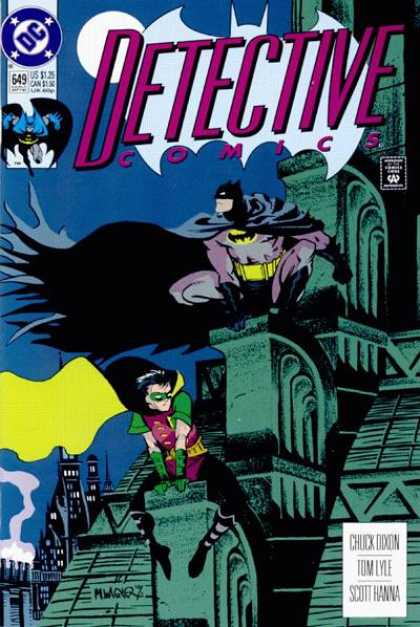
Is One’s Choice of Best Robin Generational?

Chris Sims of Comics Alliance (and, earlier, the Invincible Super-Blog) posted a very good essay this week on the questions: “Who is or was the best Robin? What is the Best Robin moment in Comic Book History?”

Ultimately Sims decides that what defines Robin is helping Batman, and by that measure he chooses Tim Drake as the best. That approach allows him to praise Dick Grayson for having been Robin and leaving that role to become a major character in the DC Universe. He also finds the best Robin moment when Carrie Kelly fully adopts the role, not through any feat of acrobatics or detection but simply in assuring Batman that he has help.

I see only one major flaw in the essay, and it’s part of Sims’s argument in favor of Tim Drake:

Tim's not in it for himself, and a lot of that comes from the simple fact that he doesn't need to be. When he first appears, he doesn't have a tragedy that defines his past and drives him to seek vengeance. In fact, he has the exact opposite: It's not really exaggerating to say that he's the single most privileged, well-adjusted character in the entire Batman mythos. He's rich enough to live more-or-less next door to Wayne Manor, he has two loving (and living) parents. The one thing that drives him is that he's a kid who loves Batman.
But why does Tim (like Sims) love Batman? A big part of the reason, I think, is that he doesn’t have “two loving (and living) parents” with him anymore. When Tim first connects with Batman and puts on the Robin suit, his parents Jack and Janet have parked him at a boarding school while they travel the world doing business deals and sniping at each other. Tim’s interest in Dick Grayson isn’t fueled just by having met the young circus flyer on a bad night; he also hungers for a family. His interest in Batman isn’t just driven by justice; it’s also a desire for an admirable father in his life.

Soon after Tim starts interning in the bat-cave (though that was before the term “interning” had escaped the confines of the medical field), his mother is killed and his father paralyzed by a criminal in Haiti. DC Comics planned for Jack Drake to die soon as well, making Tim’s trajectory the same as the preceding Robins: orphaned by crime, taken in by Bruce Wayne. But scripter Chuck Dixon kept arguing (and demonstrating) that there was more drama in keeping the man alive.

Instead, for more than a decade Tim juggled life with his father and life with Batman, which set him apart from past Robins. And it’s tough to say which man caused Tim more trouble. Jack Drake fell in love with his physical therapist Dana and married her, moved the family out of Gotham and then back, sent Tim to another boarding school, lost all his money, found out about Tim’s double life, and so on. An underlying theme of the Robin comics then was that Tim was actually the more dependable and responsible of the Drakes, the one who was really looking after other people.

In other words, Tim still needed the strong father figure of Batman in his life, whether he could admit that or not. That’s why I don’t think Tim Drake became Robin just for justice. He also had private psychological needs compelling him to take on that role. (Another underlying theme, stronger in the 2000s, was that Tim was also often more mature than Bruce Wayne.)

I also suspect Chris Sims has a particular perspective on the Robins question based on his age—or more particularly on the age when he was reading superhero comics most avidly. Now I recognize that as a professional comics writer with a specialty in Batman he’s still reading superhero comics avidly, and that he’s consumed and considered the canon published back before he started. Nonetheless, I think that the stories one read as a child and young adolescent exert the strongest emotional tug and establish one’s expectations.

In another essay Sims has stated that he was twelve in 1994 when he started to collect back issues. In other words, he was at that crucial age when:
  • Tim Drake was established as Robin. Furthermore, by then Tim had his father and stepmother at home (hence the “loving parents” understanding).
  • Jason Todd was established as the dead Robin, the possibly homicidal Robin, the Robin that haunted Bruce Wayne. As I’ve written, this characterization didn’t solidify until after 1989.
  • Dick Grayson was established as Nightwing, the former Robin, but the New Titans were past their glory days.
  • Carrie Kelly was a possible future Robin who appeared in one revolutionary volume.
And it’s those figures that dominate Sims’s essay.

The Robin that came before—the first, red-haired Jason Todd—gets less than a sentence. Of the Robins that came later, Stephanie Brown is dismissed with a hand wave (“Stacy?”). Jason Todd’s return from the dead is treated as an unnecessary, unfortunate change that doesn’t affect his symbolic significance. Damian Wayne gets a longer analysis, and a good one, but it still seems clear that Sims’s heart is back in the 1990s.
Another essayist might conclude that Dick Grayson is the best Robin because he established the mold not just for that character but for all kid sidekicks in superhero comics; because he provided the emotion and humor that the first year of Batman stories lacked; because he was popular enough to appear on more DC covers of the 1940s than any other character; because his relationship with Bruce Wayne offered the only ongoing emotional depth in Batman comics for two decades; because he set the standard all subsequent sidekicks aspire to. And that reader probably read the comics of the 1940s and 1950s at a crucial age.

Yet another fan might argue that Dick is the best Robin because Batman could rely on him whether they were fighting gangsters or extraterrestrials; because he symbolized the best of America’s youth but would, both Alfred and Earth-2 agreed, grow up to be a crime-fighter; because he had no powers but was still the Teen Titans’ leader and badass; because as “Teen Wonder” he offered DC Comics a way to gingerly explore youth culture. And that reader probably read the comics of the 1960s and 1970s, and watched the ABC TV show, at a crucial age.

As I’ve written several times, my first prolonged exposure to superhero comics was the Batman: From the ’30s to the ’70s collection, which emphasized the stories between Robin’s arrival in 1940 and the “New Look” of 1964. And the last superhero comics I was reading in my late teens was the New Teen Titans series in which Dick Grayson made the leap to become Nightwing.

So for me that character wasn’t always a former Robin, and the goofy, shallow stories of the 1950s aren’t just quaint embarrassments—though they were juvenile adventures that Dick Grayson’s character helped lead the company away from as he matured in the early 1980s. Sims’s analysis is rooted in DC’s post-Crisis universe; my expectations were established before the Crisis struck.
For other readers, younger than both of us, Stephanie Brown’s brief period as Robin might loom much larger because it came at a crucial time in their own exploration of Batman comics, and Jason Todd might not be the dead Robin but the Robin who returned from the dead and is still not fully part of the family. Some such readers might prefer those other Robins, arguing that they had so few of Tim’s advantages (and so little of his support from the publisher and the fans he was clearly designed to reflect).

Even younger readers might have just had their expectations shaped by the presence of Damian Wayne for the past few years, seeing him as the best Robin (just as he’d want). Readers whose notions are being shaped by the “New 52” universe are also seeing quite a different Tim Drake, with a different family history and different challenges to overcome. So they may well come to a different conclusion about the best Robin.

I’m not saying that everyone of Sims’s comics-reading generation would agree with him while his arguments would fail on everyone else. I just think that his essay and its conclusions reflect the age when comics meant the most of him, and probably resonate most strongly with people of similar experiences.

Because my own experience starts before Dick Grayson was a former Robin, I’m inclined to see more of the essence of Robin in him, and to see Tim Drake as striving always to match that nearly Platonic model (which Dick might be the first to acknowledge he himself didn’t always attain).

But I’ve become very fond of the first Tim as well, and wouldn’t want to give up either character. As I wrote back here, I imagine Tim would agree that Dick was the best Robin and Dick would say Tim was.

Of course, Sims might argue that Tim’s ability to win over a crotchety reader who grew up with Grayson is actually evidence that Tim deserves top honors.

(And the best Robin moment of all time? It’s in The Dark Knight Returns, to be sure. But it’s when Carrie is ready to hold off Superman with an effin’ slingshot.)

12 September 2012

Our Anachronistic Equine Vocabulary

There’s no Y in “linchpin.” Lots of people have taken to spelling the word with a Y in place of the first I because we hardly ever see linchpins. Those used to be very important because they held wheels onto the axles of wagons. I guess people are more used to seeing variations on the word “lynching.”

There’s no G in “free rein” or “tight rein” or “to rein in someone.” Those are metaphors derived from a horse’s reins, but people now seem to interpret them as related to a monarch’s reign and add the G. That’s what linguists have lately taken to calling eggcorns, attempts to make better sense of a word when folks don’t know its original derivation or context.

Those terms have become unfamiliar because they grew out of a horse-based economy. We no longer have the daily context to remind us of their original usage and meaning.

Similarly, people are now saying they’re “straddled with” problems instead of “saddled with” them because horse saddles are no longer part of our lives. People wonder what “riding roughshot” means because we no longer have to wonder about having a horse “roughshod”; that refers to horses shoed with the nailheads sticking out a little for extra traction, and I had to look it up myself. “Souped up” started as racing-track slang; now some people are using “suped up,” probably inspired by Superman.

Our language has lots of terms derived from the horse-based economy. Some are obvious (looking a gift horse in the mouth), others less so (long in the tooth), and some on their way out through obscurity (kick over the traces).

Those phrases survive like the traces of our physical equine infrastructure. In the center of my home town there’s a flower planter at the ideal height for a horse—because it was originally a fountain where drivers and riders could water their animals. But most of the unneeded parts of that infrastructure—small ponds, hitching-posts, stables, ferriers’ shops—have disappeared, swept away like manure from the streets.

As technological change has sped up, we’re probably making once-familiar phrases into anachronisms faster than ever. Kids today have never touched a telephone or television “dial.” A friend told me about having to explain to a college student what “drop a dime” meant. When I was a lad, an “E ticket” meant you could go on the very best rides at Disneyland; now it’s what I don’t bring to the airport. Soon people may be interpreting “champing at the bit” to refer to data.

TOMORROW: The carrot and the stick.

(Image above from the Boston Public Library’s Flickr stream.)

21 July 2012

Farewell to Idaville

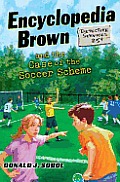
Donald J. Sobol’s Encyclopedia Brown series proffers a world amenable to reason and knowledge—a world that people could figure out, even if most of the time we had to peek at the answers. Sobol’s death this month cued an outpouring of internet nostalgia for many readers’ “gateway detective.”

I want to praise Sobol for a less obvious, less appreciated aspect of his series: world-building. He presented Idaville as a typical American small town, but it was an unusual place, and not just because of its inexplicably low rate of unsolved crimes.

The series’s first book, Encyclopedia Brown, Boy Detective, shows the title character setting up his agency in the garage for the first time, and then spending a lonely and embarrassing day waiting for his first client. That book also shows our hero’s first meeting with Bugs Meany and the Tigers; despite his knowledge of African zoology and Civil War nomenclature, Encyclopedia’s unaccountably ignorant of Idaville’s gang scene. Fortunately, we also soon meet Sally Kimball, voice for female capability from the start.

After that, the books can be read in any order. Idaville stays the same. More important, Idaville is chock full of young eccentrics like Encyclopedia, and nobody sees anything wrong with that.

Encyclopedia’s good friend Charlie Stewart, for example, collects teeth. Human teeth, animal teeth. In a big jar. In one story he and Encyclopedia go tooth-hunting, and Charlie takes off his shoes so as to sense half-buried teeth more easily. Then Charlie gets shot in the foot. (Life in Idaville can be rough.) But no one tells Charlie that he’s weird. In fact, a surprising number of kids want to get their hands on his teeth.

Cicero Sturgess is “the greatest child actor in Idaville.” Of course, a small town doesn’t have many outlets for child actors, so he’s forced to produce his own plays in churches. Cicero also hates boats, having gotten sick on a submarine sandwich; he seems to be a drama queen. But everyone accepts Cicero’s interests.

Similarly, Pablo Pizzaro is an abstract artist who wears floppy clothes. Sally actually develops a crush on him. (Encyclopedia always undercuts Sally’s dates; one of these years he might even work up the courage to ask her out himself.) Despite a rocky start stealing a wheel from another kid known for having two bikes, Pablo eventually becomes integrated into the kids’ community.

Nearly every kid has some distinctive trait. Tyrone Taylor is the town’s “youngest ladies’ man,” escorting one girl after another; “He was the only boy in Idaville who got up to give a girl his seat—even when they were the only two passengers on the bus.” Benny Breslin is known for thunderous snoring; everyone likes him awake, but the boys know not to invite him on a camping trip or a sleepover. And so on.

Even the villains—Bugs the bully, Wilford Wiggins the teen-aged con artist—are basically eccentrics in their way. Their quirks just happen to infringe on other kids’ property and rights. So Encyclopedia, Sally, and the threat of adult intervention tamp them back down.

The youth of Idaville do normal things like school, baseball, clubs, and camping. But they also, say, go watch Miguel Sebastian put on a bullfighting demonstration with a dog. (Encyclopedia attends to help rescue Charlie’s tooth collection.) And none of this is presented as outlandish, just interesting. I know Sobol built that world in part to justify his mysteries, but his picture of society encourages readers to develop their individual interests to the fullest, not just to be one of the crowd.

Furthermore, the Idaville kids’ society is largely governed by the kids themselves. Encyclopedia helps his dad the police chief out on a couple of cases each volume, but Sobol wrote that he doesn’t tell his parents how he helps out the other kids. That probably reflects a now old-fashioned culture of play, unlike the way most of today’s readers are probably being raised. Encyclopedia collects his agency fees on an old gasoline can—how many of today’s American parents would even let their kids touch a gasoline can? (Not that I had one to play with.)

The New York Public Library is collecting donations in Sobol’s memory. Penguin will publish Sobol’s final collection, Encyclopedia Brown and the Case of the Soccer Scheme, this fall.

21 May 2012

Oh, the Irony!

Yesterday I quoted a mention of Men Without Hats, the Canadian New Wave band that had a big hit in 1983, helped by an inexplicably medieval music video featuring Mike Edmonds of Time Bandits.

I can’t let that pass without adding my high-school classmate Randy’s exasperated observation at the time that one of the band often wore a hat.

16 April 2012

Being Carded in College

I used to work in Sterling Memorial Library at Yale. Not just as a student, but as a part-time work-study employee in the Manuscripts and Archives Division.

As a place to walk into every day for a job, it’s hard to top Sterling. It was designed to look like a medieval cathedral, and the card catalogue was in a place of honor in the nave. (The checkout desk was the altar.)

Even while I was there in the mid-1980s, however, other work-study employees were transferring the data on those cards into a new computerized system.

Now the card catalogue is unused, but Ellen Su made this music video to honor it.

15 April 2012

¡Hola, Robin!

This doll action figure might have been the first time anyone dressed Robin in pants.

It’s a Robin figure produced in the 1970s by Lili Lely in Mexico under a license from Mego. As Brian Cronin explains in the latest “Comic Book Legends Revealed” column, Mexico had laws requiring toys to be manufactured domestically, so Mego licensed its molds.

Evidently Lili Lely didn’t believe in a superhero in shorts. Or perhaps it was cheaper to give Robin the same red boots that Superman wore instead of manufacturing pixie boots. The company also made Robin’s sleeves about as long as the other heroes’ and left the R symbol off his jerkin.

I remember the Batman and Robin dolls action figures that my brother and I shared as coming in two distinct sizes, as in the TV shows and comics. But this Robin appears to be the same height as the accompanying Batman and Superman. All in all, one suspects that Lili Lely didn’t appreciate the nuances of the legend.

Nevertheless, in giving Robin green pants and boots, the company presaged the redesigns of the 1990s and beyond.

24 March 2012

Names to Conjure With

Back in the 1970s, my family attended some American Chemical Society conferences because my dad was active in the Chemical Education Division. At one of those events Sherwood “Sherry” Rowland appeared.

That was a big deal because it was the height of the controversy over Rowland’s research showing that chlorofluorocarbons reduce the ozone layer in the atmosphere. Reportedly the CFC manufacturers had hired a scientist to travel around to Rowland’s talks, demanding equal time to raise doubts. (It’s not unlike climate-change deniers today, and in fact some people confuse the two issues.)

Despite the industry objections, the US government and others outlawed CFCs within a few years. In 1985, a paper in Nature reported a growing hole in the ozone layer at the South Pole. (It’s since started to shrink.) Ten years later Rowland and his colleagues shared the Nobel Prize for Chemistry for their discovery. I thought back to my fleeting meeting with the future laureate when he died this month at the age of eighty-four.

But I also thought back to Sherry Rowlands, the call girl whom political consultant Dick Morris tried to impress by phoning the White House during their appointments. When Rowlands became notorious in 1996, I remember wondering, “Is that her real name or her professional name? What kind of call girl would name herself after a controversial scientist?” I never found out the answer.

Nor whether Reginald Denny, the truck driver who was assaulted during the 1992 L.A. riots, is any relation to the British character actor who performed opposite Buster Keaton, Jane Fonda, and Adam West.