Showing posts with label digging past the headlines. Show all posts

08 July 2020

The Boy in the Badger Hole

In June 1873, a young boy living on a farm in Springfield, Manitoba, outside Winnipeg, went missing. His family and neighbors searched the prairie. After a week, people despaired of finding the boy alive.

On 19 July, however, the Manitoba Free Press reported this news:
FOUND.—The little lost boy of Springfield has turned up alive and well, after a ten days subsistence on swamp water and what few strawberries the grasshoppers left for him. A Half-breed who resides in St. Paul’s, whose name we did not learn, discovered the little fellow at Little Lake, some eight miles from his father’s house. On seeing the man coming the little fellow became alarmed and concealed himself in a badger hole which for some time he had made his dormitory. On the day previous to his recovery, and [sic] boy had seen his father (who had been constantly searching for him since he had been lost) passing near, and ran shouting after him, but failed to attract his attention. We don’t know when we heard anything that surprised and pleased us so much as the above piece of news.
In 1881 a reporter for that newspaper, J. F. Galbraith, published a roundup of stories about life in the province under the pseudonym Jeff. Gee. That book, A Sketch of Both Sides of Manitoba, offered more detail about the case of the lost boy, starting:
There is, I have observed, in all very new countries, or sections of country, a bond of sympathy, that unites each man to his neighbor. So, when, one morning in June, a messenger arrived from Springfield with the announcement that a little four-year-old son of Mr. Wm. Service had strayed away from his home two days before, and all efforts to find him had been fruitless, there swelled through the Winnipeg pulse a great throb of sympathy. . . . Would Winnipeg supply fresh search parties? I should say so. Every man, woman and child wanted to turn out: the entire community would respond en masse, if need be.
Six days of searching didn’t turn up Willie Service, as Galbraith called him. The authorities offered a $200 reward. On the tenth day, however, the boy was found.

Galbraith then wrote more than two pages in the voice of the man who found the boy, whom he called a “French half-breed.” According to this account, the man saw cranes fly from a particular spot and decided that something around there must have disturbed them. He persisted in searching that area (with breaks for tea) even after his son and son-in-law gave up. And then he heard a strange noise.
“I get my gun ready and go on e-easy. Hear queer noise again, eight, ten yards off. I look: see dirt like badger hole. I stop. Then I put out my gun and walk close, slow. I point my gun, and look down. Hole dark; can't see nothing. I bend my head and look down, close. See hand—black, black; four fingers, no thumb. I draw back. I not afraid; but queer noise and black hand without thumb—don’t like it. I look again; hand move, and thumb come out from under. Then I make little noise, and two big eyes look up—wild wild. I see face. I drop gun, put out my hands and say,

“‘Oh, my poor little boy, come out, come out. Your father and mother look all over prairie and can’t find you. Come out and I take you to your mother.’

“He say nothing, but look—big eyes, scared. I ask him again come out, but he not move. Then I kneel down, and say,

“‘My poor little boy, come out, and I take you to your mother, I give you plenty bread, plenty tea, you poor little boy, you must be hungry. Come with me—I feed you, I warm you, I bring you home.’

“I reaching down all the time, and then I catch him by the hand, and say,

“‘Now, my little boy, I got you, I bring you to my wife. Don’t be afraid; I not hurt you.’

“He draw back, but I take him out, and put my arms around him, and hold him up tight, and pat him on the head, and he never say nothing. Then I take him to my wife, and my wife, and my daughter, and my son’s wife, hurry up, and make broth, and give him some in cup. My, but he hungry. Want to drink it all; but my wife say,

“‘No, not too much; I give you more after awhile.’

“Then he go to sleep, and my wife wake him soon and give him more broth. Then he sleep again, and my son go and tell his mother, and his mother come and take him away.”
Galbraith didn’t name the man who found the little boy.

According to a 1960 article in the Manitoba Pageant, transcribed here, that rescuer was Peter Fidler, Jr. (1820-1881). I don’t know the basis of that identification and thus how reliable it is. Fidler’s mother Mary was Cree; his father was not French but English by birth.

The same Manitoba Pageant article showed another way the story changed over time as people sought meaning in it:
When Archbishop [Samuel] Matheson told the story of Billy Service in 1936, he stated that Mrs. Fidler was said to have had a dream in which it was revealed to her that the boy could be found in a badger hole and that she induced her husband to go out and look for him.
In the 1880 account, the man who found the boy said nothing about a dream. He noticed unusual bird behavior, meaning he relied on experience in the world, not supernatural guidance.

TOMORROW: Another version of the same story, based on oral traditions.

19 December 2015

Off His Meds?

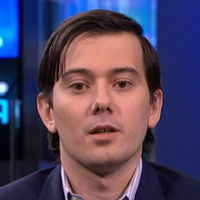
The New York Times article on the arrest of pharmaceutical investor Martin Shkreli begins:
It has been a busy week for Martin Shkreli, the flamboyant businessman at the center of the drug industry’s price-gouging scandals.

He said he would sharply increase the cost of a drug used to treat a potentially deadly parasitic infection. He called himself “the world’s most eligible bachelor” on Twitter and railed against critics in a live-streaming YouTube video. After reportedly paying $2 million for a rare Wu-Tang Clan album, he goaded a member of the hip-hop group to “show me some respect.”
All in one week? That makes me wonder if something biochemical is going on, and Shkreli’s famous obnoxiousness is fueled by mania. Like his alleged decision to do fraudulent things with people’s money.

27 November 2015

Turkey in the Straw Poll

This week Public Policy Polling released the results of a Thanksgiving survey (PDF download) which provided new evidence of OIP Derangement Syndrome among self-identified conservatives and Republicans.

The questions were all Thanksgiving-themed, such as respondents’ favorite pies, whether stuffing should be called dressing, and which Presidential candidates people might and might not like as Thanksgiving guests.

And then there was this question:
Do you approve or disapprove of President Obama’s executive action last year to pardon 2 turkeys rather than the customary one turkey at Thanksgiving?
Choices were approval, disapproval, and “not sure,” which we should assume includes “don’t give a darn.”

The results were quite widely split by party affiliation and political leaning. As PPP reported, “Only 11% of Republicans support the President’s executive order last year to 38% who are opposed—that's a pretty clear sign that if you put Obama’s name on something GOP voters are going to oppose it pretty much no matter what. Overall there’s 35/22 support for the pardon of Macaroni and Cheese thanks to 59/11 support from Democrats and 28/21 from independents.”

But what’s really telling (though not told by PPP) is that Presidents started “formally” pardoning turkeys each year back in 1989, and there have always been two turkeys involved. The breeders provide a matched pair in case one doesn’t look like it can handle the ceremony. Here, for example, is the report on President George W. Bush pardoning two turkeys in 2007.
In other words, 38% of Republicans opposed the current President pardoning two turkeys even though they’d seen his predecessor do that same thing eight times, simply because PPP’s question presented them with a chance to express disapproval of “executive action,” doing something other than “customary,” and “President Obama.”

24 November 2014

Having Trouble with This Aspect of Darren Wilson’s Testmony

According to Officer Darren Wilson, after his first brief exchange on 9 August with Michael Brown and Dorian Johnson about walking in a Ferguson, Missouri, street, he backed up his police vehicle and confronted them again because one of them was wearing a black T-shirt.

In an interview on 10 August, the day after the shooting, Wilson stated: “I heard on the radio that there was a stealing in progress from the Ferguson Market on West Florissant. I heard a brief description of a black male with a black T-shirt.”

In his grand jury testimony several weeks later, Wilson repeated that: “I was on my portable radio, which isn’t exactly the best. I did hear that a suspect was wearing a black shirt and that a box of Cigarillos was stolen.” That description confirmed for him that he’d come across the two suspects from the store robbery: “I did a doublecheck that Johnson was wearing a black shirt, these are the two from the stealing.”

However, earlier this month the police radio dispatches from that day were released.

The dispatcher said, “it's going to be a black male in a white T-shirt.”

An officer confirmed, “Black male, white T-shirt.”

Four minutes later, another voice added: “He’s with another male, he’s got a red Cardinals hat, white T-shirt, yellow socks and khaki shorts.” That was an accurate description of what Michael Brown was wearing.

Officer Wilson couldn’t have heard anything about a “black shirt” on the radio. The radio calls, as recorded and released, mention only Brown’s “white T-shirt.” Three times.

How much did Wilson, consciously or unconsciously, massage his memory to conform to what he saw after shooting Michael Brown dead?

18 November 2014

The Wizard of Oz teapot tempest”

In 1957 Ralph Ulveling, director of the Detroit Public Library, received nationwide criticism for remarks he was reported as having made about the Oz books.

I’ve been looking into that story, and this is part of one of the documents from it: Ulveling’s counterattack in the October 1957 American Library Association Bulletin.

Ulveling insisted that his library system hadn’t gotten rid of The Wizard of Oz—it simply wasn’t in the children’s rooms. To be fair to him, that decision had been made “More than thirty years ago,” or shortly after L. Frank Baum’s death. On the other hand, his endorsement of that policy acknowledged rather than refuted the anti-Oz-book sentiments attributed to him.

Ulveling went on to accuse the Michigan State University Press, of all people, of ginning up the controversy to sell books.

And you know, he might have been right.

03 October 2014

“Three Times as Many Threats as His Predecessors”

Earlier this week the Washington Post published an exposé of how an intruder got further into the White House than the Secret Service had previously disclosed.

Buried inside that article was a national index of OIP Derangement Syndrome:
President Obama has faced three times as many threats as his predecessors, according to people briefed on the Secret Service’s threat assessment.
That shouldn’t be a surprise. Back in 2010, I noted reports of a big spike in threats against this President, and an attempt by the Secret Service at that time to tamp down that concern, at least publicly.

This week also brought a report from a former Mitt Romney campaign communications director that in 2012 a married but flirtatious Secret Service agent leaked President Obama’s schedule while trying to impress another Romney aide. The campaign actually ignored the confidential information, not trusting it, but then found it was accurate.

Understandably, that sort of behavior has left African-American citizens wondering how committed all Secret Service personnel are to protecting this President. Meanwhile, Obama’s political enemies are doing their best to blame the victim of these failures.

Ironically, some of the recent incidents making headlines now, such as a security guard in Atlanta and a fake Congressman at a speech, appear to involve overeager fans of President Obama. There have been assassination conspiracies, but most seem to involve incompetent people.

Protecting officials who want to remain in contact with the people who elected them is not an easy job, especially in a country with more guns than people and a sizable majority suffering from an irrational resentment toward the President.

27 September 2014

Praying to Adidas

Of the items I read on the web this week, my favorite might well be this Gawker essay from July about a claim by right-wing “militia” members that they’d found and photographed a “Muslim prayer rug” abandoned on the US-Mexico border.

Adam Weinstein analyzed their photo thusly:
1. Here we see a waist hemline on the Muslim prayer rug.

2. This would be a sleeve opening on the Muslim prayer rug, just above the diamond-hatch red-and-white pattern so popular among lower-tier football clubs and militant Muslim prayer-rug salesmen.

3. Islamic scholars and Arsenal fans will immediately recognize "die marke mit den 3 streifen" [Adidas trademark] here on the Muslim prayer rug.
Of course, that didn’t stop the Lieutenant Governor of Texas from repeating the old rug tale this week.

01 September 2014

That Charlie Chapter

This weekend the Guardian printed a chapter from an early draft of Roald Dahl’s Charlie and the Chocolate Factory, with new illustrations by Quentin Blake.

And it was crap.

And Dahl knew it was crap. He heavily rewrote this chapter. Comparing it to the novel’s final text shows that Dahl recognized that it was more effective to have five children with particular personalities touring the Wonka factory instead of ten, with two peeled off at each stop. He realized that showing children punished for simple disobedience instead of failings specific to each child would get repetitive. Dahl saw those problems, fixed them in a revision, and filed these early pages away.

In promoting this publication, the Guardian stated:
A lost chapter of Charlie and the Chocolate Factory, deemed too wild, subversive and insufficiently moral for the tender minds of British children almost 50 years ago, has been published for the first time.
On first reading, that suggests the chapter was suppressed for being “too wild, subversive, and insufficiently moral.” In fact, it was suppressed by the author for being crap.

The finished book was what ran into trouble when Dahl tried to find a British publisher. Though set in Britain, it took three years after its publication in New York before a London publisher took a chance on Charlie.

That comes from a longer and more thoughtful article by Lucy Mangan, presumably adapted from her book Inside Charlie’s Chocolate Factory.

29 August 2014

General’s Death Exploited by People with OIP Derangement Syndrome

On 14 August, Maj. Gen. Harold Greene was interred at Arlington National Cemetery, nine days after he had been shot and killed by an Afghan soldier. A military engineer who had never been deployed to a combat zone before, Greene was the highest-ranking US military officer killed by enemy action since the 2001 attack on the Pentagon, the highest-ranking US general killed since the Vietnam War.

Even before that funeral, right-wing critics of President Barack Obama started to complain that he’d show his disrespect for the military by not attending. Morris Davis, a retired US Air Force colonel now teaching at Howard University, saw a need to respond. As he explained to a contributor to the online Washington Examiner:
A couple of days ago I saw several people observe that President Obama was somewhere between disrespectful and treasonous for not attending the funeral of Major General Greene, which triggered the usual flood of anti-Obama hate that is prolific in some right-wing circles.

I knew from my 25 years of military service that it wasn’t common for Presidents to attend military funerals and I figured this fell into the same category as Obama is a communist because he was seen without an American flag pin on his jacket lapel or Obama hates the military because he didn’t go to Arlington Cemetery on Memorial Day; in other words, I knew he was getting bashed again for doing exactly the same thing most of his Republican predecessors had done in similar circumstances.

To note the hypocrisy of the Obama-haters, I used sarcasm and tweeted that he had broken with the tradition Presidents Nixon and Bush 43 set when they attended the funerals of the last General killed in the Vietnam War and the highest ranking officer killed in the 9/11 terrorist attack on the Pentagon, which, of course, neither of them had done.

And in the right-wing’s bash-Obama glee, my tweet has been retweeted a couple of hundred times without anyone taking two minutes to Google to see if it’s true. It’s similar to a Chinese news agency reprinting that Kim Jong-un had been named the sexiest man alive without checking and finding that The Onion is a satirical site. It’s also a sad commentary on how gullible people can be and how willing they are to latch onto “news” that supports the narrative they want.
In sum, Col. Davis laid a trap for people with OIP Derangement Syndrome.

Davis sent that clear explanation to one of the “journalists” who had based a dispatch on his tweet without confirming that they had interpreted it correctly. The contributor issued a retraction, albeit one that blamed the colonel instead of his own lack of fact-checking.

Of course, that correction and the precedents set by previous Presidents haven’t stopped complaints from right-wing media. After all, as Col. Davis noted, OIP Derangement Syndrome is based on double standards.

People with visceral dislike of President Obama are also complaining:
  • That the Secretary of Defense didn’t attend the funeral, either. I got to see that in my Facebook feed. Yet standard, easily found news sources, including the New York Times, National Public Radio, and Stars and Stripes, reported that Chuck Hagel and other Defense Department officials had been at the event. Hagel appears above in a photograph from the army’s homepage.
  • That the White House sent a more respectful delegation to the funeral of Michael Brown, the unarmed eighteen-year-old shot with his hands in the air outside St. Louis. In fact, the federal delegation to that event consisted of an “Assistant to the President and White House Cabinet Secretary,” a “Deputy Director of the White House Office of Public Engagement,” and “an advisor to the public engagement office.” In Washington protocol, none of those officials come close to Hagel, a Cabinet secretary.
  • That President Obama “hasn’t even ordered flags to be flown at half-staff, like he did for the death…of singer Whitney Houston.“ In fact, Gov. Chris Christie ordered flags to half-staff in New Jersey, Houston’s native state; the President took no such action.
Snopes called that last lie “a long-running piece of political misinformation.” In other words, it’s one of the ways people with OIP Derangement Syndrome try to justify their deep-seated prejudices.

16 August 2014

What Do Those Challenges to The Giver Mean?

Slate just ran Ben Blatt’s article with the incendiary headline “The Giver Banned” and the more temperate subtitle “Why Do So Many Parents Try to Remove Lois Lowry’s Book?”

Blatt wrote:
Since its release in 1993, The Giver has been one of the most controversial books in American schools. Between 1990 and 1999, The Giver ranked 11th on the list of the books most frequently requested for removal. In the 2000s it was 23rd, just two spots below To Kill a Mockingbird. This Friday marks the release of the first film adaptation of The Giver, which is likely to renew fandom, as well as opposition, to the dystopian young adult novel.
That analysis is lacking several crucial variables:
  • just how many schools and school libraries have The Giver as a standard title. The more schools use a book, especially as assigned reading for a whole class, the more likely it is to prompt challenges, but the rate of those challenges could still be much lower than for other titles.
  • how much difference there is between the top of the list and 23rd.
The article states that, in contrast to most other controversial titles, and especially the most challenged, “The most frequently cited reasons to challenge The Giver have been ‘Violence’ and claims that the book is ‘Unsuited to [the] Age Group’—or in other words that it’s too dark for children.” That point is accompanied by a chart showing how types of challenges to The Giver compared to the ALA’s total database. But the chart offers no “n value”—no statement of how many challenges were counted.

And that complaint brings up another missing variable: what grades the complaints were coming from. To a parent “Unsuited to Age Group” doesn’t mean too dark for all children but too dark for the particular children assigned to read it.

And let’s face it, The Giver is a dark book, regardless of what age its readers are. That’s kind of the point.

20 May 2014

Behind the Legends of Oz

Legends of Oz is shaping up to be a legendary flop at the American box office, a computer-animated musical based on a well-known property that’s not only losing money (such movies are expensive) but hardly making any money.

After a week and a half of wide release (over 2,500 theaters), it’s made less than $7 million. Adjusted for the cost of tickers, that’s even worse than Hoot and The Seeker: The Dark Is Rising.

It turns out that financing has been an issue for Legends of Oz all along, as documented in a Metafilter post cleverly titled “Pay No Attention to the Man Behind the Curtain”:
Alpine Pictures, aka Summertime Entertainment, aka Box Office Productions, aka Dorothy of Oz LLC, began selling shares in the film in 2006, at a projected budget of $20m. By 2009, having sold close to $18m in shares, the offering was expanded to $24m. The offering would be expanded again later, with reference to future Oz sequels, merchandising, and an Oz-themed MMORPG. The film's release was repeatedly pushed back.

Complaints appeared online as early as 2008 about a Burbank, California-based telemarketing firm, First National Information Network, that appeared to exist only to aggressively solicit strangers for investments in Oz. Others report seeing the film promoted on the Global Information Network, a listing of spurious investment opportunities hawked by jailed con man Kevin Trudeau. Potential investors were told they could use retirement accounts if cash wasn't available.

Cease-and-desist orders have been issued against Alpine by the states of Delaware, Ohio, Indiana, Pennsylvania, Massachusetts, Texas, Alabama, Washington and California for alleged violations of SEC rules against general solicitation. Alpine allegedly targeted naive, unaccredited investors with cold calls; painted unrealistic pictures of the film's potential; and collected 40% "consulting fees" on the money raised.
(Hat tip to Laura Gjovaag.)

18 April 2014

Captain America and the Threat of OIP Derangement Syndrome

As I noted yesterday, some right-wing media organizations responded to The Lego Movie with complaints that it was anti-business. (Others, to be sure, saw it as simply anti-government, and they were fine with that. Critics on the left saw it as about the danger to people of business and government intertwining, as they often warn. In fact, it’s about commercialism taking over entertainment.)

What about the other big superhero adventure of the spring, Captain America: The Winter Soldier? The directors of that film, Joe and Anthony Russo, said months ago that they were modeling it on the political thrillers of the 1970s, with a few over-the-top action sequences thrown in. They cast Robert Redford as a high official because his filmography includes Three Days of the Condor and All the President’s Men. They even dressed him in a 1970s-style three-piece suit, and he still looks good.

Both Christian Toto at Breitbart on the right and Asawin Suebsaeng at Mother Jones on the left picked up on that anti-authority theme by saying the film wouldn’t be screened at the White House soon. Nor, they could have added on the same speculative grounds, in Congress, the FISA court, the Pentagon, or other pillars of the political center and the security establishment.

But John Nolte at the Breitbart site went off the deep end, calling the movie “a blatant $175 million ‘screw you’ to Barack Obama's surveillance state.” One might be concerned about Nolte watching a PG-13 movie without a parent since he doesn’t appear to remember anything earlier than six years ago. But his response is just a symptom of OIP Derangement Syndrome.

The big danger in Captain America: The Winter Soldier is that a government agency wants to launch worldwide preemptive strikes against what it sees as threats to America or democracy. Preemptive action was the core of the “Bush Doctrine,” which Nolte cheered on his old website, now left to drift into the aether.

The “surveillance state” that Nolte blames on President Obama was in fact built by the Bush-Cheney administration. Nolte really should know that because he’s written, for example, about the Washington Post’s coverage of the NSA’s PRISM program, which clearly stated that program was established in 2007. As soon as the Obama administration came into office in 2009, it started to reveal more about the programs it inherited and to put more limits on them.

The disclosures of Bradley/Chelsea Manning and Edward Snowden show that there’s much more we the people have to know. Nolte offered notable praise for Glenn Greenwald for helping to share the Snowden files. Of course, that happened during the Obama administration.

Based on Nolte’s stated support for some of the most egregious Bush-Cheney policies, such as waterboarding, and his decision to become a right-wing media voice (at first pseudonymous, then openly) because he disliked opposition to the Iraq invasion, I can’t help but think that his position on security leaks would have been quite different under a right-wing President.

Likewise, if Captain America: The Winter Soldier had been released under an administration he supported, Nolte would have complained that it was Hollywood’s usual attack on anything good and conservative. That’s been his professional hobbyhorse for years.

In making the security state its major threat, Winter Soldier echoes a common theme of the American left—a theme the American right takes up only when it’s not in power.

TOMORROW: And does the movie really tackle that threat?

28 March 2014

The Deep Roots of Inflation Fears

Back in 2006, the historian Michael O’Malley wrote an article for Common-place about links between fear of economic inflation (money losing value in the real world) and racial fears. Specifically, he looked at the debate in the late 1800s between maintaining a gold standard for US currency and adding a silver standard:
Arguments for gold aimed at the working class often linked gold to both a high standard of living and the intrinsic superiority of the Anglo-Saxon race. “Take a look at the company before you sit down at the feast,” an anti-silver tract warned workingmen. Who had silverites invited? “Half civilized, half clad peoples, who are weak and ignorant, who have little or no commerce; where bullfights abound and schools do not; where human labor is in sharp competition with the meek and lowly jackass; where the breech-clout is preferred to a full suit.”
In his 2013 book Face Value: The Entwined Histories of Money and Race in America, O’Malley extended that exploration, going back to the early republic and up to the present. This month he discussed some aspects of that history in this episode of Back Story, the radio show/podcast.

O’Malley’s chapter 3 analyzes reactions to paper currency that the US federal government issued during the Civil War at the same time it was enlisting African-American soldiers for the first time in decades. Opposition rhetoric claimed that paper money had less value than specie and those black soldiers had less value than white. Of course, both helped the Union to win the war.

Toward the end of his book, O’Malley notes parallels between such fears and some people’s anxieties today. The election of President Barack Obama in 2008, coinciding with the Bush-Cheney recesssion, prompted sudden new interest in gold. In turn, gold dealers became the leading sponsors of several political commentators on the right.

O’Malley notes a pattern in those advertisers and pundits warning about about “Zimbabwe-style” inflation. Why is that their chosen metaphor, he asks, rather than the better known and more significant inflation in post-WW1 Germany? Perhaps because of the underlying racial component.

More disquieting, because it’s more influential, is how so many economists and politicians have focused on inflation in recent years even though it’s hardly appeared. While international banks warn about deficit spending, most industrial nations that followed austerity programs have recovered more slowly or suffered double-dip recessions compared to those that responded with economic stimulus. Meanwhile, unemployment remains a major problem, one that central banks are supposed to address.

03 March 2014

Democracy Right or Wrong

Thailand, Ukraine, Egypt, and Venezuela are four very different nations in different parts of the world. But over the past couple of years they’ve all been in similar situations in regard to democratic governance.

In all four countries an election has brought a party to power, or confirmed that party in power. Many observers have been wary of those governments because of a combination of corruption, dominance of mass media, or moves against individual rights. However, no one’s made a convincing case that the winning party didn’t actually win most of the citizens’ votes.

In all four countries a large minority of the population, disproportionately middle- and upper-class and disproportionately concentrated around the capital, has opposed that government with massive, ongoing public protests, often becoming violent.

In Venezuela and Thailand, the elected governments have remained in power. In Egypt, the military removed the elected government that had attracted so much opposition, but then imposed its own, even harsher rule.

And in Ukraine the protest centered in Kiev succeeded in toppling the government, but didn’t win over the population in the eastern part of the country. The people there appear to be welcoming military intervention by Russia, in part out of ethnic solidarity and economic interests and in part because the president they elected was just forced out of power by mobs.

These nations therefore present very tough problems for the USA if we want to support democracy around the world. We can look at the Chavez-Maduro government in Venezuela and oppose their authoritarian strains and economic ideology. We could worry about Morsi edging toward theocracy. We can decry the amount of money or luxury that Shinawatra and Yanukovych appeared to accrue as heads of government. But those people were all duly elected, and supporting their overthrow means opposing democracy.

Anyone who talks as if there are easy answers for the Obama administration in Ukraine or any of these other trouble spots hasn’t been paying attention.

28 February 2014

Diagnosis: Fear of Obamacare

News stories and political commercials have spotlighted some Americans complaining about changes in their health insurance under the Affordable Care Act. In nearly every case that’s been critically examined, however, those people have actually been suffering from fear of Obamacare.

Maggie Mahar at HealthInsurance.org looked into an article in the Fort Worth Star-Telegram about four people who said they were worse off under the new law. Three of those people turned out to be active in the Tea Party. Their claims of not being able to find affordable insurance didn’t add up. Mahar concluded, “The paper describes them as among Obamacare’s ‘losers,’ but the truth is that they didn’t want to be winners. Two hadn’t even attempted to check prices in the exchanges.”

The same behavior showed up many other places. NBC and FOX News both featured Deborah Cavallaro and Richard Helgren complaining about their experiences with the new law. At the American Prospect, Paul Waldman checked Cavallero’s story and found that she (and the reporters who spoke to her) must not have tried her state exchange since it offered quite affordable insurance for someone in her situation.

As for Richard Helgren, buried inside the NBC report was this important fact: “Ultimately, though Helgren opted not to shop through the ACA exchanges, he was able to apply for a good plan with a slightly lower premium through an insurance agent.” Helgren probably had a very good insurance agent because he was in the insurance business, having retired as CFO of Michigan Hospital Association Insurance, which made its money selling medical malpractice insurance to hospitals and doctors.

NBC News also featured Greg Collett, who said he’d refuse to go along with the provisions of health insurance reform as a protest against government involvement in health care—while his ten children continue to receive care through Medicaid.

How many people suffer from fear of Obamacare? A recent poll in Arkansas offers some numbers for that state. A plurality of 48% of Arkansans supported the state’s “private option” for expanding Medicaid. However, only 35% of respondents supported the same plan when they were told it’s linked to the Affordable Care Act. That suggests that at least 13% of the population of Arkansas lives under the influence of fear of Obamacare.

Fear of Obamacare is so strong that it’s blocked a significant number of Americans from accepting options that would be more beneficial to them. It’s made them go on television to complain about problems they’ve chosen to perpetuate. It’s another form of OIP Derangement Syndrome.

17 February 2014

A Jury That Did Not Compromise

In the trial of Michael Dunn for killing Jordan Davis, the instructions to the jury offered the possible charges of first-, second-, and third-degree murder, plus manslaughter. That’s routine in such trials.

The jury couldn’t reach a verdict on that part of the trial. We may hear more from jurors this week. So far most of the commentary I’ve seen has focused on the fact that at least one juror (and possibly as many as eleven) was unable to see Dunn’s shooting and subsequent lies as clear evidence of murder.

The hung jury also suggests that at least one juror (and possibly as many as eleven) couldn’t see Dunn’s actions as anything less than first-degree murder. For centuries juries in the British and American legal tradition have compromised on verdicts that might not accord with the evidence but struck them as most just, given the facts of the case and the punishments involved. In this case, I suspect, some of the jurors felt that any such compromise would deny the enormity of Michael Dunn’s actions.

24 January 2014

Politifact Profiles

This week Politifact released a list of the top-ten politicians it and its regional affiliates have fact-checked.

Because the service launched in 2007, Barack Obama has been President for most of its existence, so it’s not surprising that he’s the most fact-checked person. Nor is it surprising that the people ranking second and third behind him are his main opponents from 2012 and 2008, Mitt Romney and John McCain. But Politifact has fact-checked Obama far more often (500 times) than Romney (204) and McCain (170) combined.

What’s more significant lies underneath those rankings in Politifact’s findings on each politician. It ranked President Obama’s statements True or Mostly True 46% of the time. In contrast, Romney was True or Mostly True only 31% of the time and McCain 38%. Add the Half True category to the men’s totals—after all, they are politicians, used to emphasizing one side of the argument—and the percentages are Obama 73%, Romney 59%, and McCain 56%.

We can also look at the three men’s numbers from the bottom up. Politifact gave only 2% of the Obama statements its lowest rating of Pants of Fire, and deemed another 13% False (total: 15%). Romney had 9% Pants of Fire and 16% False (total: 25%). McCain had 5% Pants on Fire and 22% False (total: 27%).

Either way we look at it, President Obama adhered to the facts more often than his major opponents. He made fewer statements that the service judged to be whoppers. And not just by a little bit, but by a 10% margin or more.

Nevertheless, one of the beliefs that people with OIP Derangement Syndrome share is that President Obama is dishonest. But that’s just another way they’ve divorced themselves from reality. In actual fact, Politifact has subjected Obama to more scrutiny than any other politician, and has assessed him to be more factual than the Republican Party’s chosen candidates.

10 January 2014

The Blockage of OIP Derangement Syndrome

With Gov. Chris Christie of New Jersey suddenly forced to respond to clear evidence that his deputy chief of staff and other appointees abused government power on his behalf, the American right is flopping around for a response. And the consensus is, of course, to complain about President Barack Obama.

This morning’s conservative talking point appears to be that Christie’s press conference was more forthright and responsible than Obama’s response to problems. For example, Talking Points Memo reported on this discussion on Morning Joe:

Mika Brzezinski said the presser trumped the President’s response to last year's scandal surrounding the Internal Revenue Service.

“Obama said he didn’t know about it, but he didn’t do what Chris Christie did,” Brzezinski said. “Which was say, ‘But I’m responsible, and I don’t know what I did in my office, and I’ve got to do a lot of soul-searching to figure out why people felt they could do this. I thought that was extremely —”

“Have you ever heard Barack Obama say that?” host Joe Scarborough chimed in.
I’ve seen others try to draw parallels to the poor healthcare.gov rollout, the ATF’s “gun walking” investigations that go back to the Bush-Cheney administration, and the National Park Service closings. And, of course, Benghazi.

But a clear look at those issues shows that they’re not parallel to the Christie administration’s abuse of power. No one has found a White House deputy chief of staff telling an agency head to cause trouble for people because the head of their political jurisdiction didn’t cross party lines to endorse the President. After months of investigation, no one has linked the misreported IRS scandal to the White House, much less to directives from someone at the level of a deputy chief of staff.

Scarborough, a former Republican congressman, insists that he’s never heard President Obama take responsibility for things that happened under his administration. His brain has apparently failed to retain contrary news stories of the past few years. For example, “Obama Says He Is Ultimately Responsible for Benghazi Security” (The Hill, 28 Oct 2012), and “President Obama Apologizes to Americans Who Are Losing Their Health Insurance“ (Washington Post, 7 Nov 2013).

In sum, President Obama has accepted ultimate responsibility for government problems, even for things he and his White House staff didn’t cause. Governor Christie disclaims responsibility for actions of his deputy chief of staff and others on his behalf. People affected by OIP Derangement Syndrome can’t remember the former and somehow see something to admire in the latter.

23 December 2013

Phil Robertson “Blind and Naïve to the Suffering of Others”

This month a widely discussed article in GQ quoted the duck-call magnate and reality-television personality Robertson saying, among other things:

I never, with my eyes, saw the mistreatment of any black person. Not once. Where we lived was all farmers. The blacks worked for the farmers. I hoed cotton with them. I’m with the blacks, because we’re white trash. We’re going across the field. ...They’re singing and happy. I never heard one of them, one black person, say, “I tell you what: These doggone white people” — not a word! ...Pre-entitlement, pre-welfare, you say: Were they happy? They were godly; they were happy; no one was singing the blues.
We have to wonder then where “singing the blues” came from.

The New York Times columnist Charles M. Blow, who also grew up in northern Louisiana, calmly commented on Robertson’s claim:
While this is possible, it is highly improbable. Robertson is 67 years old, born into the Jim Crow South. Only a man blind and naïve to the suffering of others could have existed there and not recognized that there was a rampant culture of violence against blacks, with incidents and signs large and small, at every turn, on full display. Whether he personally saw interpersonal mistreatment of them is irrelevant. . . .

Furthermore, Robertson doesn’t seem to acknowledge the possibility that black workers he encountered possessed the most minimal social sophistication and survival skills necessary to not confess dissatisfaction to a white person on a cotton farm (no matter how “trashy” that white person might think himself).
It’s not at all difficult to find signs of racial bigotry all around Phil Robertson as he grew up, allegedly untouched by that environment.

Phil Robertson was born in 1946 outside the town of Vivian, Louisiana, in the northwest corner of the state. That town is in Caddo Parish, where the big city and county seat is Shreveport. In the same year Robertson was born, a group of white men lynched a black war veteran named John C. Jones in the neighboring county. After the local law-enforcement system failed, the federal government stepped in, bringing men to trial in Shreveport. The all-white jury acquitted all the defendants in 1947. When Jones’s widow sued a sheriff for releasing her husband to the lynch mob, her suit was thrown out of court. Obviously Robertson played no role in those events, but he also seems blind to what message they sent to local African-Americans.

Like the rest of the American South, Vivian was strictly segregated on racial lines. Even today in the town’s Kansas City Southern railroad station, “Formerly segregated waiting rooms are found inside on each side of the ticket office.”

In 1954, when Robertson turned eight, the US Supreme Court ruled in Brown v. Board of Education that racially segregated schools were unconstitutional. Nevertheless, the schools in Caddo Parish remained racially divided for another decade. Robertson attended North Caddo High, which was all white. The school’s teams are called the Rebels, and until recently the mascot was a Confederate man.

Not until 1965, the year after Robertson graduated from high school, did the Caddo Parish schools start to integrate. In Shreveport, the C. E. Byrd High School opened to a total of three African-American students. One of them, Brenda Braggs, described her experience this way:
I cried many days. . . . They called me black this, and you black that. But my mother kept saying, “You can do this.” And I never gave up.
That effort to desegregate the Caddo Parish schools took several years. Officials tried redistricting, busing, and merging historically white and black schools. Whites launched private schools for their own children and cut the public-school budget.

Meanwhile, Robertson attended Louisiana Tech University, playing quarterback for its football team from 1965 to 1967. That university also desegregated under court order in 1965, and then expelled its first black student under what Breaking the Line author Samuel G. Freedman called “a dubious accusation of theft.” Robertson’s successor as Louisiana Tech quarterback was Terry Bradshaw, who in his autobiography Looking Deep wrote about not having any black teammates until he came to Pittsburgh; “It didn’t take me long to figure out I was prejudiced,” Bradshaw’s book says.

In his twenties, Robertson went into teaching. I can’t find information on where he taught or when he settled in Monroe, Louisiana, his current home. However, that city’s struggles against racial discrimination in the schools are well documented. Isabel Wilkerson’s history of the African-American migration, The Warmth of Other Suns, profiles Dr. Robert Joseph Pershing Foster, who left Monroe in 1953 because of the obstacles he encountered there. In 1960, the mayor of Monroe sent a telegram to the Louisiana state legislature urging them to continue fighting for racial segregation and “our traditional way of life.” The first black student to attend Monroe’s Neville High School in 1965 “suffered daily harassment and was often the victim of beatings by Monroe Police officers who, ironically, were assigned to protect him.” Canadian children’s book author Pamela Porter remembered moving to Monroe in 1968 and experiencing its schools:
Living there was quite an eye-opening experience for me because Louisiana was fighting very hard not to desegregate and only desegregated by a Supreme Court order. . . . Just ordinary experiences in that place were extraordinary for me because I hadn’t been used to seeing such blatant racism.
And of course Monroe wasn’t exceptional in the Deep South at the time. Hundreds of other cities were going through the same transition.

It’s impossible to credit Phil Robertson’s claim that he didn’t witness any of this. He just chose not to notice other people’s suffering.

17 December 2013

A Very Bad Man

Last week’s news that the federal government was going to extract some money from J. P. Morgan for its complaisance in Bernard Madoff’s investment fraud included the detail that the investment bank had ignored “Oz-like signals.”

I went looking for the context of that phrase. I couldn’t find the original document, only court filings that quote part of it, and always the same part. Michael Cembalest, Chief Investment Officer at J.P. Morgan’s Global Wealth division, wrote that “Oz-like signals…too difficult to ignore” were why he refused to do business with Madoff’s firm.

Among Cembalest’s “red flags,” according to Forbes, was that “his due diligence team was not allowed to meet Madoff and discuss his investment strategy.” And indeed, not meeting with visitors is a trait of the Wizard in both L. Frank Baum’s Wonderful Wizard of Oz and the MGM movie based on it.

However, it appears that Cembalest didn’t compose that metaphor until after Madoff’s fraud was revealed, according the court filing (PDF download). The quote came from a memo to investors assuring them, in a somewhat self-congratulatory way, that his division hadn’t done business with Madoff.

By then the Telegraph and other news media had begun to liken Madoff to the humbug Wizard. It seems to have become a standard trope: even a lawyer defending a Madoff employee used it in court this fall. Baum’s Wizard claimed to be a good man, just a poor wizard, and eventually he redeemed himself on both counts. We don’t seem to expect the same of Madoff.