11 July 2020

Interpreting Incident at Hawk’s Hill through the Autism Lens
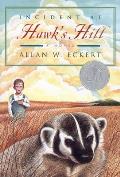
How are we to make sense of the 1971 novel Incident at Hawk’s Hill and the actual 1873 event at its root?

In 2004, Prof. Kenneth Kidd wrote about Allan W. Eckert’s novel for the children’s literature journal The Looking Glass. In that paper, titled “Leave It to Badger,” Kidd reported that he’d found no corroboration of Eckert’s claim that he had based the book on a real incident.

At the time, digital book and newspaper archives were in their infancy, so it wasn’t as easy to find the period sources I quoted back here, or the intervening secondary sources I analyzed here. Not only did Eckert have reason to believe he was working off a report of a real incident, but it’s clear that a lost little boy was indeed found in a badger hole in 1873 Manitoba. Would that knowledge have changed Kidd’s analysis?

Kidd made sense of the novel by applying the thinking in his book Making American Boys: Boyology and the Feral Tale. He discussed the story through the lens of folklore. Many cultures have stories about children being raised by animals, including such famous western examples as Romulus and Remus, Mowgli, and Tarzan. Viewed entirely as fiction, Eckert’s novel fits into that paradigm. Kidd saw an Oedipal dimension to such stories in general and Eckert’s novel in particular.

Of course, when the event at the core of Incident at Hawk’s Hill—a little boy lost on the prairie who survives by finding shelter in a badger’s hole—is real, then the ways people tell that story aren’t new examples of old folklore but attempts to understand what really happened. (Or, in the case of Eckert’s acknowledged fiction, to present what might have happened.)

Bruno Bettelheim’s paper “Feral Children and Autistic Children,” published in the American Journal of Sociology in 1959, was an attempt to explain similar events. Bettelheim posited that the root of many of those stories of children raised by animals is autism, a psychological condition he was groping to understand. Throughout history, he wrote, people had seen “severe cases of infantile autism with seemingly animal-like traits and habits” and explained that behavior by believing the children had been raised by animals.

Bettelheim’s own theory of autism was deeply flawed. In that same paper he posited that it was largely or entirely due to “extreme emotional isolation combined with experiences which they interpreted as threatening them with utter destruction.” As for the source of the emotional isolation, Bettelheim mostly blamed mothers (of course), saying they were the real “feral” ones.
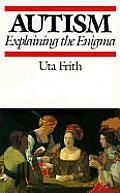
While Bettelheim’s theories about autism and how to respond to it have fallen by the wayside, his suggestion that autism explains many examples of “feral children” has caught on. Uta Frith analyzed some historic cases of "feral children” in Autism: Explaining the Enigma (1989) and elsewhere. She suggested, “an unduly high proportion of feral children suffered from autism before they were abandoned. Indeed autism, with its often severe conduct problems, may be the cause for the abandonment in the first place.”

Frith’s book and others have helped to make our culture much more aware of autism since Incident at Hawk’s Hill appeared in 1971. We now recognize a spectrum of related conditions under the autism label. Not only do we better distinguish autism from other cognitive conditions, but we acknowledge autistic ways of thinking and viewing the world in high-functioning individuals.

That knowledge allows us a new perspective on how authors from earlier generations discussed the story of the little boy lost on the Manitoba prairie. The initial reports said almost nothing about the boy himself, only that he was scared when men came by. It’s not clear how much detail in the oral traditions is based on fact and how much was added by people seeking to comprehend the mystery. Nonetheless, the more detailed recounting by Ernest Seton Thompson and the fictionalized story of Allan W. Eckert lend themselves to interpretation through the lens of autism.

Seton was quite clear about little Harry Service not being normal:
He was a strange child, very small for his age, and shy without being cowardly. He had an odd habit of following dogs, chickens, pigs, and birds, imitating their voices and actions, with an exactness that onlookers sometimes declared to be uncanny.
For Seton, this affinity with animals was a strength. He linked kindness to animals with general goodness, and equated cruelty to animals with cruelty to people. Seton’s tale contained an explanation for how this boy survived in the badger’s hole—because the badger, having lost her own young, showed maternal kindness to this unusual newcomer. And he concluded with an optimistic suggestion that Harry’s experience with the wild badger cured him of his most obvious strangeness.

In Incident at Hawk’s Hill Eckert picked up on those details and made a major subplot of the boy’s parents wrestling with what we’d now call their youngest son’s special needs. Early in the novel, Bill MacDonald tells his wife:
“Oh, what’s the use of trying to fool ourselves? He isn’t normal, Esther, and we both know it, whether or not you’re willing to admit it. He not only isn’t normal physically, he’s not normal mentally, either. Look how he acts toward animals.”
When Eckert finally shifts his narration into the little boy’s own perspective, it states:
Ben had no idea why he was so afraid of people. He was not, as his father seemed to think, retarded in his mental processes. He was, in his way, quite intelligent. He could think things through very well for his age and he retained a surprising percentage of what was taught him by his mother and the others. It was just that he kept what he learned to himself. He didn’t like to talk to people.
Was this Eckert’s attempt to depict an autistic child? Someone he knew, something he felt? Or was he picking up imaginatively on the hints in Seton’s story? I have no idea. In the end, Eckert followed Seton’s line and portrayed the experience out on the prairie as making Ben open up more than ever, especially to his father.

Reflecting the greater awareness of autism today, many recent readers of Incident at Hawk’s Hill interpret Ben forthrightly as on the autism spectrum. Monado at Book Crossing describes him as “a boy, whom these days we’d describe as autistic,” while Lori Steinbach at enotes says he probably has “a condition something like autism.” The Home School Book Review said, “Ben would probably be considered somewhat autistic today.” At Goodreads, the Shayne-Train wrote, “now that I [re]read it with adult eyes, it may be the first novel I’d ever read that had an autistic protagonist.” And the study guide for the novel at Bookrags includes a whole section on autism.

Such a diagnosis is of course only a partial explanation for the character, or the history deep behind it. Did the little Service boy who got lost on the Manitoba prairie have some form of autism? How did that affect his lost time, or his family’s and neighbors’ interpretations of it? What experiences with autism, a condition not yet isolated and named in the early 1900s, did Seton have? What about Eckert, writing in 1971? Is it just coincidence that this modern example of a “feral child” story fits so easily with an autism reading, or are we still seeking an explanation with the partial knowledge we have?

10 July 2020

How a Real Story Became Incident at Hawk’s Hill

In 1873, a young boy went missing from his family’s farm in Manitoba. After more than a week, a man of Native and European ancestry found him hiding in a badger hole. That much we can read in nineteenth-century sources from Winnipeg.

In the early 1900s the nature writer Ernest Thompson Seton picked up that story from some Manitobans. He published a version that went into much more detail about how the little boy had actually shared that hole for days with a mother badger that had recently lost its young. Seton or his informants turned the mysterious event into a morality tale, which he published in at least three books.

This 1960 article from the Manitoba Historical Society’s Manitoba Pageant magazine mentions some other local recountings: by Archbishop Samuel Matheson in 1936, in Country Guide in 1951 by Margaret Arnett MacLeod, by the Manitoba Free Press in 1953. I haven’t seen those versions, so I don’t know what new details they provide and what evidence they were based on.

At some point the American writer Allan W. Eckert (1931-2011) came across Seton’s version of the story. Eckert had made himself a specialist in ecological writing, penning most of the scripts for Mutual of Omaha’s Wild Kingdom. He also found a niche writing on Native Americans, including outdoor dramas about Tecumseh and Blue Jacket. (That pairing of nature and Native Americans probably reflects a bias within our culture.)

Eckert’s nonfiction tended toward the imaginative. One of his early magazine sales was an article for the American Legion magazine in 1962 about the disappearance of the US Navy air training mission Flight 19 off the coast of Florida. Eckert appears to have added details not in the documentary record, and that event later became a keystone of the “Bermuda Triangle” legend.

Likewise, Kirkus said of Eckert’s 1992 biography of Tecumseh, A Sorrow in Our Heart, “in its interpretative zeal it strays from, or at least embellishes, the historical record to the point of being suspect.” Even Kirkus’s good review of That Dark and Bloody River noted Eckert’s method of “'reconstituting' credible dialogue among people in briefly reported events.”

On the other hand, Eckert’s fiction was often based closely on historical fact. His first novel was about the extinction of the great auk. Another was based on an event in the life of Daniel Boone. In the late 1960s Eckert started a series of historical sagas about the “Winning of America.”

Eckert saw the skeleton of a novel in Seton’s tale of the lost boy and the badger. The tale offered a chance to write about both the frontier past and the natural world. And it came with the gloss of nonfiction. When Eckert published his novel Incident at Hawk’s Hill in 1971, he stated up front in a short author’s note, “The story which follows is a slightly fictionalized version of an incident which actually occurred at the time and place noted.” Toward the end of the book, Eckert introduced characters who shared the names of two of Seton’s informants.

Eckert changed some details of the story, starting with calling the little boy not Harry (or Willie) Service but Benjy MacDonald. Seton had written that the event took place near “Bird’s Hill,” and Eckert turned that into “Hawk’s Hill,” named after a hawk the MacDonalds see. (The original Manitoba landmark was named after a settler named Bird, not an actual bird.)

Many other details and the plot of Eckert’s story came directly from Seton’s narrative. From the outset, the little boy shows more affinity for animals than for people. Seton’s villain—a nasty neighbor named Grogan—appears under the name of George Burton. He’s not a “half-breed,” however; in fact, he’s cruel to Natives as well as animals. As in Seton’s story, Benjy wanders away after a prairie chicken and needs to take shelter from a storm. A mother badger has been injured in the villain’s trap and lost her babies, leaving her with unfulfilled maternal instincts.

The real boy was lost for about ten days, but Incident at Hawk’s Hill draws that time out to two months. Eventually, Benjy is rescued by a relative rather than (as with the real boy) a stranger; where Seton wrote that that relative was a cousin, Eckert found more drama in making the rescuer a brother.

When Benjy returns, he initially behaves like a badger, but eventually returns to human behavior, stronger for his experience in the wild. Finally, just as in Seton’s telling, the villain shoots the badger, not realizing it has become a family companion, and the family unites to drive him away. The experience brings the MacDonalds closer, particularly father and son. But the family has also decided, with a visiting archbishop’s help, to keep the full story secret so as not to make Benjy appear stranger than people already think of him.

Eckert didn’t write Incident at Hawk’s Hill for children. The point of view skips around among many characters—adults, children, badger, and omniscient narrator. Though six-year-old Benjy is a central character, for many pages Eckert describes him entirely from the outside, and not in appealing terms—he’s small for his age, developmentally odd. It takes several chapters before readers are privy to Benjy’s thoughts, and then only when he’s the only human in the scene. Much of the book follows the drama of the MacDonald family searching for him or reacting to his return.

The early reviews treated Incident at Hawk’s Hill as an adult novel. Critics focused on Eckert’s reputation as a nature writer, with the New York Times calling the book a “folk fable” written “without recourse to undue anthropomorphism.” Kirkus’s reviewer, who could barely stand the story, concluded, “Were it not for Mr. Eckert’s natural history credentials one might think he had been sniffing too much meadow grass.”

Soon, however, people began to view Incident at Hawk’s Hill as a book for children. It was, after all, about a young boy and an animal making friends. It was on the short side, well under 200 pages. And it had pictures. Little, Brown commissioned scratchboard art from John Schoenherr, who had illustrated Sterling North’s Rascal (1963) and Walt Morey’s Gentle Ben (1965)—two novels about boys and animals written for children. (Schoenherr had an earlier career as a science-fiction illustrator. He would go on to win the Caldecott Medal for Owl Moon.)

The Bulletin of the Center for Children’s Books deemed Incident at Hawk’s Hill “An adult novel that should appeal to many young readers.” And in 1972 the novel was named a Newbery Honor Book. That year the judging committee appears to have been unusually generous, naming five Honor Books, more than in any other year in the 1960s and 1970s. From then on, Eckert’s novel was treated as a children’s book.

Disney adapted Incident at Hawk’s Hill into a 1975 television movie called The Boy Who Talked to Badgers. This treatment made Benjy, played by ten-year-old Christian Juttner, more of a likable hero. It switched some episodes around, but the basics of Seton’s and Eckert’s story remained. One notable addition was Denver Pyle as narrator, revealed at the end to be Benjy grown up.

Almost two decades later, in 1998, Eckert published Return to Hawk’s Hill, starting at the end of the first novel and then going over much the same ground. Benjy, a little older, wanders off again. Even the villain returns, despite having been run off before. But the new story had one major difference. This time, instead of a badger Benjy falls in with a community of mixed Cree and French descent who look after him, and his father learns to apologize for his prejudice against these Métis.

Return to Hawk’s Hill thus restored the helpful role of Métis in the real story of the lost boy in Manitoba. As specified in the nineteenth-century sources, a man of Cree and European ancestry rescued the boy from the badger hole. Seton’s early-1900s version had not only erased that rescuer from the story but made the villain a “half-breed.”

I have no idea whether Eckert had learned of those original sources by the time he wrote Return to Hawk’s Hill and set out to fill a deficit in his earlier novel. He may simply have wanted to create a sequel to one of his most successful books and looked to his interest in indigenous North Americans for inspiration. Either way, he added yet more significance in the mysterious story of a lost boy in the badger hole.

TOMORROW: Further meaning for 21st-century readers.

09 July 2020

How a Lost Boy Met a “Kindly Badger”

Yesterday I quoted two period sources about a Manitoba boy who was missing for over a week on the prairie before being discovered in a badger’s hole.

One of those items was a newspaper article from 1873, days after the boy’s return, the other a longer account from a local journalist about the search and discovery published in 1881. Those sources establish the basic veracity of the story of the missing boy.

Those sources also leave a lot of mystery. They have little to say about what the boy experienced. They say nothing about the badger that dug the hole where the child hid. It’s not even clear that there was a badger present—that hole might have been abandoned.

Decades later, in 1909, the nature writer Ernest Thompson Seton (1860-1946) included a version of the same story in his two-volume Life-Histories of Northern Animals. This account was independent of the sources published in the nineteenth century, which Seton probably never saw.

Instead, in 1909 Seton stated: “This was related to me by George Fraser, a native of Manitoba, and corroborated by his mother, Mrs. Fraser, of Kildonan, and Archbishop Matheson.” In publishing a longer version of the tale in 1913, Seton said skeptics could speak to “Archbishop Matheson, Dr. R. M. Simpson, or Mrs. George A. Frazer of Kildonan.” As I noted yesterday, people heard Archbishop Samuel Matheson retelling the story of the boy in the badger hole (including a detail contradicting the earliest accounts) as late as 1936.

Seton presented his version as based on what the little boy told his family after his return, which neighbors then passed down to him. Some of that information might have been garbled, smoothed, or augmented in transmission over the decades. Seton’s date for the event was off by two years, for instance. He called the boy “Harry” while the 1881 account used the name “Willie,” though I haven’t found confirmation of either. Most important, while the earliest sources were about the search for the boy, Seton wrote in confident detail about how the little boy survived outdoors for more than a week.

The 1909 version from Seton stated:
In 1871, a little seven-year-old boy, named Harry Service, wandering from his father’s house at Bird’s Hill, near Winnipeg, was lost for two weeks. When found, he was living in a den with a Badger. His clothes were torn so that he was nearly naked, and his face was all scratched. He told his parents that he had taken shelter in the hole during a rain-storm, and that the Badger came later and scratched his face. At first they fought, but the child was plucky and would not give up the hole. Later the Badger brought some food and, after another quarrel, allowed the child to eat some of it. In the days that followed the Badger brought him food several times. The beast always entered the den by one of the entrances not used by the child.

When found they were on terms of friendship, and the child cried bitterly when taken from his savage friend. The boy’s story, however, was not clear. He said at one time that he lived on mud. His face, mouth, and tongue were black with mud and much swollen. Nevertheless, his description of the Badger was beyond question. He even said it had five toes on one foot and four on the other.
Four years later, Seton published a longer version of the same story in his book Wild Animals at Home and in Boys’ Life. (In 1932 that version reappeared in Seton’s Famous Animal Stories.) In the book the tale was titled “The Story of the Kindly Badger.” In the magazine it became “The Badger Who Was Brother to a Boy,” though Seton was clear that the badger was acting as a mother.

This longer version left little room for what “was not clear” about the incident. It even explained why the number of toes on the animal’s feet mattered.

“The Story of the Kindly Badger” stated at the outset that Harry Service “was a strange child, very small for his age, and shy without being cowardly.” He followed animals, imitating their noises and behavior. Indeed, following a prairie chicken was how Harry got lost.

Another addition to the established tale was a neighbor Seton named as Grogan and labeled “The Evil One” and “The Human Brute.” A week before Harry wandered off, Grogan had killed a father badger and trapped a mother badger until she “chewed off one of her toes” to escape, but by the time she returned to her burrow her children were dead.

Lost on the prairie, Seton said, young Harry took shelter from a thunder storm in a badger hole. Then that mother badger with the missing toe came back. The two refugees fought over the space. Seton quoted Harry as saying, “I scratched the badger’s face and she scratched mine.” But then they accepted one another.

The badger brought in a prairie chicken, an egg, and other food for her dinner, and Harry was able to take some. Seton explained, “The child could not know, but the parents discovered later that this was a mother badger which had lost her brood and her heart was yearning for something to love.” Harry could only drink from mud, and “Possibly the mother badger wondered why he did not accept her motherly offerings,” which is as explicit as Boys’ Life could get about breast-feeding in 1913.

In this telling, Harry saw Grogan ride by and hid from him, as well as from other men. He developed the habit of running on all fours. Finally Harry’s “Cousin Jack” spotted him and dug him out of the hole, bringing him home by force with the mother badger following for a while.

At home, Harry behaved like a wild animal for a while until his mother’s “magic touch on his brow” calmed him and he began to speak. Then the badger appeared in the doorway. “My Badgie, my Badgie,” Harry cried while hugging her. The boy made a pet of the badger for a while, feeding her, sleeping with her, and playing with her on a dirt pile outdoors.

According to Seton, Harry Service said he hated his father because “he passed me every day and would not look at me.” That might be a remnant of the detail from the very first newspaper account, which reported that the little boy had once seen his father ride by and couldn’t get his attention.

But the real villain of this tale was Grogan, who reentered for the final act. Playing off the stereotypes of his time, Seton labeled Grogan a “hulking half-breed.” In fact, according to the nineteenth-century accounts, a “Half breed,” possibly Peter Fidler, Jr., was the hero who found the little boy and brought him back to his parents. Seton’s telling erased that figure from the story and credited one of the boy’s cousins with rescuing him instead.

As Seton recounted it, Grogan spotted the badger in the Services’ yard, assumed it was a wild pest, and shot it. Harry’s father ordered the man away. It took three weeks for Harry to recover from the loss. This tale concluded:
He grew up to be a fine young man, but he took no pleasure in the killing that was such sport to his neighbors’ sons, and to his dying day he could not look on the skin of a badger without feelings of love, tenderness and regret.
The 1913 version of the story was thus invested with much more meaning than all the earlier accounts. It’s impossible to know how much of that meaning came from what the boy actually told people, how much from the intervening informants, and how much from Seton’s recounting. The published tale certainly fit in with his approach to nature writing, which imbued animals with moral motivations. Seton got into debates with other naturalists about this attitude. He even wrote a book called The Natural History of the Ten Commandments (1907), later retitled The Ten Commandments in the Animal World (1925).

Fitting into that pattern, Seton’s 1913 tale had a moral about the importance of kindness to animals, and animals’ capacity to be kind to little humans in return. The Service boy’s survival was an utter mystery in the nineteenth-century stories, but Seton offered answers. The boy was unusually attuned to animals. The badger, missing her young, was “kindly” and “maternal.” Therefore, they got along fine (after a little scratching). Seton’s telling also provided a clear villain, a man who trapped and killed animals cruelly instead of recognizing their worth, and was non-white besides.

In sum, regardless of how much Seton deliberately fictionalized the mysterious 1873 incident of the boy in the badger hole, he assembled an intellectually and emotionally meaningful narrative, which is what we seek in fiction.

TOMORROW: The fully fictionalized version.

08 July 2020

The Boy in the Badger Hole

In June 1873, a young boy living on a farm in Springfield, Manitoba, outside Winnipeg, went missing. His family and neighbors searched the prairie. After a week, people despaired of finding the boy alive.

On 19 July, however, the Manitoba Free Press reported this news:
FOUND.—The little lost boy of Springfield has turned up alive and well, after a ten days subsistence on swamp water and what few strawberries the grasshoppers left for him. A Half-breed who resides in St. Paul’s, whose name we did not learn, discovered the little fellow at Little Lake, some eight miles from his father’s house. On seeing the man coming the little fellow became alarmed and concealed himself in a badger hole which for some time he had made his dormitory. On the day previous to his recovery, and [sic] boy had seen his father (who had been constantly searching for him since he had been lost) passing near, and ran shouting after him, but failed to attract his attention. We don’t know when we heard anything that surprised and pleased us so much as the above piece of news.
In 1881 a reporter for that newspaper, J. F. Galbraith, published a roundup of stories about life in the province under the pseudonym Jeff. Gee. That book, A Sketch of Both Sides of Manitoba, offered more detail about the case of the lost boy, starting:
There is, I have observed, in all very new countries, or sections of country, a bond of sympathy, that unites each man to his neighbor. So, when, one morning in June, a messenger arrived from Springfield with the announcement that a little four-year-old son of Mr. Wm. Service had strayed away from his home two days before, and all efforts to find him had been fruitless, there swelled through the Winnipeg pulse a great throb of sympathy. . . . Would Winnipeg supply fresh search parties? I should say so. Every man, woman and child wanted to turn out: the entire community would respond en masse, if need be.
Six days of searching didn’t turn up Willie Service, as Galbraith called him. The authorities offered a $200 reward. On the tenth day, however, the boy was found.

Galbraith then wrote more than two pages in the voice of the man who found the boy, whom he called a “French half-breed.” According to this account, the man saw cranes fly from a particular spot and decided that something around there must have disturbed them. He persisted in searching that area (with breaks for tea) even after his son and son-in-law gave up. And then he heard a strange noise.
“I get my gun ready and go on e-easy. Hear queer noise again, eight, ten yards off. I look: see dirt like badger hole. I stop. Then I put out my gun and walk close, slow. I point my gun, and look down. Hole dark; can't see nothing. I bend my head and look down, close. See hand—black, black; four fingers, no thumb. I draw back. I not afraid; but queer noise and black hand without thumb—don’t like it. I look again; hand move, and thumb come out from under. Then I make little noise, and two big eyes look up—wild wild. I see face. I drop gun, put out my hands and say,

“‘Oh, my poor little boy, come out, come out. Your father and mother look all over prairie and can’t find you. Come out and I take you to your mother.’

“He say nothing, but look—big eyes, scared. I ask him again come out, but he not move. Then I kneel down, and say,

“‘My poor little boy, come out, and I take you to your mother, I give you plenty bread, plenty tea, you poor little boy, you must be hungry. Come with me—I feed you, I warm you, I bring you home.’

“I reaching down all the time, and then I catch him by the hand, and say,

“‘Now, my little boy, I got you, I bring you to my wife. Don’t be afraid; I not hurt you.’

“He draw back, but I take him out, and put my arms around him, and hold him up tight, and pat him on the head, and he never say nothing. Then I take him to my wife, and my wife, and my daughter, and my son’s wife, hurry up, and make broth, and give him some in cup. My, but he hungry. Want to drink it all; but my wife say,

“‘No, not too much; I give you more after awhile.’

“Then he go to sleep, and my wife wake him soon and give him more broth. Then he sleep again, and my son go and tell his mother, and his mother come and take him away.”
Galbraith didn’t name the man who found the little boy.

According to a 1960 article in the Manitoba Pageant, transcribed here, that rescuer was Peter Fidler, Jr. (1820-1881). I don’t know the basis of that identification and thus how reliable it is. Fidler’s mother Mary was Cree; his father was not French but English by birth.

The same Manitoba Pageant article showed another way the story changed over time as people sought meaning in it:
When Archbishop [Samuel] Matheson told the story of Billy Service in 1936, he stated that Mrs. Fidler was said to have had a dream in which it was revealed to her that the boy could be found in a badger hole and that she induced her husband to go out and look for him.
In the 1880 account, the man who found the boy said nothing about a dream. He noticed unusual bird behavior, meaning he relied on experience in the world, not supernatural guidance.

TOMORROW: Another version of the same story, based on oral traditions.

22 May 2020

Family Puzzles

I grew up doing jigsaw puzzles with my family. There were puzzles for the whole family that took up a side table or a dedicated board. And there were small puzzles that belonged just to me.

Not only were puzzles part of my family culture but my family had a particular culture when it came to puzzles. I knew families that sprayed completed puzzles with lacquer and hung them, as works of art or trophies. We just disassembled them after a day and a couple of months later brought out another.

One of our strongest family customs, which I credit to my dad, was that we didn’t consult the picture on the box after opening it. We had to build up the picture from memory and the pieces themselves. I didn’t realize how rare this was until I started to participate in the “community puzzle” at my local library and declined to look at the box there.

Together my family got through some fiendish jigsaw puzzles, such as Little Red Riding Hood’s Hood, a circle that was entirely one shade of red. And puzzles got us through a hard time: in the year after my brother died in his twenties, my mother and I did a lot of puzzles silently in the side room.

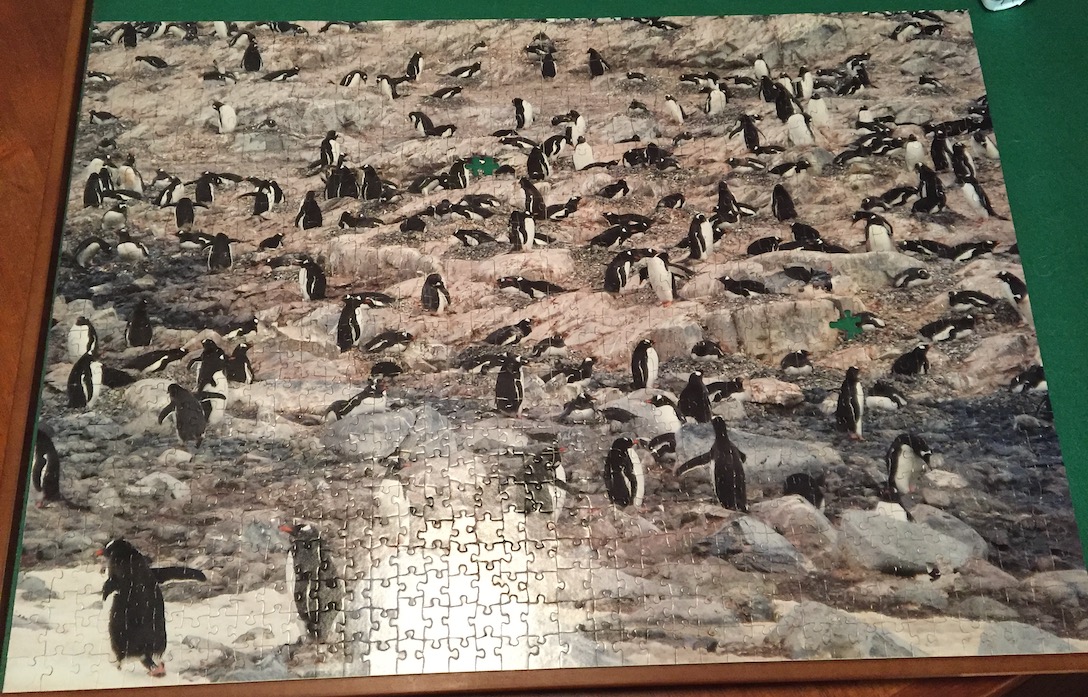
Five years ago, my dad went to Antarctica. He was in his late seventies, so that was a notable feat. (Since then, he’d been on an Arctic cruise, so maybe not so notable.) He came back with lots of photos to show me on his laptop.

One of those images showed scores of black and white (and orange-beaked) penguins on the slushy gray Antarctic landscape. I looked at that and thought, “That could be a jigsaw puzzle.” A damned hard jigsaw puzzle, to be sure. So I snuck the file onto my thumb drive, sent it off to a company that makes custom puzzles, and gave it to Dad as a present.

This month, four and a half years and one global plague that keeps everyone home later, Dad reported that he had completed the penguin puzzle!

16 May 2020

New Fun with Jack and Bill

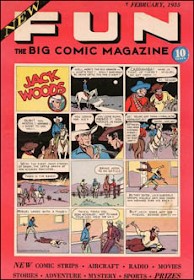
In 1935, National Publications issued its first magazine collection of original comics. New Fun was thus the first comic book from the company founded by Malcolm Wheeler-Nicholson that eventually became DC Comics.

That magazine basically tried to replicate a Sunday newspaper comics section. It was as large as a tabloid newspaper. Though the interior was all black and white, the company quickly moved to color printing, suggesting that was always the plan.

Most significant for the storytelling, the magazine offered twenty different comics, each on a single page. (Twelve more interior pages were filled with prose and advertising.) Some of those comics ended in gags, but most were serialized adventures. Most were also obvious knock-offs of popular newspaper strips or genres. The stories were aimed at different audiences, from little kids to adults looking for thrills.

The advertising reflected that same hope that the magazine would appeal to a broad audience. There were ads for model airplanes, for example, but also ads for job seekers. There were multiple ads for razor blades, indicating that the publisher expected a significant portion of the readers to be shaving. Some ads were aimed at men and a few at women. As National Publications narrowed its target audience to kids, some of those ads went away while others stuck around for decades.

One of the latter was for Charles Atlas’s bodybuilding lessons. From the start Atlas built his campaign around the graphic story of “The Insult that Made a Man out of ‘Mac’.” A scrawny young man gets humiliated in front of a girl on the beach, builds up his muscles, and returns to beat up that bully—in front of more admiring girls. The art was later redrawn, but the script didn’t change much.

One New Fun page turn later, however, came another bodybuilding ad built around another little story, but with a different message. The Jowett Institute of Physical Culture titled its comic “Jack ‘Puts One Over’ on His Boy Friend!” Girls appear in only half of its six panels (instead of seven out of nine in the Charles Atlas story). The relationship between Jack and his pal Bill is more developed than the one between Jack and Hannah. The institute also offered a “FREE Book with Photos of Famous Strong Men.” A different sort of appeal.


14 May 2020

After Catching The Train

The Train is a 1964 movie about French railroad personnel preventing a German army officer from removing a trainload of paintings from Paris toward the end of World War 2.

In real life, the French accomplished this through the national sport of bureaucracy—demanding extra paperwork, routing the train in a circle around Paris, delaying it at stations for more paperwork, and shunting the freight cars into yards until the Allied forces arrived. But that wouldn’t have made a thrilling movie.

Instead, producer and star Burt Lancaster wanted action. To that end he removed the original director, Arthur Penn, after three days of filming. Penn, coming from The Miracle Worker, planned to emphasize the psychological change in Lancaster’s character, from thinking that paintings are low priority for his Resistance cell to putting his life on the line for them.

Lancaster’s previous film, Luchino Visconti’s The Leopard, had been a poorly received by critics and paying audiences in America. (It’s now considered a classic.) So he wanted less psychology, more action. And since Lancaster was the producer as well as the star, he got it.

Lancaster sent Penn home and flew in John Frankenheimer, who had just directed him in Seven Days in May. The production shut down briefly while Frankenheimer and his team reworked the script and plotted out new set-pieces.

As a result, The Train has great action sequences. Early on, the movie shows the Allies bombing a rail yard. The crew really blew up that yard with dynamite and permission from the French government, which needed to renovate those tracks anyway. The long shot shows real explosive shock waves rippling through the ground.

Another sequence features a steam engine being derailed to stall traffic on a line. The scene’s famous final shot shows the engine crashing toward us in a wave of steel and dirt ending with one wheel spinning in the air only centimeters in front of the camera. Frankenheimer has talked about how that stunt was only partially planned. The engine came in too fast, it wiped out a bunch of other cameras, and he didn’t realize what he’d captured until he saw the surviving dailies.

One of The Train’s most impressive effects, however, is Burt Lancaster. The former circus acrobat could do stunts that few other leading men would try. Early on there’s a single shot in which he slides down a long ladder, runs past the camera so we can see his face, and jumps onto a moving locomotive that carries him back to the camera to deliver his line.

Ironically, Lancaster injured his knee while playing golf during production and had to limp through the final reels. To explain that, Frankenheimer added a scene in which the Germans shoot Lancaster’s character in the leg. And, man, he goes down hard!

Unfortunately, aside from those action sequences, The Train doesn’t have a lot of traction. The most complex character is the antagonist, an art-loving German officer played by Paul Scofield. Lancaster’s hero still makes the transition from skeptic about the paintings to fan, but that shift is never explored. Almost every other character gets killed, but only a couple of those deaths carry weight. The story lost too much in becoming an action movie.

06 May 2020

Looking Back on Claude Jarman’s Hollywood

I read about the child actor Claude Jarman, Jr., before I saw him in a movie, and it wasn’t a complimentary read. The Medved brothers’ Golden Turkey Awards listed Jarman in the category of Most Obnoxious Child Actor.

Though he didn’t have the dubious distinction of winning that award, Jarman’s entry dwelled on his debut performance as Jody in the 1946 MGM adaptation of Marjorie Kinnan Rawlings’s The Yearling.

Only later did I actually see that movie and assess Jarman’s performance for myself. He performed alongside Gregory Peck, Jane Wyman, and a herd of young deer selected to play one pet. Clearly someone who doesn’t like sentimental stories about wide-eyed children and animals wouldn’t like that film or Jarman’s performance. I think Peck as a young father carried the picture, but Jarman performed his major role just fine.

Of course, it helped that Jarman looked like the illustrations of Jody that Edward Shenton drew for the first edition of The Yearling. (Scribner’s commissioned more art from N. C. Wyeth for a deluxe edition the next year.) I came away thinking that Jarman’s performance might be a case of careful casting, director Clarence Brown finding a boy who looked and talked just as that one role required. But, if the Golden Turkey nomination was a fair indication, Jarman wasn’t up to any other part.

Later I ran across Brown’s adaptation of William Faulkner’s Intruder in the Dust (1947), which I’ve written about as one of the precursors to To Kill a Mockingbird. I hadn’t expected to see Jarman again—The Golden Turkey Awards didn’t mention that film at all. It’s a good movie, and Jarman did a fine job as a southern teenager realizing the racial injustice in his society.

Last week I watched John Ford’s Rio Grande (1950), discussed here. Again, there was Claude Jarman, this time playing the estranged son of cavalry officer John Wayne. Again, the Medveds didn’t mention this movie. And again, Jarman did fine with his part. It’s not a deeply nuanced role in a film whose biggest strength is the visuals, but he did all that was asked of him, including a crazy stunt.

How, I wondered, did this supposedly terrible young actor keep doing fine in good movies? In fact, Jarman made only about a dozen films in his whole Hollywood career, so for three to stand the test of time is an achievement. (Two more westerns, Roughshod [1949] and Hangman’s Knot [1952], also have fans, but I haven’t seen them.)

To understand Jarman’s work I sought out his autobiography, My Life and the Final Days of Hollywood, published in 2018. It’s a short book, straightforwardly told. Just as the title suggests, it combines Jarman’s own life with the change he saw happening around him during his stint in the movie capital in the late 1940s.

As MGM’s publicity machine trumpeted, Clarence Brown spotted Jarman at his school in Nashville taking down a Valentine’s Day display in 1945. Some versions of the story say Jarman had missed a haircut and was thus sporting a rustic look, suitable for Jody. A photo in My Life and the Final Days of Hollywood casts doubt on that; sent back to a producer in California, that image shows Jarman with hair much shorter than he wore in the movie.

In any event, Brown convinced MGM to bring Jarman and his father out to the coast for a screen test, then to cast the boy as Jody. The Yearling took almost a year and a half to make in Florida and California, released for Christmas season in 1946.

Jarman arrived in Hollywood (technically Culver City) when the studio system was still intact. MGM provided him with a weekly salary, drama lessons, publicity, and acting assignments whether he was interested in those movies or not. He went to school at the studio alongside other child actors like Elizabeth Taylor, Margaret O’Brien, and Dean Stockwell. It didn’t take him long to realize that he didn’t share their interest in acting or being a star.

A lot of successful child performers are naturally short or bloom late, so they can play younger roles. Jarman, in contrast, grew several inches in his early teens, meaning his height and body no longer fit his baby face. As Harry Carey, Jr., recalled, at fifteen Jarman “was 6'2" and weighed about 160 pounds.” That made it tough for MGM to cast him. In fact, in Rio Grande Jarman played a West Point dropout—a significantly older role, albeit one that needed an actor with a young face.

Meanwhile, the studio system was crumbling around him. Between television and the antitrust lawsuit that separated movie studios from cinema chains, the industry changed from assembly line to contingency projects. In 1949, Jarman happily went back to Tennessee. He was a star athlete at his prep school, then enrolled at Vanderbilt. Jarman spent summers or skipped classes to make a few more films, such as Rio Grande, and entered the business world.

Eventually, however, Jarman found himself back in a wing of show biz, running the San Francisco International Film Festival. He started in 1965, before revival cinema was everywhere, and he tapped his Hollywood contacts to bring special guests up from LA. That experience gave Jarman another couple of chapters of anecdotes and a perspective on the movie business that enriches his whole book.

Notably, Jarman refers to The Golden Turkey Awards at one point in his memoir, mentioning how his costar in Fair Wind to Java, Vera Ralston, was nominated for Worst Actress of All Time. Though he makes a point of saying he never read his own reviews, I can’t help but think he knew about the Medveds’ critique of his own acting career. Which I’ve now come to think of as unfair.

Jarman published his memoir through Covenant Books, a self-publisher that markets itself to Christian authors. That probably limits the reach of the book into physical stores and libraries, but there’s a digital edition available. The book is written and produced at a professional level. (Jarman credits Sloan de Forest with helping him write his story.)

People interested in the history of America’s movie studios should enjoy My Life and the Final Days of Hollywood, not because it reveals a great deal new but because it shows those details through one wide-eyed child’s perspective. Jarman’s Hollywood career was short and in many ways atypical. But he did fine, and he came out fine.

05 May 2020

Rio Grande and Roman Riding

Rio Grande is the third western that John Ford made about the US Cavalry with John Wayne as one of the stars. Ford made it only because the head of the Republic studio demanded another western before financing the movie Ford really wanted to make, The Quiet Man.

As such, Rio Grande was quickly shot, with even more continuity lapses than usual. (Ford always delivered minimal footage so the studio couldn’t edit his movies into something he didn’t want.) There are a few too many musical numbers, and the central story of a cavalry colonel, the wife he won during the Civil War, and the son he barely knew who becomes one of his recruits gets played out but not deeply explored.

At the same time, Rio Grande works. Shot in the Moab Valley of Utah, its visuals are amazing. Wayne and Maureen O’Hara are strong in their roles, and Ford’s usual cast of supporting players enact their usual parts well. The jokes land. The final action sequence is set up by just a couple of shots in the opening montage. The movie might have been a masterpiece if its makers had put more into it, but it’s as entertaining as it needs to be.

One of the most impressive scenes comes early as a sergeant, played by Victor McLaglen, challenges the new cavalry recruits to do “Roman riding,” standing astride two galloping horses. There’s no reason for this to be in the movie but spectacle. That skill never comes back later in the action, but it looks good on screen. And it looks even better when you realize that the actors—Ben Johnson, Harry Carey, Jr., and Claude Jarman, Jr.—performed the Roman riding themselves.

Now I knew Johnson got into the movies as a horseman, supplying horses and then doing stunts before becoming an actor. But Jarman started out as a child star in The Yearling. I had to go back in the video to confirm that yes, there’s one unbroken shot of him vaulting onto two horses, standing, and riding off. So I went hunting for the story behind that sequence.

A few years back, Arthur Arnell posted excerpts from a conversation with Carey on a John Wayne discussion site. Carey recalled his and Johnson’s first conversation with Ford about the movie:
The old man sat there for a while, and finally said, “You guys know how to Roman ride?”

I said, “No, sir,” and Ben said, “No, sir,” and Ford said, “You’re going to have to learn it; we’re going to have Roman riding!”

We knew what it was, and Ben being real careful said, “Well, Mr. Ford, how long before we have to know how to do it?”

And he said, “A month.” So Ben looked at me and I looked at him and we both thought, “Oh, s**t!”
The two actors started training. At first it was so difficult that after riding sessions they “had to go to a nearby town to visit a physiotherapist,” Arnell reported. But after three weeks they could show off their new skill to the director.

Ford was pleased. In fact, Carey recalled, “I’d never seen the old b******d so happy.” And he decided, a week before filming, that Claude Jarman should also ride that way.

Jarman was only fifteen years old at the time, though tall enough to play a West Point dropout. According to Carey:
Now he looked like he barely rode at all, but he came out, croupered those horses, jumped up on my team, and went down the road no practice.
So basically the scene in the movie played out just like real life.
Ben said, “Well, Jesus Christ.” We wanted to crawl under a board. And old man Ford said, “Well, Jesus, it took you guys three weeks, for Christ’s sake.”

Ben said, “He’s never been hurt before, Mr Ford.”

Ford said, “What?” He made you repeat everything.

“Well, he’s never been mashed up or hurt, he’s not afraid.”

“You’re goddam right, he’s not afraid!”

So Claude rode, too. He used my team since we only had two. It was unusual for people who had critical parts in a movie to do that kind of stunt, but Ford would do it. We shot that Roman riding sequence right in the middle of the picture, and we were even out Roman riding every morning on location.
Carey added that Jarman, unlike his adult castmates, “felt no ill effects whatever” from standing on horses.

A man named William T. Brooks, who had been on extra on Rio Grande, added some moviemaking details on that discussion site:
They were not attached to the horses, but they did have on black rubber sole tennis shoes. But if you look close the next time that you watch the film, you might see that the horses have “trace straps” holding them together so they would not go in different directions.
And the final word from Jarman’s autobiography:
They seemed as surprised as I was when I stood up without a hitch on my first try! Ben even seemed a little chagrined that I took to trick-riding so easily and was heard to mutter, “The reason that kid did it so easy is that his feet are so goddamned big they just wrapped around the horse’s back!”

30 April 2020

Love and the Law in a Terrific Tangle

A Stranger in Town is a competent B picture from MGM in 1943.

It starred Frank Morgan, best remembered as the title character in The Wizard of Oz. As Wikipedia says, a typical Morgan role was “a befuddled but good hearted middle-aged man.” In this case, his character spends much of the movie playing good-hearted and befuddled when in fact he’s a sharp and sometimes cranky Supreme Court judge on vacation in a small town.

The movie’s young couple was played by Richard Carlson, as the small-town lawyer, and Jean Rogers, as the justice’s prim clerk. Rogers had played Dale Arden in the Flash Gordon serials and was hoping for better roles at MGM. Carlson went on to star in Creature from the Black Lagoon before establishing himself in television as both actor and director. So all three principals are best known for their roles in fantastika.

It was refreshing to see a movie that reflected the New Deal belief that honest government was a good thing that people deserve. In real life, we’ve gone from the post-Reagan attitude that honest government was the best version of a bad thing that we could hope for to the current dismissal of good government being possible at all.