09 June 2006

Runaway Bunny source material

Last month I wrote of my fondness for The Runaway Bunny, by Margaret Wise Brown, with pictures by Clement Hurd, over more recent “I Love You More Than That Other Book” books for new parents and young children.

In his 1992 biography of Brown, Leonard S. Marcus writes that the inspiration for this book came from a Provençal love song. The lines he quotes are:

If you pursue me I shall become a fish in the water
And I shall escape you.
If you become a fish, I shall become an eel.
If you become an eel, I shall become a fox
And I shall escape you.
If you become a fox, I shall become a hunter,
And I shall hunt you...
The closest equivalent in the British tradition seems to be a ballad called “The Twa Magicians,” collected by Francis James Child in the late 1800s.
The lady stands in her bower door,
As straight as willow wand;
The blacksmith stood a little forebye,
Wi hammer in his hand.

“Weel may ye dress ye, lady fair,
Into your robes o' red;
Before the morn at this same time,
I'll gain your maidenhead.”

“Awa, awa, ye coal-black smith,
Woud ye do me the wrang
To think to gain my maidenhead,
That I hae kept sae lang!”

Then she has hadden up her hand,
And she swam by the mold,
“I wudna be a blacksmith's wife
For the full o' a chest o' gold.

“I'd rather I were dead and gone,
And my body laid in grave,
Ere a rusty stock o' coal-black smith
My maidenhead shoud have.”

But he has hadden up his hand,
And he sware by the mass,
“I'11 cause ye be my light leman
For the hauf o' that and less.”

[FIRST CHORUS:]
O bide, lady, bide,
And aye he bade her bide;
The rusty smith your leman shall be,
For a' your muckle pride.

Then she became a turtle dow,
To fly up in the air,
And he became another dow,
And they flew pair and pair.
[FIRST CHORUS]

She turn’d hersell into an eel,
To swim into yon burn,
And he became a speckled trout,
To gie the eel a turn.
[FIRST CHORUS]

Then she became a duck, a duck,
To puddle in a peel,
And he became a rose-kaim’d drake,
To gie the duck a dreel.
[FIRST CHORUS]

She turn’d hersell into a hare,
To rin upon yon hill,
And he became a gude grey-hound,
And boldly he did fill.
[FIRST CHORUS]

Then she became a gay grey mare,
And stood in yonder slack,
And he became a gilt saddle,
And sat upon her back.

[SECOND CHORUS:]
Was she wae, he held her sae,
And still he bade her bide;
The rusty smith her leman was,
For a' her muckle pride.

Then she became a het girdle,
And he became a cake,
And a' the ways she turnd hersell,
The blacksmith was her make.
[SECOND CHORUS]

She turn’d hersel’ into a ship,
To sail out ower the flood;
He ea'ed a nail intill her tail,
And syne the ship she stood.
[SECOND CHORUS]

Then she became a silken plaid,
And stretch’d upon a bed,
And he became a green covering,
And gain’d her maidenhead.
[SECOND CHORUS]
Brown might not have known of this version or any like it. Still, her book's source material seems to have been at bottom about snobbishness and rape, and all the magical transformations laced with sexual innuendo. But she produced a reassuring bedtime story out of it.

Incidentally, Clement Hurd’s picture-book work, along with his wife’s and son’s, is on exhibit at the Rhode Island School of Design Museum through 23 July.

08 June 2006

Agent Kristin's top ten

Agent Kristin, “a very nice literary agent,” shares the top ten things she’d rather not see in the opening chapters of manuscripts. Many of these prohibitions are peculiar to fantasy novels--unless authors of, say, contemporary realistic fiction start their stories off with “Characters inexplicably getting sucked into a portal” or “A person gathering herbs in the forest.”

But maybe I speak too soon.

“Our relationship,” I say, starting to unpack the groceries.

“What about it?” We have lived together long enough that I can sense the wariness that she would deny if I were to ask.

“Nothing,” I say. I slam the baguette into the steel bread box.

“No, really. What? Why does every serious conversation have to start out like this?”

“Start out like what?” I say, because I panic and can’t think of anything better. I reach back into the paper grocery sack, making as much noise as I can.

“Start out like--"

Silence.

I turn. She has vanished, truly vanished, into another world. I am alone in the cramped apartment kitchen, holding a clear bag of freshly gathered herbs.

Some of Agent Kristin’s warnings are more general, such as “I have yet to see a well-done prologue in sample pages I’ve received.” There she echoes the advice of Elmore Leonard, whose own top-ten advice list says, “Avoid prologues.”

Have I mentioned that one of my current writing projects has a prologue? I may decide to relabel it.

07 June 2006

The Night Is Singing too quietly?

Fantasy literature depends on children's imaginations, but sometimes that imagination can be too energetic--it can make a young child anxious about a dark night and an empty bedroom. That's what The Night Is Singing, a new picture book from Jacqueline Davies and Kyrsten Brooker, responds to.

Jackie's a good friend, and I saw her text for this book in a critique group and then through several stages to print. So I don't claim this is an unbiased opinion about The Night Is Singing.

I simply mention hearing that the two big U.S. bookstore chains have passed on stocking this picture book because it's "quiet." I'm not a parent, but I'd think that quiet is a good quality for helping a child go to bed. And the advance reviewers seem to agree.

  • Horn Book: a "welcome contrast to the monster-under-the-bed genre"
  • School Library Journal: a "perfect bedtime read"
  • Kirkus: "gratifying and readable night after night"
So even if the two big chains don't (yet) carry The Night Is Singing in their regular stock, we can find it at Powell's and other independent retailers. Dial offers a look at a couple of page spreads, and Jackie's own site gives a hint of the rhyming text.

06 June 2006

Ozma in chains and other rare images

A few years ago, I understand, the Baum Family Trust made a deal with the heirs of Ruth Plumly Thompson, the first author to continue the Oz series after L. Frank Baum's death. Since Baum's own novels are all in the public domain and available from several publishers and Project Gutenberg, the Baum Trust needed some intellectual property to call its own. About a dozen of Thompson's Oz novels are still under copyright and therefore can be exclusive properties.

However, it turned out those Thompson books were already under contract to Random House due to an old agreement with the Del Rey imprint. And as long as Random keeps its print-on-demand editions on sale, I suspect, that contract remains in force. What to do?

Well, the Del Rey editions didn't include one ingredient of the original books: John R. Neill's color plates. Under the copyright doctrines of the early 20th century, illustrations were considered derivative of the texts they illustrated unless a contract specified otherwise, so the images on those plates had become part of Thompson's copyrights--but not part of the Random House editions.

The happy result of that situation is that the Baum Trust has posted those color images on its Oz-Central website. Small as the images are, this is the first time most of those pictures have been widely distributed in many decades--since the Reilly & Lee Company stopped printing the plates to save costs. (Books of Wonder and the International Wizard of Oz Club have each reprinted a couple of Thompson novels with color art, but most have been reprinted only in black and white.)

There are some wild images in the collection, such as the pictures of Ozma in chains (as aforementioned) and a frightening first glimpse of Jinnicky the Red Jinn from Jack Pumpkinhead of Oz; the many indignities of Kabumpo the Elegant Elephant in The Purple Prince of Oz; and different magical telescopes in The Yellow Knight of Oz and The Wishing Horse of Oz. Some color plates offer our only glimpses of certain Oz characters.

Thanks to Atticus Gannaway for this alert.

05 June 2006

E. Nesbit: magical realism before its time

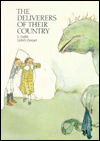
In a discussion of "magic(al) realism" on an email list in March and more recently in another on Child_Lit, I opined that all the traits that define that literary style (aside from continental origin) can be found in E. Nesbit's short story "The Deliverers of Their Country", published in 1899. [Actually, I called that story "The Saviours of Their Country," so proud that I'd spelled the second word in the English way. Oh, well.]

On Child_Lit Leda Schubert posted one definition of "magic realism," from Herbert Kohl's From Archetype to Zeitgeist (1992):

Magic realism is the name given to a style of writing that has emerged in fiction written over the past twenty-five years in Central and South America [i.e., since 1967]. The style is characterized by a jarring juxtaposition of magical and strange occurrences described in ordinary and detailed descriptive language. Magic realism does not try to make the strange seem special or mystical, but rather matter-of-fact and part of everyday reality. The Colombian Gabriel Garcia Marquez (1928-), one of the leading creators of this style, once said in an interview that attention to the concrete details of the magical event created the belief in magic as ordinary and within the world that is essential to this style. He gave an example of elephants flying through the sky, and said that one wrote that there were twenty-two elephants flying by instead of merely that there were elephants flying by, because that detail infused the magic with enough reality to draw the reader in.
Obviously Nesbit wrote in England about a hundred years ago, and not in Latin America forty years ago. But otherwise, how does her story meet this definition's main criterion of making the strange seem "matter-of-fact and part of everyday reality" through "attention to the concrete details"?
It all began with Effie's getting something in her eye. It hurt very much indeed, and it felt something like a red-hot spark--only it seemed to have legs as well, and wings like a fly. Effie rubbed and cried--not real crying, but the kind your eye does all by itself without your being miserable inside your mind--and then she went to her father to have the thing in her eye taken out. Effie's father was a doctor, so of course he knew how to take things out of eyes; he did it very cleverly with a soft paintbrush dipped in castor-oil. When he had got the thing out, he said:--

"This is very curious." Effie had often got things in her eye before, and her father had always seemed to think it was natural--rather tiresome and naughty perhaps, but still natural. He had never before thought it curious. She stood holding her handkerchief to her eye, and said:--

"I don't believe it's out." People always say this when they have had something in their eyes.

"Oh, yes--it's out," said the doctor--"here it is on the brush. This is very interesting."

Effie had never heard her father say that about anything that she had any share in. She said "What!"

The doctor carried the brush very carefully across the room, and held the point of it under his microscope--then he twisted the brass screws of the microscope, and looked through the top with one eye.

"Dear me," he said. "Dear, dear me! Four well-developed limbs; a long caudal appendage; five toes, unequal in length, almost like one of the Lacertidae, yet there are traces of wings." The creature under his eye wriggled a little in the castor-oil, and he went on: "Yes; a bat-like wing. A new specimen, undoubtedly. Effie, run round to the professor and ask him to be kind enough to step in for a few minutes."

"You might give me sixpence, daddy," said Effie, "because I did bring you the new specimen. I took great care of it inside my eye; and my eye does hurt."
Lots of matter-of-fact, concrete detail about what turns out to be a dragon. Enjoy the rest of the story here, or check out the Lisbeth Zwerger picture book.

04 June 2006

Penrod and the lamp of real literature

For a change of pace, I just listened to Fat Ollie's Book, by Ed McBain, which contains the entirety of a very rough, very short detective novel written by a rather rough, rather broad detective. That put me in mind of the granddaddy of bad writing within novels, the adventure story that Booth Tarkington's Penrod writes in his private moments:

Creation, with Penrod, did not leap, full-armed, from the brain; but finally he began to produce. He wrote very slowly at first, and then with increasing rapidity; faster and faster, gathering momentum and growing more and more fevered as he sped, till at last the true fire came, without which no lamp of real literature may be made to burn.

Mr. Wilson reched for his gun but our hero had him covred and soon said Well I guess you don't come any of that on me my freind.

Well what makes you so sure about it sneered the other bitting his lip so savageley that the blood ran. You are nothing but a common Roadagent any way and I do not propose to be bafled by such, Ramorez laughed at this and kep Mr. Wilson covred by his ottomatick

Soon the two men were struggling together in the death-roes but soon Mr Wilson got him bound and gaged his mouth and went away for awhile leavin our hero, it was dark and he writhd at his bonds writhing on the floor wile the rats came out of their holes and bit him and vernim got all over him from the floor of that helish spot but soon he managed to push the gag out of his mouth with the end of his toungeu and got all his bonds off

Soon Mr Wilson came back to tant him with his helpless condition flowed by his gang of detectives and they said Oh look at Ramorez sneering at his plight and tanted him with his helpless condition because Ramorez had put the bonds back sos he would look the same but could throw them off him when he wanted to Just look at him now sneered they. To hear him talk you would thought he was hot stuff and they said Look at him now, him that was going to do so much, Oh I would not like to be in his fix

Soon Harold got mad at this and jumped up with blasing eyes throwin off his bonds like they were air Ha Ha sneered he I guess you better not talk so much next time. Soon there flowed another awful struggle and siezin his ottomatick back from Mr Wilson he shot two of the detectives through the heart Bing Bing went the ottomatick and two more went to meet their Maker only two detectives left now and so he stabbed one and the scondrel went to meet his Maker for now our hero was fighting for his very life. It was dark in there now for night had falen and a terrible view met the eye Blood was just all over everything and the rats were eatin the dead men.
And just at that moment of utter suspense, I must leave off.

03 June 2006

Han Solo plasticized

Click on this picture for a gallery of photos of one of my generation's most powerful fantasy images--Han Solo in carbonite--as reproduced entirely in LEGO blocks.

I didn't know there was such a thing as a "Certified LEGO® Professional," but ersatz-carbonite sculptor Nathan Sawaya is one. How many other certified pros are there? And are there freelance LEGO® Professionals, working without certification?

I imagine certified guild members, assisted by Danish mercenaries, chasing down the renegades. But the authorities have trouble locking them up because it takes so much time to build a prison out of millions of little plastic bricks.

Low-budget movie deal for Roger S. Baum

Publishers Weekly reports that Alpine Pictures has optioned seven of the latter-day Oz books written by Roger S. Baum, great-grandson of L. Frank Baum. Among the titles mentioned are Dorothy of Oz, The Oz Odyssey, and The Rewolf of Oz.

Yahoo! Finance says Alpine Pictures "concentrates on the domestic and international distribution of low-budget motion pictures, distributing films to theatrical, cable, broadcast, and home video (DVD) markets." IMDB.com offers an Alpine filmography. For these books, Alpine hopes to develop a series of animated features. One Roger S. Baum book was
already made into a movie, Lion of Oz (also known by other titles), in 2000.

I find Roger S. Baum's Oz stories flat and derivative even for pastiches--and I do a lot of work with Oz pastiches. I suspect these books wouldn't be distributed so widely if the author were a matrilineal descendant of Baum instead of a patrilineal one (i.e., one who happens to carry the Baum name). But Roger S. Baum's website offers a different take: "He is considered one of the current top ten best-selling authors of children's books. Some believe that J. K. Rowling's Harry Potter series may have been influenced by these adventures in OZ." So he definitely has the character of a humbug down cold.

02 June 2006

S&S to go Foo

Publishers Weekly reports that Simon & Schuster will pick up the paperback rights to Leven Thumps and the Gateway to Foo, by Obert Skye, and future books in this series. According to the magazine article, the book has sold 60,000 hardcover copies despite its publisher, Shadow Mountain, suffering "distribution glitches."

Shadow Mountain is an imprint of Deseret Books designed to focus on the "values-based, general market." Deseret Books, in turn, is "a wholly owned subsidiary of Deseret Management Corporation, the holding company for business firms owned by The Church of Jesus Christ of Latter-day Saints." All of its books, the company website says, "reflect the values espoused by The Church of Jesus Christ of Latter-day Saints." So the Leven Thumps series is at bottom a Mormon answer to the Harry Potter phenomenon. As the Christian Science Monitor review pointed out, "even the typeface looks the same." (Of course, the Monitor is the Christian Science answer to the New York Times, or vice versa.)

The Motley Vision blog discussed this series a year ago, including the assumption that Obert Skye is a pseudonym. Interestingly, a man answering to that name does school visits, at least in Utah. Apparently, pseudonymity doesn't compromise school security if you come to tell children that "Impossible is not a word. You have the potential to do great things."

01 June 2006

Cronus Chronicles website

I haven't read The Shadow Thieves, but I'm very impressed by the Cronus Chronicles website that author Anne Ursu has commissioned. For an author's site (as opposed to one created by a multinational publishing conglomerate after a "property" has proved itself in the marketplace), it's elaborate and heavy with stylish graphics. Much credit due to Jonathan Van Gieson at Fictional Company design.

One detail that caught my eye in this preview is that the books' secondary protagonist, Zee, is a boy from London. From what I can tell, Ursu is rooted in America: Brown University, Portland (Maine, though it could just as well have been Oregon), Minneapolis, and soon back here in New England. But does top-market children's fantasy need a dash of British flavour these days?

In early April, Publishers Weekly reported on upcoming fantasy novels for children and young adults that publishers planned to promote strongly. Of all the titles mentioned, only Jeanne DuPrau’s prequel to City of Ember is written by an American. All the first-time authors (or first-time authors of children’s fantasy) that the magazine highlighted are British.