11 October 2011

One of These Things Is Not Like the Others


For each of the four Oz-book adaptations he’s scripted for Marvel Comics, Eric Shanower has drawn a variant cover for at least one issue.

For the first four of those covers, Shanower mainly followed the character designs that Skottie Young created for the series, adapting them slightly to his own style.

On this season’s Dorothy and the Wizard in Oz, however, we see Eric’s own characterizations, in the style he developed for Adventures in Oz, as influenced by John R. Neill.

Or, as we traditionalists like to think, the way those characters really look.

10 October 2011

Weekly Robin Special: The Games Plotters Play

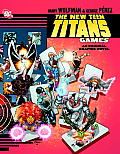
Saturday’s weekly Robin special discussed how Marv Wolfman and George Pérez developed New Teen Titans: Games over more than two decades, and how Wolfman believes (for the purpose of a publicity interview, but no doubt sincerely as well) that that delay benefited the book.

Indeed, at some points in recent years the book could not have been published. Its action involves attacks on New York City buildings, bombs planted in the UN and other landmarks, an attempt to shoot a passenger jet out of the sky, and, at the climax, the tops of skyscrapers crumbling (as shown above).

In late 2001 Pérez responded to a question about whether Games would ever appear by stating, “a major scene in the story took place on the World Trade Center towers. That pretty much ends the speculation for me.” But more years have passed, that scene was changed, and those images, while powerful, are no longer so raw. [Ironically, New Teen Titans, vol. 2, #20, from 1986, shows Donna Troy nearly flying the Titans jet into the World Trade Center. Oops!]

Still, it seems that the long gestation time blurred some details of the Games plan. The way the book was created, Pérez typed up an incomplete plot outline and then went home to draw pages, filling out the action visually for Wolfman to script later. By the time they came back to those pages, Pérez no longer remembered how he expected certain images to fit together. And then the team rewrote their story with a new ending and more character moments.

As a result, some parts of the plot don’t quite fit together. Early on, the Titans spot secret agent King Faraday using all the resources of the federal government to pressure them into helping him on his mission. Yet the book has shown Faraday losing power within the bureaucracy, and the Titans have their own high connections. More important, despite knowing that Faraday is willing to manipulate them, Nightwing and the Titans never question the evidence he shows them.

At one point young Danny Chase is grazed by a bullet; several pages later, he’s shielded from six bullets. Three different times, things blow up in front of him. A character named the Squire suddenly feels his body age or deteriorate, but it’s unclear how that happens, and most of the other secondary villains just explode. And I never got what powers the Squire’s musical instrument is supposed to have.

The villains prove that they can plant bombs and lasers all over New York, unleash giant robots, take over all television broadcasts, and make nasty creatures appear from nothing. Yet the whole nefarious plot requires taking over one building and its power supply. Because without that, the US won’t believe that really bad things can happen. Yeah.

In the end, the plot turns out to involve one crazy person secretly recruiting several more crazy people. (I use the term “crazy” because there’s no realistic depiction of mental illness; the characters’ conditions are excuses for them to behave unreasonably as need be.) Wolfman and Pérez invented villains for this project to reflect various types of video games popular in 1988. By the end of this volume they’re almost all dead, with no great loss to the world—not that that stops comic-book characters from coming back.

The Titans split up to battle those separate foes, then gradually team up to triumph, underscoring this series’ recurring theme of sticking together. Some of those conflicts weren’t compelling for me, but perked up as they intertwined. Pérez and Wolfman make especially good use of Jericho’s power to enter and take over other people’s bodies.

Of course, I never read the New Teen Titans for the villains or the fights. (Remember that fish-god-thing from the museum? I thought not.) I read it for the heroes and their interactions. Games brings back the Titans’ private lives and relationships, even Donna’s relentlessly loving marriage with Terry Long.

I’d have been happy with a few more glimpses of Dick and Kory as a couple, but Pérez made sure to show Nightwing shirtless for the final pages of the fight; some traditions are indispensable. Koriand’r comes through as gorgeous, strong, and passionate, and she also thinks through her opponent’s weaknesses. This is especially welcome in a month when DC introduced a new version of Koriand’r who appears emotionally and mentally vacant, and—hard as this is to believe—even less dressed.

My favorite of the “private” moments on first reading was Dick having to contact all of Joey Wilson’s recent girlfriends on what, way back in 1988, we called “answering machines.” (At another high-tech moment, Donna holds up a CD and calls it “a hard disk.”)

At the end, we see several past Titans joining the current lineup before one of their beloved picnics together. Titans Tower doesn’t look the way it once did, but once again we’ve seen what’s really important: the team stands tall.

COMING UP: Pérez’s panels.

09 October 2011

The New Teen Titans: Games Pocket Universe

As the weekly Robin started to discuss yesterday, Marv Wolfman and George Pérez began mapping out New Teen Titans: Games in 1988. At that time, a young telekinetic named Danny Chase was one of the Titans, Batman’s young crime-fighting partner was Jason Todd, and Nightwing was feeling estranged from his mentor.

Within months, Jason was killed, Nightwing had responded by cutting Danny from the team, and Tim Drake was slipping into the role of Robin—in a story initially written by Wolfman and drawn by Pérez. Those developments meant that Games no longer reflected current Titans continuity. As time passed, its storyline slipped even further behind the DC Universe.

Soon the Games pages that Pérez had drawn belonged in a pocket universe of their own. Rather than toss those aside or rework them, he and Wolfman proceeded with their story. The result is what DC once called an “Elseworlds” story, though less radically redesigned than usual.

This version of DC reality offers starkly different fates for Danny Chase, master spy King Faraday, and Cyborg’s friend Sarah Simms, who works with children who have prosthetics. In this continuity, Tim Drake wears the first, bare-legged Robin uniform, and Dick and Bruce Wayne exchange warm handshakes, as in the pre-Crisis universe.

But otherwise, the Titans are very much like what we fans from the 1980s remember. In fact, in some ways they might be better. After the main action in Games, Pérez shows us that Gar Logan has stopped wearing his green hair in a mullet, which offers hope that Dick will never go down that route.

We can imagine a brighter future for the whole team. Donna might find a less ludicrous costume more quickly and not lose her family. Joey might never go mad. Dick and Kory could live together happily ever after. In sum, Games offers select comics fans the chance to imagine that things will always stay the way they remembered.

The biggest difference lies in the story of Danny, the “Cousin Oliver” of the Titans. When Wolfman invented that character, full of braggadocio and insults, he planned for the young teen to mature, and hoped that eventually people would recognize his good qualities. (Even Pérez didn’t care for Danny.) But readers didn’t come around. Wolfman wrote him off the team, and eventually out of existence.

Games offers an alternative path for Danny, and perhaps his finest moment. Wolfman scripts him realizing he’s reached his limits and then going beyond to protect people, making a big sacrifice in the process. In this continuity, Danny Chase remains a Titan, and becomes a hero.

TOMORROW: Plots within plots.

08 October 2011

Weekly Robin Special: Let the Games Begin

DC published the New Teen Titans: Games graphic novel this season, more than twenty years after scripter Marv Wolfman and penciler George Pérez met to map out their story. Such a big event demands more than a single weekly Robin posting.

I’ll start on a personal note: I had stopped reading the New Teen Titans magazine before DC Comics first announced back in the late 1980s that this book was on its way, so I’m not one of those fans who’ve waited for Games for over two decades.

On the other hand, I have been waiting for two years since DC announced that Pérez had resumed work and that it would soon publish the book. Fortunately, having grown to more than twice the age of the heroes in the magazine, I’d developed enough patience to handle that delay.

In fact, the book has benefited in many ways from the long wait. According to Wolfman’s comments in an interview at Bleeding Cool by new Teen Titans scripter Scott Lobdell:
In 1988, I had come up with the basic storyline, but I was then suffering a terrible writer’s block, the only one in my career, thank God, although it lasted 5 years. George, then-editor Barbara Randall Kesel and I talked over what I’d come up with, and because of my block George went home and typed up the overview, breaking it down and filling it out with ideas, etc. We actually print that plot in the Games hardcover complete with annotations so people can see what had been and what was then changed. He then drew between 60-70 pages before going into a Titans block and stopped. I never dialoged any pages since I was waiting for them all to be finished so I could write them all at once. Also, I was hoping my block would go away as didn’t want to do less than my best on it.

But when we finally came back to the story 23 years later, since we had not really worked out the last 50 plus pages in any depth, and because neither of us could remember what we intended decades before, and the plot, frankly, would have felt dated, we decided to come up with a new story, utilizing and making sense of all the pages George had already drawn, yet written to have an entirely new meaning. I started re-plotting the story, adding in a new villains, plot twists and more, as well as suggesting we change the major villain who was actually behind the whole plot, which was new as well. We also had to come up with all new character-driven scenes to make what was supposed to have been a pure action story into something much more. (As a companion piece to the regular book we were working on, a solid action book would have worked. Twenty-three years later that would not have been satisfying to any of us who had been waiting so long.)

Knowing the new character scenes which George and I worked on together, batting ideas back and forth as we always had, I then was able to dialog the earlier, already drawn pages, in a way that would cleanly set up where we were going to go. When you read it you will assume that was what was intended all along, because the copy and art work perfectly together, but it’s new. George and I would go back and forth and I’d rewrite the ideas and we finally had a story that was much, much stronger than had originally been designed.
That delay also meant that Games has ended up standing outside the standard DC Comics continuity—which might well be a good thing.

TOMORROW: The weekly Robin explores the New Teen Titans: Games pocket universe.

07 October 2011

Getting All Hyper

At Salon, Paul LaFarge discusses the fate of hypertext fiction, celebrated as the coming new thing in the 1990s and forgotten today.

Born into a world that wasn’t quite ready for it, and encumbered with lousy technology and user-hostile interface design, it got a bad reputation, at least outside of specialized reading circles. At the same time, it’s impossibly hard to create, one of the only modes of fiction I know of which is more demanding than the novel. (And then add to that the need to create a user interface, and maybe a content-management system, and is it going to be an app? Suddenly your antidepressants aren’t nearly strong enough to get you out of bed.)

It’s tempting to leave the story there, and to let the hypernovel, or whatever you want to call it, become part of the technological imagination of the past, like the flying car. But I believe that the promise of hypertext fiction is worth pursuing, even now, or maybe especially now. On the one hand, e-books are beginning to offer writers technical possibilities that, being human, we’re going to be unable to resist. On the other, the form fits with life now. So much of what we do is hyperlinked and mediated by screens that it feels important to find a way to reflect on that condition, and fiction, literature, has long afforded us the possibility of reflection.

Just as the novel taught us how to be individuals, 300 years ago, by giving us a space in which to be alone, but not too alone — a space in which to be alone with a book — so hypertext fiction may let us try on new, non-linear identities, without dissolving us entirely into the web.
LaFarge name-checks several print precursors to digital hypertexts: Laurence Sterne’s Tristram Shandy (1759-69), Vladimir Nabokov’s Pale Fire (1962), Júlio Cortázar’s Hopscotch (1963), and Jacques Roubaud’s The Great Fire of London (1989).

He also identifies Shelley Jackson’s “Patchwork Girl” and Geoff Ryman’s “253” as the possible “first classics of the genre, both for the quality of their prose and because they found ways to make their fragmentary forms feel purposeful.”

Jackson took the title and some inspiration for her hypertext work from The Patchwork Girl of Oz, of course. Ryman is the author of Was, a fictional study of L. Frank Baum, Judy Garland, and the Oz phenomenon in American culture. I’m just saying.

06 October 2011

“Books…want to be a whole lot cheaper”

At GigaOM, Mathew Ingram contemplates the falling prices of the Kindle and other simple electronic readers, and the falling prices of simple genre fiction in digital form:
…books don’t want to be free; they just want to be a whole lot cheaper than they are. And when you make books (not all books, but some) $4.99 or $1.99 or even 99 cents, people will buy more of them. . . .

There’s even the possibility that books could be free and still make money: Amazon has an ad-supported Kindle, so why not extend that model to the books themselves? Magazine writers publish their content in an ad-supported medium, so why not books? Authors such as Charles Dickens and Arthur Conan Doyle wrote many of their novels on a monthly basis as magazine supplements. And Amazon apparently already has a patent that covers advertising-supported e-books.

As we’ve pointed out before, the book is evolving as it becomes digital — there are Kindle Singles that aren’t much longer than a magazine-length feature, and some magazines and newspapers are packaging features in just that format, as well as newer services like Byliner that have been commissioning custom content. A free Kindle could be just the beginning of an explosion of book-like content from Amazon and others: The company is already talking about a “Netflix for books” that would offer content for a monthly fee.

Why not offer a subscription to an author, so I can automatically get whatever he or she writes, regardless of length or format? This would blend the worlds of blogging, Kindle Singles, magazine-length features and novels into one stream of content, and I’d be willing to bet more people would read more as a result. The printed book, as Seth Godin wrote recently, is a fetish of sorts, like an expensive watch: something we buy because we like to look at it, but something that is no longer really functional or necessary. In the end, that’s likely to be a good thing, not a bad one.
I doubt that people would sign up for anything an author writes. But they might well sign up for notifications (and one-click purchasing) of anything she writes, so they can be sure of the genre, main character, or other necessary qualities. If such a system takes place, it will surely change the nature of the writing, just as we can tell where Dickens broke off his serialized installments while making sure readers would come back for the next.

05 October 2011

The Danger with Giving Her Sharp Objects

From the opening chapter of L. Frank Baum’s Dorothy and the Wizard in Oz:

The little girl stood still to watch until the train had disappeared around a curve; then she turned to see where she was.

The shed at Hugson’s Siding was bare save for an old wooden bench, and did not look very inviting. As she peered through the soft gray light not a house of any sort was visible near the station, nor was any person in sight; but after a while the child discovered a horse and buggy standing near a group of trees a short distance away. She walked toward it and found the horse tied to a tree and standing motionless, with its head hanging down almost to the ground. It was a big horse, tall and bony, with long legs and large knees and feet. She could count his ribs easily where they showed through the skin of his body, and his head was long and seemed altogether too big for him, as if it did not fit. His tail was short and scraggly, and his harness had been broken in many places and fastened together again with cords and bits of wire. The buggy seemed almost new, for it had a shiny top and side curtains. Getting around in front, so that she could look inside, the girl saw a boy curled up on the seat, fast asleep.

She set down the bird-cage and poked the boy with her parasol.
Image from the opening pages of the Marvel Comics adaptation of Dorothy and the Wizard in Oz, drawn by Skottie Young from a script by Eric Shanower.

04 October 2011

The First Little Boy to Receive The Wonderful Wizard of Oz?

PBA Galleries is selling an unusual copy of the first edition of The Wonderful Wizard of Oz this week:
With ink inscription on front free endpaper, “Richard Adlai Watson, from his Godfather R.J. Street, May 23, 1900”; [bibliographers] Bienvenue & Schmidt note that “The Wonderful Wizard of Oz had its official publication on September 1, 1900,” making this a very early pre-publication copy. In fact, it pre-dates the copy given by [L. Frank] Baum to his brother, which he noted in the May 28, 1900 presentation inscription as “the first copy of The Wonderful Wizard of Oz that left the hands of the publisher.” The present copy was known to Justin Schiller, and in 1970 he speculated that Street was somehow involved in the publication of the book, and took a fresh copy from the press before Baum had a chance to get one.
This thing called the internet allows us to learn more about the people involved in this gift.

Richard Adlai Watson was born 16 Jan 1893 in Buenos Aires, according to his WW2 draft card, so the inscription date indicates that he received the book when he was seven. He went on to Yale, where he wrote melodramatic fiction. After graduating in 1915, he joined the American Bronze Company in Pennsylvania under his brother John Warren Watson, older by ten years and a UPenn grad. The brothers then founded the John Warren Watson Company, which manufactured the “Watson stabilator” and other shock absorbers for automobiles. They worked together for decades.

Since R. J. Street identified himself as Richard’s godfather, I guessed that his first initial stood for “Richard,” and searched for “Richard J. Street.” In 1900 a man of that name was the head cashier at the First National Bank of Chicago. Three years earlier, a guide to US banks said that Street “has a record of twenty-five years’ continuous service with the bank. He has had a very large share in the building up of that institution, and is recognized as the semper fidelis of the First National, and the presiding genius of its affairs.”

What’s the likely connection between Street and the Watson family? The Watson brothers were sons of Thomas T. Watson, born in Ireland about 1848. According to an article in The Insurance Press in 1917, the elder Watson worked for the Equitable Life Assurance Society for thirty-five years, starting as a clerk in Chicago around 1872, the same time Richard J. Street was starting at the First National. So I’m guessing the two young businessmen became friends. From 1889 on, Watson headed the company’s offices in Argentina and Brazil—which is why Richard was born overseas (though he might have been sent back to Chicago for schooling).

The main question is, of course, how Street might have given young Richard a copy of The Wonderful Wizard of Oz even before its author sent a copy to his brother, especially since (contrary to Schiller’s good guess) he was not involved in publishing. And on that I got nothing. Perhaps Street was so important in Chicago business that somebody at the publishing company slipped him a copy. Perhaps he simply dated the inscription wrong—though we expect precision from head cashiers. Perhaps Baum took the first copy from the press but didn’t inscribe it to his brother for another couple of weeks.

02 October 2011

Smith and Doyle on Drake

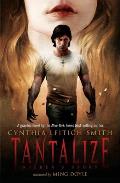
Today artist Ming Doyle signs copies of Tantalize: Kieren’s Story, a graphic retelling of the events in Cynthia Leitich Smith’s novel Tantalize, at the Brookline Booksmith.

In honor of that event, this weekly Robin quotes from Smith and Doyle’s Newsarama interview:

Nrama: What characters in comics would you like to write/draw a story with?

Smith: I’ve always been fond of Tim Drake/Robin. I suppose it’s the YA writer in me. I enjoy the intensity of young, smart heroes. I’d love to write him in either graphic or prose form.

Doyle: Tim Drake’s actually a character I have a lot of interest in as well! In general, I’ve always been drawn to the Bat family and its associates.
Smith has also expressed her admiration for Wonder Woman. Of course, that was before the DC Universe’s latest retelling.

01 October 2011

Cute Couples

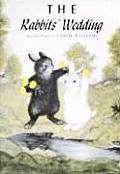
Yesterday Anita Silvey’s Book-a-Day Almanac spotlighted The Rabbits’ Wedding by Garth Williams:
Published first in 1958, The Rabbits’ Wedding features black and white rabbit protagonists. The artist most likely chose these colors to help delineate the two characters in a limited-color book, but adults interpreted this lovely romp in the forest as an endorsement of interracial marriage.

As Leonard Marcus recounts the controversy in Minders of Make-Believe, the Montgomery Home News condemned the book, then Alabama politicians rallied against the book and spoke out against the director of the Alabama Public Library Service Division, Emily Reed.
Showing how much things have changed, the most frequently challenged book in America last year was And Tango Makes Three by Peter Parnell and Justin Richardson, a picture book about two male penguins who raise a chick together. Adults interpret that true story as an endorsement of same-sex marriage.

Some people just don’t like seeing certain cute little animals happy together.