Showing posts with label COMIC Archie. Show all posts

28 November 2015

Archie Across the Globe

This week the New York Times ran a profile of Ahmad Saeed, a bookseller in Islamabad, Pakistan.

He inherited the business from his father this spring, and one of his first tasks as owner was accepting visits from “elderly men” who had come to apologize for shoplifting in their youth.

According to the Times of New York:
One of the penitent former book thieves who dropped in was Suleman Khan, the vice chancellor of Iqra University, in Islamabad.

“He came to say that when he was a child, 6 years old or so, he stole an Archie comic book and my father saw him,” Mr. Saeed said. “He said he was afraid he was going to get slapped, but my father said: ‘This is good that you like books. So every day you can take a book but keep it in mint condition and return it when you’re done so I can still sell it.’”

And then the vice chancellor said, “Everything that I am now, I owe to your father.”
That story seems remarkable in many ways, not least in how a comic story about teenagers inspired by life in Depression-era Haverhill, Massachusetts, could speak so powerfully to a six-year-old in Islamabad decades ago.

But Dr. Khan clearly isn’t the only Archie fan in that region of the globe. In 2014 a company executive told the Times of India that India was full of loyal readers. Riverdale is now home to characters of South Asian heritage, such as aspiring filmmaker Raj Patel, and Archie visited Mumbai in 2011, falling for Bollywood star Amisha Mehta.

09 November 2014

“No other comic-book character has lasted as long”

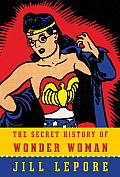
In articles derived from her new book, The Secret History of Wonder Woman, Jill Lepore has been talking up that comic-book heroine’s place in superhero history.

In Smithsonian:
Wonder Woman is the most popular female comic-book superhero of all time. Aside from Superman and Batman, no other comic-book character has lasted as long.
In The New Yorker:
Superman débuted in 1938, Batman in 1939, Wonder Woman in 1941.
Who’s missing from this discussion? “The Sensational Character Find of 1940,” of course.

Dick Grayson has appeared in stories for nearly three-quarters of a century, about a year and a half longer than Wonder Woman. He’s been a major character in two movie serials, a television series, and two feature films. Plus, half a dozen television cartoons have featured some version of Robin.

I suspect Robin is a pop-culture reference as recognizable as Wonder Woman. In fact, the name “Dick Grayson” might be better known than Wonder Woman’s occasional alias, “Diana Prince.”

Of course, Robin has always been a sidekick to Batman, and thus a supporting character or one in an ensemble instead of a lead. Though he appeared on more comic-book covers in the 1940s than Batman, not until the 1990s was there a comic book with the Robin name in its official title. In contrast, there’s been a Wonder Woman magazine since 1942 (with a yearlong break in 1986-87), and she’s usually worked on her own as well as with the Justice Society and Justice League.

So I’m not arguing that Wonder Woman is less prominent than Robin, just that he qualifies as a famous, long-lasting comic-book crime-fighter on the same level.

(And I won’t even mention that Archie Andrews made his debut in comic books in the same month as Wonder Woman, so those two comic-book characters have lasted the same time.)

01 May 2009

What Do Jughead, Goober, and Bim Have in Common?

Oz and Ends is not about to institute an award for Archie comics research to go along with its occasional honor for Batman research. Nonetheless, the editorial board feels a need to recognize the work at the "I'm Learning to Share!" blog on the history of Jughead's hat.

Though pictured these days as a crown, that hat originally had a crown, and covered more of Jughead's pate. It was, in other words, a recognizable version of the hats that other characters wore in the 1940s and even, in the case of The Andy Griffith Show's Goober Pyle, well into the 1960s. In American culture at the time the Archie comics launched, such hats were a marker of youth, and thus appropriate for the Jughead character.

The In Crowd has collected many examples of such hats, including one worn by Leo Gorcey in the Dead End Kids' finest film, Angels with Dirty Faces (1938). And that indefatigable blogger has gone further to theorize about how such hats were created:

It appears that the first people to wear the original 'Jughead'-styled caps were auto mechanics, welders and other workmen who found they could get the same 'safety' function of a factory worker's beanie by altering an old worn-out fedora.

The method was to turn a fedora upside-down, push the hat's crown inside-out, then turn up the brim and trim away its excess with a scalloped cut.
Oz and Ends breathlessly awaits further research on these questions:
  • Can we confirm the In Crowd's hypothesis by, for example, unearthing magazine instructions on how to make such a hat when they were cool?
  • What term people did use for such headgear before it became nearly exclusive to Jughead? Were such caps seen as a simple variation of the 1920s "whoopee hat"?
(Tip from Good Comics for Kids.)