11 July 2026

The Facts Behind the First News Stories about an “Our Gang Curse”

My last two postings have posited that the long-lived public discussion of an “Our Gang curse” started with a couple of wire-service articles in early 1959, spurred by the deaths of Carl “Alfalfa” Switzer and Don “Fats” Law.

Carl Switzer had indeed been a star of many Our Gang shorts. He had a bad death, shot in the groin in a fight over $50 for training a hunting dog. He was only thirty-one. Yes, that can sound cursed.

But Don Law, who “died of an intestinal disorder” a couple of weeks later, was never in the Our Gang movies, much less in twenty of them as his obituary claimed. That series never had a character named “Fats.” Law’s death got nationwide attention because it came so soon after Switzer’s, and that concatenation launched the “Our Gang curse.” Yet that coverage was based on a lie.

The long May 1959 article by Rick Du Brow about the Our Gang alumni as a “pathetic group of Hollywood ‘has-beens’” rested on similar misinformation. It offered a list of five Our Gang alumni who had “died in the past seven years” alone. Two were Switzer and Law, so right away the pattern was weaker than presented.

That list of recent deaths included the actress Helen Parrish, but she was never in the Our Gang series. Parrish had been a child actress in the 1920s, appearing in one Smitty short with Donald Haines, who was later part of the gang, but that’s as close as she got.

Clifton “Bobby” Young did appear in a bunch of Our Gang shorts in the late 1920s and early 1930s before his adult acting career. He died in a fire in 1951, and thus not in “the past seven years.”

Billy “Froggy” Laughlin (not McLaughlin, as Du Brow had it) was a regular in the late Our Gang shorts from MGM. He died at age sixteen after a motor scooter crash in 1948. Again, that wasn’t in the preceding seven years. Du Brow obviously stretched for examples to produce the illusion of a trend.

Du Brow also mistakenly listed Eddie Bracken and Nanette Fabray as Our Gang alumni. He wrote that embezzler Lea Artye Folz had been in the gang; she had small roles in three shorts but more appearances in rival series and features.

Du Brow said the Rev. Ben Griffith had played Mickey McGuire in Our Gang; that was the title character in a rival series, played by Mickey Rooney and Marvin Stephens. Griffith did claim to have played that part in Our Gang as early as 1950 and as late as his 1988 autobiography, but I don’t see confirmation anywhere.

I also mentioned a Miami News article from early 1959 listing four locals as Our Gang regulars. Only one was: Shirley Jean Rickert, who made six appearances in 1931 followed by an equal number of Mickey McGuire shorts in 1933–34. Geraldine Fay and Sy Rich had no discernible link to Hollywood. Jack Ray made a fleeting appearance in one Our Gang movie in 1926, but he never played “Freckles” in the series as the Miami story said. (Ray did, however, spend most of his childhood appearing in theaters across the US, Canada, and western Europe claiming to have played “Freckles” in Our Gang. I’m still collecting information on him.)

Thus, in 1959 a lot of people were telling false stories about being in Our Gang as children, possibly because of work on other series, possibly out of wishfulness. Yet Du Brow was actually in touch with Fern Carter, who knew exactly which kids she had taught. And he still got a lot of names wrong.

Bob Thomas’s earlier Associated Press article started with “the legend that the famed little rascals have been ill-fated,” but it was actually an interview with producer Hal Roach. He knocked down the idea of a jinx, saying that “176 kids” had appeared in his series, and many had “turned into happy respected citizens, including doctors and lawyers here in Los Angeles.” (Early Our Gang player Jack Davis was indeed a doctor. I can’t think of an alumnus who became a lawyer, though.)

Some newspapers therefore gave Thomas’s AP dispatch headlines like “‘Our Gang’ Normal Group of Kids—Roach” (Morris Herald-News, 17 February) and “Roach Denies Ill Fate Plagues ‘Our Gang’” (Duluth News-Tribune, 18 February). But that fact-based argument didn’t have the appeal of the “Our Gang curse.”

In his UPI story, Du Brow cited an even higher number of kids in the series—“more than 300 youngsters.” But then he ignored the consequences of that math. He wrote that four highly successful performers were “just a fraction” of the total while five deaths (which included two people with no part in the series) were representative of the larger group.

Clearly those reporters sensed that the public would lap up the idea of an “Our Gang curse.” And the longevity of that idea—bolstered, to be sure, by some sensational deaths after 1959—shows that their sense was right.

[The photo above shows Fern Carter teaching arithmetic to Pete the Pup, Allen “Farina” Hoskins, and Jean Darling during a publicity tour in 1928.]

10 July 2026

“Possibly the most pathetic group of Hollywood ‘has-beens’”

Yesterday I quoted the February 1959 story from the the Associated Press’s Hollywood columnist Bob Thomas that began:
The recent deaths of two former members of “Our Gang”—one shot in an argument over $50—adds to the legend that the famed little rascals have been ill-fated in later life.
That article ran nationwide under headlines like “Was ‘Our Gang’ Jinxed?” (Illinois State Register, 17 February) and “‘Our Gang’ Ill-Fated in Later Life” (Sarasota Journal, 20 February).

As I wrote yesterday, that’s the first example I’ve found of the American media portraying veterans of the Our Gang comedies as prone to suffering sad adult lives.

A couple months later, Rick Du Brow of United Press International filed a longer story expanding on the same topic. When it appeared in the San Francisco News on 9 May, the headline was “Tragedy Stalks ‘Our Gang’.” Du Brow began:
Possibly the most pathetic group of Hollywood “has-beens” are the many former Our Gang child stars who flickered briefly to fame and prosperity only to come to grief as adults.

Five members of the “Gang” have died in the last seven years—some violently. . . .

Some “Our Gang” graduates, of course, have achieved success. These include Jackie Cooper, Eddie Bracken, Nanette Fabray and Johnny Downs. But they represent just a fraction of the more than 200 youngsters who made up of the most famous “gang” of all time in the last 38 years.
Having interviewed George “Spanky” McFarland back in February, as mentioned yesterday, Du Brow ran those quotes again to indicate McFarland was “having trouble.”

Darla Hood (shown above in a shot for TV Guide in 1955) was noted for her appearances in night clubs, on radio, and in TV shows, but she wasn’t included in that initial list of successful performers.

Du Brow spoke to Fern Carter, the kids’ regular teacher at the Hal Roach and MGM studios. She kept in touch with as many of her former pupils as she could. I doubt she liked how this article portrayed them as adults with troubled marriages and worse.

The article listed these five recent deaths:
  • Carl “Alfalfa” Switzer, shot the preceding January.
  • “Helen Parrish, 35-year-old TV actress, died last February of cancer.”
  • “Don Law, who played ‘Fats,’ died of an intestinal disorder at the age of 38 in Meadsville, Pa.”
  • “Froggy McLaughlin…killed in a motor scooter accident several years ago near Huntington Beach, Cal.”
  • “Clifton Young…died in a 1951 Los Angeles hotel fire.”
Du Brow also noted Scotty Beckett’s well publicized troubles with the law, Shirley Jean Rickert’s appearances in burlesque, and Mickey Daniels having “fled to Africa in search of a new life” (he worked in construction and mining).

One paragraph stated:
Tough guy Mickey McGuire became the Rev. Ben Griffith, a Los Angeles evangelist. And Lea Artye Folz, 38, was placed on probation three years ago after being charged with embezzling $5000 from a bank.
Did being a minister cancel out being charged with theft? Or were both activities signs of a troubled adulthood?

As mixed up as that portrayal of the Our Gang cast was, articles like Thomas’s and Du Brow’s appear to have established the idea in American culture that those kids were unusually liable to have sad adult lives and early deaths. Even today, websites address the question of an “Our Gang curse.”

But both those nationwide wire service dispatches were full of bad reporting, spun out of sensationalism, shoddy math, and lies.

TOMORROW: The facts behind the headlines.

09 July 2026

“Death has taken a second former member of the ‘Our Gang’ movie comedy cast”

Carl “Alfalfa” Switzer died of a gunshot wound during a fight on 21 Jan 1959.

Switzer had been a big star in the Our Gang film series from 1935 to 1940, and those shorts were finding a new audience on television.

Switzer had also been fairly successful at maintaining a career as a character actor with bit parts in movies and larger parts on TV.

And of course his violent death at age thirty-one was sensational.

As a result, Switzer’s death was widely reported in American newspapers.

A couple of weeks later, on 6 February, an Associated Press dispatch out of Meadville, Pennsylvania, began:
Death has taken a second former member of the “Our Gang” movie comedy cast within the past three weeks.

Don Law, 38, who played “Fats” in some 20 of the old-time child comedy films, died here following a brief illness.
Newspapers headlined that story with variations on “2d Our Gang Star Dead” (Boston American).

That concatenation produced follow-up stories. On 8 February, the Miami News ran “‘Our Gang’ Deaths Hit Home in Miami” by Denis Sneigr. With the news of Switzer and Law as a hook, that article collected the movie-making memories of four locals: Geraldine “Sissy” Fay; Jack “Freckles” Ray; Gilda Edwards, formerly known as Shirley Jean Rickert; and Sy Rich.

George “Spanky” McFarland called up Rick Du Brow of United Press International, “spurred to comment by the death last month of his co-star” and his own wish to restart his Hollywood career. In the 15 February Memphis Commercial-Appeal, that story was headlined, “Spanky Knows Why Many Child Stars Go Bad.”

That same week, the Associated Press’s Hollywood columnist Bob Thomas filed a story that began:
The recent deaths of two former members of “Our Gang”—one shot in an argument over $50—adds to the legend that the famed little rascals have been ill-fated in later life.
As far as I can tell, this was the first public discussion of a “jinx” or “curse” on the Our Gang cast.

There was earlier reporting on child stars in general feeling “jinxed” when they tried to continue their acting careers as adults; an article in the 19 Aug 1954 Long Beach Independent actually held up Carl Switzer as a counterexample. But that’s a long way from suggesting that Our Gang veterans in particular were cursed.

Though Thomas’s article mentioned only two “ill-fated” Our Gang actors, not even by name, the idea of a jinx had legs. Soon another reporter picked up the theme.

TOMORROW: The story takes hold.

03 July 2026

Credit Where It’s Due

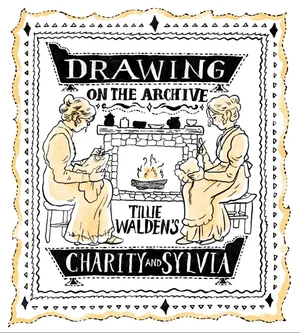
I view the public discussion over fair credit for Rachel Hope Cleves’s Charity and Sylvia in Tillie Walden’s Charity and Sylvia from a particular perspective.

I’ve scripted indie comics, the field where Walden has made her name. I’ve written scholarly books and articles like Cleves. I’ve also worked in book publishing, so I know the considerations involved in adding more pages to a printed book or writing promotional copy about how ground-breaking a new title is.

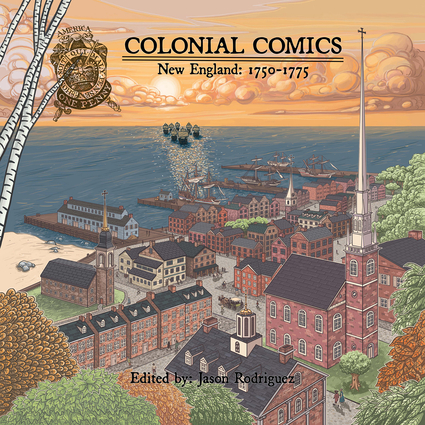
I’ve worked on both sides of the nonfiction-into-comic process. For Colonial Comics: New England, I adapted historical sources into stories about Samuel Maverick, Benjamin Franklin, and Crispus Attucks. I also supplied my nonfiction writing and research for other scripters to adapt into their own stories. I’ve seen artists add immeasurably to a tale in ways that go beyond what historical research could provide.

I also know what it’s like to have the work of historical research be rendered close to invisible. Years back, I worked with producers of the History Detectives television show to figure out the mysteries behind a couple of artifacts. I was never going to be paid, but for one of those two shows there were plans to interview me on camera. In the end, my name appeared as one short line in small type as the closing credits scroll by.

On my history blog I’ve published a series of posts about James McHenry and Elizabeth Willing Powell, drawing on new archival research and analysis. In 2019, the Washington Post published Zara Anishanslin’s article about Powell. She acknowledged relying on my work for one point, apologizing that the newspaper wouldn’t allow credit by name, only by a link. And then when a Post staffer wrote another article citing Anishanslin’s, that link didn’t survive. That’s a common problem in the major news media.

A few months back, I discovered my book The Road to Concord: How Four Stolen Cannon Ignited the Revolutionary War had been turned into a novel. A novel! The author never contacted me about obtaining derivative rights. The book contains one line of acknowledgement, grateful in tone but small in type. Since this novel was self-published, I decided simply to keep quiet about it.

At the same time, I think The Road to Concord could be adapted into a nifty movie. I’ve even taken a meeting with an aspiring producer about that prospect. If that ever happens, I darn well want credit and compensation, even though the whole point of the book and its many citations was to lay out the historical facts and sources for anyone to follow.

02 July 2026

Can This Marriage Be Saved?

On 1 July, the Comics Beat published an article about the disagreement over fair credit for Rachel Hope Cleves’s Charity and Sylvia in Tillie Walden’s Charity and Sylvia.

That article cites historian Cleves as saying Walden contacted her by email twice as she created her graphic novel: in August 2024 with news that Vermont Humanities had commissioned the project and in spring 2025 with a draft. Cleves’s workload prevented her from studying that material closely. She didn’t raise the question of adaptation rights. The two authors never connected for a phone or video conversation.

Although Cleves had spoken at the Henry Sheldon Museum through a Vermont Humanities grant in 2022, it doesn’t appear that either of those entities ever contacted her about the graphic novel. Nor did Drawn & Quarterly after it agreed to publish Walden’s finished work.

Given the initial understanding that Walden would draw only on documents at the museum, as I quoted yesterday, and given lack of objections from Cleves, people involved in the graphic novel might have convinced themselves that there was no need to seek a formal approval from her. But it’s clear that Walden came to rely on Cleves’s history more than originally planned. Walden and Drawn & Quarterly should have done more before publication. 

Comics Beat reports that Cleves wishes “to see Drawn & Quarterly option [her book] for adaptation and co-credit her, with appropriate compensation.”  

For now (and 1 July was a holiday in Canada), the publisher says it “stands by Tillie Walden’s research for her graphic novel” while drawing attention to her citations and praise for Cleves on the book’s website. In fact, the press says, those citations were too long to be included in the printed book. That may be right from an aesthetic or cost standpoint, but it only shows how Cleves deserves more credit in print than one laudatory line.

I suspect Drawn & Quarterly wants to protect its author from accusations of deliberate plagiarism or downgrading Cleves’s work. And to ensure Walden gets credit for the effort and creativity she put into the graphic novel, which by its nature is quite different from its source material.

Likewise, Cleves deserves credit for all the work she did in unearthing and telling Charity and Sylvia’s life stories, whether or not the graphic novel borrows specific language, which would be the strongest evidence in a copyright case.

Tillie Walden is a comics creator who has delightfully found success at a time when one can actually make a living at that work. Drawn & Quarterly is an artsy independent comics publisher based in Montréal. Rachel Hope Cleves is a respected history professor at the University of Victoria, British Columbia. The development of both versions of Charity and Sylvia was supported by humanities grants.

No one goes into any of those enterprises to make a lot of money. People spend years producing scholarly studies or graphic novels because they think the work is important. Yet that situation makes fair credit all the more important.

A graphic novel and a scholarly biography aren’t competing for the same sales—but the comic could promote the study, just as the study made the comic possible. So I really hope there’s a way for these projects to become mutually supporting.

01 July 2026

“The possibility of rendering Bryant and Drake’s relationship in a graphic novel”

Looking at the history of the new Charity and Sylvia graphic novel by Tillie Walden might shed light on the brewing controversy over its debt to the older Charity and Sylvia history by Rachel Hope Cleves.

In February 2024, Seven Days reported on the upcoming project this way:
Christopher Kaufman Ilstrup, the executive director of Vermont Humanities, first learned about the Weybridge couple [Sylvia Drake and Charity Bryant] from [Rachel Hope] Cleves’ book. Then the senior philanthropic adviser of the Vermont Community Foundation, he awarded a grant to the [Henry] Sheldon Museum to sponsor an exhibition of the Bryant-Drake archive and a lecture by Cleves at Middlebury College.

Kaufman Ilstrup saw the possibility of rendering Bryant and Drake’s relationship in a graphic novel. He thought the story of the two 19th-century women, who lived openly as a married couple before the vocabulary existed to describe their relationship, deserved a wider audience. When [Tillie] Walden, who teaches at the Center for Cartoon Studies in White River Junction, became the state’s cartoonist laureate last year, “it was like a bolt of lightning for me, frankly,” Kaufman Ilstrup said.

He emailed Walden and asked if he could pitch her an idea.
As a marker of how Vermont a story this was, their conversation took place at the King Arthur Baking Company in Norwich.

At the end of that same month, the Middlebury Campus newspaper announced announcing the start of Walden’s residency in that town. (A Bluesky user with the handle Queerkitty spotted this article, which led me to the one above).

The Middlebury article reported:
Tillie Walden, Vermont’s renowned cartoonist laureate, will take up residency at the [Henry Sheldon] museum beginning in May in order to write a graphic novel about the couple’s life. . . .

Walden’s upcoming book will differ from the only previous narration of Bryant and Drake’s lives, “Charity and Sylvia: A Same-Sex Marriage in Early America,” written by Rachel Hope Cleves, a professor at the University of Victoria in British Columbia, in 2014. While Cleves used records from places outside of Vermont and focused on the couples’ intimate relationship, Walden will exclusively rely on the Sheldon museum archives to tell the story of Bryant and Drake’s years living together in Vermont, according to Garcelon-Hart.

Walden’s project was commissioned by nonprofit arts organization Vermont Humanities and the Vermont branch of the National Endowment for the Humanities.
There’s no question, therefore, that Cleves’s history led to the graphic novel, with everyone involved aware of the earlier book. The museum’s YouTube page offer Cleves’s lecture from 2022, also supported by Vermont Humanities.

Yet the comic was supposed to be entirely independent of that history book, whether to avoid the issue of derivative rights, to highlight Vermont resources, or to provide Walden with free rein to interpret the sources at the Sheldon Museum.

However, according to Cleves, portions of the comic are based on material not in the museum collection, material she found and described in her book. Walden’s online bibliography acknowledges how she consulted Cleves’s book regardless of the initial plans in February 2024.

The news articles also show how Walden produced her Charity and Sylvia in an amazingly short time: it was just over two years from when she started the museum residency to its publication. That shows what a hard-working graphic novelist can produce with financial support. But that schedule might also have raised the pressure to follow an established narrative rather than develop a new one.

30 June 2026

Two Takes on Charity and Sylvia

In recent years, publishers have worked with historians to adapt their scholarly studies into other types of books, more welcoming to teenagers and other regular people, and thus with potential for large and lasting sales to schools.

For example, after publishing Never Caught: The Washingtons’ Relentless Pursuit of Their Runaway Slave, Ona Judge in 2017, Erica Armstrong Dunbar worked with Kathleen Van Cleve to produce a Never Caught, the Story of Ona Judge: George and Martha Washington’s Courageous Slave Who Dared to Run Away, a “Young Readers Edition” published in 2019.

Marcus Rediker initiated collaborations with David Lester and Paul Buhle on graphic novels adapted from his books: Prophet Against Slavery: Benjamin Lay, a Graphic Novel; Under the Banner of King Death: Pirates of the Atlantic, A Graphic Novel; and Revolution by Fire: New York’s Afro-Irish Uprising of 1741, a Graphic Novel.

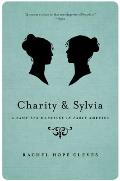
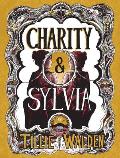
Earlier this month I saw an announcement of Tillie Walden’s new graphic novel Charity and Sylvia, published by Drawn & Quarterly, about a couple in Vermont in the early 1800s. I immediately connected that to Rachel Hope Cleves’s study Charity and Sylvia: A Same-Sex Marriage in Early America, published in 2014 by Oxford University Press.

I wondered if Walden had adapted Cleves’s work, or fictionalized it with her blessing. When I shared news of the graphic novel with the Boston Comics Roundtable, I added a mention of Cleves’s work.

Unlike Dunbar and Rediker, Cleves isn’t credited as a coauthor of the graphic novel. In a line inside the book, an online bibliography and discussion of sources, and public talks, Walden cites Cleves’s Charity and Sylvia as a major source. But does that add up to enough acknowledgment for how much she relied on a previous author’s work?

Last night Cleves posted an open letter to readers that says in part:
I've tried to be happy that Walden's book is making their story more widely known, even if she chose to take my title and my cover design as well as my narrative and my research with only a single sentence of acknowledgement at the end of her book in her notes section. Walden's illustrations and storytelling are wonderful, as I told her when she reached out to me during the writing process. It would take nothing away from her hard work to be honest about how it is built on my hard work. But in Walden's publicity tour, she has repeatedly made the claim to have based her book on her extensive research in the archive without acknowledging that her book is, in fact, based on my book. . . .

I don't doubt that Walden spent time looking at letters at the Henry Sheldon Museum, but the story that Walden tells is not to be found there. It is a story that I pieced together from years of visits to at least twenty different archives and locations across the United States, not only in Vermont but in Massachusetts, New York, Illinois, and Washington State, as well. . . . Many of the details of that story which appeared in my book, and re-appear in Walden's, do not come from the Henry Sheldon Museum, where she claims to have done her research. They come from the countless additional archives I visited.
The process of creating a graphic novel is akin to dramatizing a narrative for stage or screen. The script turns narration and analysis into scenes with dialogue. The art builds on descriptions or imagination. Even the most nonfictional narrative comic is a fictionalizing adaptation of its sources.

With fiction, we readily recognize how a graphic novel or dramatization is a derived work. Unless the original story has entered the public domain, the new publication requires contracting for the right to adapt the original, crediting and compensating its author. After all, the story and characters wouldn’t exist without the first author’s creativity.

With nonfiction, the law is less clear. No one has a copyright claim on historical facts. No one can call dibs on the exclusive right to line up events in chronological order. As legal experts often say, copyright doesn’t protect ideas; it protects the expression of those ideas.

In her open letter, Cleves writes: “This is not just a question of facts but of story: the story of how Charity and Sylvia built a life together…” But was that “story” created by the subjects living their lives or by the historian reconstructing those lives in a meaningful form? Is a “story” a copyrightable expression of ideas that survives even when it’s expressed in a different form?

There’s no doubt that Cleves’s research unearthed facts about Charity Bryant and Sylvia Drake, produced enough detail to build a compelling story, and smoothed the path for future researchers. Unlike the tale of Ona Judge or the 1741 uprising in New York, there are no other books to draw from. So what claim should Cleve have on that subject? Our copyright law protects creative work, but should it also require compensation for hard work?

TOMORROW: Historical roots.

04 June 2026

“Expands into a fluffy cloud when microwaved”

In yesterday’s New Yorker crossword puzzle, clue 27 Down was:
Brand-name bath bar that expands into a fluffy cloud when microwaved
I’ve already stated my claim to be the first person to try microwaving bars of soap, or at least the first person to publish the eye-opening results of the process on one well-known brand, in my 1993 book Soap Science.

But I haven’t mentioned that I told that story for a short comic drawn by Dan Mazur in the Boston Comics Roundtable anthology Boundless, edited by Olivia Li, Jordan Stillman, and Neil Johnson in 2016.

That comic includes depictions of me and my dad in the 1970s and 1990s. In fact, the editors told me that the script won them over as soon as it called for pictures of me as a child. 

22 May 2026

Ernie Morrison’s Tutor, Miss Zenobia Frierson

I first mentioned that Ernie Morrison had an individual tutor while he worked at the Hal Roach Studio back here.

At that time, I knew that tutor was a black woman. She appeared in a couple of photos that also showed Fern Carter teaching the white kids in the Our Gang movies. But I didn’t know that woman’s name.

News stories about Ernie’s departure from the studio in 1924 reveal his tutor at that time: Zenobia Frierson (her first name also rendered in newspapers as “Znobia” and “Zenovia”). Using newspapers and other information, I’ve assembled this brief profile of her.

Zenobia Evelyn Frierson was born in Texas—probably in 1897, though I’ve seen documents stating the year as 1895 and 1898. She studied at Wiley College in Marshall, a historically black college founded in 1873 by a bishop in the Methodist Episcopal Church. I haven’t found a yearbook or other document about her studies.

By 1924 Frierson was in Los Angeles, working as Ernie Morrison’s tutor. Under California law, he’d probably needed three hours of lessons on each working day since the fall of 1918, when he’d turned six. Given that Frierson probably graduated from college around that year, she may well not have been his first tutor. But she could have had the job in 1922–24 while Ernie was working on the Our Gang films.

After traveling with the Morrisons in 1925, Frierson returned to Los Angeles, where she married Louis Payton Allen on 15 Sept 1928. He was also from Texas, born in 1882. In the 1940 U.S. Census he was listed as a waiter on a railroad; if that had been his profession all along, he presumably traveled a lot. An October item in the California Eagle, the newspaper of Los Angeles’s black community, referred to the bride as “Mrs. Zenobia Frierson-Allen,” but she soon used only her husband’s surname.

In 1930, Zenobia Allen was living in a rented house on 49th Place in Los Angeles. Census records list her occupation as “secretary” of a “Christian organization.” She was head of a household that included her mother, Marjorie Blye, and a young roomer, Helen Boyd, but no children. Louis P. Allen wasn’t listed as living with them. Interestingly, the actress Louise Beavers and her family lived nearby.

In that decade Zenobia Allen appeared regularly in the Eagle as part of African-American social events. She helped to organize Wiley alumni gatherings. She signed a protest against hiring discrimination at the telephone company. In 1935 she started to work for the Angelus Funeral Home as a “receptionist”—though of course being the first person to speak to grieving families was a position with great responsibility. The photo above dates from 1934 or before.

By 1940, the Allens’ marriage had definitely broken up. Louis was living with a new wife, Inez. She was a manicurist while he worked for a railroad. He died that October.

After World War 2, Zenobia E. Allen gained national visibility as a “supreme epistoleus” of the Alpha Kappa Alpha sorority. In that role she traveled the country and corresponded with Mary MacLeod Bethune.

In 1955, after twenty years at the funeral home, Zenobia Allen moved to work at a local savings and loan. That fall she married Claude A. Jolly, a real estate and investment broker, with her mother looking on. The Los Angeles Tribune reported:
Romance of the popular and attractive Greekletter figure and the prominent businessman came as a surprise to the local community at large, where they are well known…
Unfortunately, Claude Jolly died in August 1957, less than two years later.

Zenobia Jolly continued to appear at AKA sorority events over the next few years, but she appears to have retired by the 1960s—probably comfortably, given her second husband’s wealth. Zenobia E. Jolly still owned real estate when she died in October 1982.

I haven’t found any mention of Zenobia Allen Jolly discussing how one of her first jobs was to tutor and travel with the young entertainer Ernie Morrison. She appears in print simply as a pillar of Los Angeles’s African-American community at mid-century. If she hadn’t had such a rare name, her connection with show business would be invisible.

11 May 2026

“The following routine hardly constitutes a ‘vacation’”

In March 1924, for the first time in more than six years, eleven-year-old Ernie Morrison didn’t have a movie to make.

He had no call time the Hal Roach Studio. He wouldn’t spend hours with the other kids he’d worked and played with for the past two years. (Ernie had his own tutor, so at least he wasn’t also cut off from Fern Carter’s studio classroom.)

The end of Ernie’s $250 per working week salary would no doubt affect the Morrison family finances, but not immediately. His father, Joseph, who had run a market before entering show business, evidently invested some of those earnings in what the 17 September New York Evening Journal called “a string of ice cream parlors and frocery [sic] stores in Los Angeles.” In addition, the 18 December Savannah Tribune indicated he owned the Four Brown Candy Factory. The African-American press treated Joseph Morrison as a admirable entrepreneur.

It’s notable that the Morrison family and the Hal Roach Studio didn’t cut ties. Joseph continued to play black men in the movies, performing opposite Gene “Pineapple” Jackson and Allen “Farina” Hoskins in “Circus Fever.” Ernie’s little sister Dorothy Morrison appeared as Farina’s girlfriend in “The Love Bug,” with Joseph along as her father. In 1925 she would make “Isn’t Life Terrible?” with Charley Chase.

In late June, Ernie himself returned to Our Gang unit for a week (at his previous salary) to finish shooting “Fast Company,” a short begun over a year before. (Harold Lloyd’s young brother-in-law, Jack Davis, returned from military school for the same shoot.) That movie proved to be the coda to Ernie’s long Rolin/Hal Roach Studio career, but decades later he still had good things to say about Roach.

An item in the 24 May Colton Daily Courier revealed how Ernie was spending most of his days:
Sunshine Sammy, world famous little comedian and formerly featured player in Hal E. Roach’s “Our Gang” comedies, has a complaint to enter. . . . his father, Joseph Morrison, well known candy manufacturer, promised Sammy a good long vacation. Sammy, in his aforesaid complaint, says the following routine hardly constitutes a ‘vacation’—“Three to four hours a day study under his special teacher, Miss Zenovia [sic] Frierson. One hour violin lesson each day from James B. Warren. Miscellaneous and incidental other hours spent in perfecting himself in fencing, boxing, wrestling and in his ‘spare’ moments he composed a wonderful waltz, “Sunshine Sammy is a Good Old Scout.”
The same newspaper had reported on that waltz back on 3 May, saying “hundred of congratulatory messages” had come for Ernie. That article added:
The fact that he has become a composer of the first rank is only incidental with Sammy’s plans and he will soon spring a surprise on his friends, that will prove momentous in amusement circles.
COMING UP: Big plans.

10 May 2026

“They are trying to get along without Ernest Morrison”

As I wrote back here, almost all the other kid-gang comedy movies produced in the wake of Our Gang’s success included at least one African-American kid in the cast.

People viewed Ernie “Sunshine Sammy” Morrison and Allen “Farina” Hoskins as vital to the series’ success.

On 4 July 1924 the California Eagle, published for Los Angeles’s African-American community, reported:
The kid situation seems to be worrying that powers that be at the Hal Roach Studio. They are trying to get along without Ernest Morrison (Sunshine Sammy) but the big question is will the exhibitors accept “Our Gang” comedies without Sammy or a Race star other than Farina.

It is rumored that two of the “Our Gang” Series that were made without Ernest were returned from the Eastern exchange marked N.G.
“N.G.” was the standard Hollywood label for bad shots to be discarded.

In fact, Hal Roach had quickly sought out a replacement for Ernie Morrison. In April 1924 the studio brought on Flemon Miller, a black boy about the same age, to appear in “The Sun Down Limited” and “Every Man for Himself.” The Pathé Exchange would distribute those pictures in the fall, but Flemon wouldn’t make much impression on the screen.

The California Eagle went on to drop some inside information:
The Dramatic League booking office received a hurry up call for Eugene Jackson and Eugene has gone to work there and his director is McGowan who directs the “Our Gang” series.
Eugene Jackson (1916–2001) had already acted in a few films, including the feature Penrod and Sam and “An Afternoon Tee” in the rival Reg’lar Kids series (a short which was Johnny Downs’s break into the movies).

The newspaper’s next item noted that another black child actor, James “Bubbles” Berry (1915–1969, shown above), was available after making eight pictures for the Century studio. Those movies, such as “Speed Boys,” were also imitations of Our Gang. But “Bubbles” was made up with white lipstick for a minstrel-show effect, something the Roach studio never did to Ernie Morrison.

The Eagle’s deduction about Gene Jackson was correct: he joined the Our Gang unit at the end of June and made six movies through early 1925. In his 1999 autobiography, Jackson described his beginning this way:
I met with Mr. Roach, and he liked my natural acting ability. I did some impromptu acting, and he said I had an open freshness with a million dollar smile. He conversed with me for a short while, and I signed immediately for a three-year contract. He coined the name “Pineapple” for me in the series, which has been a permanent part of my show business name.
As for Ernie Morrison, Jackson remembered living around the corner from him. Ernie was four years older and busier, so Gene admired him from a distance:
Sammy was such a big star. He was an established star. When he arrived home, the entire neighborhood would could out to see him. He had a great big limousine a mile long.
But now that Ernie had left the Hal Roach Studio, what would he do?

TOMORROW: Training in ’24.

08 May 2026

“‘Our Gang’ comedies will be as a ship without a rudder without Sammy”

In the early 1920s, Ernie Morrison was almost certainly the most prominent African-American actor in Hollywood, the only one to appear regularly in movies marketed to mainstream audiences.

What’s more, whether as sidekick to Hal Roach’s adult male comedians or as a leading member of Our Gang, Ernie didn’t really fit inside the dominant culture’s racial stereotypes (despite the studio and the press’s best efforts).

While he often played scamps, Ernie the real-life hard-working actor was also a role model. His June 1922 trading card assured children, “In between his motion-picture work he studies hard at his lessons, and a very great future is predicted for this clever youngster.”

Naturally, Ernie Morrison held special significance for African-Americans. W. E. B. Du Bois’s short-lived magazine for black children, The Brownies’ Book, featured the boy twice while he was still working with Snub Pollard. In 1923 Du Bois visited the Hal Roach Studio with other members of the NAACP. The June issue of that organization’s magazine, The Crisis, included the photo above.

Ernie, clowning with a broken bass fiddle, was surrounded by:
  • Dr. Vada Somerville (1885–1972), co-founder of the NAACP’s Los Angeles chapter, first black woman to be licensed as a dentist in California.
  • Dr. W. E. B. Du Bois (1868–1963).
  • Anita Thompson (1901–1980), star of By Right of Birth from the Lincoln Motion Picture Company and actress in other films.
  • Beatrice Thompson (1874–1938), executive secretary of the LA chapter and the actress’s mother.
  • Pearl W. Hinds Roberts (1892–1984), pipe organist with a degree from the Oberlin Conservatory, wife of a California assemblyman.
On 28 Feb 1924, around the time Joseph Morrison and Hal Roach broke off negotiations over a contract renewal, the Omaha World-Herald reported that the local NAACP chapter had sponsored a free showing of “one of ‘Sunshine’ Sammy’s photoplays” for more than 200 black children to raise funds to support an anti-lynching bill.

Given Ernie’s profile, the end of his contract with Roach was a big deal for African-American moviegoers. The most detailed reports about that change appeared in the black press. The New York Age article cited here was the first to report salary numbers. On 18 July 1924, the Afro-American of Baltimore ran this item:
SUNSHINE SAMMY LEAVES HAL ROACH

The Hal Roach Studio seems hard put to it these days. Ernest Morrison, nationally known as “Sunshine Sammy” has left the lot.

Mr. Morrison, Sammy’s father, refuses to give any information other than to say that Ernest will be featured in his own company. The “Our Gang” comedies will be as a ship without a rudder without Sammy.
The Morrisons’ contract had ended four months before, but the studio was about to run out of the Our Gang movies Ernie had made early in the year. And audiences viewed black kids as an essential part of the gang.

COMING UP: Keeping busy in 1924.

06 May 2026

“Ended an eight-year engagement with Hal Roach”

Ernie Morrison starred in the Our Gang films regularly for more than two years, from January 1922 to March 1924.

The only other movies he made during that time were cameo appearances with the gang in other Hal Roach Studio comedies. He was too valuable to be an adult comic’s sidekick anymore.

Ernie had started at the studio at $100 per week, plus $30 for his father, Joseph Morrison, who played occasional roles for black men. (In the Our Gang series Joseph often played Ernie’s father, though in “Lodge Night” and “Circus Fever” he appeared prominently in other roles.)

By 1924 Ernie was making $250 per week, plus $50 for his father, according to Rob Demoss’s Lucky Corner website. That was the studio’s most expensive contract for an Our Gang member; freckle-faced Mickey Daniels also earned $250 per week, but with no added payment to a parent.

In early 2024, Joseph Morrison asked Hal Roach to increase his son’s pay. According to an article in the 31 Jan 1925 New York Age (published for the city’s African-American community), Joseph asked for Ernie to earn $300 a week.

That article also said that would have been a $75 raise for Ernie, which doesn’t add up. But perhaps Joseph also asked for his own weekly rate to rise by $25, which would be $75 more overall. In any event, it wasn’t an outlandish request.

Hal Roach said no. Roach’s employees liked the collaborative culture and working conditions he established, but he could be ruthless in negotiating salaries, even with his biggest stars.

“Quits Roach,” headlined the 1 Mar 1924 Los Angeles Evening Citizen News over a photo of Ernie smiling; “the child will not sign for another engagement because of financial differences.”

The 16 March Detroit News told readers: “‘Sunshine Sammy’…has ended an eight-year engagement with Hal Roach.” He’d been at the studio for less than five years, but Roach sometimes wrote his contracts to include options into the future.

The 23 March Omaha Morning Bee said: “the cute negro boy screener, has quite [sic] Hal Roach, due to a difference in salary demand on a new contract and may essay a trip into vaudeville.”

Those items appeared in long columns of other news from Hollywood, but other journalists had more to say.

COMING UP: Sunshine Sammy and the black press.

04 May 2026

Ernie Morrison before Our Gang

Ernie Morrison was born in late 1912 in New Orleans. About six months later his father, Joseph, moved the family to Los Angeles, where he ran a grocery store.

In 1916, Joseph Morrison later told the New York Age, he “overheard some directors inquiring as to where they could find a clever little youngster.” Another source says the moviemakers were looking for a “little colored boy.” Ernie fit both descriptions. Joseph took his son to the studio.

By age four, Ernie was a regular in the Baby Marie Osborne comedies. The studio behind those films, Diando, even tried to create a new series around Ernie in 1918, using his father’s nickname “Sunshine Sammy.” But the Pathé Exchange didn’t pick up those short movies for distribution.

In August 1919, Harold Lloyd, the only consistently successful comedy star at the Rolin Studio, was badly injured by a prop bomb during a photo shoot. Rolin’s head, Hal Roach, scrambled both to help his friend recover and to find new material to release.

Lloyd’s usual sidekick, the Australian comedian Snub Pollard, was promoted to a lead. In the short “Call for Mr. Caveman,” filmed in September 1919, his supporting cast included a little black boy played by Ernie Morrison.

Roach saw how well Ernie performed. Indeed, his lively personality still comes through on the screen. Envisioning a new series (which, Robert Demoss reports at the Lucky Corner, he unfortunately referred to as “‘coon’ pictures”), Roach signed Ernie to a two-year contract, as shown above. That made the six-year-old the first African-American actor with a long-term movie deal.

However, Pathé still wasn’t interested in a “Sunshine Sammy” series—“not on the basis of racism,” writes Richard Lewis Ward in A History of the Hal Roach Studios, but because the company head felt “‘kid pictures’ were box office poison.”

Instead, Ernie performed as Snub Pollard’s regular sidekick from 1919 to 1921. After Lloyd recovered, Ernie appeared in a few of his films, too, most delightfully in “Get Out and Get Under.” During that time, Rolin was renamed as the Hal Roach Studio.

Roach saw that Ernie Morrison was gaining a fan base. He renewed the contract and assigned the boy to boost the studio’s lesser comedians, such as Eddie Boland and Paul Parrott (brother of Charley Chase and later director for Laurel and Hardy). Ernie was also loaned out for the Neilan adaptation of Booth Tarkington’s Penrod with Wesley Barry.

In mid-1921, Hal Roach once again put “Sunshine Sammy” at the center of a picture. In an advertisement to cinema owners (shown here), the studio declared:
Millions have laughed at him, exhibitors have commented upon his popularity with their audiences,…full of pep, a “pip” of a “feeder” to the comedy stars he supported

Now he is starred in one two-reel comedy, made the way Hal Roach knows how to make ’em

Hot Dog! This one isn’t a gamble, it’s just sure to please!
The rest of that ad copy uses broad dialect and racial slurs. The movie itself was titled “The Pickaninny,” though Ernie never fit into that stereotype of a black child. Roach thus offered the Morrisons more opportunity than they would find elsewhere but still played into the racism of the time.

Pathé released that “Sunshine Sammy” comedy in December 1921. It didn’t do well enough to launch a new series. Ernie continued to appear in supporting roles. But he was popular enough to be featured on a Boys’ Cinema trading card in June 1922, posing in top hat and tails with a short biography on the back; most of the other “Famous Heroes” in this series were grown men, all of them white.

Meanwhile, in January 1922 Ernie had started performing in a new series of shorts at the Roach studio—not in support of an adult male comedian, but alongside other child actors and animals. Those “kid pictures” would make him an even bigger star.

COMING UP: After the gang.

02 May 2026

Assessing the Ultimate Oz Universe for the Baum Bugle

The spring 2026 issue of The Baum Bugle contains my review of The Lost Lands, the first volume of the Ultimate Oz Universe graphic retelling of L. Frank Baum’s Oz books.

There’s a big team behind this comic, some of them having worked for years to develop this version of Oz for various media. But the main creators of what we see on the book’s pages are the writers Cullen Blum and Larry King and the artist Mike Deodato, Jr.

My bottom line is that The Lost Lands is interesting to sample as an alternate version of Oz and often visually striking, but sadly not as original as it presents itself.

Firstly, there have been many “dark” adaptations of the Oz books in comics form over the years. The Ultimate Oz Universe is far from the first to recast Dorothy as a teenager, the Tin Woodman as a robot, the Scarecrow as truly scary, and so on.

Second, this graphic novel is a streamlined retelling of The Marvelous Land of Oz. Nothing wrong with that, but the project also draws without acknowledgment on work still under copyright, including later books and the syncretic maps created by James E. Haff and Dick Martin for the Oz Club.

Third, Deodato’s art is notable not only for its dramatic hyperrealism and solid comic-page design but its inconsistency on the details. I spent two paragraphs listing examples, such as:
Over one action sequence, Glinda’s sleeves grow from being short and off-the-shoulder to long and puffy. Mrs. Yoop’s shoes have straps in one panel but not the next. On a single spread, the Cowardly Lion’s belt takes on three separate designs.
Based on such discrepancies, other comics artists have accused Deodato of using AI imagery. He’s denied doing that. (Using AI should have been disclosed during the book’s Kickstarter campaign.) I don’t have hard evidence on that question, so I wrote simply about sloppiness in the visual details.

The overall lack of originality limits how compelling this volume can be. Fans of the Oz books already know the twist at the end of The Marvelous Land of Oz. Seeing the same basic story play out with a teen-aged Tip, a bipedal Cowardly Lion and Hungry Tiger, and other changes doesn’t make it a different story.

Other articles in thus Bugle issue cover the release of Wicked: For Good, a detailed analysis of the art of John R. Neill, a tour of the Hotel del Coronado, and a look at the Australian textile artist Raquel Caballero’s Ozzy work (showcased with eight pages of color), as well as many other reviews.

03 April 2026

“We went back and figured out what we would do for a beginning”

After “The Big Show!” and “The Cobbler,” the next Our Gang production was Bob McGowan’s “The Champeen!”

As Rob DeMoss explains on the Lucky Corner website, it’s not clear when in September 1922 or so that short was filmed. The two preceding films both had an unusually high number of shooting days, and the studio records don’t assign any days to “The Champeen!” at all. DeMoss posits there was a bookkeeping error.

Watching for the splint that Jackie Condon started wearing after his 8 August fall offers hints to how “The Champeen!” was created. And the recent ClassicFlix restoration of that short (which can be viewed here) provides clear pictures.

During that movie’s climactic boxing scene, Jackie serves as timekeeper for the match. He rings the bell with his left hand. A bit of the splint can be seen poking out of his right sleeve, as shown above.

Likewise, in his first appearance in this short, appearing to drive a car, Jackie has the splint on his right forearm while his left forearm is bare. So that footage was also shot while he was still recovering—but he seems more dexterous.

About a quarter of the way through these two reels, Jackie has a scene with Jack Davis. In some shots he appears still to be wearing the splint, even as he uses his right arm to knock a pastry out of Jack’s hands. But in the shots when Jack pummels the smaller boy, as shown here, Jackie’s forearms are both bare. Apparently his arm had healed by then (and a good thing, too).

Those glimpses suggest that McGowan filmed the fight scene in “The Champeen!” first. In the same way, Harold Lloyd, the biggest star working on the Hal Roach Studios lot in 1923, shot the big climbing sequence in Safety Last, then worked backwards to motivate that action.

“We didn't know what we were going to have for the beginning of it,“ Lloyd said in a 1966 interview; “after we found that we had, in our opinion, a very, very good thrill sequence,…we went back and figured out what we would do for a beginning, and then worked on up to what we already had.”

For “The Champeen!” McGowan appears to have created a funny boxing scene for the climax but needed a motivation for Jack Davis and Mickey Daniels to fight. Rivalry for Mary Kornman offered a reason. The final scenario has her first set those two boys against each other by asking Mickey to chastise Jack for pummeling her little brother—Jackie. But that scene wasn’t shot till after the big finish.

Indeed, on reflection Jackie Condon’s role at the end of “The Champeen!” doesn’t fit with his scenes before. He goes from being part of the beef between the two boxers to being a neutral timekeeper. Though Mary is introduced as his big sister, there’s no connection between them in the final scene. Not that I thought about those discrepancies until now. 

02 April 2026

Working Around Jackie Condon’s Broken Arm

The Lucky Corner website shows that the Hal Roach Studio continued to pay Jackie Condon $40 per week throughout the summer and fall of 1922, even after he broke his arm on 8 August during the making of “The Big Show!”

That seems to confirm that Jackie did indeed work on his regular schedule after a doctor put on a splint, as the newspaper article quoted yesterday reported. (Though the studio should have been reluctant to dock the four-year-old’s pay while he recovered from an on-the-job injury.)

We can see the result of Jackie’s fracture in the Our Gang movies made in the late summer and early fall of 1922.

The freeze frame above comes from “The Cobbler,” which Tom McNamara shot in late August and early September 1922. Jackie wears long sleeves, the right one stretched tight over his splint.

Likewise, in “The Big Show!” Jackie usually has his left sleeve rolled up to his elbow but his right loose at his wrist. When he releases a bunch of animals from their cages, he works only with his left hand, the right hanging at his side.

Jackie’s injury may even have shaped the plot of “The Big Show!” as it was cut together. According to Rob DeMoss at the Lucky Corner, filming on that short was spread out: 28 July to 15 August (a week after the injury), “added scenes” 11 to 28 September, and finally reshoots 10–11 January. That break suggests director Bob McGowan and the unit did some retooling.

The newspaper article about Jackie’s fracture and the publicity photo shared yesterday show that “The Big Show!” was always written to feature the gang’s jury-rigged version of a county fair. That photo also shows Mary Kornman with the gang for the first time.

In the final film, Mary’s only scene comes in a middle section devoted to the gang and guests imitating Hollywood stars like William S. Hart and Douglas Fairbanks. She plays Mary Pickford, curly wood shavings added to her natural hair to evoke the Fauntleroy hairstyle.

Jackie doesn’t show up in that sequence at all, not even as Jackie Coogan to Andy Samuel’s Charlie Chaplin. (And ironically, back in 1921 the little tousle-headed boy had been the first face to appear in Pickford’s Little Lord Fauntleroy.)

Furthermore, Jackie doesn’t appear on any of the fair rides with the other kids in the final cut. Instead, the story is driven by the big kids excluding Jackie from their activities because he’s too little. He tries to sneak into their fair, gets chased away by tiny security guard Farina, and finally frees those animals as revenge. Those scenes were shot after his injury.

It therefore looks like Bob McGowan shot parts of “The Big Show!” with Jackie, Mary, and the gang at the fair. Then Jackie fell. As he recovered, he may have needed more rest and couldn’t do complex scenes with the whole gang—but the unit could shoot him with just Farina and the animals.

McGowan and the studio may have rebuilt their story around Jackie being left out, adding a new opening scene outside a real fair (with Joe Cobb, who didn’t join the gang until September). We don’t know whether the original story had a kid-driven plot, but that change might have been for the better.

TOMORROW: A ringside seat.

30 March 2026

“The 3-year-old comedian is so proud of his injury”

The 22 Oct 1922 Portland Oregonian, and probably some other newspapers around the same time, ran this story from Hollywood:
Jackie Condon, the little tousled-haired kid playing in Pathé’s “Our Gang” comedies, is the proudest kid around the Hal Roach Studios. Jackie broke his right arm in two places the other day while working on a new picture—hence his proudness.

Bob McGowan was directing the scene in which the youngsters stage a county fair. Little Jackie fell from a “death-defying slide” and became unconscious. He was rushed to Dr. Hull of Culver City, who diagnosed the injury as a compound fracture.

The arm was placed in splints and Jackie taken home, but he is so intent on his screen career that he appeared on the Roach lot in the afternoon, ready for work. The 3-year-old comedian is so proud of his injury that he exhibits it on the slightest provocation to everyone who comes near him.
Jackie Condon (1918–1977) was actually four years old at this time, but Hollywood publicists routinely underreported child actors’ ages.

The article glossed over the circumstances of Jackie’s fall. Was he doing a scene or playing unsupervised? Was this a foreseeably dangerous stunt? Was he simply too short to go on that ride? Emphasizing his plucky return and pride smooths over the fact of a four-year-old with a compound fracture.

According to Rob DeMoss’s Lucky Corner website, Hal Roach Studio records show Jackie suffered his injury on 8 August during the filming of what became “The Big Show!”

The still photo above was taken as that movie was made. It shows most of that season’s gang posed on a merry-go-round built to be whirled around by their dog. The kids never appear in this configuration in the finished film, so this shot was most likely constructed for the poster.

Jackie Condon sits on an arm of the merry-go-round at the left. His right forearm is obviously not injured, meaning this picture was taken before his fall. Knowing what lies ahead, one wishes he had a better grip on the apparatus.

Though the news story about Jackie’s injury uses the present tense to describe him showing off his splint, more than two months had passed since his fall.

The first Our Gang movies were screened for the industry early in 1922 and garnered enough enthusiasm for Hal Roach to order up more that summer. But the series didn’t launch into wide release until September. Pathé offered the second film, “Firefighters” on 8 October; Jackie Condon played a prominent role in that one as the smallest boy who gets to be the fire chief because he’s the only fellow who has the right hat.

That explains why the movie publicists were pumping the story of Jackie’s injury in October. Publicity back in August, before the Our Gang movies were in cinemas, wouldn’t have benefited the series.

COMING UP: Working around an injury.

09 February 2026

Another Addition to the Jackie Condon Filmography

Discontented Wives was a five-reel melodrama directed by and starring J. P. McGowan, released in September 1921.

The American Film Institute summarized it this way:
Ruth Gaylord gives up her home in New York to marry John Gaylord but grows discontented with the loneliness and desolation of life in the West and leaves her husband. After returning home, she hears that he has struck one of the richest gold veins in California. A letter surrendering her interests in the mine falls into the hand of Kirk Harding, an eastern capitalist; and John, tricked into surrendering his rights and discovering the truth, struggles with Harding. Ruth awakens, discovering it was all a dream, and decides not to leave her dedicated husband after all.
At the end of a review in the 16 October 1921 Seattle Daily Times came this paragraph:
The cast in Mr. McGowan’s support, besides Fritzi Brunette, includes Jean Perry, Andy Waldron, C. S. McGregor and little Jackie Condon.
Now lost, Discontented Wives is thus another entry in Jackie Condon’s pre-Our Gang filmography.

The mention of Jackie’s name might imply that his face and tousled hair were becoming known to movie exhibitors or audiences.

The first short in the Our Gang series that Hal Roach and Pathé released in September 1922 was “One Terrible Day.” The poster for that film, shown above, doesn’t depict the whole gang. Instead, it features only the two kids who would have been most familiar to viewers because of their previous work: Ernie “Sunshine Sammy” Morrison and little Jackie Condon.

08 February 2026

“So completely captivated with little ‘Jackie’ Condon”

A couple of weeks before the Los Angeles Evening Herald profiled two-year-old movie performer Jackie Condon (as quoted yesterday), the paper ran an anecdote about a movie he was making.

The 5 Apr 1920 edition reported:
$300 Gold Watch Given Boy Who Appears in Film

When Neely Edwards, the star of the Hall Room Boys comedies, went on location the other day he conferred with his co-star, Hugh Fay, and his director, Malcolm St. Clair, and decided to shoot some exterior scenes that would require the front entrance to a prominent mansion.

Mr. St. Clair being personally acquainted with Mr. W. A. Clark, jr., the son of the famous senator, induced Mr. Clark to allowed him to film his mansion on West Adams street.

They all went to the Clark home and worked all that day on the lawn and porch of the house. Mr. Clark was so completely captivated with little “Jackie” Condon of the party that he gave him a solid gold watch worth over $300.

The watch will now be used in the picture as a befitting climax to it. The Hall Room Boys comedies are released by Jack and Harry Cohn in New York.
Perhaps that solid gold watch is why Jackie’s recent earnings were so high according to the Herald’s 23 April story.

William Andrews Clark, Jr., was an heir to a mining fortune, attorney, book collector, and philanthropist, by 1920 founder of the Los Angeles Philharmonic and funder of the Hollywood Bowl. Clark’s house at the corner of West Adams and Cimarron, somewhat modified, appears above, courtesy of the Adams Boulevard blog. Having been widowed twice, Clark was living there with his teen-aged son; his lover, Harrison Post; and no doubt a large staff.

Clark’s house and grounds appeared in several movies around 1920, including “Fresh Paint,” featuring Snub Pollard (but not, contra IMDB, Ernie Morrison) and directed by Charley Chase. Other productions offering glimpses of the estate include “The Tourist,” with Jimmy Aubrey and Oliver Hardy, and Harold Lloyd’s Dr. Jack.

The Hallroom Boys was a comic strip that H.A. MacGill launched in 1904. It spun off a couple of film series. The young male comedians who played the main characters were swapped out several times. According to IMDB, only one Hallroom Boys movie starred Neely Edwards and Hugh Fay with Malcolm St. Clair as director: “Tell Us, Ouija!”

Released in September 1920, this movie played off the ouija board craze. More pertinent to our inquiry is this portion of the advance review from the 20 May 1920 Film Daily, as quoted in The Palgrave Encyclopedia of American Horror Film Shorts, 1915–1976:
One scene in which a child is seen first in a derby hat, only the sky-piece being visible at first, provokes a giggle. When, however, they employ a similar scheme showing a pair of large and well-worn shoes protruding from under a bed, what actually amounts to the same gag is offered again, for the youngster soon appears wearing them.
St. Clair’s signature style as a director evidently used a lot of close-ups and reveals like this. The youngster in those scenes was most likely Jackie Condon.

COMING UP: A melodrama.

07 February 2026

“Jack’s been around again”

Jackie Condon surely appeared in more movies before “Our Gang” than the seven listed yesterday.

The 23 Apr 1920 Los Angeles Evening Herald reported on his acting success shortly after he turned two. “Young Film Player Amasses $3000 in Short Career Before Camera” was the headline.

The story said the little boy began his career “at the age of six weeks.” (In later press about Jackie, that age was halved.) “In the last three weeks he has earned $500. During his lifetime he has earned $3000.”

The story went on:
But when Baby Condon is “off duty” he is the “terror of the neighborhood.” When the neighbors discover broken shrubbery, when they discover the sides of their houses marked with chalk or a pencil, they say, “Jack’s been around again.”
While touting Jackie as the Condon family’s main earner, the article also noted that two older siblings were also appearing in movies: Geraldine, aged 5, and “Billie,” aged 8. Billy Condon would have a prominent role in “Our Gang” but not appear in any of the subsequent series.

According to the Lucky Corner website, Jackie and Billy each earned $7.50 per day for their week of work on “Our Gang” in January 1922. When Hal Roach committed to making a series, Jackie was the second kid he signed to a long-term contract (after Ernie Morrison), and the salary was $40 per week with no pay when there was no filming.

That’s a long way down from $500 in three weeks, the figure the Herald reported. Either Jackie’s earning potential plummeted after he turned three, or the newspaper story was exaggerated—as newspaper stories about Hollywood usually were. But with press like that, we can see why so many parents were eager to get their children into moving pictures.

Because little Jackie Condon was almost always an uncredited supporting player, and because so many of Hollywood’s early movies have been lost, finding his pre-Gang work relies on luck piecing together what information survives. I’ve spotted two additions to his filmography.

COMING UP: A tale of a watch.

06 February 2026

Jackie Condon’s Career Before “Our Gang”

Jackie Condon was the youngest player in the first Our Gang movie ever shot in early 1922, establishing the role of the tagalong little brother. Born in March 1918, he was going on four years old.

Among the kid actors in “Our Gang,” however, Jackie was probably second only to Ernie Morrison in filmmaking experience. He’d been appearing on camera since he was a babe in arms.

IMDB and the Lucky Corner list seven movies Jackie appeared in before “Our Gang” was filmed:
  • Jinx, a Mabel Normand feature in 1919—as shown by press reports.
  • “Italian Love,” a Billy West short directed by Charley Chase in 1920—a viewing on YouTube confirms Jackie appeared in it, in the flesh. 
  • “A Convict’s Happy Bride,” an Alice Howell short—also on YouTube, with Jackie quite active. 
  • “The Morning After,” a Snub Pollard one-reeler released in 1921, now lost—Jackie’s work was identified by Robert Demoss through Rolin/Hal Roach Studio records. (In this period Ernie Morrison was Pollard’s regular sidekick, so this was the first movie Ernie and Jackie both appeared in before Our Gang.)
  • Little Lord Fauntleroy, the Mary Pickford feature—in the opening scene, Jackie gets undressed to play in a sprinkler.
  • “At Your Service,” a Hallroom Boys short—only one reel survives, and Jackie doesn’t appear in that footage; I don’t know the basis for listing him in the cast.
  • Penrod, a Wesley Barry feature made in 1921 and released in 1922, adapted from Booth Tarkington’s novel—I don’t think this movie survives, but the press material includes Jackie in the long list of young cast members.
In fact, Penrod was a significant precursor to the Our Gang series launched a few months later. Hal Roach lent Ernie Morrison to be a featured player in it, and its cast also included Peggy Cartwright, who became the “leading lady” in several of the earliest Our Gang shorts.

Wesley Barry’s stardom in the early 1920s probably also influenced Roach’s thinking about the Our Gang series. For Rebecca of Sunnybrook Farm (1917), producer-director Marshall Neilan had young Wesley act for the first time without greasepaint covering his freckles. The young actor caught the eye of moviegoers. He rose quickly to be a featured player, then a star in Dinty (1920). Wesley Barry established the archetype of the freckle-faced “reg’lar” American boy that Mickey Daniels, Jay R. Smith, Harry Spear, and Donald Haines would play in the Our Gang movies.

Dinty also showed its young white hero having an African-American kid and a Chinese-American kid as his playmates. Many reviewers mentioned that favorably. Of course, that movie, and that press coverage, played up the racial stereotypes of the day. But at least those characters were friends.

COMING UP: New additions to Jackie Condon’s filmography.

03 February 2026

Two More Tales of Oz

The 2025 edition of Oziana, the International Wizard of Oz Club’s creative magazine, is now available for purchase through Lulu.

This issue contains two stories by me.

“The Piglets and the Tin Soldier” is another short slice-of-life tale inspired by L. Frank Baum’s Little Wizard Stories of Oz, taking a couple of his established characters and bouncing them off each other.

The Nine Tiny Piglets first appeared from the Wizard’s pockets in Dorothy and the Wizard of Oz and made small cameos in the Emerald City after that, never getting individual names. 

Captain Fyter, the Tin Soldier, marched onto the scene in The Tin Woodman of Oz. At one point in that book the heroes meet the piglets’ parents. Afterward the soldier says, “I hope I’m not too particular about my associates, but I draw the line at pigs.” So there was a natural tension to work with.

David Valentin created digital artwork of the Tin Soldier and his basket of piglets for this story of a journey through the Munchkin Country.

“The Missing Key” is a mystery featuring Snip, the button boy who was a protagonist of Ruth Plumly Thompson’s The Lost King of Oz. She introduced Snip sneaking into Mombi’s kitchen and then spying on her, establishing him as a curious kid. Several years ago, I used that trait to bring Snip into a story called “Invisible Fence.” More recently I realized that would make him a good investigator for a mystery.

In this story, Snip sets out to retrieve the wind-up key that’s vanished from Tik-Tok’s back. David Lee Ingersoll supplied the illustrations, including one of Snip pinned to the ground by string-wielding field mice, inspired by scenes in The Wonderful Wizard of Oz and Gulliver’s Travels.