Showing posts with label AUTHOR Barry Lyga. Show all posts

15 October 2012

A Somewhat Radical Suggestion from 1987

Yesterday I shared a panel from Teen Titans Spotlight, #10, published in the spring of 1987. The letter column in that magazine included this missive from a fan angling for DC Comics to publish stories from, well, people like him. The reply in italics came from editor Mike Gold.

Ironically, this was about the time that Marv Wolfman was starting to suffer from writer’s block, even as the need for monthly Titans stories was expanding. But with its small staff, tight deadlines, and universe-wide storytelling, DC couldn’t open the transom to just anyone.

Whatever happened to young Barry Lyga from Maryland, with his naive (but shared) vision of fans writing superhero stories? How did his submissions fare? Did he ever break into the comics business or get his stories published? Oh, yeah.

22 March 2012

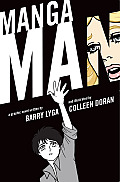
Making Sense of Manga Man

Manga Man, written by Barry Lyga and illustrated by Colleen Doran, explores the premise of a typical manga hero coming to earth in an American high school.

Of course, there is no “typical manga hero.” Ryoko Kiyama is a typical “bishonen” or “beautiful boy” type from one genre of Japanese comics. He’s an adolescent with big eyes and extraordinary hair. He has a tendency to express emotions by turning into a cute, small chibi version of himself. Given his background, Ryoko is comfortable with barely explained gender-shifting, robot attacks, and sitting still to watch nature for several panels.

For Marissa Montaigne, the prettiest girl in her high school, Ryoko is a delightful change from her ex-boyfriend the football captain, but their attraction doesn’t go any deeper than that.

Artist Colleen Doran does a fine job of fitting characters in both styles into the same panels. Scripter Barry Lyga also seems to focus on that contrast rather than on the characters’ relationship, and I didn’t think all his ideas panned out.

For example, because Japanese comics are read right to left, a couple of times Ryoko finds himself moving opposite to his American classmates. He can even foresee the future in a limited, one-panel way. I kept waiting for that to become a major part of the plot, but it didn’t.

At another point, Ryoko reveals his ability to move into the gutters between panels, and thus to move supernaturally between scenes, again emphasizing his identity as a comics character. But then he shows his love interest, Marissa Montaigne, how to do this as well, meaning that she’s also living in a comics universe.

For me that shifts Manga Man from being about a comics character visiting the real world to a Japanese comics character visiting some form of American comics—but not one matching the conventions of any genre I know. And the American characters just weren’t developed enough to stand on their own without a genre background.

Then the reality shifts back again as Ryoko gets in trouble for fighting too rough with his romantic rival. He expects to cause no more damage than in his typical stories, but Marissa’s old boyfriend ends up on a ventilator. Which left me further confused since a long-standing complaint about American comics is that they show unrealistic violence without consequences.

16 May 2009

Wolverine Meets Wimpy Kid—Who Would Win?

A while back, Graphic Novel Reporter ran a preview of Wolverine: Worst Day Ever, written by Barry Lyga and illustrated by various Marvel Comics artists.

The website called the book a “graphic novel,” which prompted a visitor [okay, it was me] to comment:

I'm glad to see Barry Lyga getting work. But why is Wolverine: Worst Day Ever being described as a “a YA graphic novel”? It's an illustrated story which uses very little of the comics format. And are the illustrations original to this project or repurposed?
When GNR went back to review the book, it answered those questions:
Wolverine: Worst Day Ever is close to being a prose work itself. It uses the blog format to advance its story, combined with archive images of Wolverine that have appeared in comics throughout the years. So while not technically a graphic novel per se, it has several of the elements (not least of which is one of the most popular characters to ever appear in comics).
And the book was scheduled, I suspect, to appear alongside this spring's Wolverine movie.

Lyga, former employee of the Diamond comics distribution monopoly and award-winning YA novelist, seems like a good choice to bridge the worlds of superheroes and YA prose fiction. And he understands that Wolverine: Worst Day Ever isn't a graphic novel. In an interview at Comic Book Resources Lyga discussed how his text interacts with the artwork:
In the Wimpy Kid books [by Jeff Kinney], the artwork is sort of seamlessly integrated into the text as an essential part of the story. You can't remove the art and have a coherent story, really. In that sense, they are sort of prototype graphic novels, in a way, with the art conveying story points.

With Worst Day Ever, my original thought was that the artwork would stand alone, on separate pages, like a traditional illustrated novel. But a couple of things happened. First of all, some of the art just SCREAMED for snarky captions in [the narrator] Eric's voice, and I got carried away. Next thing you knew, I was writing captions for every piece of art, not just a few.

And then, secondly, Marvel's designer made the artwork blend with the text in a very natural way, not on separate pages, but actually with the text, so that the art sort of comments on the text. Which actually makes sense--the book is supposed to be a blog, and on blogs, art co-exists with text. So it's a very organic and sensible decision. Her name is Spring [Hoteling], and she's done a great job designing the book.

That said, unlike in Wimpy Kid, if you removed the art, you would still have a complete story. It might not be quite as funny, but it would still be a complete story. I'm not 100% sure that's the case with Wimpy Kid--I think you'd lose more than mood or atmosphere if you yanked the art.
I wasn't so sure; Wimpy Kid was first written with much less art. But at least everyone agrees that just because a book contains lots of pictures--even cartoons or drawings of superheroes--that doesn't make it a "graphic novel."