Showing posts with label AUTHOR Willam Golding. Show all posts

04 October 2017

Years before Lord of the Flies
William Golding’s Lord of the Flies sits in a long line of novels about shipwrecked voyagers stretching back to the beginning of the English novel with Daniel Defoe’s Robinson Crusoe.

Other famous examples of the “Robinsonade” genre include Gulliver’s Travels, The Swiss Family Robinson, Enoch Arden, Haakon Haakonsen: En Norsk Robinson, Treasure Island, The Blue Lagoon, The Black Stallion, and Island of the Blue Dolphins.

The example that Golding cited as inspiration was The Coral Island and a Tale of the South Pacific, by R. M. Ballantyne. He explicitly alluded to that book twice in Lord of the Flies and borrowed two of its main characters’ first names. In Ballantyne’s tale three boys are shipwrecked on an island, look after themselves and friendly natives, fight off pirates and unfriendly natives, and convert natives to Christianity. Really their island’s not that deserted.

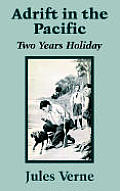
One novel resembles Lord of the Flies in its premise a lot more: Deux ans de vacances (Two Years’ Vacation, also titled Adrift in the Pacific, A Two Years’ Holiday, and A Long Vacation), written by Jules Verne in 1888. Verne liked Robinsonades, publishing two others before this one: The Mysterious Island (titled L’Oncle Robinson in its first, discarded version) and Godfrey Morgan.

In Deux ans de vacances, a group of mostly British schoolboys are cast ashore on an uninhabited, unmapped island. They organize themselves into a rudimentary society, the older boys looking after the younger ones. They hunt wild animals. They see no other humans for two years until a ship comes by.

In those respects, Lord of the Flies is more like Deux ans de vacances than The Coral Island or any of its predecessors. And the similarities don’t stop with the thick lines of plot. In the first English edition of Verne’s novel, titled Adrift in the Pacific, the younger boys are frequently referred to as “little ones.” In Lord of the Flies, the younger boys are “littluns.” (The 1967 translation of Deux ans de vacances, titled A Long Vacation, comes up with the jargon “Elbees,” short for “little boys.”)

There’s no evidence that Golding ever read Deux ans de vacances. The 1889 British version was reprinted in 1927, 1934, and perhaps other years, however. Golding said he and his wife shared a number of island adventure stories before he got the idea to write about how boys would really behave on an island. Adrift in the Pacific might have been one of them. If not, then there are some mighty strong coincidences.

08 September 2017

Golding and the Girls

Recently news broke that a Hollywood studio optioning a remake of William Golding’s Lord of the Flies with marooned schoolgirls instead schoolboys. I saw some people suggesting that adaptation missed how the novel is a critique of male behavior; others said that wasn’t what Golding had in mind at all. So I decided to look into the question.

As the book was being published, Golding told his publisher:
The theme is an attempt to trace the defects of society back to the defects of human nature. The moral is that the shape of a society must depend on the ethical nature of the individual and not on any political system however apparently logical or respectable. The whole book is symbolic in nature except the rescue in the end where adult life appears, dignified and capable, but in reality enmeshed in the same evil as the symbolic life of the children on the island.
It seems clear not only that Golding hadn’t set out to discuss male behavior. Indeed, his use of the generic word “children” for the all-boy cast of characters hints that he believed boys were representative of all children.

And that’s confirmed by Golding’s later comments. Peter Brook, who eventually directed the best movie adaptation of the novel, recalled hearing Golding respond to Hollywood producer Sam Spiegel’s suggestion to add girls to the cast:
Mr. Spiegel, I wanted the film to be an allegory on the human race. “Man” suggests all, “boy” equally—if you bring in boys and girls you’re forced to bring in secondary side issues, sexual attractions, conflicts, problems of puberty…
Indeed, a teacher casting the play in a co-ed school found something similar: “while having the female actors read lines with the male actors during auditions, Williams noticed that the teasing dialogue had turned into flirting.” Surely Golding, a schoolteacher, understood those issues arose in an all-male group as well, but they weren’t as open, especially with such young boys.

However, that quotation also shows that Golding was considering male as the default gender, especially when discussing “the human race.” In the introduction for a reissue of the novel, Golding expressed that idea at even more length:
When girls say to me, and very reasonably, “Why isn’t it a bunch of girls? Why did you write this about a bunch of boys?” my reply is I was once a little boy. I have been a brother, I have been a father, I’m going to be a grandfather, I have never been a sister or a mother or a grandmother, so this is why I wrote it really about little boys. That’s one answer. Another answer is of course to say if you, as it were, scaled down human beings, scaled down society, if you land with a group of little boys, they are more like scaled-down society than a group of little girls would be.

Don’t ask me why, and this is a terrible thing to say because I’m going to be chased from Hell to breakfast by all the women who talk about equality. This has nothing at all to do with equality at all. Women are foolish to pretend they’re equal to men. They are far superior and always have been. But one thing you cannot do with them is take a bunch of them and boil them down so to speak into a set of little girls who would then become a kind of image of civilization, of society. That’s another reason why they were little boys.

The other thing is, why weren’t they little boys and little girls? We being who we are, sex would have raised its lovely head, and I didn’t want this book to be about sex. I mean, sex is too trivial a thing to get into with a story like this, which is about the problem of evil and the problem of how people would work together in society.
After considering these quotations, I concluded that it was clear Golding didn’t intend to write about masculinity, but also couldn’t conceive of masculinity as an issue in the problems he set out to explore. Which looks like an aspect of the male behavior up for critique. Unknowingly, or in defiant denial, Golding portrayed the worst of male behavior while insisting he’d done no such thing.